Grantors Texas Ever For The Future
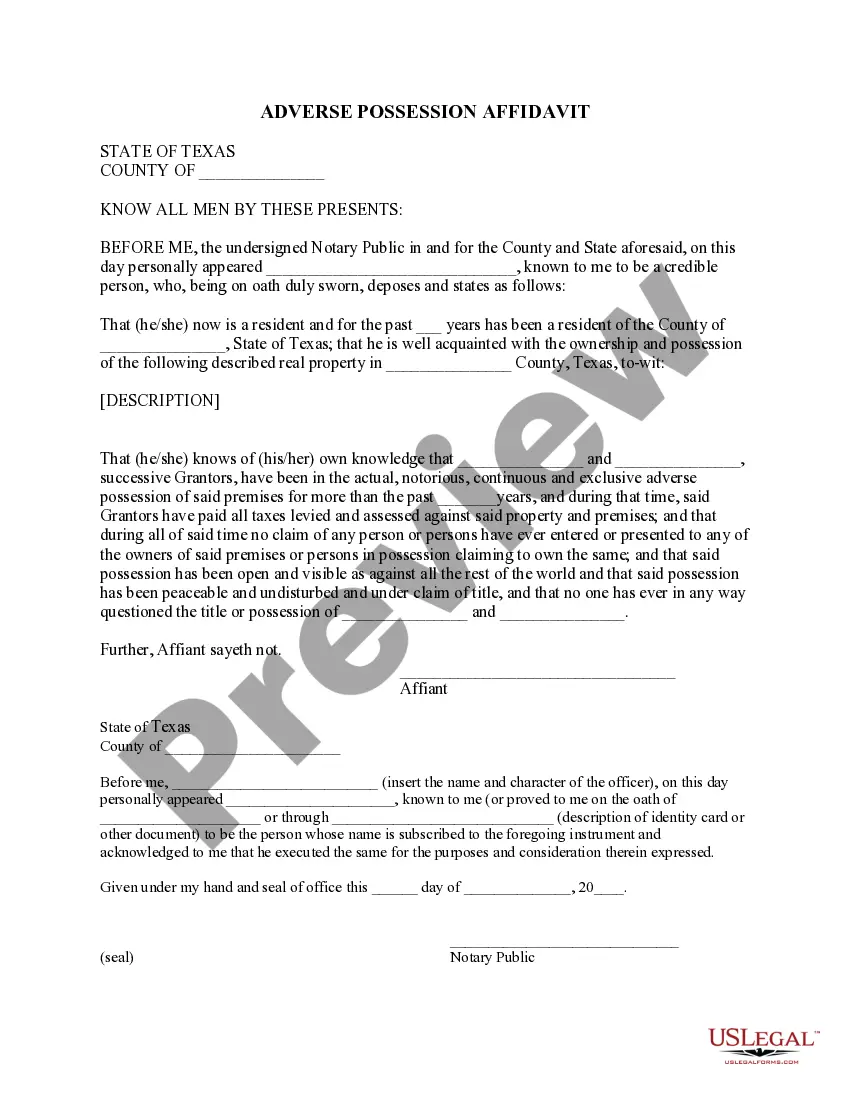
Description
Get your form ready online
Our built-in tools help you complete, sign, share, and store your documents in one place.
Make edits, fill in missing information, and update formatting in US Legal Forms—just like you would in MS Word.
Download a copy, print it, send it by email, or mail it via USPS—whatever works best for your next step.
Sign and collect signatures with our SignNow integration. Send to multiple recipients, set reminders, and more. Go Premium to unlock E-Sign.
If this form requires notarization, complete it online through a secure video call—no need to meet a notary in person or wait for an appointment.
We protect your documents and personal data by following strict security and privacy standards.

Make edits, fill in missing information, and update formatting in US Legal Forms—just like you would in MS Word.

Download a copy, print it, send it by email, or mail it via USPS—whatever works best for your next step.

Sign and collect signatures with our SignNow integration. Send to multiple recipients, set reminders, and more. Go Premium to unlock E-Sign.

If this form requires notarization, complete it online through a secure video call—no need to meet a notary in person or wait for an appointment.

We protect your documents and personal data by following strict security and privacy standards.
Looking for another form?








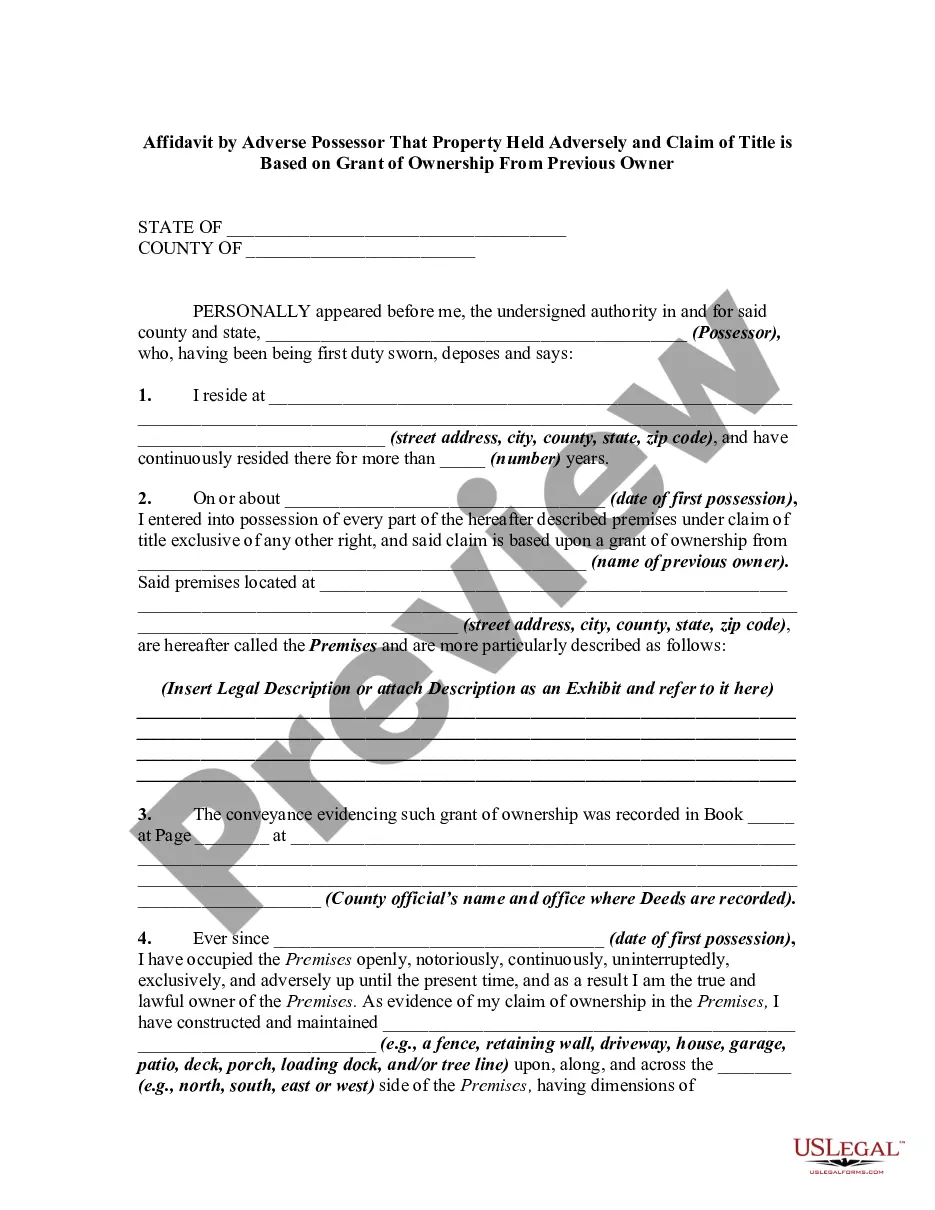
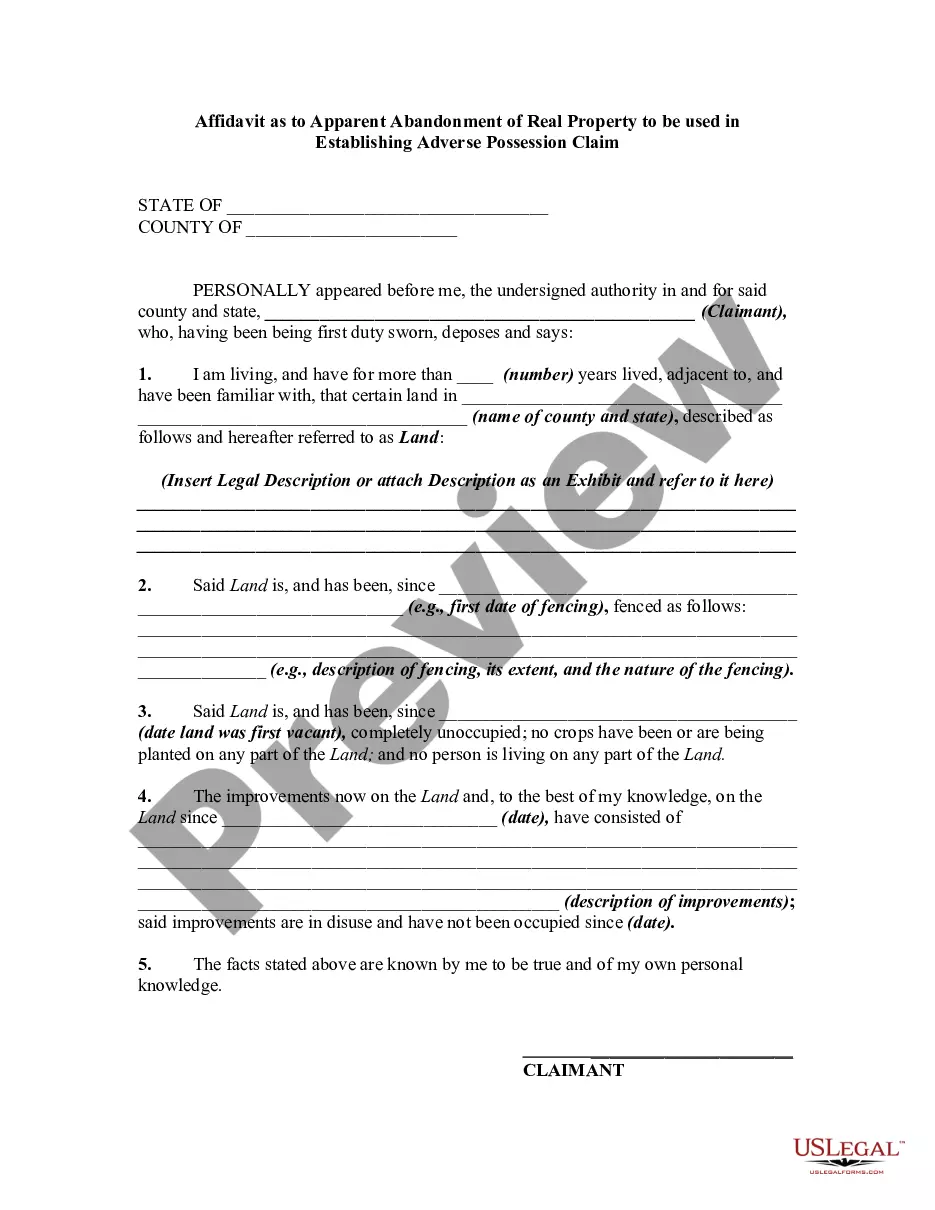
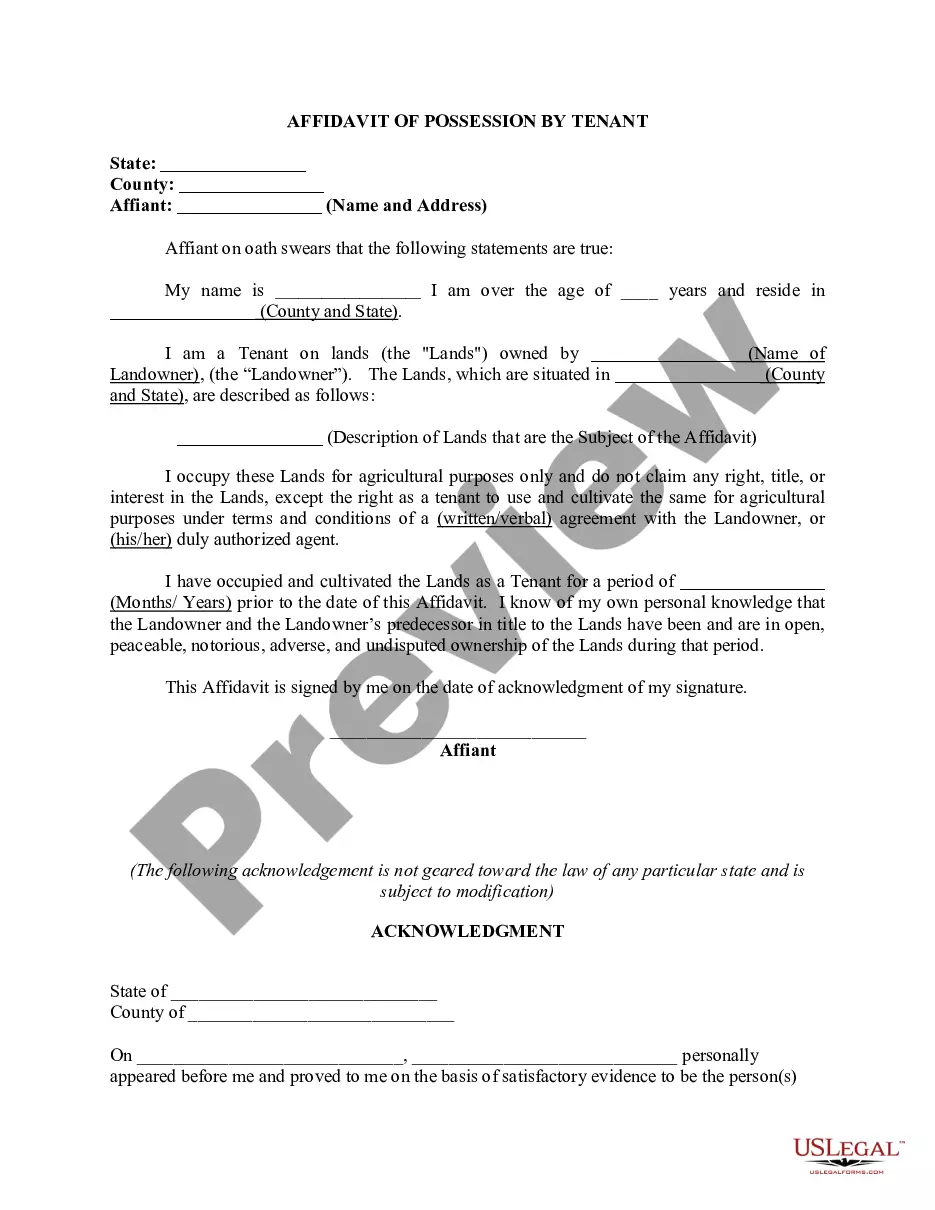
How to fill out Texas Adverse Possession Affidavit - Squatters Rights?
- If you're an existing user, start by logging into your account. Ensure that your subscription is active to access the needed forms.
- For first-time users, begin by browsing our extensive library. Utilize the Preview mode to check the form descriptions and confirm that the template meets your requirements.
- If you encounter any discrepancies, use the Search feature to find alternate templates that align with your needs.
- Once you've selected the correct document, click the 'Buy Now' button and choose a subscription plan tailored for you. Make sure to create an account to gain full access to resources.
- Proceed to finalize your purchase by entering your payment details through credit card or PayPal.
- After purchasing, download the form directly to your device. You can also revisit the form anytime through the 'My Forms' section in your account.
With US Legal Forms, individuals and attorneys can efficiently execute legal documents thanks to our robust collection of over 85,000 forms. Our platform not only provides value but also connects users with premium experts to ensure legal accuracy.
Take advantage of the vast resources available and simplify your legal form needs today!
Form popularity
FAQ
One major mistake parents make is failing to clearly define the trust's terms and beneficiaries. Ambiguities can lead to disputes and misunderstandings down the line. Grantors in Texas ever for the future should engage in thorough communication and planning to avoid such pitfalls and ensure their trust serves its intended purpose.
Yes, a trust can have two grantors, enabling individuals to collaboratively manage their assets and estate. This partnership fosters a shared vision for asset distribution and management. For grantors in Texas ever for the future, this arrangement can be a powerful tool for unified estate planning.
Generally, if one of the two grantors of a trust passes away, the trust may become irrevocable under certain conditions. This change often enhances the protection of the trust's assets, securing the interests of beneficiaries. Grantors in Texas ever for the future should consider these implications while drafting their trust agreements.
Having co-trustees can be beneficial, as it allows for shared responsibilities and insights. This approach can lead to more balanced decision-making and enhance trust management. Grantors in Texas ever for the future should weigh the advantages of co-trustees against the possible complications, ensuring they maintain clarity and communication.
While dynasty trusts can provide substantial benefits, they also present challenges. One significant issue is the potential for increased complexity and administrative costs over time. Grantors in Texas ever for the future should consider these factors, ensuring they have a clear plan and are prepared for long-term management responsibilities.
In Texas, a trust can last for up to 90 years, allowing grantors to establish long-term plans for their assets. After this period, the trust assets will be distributed according to the terms set forth in the trust document. This durability makes it vital for grantors texas ever for the future to carefully craft their trust agreements.
Indeed, a living trust can have two grantors, allowing couples or partners to manage their assets together. This arrangement offers flexibility and shared control, essential for effective estate planning. Grantors in Texas ever for the future can enjoy the benefits of a joint living trust to simplify asset management.
Yes, Texas allows perpetual trusts, making them a popular choice for grantors in Texas ever for the future. These trusts can continue indefinitely, benefiting your heirs without the limitations of time. Such structures provide long-term financial security, as they can protect assets and ensure wealth is preserved for generations.
In Texas, a grantee does not automatically own property unless the grant specifies that transfer of ownership. Typically, the grantor retains certain rights until specified conditions are met, at which point ownership may pass. This distinction is vital for grantors in Texas ever for the future, as it impacts asset management and beneficiary rights. If you need help clarifying ownership structures, uslegalforms can provide valuable insights.
In Texas, setting up a trust in perpetuity is generally not permitted due to the Rule Against Perpetuities. Trusts are typically limited to a maximum duration dictated by specific legal guidelines, which ultimately aim to promote timely distribution of assets. It is crucial for grantors in Texas ever for the future to understand these limitations when designing their estate plans. For assistance in trust creation, consider using uslegalforms.