Abandonment Squatters Rights For Apartments
Description
Get your form ready online
Our built-in tools help you complete, sign, share, and store your documents in one place.
Make edits, fill in missing information, and update formatting in US Legal Forms—just like you would in MS Word.
Download a copy, print it, send it by email, or mail it via USPS—whatever works best for your next step.
Sign and collect signatures with our SignNow integration. Send to multiple recipients, set reminders, and more. Go Premium to unlock E-Sign.
If this form requires notarization, complete it online through a secure video call—no need to meet a notary in person or wait for an appointment.
We protect your documents and personal data by following strict security and privacy standards.

Make edits, fill in missing information, and update formatting in US Legal Forms—just like you would in MS Word.

Download a copy, print it, send it by email, or mail it via USPS—whatever works best for your next step.

Sign and collect signatures with our SignNow integration. Send to multiple recipients, set reminders, and more. Go Premium to unlock E-Sign.

If this form requires notarization, complete it online through a secure video call—no need to meet a notary in person or wait for an appointment.

We protect your documents and personal data by following strict security and privacy standards.
Looking for another form?



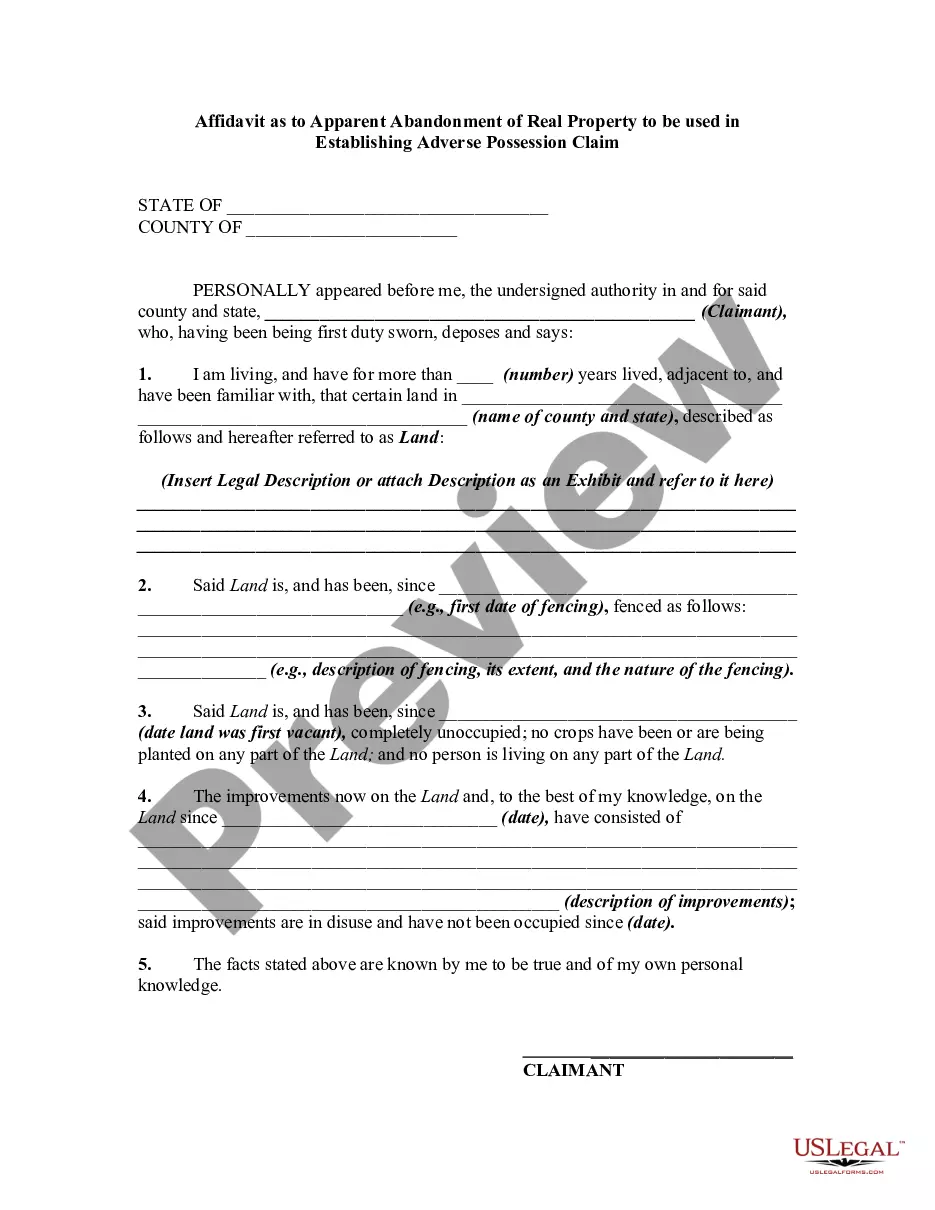
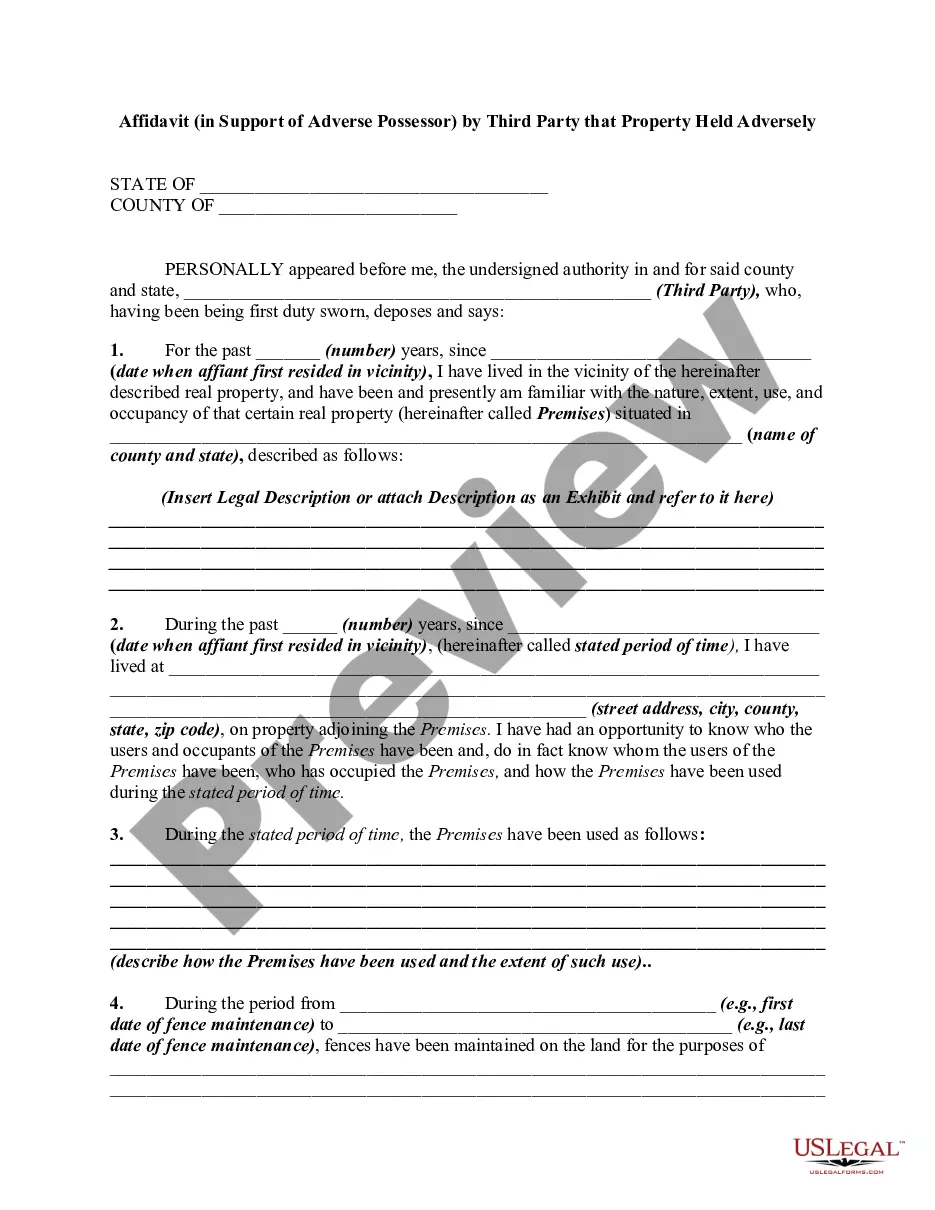
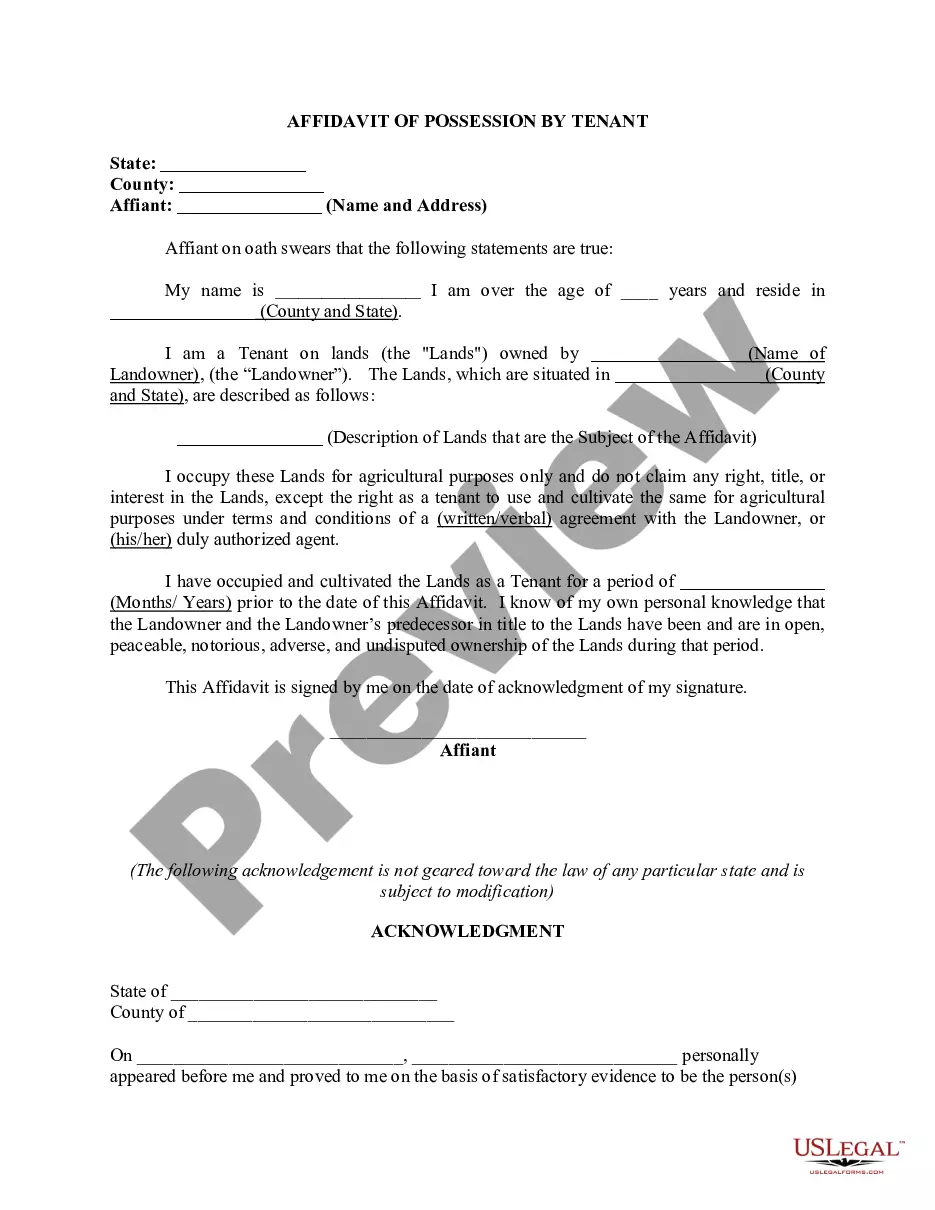
How to fill out Affidavit As To Apparent Abandonment Of Real Property To Be Used In Establishing Adverse Possession Claim - Squatters Rights?
The Abandonment Squatters Rights For Apartments presented on this page is a reusable formal format crafted by expert attorneys in accordance with federal and local laws.
For over 25 years, US Legal Forms has supplied individuals, businesses, and legal professionals with over 85,000 confirmed, state-specific documents for any business or personal situation. It’s the quickest, easiest, and most trustworthy method to acquire the paperwork you require, as the service ensures the utmost level of data protection and anti-malware security.
Select the format you desire for your Abandonment Squatters Rights For Apartments (PDF, Word, RTF) and download the sample onto your device.
- Search for the document you require and review it.
- Browse the sample you searched and preview it or examine the form description to confirm it meets your requirements. If it does not, use the search bar to locate the suitable one. Click Buy Now when you have identified the template you need.
- Choose and Log In.
- Select the pricing option that fits you and create an account. Use PayPal or a credit card to make a swift payment. If you already possess an account, Log In and verify your subscription to continue.
- Obtain the editable template.
Form popularity
FAQ
In Pennsylvania, a squatter will need to have occupied the property for at least 21 years (20 years in Maryland) to file a claim. This entire period must also be uninterrupted.
In Texas, a squatter must meet the following seven pieces of criteria before applying for legal rights to a vacant property: Hostile Possession. Here, the term hostile does not mean dangerous, violent, or unsafe. ... Actual Possession. ... Continuous Possession. ... Exclusive Possession. ... Open & Notorious. ... Color of Title.
In Pennsylvania, to succeed in a claim for adverse possession a trespasser must prove actual, continuous, exclusive, visible, notorious, distinct, and hostile possession of property for (in most cases) 21 years. Each of these elements must be proven in a court of law and each case will be unique.
To remove a trespasser from your property, you may only need to call the police. However, with squatters, the property owner will need to evict them just as they would tenants. For a full understanding of legal eviction proceedings, be sure to familiarize yourself with Virginia's fair housing legislation.
If the individual is a trespasser, the police may remove them from your property. However, if the squatter has established residency through adverse possession or permission from a prior owner or tenant, you will need to pursue legal action to evict them.