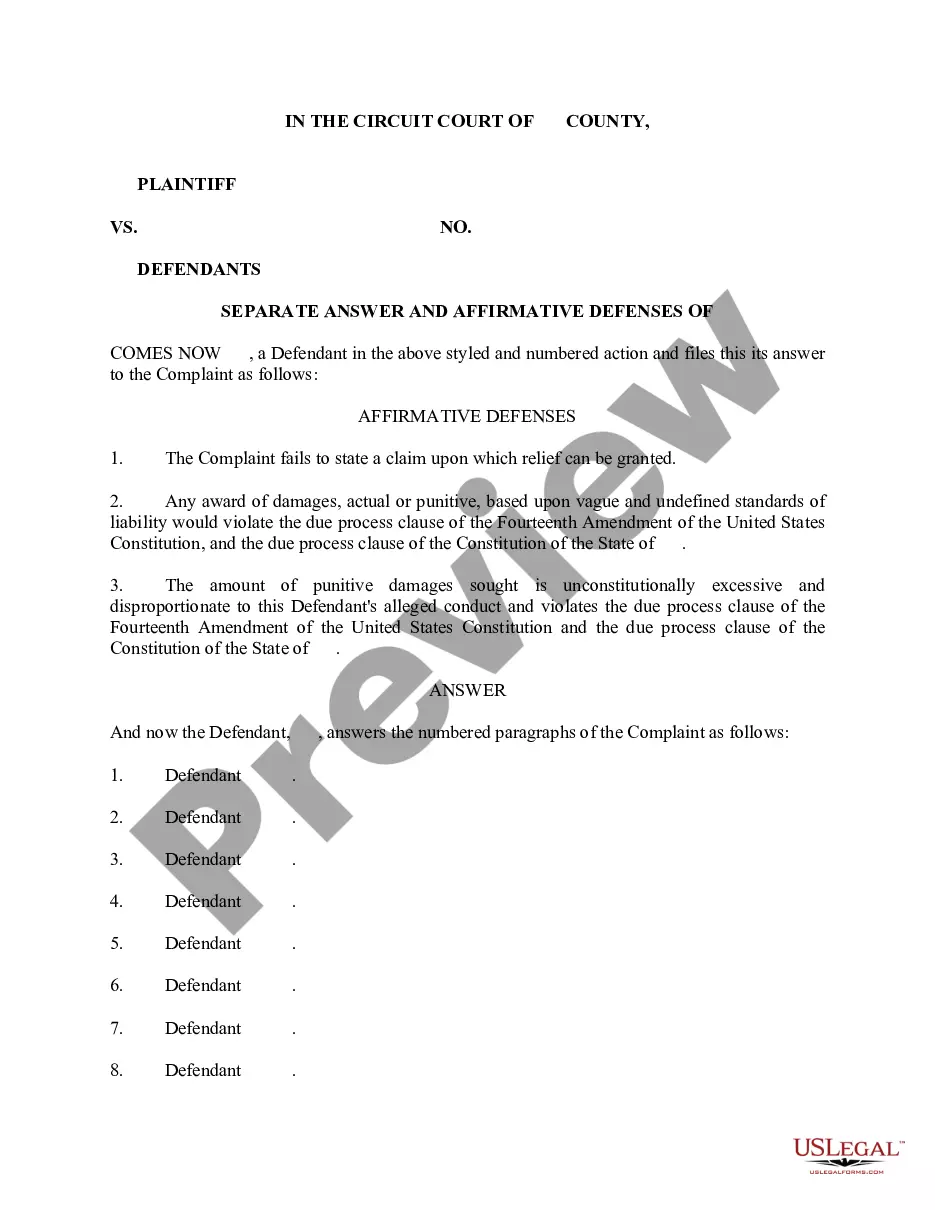
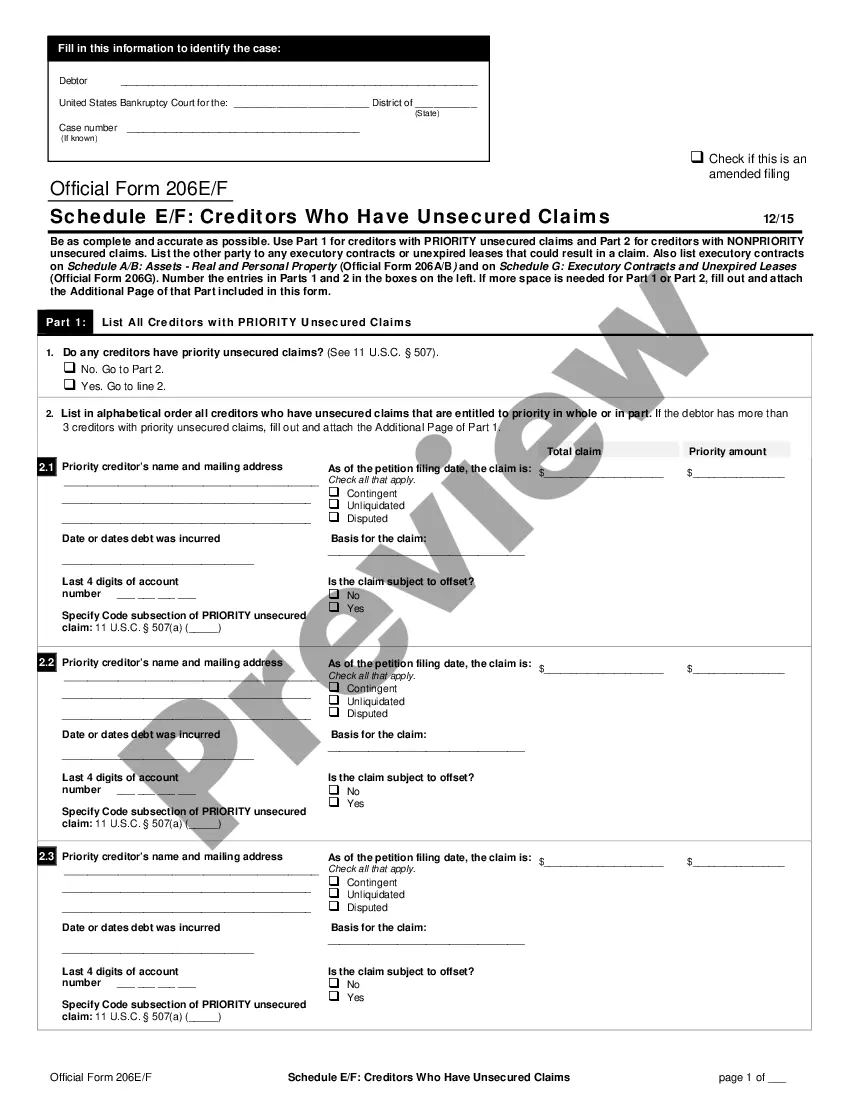
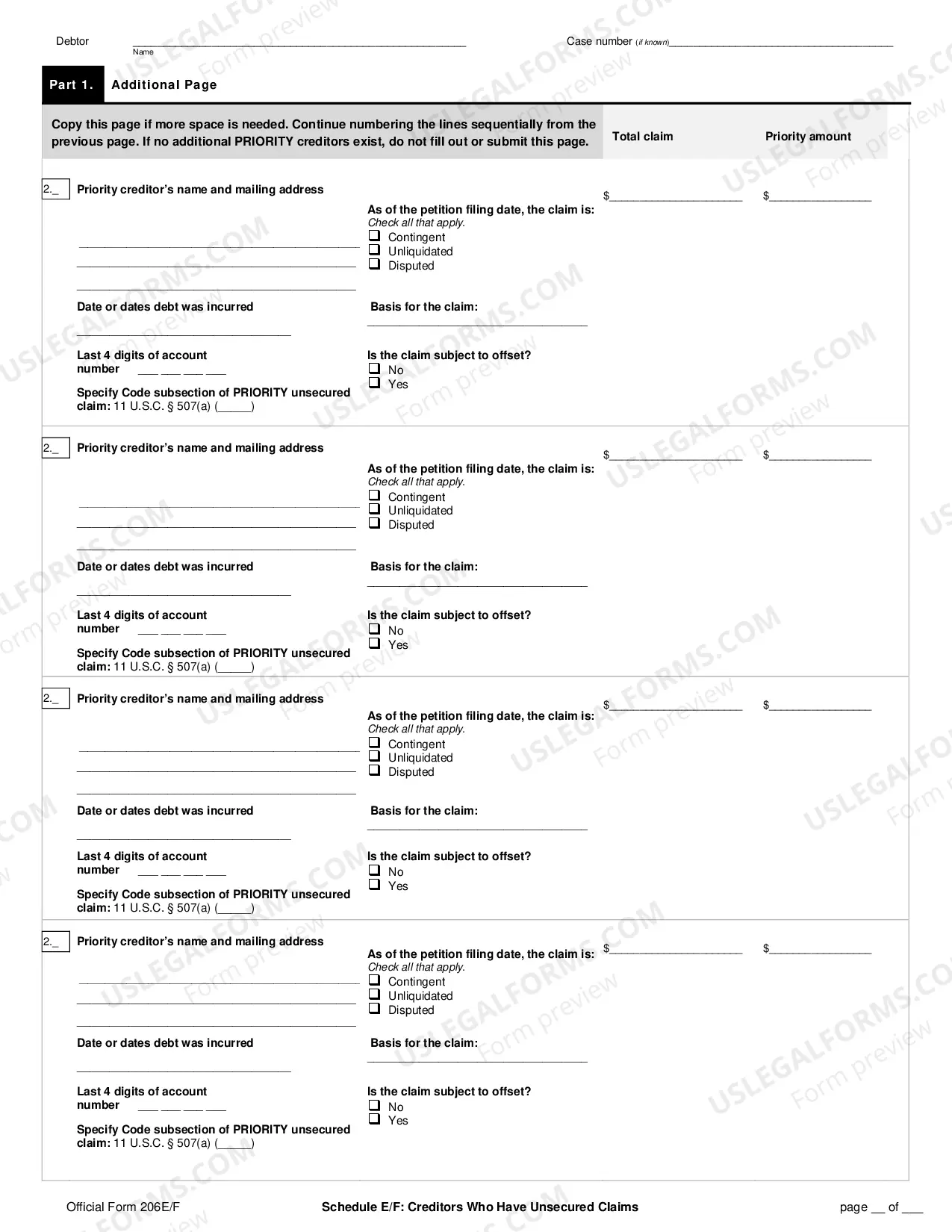
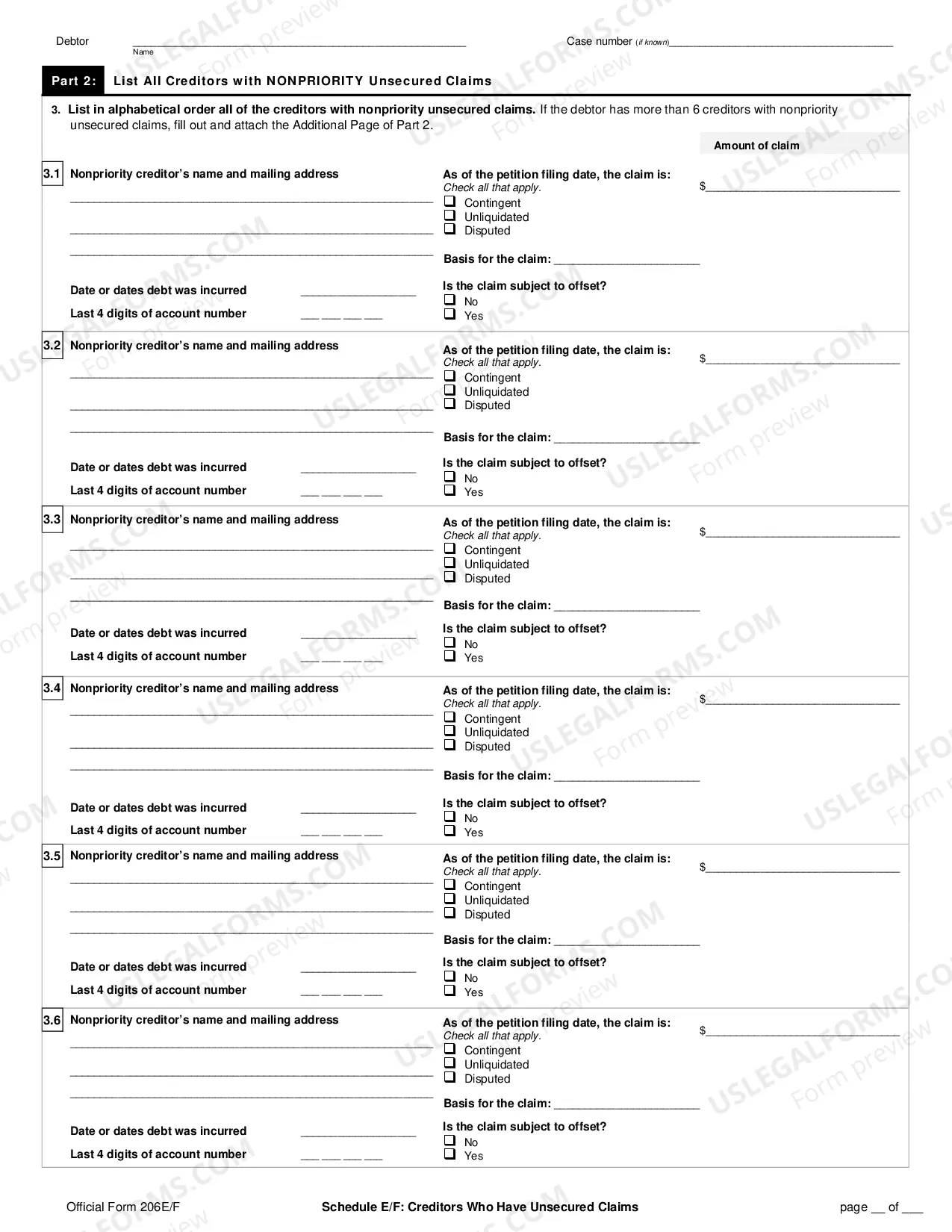
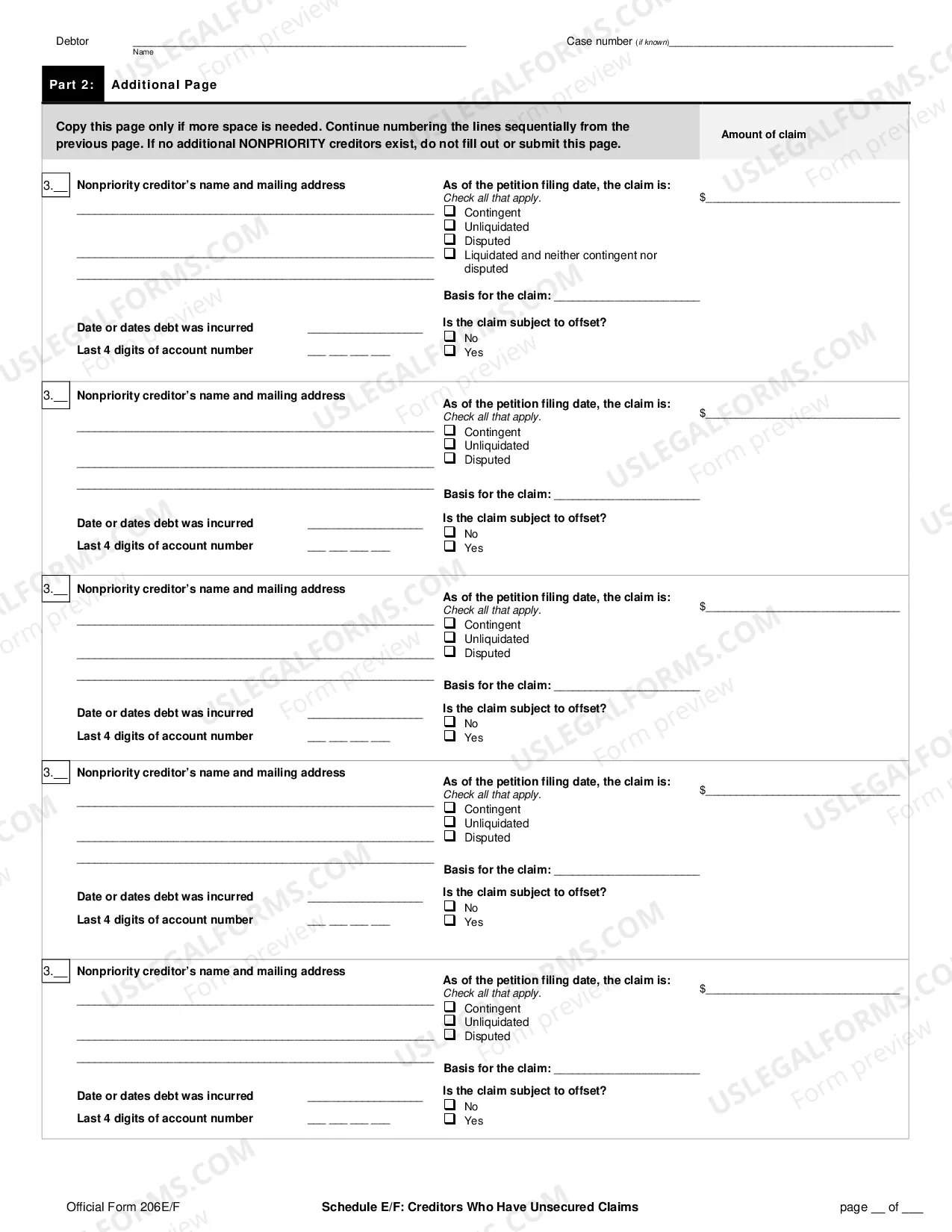
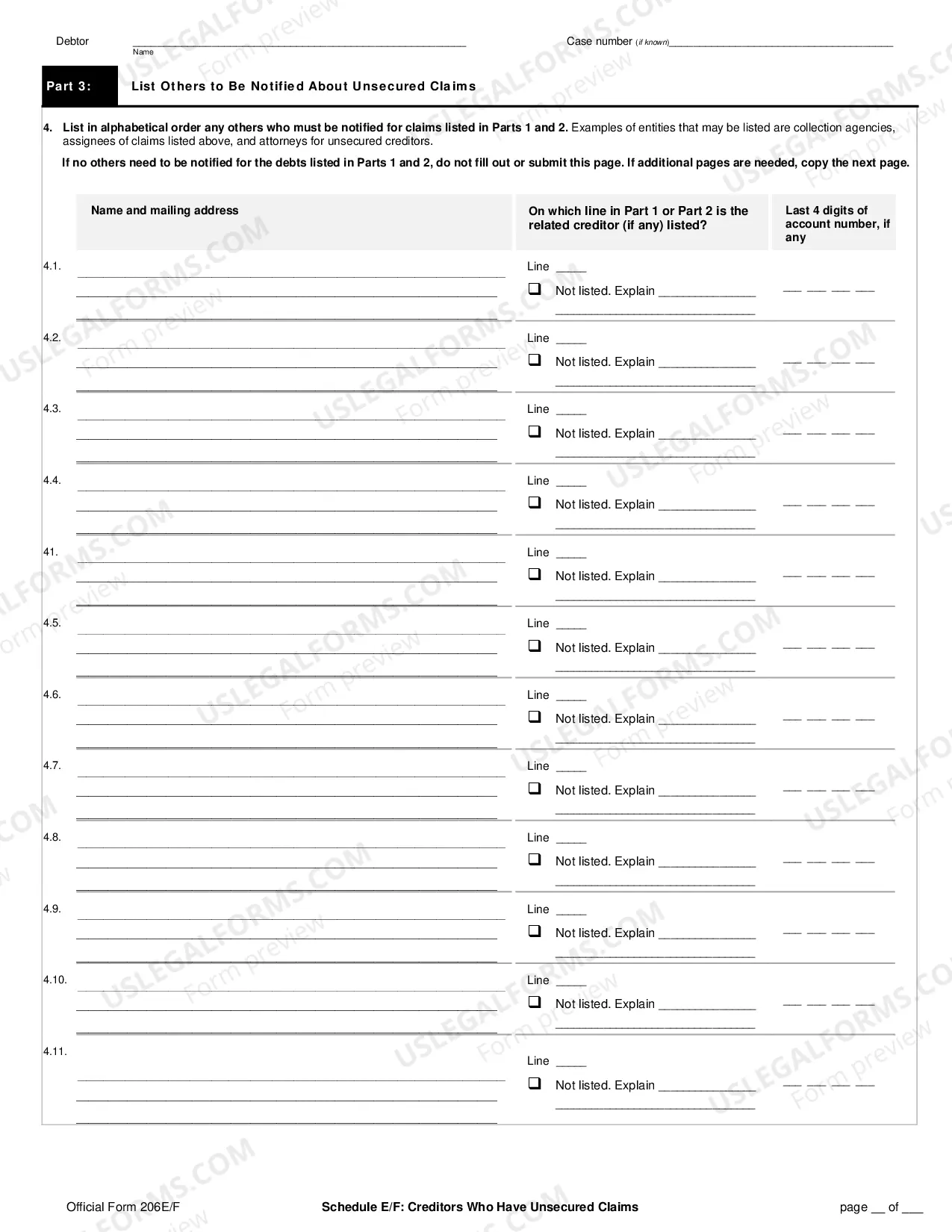
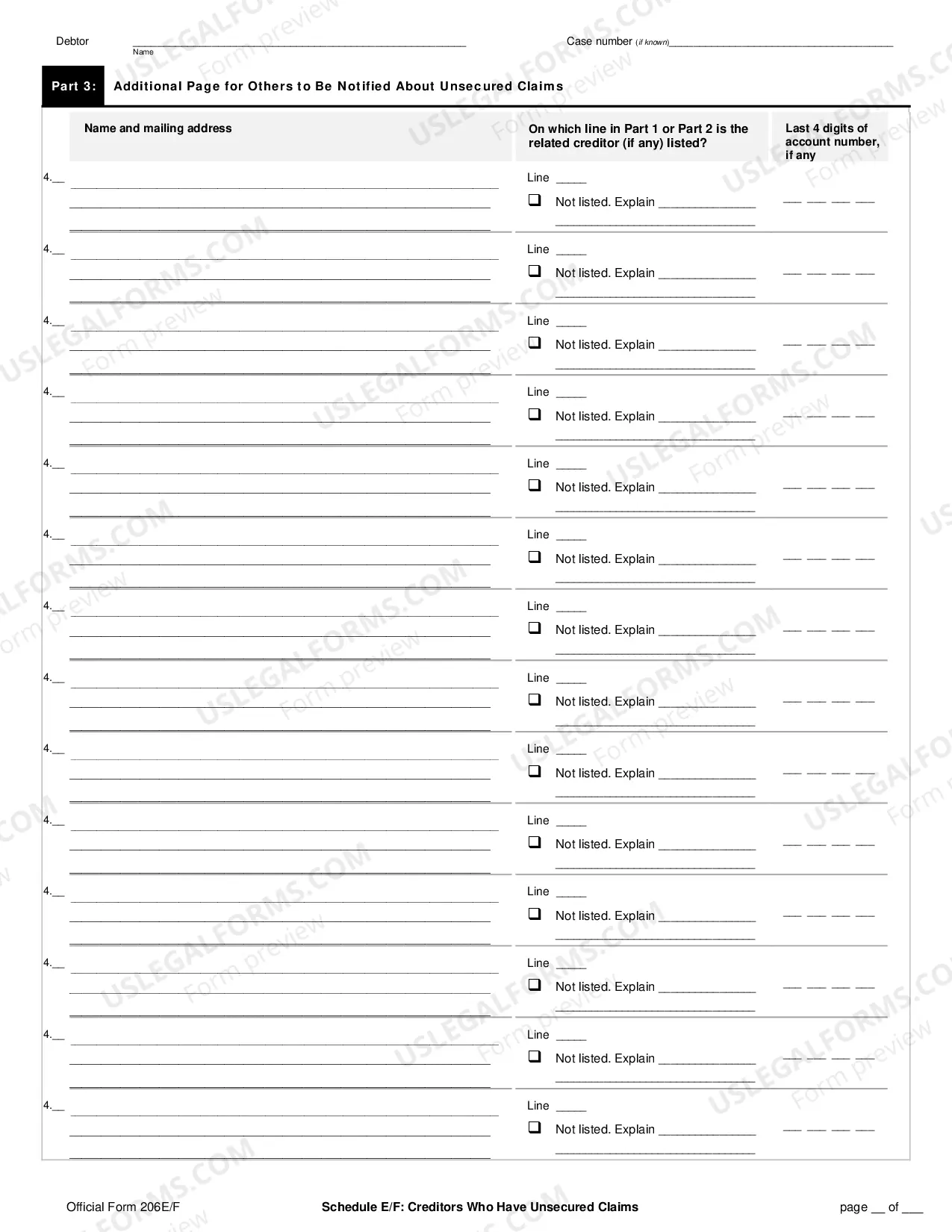
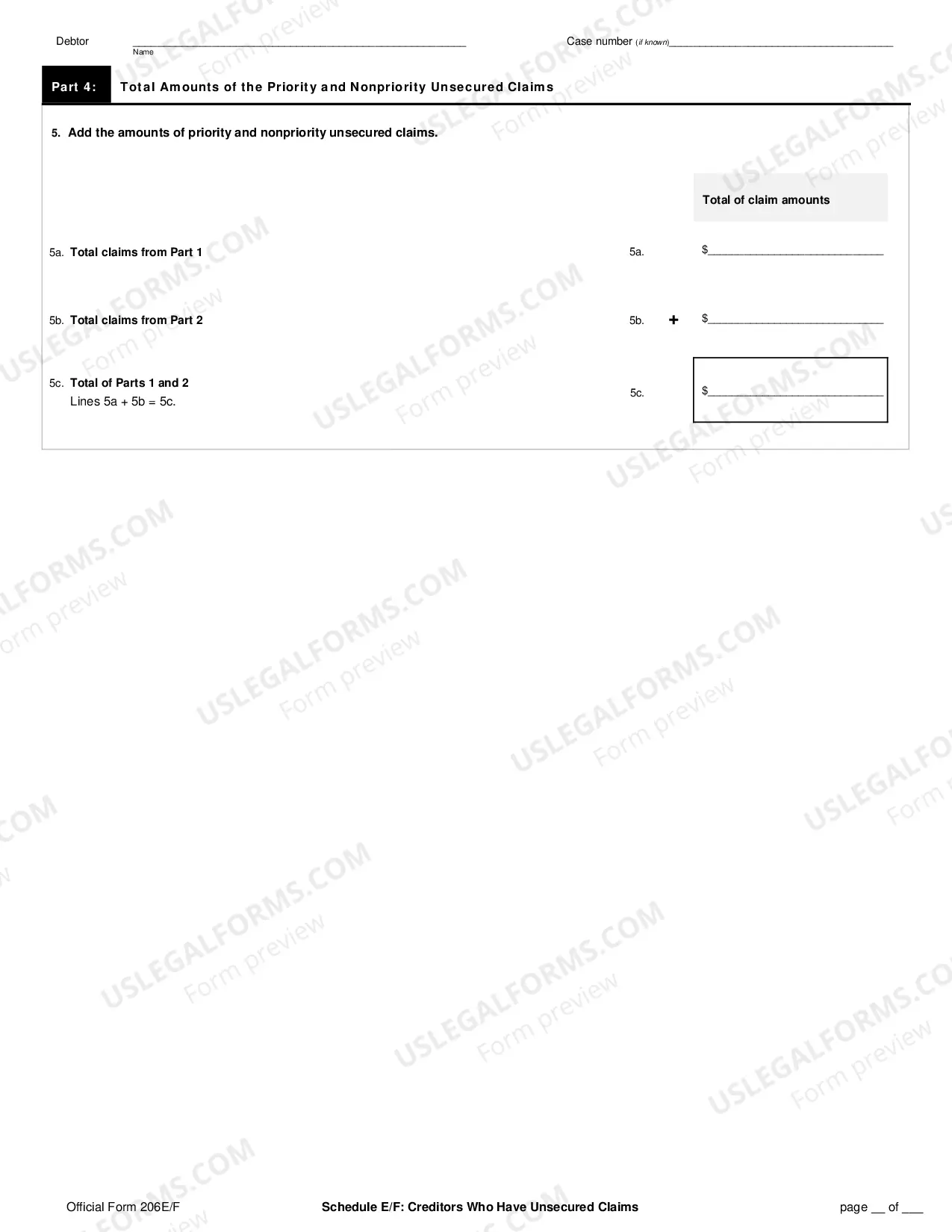
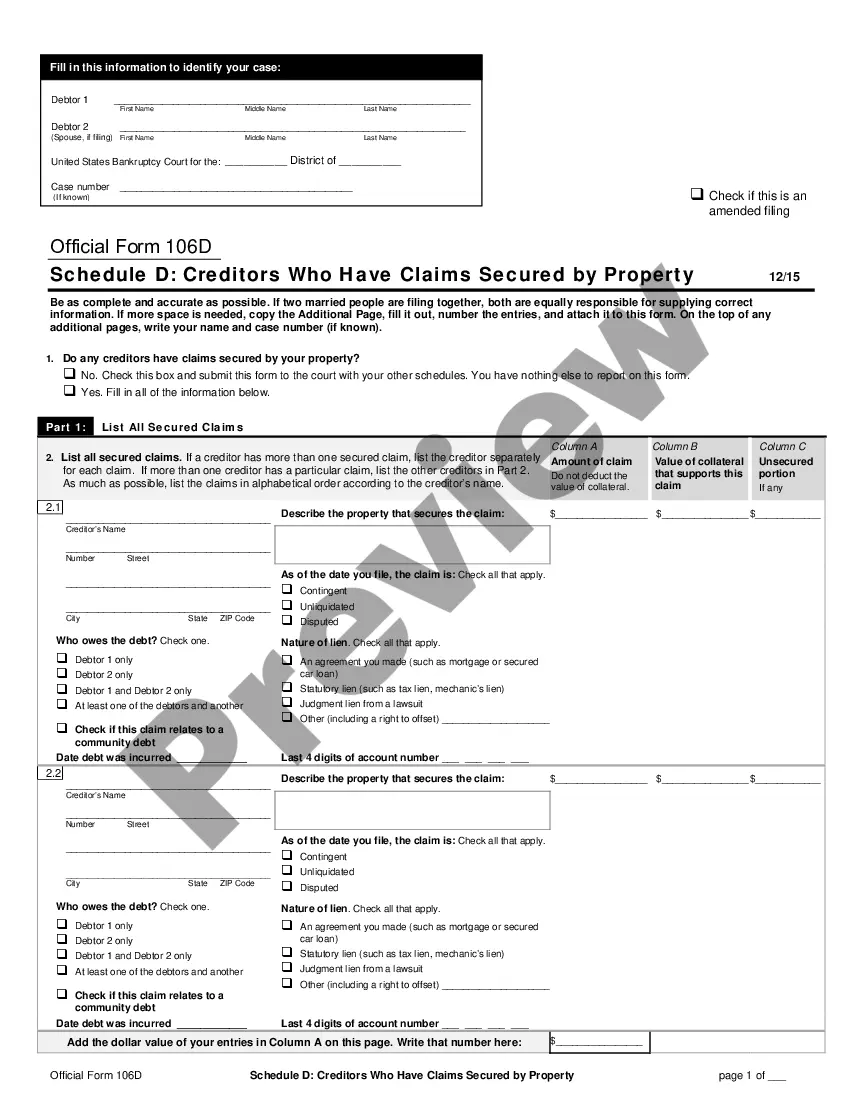
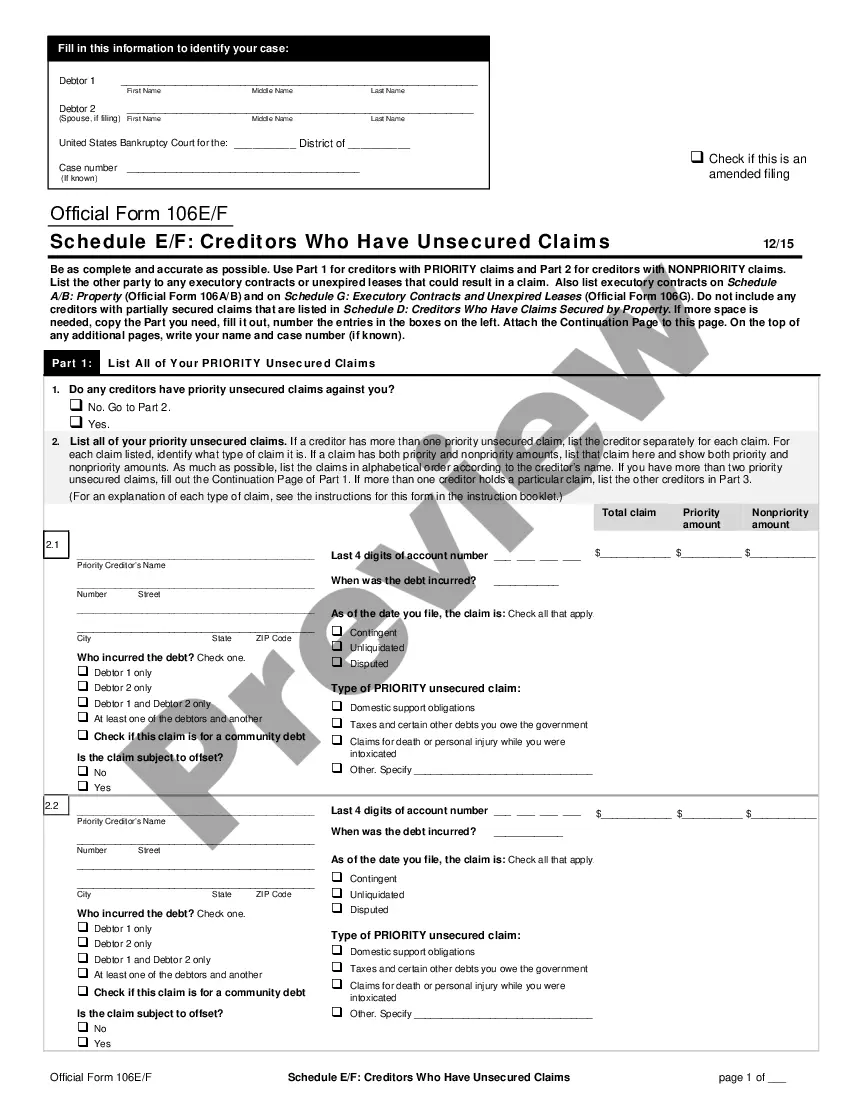
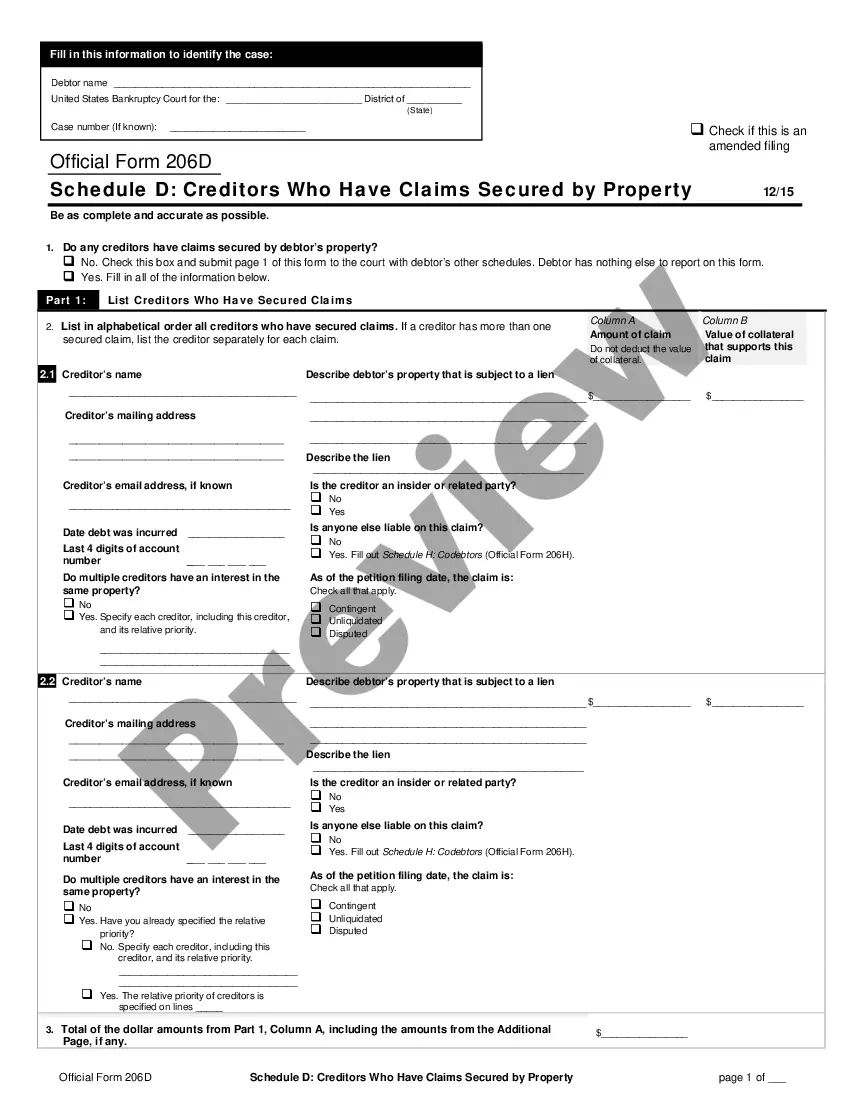
Schedule E/F: Creditors Who Have Unsecured Claims (non-individuals) is a form that is part of a bankruptcy filing. This form is used to report all non-individual creditors who have unsecured claims against the debtor. Examples of these creditors include governmental agencies, banks, credit unions, or other businesses. The form requires the debtor to provide a list of all creditors, the amount of the claim, the date the debt was incurred, and the nature of the debt. The form also requires the debtor to state whether the claim is secured, contingent, unliquidated, or disputed. There are three types of Schedule E/F forms: one for individuals, one for non-individuals, and one for foreign creditors.
Schedule E/F: Creditors Who Have Unsecured Claims (non-individuals)
State:
Multi-State
Control #:
US-B-206EF
Format:
PDF
Instant download
This website is not affiliated with any governmental entity
Public form
Description
Schedule E/F: Creditors Who Have Unsecured Claims (non-individuals)
Free preview
Get your form ready online
Our built-in tools help you complete, sign, share, and store your documents in one place.
Built-in online Word editor
Make edits, fill in missing information, and update formatting in US Legal Forms—just like you would in MS Word.
Export easily
Download a copy, print it, send it by email, or mail it via USPS—whatever works best for your next step.
E-sign your document
Sign and collect signatures with our SignNow integration. Send to multiple recipients, set reminders, and more. Go Premium to unlock E-Sign.
Notarize online 24/7
If this form requires notarization, complete it online through a secure video call—no need to meet a notary in person or wait for an appointment.
Store your document securely
We protect your documents and personal data by following strict security and privacy standards.

Make edits, fill in missing information, and update formatting in US Legal Forms—just like you would in MS Word.

Download a copy, print it, send it by email, or mail it via USPS—whatever works best for your next step.

Sign and collect signatures with our SignNow integration. Send to multiple recipients, set reminders, and more. Go Premium to unlock E-Sign.

If this form requires notarization, complete it online through a secure video call—no need to meet a notary in person or wait for an appointment.

We protect your documents and personal data by following strict security and privacy standards.
Looking for another form?

How to fill out Schedule E/F: Creditors Who Have Unsecured Claims (non-individuals)?
How much time and resources do you typically spend on composing formal documentation? There’s a greater option to get such forms than hiring legal specialists or wasting hours browsing the web for an appropriate blank. US Legal Forms is the premier online library that offers professionally drafted and verified state-specific legal documents for any purpose, including the Schedule E/F: Creditors Who Have Unsecured Claims (non-individuals).
To obtain and prepare a suitable Schedule E/F: Creditors Who Have Unsecured Claims (non-individuals) blank, follow these simple instructions:
- Examine the form content to ensure it meets your state laws. To do so, check the form description or take advantage of the Preview option.
- In case your legal template doesn’t meet your needs, find a different one using the search tab at the top of the page.
- If you are already registered with our service, log in and download the Schedule E/F: Creditors Who Have Unsecured Claims (non-individuals). If not, proceed to the next steps.
- Click Buy now once you find the correct document. Opt for the subscription plan that suits you best to access our library’s full opportunities.
- Register for an account and pay for your subscription. You can make a payment with your credit card or via PayPal - our service is totally reliable for that.
- Download your Schedule E/F: Creditors Who Have Unsecured Claims (non-individuals) on your device and complete it on a printed-out hard copy or electronically.
Another benefit of our service is that you can access previously downloaded documents that you safely store in your profile in the My Forms tab. Get them anytime and re-complete your paperwork as frequently as you need.
Save time and effort preparing legal paperwork with US Legal Forms, one of the most trusted web solutions. Sign up for us today!
Form popularity
FAQ
Unsecured claims still take priority over other debts that the person may owe, but they aren't secured with collateral. These claims usually have priority for public policy reasons, where the public would otherwise be harmed by unpaid debts.
Some of the most common types of priority unsecured debt include: Child support. Other domestic support, such as alimony. Certain income taxes, depending on age and whether they were timely filed.
Priority unsecured creditors are parties that the bankruptcy law favors over other unsecured creditors, even though they do not have a security interest in the debtor's property. Examples of priority unsecured claims include: Alimony or child support payments, The costs of the trustee in handling the bankruptcy, and.
Unsecured Debt - If you simply promise to pay someone a sum of money at a particular time, and you have not pledged any real or personal property to collateralize the debt, the debt is unsecured. For example, most debts for services and some credit card debts are ?unsecured?.
Non-priority debts include the bulk of unsecured debts, such as: Past-due credit card bills and outstanding credit card balances. Unpaid personal loan payments. Private debts to friends and family members. Overdue bills, including those for rent, utilities and cellphones.
Some of the most common types of unsecured creditors include credit card companies, utilities, landlords, hospitals and doctor's offices, and lenders that issue personal or student loans (though education loans carry a special exception that prevents them from being discharged).