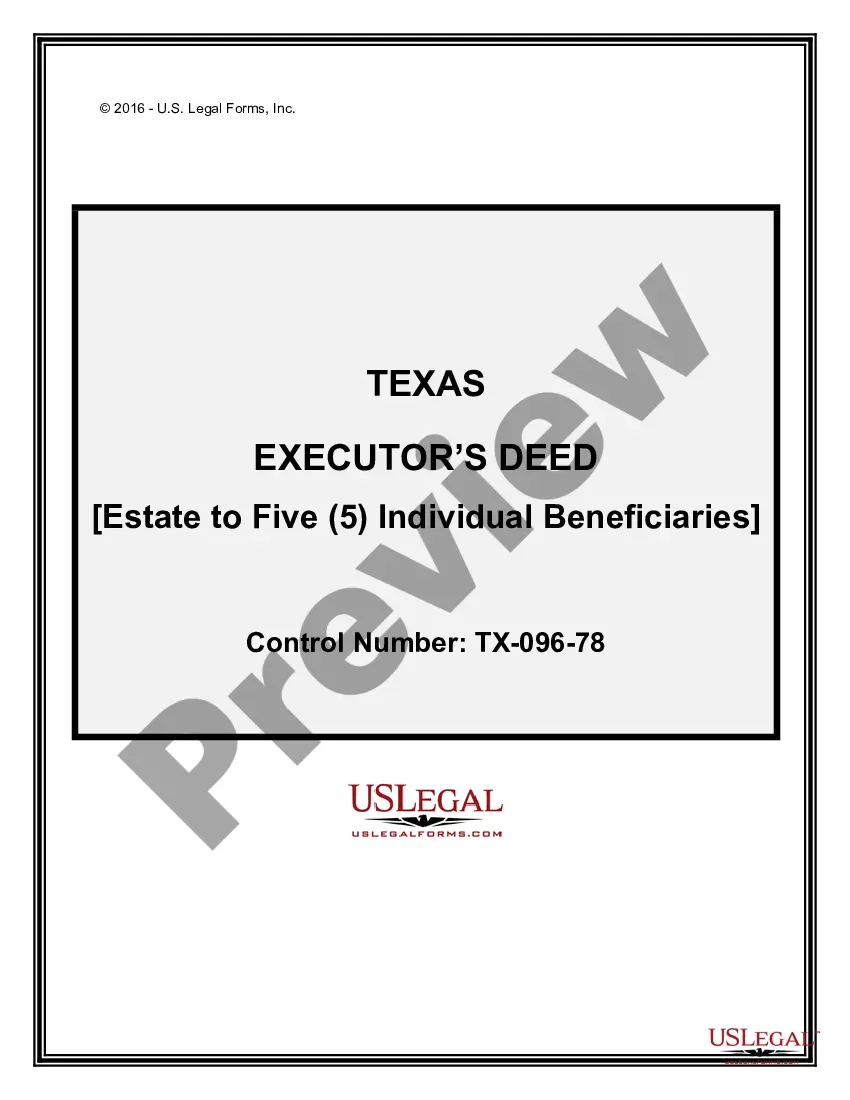
Executor Of Estate Form Texas
Description
Get your form ready online
Our built-in tools help you complete, sign, share, and store your documents in one place.
Make edits, fill in missing information, and update formatting in US Legal Forms—just like you would in MS Word.
Download a copy, print it, send it by email, or mail it via USPS—whatever works best for your next step.
Sign and collect signatures with our SignNow integration. Send to multiple recipients, set reminders, and more. Go Premium to unlock E-Sign.
If this form requires notarization, complete it online through a secure video call—no need to meet a notary in person or wait for an appointment.
We protect your documents and personal data by following strict security and privacy standards.

Make edits, fill in missing information, and update formatting in US Legal Forms—just like you would in MS Word.

Download a copy, print it, send it by email, or mail it via USPS—whatever works best for your next step.

Sign and collect signatures with our SignNow integration. Send to multiple recipients, set reminders, and more. Go Premium to unlock E-Sign.

If this form requires notarization, complete it online through a secure video call—no need to meet a notary in person or wait for an appointment.

We protect your documents and personal data by following strict security and privacy standards.
Looking for another form?
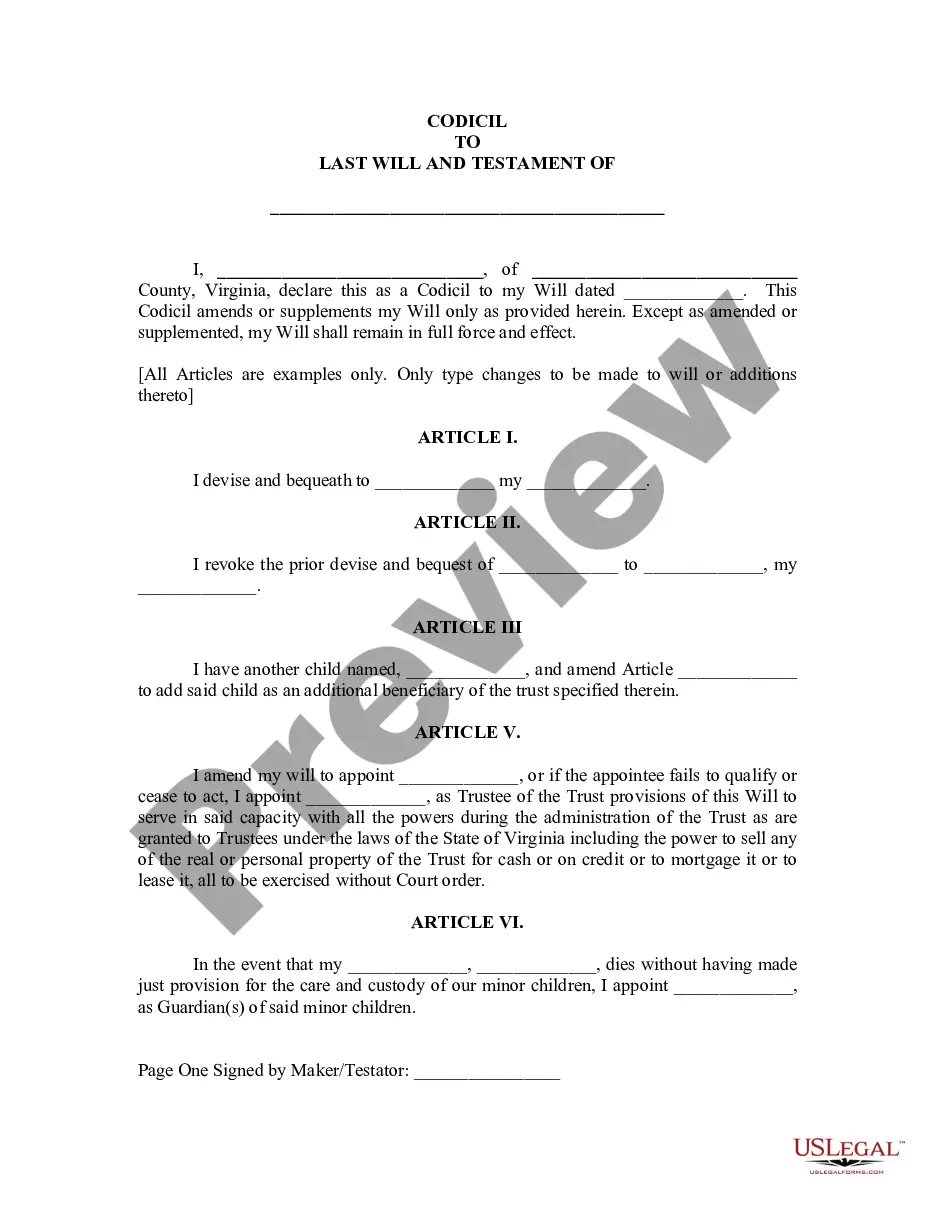
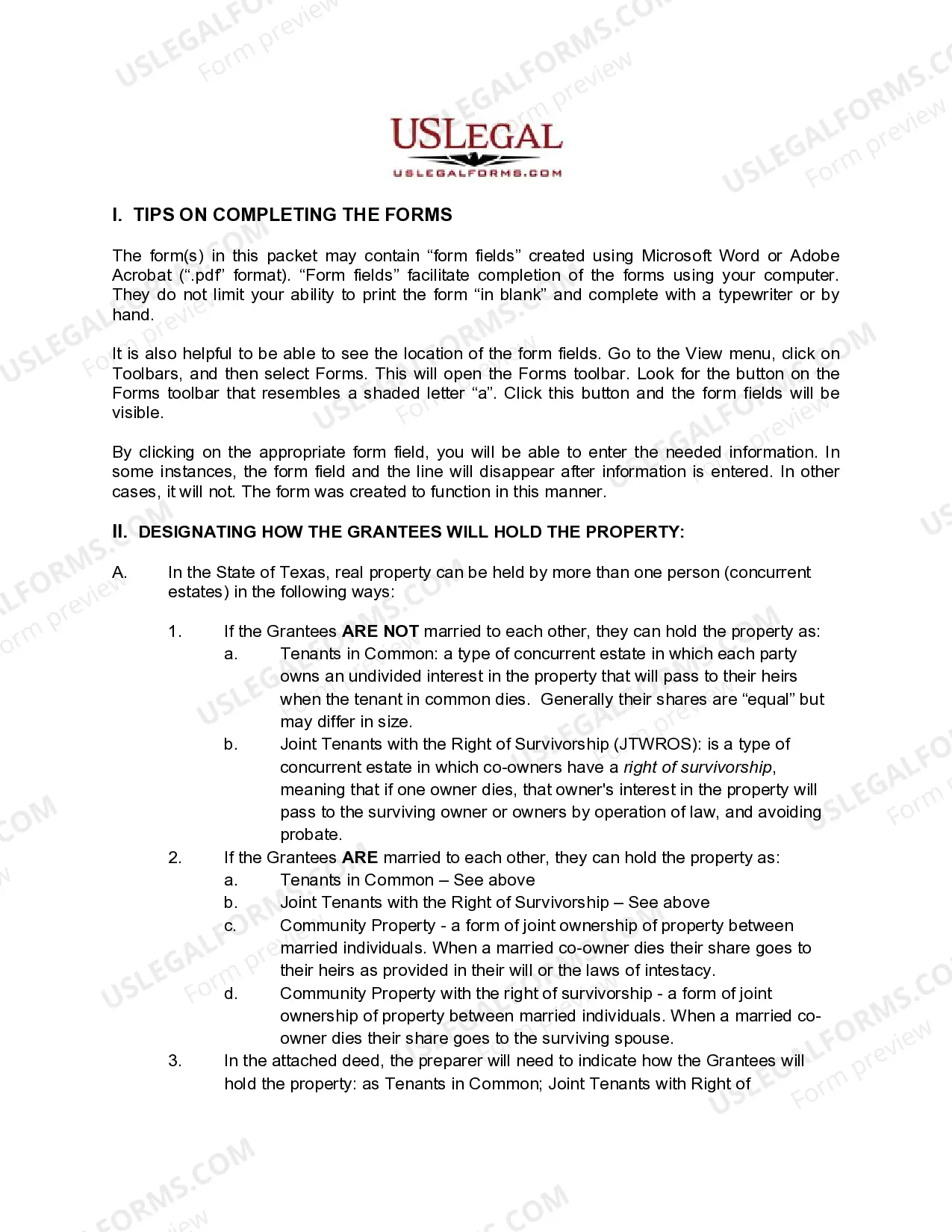
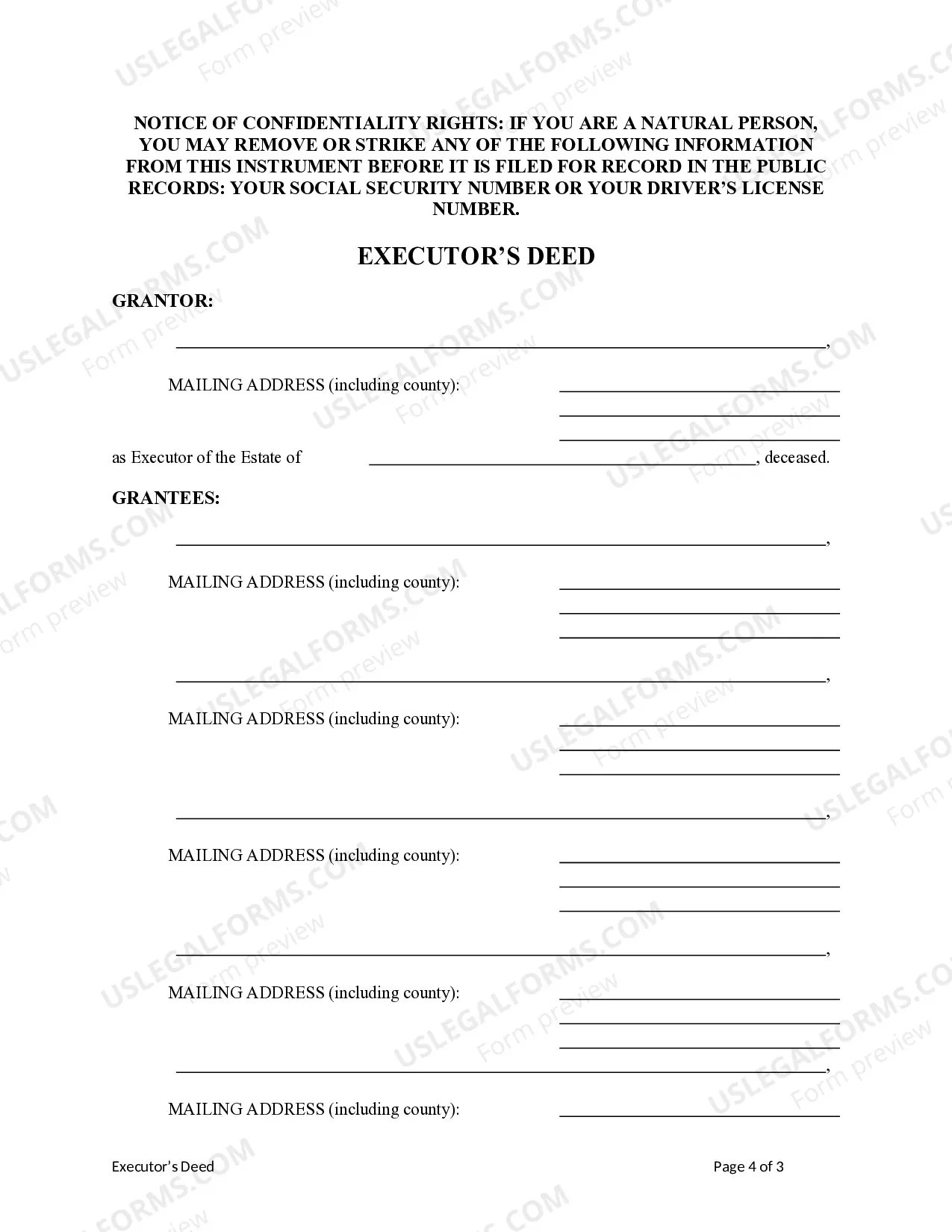
How to fill out Texas Executor's Deed - Estate To Five Beneficiaries?
Gaining access to legal document samples that align with federal and local regulations is crucial, and the web provides countless choices to select from.
However, what is the benefit of expending time searching for the correct Executor Of Estate Form Texas template online when the US Legal Forms digital library already hosts such documents in a single repository.
US Legal Forms stands as the largest internet-based legal repository with over 85,000 editable templates crafted by attorneys for any professional and personal situation.
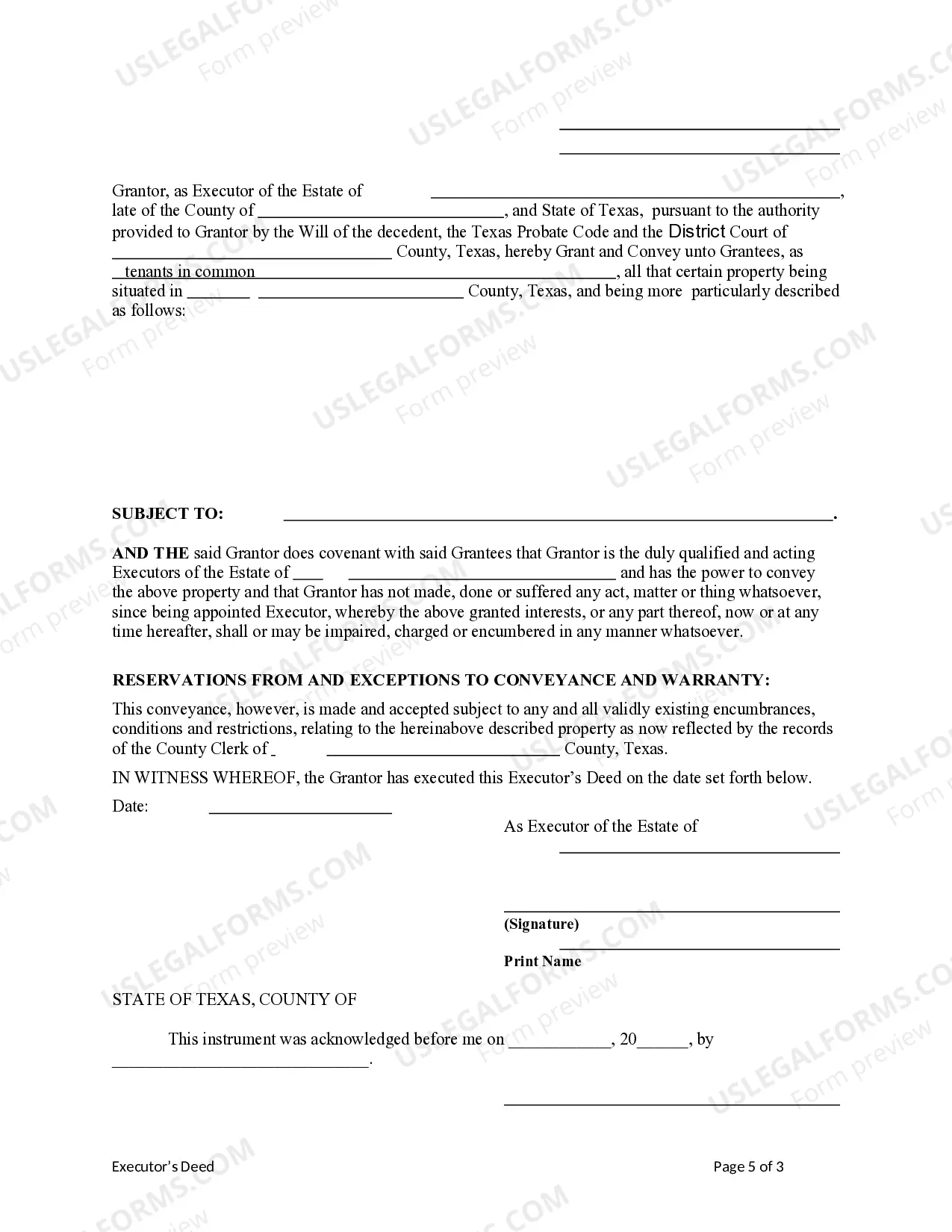
Explore the template using the Preview option or through the textual description to ensure it fulfills your needs.
- They are easy to navigate with all documents categorized by state and intended use.
- Our experts stay current with legal changes, ensuring that your forms are always updated and compliant when acquiring an Executor Of Estate Form Texas from our site.
- Acquiring an Executor Of Estate Form Texas is quick and straightforward for both existing and new clients.
- If you already possess an account with an active subscription, Log In and save the document sample you require in your preferred format.
- If you are a first-time visitor to our site, follow the steps below.
Form popularity
FAQ
Before the terms of a will can be accepted, the will must be proven in probate court. Probate is the court-supervised process of distributing the estate of a deceased person. A New Hampshire will must be filed with the probate court within 30 days of the decedent's death.
A POA must be signed by the principal or by another person in the principal's presence and at the principal's direction, and acknowledged by a notary public.
The public's right to know what its government is doing is a fundamental part of New Hampshire's democracy. New Hampshire's Constitution and the Right-to-Know law ensure that the public has reasonable access to meetings of public bodies and to governmental records.
Even if there are no assets, but there is a will, you must file the will, any codicils (amendments), and a death certificate with the Probate Court within thirty (30) days of the date of death.
However, New Hampshire allows you to make your will "self-proving" and you'll need to go to a notary if you want to do that. A self-proving will speeds up probate because the court can accept the will without contacting the witnesses who signed it.
The New Hampshire Right to Know Law is a series of statutes designed to guarantee that the public has access to public records of governmental bodies. Public records are any information created, accepted, or obtained by, or on behalf of, any public body.
In order for a will or codicil to be valid under New Hampshire law, it must comply with the requirements of the law. For instance, the will must be in writing, signed by the person whose will it is, and signed by two or more credible witnesses who must swear that the person's signature is genuine.
Probate Division | New Hampshire Judicial Branch.