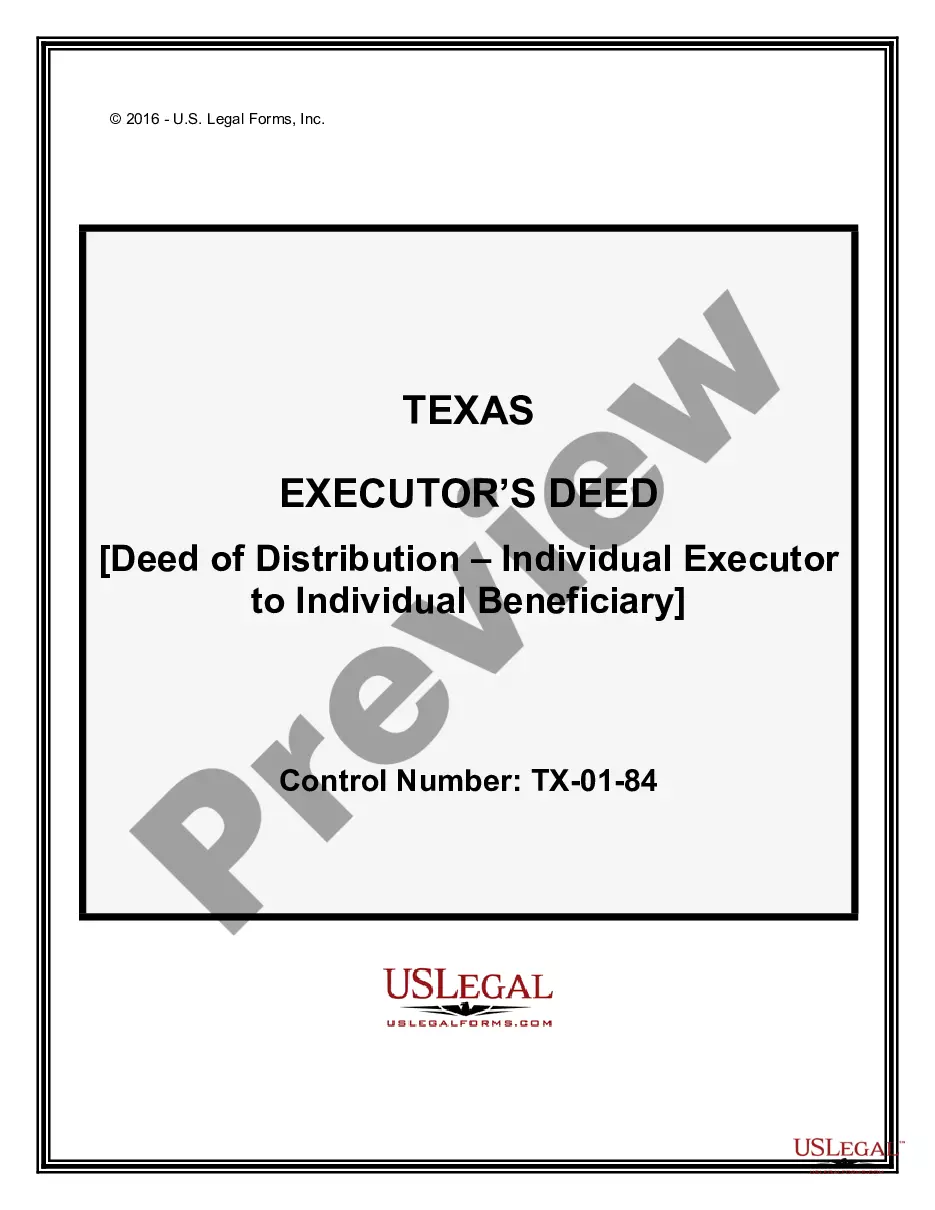
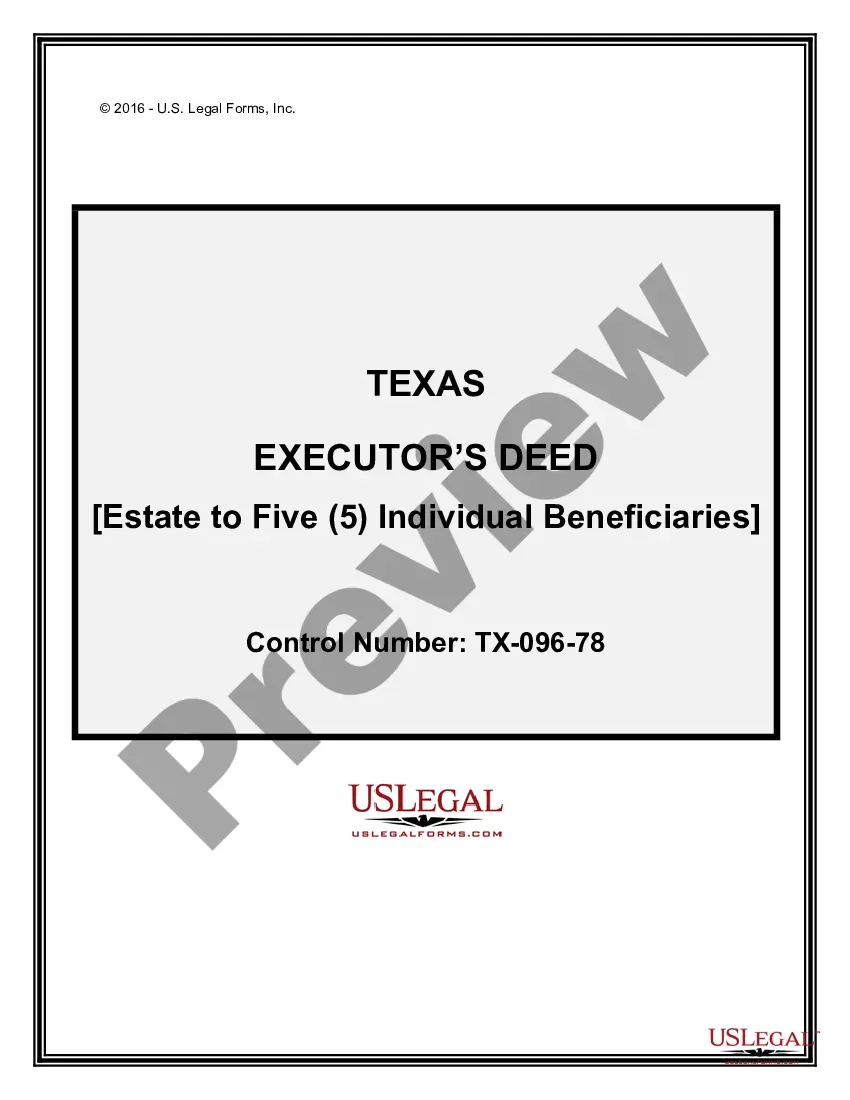
Executor Deed Executor For My Will
Description

Get your form ready online
Our built-in tools help you complete, sign, share, and store your documents in one place.
Make edits, fill in missing information, and update formatting in US Legal Forms—just like you would in MS Word.
Download a copy, print it, send it by email, or mail it via USPS—whatever works best for your next step.
Sign and collect signatures with our SignNow integration. Send to multiple recipients, set reminders, and more. Go Premium to unlock E-Sign.
If this form requires notarization, complete it online through a secure video call—no need to meet a notary in person or wait for an appointment.
We protect your documents and personal data by following strict security and privacy standards.

Make edits, fill in missing information, and update formatting in US Legal Forms—just like you would in MS Word.

Download a copy, print it, send it by email, or mail it via USPS—whatever works best for your next step.

Sign and collect signatures with our SignNow integration. Send to multiple recipients, set reminders, and more. Go Premium to unlock E-Sign.

If this form requires notarization, complete it online through a secure video call—no need to meet a notary in person or wait for an appointment.

We protect your documents and personal data by following strict security and privacy standards.
Looking for another form?
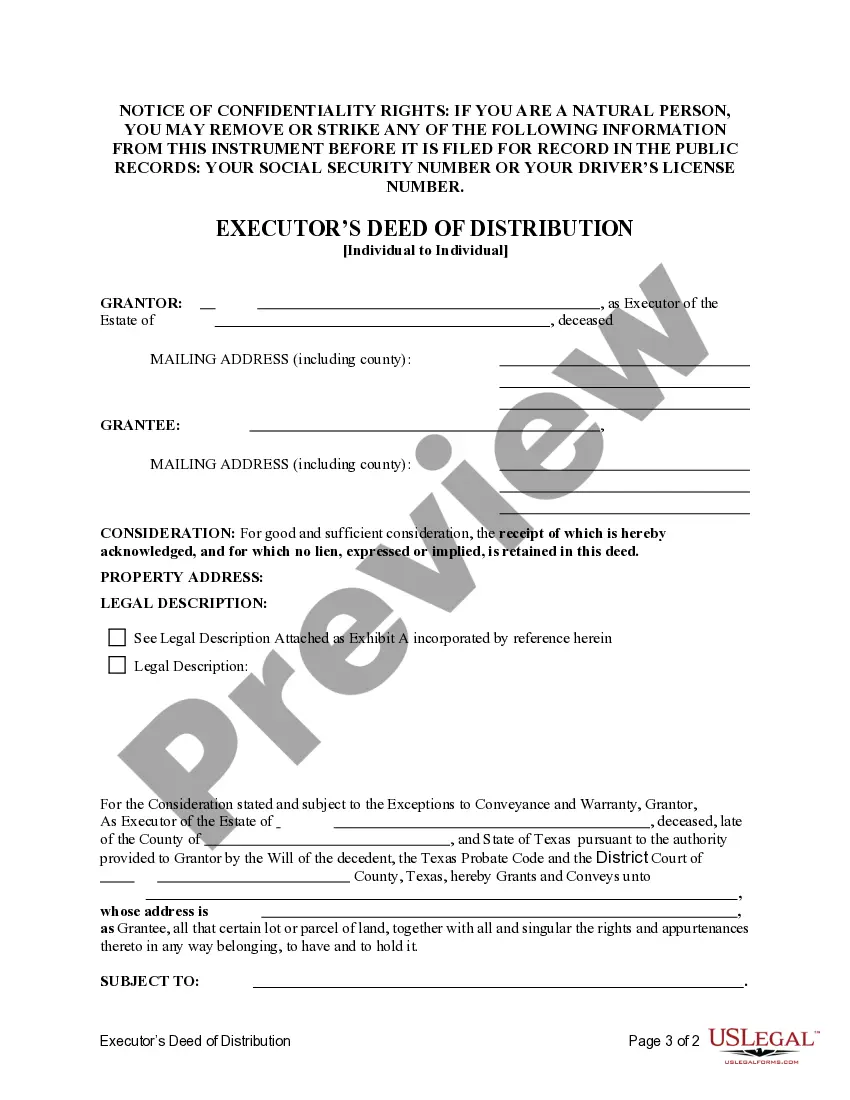
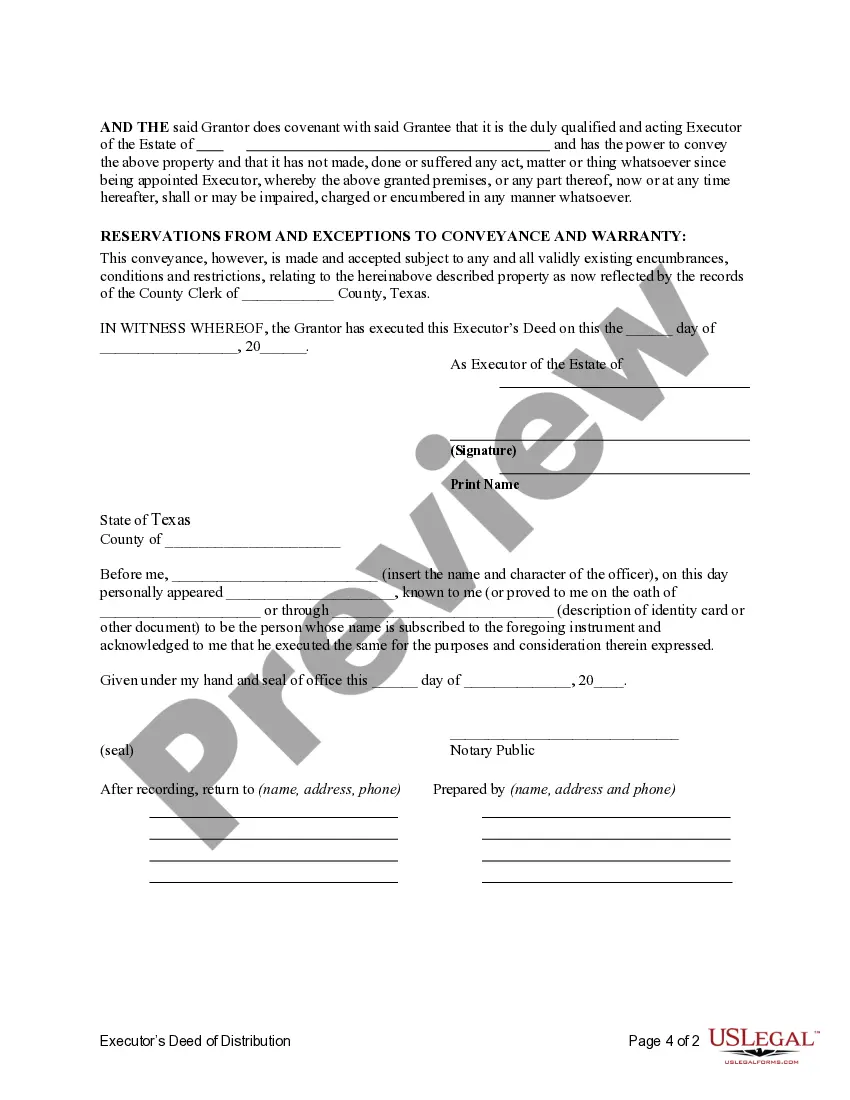
How to fill out Texas Executor's Deed Of Distribution - Individual Executor To Individual Beneficiary?
Creating legal documents from the ground up can frequently be daunting.
Certain circumstances may require extensive research and substantial financial investment.
If you seek a simpler and more economical method of preparing Executor Deed Executor For My Will or other documents without unnecessary complications, US Legal Forms is always available to assist you.
Our online collection of over 85,000 current legal forms encompasses nearly every aspect of your financial, legal, and personal affairs.
Review the form preview and descriptions to ensure you have the correct document. Verify that the form you select meets the criteria of your state and county. Choose the most appropriate subscription option to acquire the Executor Deed Executor For My Will. Download the document, then complete, sign, and print it. US Legal Forms enjoys an impeccable reputation and over 25 years of experience. Join us today and make document completion a straightforward and efficient process!
- With just a few clicks, you can immediately access state- and county-specific forms meticulously assembled for you by our legal professionals.
- Utilize our website whenever you require dependable and trustworthy services to swiftly find and acquire the Executor Deed Executor For My Will.
- If you’re already familiar with our services and have previously registered an account with us, simply Log In to your account, choose the form, and download it or re-download it anytime in the My documents section.
- Don’t have an account? No problem. Setting it up takes just a few minutes, allowing you to explore the library.
- However, before you proceed to download Executor Deed Executor For My Will, consider these suggestions.
Form popularity
FAQ
Canadian Executors are typically paid between 3% and 5% of the estate for their efforts. The final percentage amount changes depending on the province and specific estate circumstances, such as: Size of the estate. Care and responsibility involved.
What is an executor? Things you need to know How the job starts. The first step is to locate a copy of the deceased's most recent Will. ... Valuing and safeguarding estate assets. ... Tracking down and talking to beneficiaries. ... Administering the estate. ... Distribution of assets. ... Bringing in professionals.
Can an executor of a will be a beneficiary? Yes, the executor of the estate also can be a beneficiary of the will, and often is. Many people will select one of their grown children to be their executor.
Can the executor of an estate also be a beneficiary? As long as there is no conflict of interest, the executor of a will can also be a beneficiary. In fact, this often occurs as it's common to pick a close family member or friend to be an executor.
An executor is the person who administers a person's estate upon their death. An executor is often named by the testator before their death, or else by a court. The primary duty is to carry out the wishes of the deceased person based on instructions spelled out in their will or trust documents.