Texas Managing Conservator With Other Parent
Description
Get your form ready online
Our built-in tools help you complete, sign, share, and store your documents in one place.
Make edits, fill in missing information, and update formatting in US Legal Forms—just like you would in MS Word.
Download a copy, print it, send it by email, or mail it via USPS—whatever works best for your next step.
Sign and collect signatures with our SignNow integration. Send to multiple recipients, set reminders, and more. Go Premium to unlock E-Sign.
If this form requires notarization, complete it online through a secure video call—no need to meet a notary in person or wait for an appointment.
We protect your documents and personal data by following strict security and privacy standards.

Make edits, fill in missing information, and update formatting in US Legal Forms—just like you would in MS Word.

Download a copy, print it, send it by email, or mail it via USPS—whatever works best for your next step.

Sign and collect signatures with our SignNow integration. Send to multiple recipients, set reminders, and more. Go Premium to unlock E-Sign.

If this form requires notarization, complete it online through a secure video call—no need to meet a notary in person or wait for an appointment.

We protect your documents and personal data by following strict security and privacy standards.
Looking for another form?







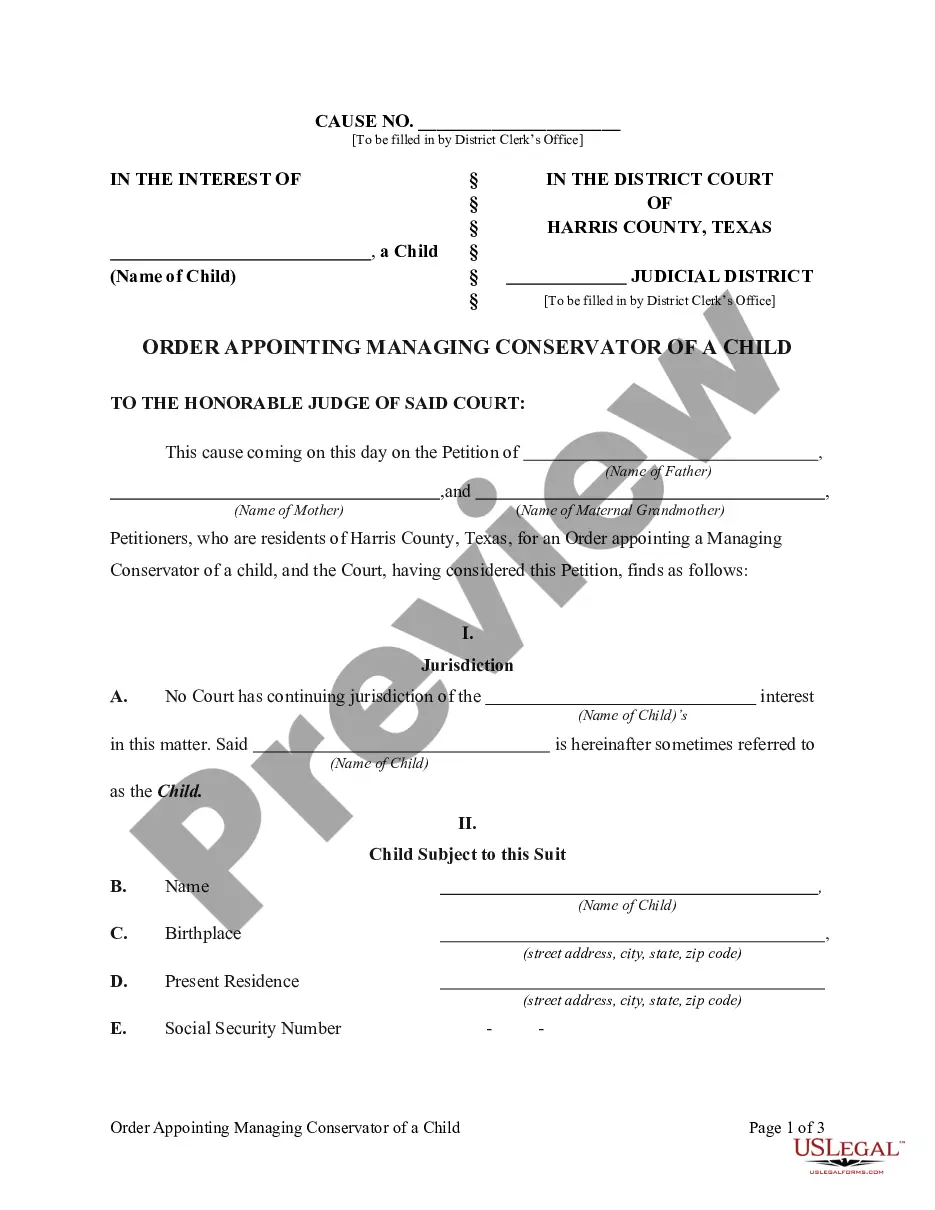
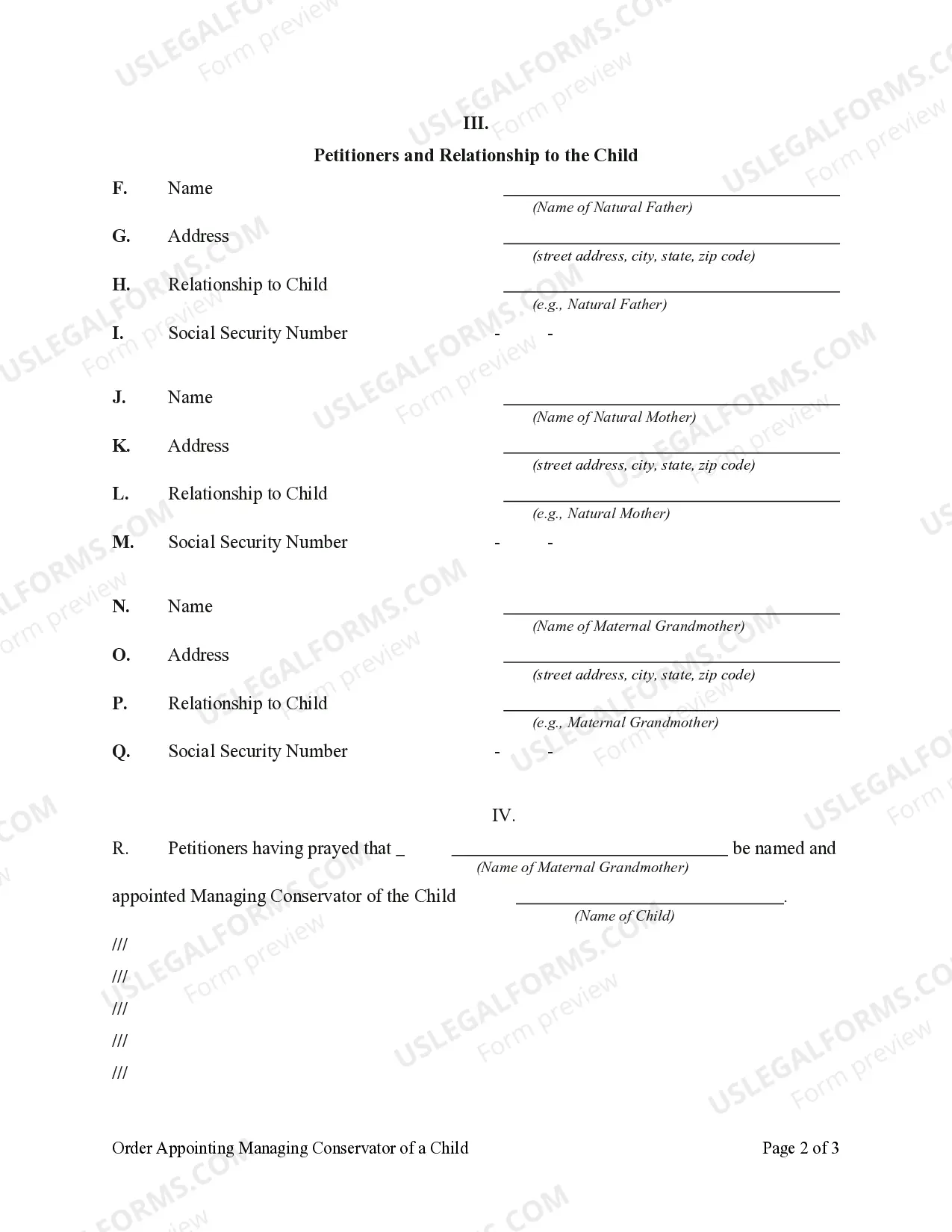
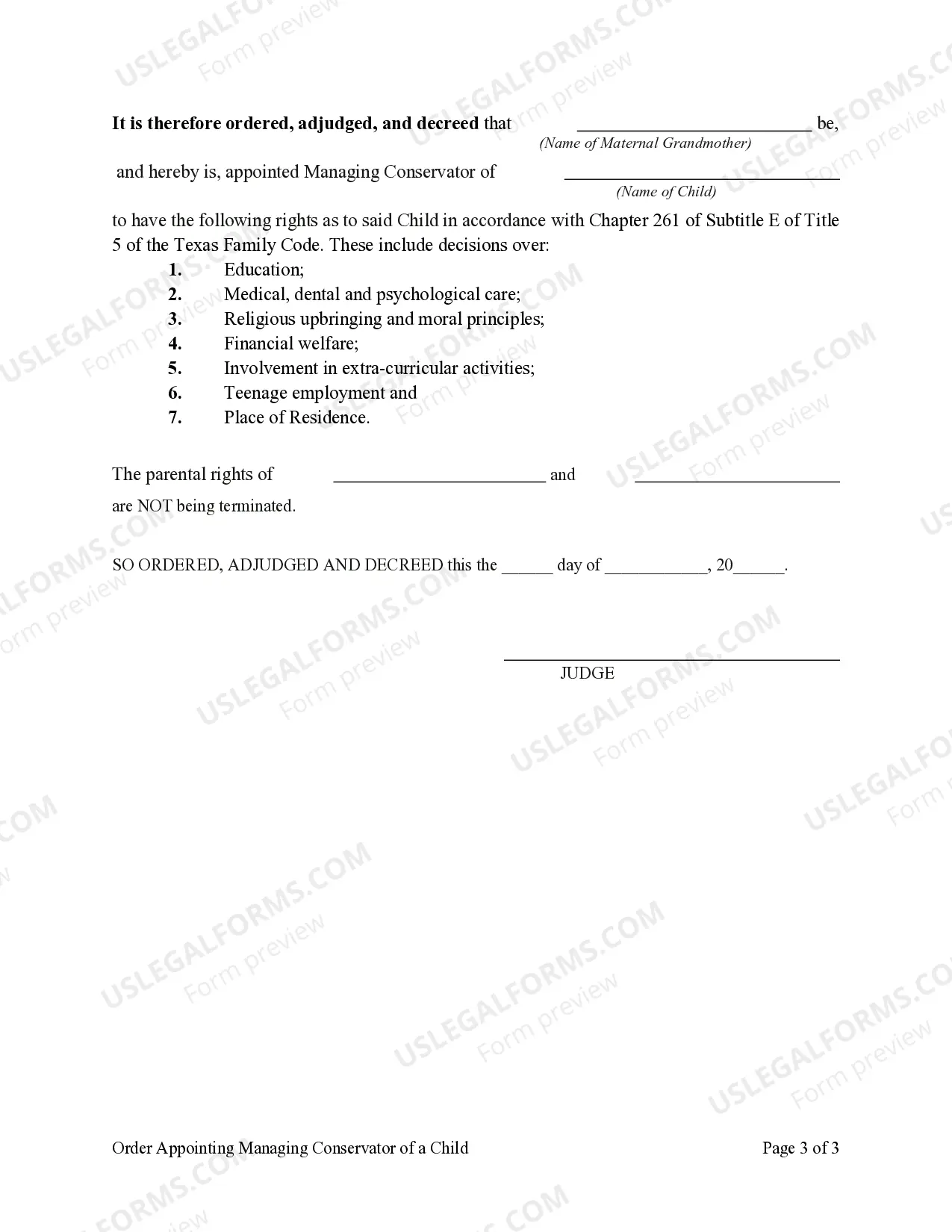
How to fill out Texas Order Appointing Managing Conservator Of A Child?
It’s clear that you cannot instantly become a legal expert, nor can you easily learn how to swiftly prepare Texas Managing Conservator With Other Parent without possessing a specialized foundation.
Drafting legal documents is a lengthy process necessitating specific education and expertise.
So why not entrust the creation of the Texas Managing Conservator With Other Parent to experienced professionals.
Preview it (if this feature is available) and read the accompanying description to see if Texas Managing Conservator With Other Parent is what you’re looking for.
Restart your search if you need any additional template.
- With US Legal Forms, one of the largest collections of legal documents, you can find everything from court filings to templates for internal business correspondence.
- We recognize how crucial it is to comply with and follow federal and state laws and regulations.
- That’s why, on our site, all documents are location-specific and current.
- Begin your journey on our website and acquire the form you require in just a few minutes.
- Discover the form you seek using the search bar at the top of the page.
Form popularity
FAQ
To secure sole managing conservatorship, you should present substantial evidence that supports your claim. This may include documentation of any negative behavior from the other parent, proof of your ability to care for the child, and witness testimonies if applicable. The court focuses on the child's best interests, so gathering reliable evidence is crucial. Consider exploring US Legal Forms for templates and guidance on collecting the right documentation.
Getting sole custody, or sole managing conservatorship, in Texas can be challenging, especially if the other parent contests your request. The court prioritizes the child’s best interests and evaluates various factors. You must present compelling evidence to show that this arrangement serves the child's welfare. Utilizing services like US Legal Forms can provide you with essential tools and information to strengthen your case.
While it is possible to pursue conservatorship without a lawyer, it is generally not advisable. The process can be complicated, and having legal guidance can ensure that you meet all requirements and deadlines. If you decide to go solo, consider using resources from platforms like US Legal Forms to access necessary documents and tips for your case. Proper preparation is key to achieving a favorable outcome.
Sole managing conservatorship in Texas does resemble full custody, but there are specific legal distinctions. The sole managing conservator has exclusive rights and duties regarding the child, while the other parent may still have visitation rights. Understanding this difference is crucial when navigating custody arrangements with the other parent. Clarifying these terms can help you make informed decisions.
To obtain sole managing conservatorship in Texas, you must first file a petition in court. You need to demonstrate that having you as the sole managing conservator is in the best interest of the child. Gather necessary documents, such as evidence of any issues with the other parent, to strengthen your case. Additionally, consider seeking assistance from resources like US Legal Forms to navigate the legal process smoothly.
To win sole managing conservatorship in Texas, you must demonstrate that it's in the best interest of the child. Factors include proving instability or harmful conditions faced by the child with the other parent. When seeking Texas managing conservator with other parent terms, it is essential to gather thorough evidence and document all relevant circumstances. Creating and submitting the right legal forms through a trusted platform can significantly ease this process.
In Texas, the family code addressing joint managing conservatorship is found in Section 153.131. This section establishes that both parents can have the right to make important decisions regarding the child's upbringing. When considering Texas managing conservator with other parent, it's crucial to understand how shared responsibilities can promote a stable environment for your child. Utilizing the right legal forms can help ensure that this arrangement is clear and beneficial for all parties involved.
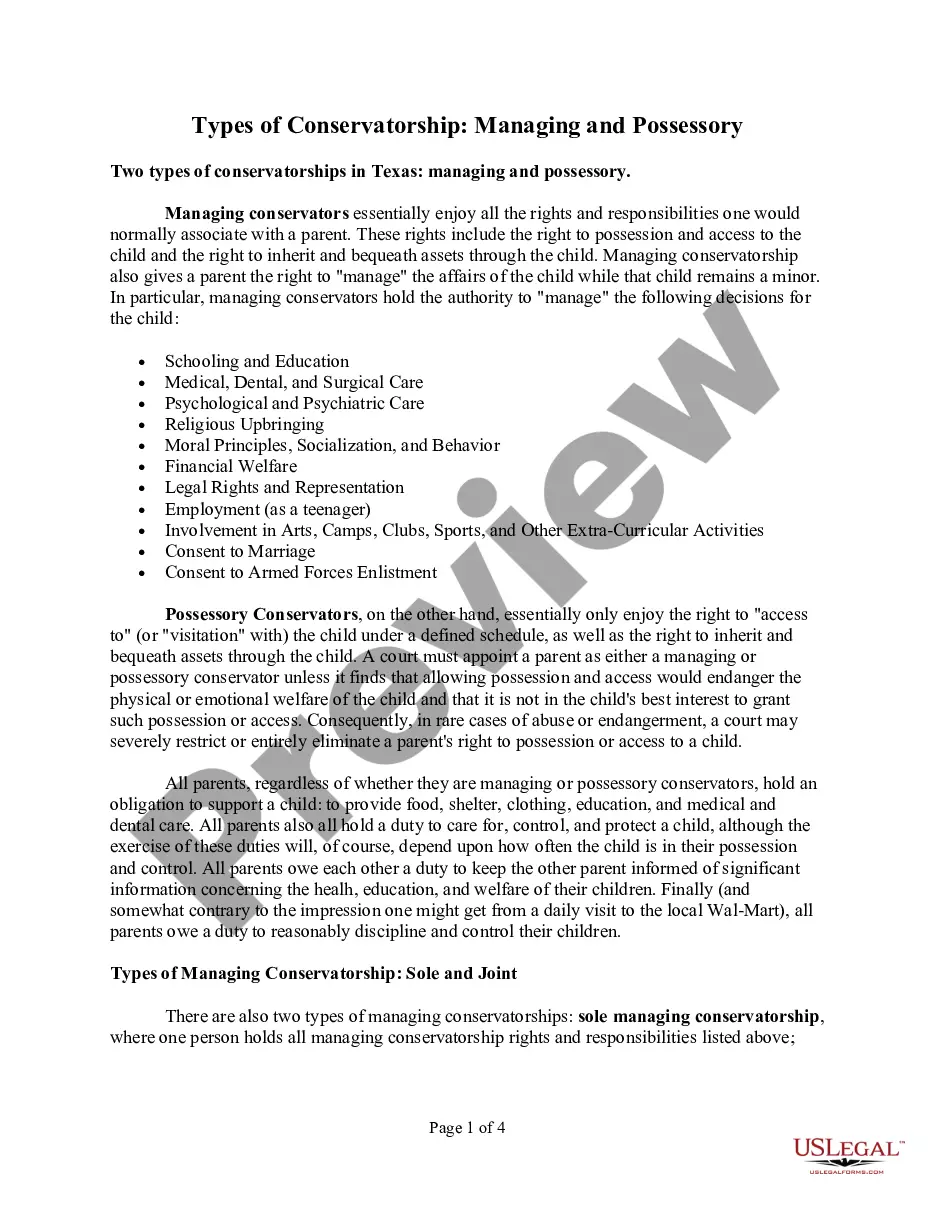
'Joint managing conservators' refers to a custody arrangement in which both parents share responsibilities for their child in Texas. Each parent, or the Texas managing conservator with other parent, plays a crucial role in decision-making, guiding the child's upbringing together. This arrangement encourages cooperation and tends to benefit the child's overall development when executed properly. Understanding the implications of this designation can greatly help parents navigate their responsibilities.
One of the biggest mistakes in a custody battle is failing to prioritize the child's needs over personal conflicts. When tension escalates, parents may focus more on winning rather than cooperating with the Texas managing conservator with other parent. This can damage relationships and ultimately affect the child's well-being. Keeping communication open and anchored in the child's best interest is vital for a successful outcome.
In Texas, a joint managing conservatorship means that both parents share the rights and responsibilities of raising their child. This arrangement works towards the best interests of the child, allowing collaboration between the Texas managing conservator with other parent. While both parents may have a say in major decisions, the final authority might depend on specific arrangements made in court. This structure fosters a balanced approach to parenting.