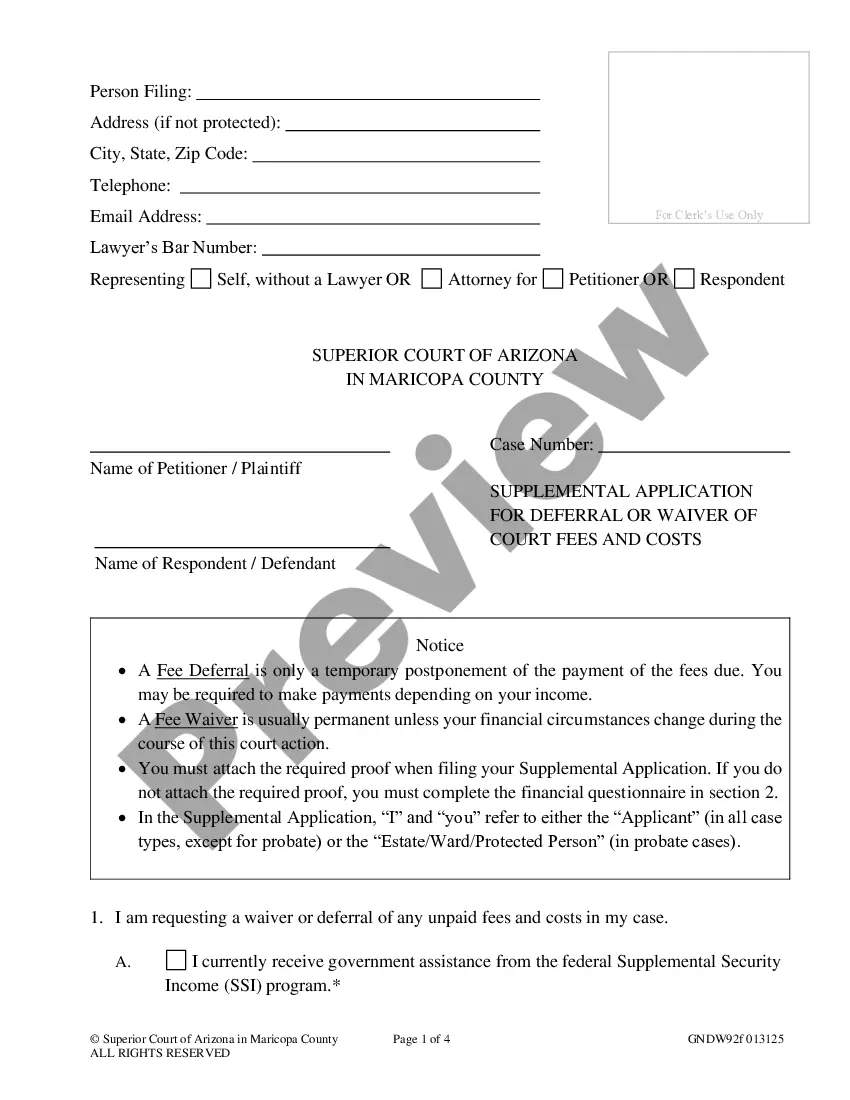
Management Agreement between Condominium Association and Management
What is this form?
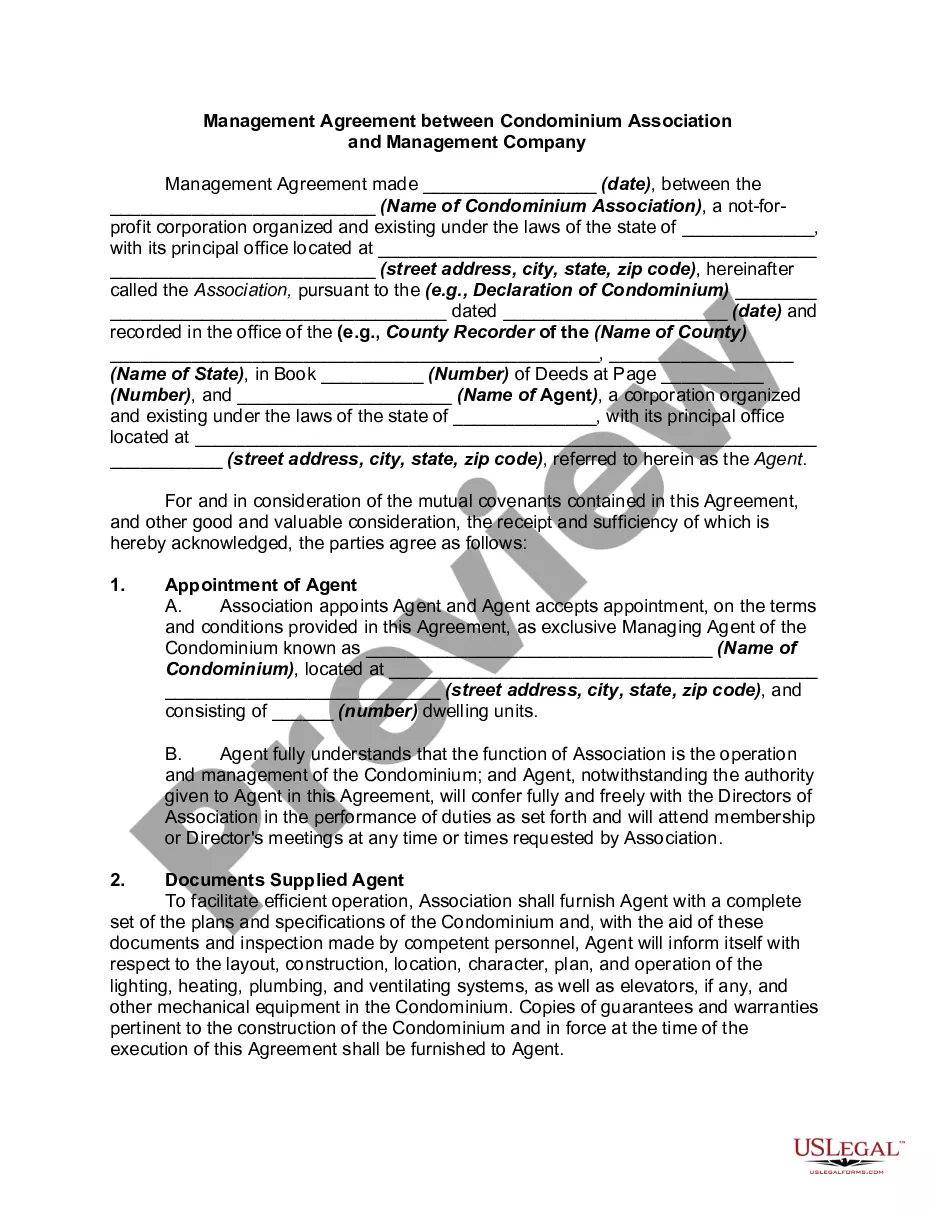
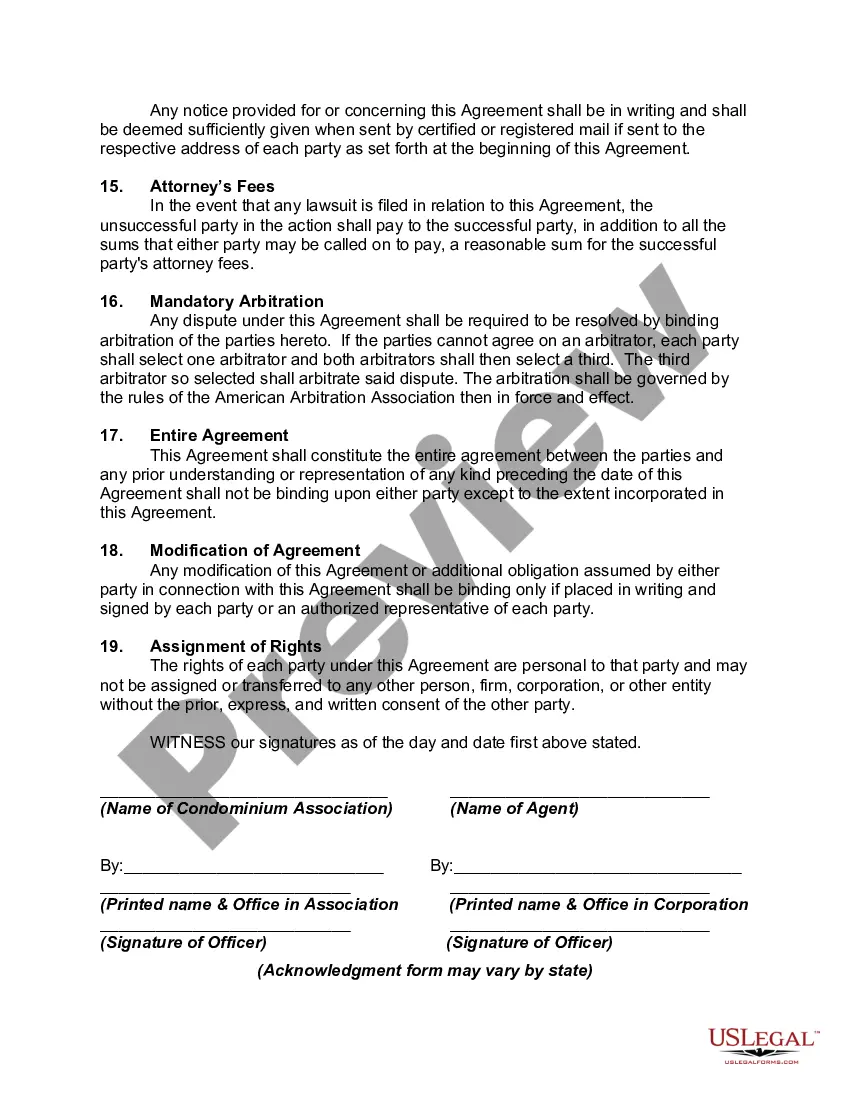
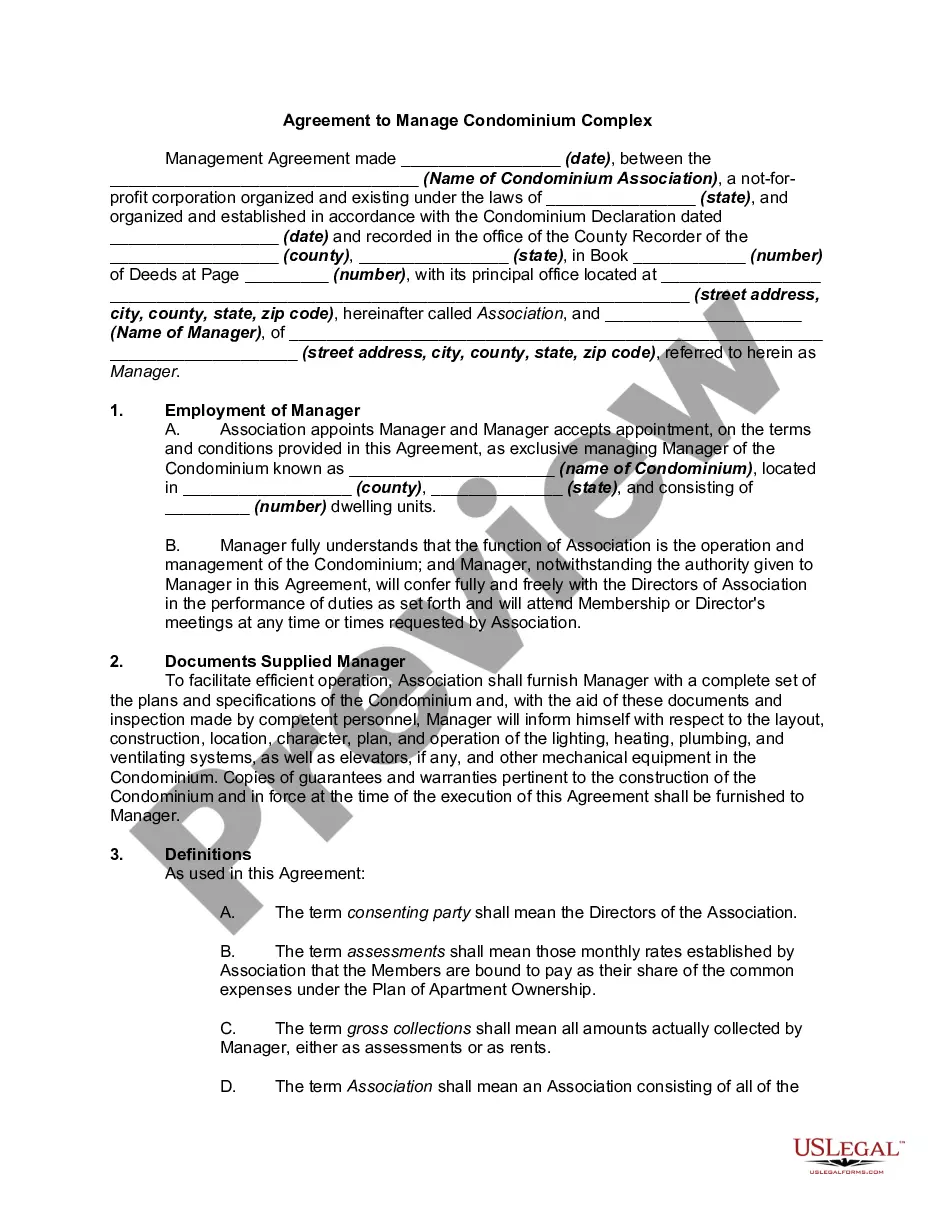
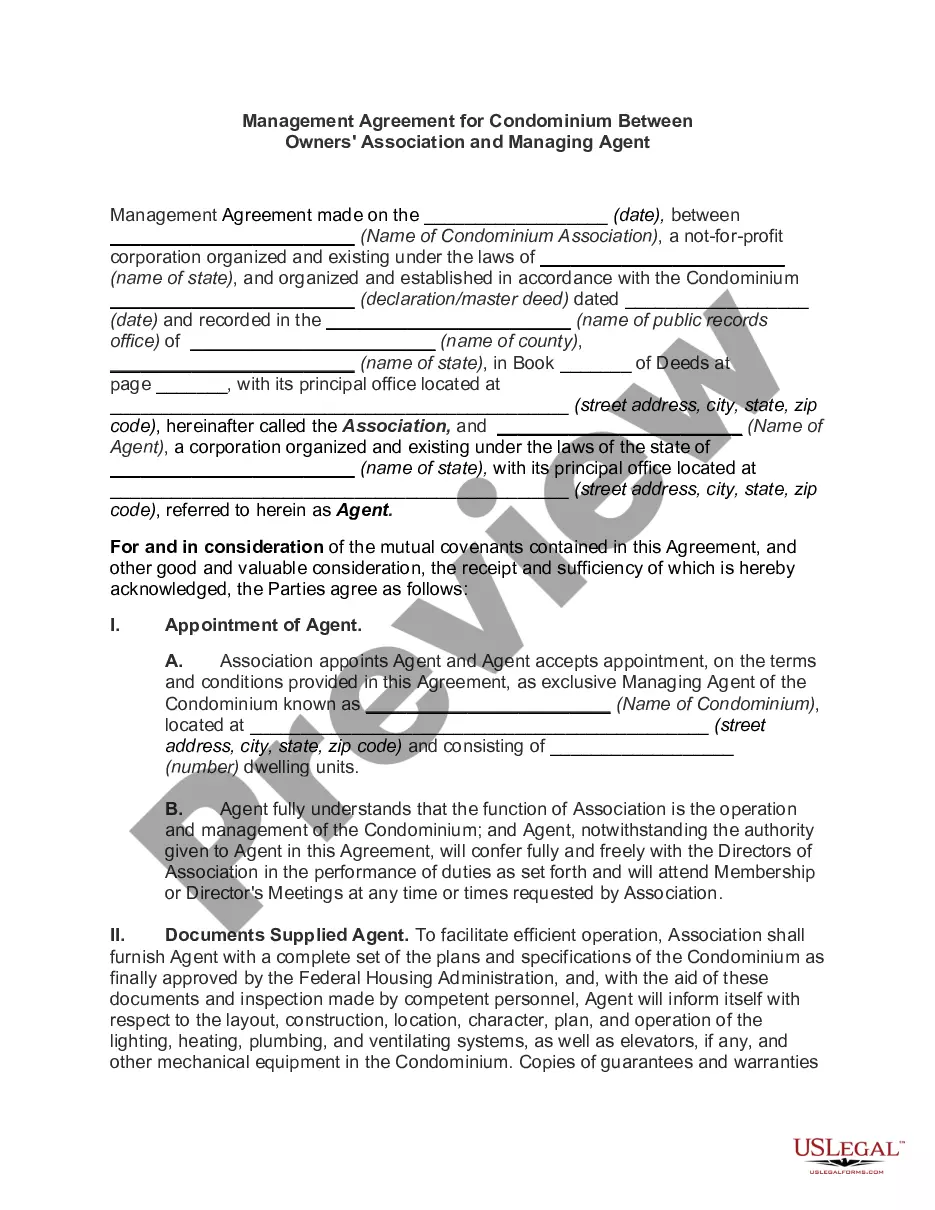
The Management Agreement between Condominium Association and Management is a legal document that establishes a formal relationship between a condominium association and a management agent. This form outlines the roles, responsibilities, and terms of service for managing the common areas and facilities of a condominium. It differs from similar forms by specifically addressing the unique needs of condominium associations, which manage shared spaces among multiple property owners.
Key parts of this document
- Appointment of Agent: Designation of the management agent responsible for the condominium.
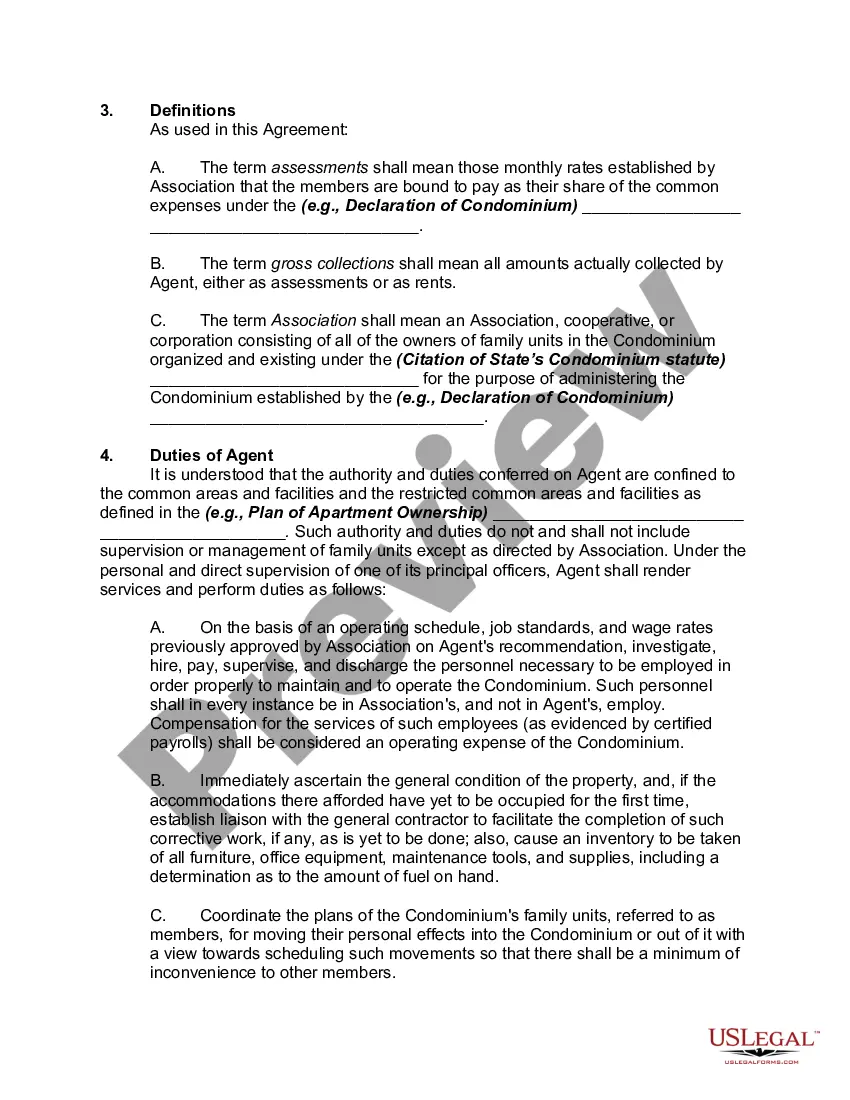
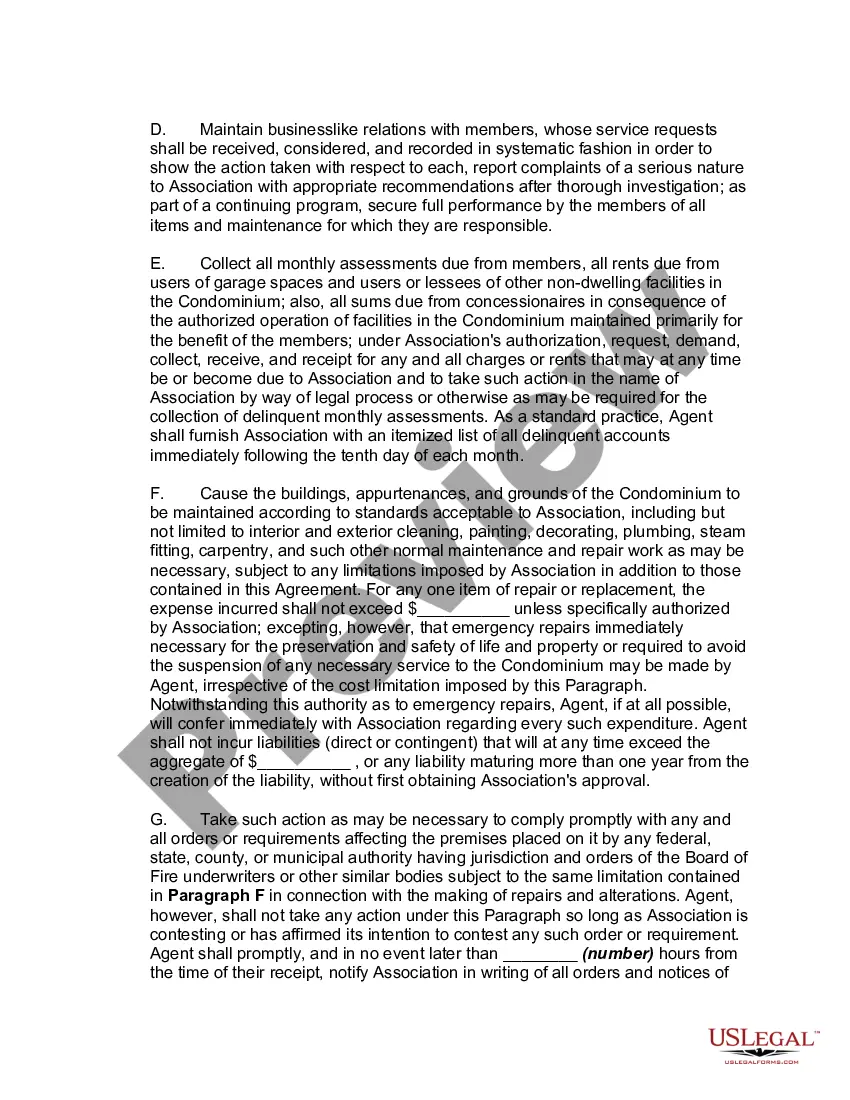
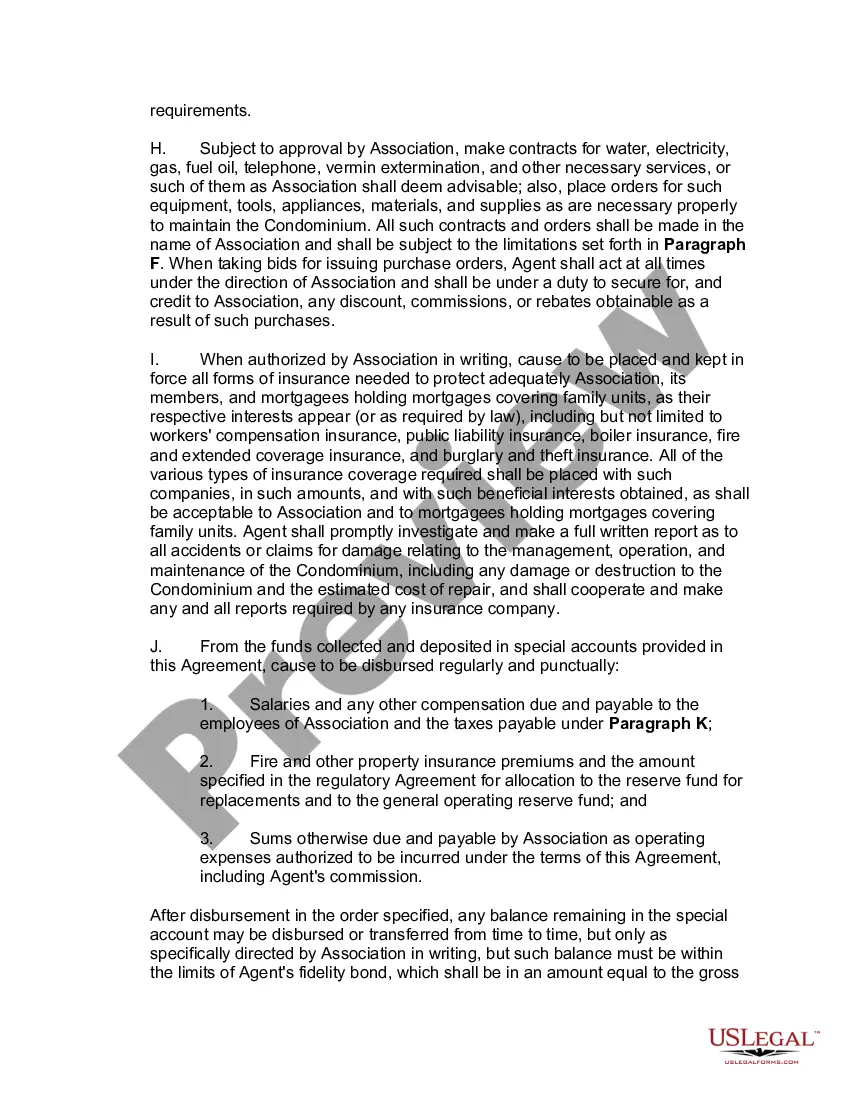
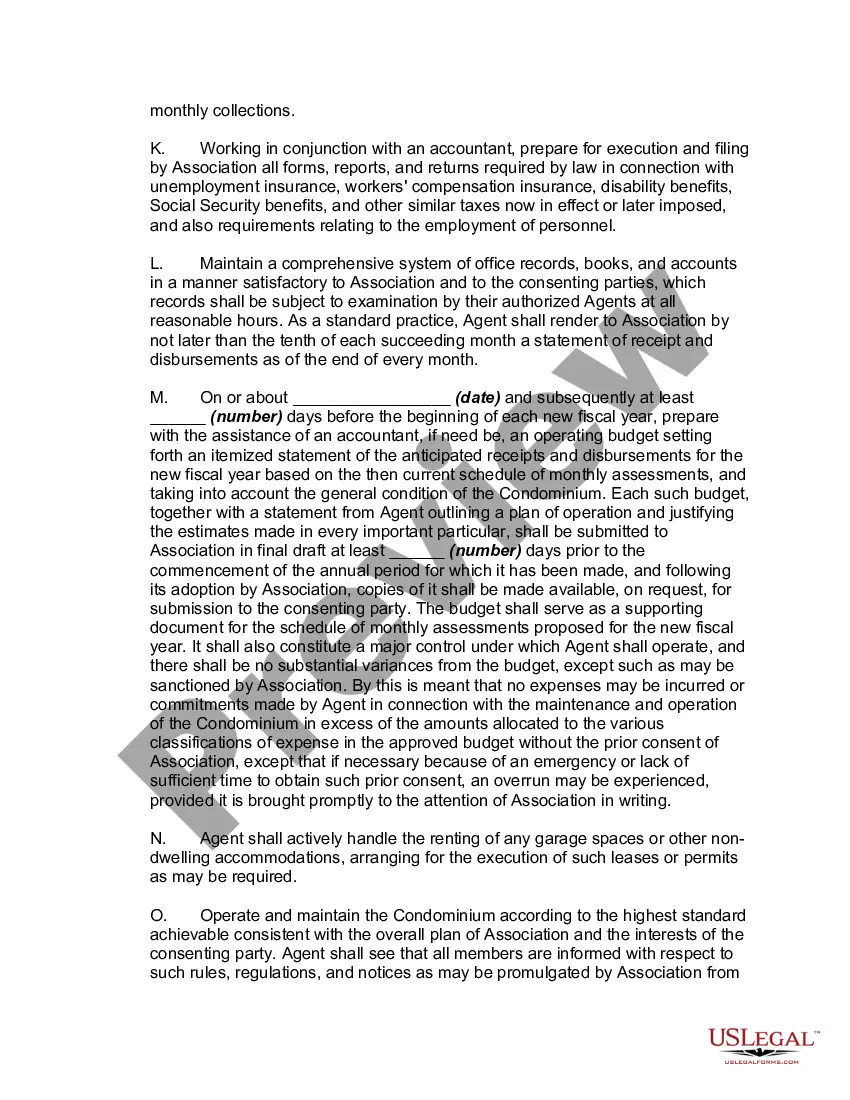
- Duties of Agent: Detailed responsibilities, including maintenance, financial management, and hiring personnel.
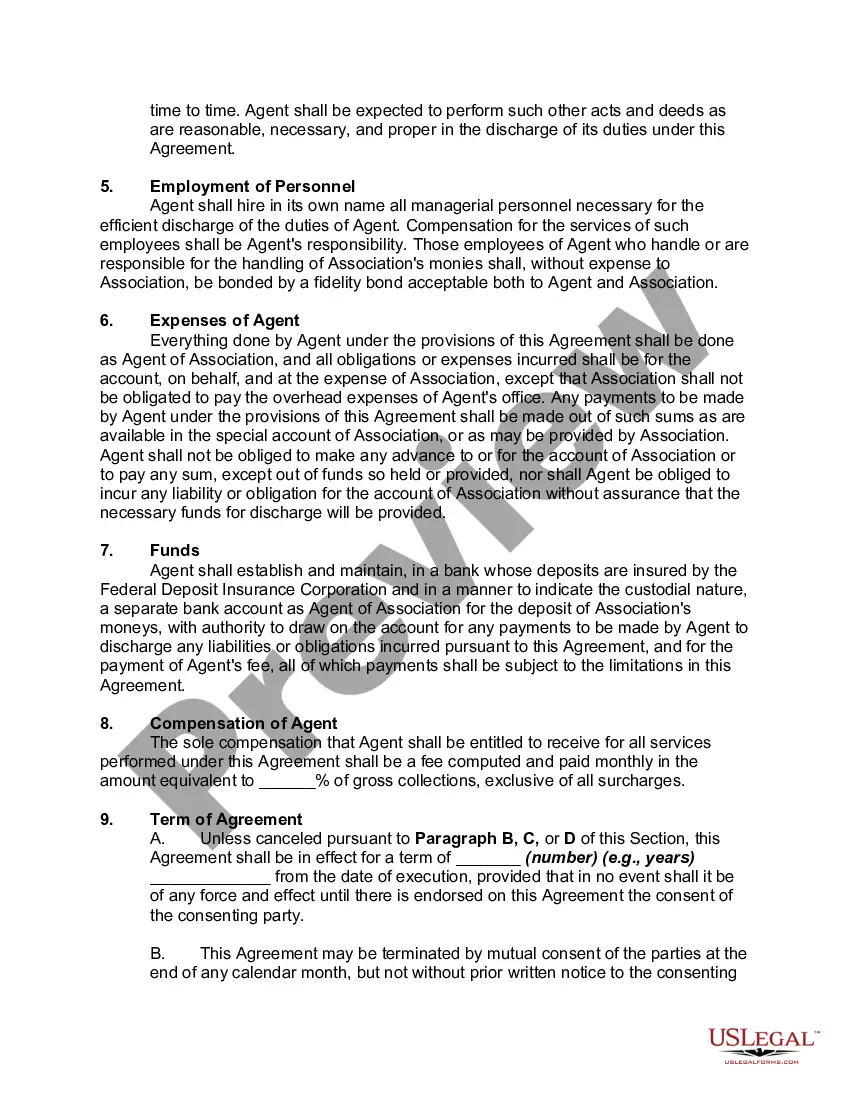
- Compensation of Agent: Terms for payment for the services rendered by the management agent.
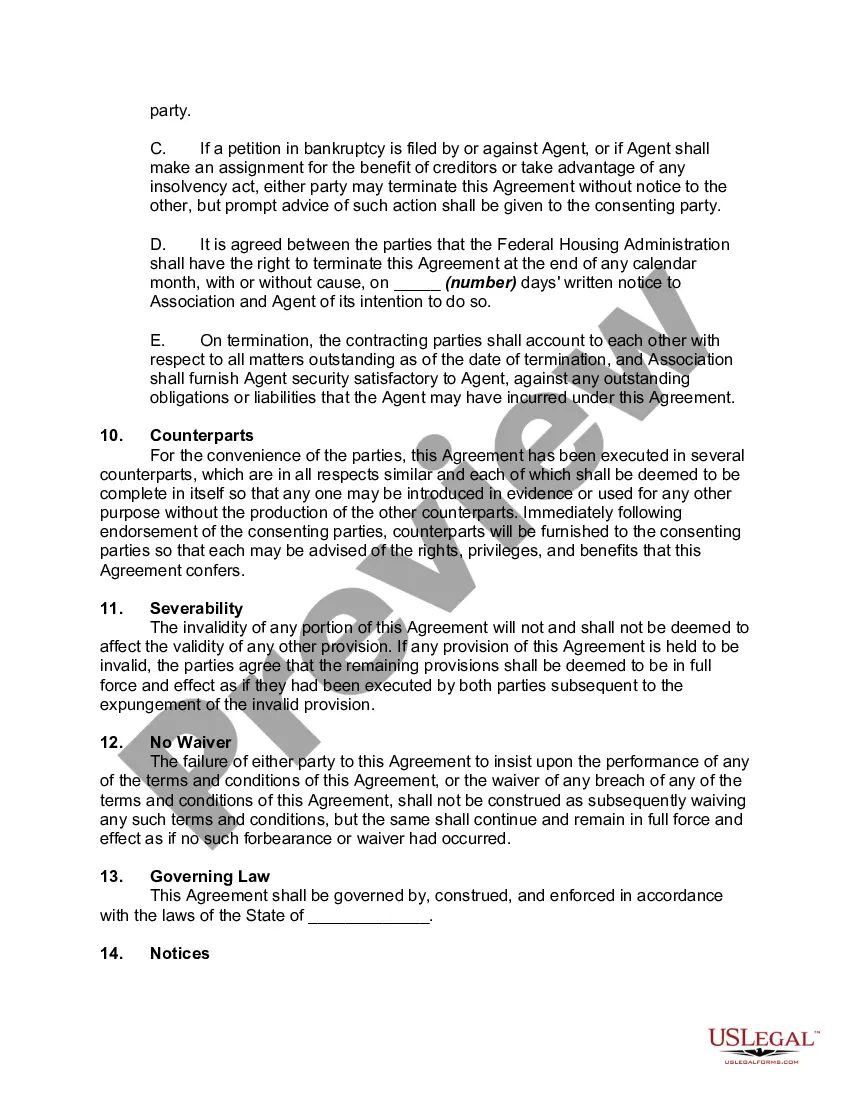
- Term of Agreement: Specified duration for which the agreement is valid, along with termination provisions.
- State of Governing Law: Jurisdiction determining the legal framework for the agreement.
When this form is needed
This management agreement is used when a condominium association needs to hire a professional management agent to oversee the operation and maintenance of its property. It is appropriate for newly established condominiums or existing ones seeking to transfer management responsibilities to a qualified agent. This form is essential to clarify expectations and responsibilities, thereby preventing disputes between the association and the management agent.
Who should use this form
- Condominium associations looking to appoint a management agent.
- Management companies seeking to formalize their role with a condominium association.
- Property owners within the condominium who need to ensure proper management and maintenance of common areas.
Completing this form step by step
- Identify the parties: Enter the name of the condominium association and the management agent.
- Specify the property: Include details about the condominium, such as its address and number of units.
- Detail the term: Clearly state the duration of the management agreement and any renewal terms.
- Outline duties: Fill in the specific responsibilities the agent will undertake as defined in the agreement.
- List compensation: Indicate how the management agent will be compensated for their services.
Does this document require notarization?
Notarization is not commonly needed for this form. However, certain documents or local rules may make it necessary. Our notarization service, powered by Notarize, allows you to finalize it securely online anytime, day or night.
Get your form ready online
Our built-in tools help you complete, sign, share, and store your documents in one place.
Make edits, fill in missing information, and update formatting in US Legal Forms—just like you would in MS Word.
Download a copy, print it, send it by email, or mail it via USPS—whatever works best for your next step.
Sign and collect signatures with our SignNow integration. Send to multiple recipients, set reminders, and more. Go Premium to unlock E-Sign.
If this form requires notarization, complete it online through a secure video call—no need to meet a notary in person or wait for an appointment.
We protect your documents and personal data by following strict security and privacy standards.

Make edits, fill in missing information, and update formatting in US Legal Forms—just like you would in MS Word.

Download a copy, print it, send it by email, or mail it via USPS—whatever works best for your next step.

Sign and collect signatures with our SignNow integration. Send to multiple recipients, set reminders, and more. Go Premium to unlock E-Sign.

If this form requires notarization, complete it online through a secure video call—no need to meet a notary in person or wait for an appointment.

We protect your documents and personal data by following strict security and privacy standards.
Common mistakes to avoid
- Failing to specify the exact duties of the management agent, leading to misunderstandings.
- Not clearly defining the term of the agreement and conditions for termination.
- Omitting important details about property maintenance and financial management responsibilities.
Why use this form online
- Convenience of downloading and filling out the form from home.
- Editability to fit specific needs without legal complexities.
- Access to legally compliant templates drafted by licensed attorneys.
What to keep in mind
- The Management Agreement is essential for defining the roles and responsibilities between a condominium association and its management agent.
- It should be completed carefully to avoid common pitfalls that may lead to future disputes.
- Customization according to state laws enhances the validity of the agreement.
- Using the form online streamlines the process and ensures access to quality legal documentation.
Looking for another form?
Form popularity
FAQ
Full-service property management generally includes the following services: rent collection, payment of bills, evictions, tenant screening, advertising vacant units, ongoing maintenance to building exterior and landscaping, and drawing up tenancy or lease agreements.
Contracts can range from 1-3 years, but are usually on a year to year basis. You can expect to pay roughly $10 to $20 per unit, per month, for management services. Larger communities may be charged lower per door rates because of the way administrative efforts scale.
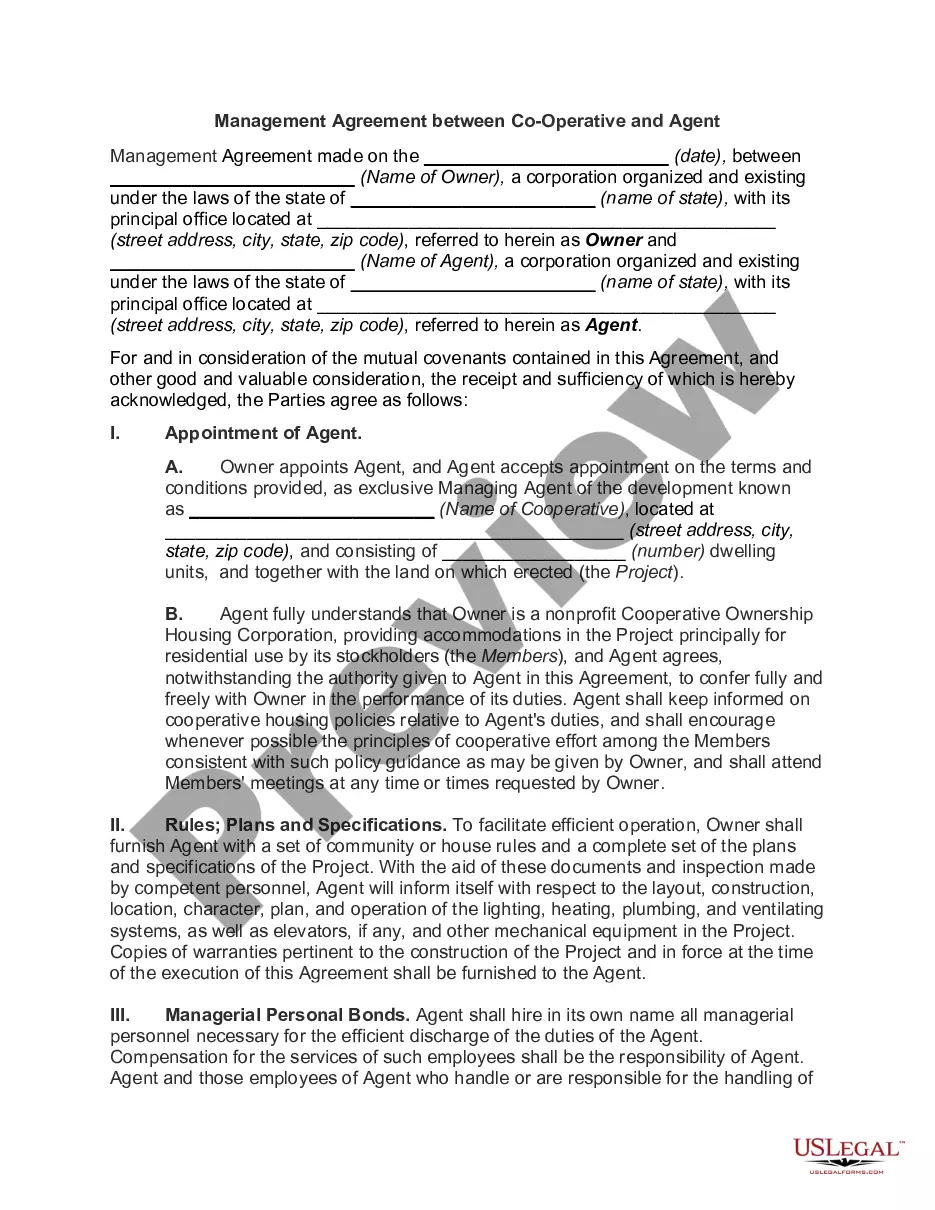
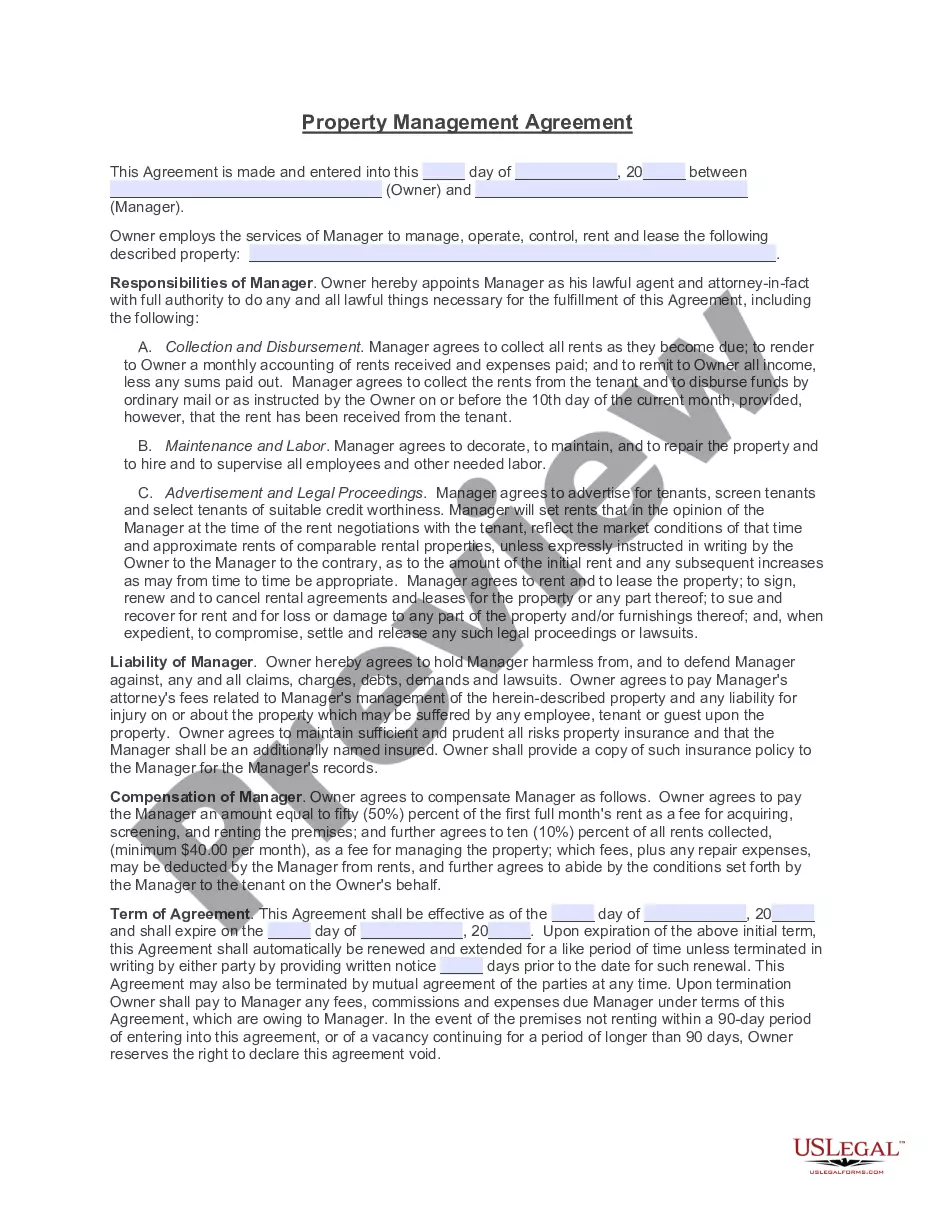
A property management agreement is a contract between a property owner and the company or person hired to manage the property.A well-drafted agreement includes a clause about the type of insurance coverage a building owner must carry for the building.
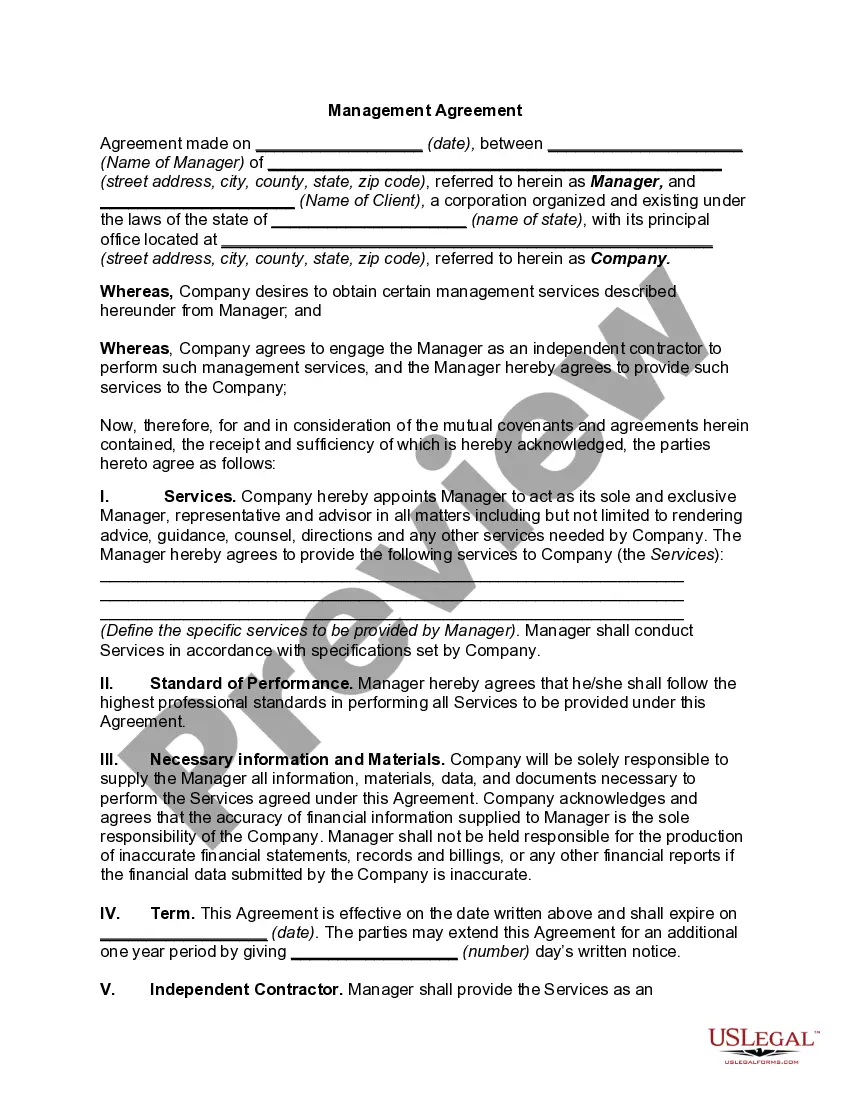
A management agreement is a binding contract that establishes the manager's legal authority over the operation of a given property. The manager usually is an agent for the owner, serving as the owner's fiduciary or trustee of the owner's funds and assets associated with the property.
When an investor comes to you with a property to manage it is important to have a property management agreement that is comprehensive and allows you to take care of the property, make profits for your property management company, and to be able to make a profit for the owner of the property.
Tenant screening. Rental applications. Rent collection and online payments. Communicating with tenants. Maintenance requests. Signing or renewing leases. Advertising properties. Income and expense tracking.
What Does a Property Management Company Do? Management companies deal directly with prospects and tenants, saving you time and worry over marketing your rentals, collecting rent, handling maintenance and repair issues, responding to tenant complaints, and even pursuing evictions.
A condo's management company is responsible for maintaining the property and ensuring that it is up to environmental standards, communicating with homeowners about CC&R violations, managing the condos' finances, handling questions and concerns from homeowners, obtaining and managing the condo's insurance policy and