Arizona Order Requiring Final Accounting and Petition for Distribution of Estate
Overview of this form
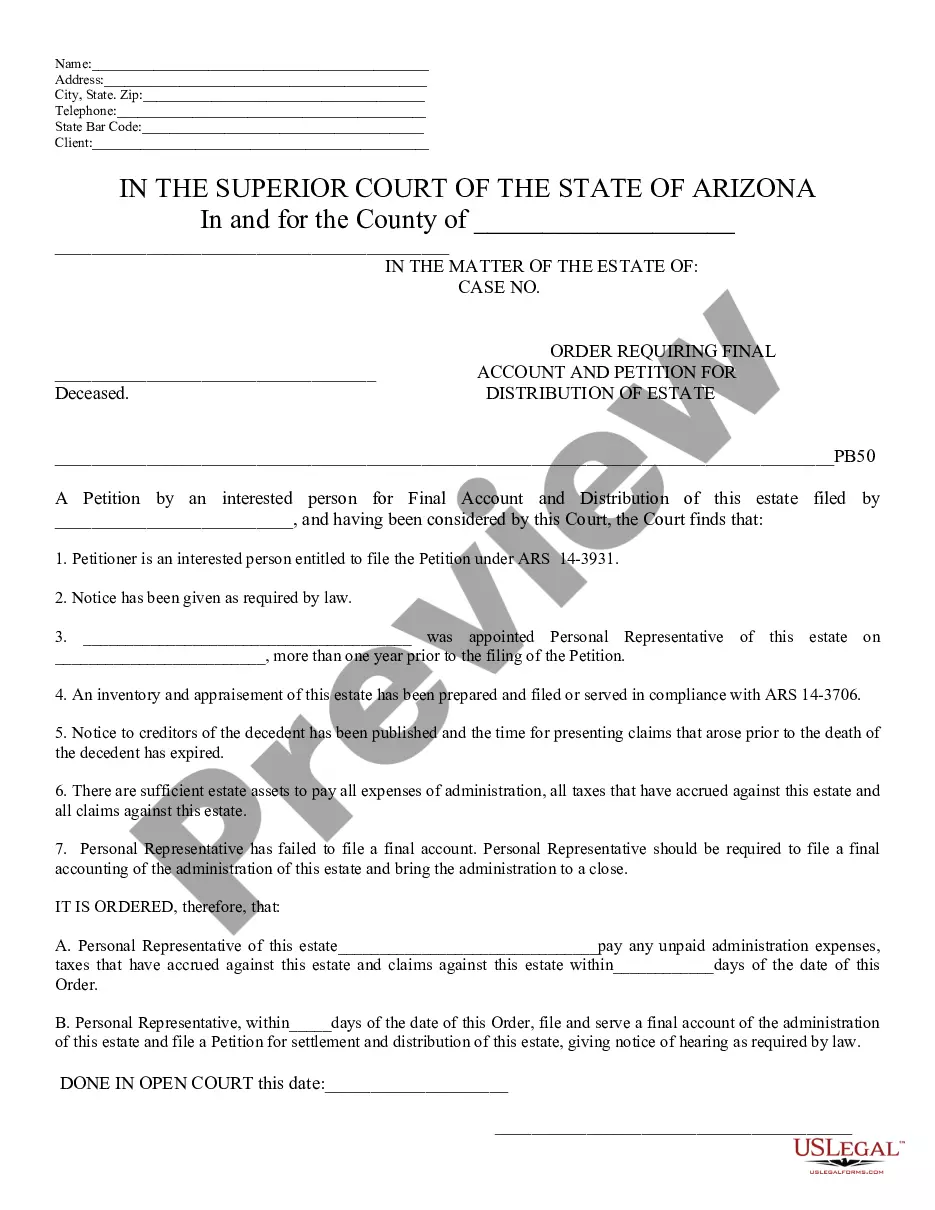
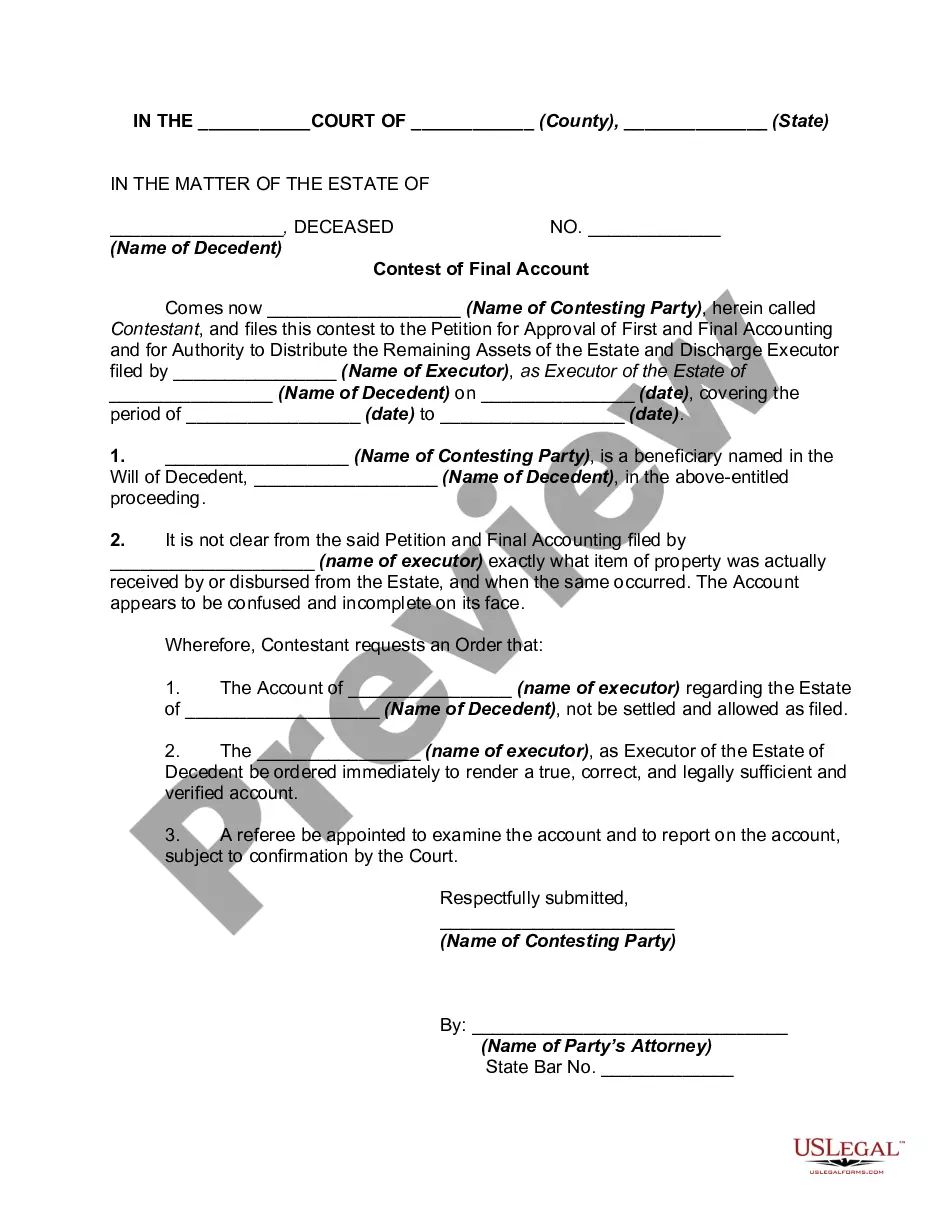
The Order Requiring Final Accounting and Petition for Distribution of Estate is a legal document issued by a court. It mandates that the personal representative of an estate submit a final accounting and request the distribution of the estate's assets. This order is essential in ensuring all debts are settled and the estate is properly distributed to the beneficiaries, differentiating it from other estate-related forms which may not require a final accounting or specific distribution instructions.
Main sections of this form
- Petitioner's details, including name and contact information
- Confirmation of the personal representative's appointment and responsibilities
- Notice of whether creditors have been notified and claims settled
- Instructions for the personal representative regarding the final accounting and distribution
- Signature line for the judge or commissioner of the court

Common use cases
This form is typically used when the estate administration is nearing completion, and the personal representative needs to formally request approval from the court for final accounting and distribution. Situations may include settling all debts and taxes associated with the estate or when beneficiaries are awaiting the distribution of their inheritance.
Intended users of this form
- Personal representatives of an estate
- Beneficiaries interested in the estate distribution
- Legal professionals assisting with estate administration
Instructions for completing this form
- Provide your name and address at the top of the form.
- Fill in the details of the deceased and the corresponding case number.
- List the interested parties and the appointed personal representative.
- Confirm compliance with notice requirements and other statutory obligations.
- Include the judge's signature and the date of the order.
Notarization requirements for this form
This form does not typically require notarization unless specified by local law. However, it is recommended to check with the court or a legal advisor to confirm specific requirements for your situation.
Get your form ready online
Our built-in tools help you complete, sign, share, and store your documents in one place.
Make edits, fill in missing information, and update formatting in US Legal Forms—just like you would in MS Word.
Download a copy, print it, send it by email, or mail it via USPS—whatever works best for your next step.
Sign and collect signatures with our SignNow integration. Send to multiple recipients, set reminders, and more. Go Premium to unlock E-Sign.
If this form requires notarization, complete it online through a secure video call—no need to meet a notary in person or wait for an appointment.
We protect your documents and personal data by following strict security and privacy standards.

Make edits, fill in missing information, and update formatting in US Legal Forms—just like you would in MS Word.

Download a copy, print it, send it by email, or mail it via USPS—whatever works best for your next step.

Sign and collect signatures with our SignNow integration. Send to multiple recipients, set reminders, and more. Go Premium to unlock E-Sign.

If this form requires notarization, complete it online through a secure video call—no need to meet a notary in person or wait for an appointment.

We protect your documents and personal data by following strict security and privacy standards.
Mistakes to watch out for
- Failing to provide complete information about the deceased or personal representative.
- Not adhering to all required notice and claim deadlines.
- Forgetting to sign the order before submitting it to the court.
Benefits of using this form online
- Convenient download and printing options for immediate use.
- Editability to customize the document according to specific case requirements.
- Access to forms drafted by licensed attorneys, ensuring legal compliance.
Legal use & context
- The order is legally binding and must be complied with to avoid contempt of court charges.
- It serves as a formal request for the court's authorization to finalize estate matters.
- Understanding the right procedural steps is crucial for valid accounting and distribution.
Key takeaways
- The order is essential for finalizing estate administration in Arizona.
- Accuracy in completion is critical to avoid delays or legal issues.
- Beneficiaries and representatives should understand their roles in the process.
Looking for another form?



Form popularity
FAQ
An Arizona Order Requiring Final Accounting and Petition for Distribution of Estate is a court-issued directive that compels the personal representative to prepare a final accounting of the estate and to distribute its assets to heirs or beneficiaries. It ties the accounting to distributions and ensures the estate is settled in accordance with Arizona probate law, typically after the estate has been open for at least one year and claims are resolved.
The final distribution of the estate is the step when assets are transferred to heirs or beneficiaries as directed by the will or Arizona law. In this form, the court issues an order after the personal representative submits the final accounting and pays administration expenses, approving the distribution of remaining assets to eligible recipients.
The final accounting to beneficiaries is the detailed report the personal representative provides showing all estate assets, liabilities, income and expenses, and the amounts distributed. The Arizona Order Requiring Final Accounting and Petition for Distribution of Estate directs the filing of this final accounting, which informs beneficiaries of what was collected, paid, and what remains for distribution.
A final accounting of an estate is a comprehensive report prepared by the personal representative listing all assets, liabilities, income, expenses (including administration expenses), and any distributions made. It is filed with the court as part of the Order Requiring Final Accounting and Petition for Distribution of Estate to show the estate’s settlement status.
To complete and file the order, the personal representative prepares the final accounting, ensures all claims are settled and administration expenses paid, then submits the accounting together with the petition for distribution to the court. The court reviews findings on notice and appointment before signing the order authorizing distribution.
The key difference is that this form couples the final accounting with a petition for distribution and a court order authorizing that distribution, rather than only approving an accounting. It includes court findings on notice, appointment of the personal representative, and a signature line for the judge.