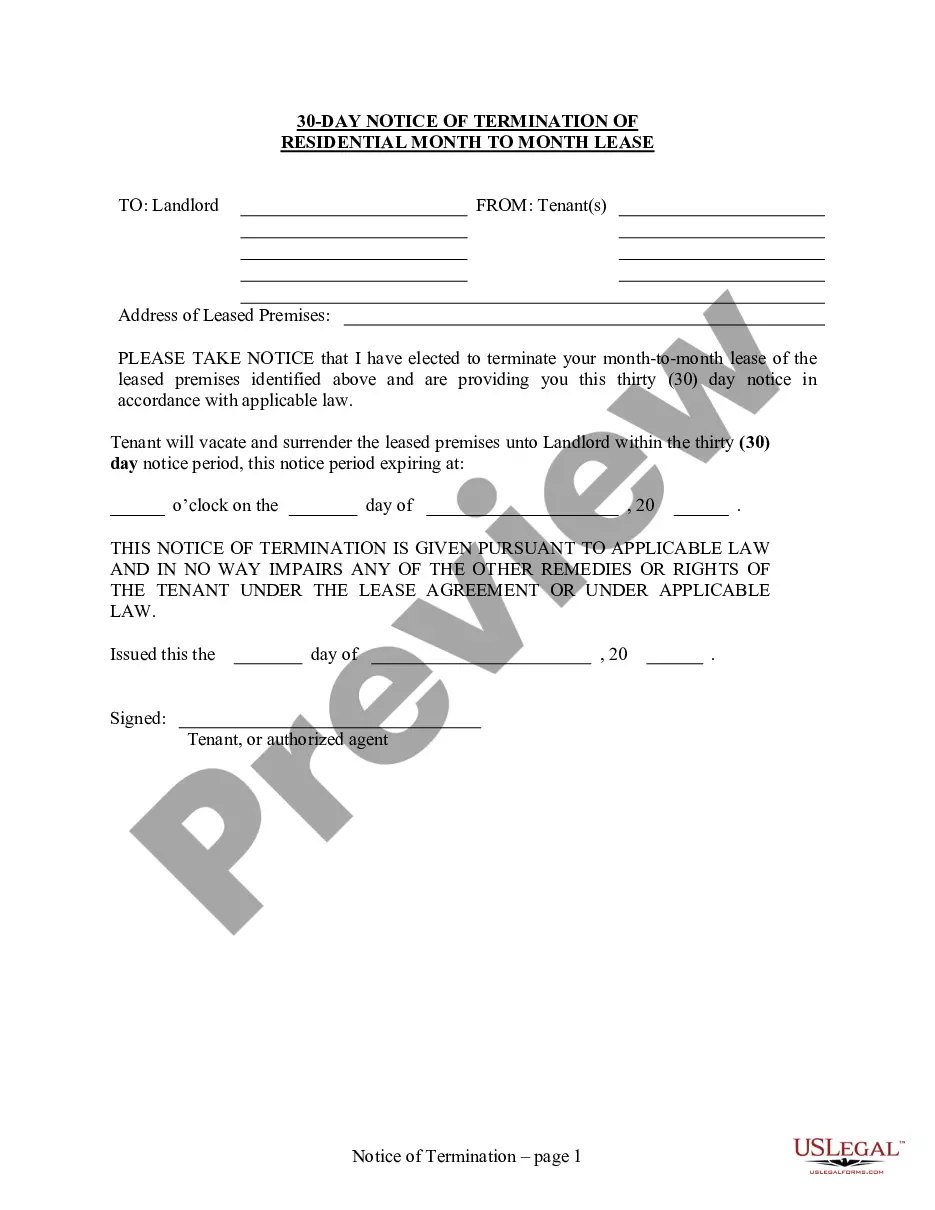
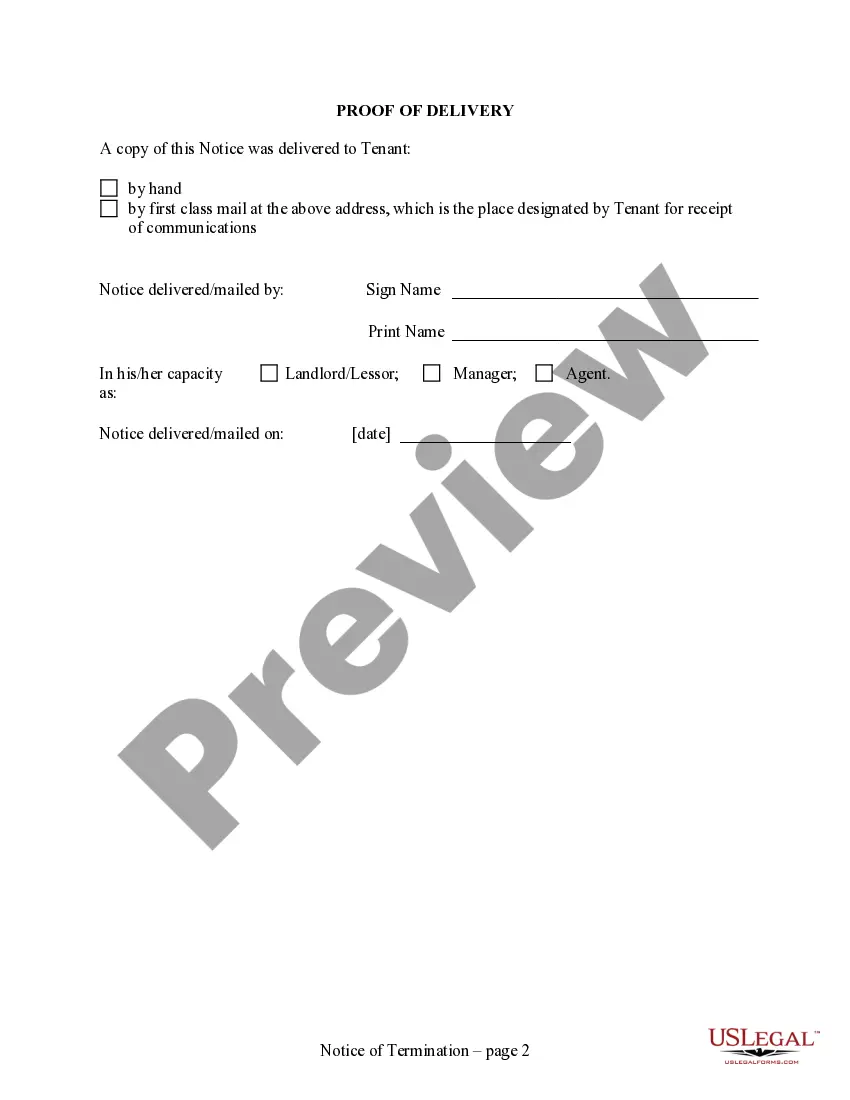
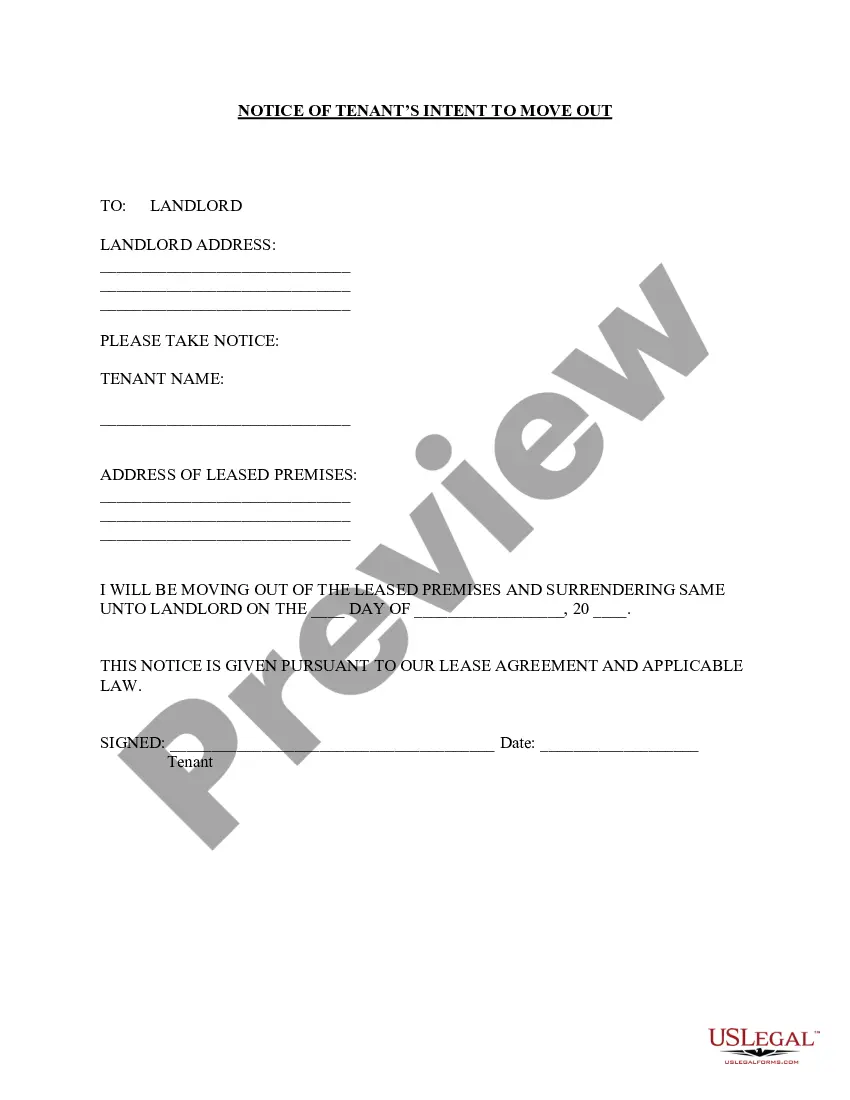
60-day Notice
Description

Get your form ready online
Our built-in tools help you complete, sign, share, and store your documents in one place.
Make edits, fill in missing information, and update formatting in US Legal Forms—just like you would in MS Word.
Download a copy, print it, send it by email, or mail it via USPS—whatever works best for your next step.
Sign and collect signatures with our SignNow integration. Send to multiple recipients, set reminders, and more. Go Premium to unlock E-Sign.
If this form requires notarization, complete it online through a secure video call—no need to meet a notary in person or wait for an appointment.
We protect your documents and personal data by following strict security and privacy standards.

Make edits, fill in missing information, and update formatting in US Legal Forms—just like you would in MS Word.

Download a copy, print it, send it by email, or mail it via USPS—whatever works best for your next step.

Sign and collect signatures with our SignNow integration. Send to multiple recipients, set reminders, and more. Go Premium to unlock E-Sign.

If this form requires notarization, complete it online through a secure video call—no need to meet a notary in person or wait for an appointment.

We protect your documents and personal data by following strict security and privacy standards.
Looking for another form?







How to fill out Oregon 30 Day Or 60 Day Notice To Terminate Month To Month Lease For Residential From Tenant To Landlord?
- Log in to your US Legal Forms account if you're an existing user and check your subscription status before downloading the form template.
- If you're new to the service, start by browsing the form library and search for the 60-day notice template that matches your requirements.
- Once you locate the correct form, review its description in the Preview mode to ensure it aligns with your jurisdiction's guidelines.
- Select the 'Buy Now' button to choose a subscription plan that suits your needs, creating an account if needed.
- Complete your purchase by entering your payment details via credit card or PayPal.
- Download the completed form to your device, ensuring you can access it later in the 'My Forms' section of your profile.
Once you have downloaded and completed your 60-day notice, you'll have peace of mind knowing you are following the correct legal procedures.
Start utilizing the extensive resources of US Legal Forms today to make your legal documentation process seamless and efficient!
Form popularity
FAQ
To write a 2-month notice to a landlord, you should clearly state your intention to move out, indicating a definitive move-out date that respects the 60-day notice period. Use a professional tone and include your personal details to identify the rental agreement easily. Don’t forget to thank your landlord for their cooperation, making the communication as smooth as possible. Using tools like USLegalForms can simplify this process.
Yes, you can send a 60-day notice via email, but it's essential to check your rental agreement for any specific requirements on notification methods. Ensure your email is clear and provides all necessary details, including your planned move-out date. It’s also advisable to request a confirmation of receipt from your landlord to ensure they have received your notice.
To write a 60-day vacate letter, include your name and address at the top, followed by the date and your landlord’s information. State your intention to vacate and the exact date of departure, allowing for the 60-day notice period. Closing the letter with a courteous thank you can also leave a good impression. Consider using USLegalForms for templates and guidance.
When writing a letter for a 60-day notice to move out, begin by stating your intention to vacate the property. Specify the intended move-out date, ensuring it reflects the 60-day notice period. Be concise, maintain a respectful tone, and include your contact information. This formal approach can help foster a positive conclusion to your rental experience.
To calculate a 60-day notice, begin with the date you plan to vacate and count back 60 days. Ensure that your notice aligns with the rental agreement terms and any local laws regarding notice periods. Mark your calendar and consider sending your notice well in advance to avoid any confusion.
To format a letter to vacate, start with your address, the date, and the landlord's address at the top. Clearly state that you are providing a 60-day notice to vacate, including the specific date you plan to move out. It's also helpful to express gratitude for the time spent in the property. Finally, sign the letter to confirm your intent.
Email can count as written notice to vacate if both parties agree to it as a communication method. However, it's important to confirm that your lease allows for electronic communication. Written notices, including a 60-day notice, are often best delivered through certified mail or personal delivery for legal compliance.
To handle a 60-day notice to vacate, you could seek alternatives such as negotiating a mutually agreeable move-out date. Providing evidence of reasons like financial hardship may persuade your landlord to adjust the notice period. Additionally, referring to state laws may offer protections or stipulations that apply to your case.
Several factors can render a notice to vacate invalid. A lack of proper delivery, incorrect information, or not following state-mandated formatting can all contribute. For instance, if the notice does not include necessary dates or signatures, it may not fulfill legal requirements. Always review your notice carefully, and consider using USLegalForms for accurate templates.
If you seek to get around a 60-day notice to vacate, consider discussing the situation directly with your landlord. Negotiation may lead to an earlier resolution, especially if there are extenuating circumstances. You could also explore legal options depending on your state laws, but remember that a valid 60-day notice typically must be honored.