Transfer Death Tod For House
Description


Get your form ready online
Our built-in tools help you complete, sign, share, and store your documents in one place.
Make edits, fill in missing information, and update formatting in US Legal Forms—just like you would in MS Word.
Download a copy, print it, send it by email, or mail it via USPS—whatever works best for your next step.
Sign and collect signatures with our SignNow integration. Send to multiple recipients, set reminders, and more. Go Premium to unlock E-Sign.
If this form requires notarization, complete it online through a secure video call—no need to meet a notary in person or wait for an appointment.
We protect your documents and personal data by following strict security and privacy standards.

Make edits, fill in missing information, and update formatting in US Legal Forms—just like you would in MS Word.

Download a copy, print it, send it by email, or mail it via USPS—whatever works best for your next step.

Sign and collect signatures with our SignNow integration. Send to multiple recipients, set reminders, and more. Go Premium to unlock E-Sign.

If this form requires notarization, complete it online through a secure video call—no need to meet a notary in person or wait for an appointment.

We protect your documents and personal data by following strict security and privacy standards.
Looking for another form?










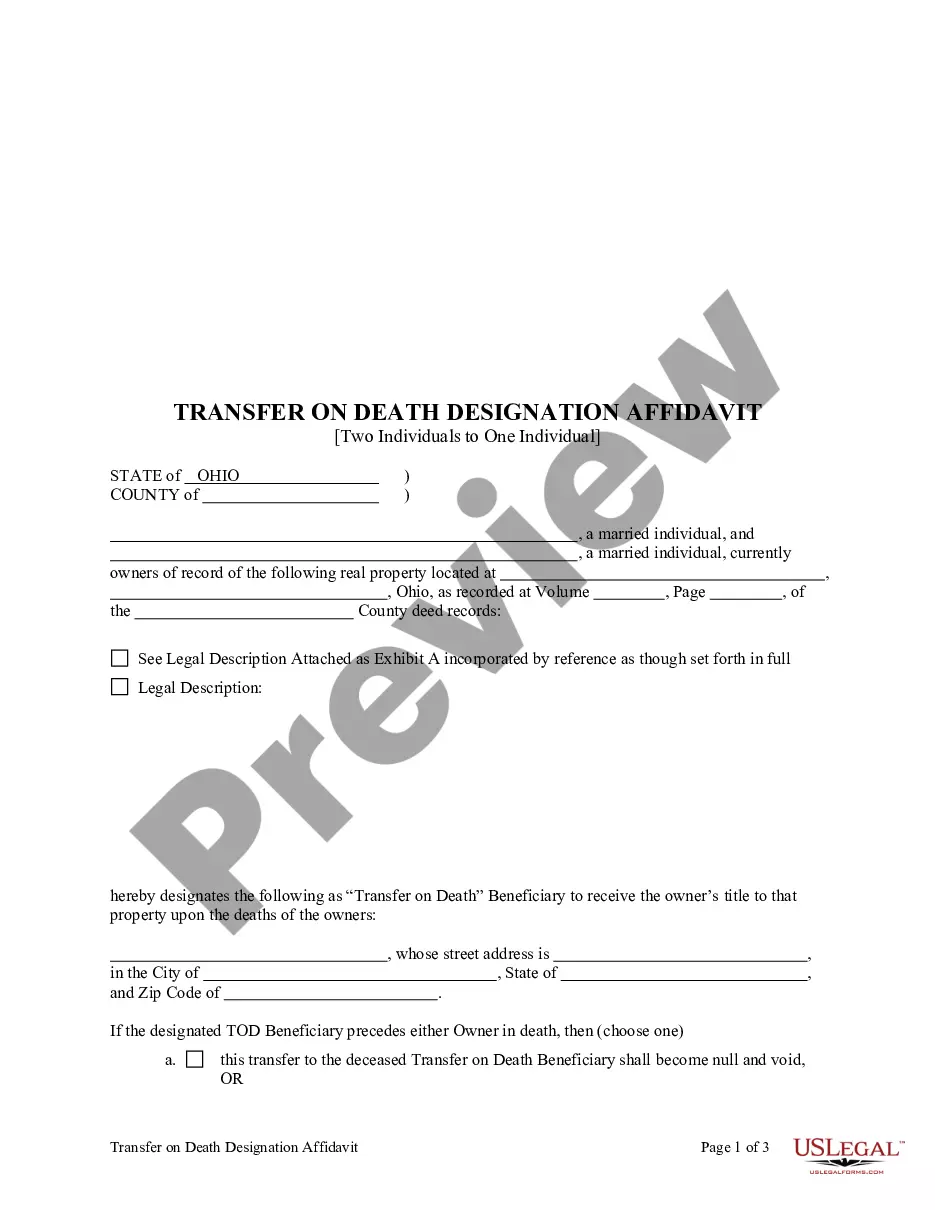
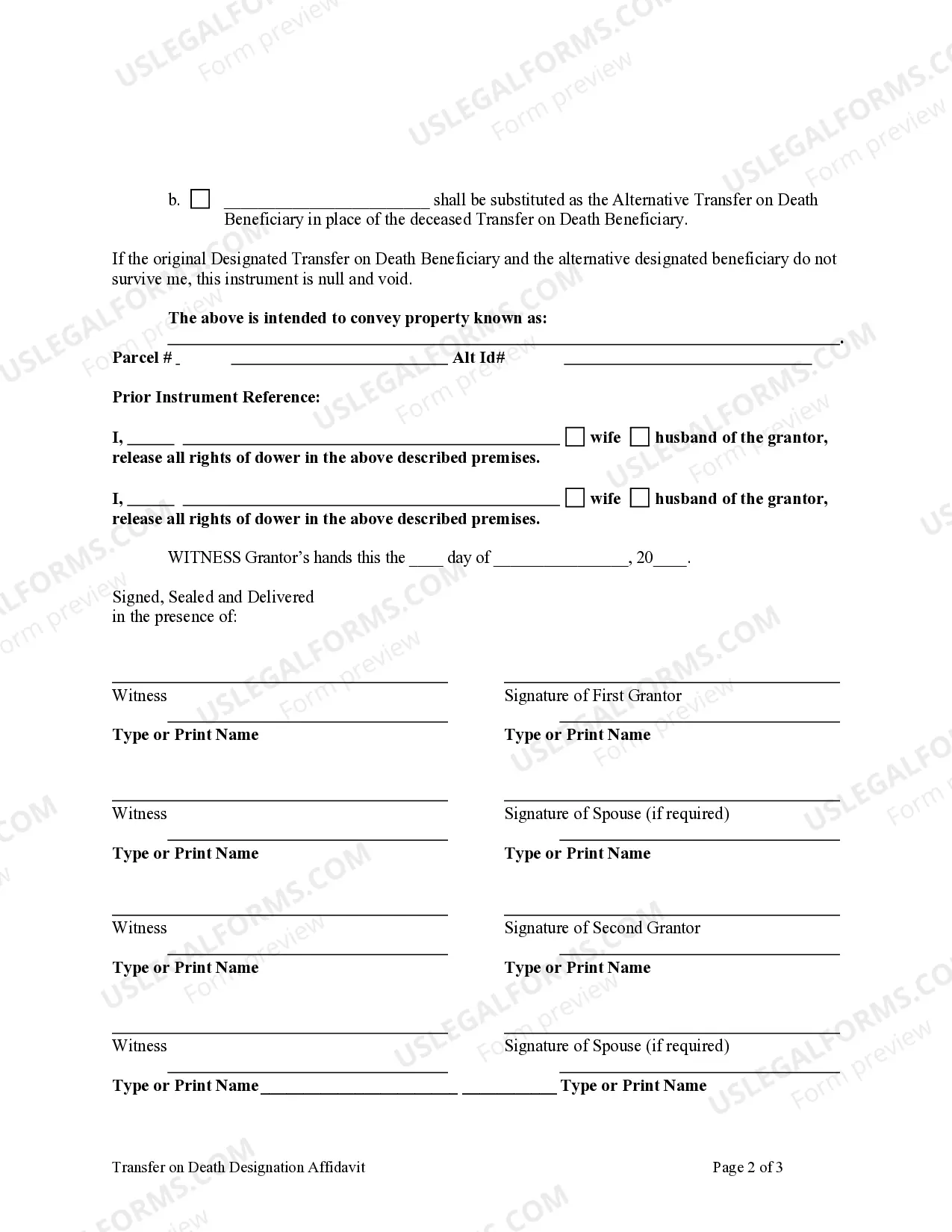
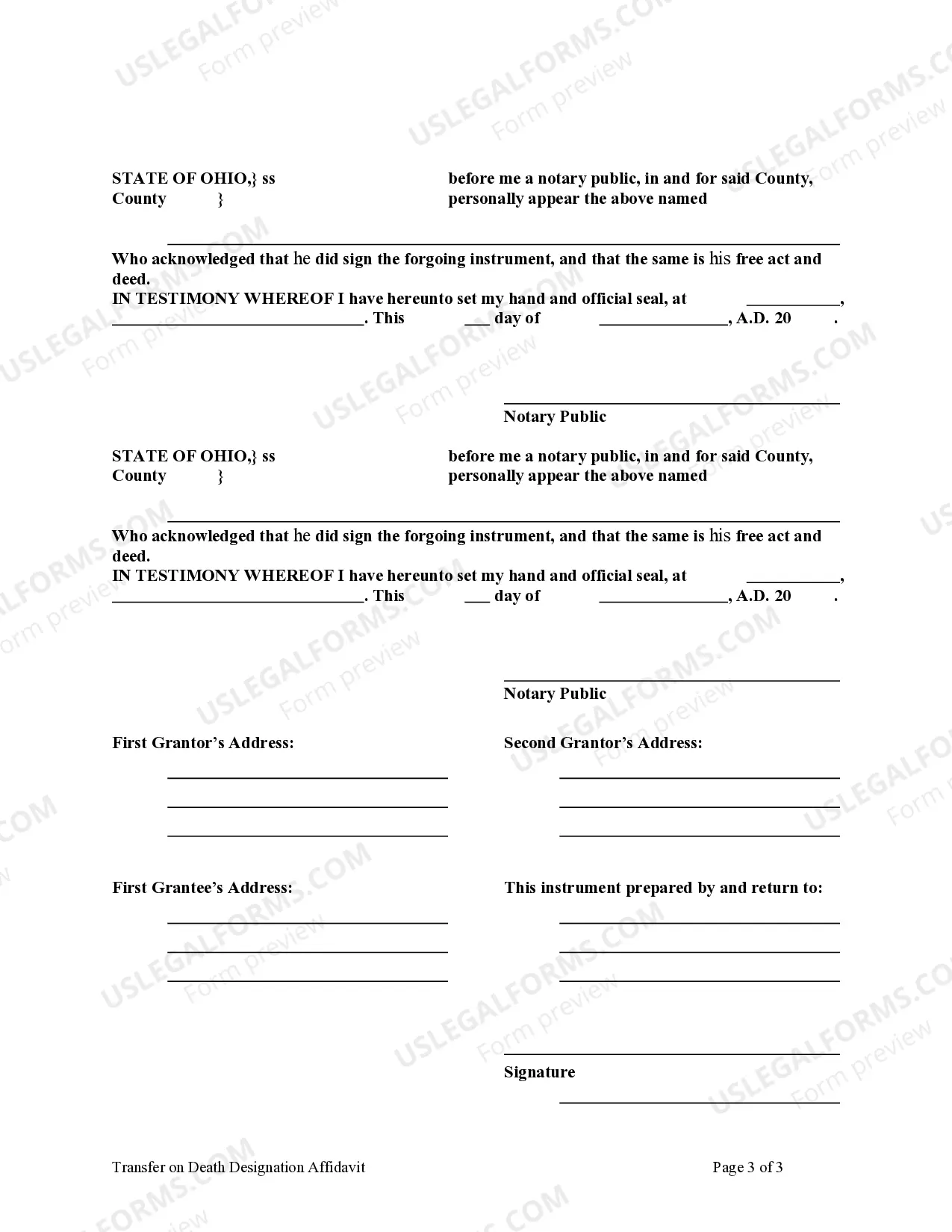
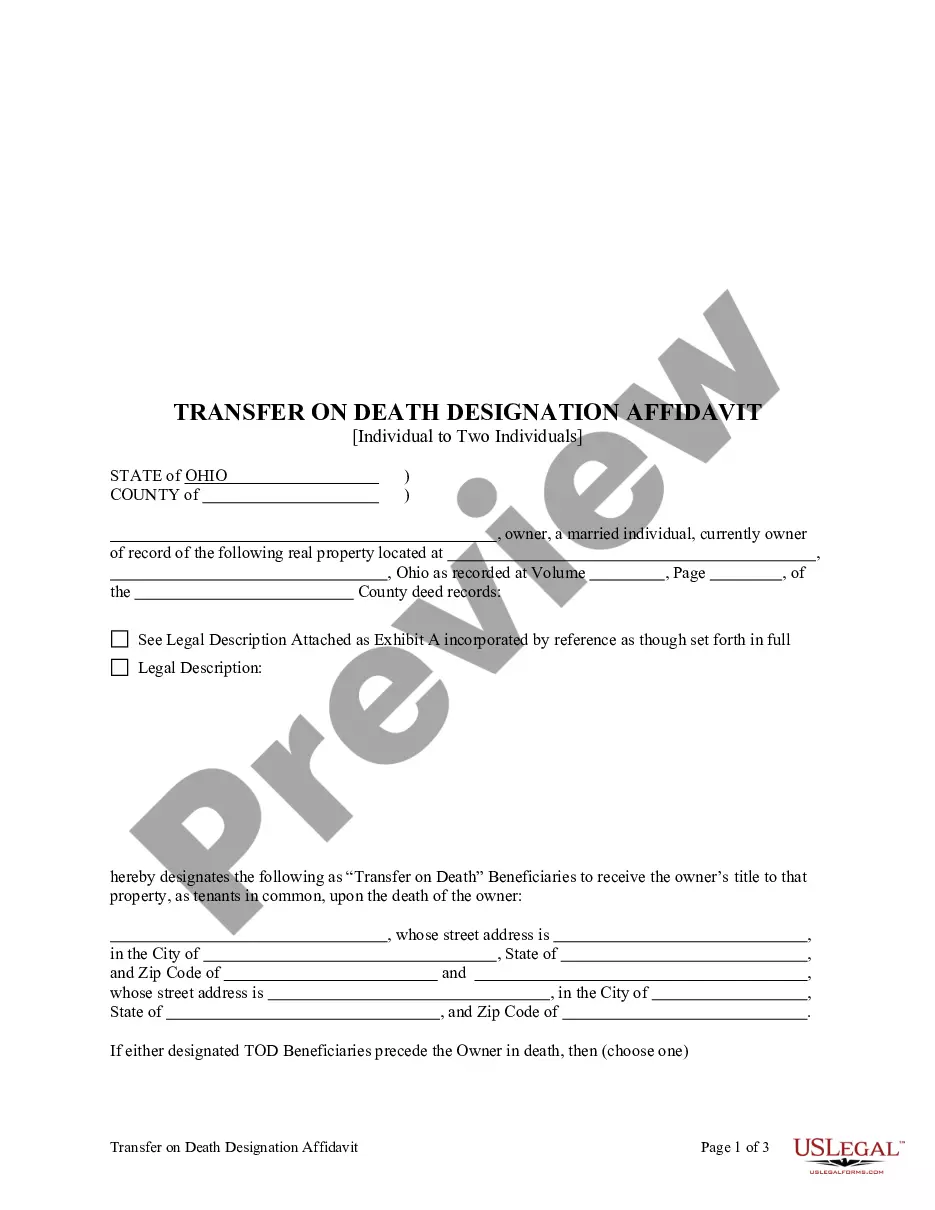
How to fill out Ohio Transfer On Death Designation Affidavit - TOD From Two Individuals To One Individual?
- Log in to your US Legal Forms account. If you don’t have an account, register to gain access to our extensive library.
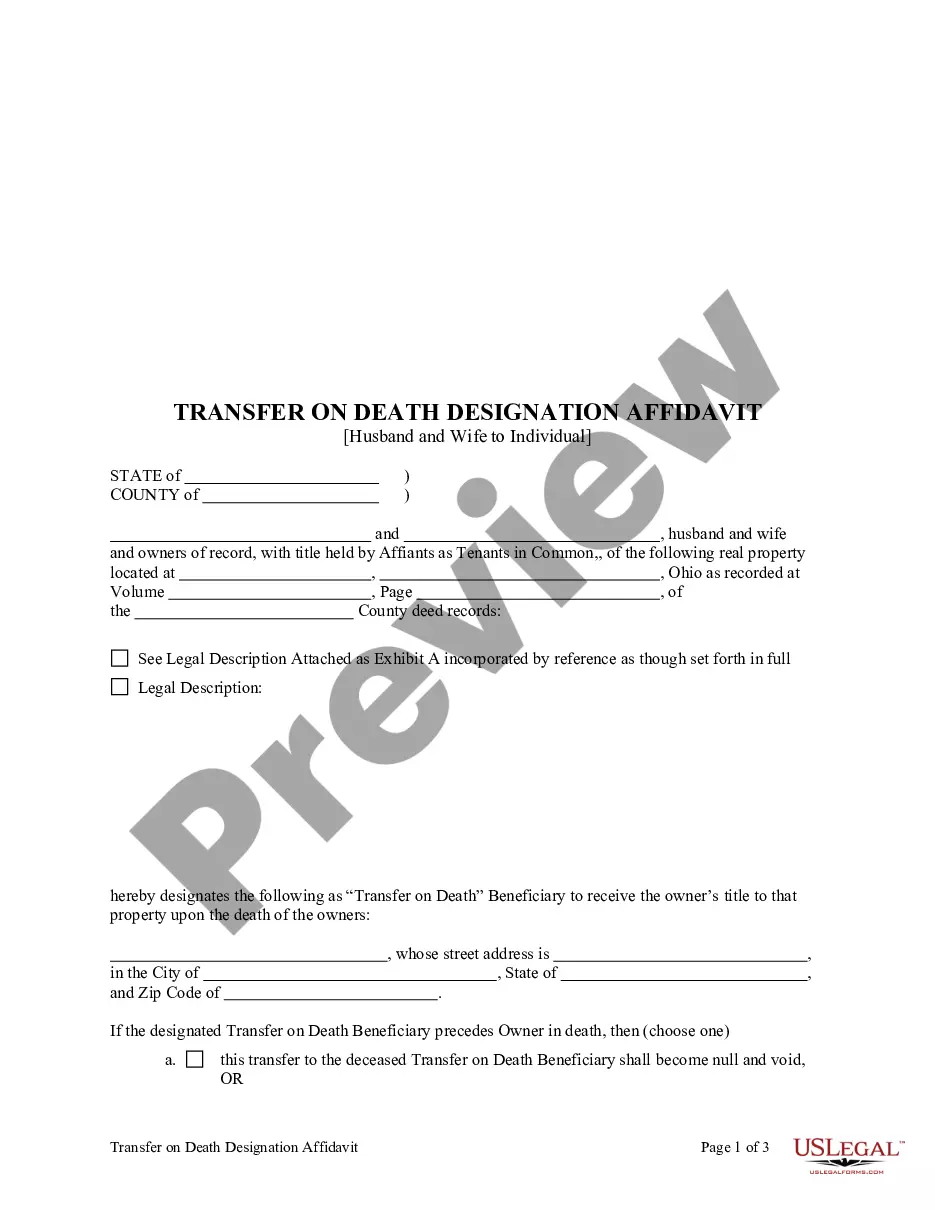
- Search for the Transfer on Death deed form. Use the preview mode to check that it meets your local jurisdiction's requirements.
- If the form isn’t suitable, utilize the search tab to find a different template that matches your needs.
- Select your template and click on the 'Buy Now' button to choose a subscription plan that works for you.
- Complete your purchase by entering your payment information, either via credit card or PayPal.
- Download the form to your device. You can also access it anytime through the 'My Forms' menu in your profile.
US Legal Forms simplifies the process of executing legal documents by providing a vast library of over 85,000 fillable forms. They offer more forms than competitors for a similar cost, empowering individuals and attorneys alike.
Get started today and ensure your property transfer is carried out smoothly with US Legal Forms. Sign up now to access unparalleled resources and assistance!
Form popularity
FAQ
When you designate a transfer on death deed, the mortgage on your house remains intact. Your heirs will assume the mortgage obligations after your death. This means they will need to continue making payments, or they risk foreclosure. It's essential to communicate with your family about this responsibility to avoid surprises when using a transfer death tod for house.
A transfer on death deed might seem straightforward, but it has some downsides. First, it does not protect against creditors. If the property owner has debts, creditors might still claim a part of the estate. Additionally, the transfer does not provide the same asset protection as a trust, which might be more secure for your heirs. It's crucial to consider these factors when you choose a transfer death tod for house.
Transfer on Death (TOD) provisions do not inherently avoid inheritance tax, as tax laws are determined by the estate’s overall value and your state’s regulations. However, a TOD can help bypass probate, potentially reducing some costs associated with the estate. It's essential to consult with a tax advisor or estate planning professional to explore possible tax implications when you use a transfer death TOD for a house. They can provide guidance tailored to your circumstances.
The best way to leave property upon your death depends on your unique situation and goals. Options include wills, living trusts, and Transfer on Death (TOD) deeds. A TOD can be a straightforward method if you're looking to avoid probate and ensure a smooth transfer of your house. Consulting with estate planning professionals can help identify the most suitable strategy for your property and beneficiaries.
While you do not legally need an attorney to set up a Transfer on Death (TOD), consulting with one is often beneficial. An attorney can help ensure that the TOD is correctly executed and aligns with your overall estate planning. They can also provide valuable insights into potential complications or state-specific laws concerning the transfer death TOD for a house. Engaging a legal professional can help you make informed decisions and avoid missteps.
A Transfer on Death (TOD) is a legal mechanism that specifically allows real estate or financial accounts to transfer directly to a named beneficiary upon your death, while beneficiary designations can apply to various accounts and policies. With a TOD, the property does not enter probate, providing a quick and straightforward transfer. On the other hand, beneficiary designations may require additional legal frameworks and custodian instructions. It's wise to assess both options when transferring a house upon your death.
The choice between using a Transfer on Death (TOD) or designating a beneficiary often depends on your situation. A TOD allows assets to pass directly to the named individual without going through probate, which saves time and costs. However, a beneficiary designation may require more detailed planning if the transfer involves insurance policies or retirement accounts. Evaluating your estate planning goals will help you decide which approach is more beneficial.
TOD accounts can be a good idea for simplifying the transfer of assets upon death. They allow you to retain full control of your property during your lifetime, yet facilitate a smooth transition to your beneficiaries. However, it's essential to ensure that your beneficiaries understand their responsibilities. Evaluating your specific needs can help determine if using a TOD for your house is right for you.
One disadvantage of a Transfer on Death (TOD) is that it may not protect your property from creditors after your death. While a TOD simplifies the transfer process, it does not provide the same safeguards as a trust. In addition, if the designated beneficiary is unable or unwilling to accept the property, the transfer might not occur as you intended. It's important to carefully weigh the benefits and potential issues of using a TOD when you transfer death TOD for a house.
Yes, New Jersey permits transfer on death (TOD) deeds for real property, including houses. This allows homeowners to pass their property directly to a designated beneficiary after their death, bypassing the lengthy probate process. Implementing a transfer death TOD for a house in New Jersey can make inheritance smoother and more efficient for your loved ones. Always ensure to follow New Jersey’s specific guidelines when creating this deed.