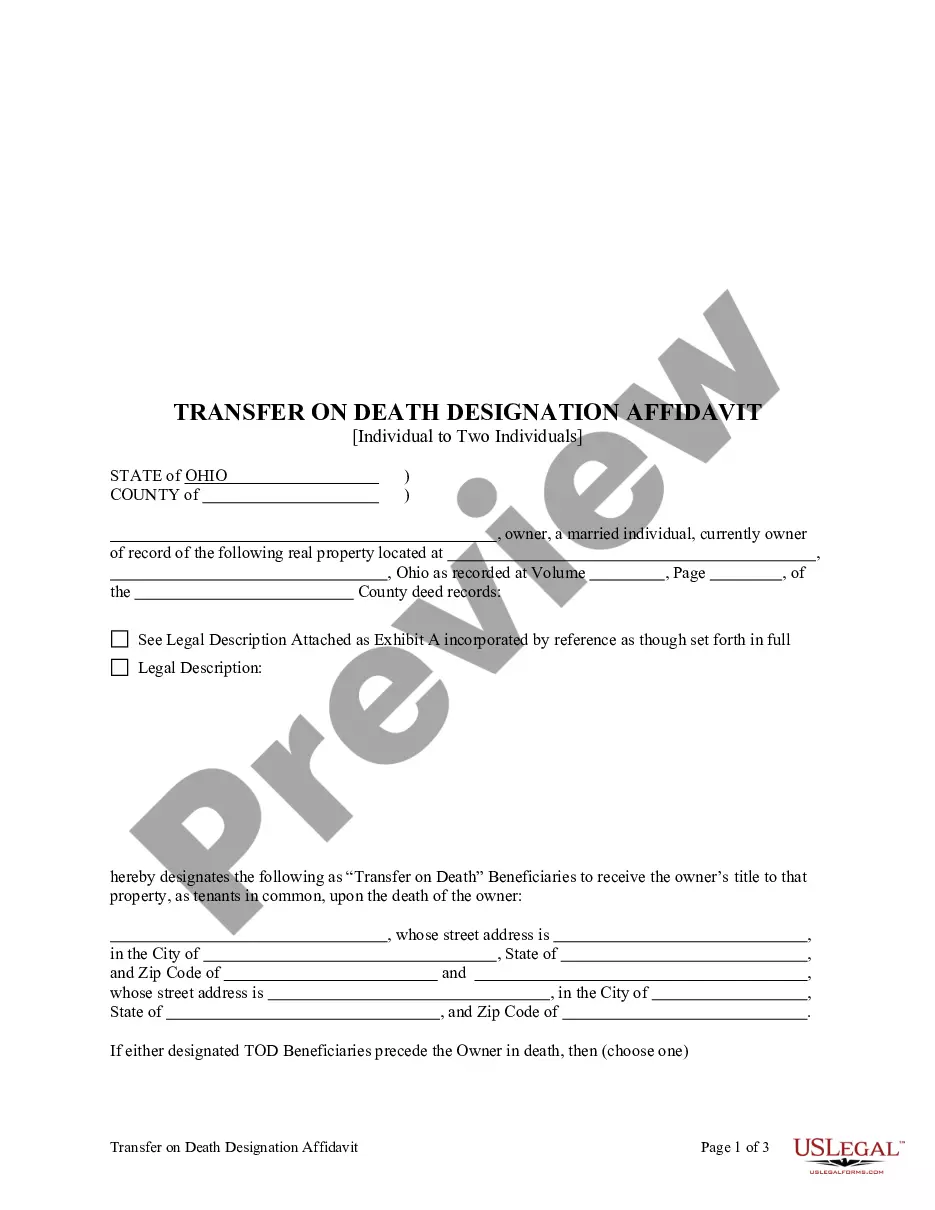
Ohio Tod With Toddlers
Description


Get your form ready online
Our built-in tools help you complete, sign, share, and store your documents in one place.
Make edits, fill in missing information, and update formatting in US Legal Forms—just like you would in MS Word.
Download a copy, print it, send it by email, or mail it via USPS—whatever works best for your next step.
Sign and collect signatures with our SignNow integration. Send to multiple recipients, set reminders, and more. Go Premium to unlock E-Sign.
If this form requires notarization, complete it online through a secure video call—no need to meet a notary in person or wait for an appointment.
We protect your documents and personal data by following strict security and privacy standards.

Make edits, fill in missing information, and update formatting in US Legal Forms—just like you would in MS Word.

Download a copy, print it, send it by email, or mail it via USPS—whatever works best for your next step.

Sign and collect signatures with our SignNow integration. Send to multiple recipients, set reminders, and more. Go Premium to unlock E-Sign.

If this form requires notarization, complete it online through a secure video call—no need to meet a notary in person or wait for an appointment.

We protect your documents and personal data by following strict security and privacy standards.
Looking for another form?







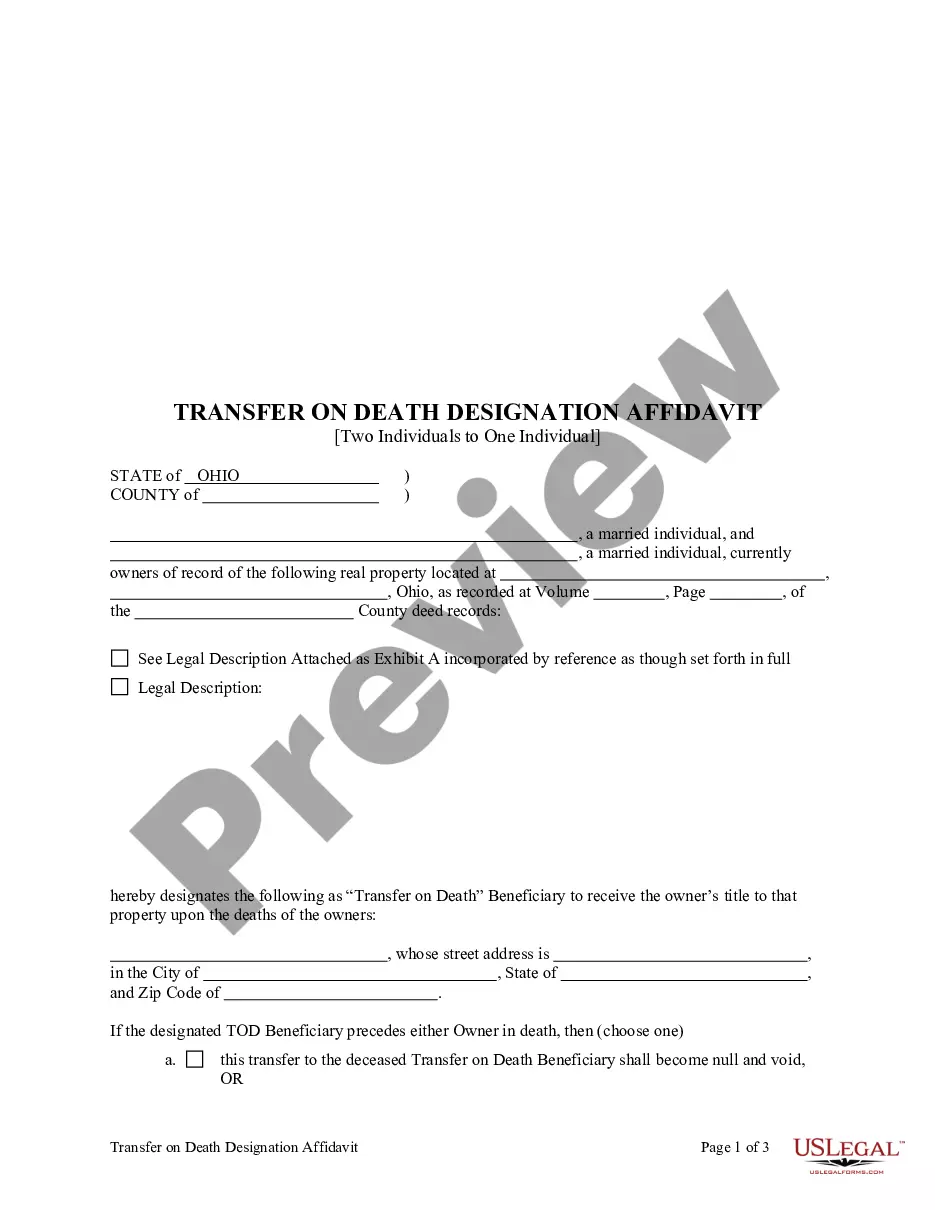
How to fill out Ohio Transfer On Death Designation Affidavit - TOD From Two Individuals To One Individual?
Whether for corporate objectives or personal issues, everyone must confront legal matters at some point in their lives.
Completing legal paperwork demands meticulous attention, starting with choosing the appropriate form example.
With an extensive US Legal Forms catalog available, you never have to waste time looking for the right example online. Make use of the library’s easy navigation to find the correct form for any circumstance.
- Obtain the template you require by utilizing the search bar or catalog browsing.
- Review the form’s details to confirm it aligns with your situation, jurisdiction, and locale.
- Select the form’s preview to examine it.
- If it is not the right document, return to the search function to find the Ohio Tod With Toddlers example you need.
- Download the file if it meets your specifications.
- If you possess a US Legal Forms account, click Log in to reach previously saved documents in My documents.
- If you haven't created an account yet, you can secure the form by clicking Buy now.
- Choose the correct pricing option.
- Fill out the account registration form.
- Choose your payment method: a bank card or PayPal account can be used.
- Select the file format you desire and download the Ohio Tod With Toddlers.
- After downloading, you can complete the form using editing software or print it and finish it by hand.
Form popularity
FAQ
If your parent has left a will, you will need to go through the probate process to transfer their property in Ohio. The will dictates how the property should be distributed among heirs. It's essential to file the will with the local probate court along with the necessary forms to begin the probate process. Using US Legal Forms can simplify this process by providing templates and guidance tailored to your needs.
The most important benefit of a TOD account is simplicity. Estate planning can help minimize the legal mess left after you die. Without it, the probate system can take over the distribution of your assets. It can also name an executor of your estate and pay off your remaining debts with your assets.
Instructions for filling out deeds Read the entire form carefully. ... Enter all the names of the current owners of the property as the grantors on the deed. Enter all the names of the persons you want to be owners of the property as the grantees. ... Attach the legal description of the property from the prior deed.
An Ohio real estate owner can use a TOD affidavit to transfer a whole or partial interest in Ohio real estate. A TOD affidavit can be used by a sole owner or a part-owner who co-owns real estate with one or more co-owners. An Ohio TOD affidavit can transfer complete title or a fractional interest in real estate.
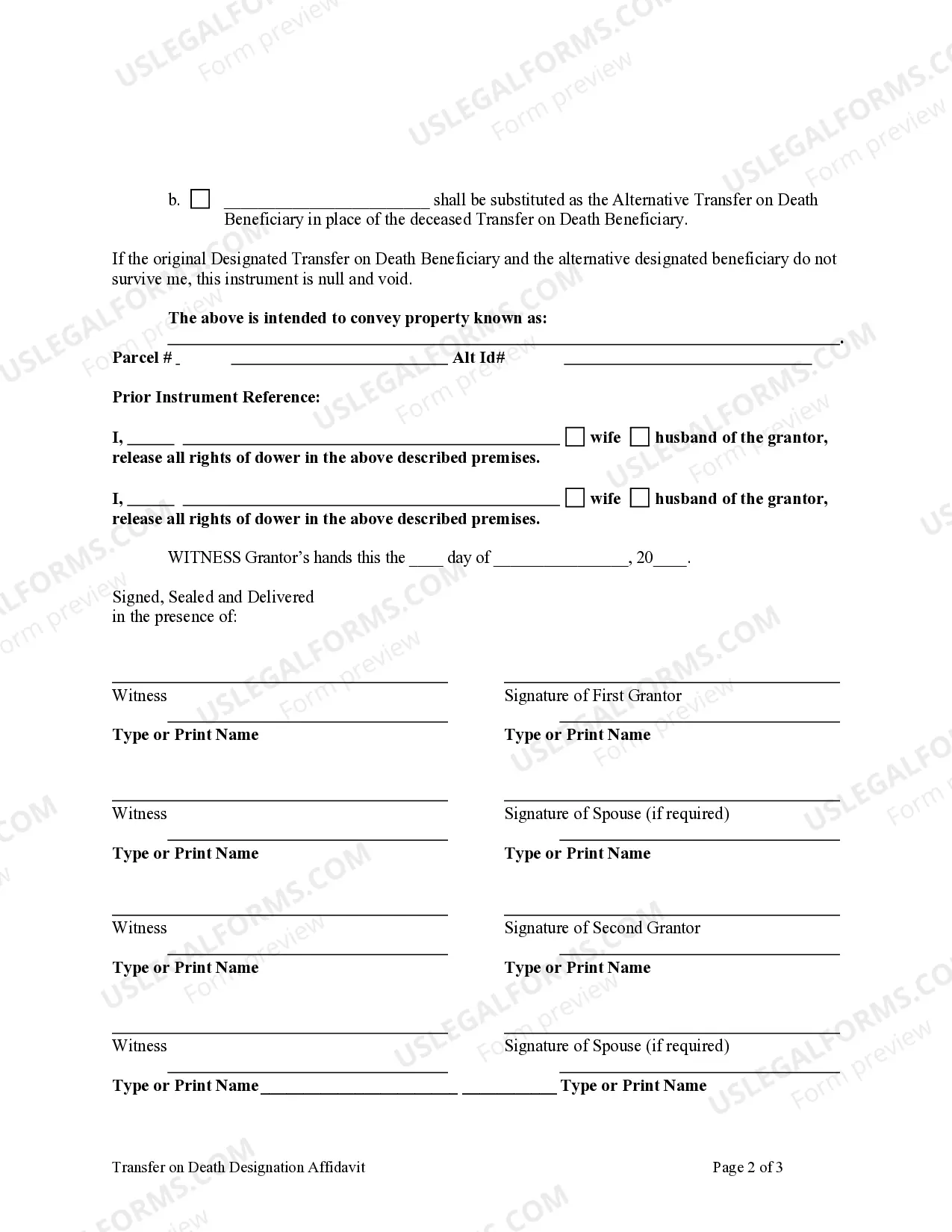
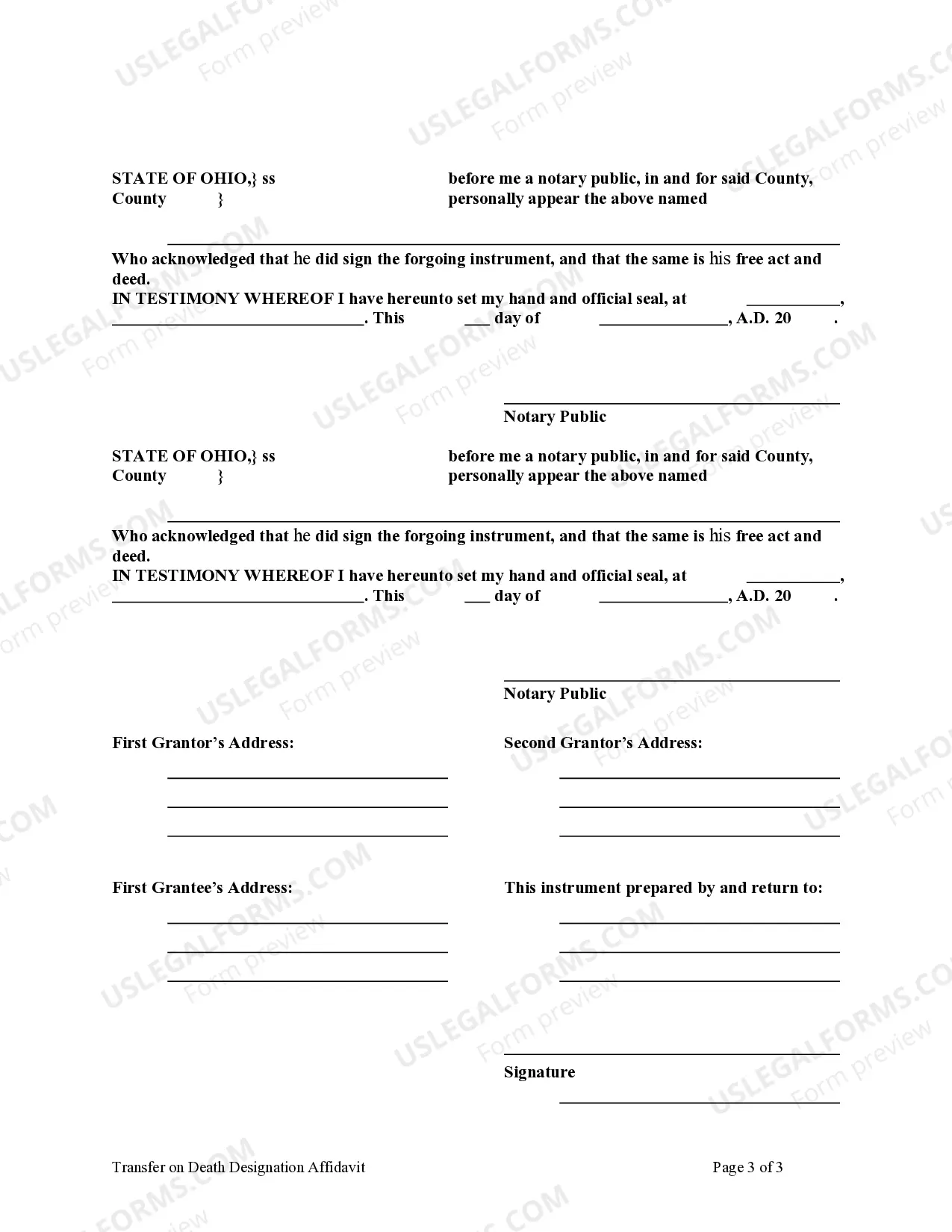
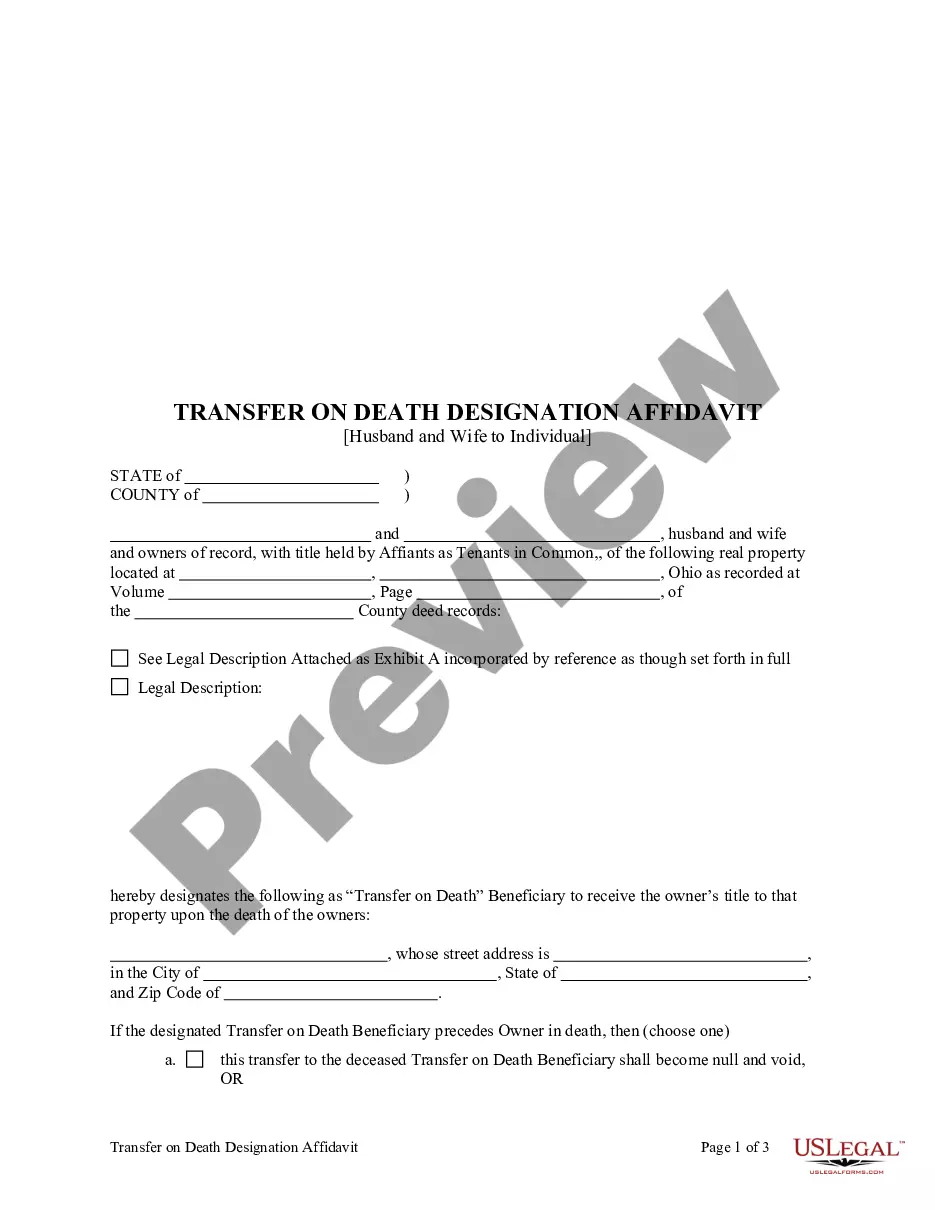
Ohio law allows individuals who do not need the estate administration benefits of a trust agreement to avoid Probate on the transfer of real property by executing a legal document called a Transfer-On-Death (?TOD?) Designation Affidavit.
Transfer-on-Death deeds also do not allow for naming a contingent beneficiary on the deed like a trust document that owns the property does. Secondly, if the intended beneficiary is a minor, the minor would not be able to manage or transfer the property until they reach the age of 18.