Transfer On Death Deed For Texas
Description

Get your form ready online
Our built-in tools help you complete, sign, share, and store your documents in one place.
Make edits, fill in missing information, and update formatting in US Legal Forms—just like you would in MS Word.
Download a copy, print it, send it by email, or mail it via USPS—whatever works best for your next step.
Sign and collect signatures with our SignNow integration. Send to multiple recipients, set reminders, and more. Go Premium to unlock E-Sign.
If this form requires notarization, complete it online through a secure video call—no need to meet a notary in person or wait for an appointment.
We protect your documents and personal data by following strict security and privacy standards.

Make edits, fill in missing information, and update formatting in US Legal Forms—just like you would in MS Word.

Download a copy, print it, send it by email, or mail it via USPS—whatever works best for your next step.

Sign and collect signatures with our SignNow integration. Send to multiple recipients, set reminders, and more. Go Premium to unlock E-Sign.

If this form requires notarization, complete it online through a secure video call—no need to meet a notary in person or wait for an appointment.

We protect your documents and personal data by following strict security and privacy standards.
Looking for another form?

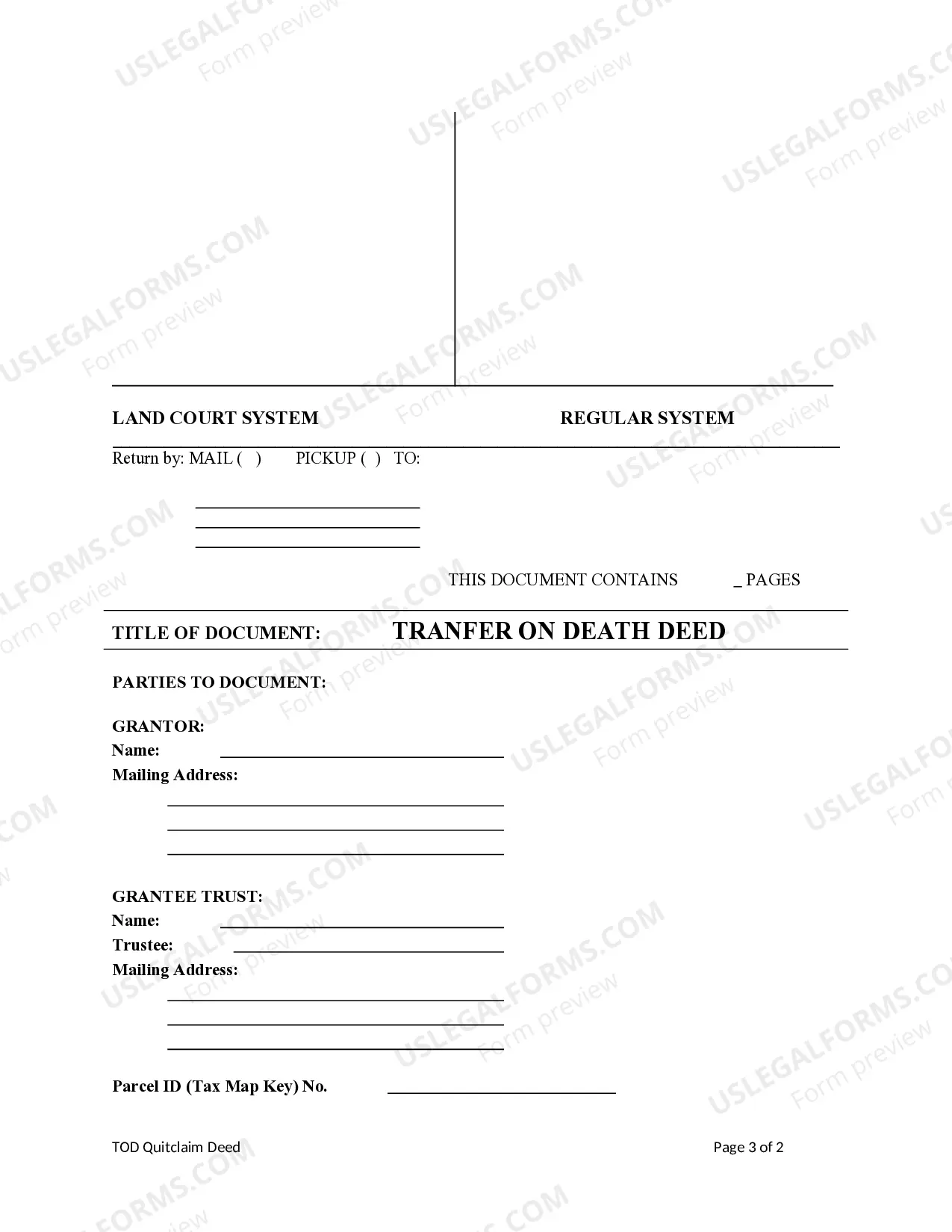
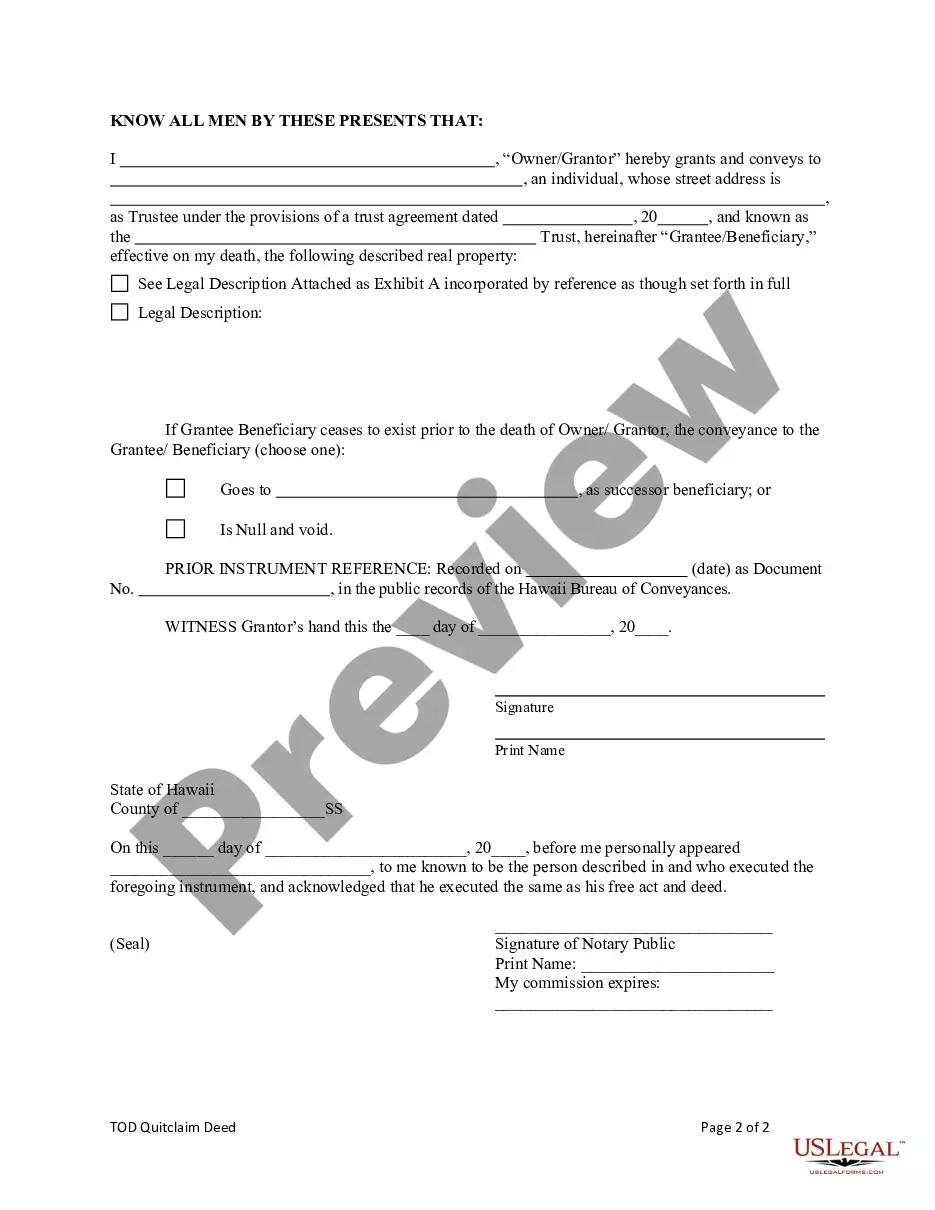
How to fill out Hawaii Transfer On Death Quitclaim Deed From Individual To A Trust?
- If you are a returning user, log in to your account and download the TODD template. Ensure your subscription is active; if it's not, renew it according to your plan.
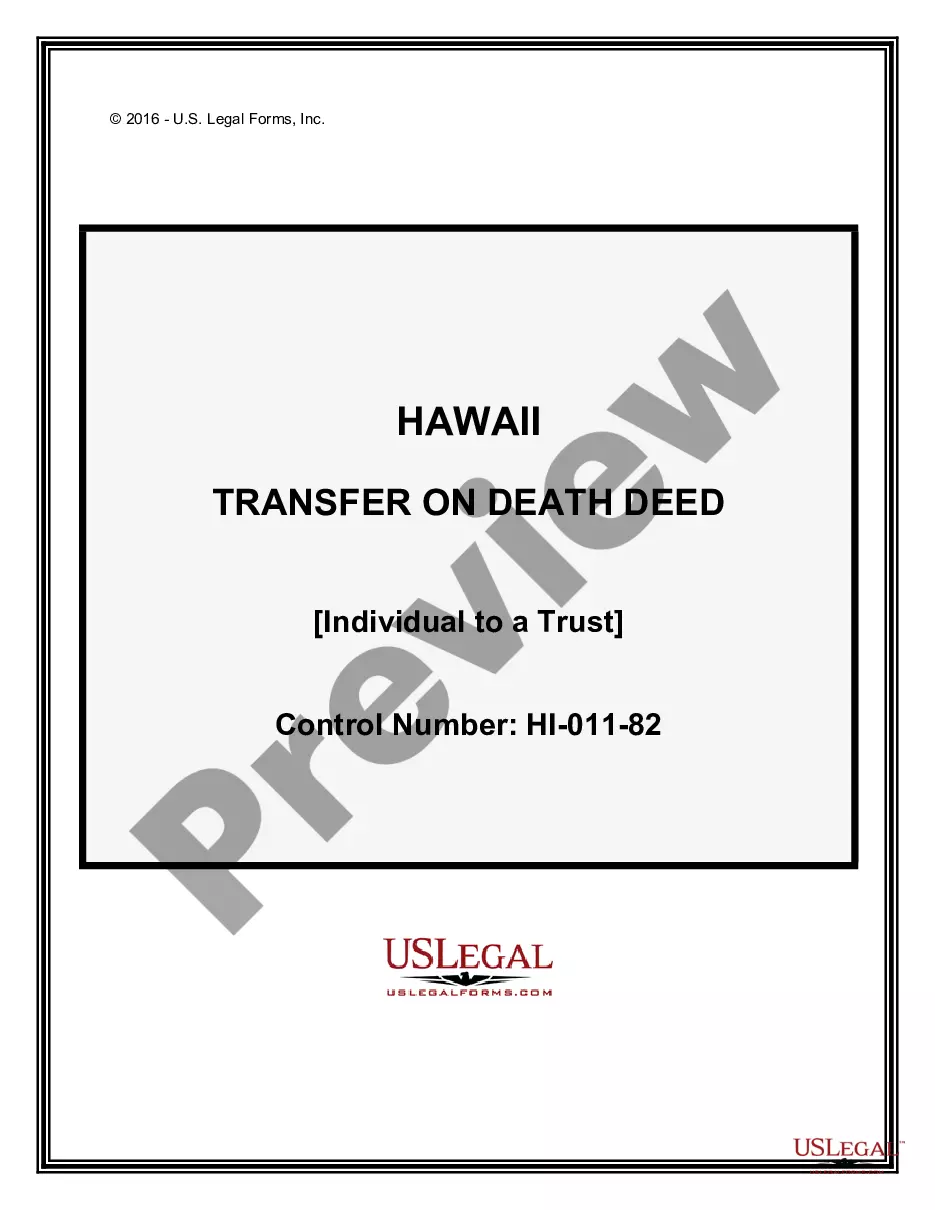
- For new users, start by checking the preview mode and description of the Transfer on Death Deed. Confirm it aligns with your requirements and local regulations.
- If the selected template is not suitable, utilize the search feature at the top to find an alternative that fits your needs.
- Once you find the correct form, click the Buy Now button to proceed. Choose your preferred subscription plan and create an account to access the comprehensive library.
- Complete your purchase by entering your credit card details or using PayPal for payment.
- After purchasing, download your TODD template to your device. You can access it anytime via the My Forms section of your profile.
With US Legal Forms, you can ensure your legal documents are easy to access and tailored to your state's requirements. Their extensive database of forms means you have more options at competitive prices.
Start simplifying your estate planning today. Explore US Legal Forms for a smoother, more reliable way to secure your legal documents!
Form popularity
FAQ
Yes, Texas allows transfer on death deeds, providing a straightforward way to pass property to heirs outside of probate. This option helps simplify the transfer process after death, making it a popular choice among property owners. Using a properly executed transfer on death deed for Texas ensures that your wishes are respected and fulfilled. To create one easily, check out US Legal Forms, which offers templates and valuable resources.
Transferring a deed in Texas requires several documents, including the original deed, any relevant titles, and a signed transfer on death deed for Texas. You will also need to file the completed deed with the appropriate county clerk's office. Having these items organized can streamline the process. If you feel overwhelmed, US Legal Forms can guide you through each step effectively.
To transfer ownership from a deceased owner in Texas, you will need the original deed, the death certificate, and a completed transfer on death deed for Texas. Additionally, it may be helpful to gather any relevant estate documents that prove your right to inherit the property. If you're new to this process, platforms like US Legal Forms offer resources to assist you in preparing these materials correctly.
Yes, you can transfer a deed without an attorney in Texas, including the transfer on death deed for Texas. However, you will need to follow specific forms and procedures to make the transfer valid. This process includes proper documentation and filing with the county clerk. To make things easier, consider using US Legal Forms, which provides templates and guidance tailored for your needs.
While you can technically transfer a deed in Texas without a lawyer, it is often advisable to seek legal help for the transfer on death deed for Texas. A knowledgeable attorney can assist you in ensuring that all documents are completed correctly and securely. This attention to detail can prevent potential disputes or complications in the future. If you're uncertain about the process, using a platform like US Legal Forms can simplify your experience.
A transfer on death deed for Texas allows property to pass directly to beneficiaries upon your death, avoiding probate. In contrast, a ladybird deed provides similar benefits but allows you to retain full control of the property during your lifetime, including the ability to sell or change beneficiaries. Both options offer effective estate planning strategies, but the key difference lies in the level of control you maintain over the property while you're still alive. Understanding these distinctions can help you choose the right approach for your estate planning needs.
You do not necessarily need an attorney to create a transfer on death deed for Texas. However, consulting with a legal professional can help ensure the document meets all requirements and accurately reflects your intentions. An attorney can also assist in navigating any complex situations involving property or beneficiaries. Ultimately, while it's possible to handle it on your own, having expert guidance can provide peace of mind.
To transfer ownership of a property after death in Texas, you can use a transfer on death deed or go through probate, depending on your situation. If a transfer on death deed is in place, beneficiaries can claim ownership directly without extensive legal processes. Alternatively, they might need to initiate probate if there's no valid deed. Utilizing platforms like US Legal Forms can simplify the preparation of necessary documents, ensuring a smoother transition.
While the transfer on death deed for Texas provides a straightforward way to transfer property, it comes with certain disadvantages. It may not eliminate probate, especially if there are disputes among heirs or other legal complications. Moreover, this deed does not address tax implications, which could surprise beneficiaries later on. Understanding these factors is critical before choosing this option.
Transfer on death deeds for Texas can lead to unexpected complications. One major issue arises when the property has multiple heirs, as disagreements may occur during the transfer process. Additionally, if the property owner has outstanding debts, creditors may challenge the transfer. It is essential to consult with a legal professional to avoid potential pitfalls.