Trust Account With Bank
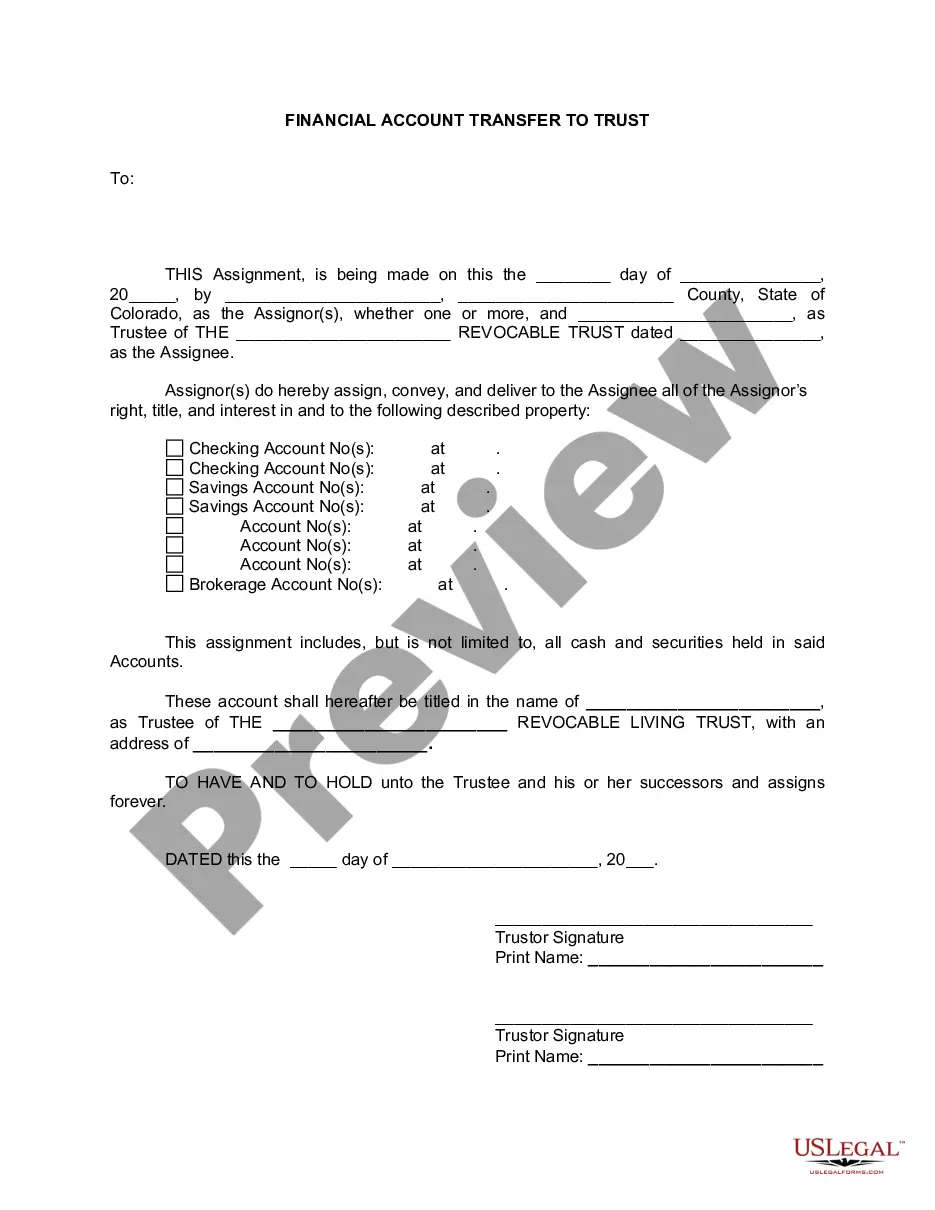
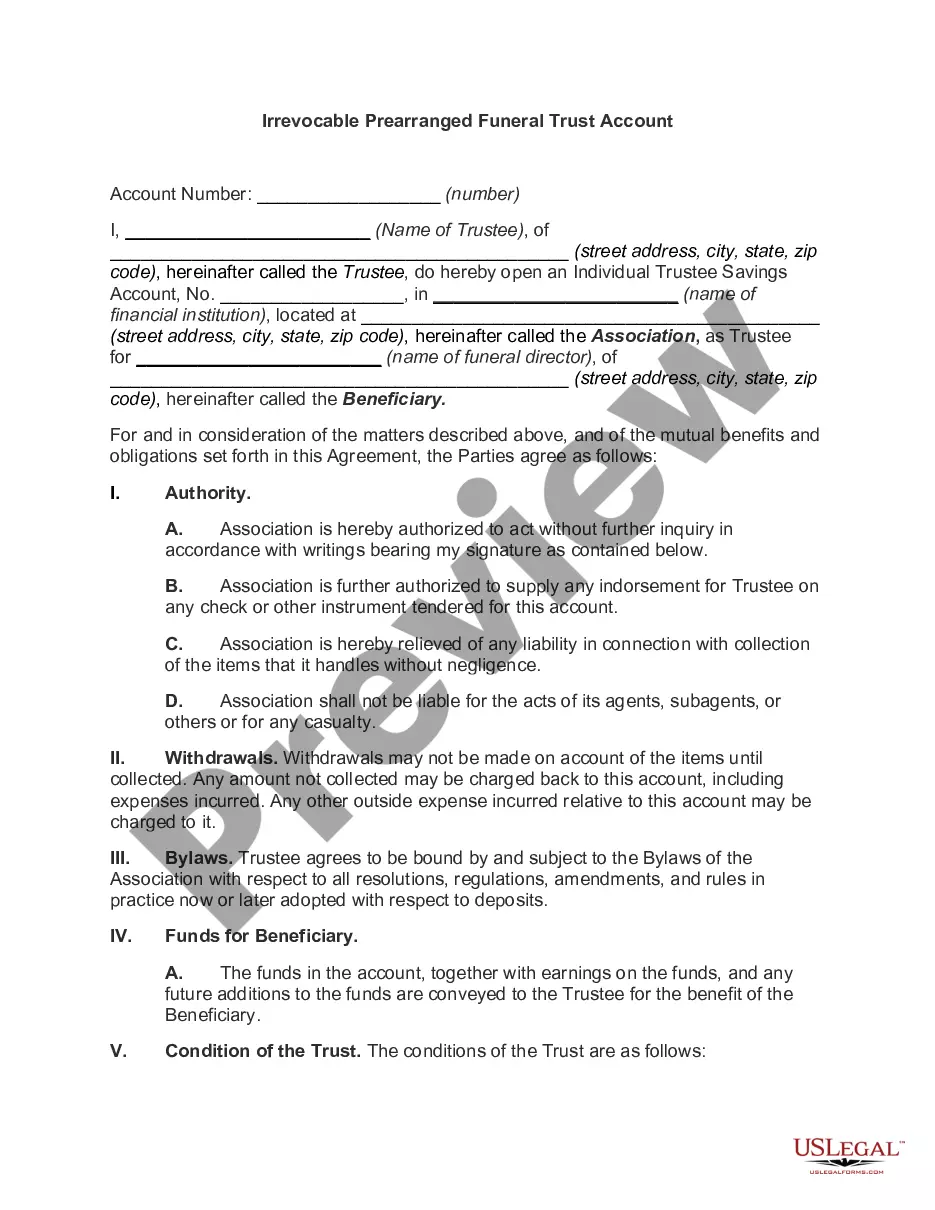
Description


Get your form ready online
Our built-in tools help you complete, sign, share, and store your documents in one place.
Make edits, fill in missing information, and update formatting in US Legal Forms—just like you would in MS Word.
Download a copy, print it, send it by email, or mail it via USPS—whatever works best for your next step.
Sign and collect signatures with our SignNow integration. Send to multiple recipients, set reminders, and more. Go Premium to unlock E-Sign.
If this form requires notarization, complete it online through a secure video call—no need to meet a notary in person or wait for an appointment.
We protect your documents and personal data by following strict security and privacy standards.

Make edits, fill in missing information, and update formatting in US Legal Forms—just like you would in MS Word.

Download a copy, print it, send it by email, or mail it via USPS—whatever works best for your next step.

Sign and collect signatures with our SignNow integration. Send to multiple recipients, set reminders, and more. Go Premium to unlock E-Sign.

If this form requires notarization, complete it online through a secure video call—no need to meet a notary in person or wait for an appointment.

We protect your documents and personal data by following strict security and privacy standards.
Looking for another form?





How to fill out Colorado Financial Account Transfer To Living Trust?
- Log in to your US Legal Forms account. If you’re a new user, create an account to get started.
- Review the preview mode and form descriptions carefully to select the right document for your needs.
- If your selected form doesn't match your requirements, use the search function to find an appropriate template.
- Once you find the right document, click on the 'Buy Now' button and choose a subscription plan that suits you.
- Fill in your payment details and finalize your purchase. Make sure your subscription is active for continued access.
- Download the required form to your device and save it for future reference, or access it anytime via the 'My Forms' section.
Utilizing US Legal Forms not only saves time but also ensures you're using legally validated documents tailored to your state’s regulations.
Start your journey with US Legal Forms today and gain access to over 85,000 customizable legal forms designed to meet your needs. Don't hesitate – make the smart choice for your legal documentation!
Form popularity
FAQ
One disadvantage of a family trust is that it can sometimes lead to family disputes over asset management and distribution. Additionally, while family trusts offer privacy and control, they also come with administrative responsibilities and taxes. Understanding the intricacies of managing a trust account with a bank before establishing a family trust is vital to avoid potential pitfalls.
A potential downfall of having a trust is the complexity involved in setting it up and maintaining it. Many individuals find navigating the laws and regulations surrounding trusts challenging. Furthermore, poorly managed trust accounts with banks can lead to issues, making professional advice essential for successful trust administration.
It may benefit your parents to consider putting their assets in a trust, especially if they want to manage how their assets are distributed after they pass away. A trust can provide control over asset distribution, potentially avoid probate, and protect against creditors. Consulting with a professional to explore trust account with bank options can help your parents make an informed decision.
To set up a bank account for a trust, start by gathering the necessary documentation, including the trust agreement and identification for the trustee. Next, visit a bank that offers trust account services and inquire about their specific requirements. Using a trust account with bank can help you manage the trust's assets efficiently while ensuring compliance with legal obligations.
Choosing the best bank for a trust account depends on various factors, including fees, services, and trust management options. It's essential to research banks that specialize in trust accounts with banks, offering beneficial features and a solid reputation. Consider consulting platforms like US Legal Forms for insights and resources to make an informed decision.
The main purpose of a trust account is to manage and distribute funds according to specific guidelines laid out in a trust agreement. This ensures that assets are protected and allocated according to the wishes of the person who created the trust. Such accounts provide clarity and security for both trustees and beneficiaries.
Someone might use a trust to secure their estate and ensure specific wishes are honored upon their passing. A trust account with a bank allows for organized management of assets, potentially reducing probate complications. This approach can also provide financial support for beneficiaries who may need help managing their inheritance.
The major disadvantage of a trust typically revolves around complexity and costs. Setting up a trust account with a bank can involve legal fees, tax implications, and management responsibilities. It's essential to weigh these factors against the benefits when considering a trust.
A trust account with a bank is good for managing funds intended for specific beneficiaries or purposes. It safeguards assets while providing a clear framework for distribution according to the trust agreement. This facilitates smooth financial transitions and minimizes disputes among beneficiaries.
A trust account may have several disadvantages, including the initial setup costs and the need for ongoing management. It might also limit your access to funds if the account is strictly used according to the trust's terms. Therefore, understanding how to navigate these accounts is crucial for effective asset management.