Colorado Financial Account Transfer to Living Trust
What this document covers
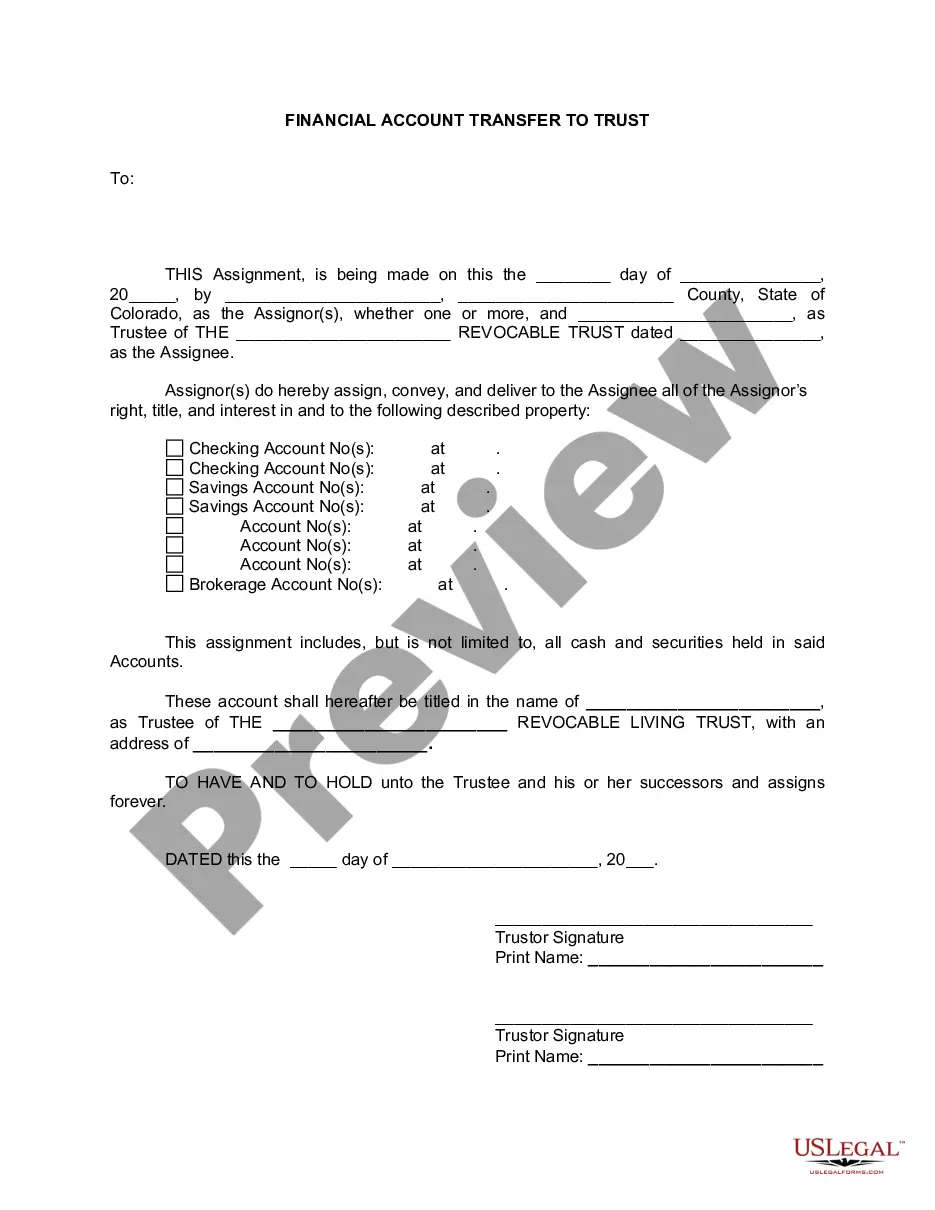
The Financial Account Transfer to Living Trust form is a legal document used to transfer ownership of bank and financial accounts into a living trust. A living trust is established during a person's lifetime, allowing for the management and distribution of assets as part of estate planning. This form differs from other transfer documents by specifically focusing on financial accounts and requires the signature of the Assignor in the presence of a notary public to be legally valid.
Form components explained
- The Assignor(s) commits to assign their rights, title, and interest in the specified financial accounts.
- Identification section for naming the living trust and its trustee.
- Signature fields for the trustor(s), indicating acceptance and agreement to the transfer.
- A notary acknowledgment section to verify the authenticity of the signatures.



Common use cases
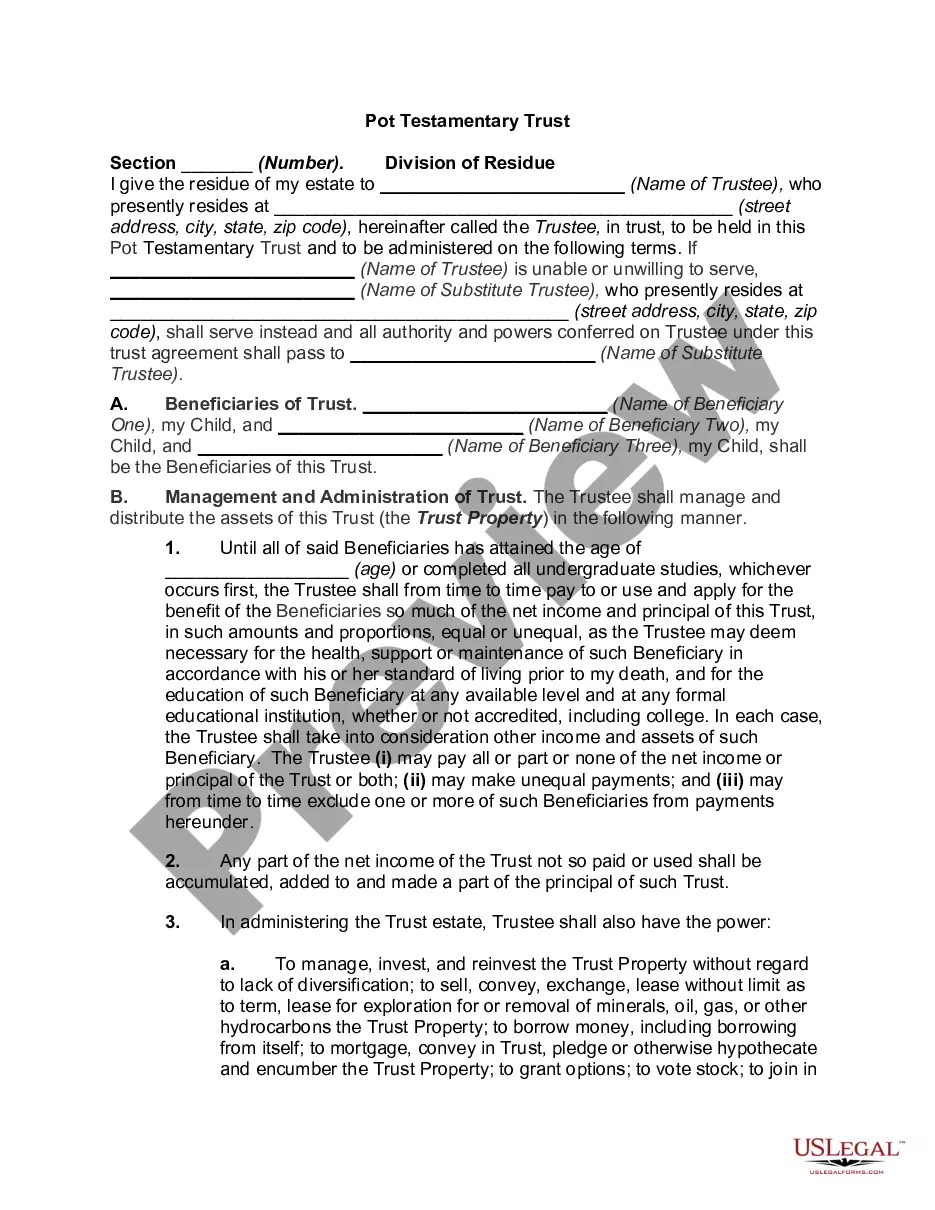
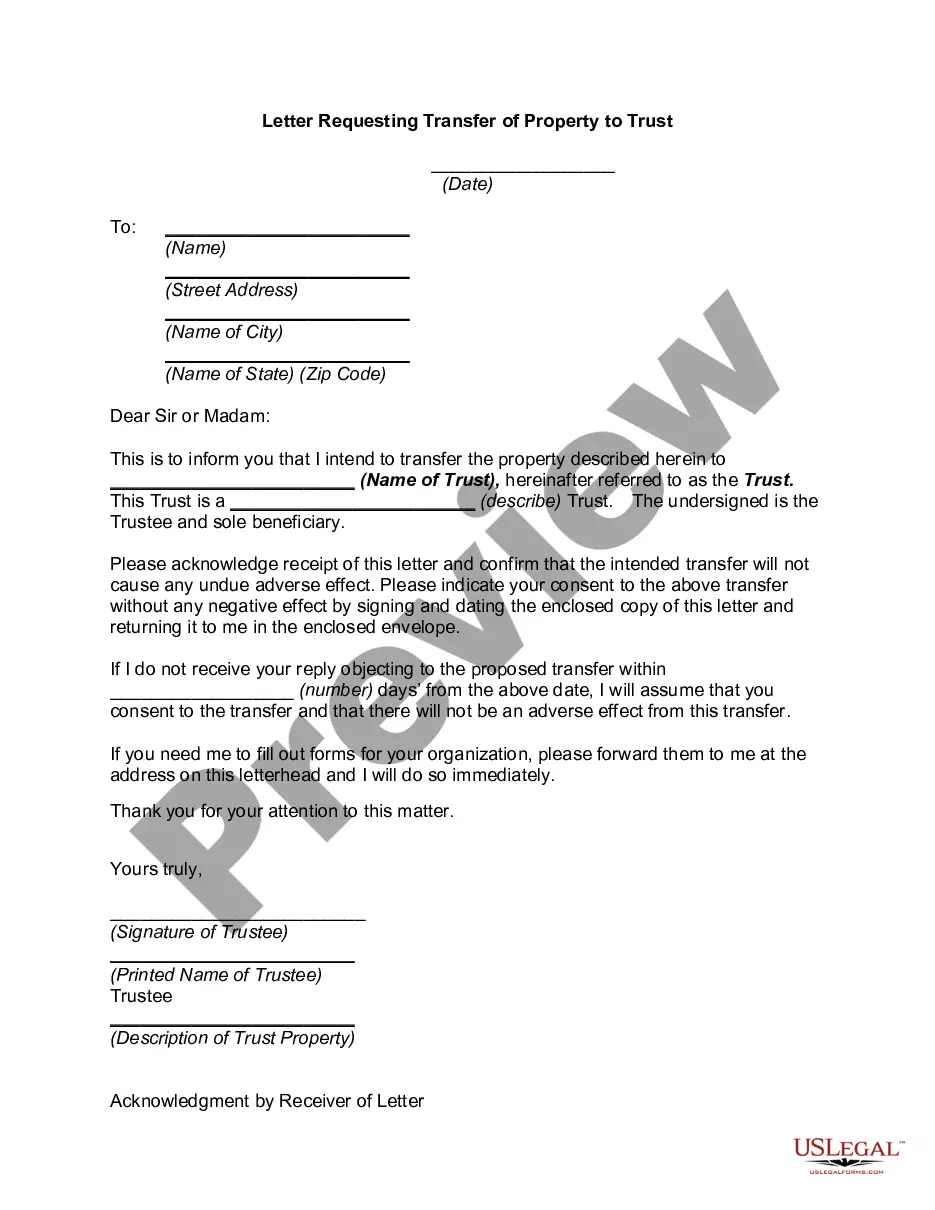
This form should be used when a person wants to transfer their financial accounts, such as bank accounts or investment accounts, into a living trust. It is particularly useful during estate planning to ensure that assets are managed according to the trust's terms and can seamlessly pass on to beneficiaries without going through probate. You may need this form if you recently created a living trust or if you wish to update your asset ownership structure.
Who should use this form
- Individuals establishing a living trust for the first time.
- Trustors looking to consolidate their financial accounts under a living trust.
- Those involved in estate planning who want to avoid probate for financial assets.
How to prepare this document
- Identify the Assignor(s) by entering their full legal name(s).
- Specify the financial accounts being transferred, including account numbers and types.
- Name the living trust and the trustee, providing their address for clarity.
- Fill in the date and affix signatures of the Assignor(s) as required.
- Provide the notary public with the necessary information for acknowledgment.
Does this document require notarization?
Yes, this form must be notarized to be legally valid. Notarization ensures that the signatures are authentic and that the Assignor understands the implications of the transfer. US Legal Forms offers integrated online notarization services, allowing you to complete the notarization through a secure video call, 24/7, without the need for travel.
Get your form ready online
Our built-in tools help you complete, sign, share, and store your documents in one place.
Make edits, fill in missing information, and update formatting in US Legal Forms—just like you would in MS Word.
Download a copy, print it, send it by email, or mail it via USPS—whatever works best for your next step.
Sign and collect signatures with our SignNow integration. Send to multiple recipients, set reminders, and more. Go Premium to unlock E-Sign.
If this form requires notarization, complete it online through a secure video call—no need to meet a notary in person or wait for an appointment.
We protect your documents and personal data by following strict security and privacy standards.

Make edits, fill in missing information, and update formatting in US Legal Forms—just like you would in MS Word.

Download a copy, print it, send it by email, or mail it via USPS—whatever works best for your next step.

Sign and collect signatures with our SignNow integration. Send to multiple recipients, set reminders, and more. Go Premium to unlock E-Sign.

If this form requires notarization, complete it online through a secure video call—no need to meet a notary in person or wait for an appointment.

We protect your documents and personal data by following strict security and privacy standards.
Typical mistakes to avoid
- Failing to specify all financial accounts being transferred.
- Not signing the document in front of a notary public.
- Omitting the trust's name or trustee information.
Benefits of using this form online
- Immediate access to a legally vetted template created by licensed attorneys.
- The convenience of completing the form at your own pace, anywhere.
- Editable format allows for easy customization to fit individual needs.
Key takeaways
- This form is essential for transferring financial accounts into a living trust.
- Proper notarization is necessary for legal validity.
- It simplifies estate planning and asset management.
Looking for another form?







Form popularity
FAQ
To transfer your brokerage account to a living trust, first gather the necessary documentation for the trust. Then, reach out to your brokerage and request their specific process for transferring accounts to a trust. Completing the forms provided by your brokerage will initiate the Colorado Financial Account Transfer to Living Trust. Always check that the transfer meets your estate planning needs.
Including your brokerage account in your living trust can simplify the management and distribution of your assets after your passing. It helps avoid probate, making the process smoother for your beneficiaries. Since this is a crucial aspect of a Colorado Financial Account Transfer to Living Trust, consider discussing it with a legal expert to ensure it aligns with your estate planning goals.
Transferring stock to a revocable trust generally does not trigger immediate tax consequences. You maintain control over the assets during your lifetime, so the assets remain part of your taxable estate. However, it's wise to consult a tax professional when considering a Colorado Financial Account Transfer to Living Trust to understand any potential long-term implications.
To transfer a brokerage account to a trust, start by contacting your brokerage firm. They will usually provide the necessary forms to facilitate a Colorado Financial Account Transfer to Living Trust. Fill out these forms with the trust's information and any required signatures. Once submitted, the brokerage will initiate the transfer process.
A potential downfall of having a trust is that if not properly funded, it may not serve its intended purpose during your lifetime or after. This could lead to confusion for beneficiaries or complications during asset distribution. However, with a Colorado Financial Account Transfer to Living Trust, regular reviews and updates can help ensure all assets are properly included. Services like uslegalforms offer tools to assist in maintaining the trust so that it functions as intended.
It is often wise for parents to consider placing their assets in a trust, especially when planning for future management and distribution. A Colorado Financial Account Transfer to Living Trust can help ensure their assets remain protected and are managed according to their wishes. By establishing a trust, parents can simplify the transfer process to their beneficiaries and avoid potential probate delays. Utilizing a platform like uslegalforms can guide them through the process effectively.
While placing your house in a trust can offer notable benefits, there are some disadvantages to consider. For example, you may encounter costs related to establishing and maintaining the trust. Additionally, transferring ownership can complicate your financial dealings, so understanding the potential implications of the Colorado Financial Account Transfer to Living Trust is key.
To transfer your checking account to your living trust, visit your bank and request the transfer forms. You will likely need to provide information about the trust and its trustee. This step is a crucial aspect of the Colorado Financial Account Transfer to Living Trust, as it ensures your accounts are managed smoothly.
Placing your house in a trust in Colorado can provide significant benefits, such as avoiding probate and protecting your assets. It ensures that your home is managed according to your wishes and is passed down efficiently to heirs. Evaluating the long-term advantages of the Colorado Financial Account Transfer to Living Trust can be beneficial for your estate planning.
Transferring your property to a living trust in Colorado involves drafting a new deed and naming the trust as the property owner. It's important to file this deed with the county clerk and maintain a clear record. Using a reliable platform like uslegalforms can guide you through the Colorado Financial Account Transfer to Living Trust process.