Trust Account For Attorney
Description


Get your form ready online
Our built-in tools help you complete, sign, share, and store your documents in one place.
Make edits, fill in missing information, and update formatting in US Legal Forms—just like you would in MS Word.
Download a copy, print it, send it by email, or mail it via USPS—whatever works best for your next step.
Sign and collect signatures with our SignNow integration. Send to multiple recipients, set reminders, and more. Go Premium to unlock E-Sign.
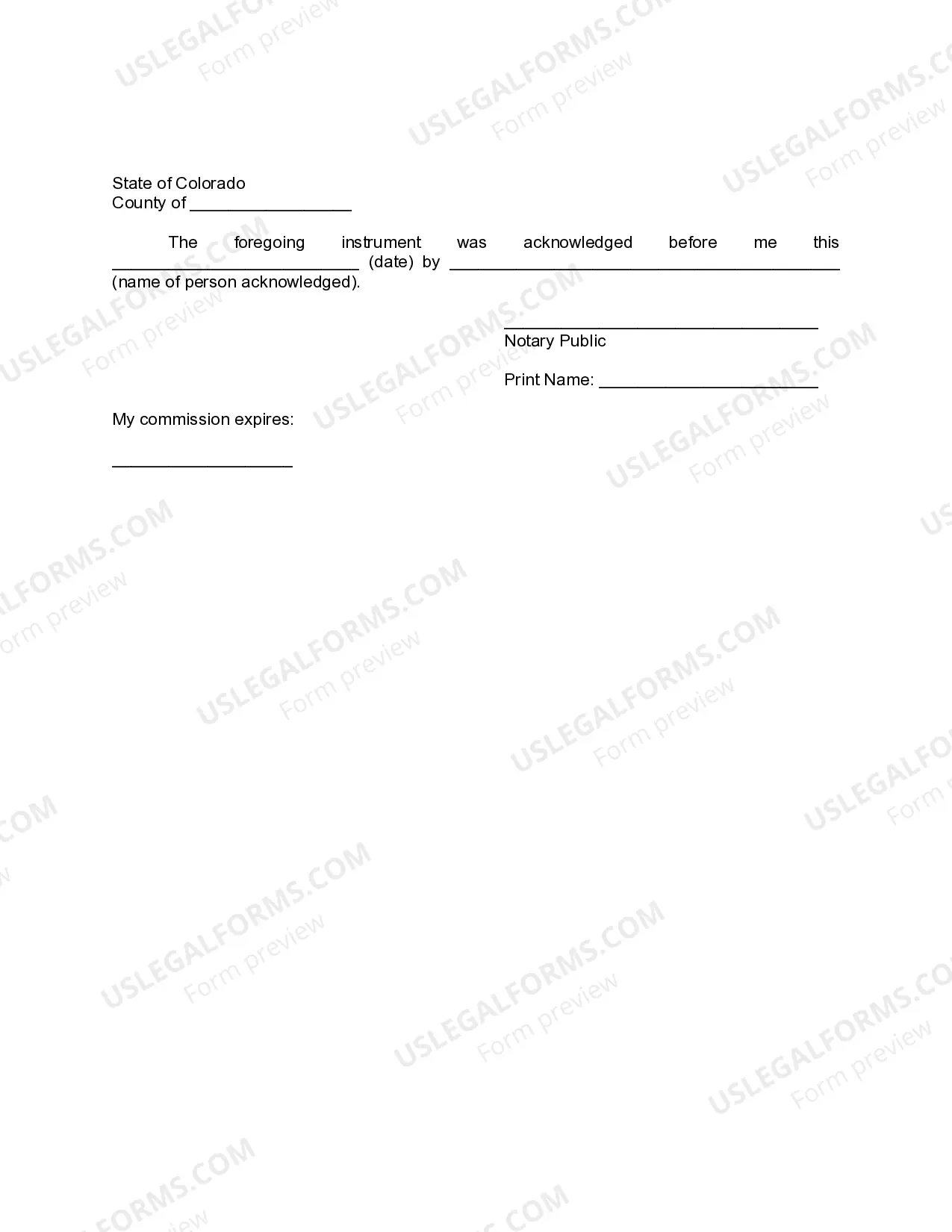
If this form requires notarization, complete it online through a secure video call—no need to meet a notary in person or wait for an appointment.
We protect your documents and personal data by following strict security and privacy standards.

Make edits, fill in missing information, and update formatting in US Legal Forms—just like you would in MS Word.

Download a copy, print it, send it by email, or mail it via USPS—whatever works best for your next step.

Sign and collect signatures with our SignNow integration. Send to multiple recipients, set reminders, and more. Go Premium to unlock E-Sign.

If this form requires notarization, complete it online through a secure video call—no need to meet a notary in person or wait for an appointment.

We protect your documents and personal data by following strict security and privacy standards.
Looking for another form?




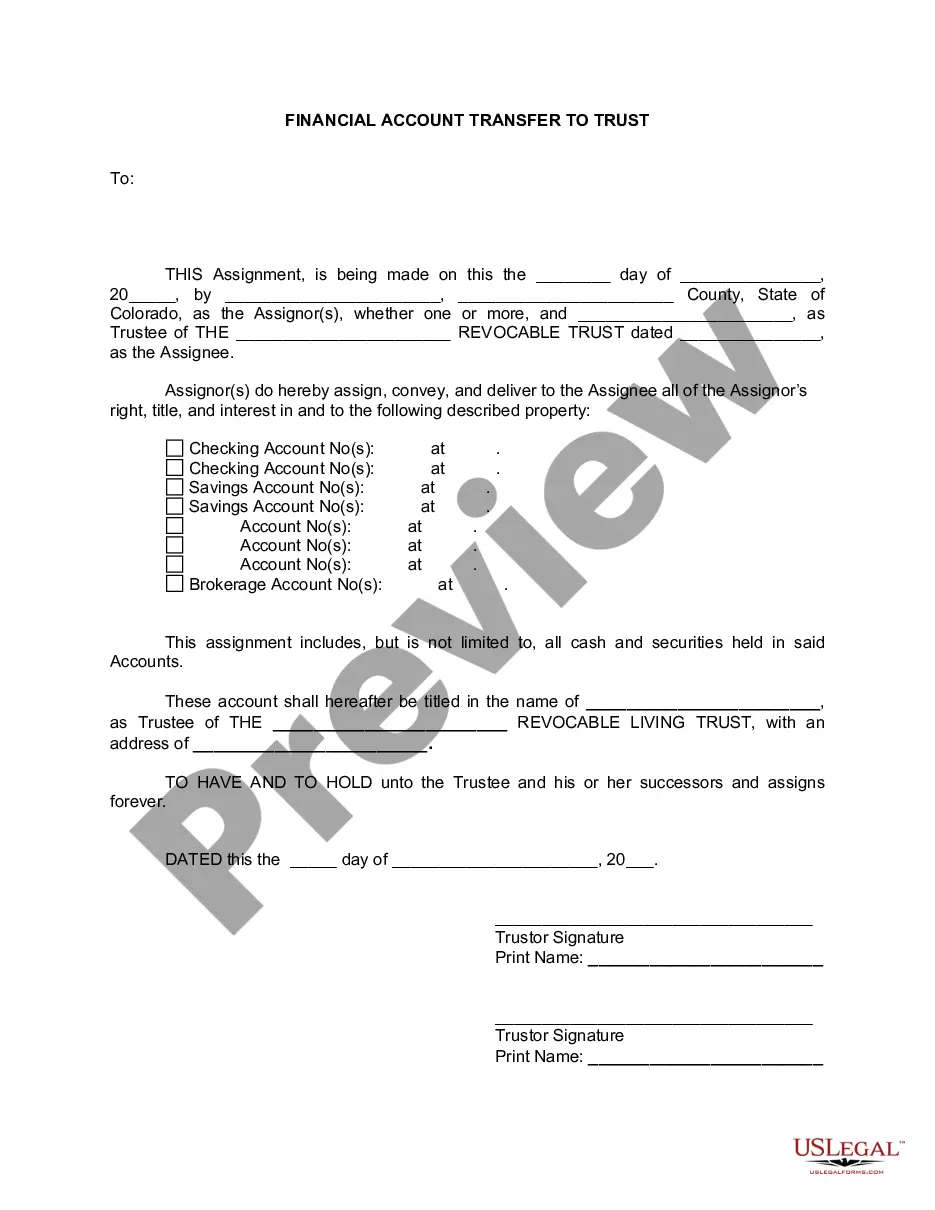
How to fill out Colorado Financial Account Transfer To Living Trust?
- If you're an existing user, log into your account and select the form to download by hitting the Download button. Confirm your subscription is active; if not, renew it based on your payment plan.
- For new users, start by browsing through the Preview mode to review form descriptions. Ensure you select the correct form that meets your specific needs and adheres to local jurisdiction requirements.
- If necessary, search for alternative templates using the Search tab to find one that perfectly suits your requirements.
- Proceed with your purchase by clicking the Buy Now button, then select a subscription plan. An account registration will be necessary to unlock access to the extensive library.
- Complete your payment by entering your credit card information or using your PayPal account to finalize the subscription.
- Download your completed form and save it on your device. You can access it later through the My Forms section of your profile.
US Legal Forms delivers a robust collection of legal documents, offering more options than competitors for a similar cost. The platform is not only user-friendly but also supports users with access to premium experts for guidance.
In conclusion, utilizing US Legal Forms to manage your trust account ensures efficiency and compliance. Start today to streamline your legal document needs!
Form popularity
FAQ
The best place to open a trust account for attorney purposes is at a bank familiar with the unique requirements of legal accounts. Look for financial institutions that offer specialized services for attorneys and provide support for trust account management. You can also use resources like US Legal Forms to find a bank that meets your needs and assists in setting up the account properly.
Lawyers use trust accounts to securely manage and segregate client funds, thus preventing any misuse. Trust accounts ensure that funds are utilized solely for their intended legal purposes, fostering trust between the attorney and their clients. By using trust accounts, lawyers can comply with legal requirements and avoid potential penalties related to mishandled funds.
To establish a trust account for attorney purposes, you typically need to apply through a bank that offers legal accounts. After choosing a suitable financial institution, gather necessary documentation such as your attorney license and identification. Then, complete the bank's application process, specifying that the account will function as a trust account, ensuring compliance with any state regulations.
Accounting for a trust involves keeping meticulous records of all financial transactions related to the trust account for attorney. Start by recording each transaction in a detailed manner, summarizing monthly activity to identify balances and outstanding amounts. Consider using accounting software or platforms like USLegalForms to simplify this process and ensure accuracy in compliance with regulations governing trust accounts.
To properly record trust accounts for attorneys, start by maintaining a dedicated ledger that tracks each client’s funds separately. It is essential to document all deposits, withdrawals, and transactions related to the trust funds accurately. A user-friendly platform like USLegalForms can help streamline this process, ensuring that you adhere to legal requirements while efficiently managing your trust accounts.
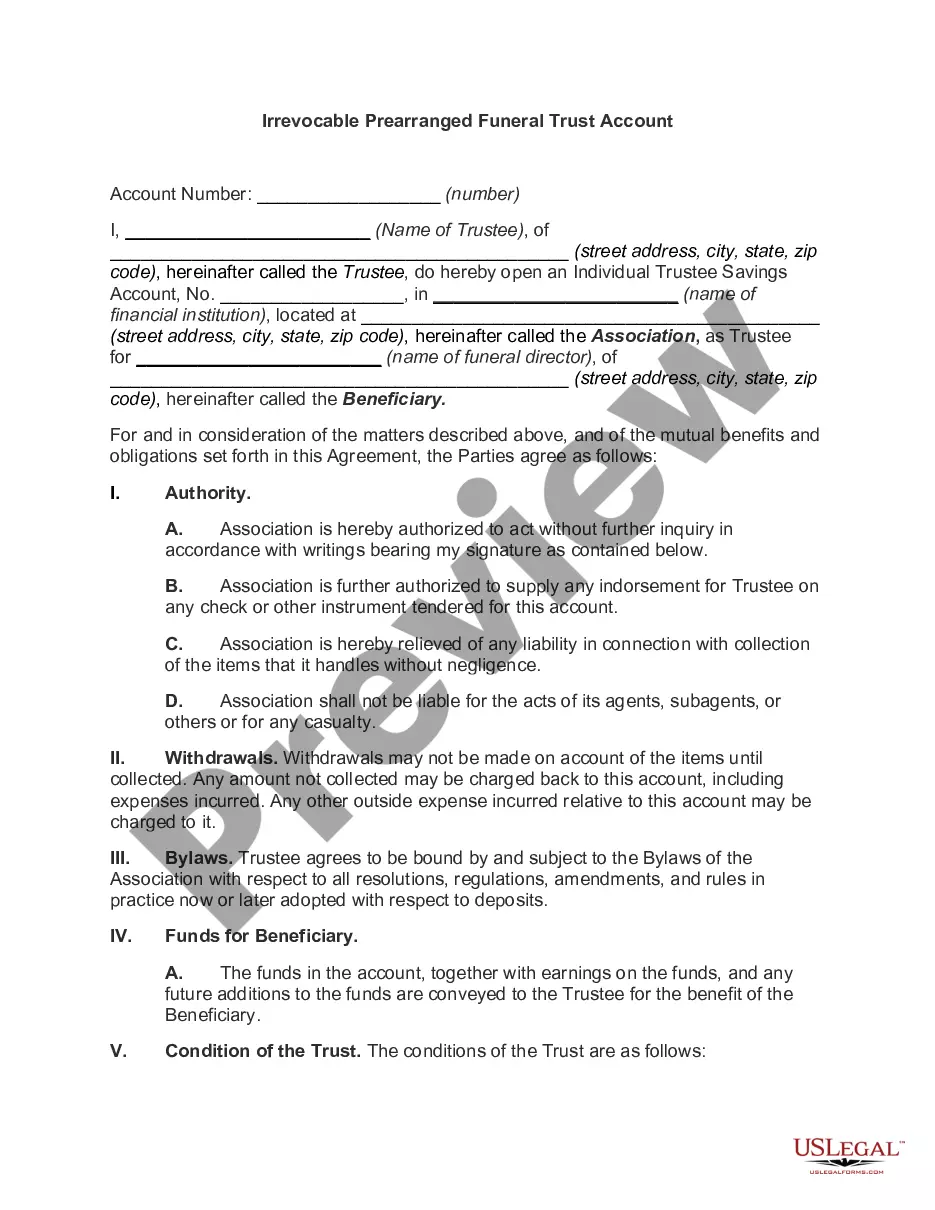
Filling out a trust fund involves several clear steps. Begin by naming the trust and identifying the parties involved, including the trustee and beneficiaries. Then, outline the terms and conditions, specifying how the funds should be managed and distributed. If you need assistance or specific templates, consider using US Legal Forms, which provides helpful resources to ensure your trust account for attorney is set up correctly.
To write a check to an attorney trust account, start by filling in the payee's name, which is typically the law firm's name or the attorney handling the account. Next, specify the amount in both numbers and words to avoid confusion. Be sure to note the purpose of the payment in the memo line, as this helps in maintaining accurate records. Finally, keep a copy of the check for your records, as documentation is crucial when dealing with a trust account for attorney.
While it is not mandatory to have a separate trust account for each client, many attorneys choose to do so for clarity and compliance. Having individual trust accounts for each client helps avoid the risks associated with co-mingling funds. This practice also simplifies accounting and provides clear tracking for every client’s funds. Consider using a reputable platform, like uslegalforms, to help manage and maintain your trust accounts effectively.
Yes, individuals can have multiple trust accounts depending on their specific needs and circumstances. Having more than one trust account allows an attorney to manage different clients or various purposes effectively. A trust account for attorney can be tailored to fit the financial requirements of each client or case. It is advisable to keep accurate records for every trust account to maintain compliance.
Yes, a trust typically needs a separate bank account to effectively manage and safeguard its assets. Opening a dedicated trust account for attorney helps maintain clarity and protects the funds from co-mingling with personal assets or business accounts. This separation is essential for transparency, tax purposes, and complying with legal regulations. Consult a legal expert to ensure all requirements are met.