Colorado Deed of Distribution - Personal Representative to Two Individuals
What this document covers
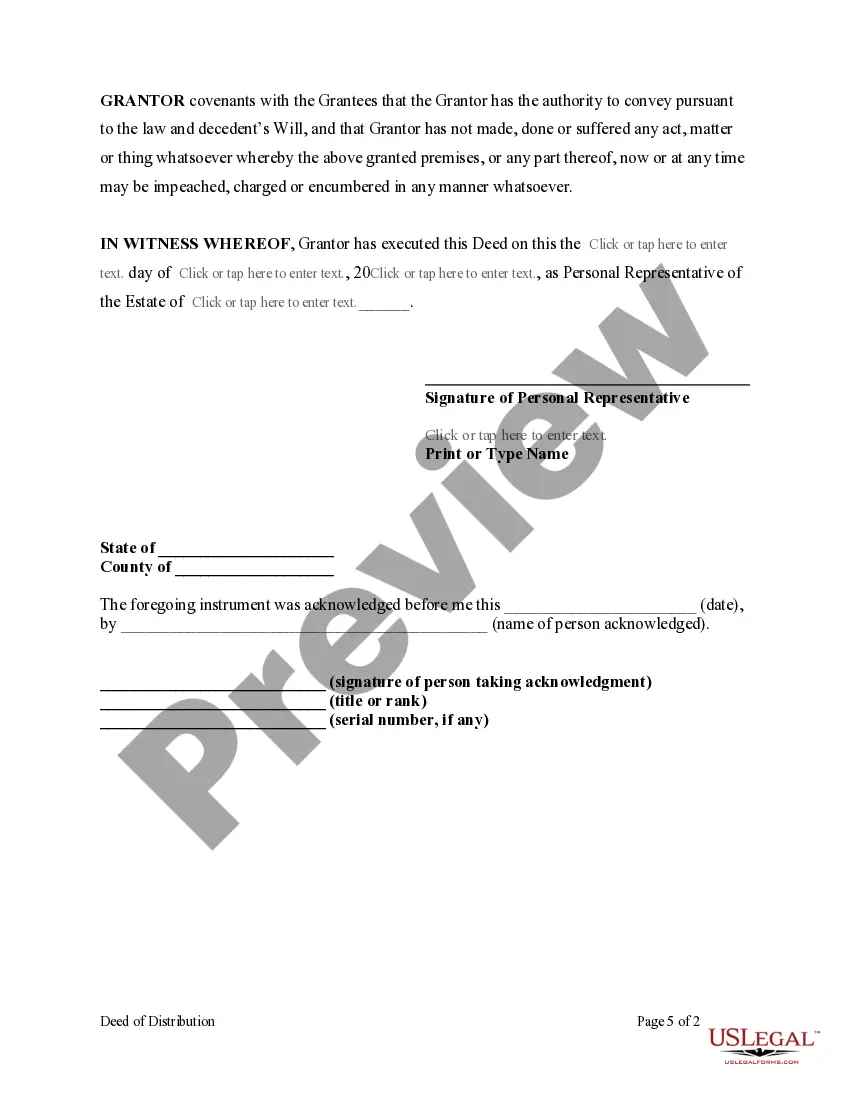
The Deed of Distribution - Personal Representative to Two Individuals is a legal document used to transfer ownership of property from a Personal Representative of an estate to two beneficiaries. This form is crucial when settling an estate, as it officially records the distribution of property among heirs. Unlike other property transfer forms, this deed specifically addresses the role of the Personal Representative and complies with state laws, ensuring that the grantor's title is warranted only for actions taken during their tenure as representative of the estate.
Form components explained
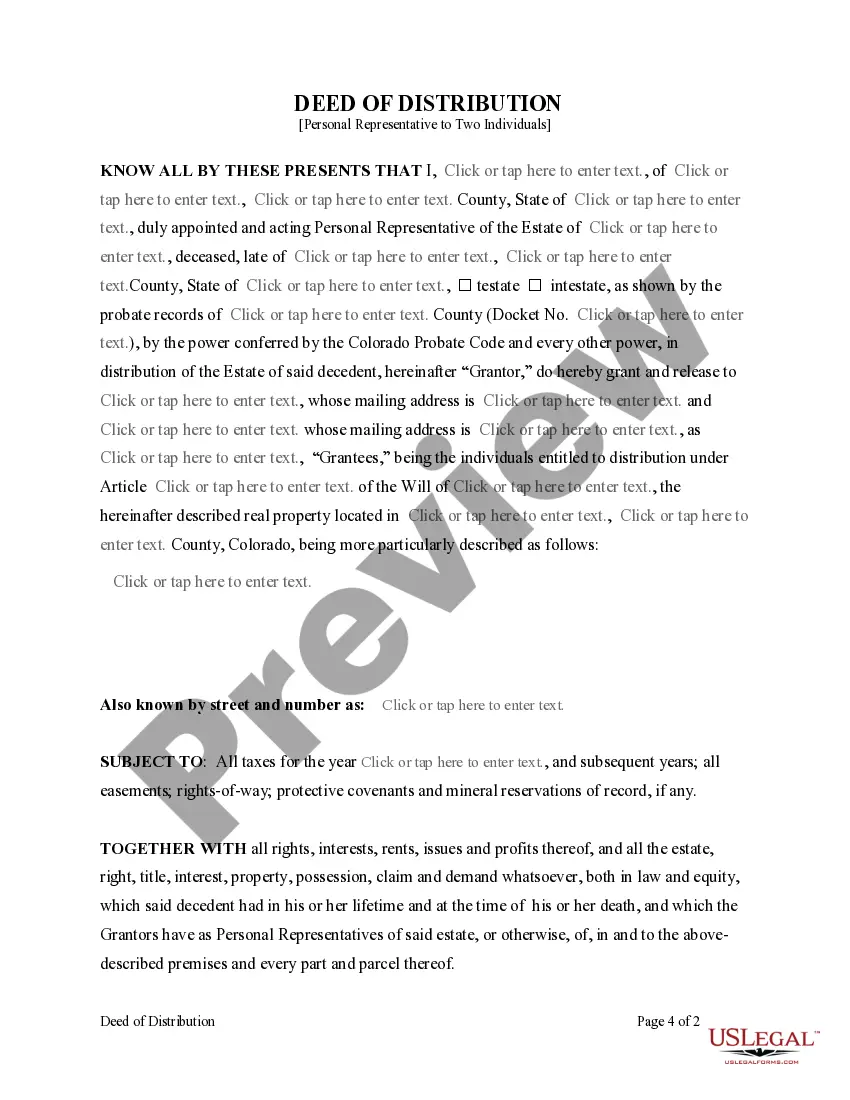
- Identification of the grantor as the Personal Representative of the estate.
- Specification of the grantees as the beneficiaries receiving the property.
- Detailed description of the property being conveyed.
- Warranties provided by the grantor regarding the title of the property.
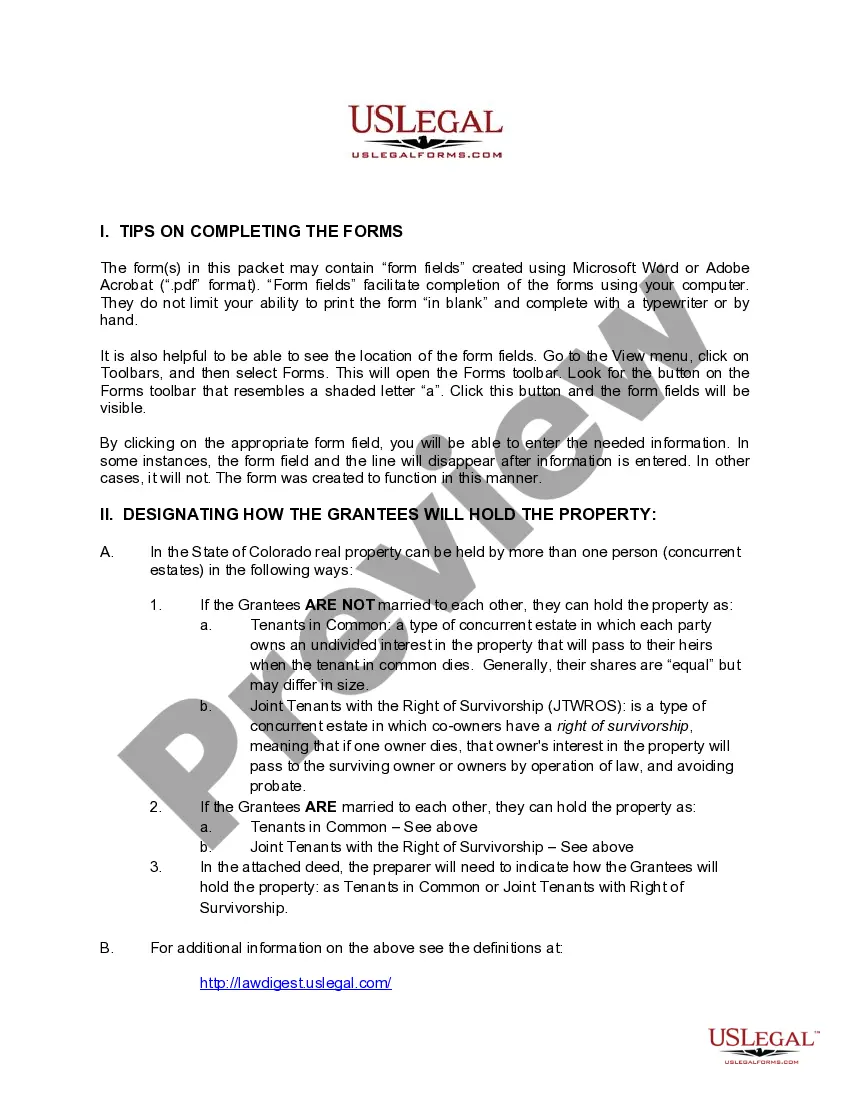
- Options for how the grantees will hold the property (e.g., as Tenants in Common or Joint Tenants with Right of Survivorship).



When to use this form
This form is needed when a Personal Representative has been appointed for an estate and is ready to distribute property to beneficiaries. It is particularly useful in scenarios where the estate consists of real property and the grantor wants to ensure a clear and legally compliant transfer to the designated individuals. It can also be applicable in cases where the estate has settled debts and is ready for final distribution of assets.
Who needs this form
This form is intended for:
- Personal Representatives of an estate who are tasked with distributing property to beneficiaries.
- Beneficiaries who are receiving property as part of an estate distribution.
- Heirs who wish to formalize the transfer of property from a deceased person's estate.
How to complete this form
- Identify all parties involved in the transaction, including the Personal Representative and the beneficiaries.
- Clearly describe the property being distributed, including any relevant legal descriptions.
- Designate how the grantees will hold the property, choosing between Tenants in Common or Joint Tenants with Right of Survivorship.
- Enter the date of the distribution and ensure all parties sign the document.
- Review the completed deed for accuracy and compliance with state requirements before filing.
Does this form need to be notarized?
Notarization is required for this form to take effect. Our online notarization service, powered by Notarize, lets you verify and sign documents remotely through an encrypted video session, available 24/7.
Get your form ready online
Our built-in tools help you complete, sign, share, and store your documents in one place.
Make edits, fill in missing information, and update formatting in US Legal Forms—just like you would in MS Word.
Download a copy, print it, send it by email, or mail it via USPS—whatever works best for your next step.
Sign and collect signatures with our SignNow integration. Send to multiple recipients, set reminders, and more. Go Premium to unlock E-Sign.
If this form requires notarization, complete it online through a secure video call—no need to meet a notary in person or wait for an appointment.
We protect your documents and personal data by following strict security and privacy standards.

Make edits, fill in missing information, and update formatting in US Legal Forms—just like you would in MS Word.

Download a copy, print it, send it by email, or mail it via USPS—whatever works best for your next step.

Sign and collect signatures with our SignNow integration. Send to multiple recipients, set reminders, and more. Go Premium to unlock E-Sign.

If this form requires notarization, complete it online through a secure video call—no need to meet a notary in person or wait for an appointment.

We protect your documents and personal data by following strict security and privacy standards.
Common mistakes to avoid
- Failing to accurately describe the property can lead to future disputes.
- Not specifying how the grantees will hold the property may create confusion about ownership rights.
- Omitting signatures or dates could invalidate the deed.
- Not reviewing the form for compliance with state laws might cause legal issues.
Benefits of completing this form online
- Convenience of accessing and completing the form from anywhere.
- Editability allows for easy corrections and adaptations as needed.
- Access to professionally drafted templates ensures legal compliance.
- Instant downloads enable quick initiation of the property transfer process.
Looking for another form?


Form popularity
FAQ
Transfers property from the estate's Personal Representative to two beneficiaries, officially recording the distribution of property as part of settling the estate. The deed ensures the grantor's title warranties apply only to actions taken while serving as the estate's Personal Representative and helps validate the transfer to two named individuals under Colorado law.
The grantor is identified as the Personal Representative of the estate, meaning the deed is executed by the person authorized to manage and distribute estate assets. This ensures the transfer occurs under court-appointed authority and reflects the form’s purpose of recording a distribution from the estate to two beneficiaries.
A detailed description of the property being conveyed must be included so the exact real property is clearly identified and recorded. This aligns with the form components that specify the property to be transferred from the estate to the two beneficiaries, ensuring the correct parcel is legally conveyed and titled in the receivers’ names.
The form provides for how the two grantees may hold title, including options such as Tenants in Common or Joint Tenants with Right of Survivorship. This clarifies whether each beneficiary holds an undivided interest or joint ownership with survivorship rights, and it helps determine how the property remains titled after distribution.
The grantor provides warranties regarding the title of the property, as described in the form components. These title warranties are linked to the grantor’s status as Personal Representative and cover the interest conveyed, offering assurance to the beneficiaries about the estate’s ownership and the transfer being recorded.
This deed is specifically designed to transfer property to two beneficiaries, naming two grantees and outlining how they may hold the title jointly or in other arrangements. A single-beneficiary version would name only one grantee and would not address two-person holding options, making this form distinct for two-beneficiary distributions.