Florida Last Will and Testament for Divorced and Remarried Person with Mine, Yours and Ours Children
Understanding this form
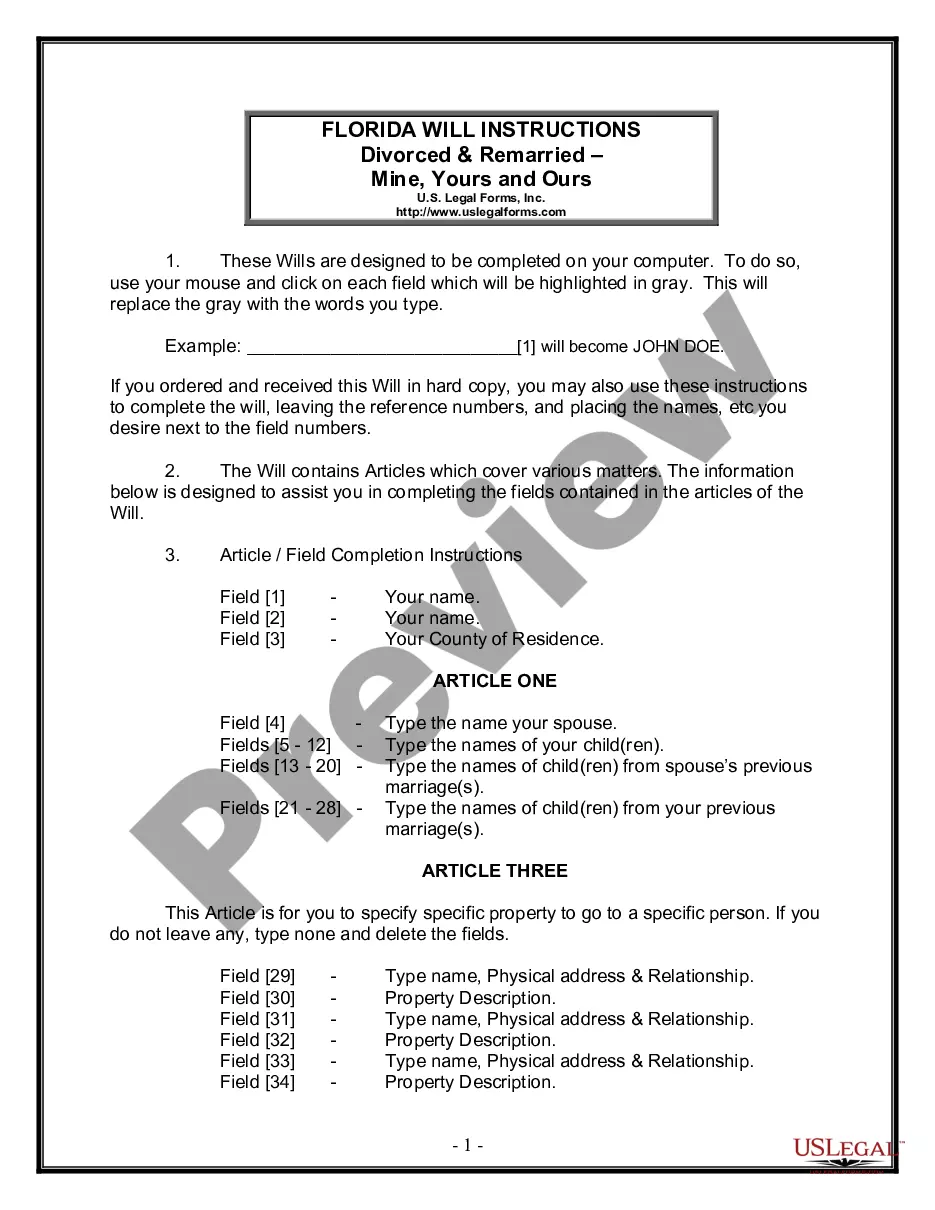
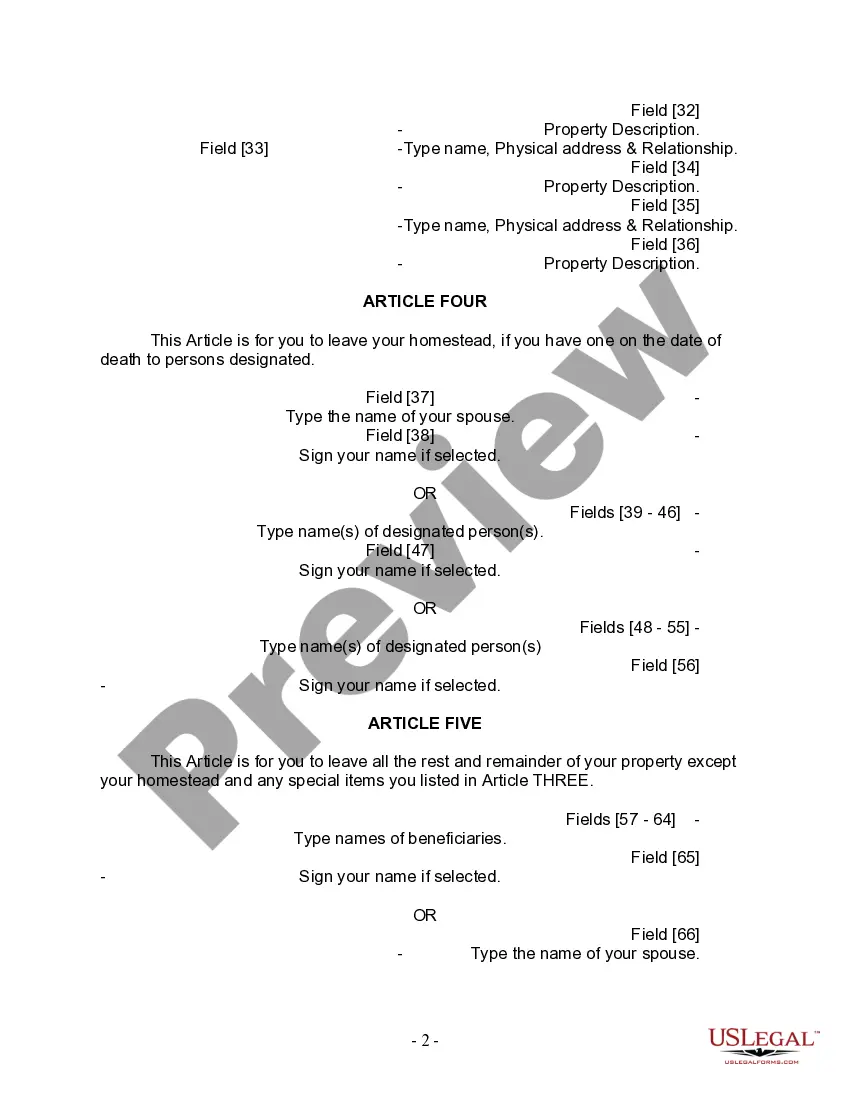
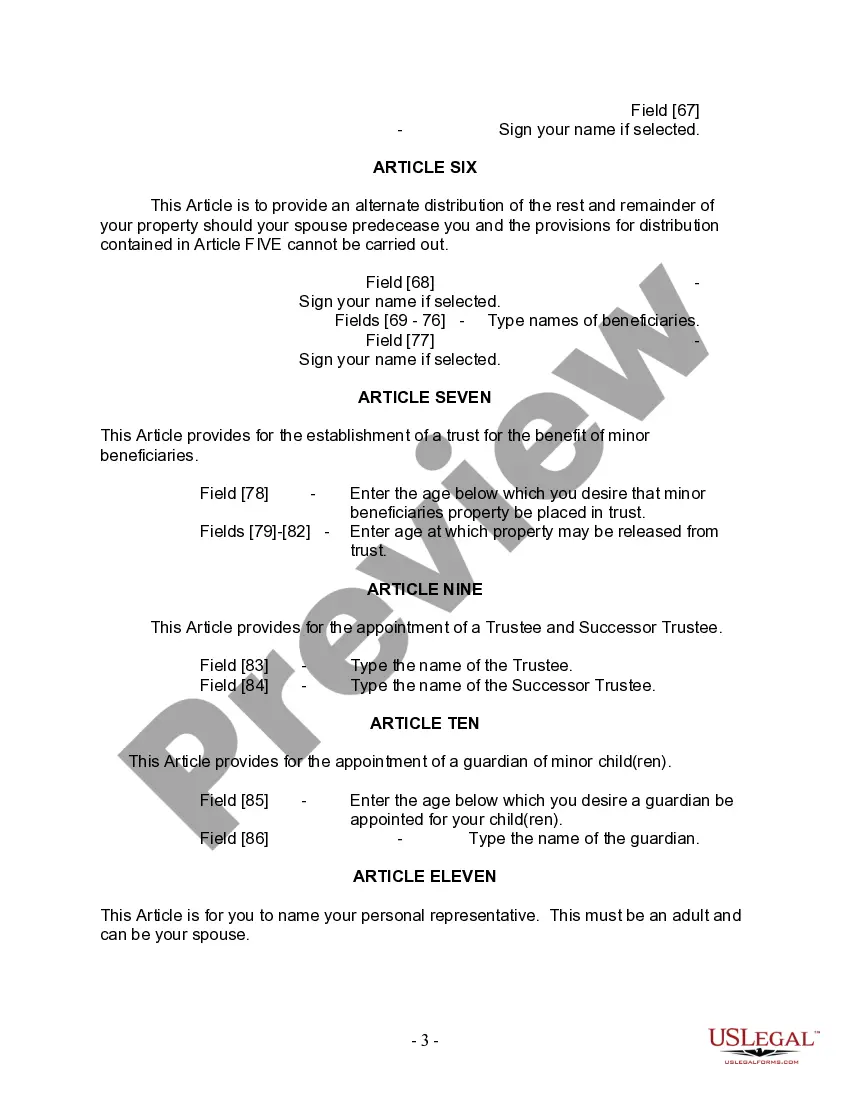
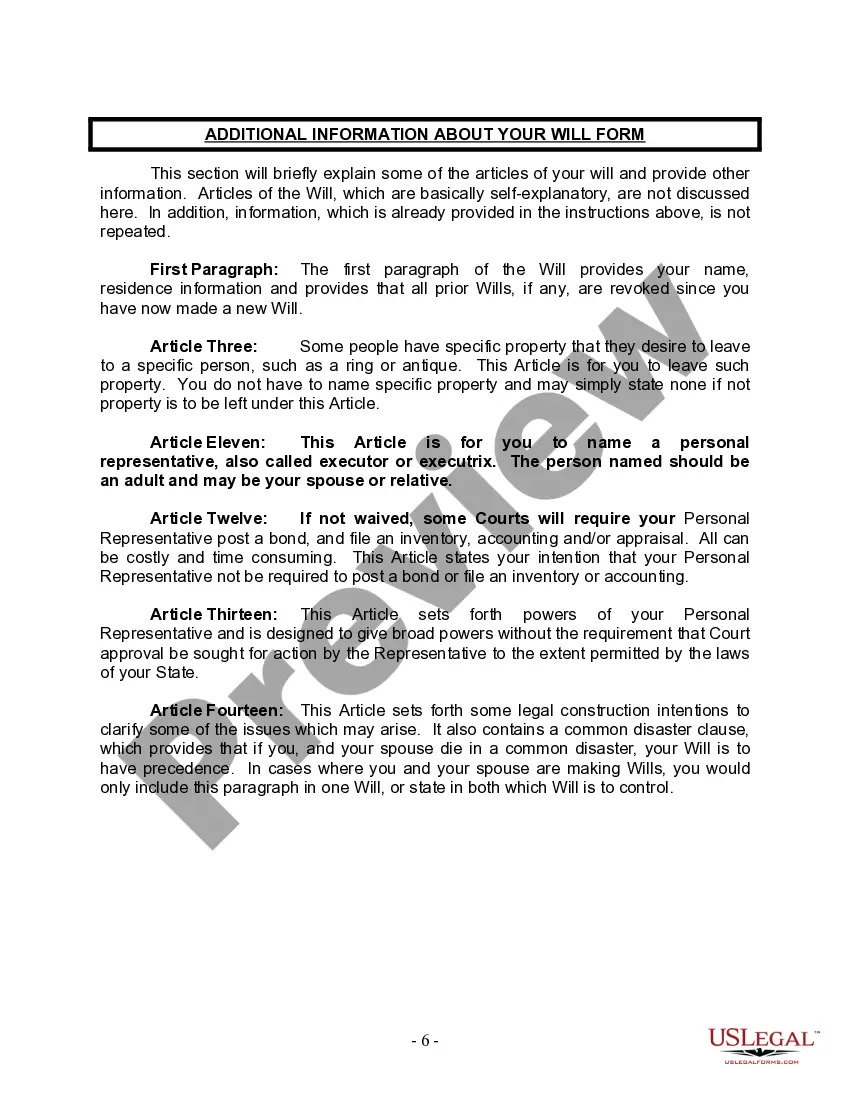
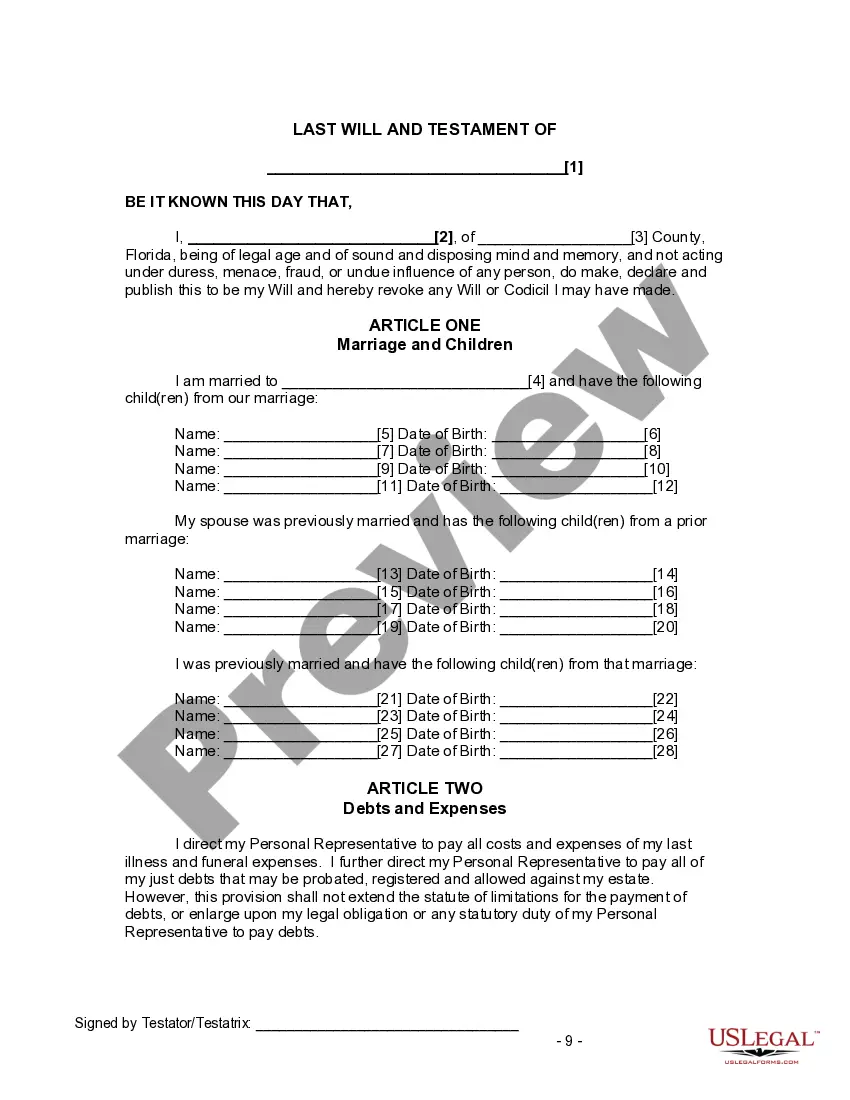
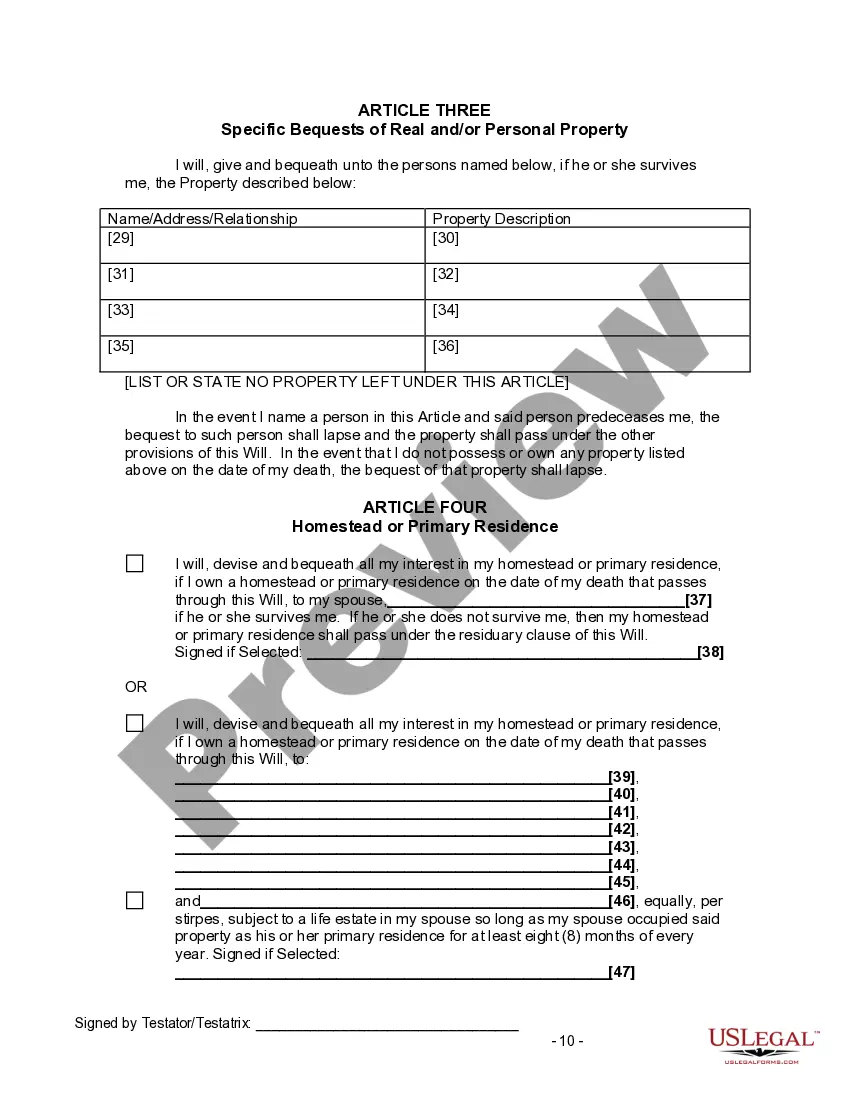
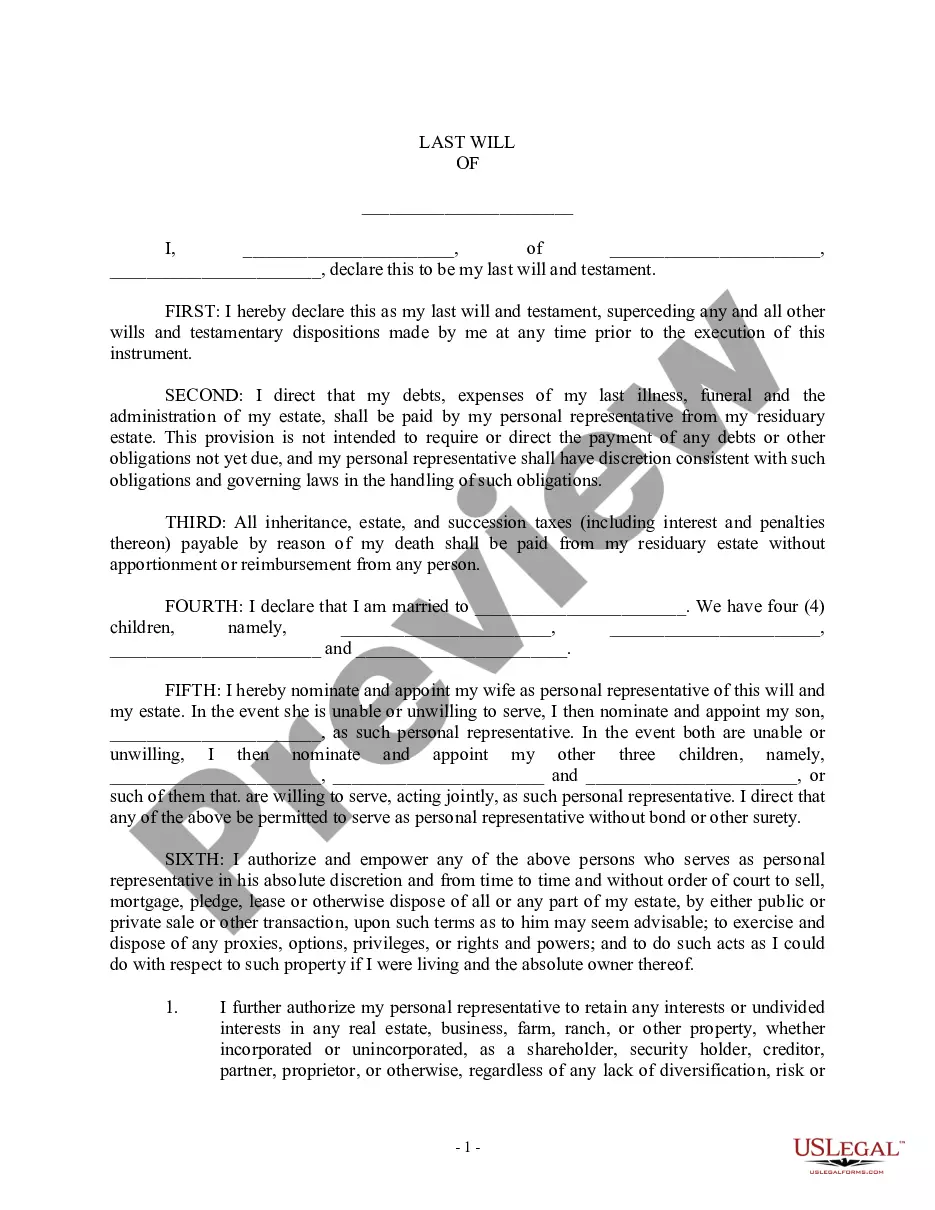
This Last Will and Testament is a legal document designed for a divorced and remarried person with biological children and stepchildren. It specifies how your assets will be distributed upon your death, appoints guardians for minor children, and designates a personal representative to manage your estate. This form uniquely addresses the complexities of blended families, ensuring that both "mine," "yours," and "ours" children are included in your estate planning. It is crucial for ensuring your wishes are honored and minimizing disputes among beneficiaries.
Main sections of this form
- Appointment of a personal representative or executor to manage your estate.
- Specification of how your property will be distributed, including specific bequests to individuals.
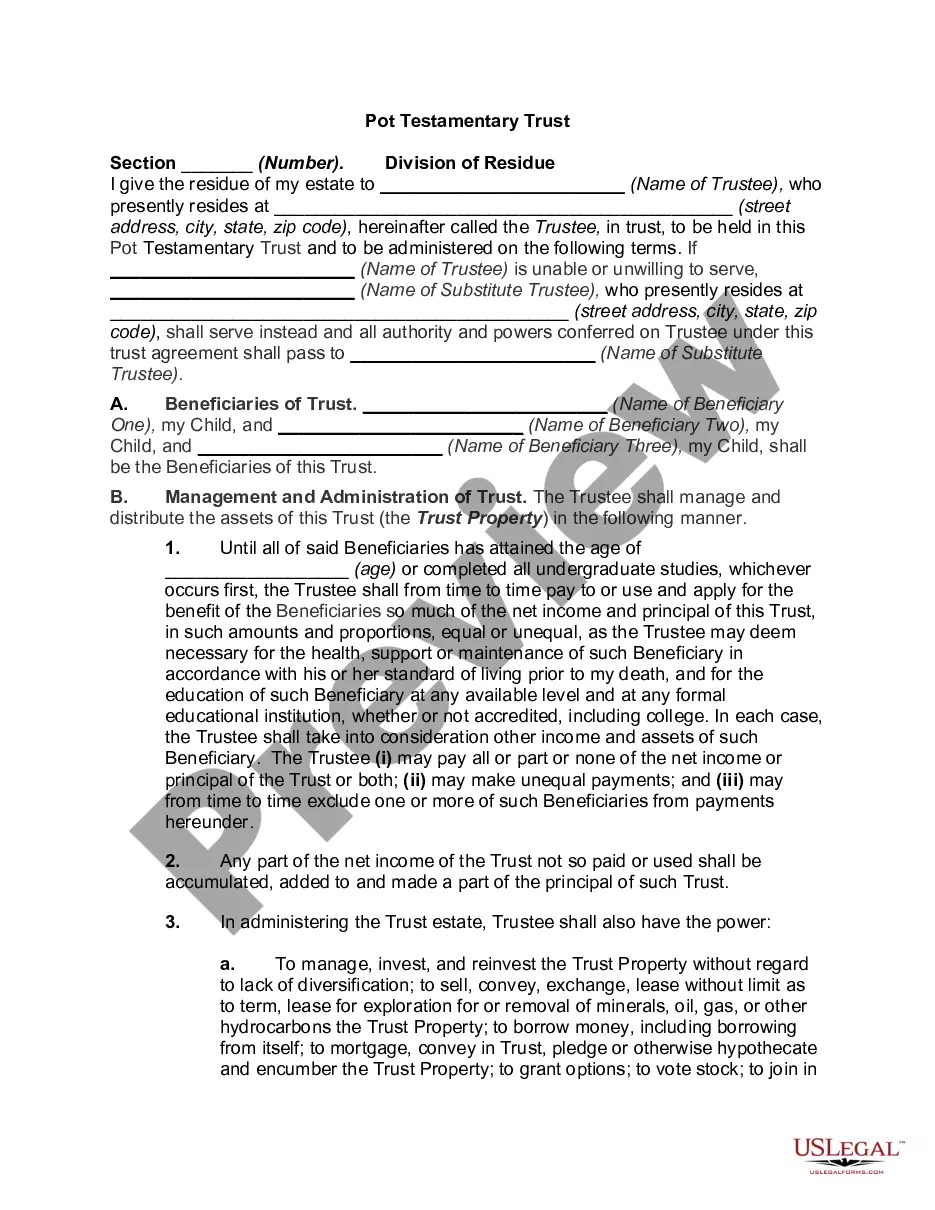
- Provision for a trust for minor children until they reach a specified age.
- Designation of guardians for minor children if both you and your spouse predecease them.
- Common disaster clause addressing situations where you and your spouse pass away simultaneously.



Situations where this form applies
This form should be used when you have been divorced and remarried, and you have children from more than one relationship. It is suitable for individuals wanting to ensure their children, whether from current or previous marriages, are provided for in their will. Consider using this form when updating your estate plan after a significant life change, such as remarriage or having new children.
Who this form is for
- Divorced individuals who have remarried and have children from previous marriages.
- Parents with both biological and stepchildren who want to clearly indicate their wishes regarding inheritance.
- Those looking to establish specific provisions for minor children regarding guardianship and inheritance.
Steps to complete this form
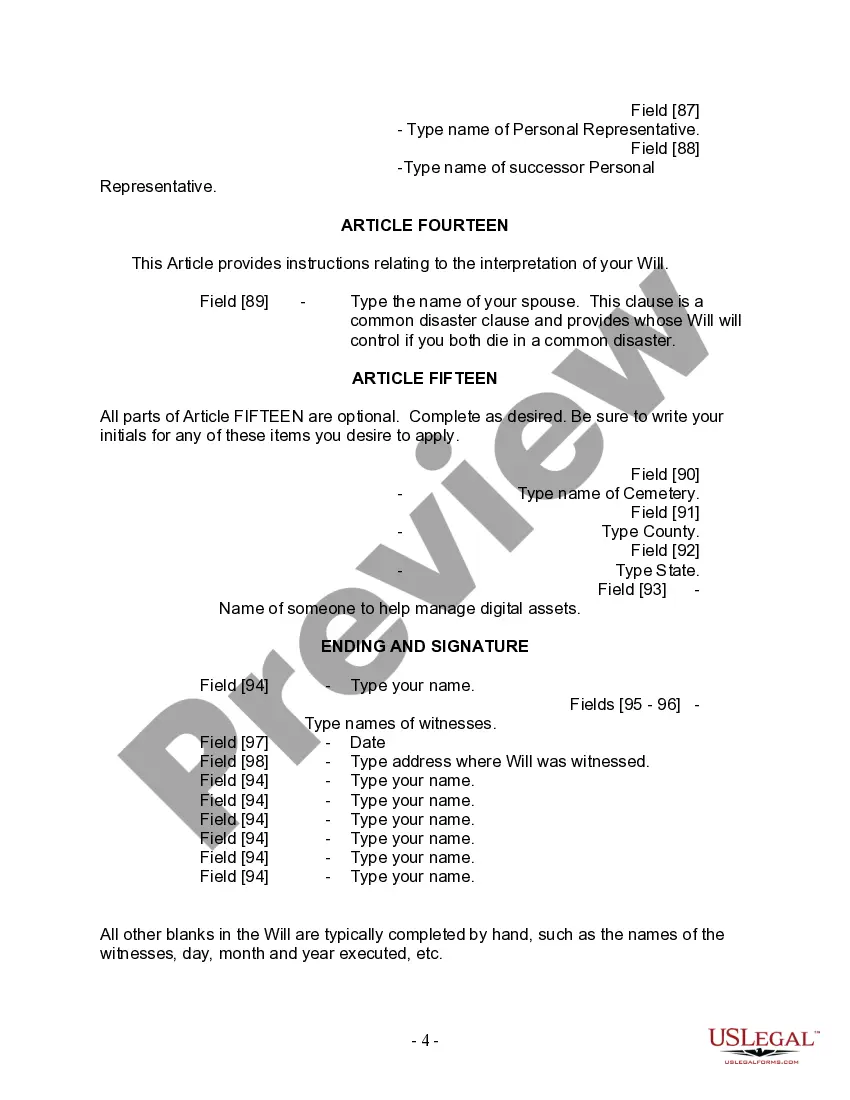
- Begin by entering your name and your county of residence at the top of the form.
- Fill in the names and details of your spouse and any children from your current and previous marriages.
- Specify any specific property you wish to bequeath to individuals, or state 'none' if there are no specific bequests.
- Complete sections for appointing a guardian for minor children and a trustee if needed.
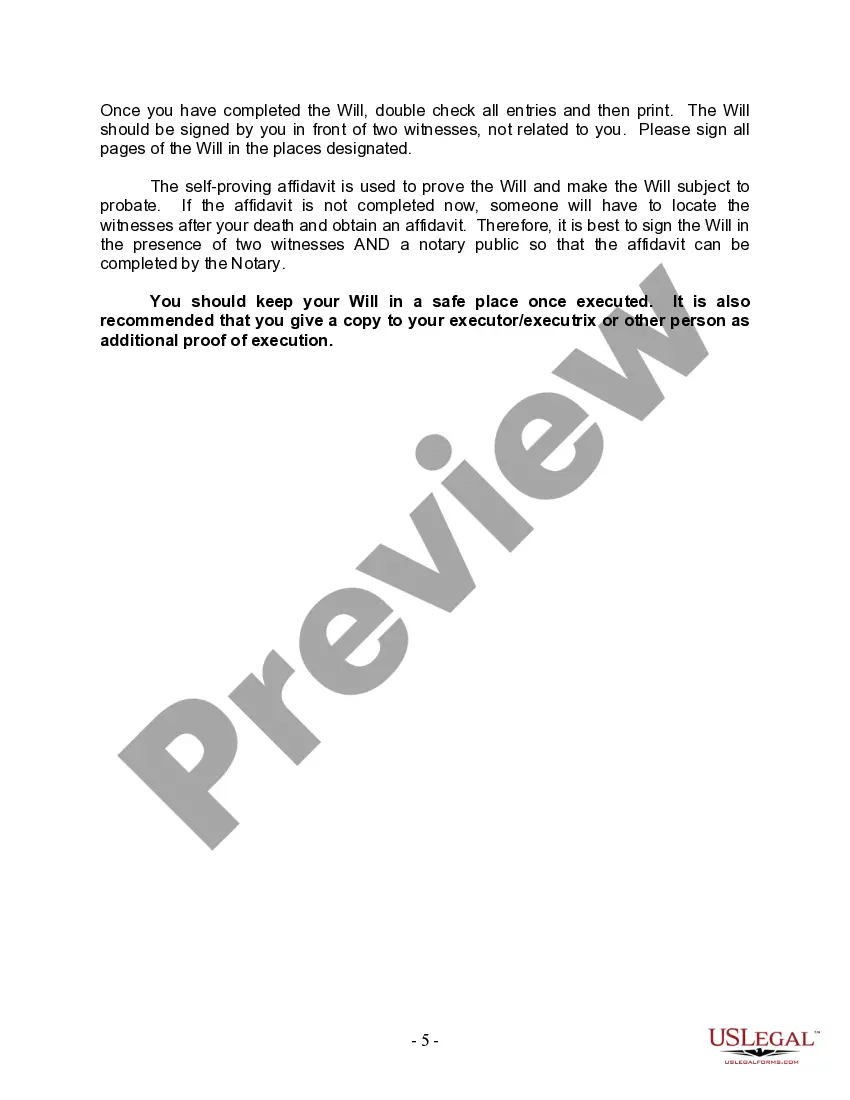
- Sign the document in the presence of two unrelated witnesses and a notary public, if required by your state.
Does this form need to be notarized?
To make this form legally binding, it must be notarized. Our online notarization service, powered by Notarize, lets you verify and sign documents remotely through an encrypted video session.
Get your form ready online
Our built-in tools help you complete, sign, share, and store your documents in one place.
Make edits, fill in missing information, and update formatting in US Legal Forms—just like you would in MS Word.
Download a copy, print it, send it by email, or mail it via USPS—whatever works best for your next step.
Sign and collect signatures with our SignNow integration. Send to multiple recipients, set reminders, and more. Go Premium to unlock E-Sign.
If this form requires notarization, complete it online through a secure video call—no need to meet a notary in person or wait for an appointment.
We protect your documents and personal data by following strict security and privacy standards.

Make edits, fill in missing information, and update formatting in US Legal Forms—just like you would in MS Word.

Download a copy, print it, send it by email, or mail it via USPS—whatever works best for your next step.

Sign and collect signatures with our SignNow integration. Send to multiple recipients, set reminders, and more. Go Premium to unlock E-Sign.

If this form requires notarization, complete it online through a secure video call—no need to meet a notary in person or wait for an appointment.

We protect your documents and personal data by following strict security and privacy standards.
Avoid these common issues
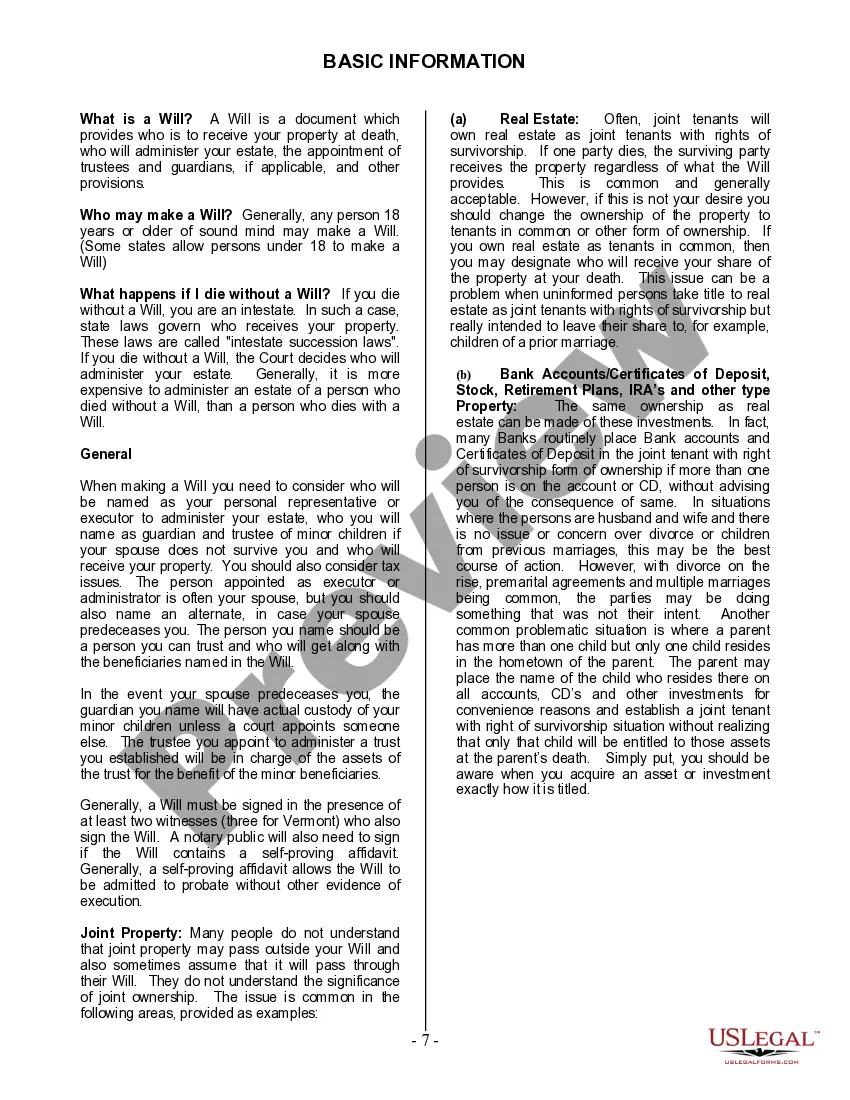
- Failing to have the will signed by two witnesses, leading to potential issues with probate.
- Not including a contingent plan in case a beneficiary predeceases you.
- Overlooking the necessity of a self-proving affidavit when required by state law.
Benefits of using this form online
- Conveniently complete the will from home without needing to visit an attorney.
- Edit the document easily to reflect any changes in your situation.
- Access instructions and support during the completion process.
Legal use & context
- This Last Will and Testament provides clear instructions on how your property should be distributed after your passing.
- It helps prevent disputes among family members regarding inheritance, especially in blended families.
- Having a valid will can simplify the probate process and minimize costs.
Summary of main points
- This will addresses the specific needs of divorced and remarried individuals with children.
- Proper execution, including witnesses and notarization, is essential for legality.
- Using this form can help ensure your estate is distributed according to your wishes.
Looking for another form?
Form popularity
FAQ
In general, a divorce agreement can impact a will, especially in the context of the Florida Last Will and Testament for Divorced and Remarried Person with Mine, Yours and Ours Children. Typically, assets that are addressed in the divorce settlement may not be included in the will. Additionally, any provisions that benefit an ex-spouse might be invalidated by the divorce. It's crucial to update your will after a divorce to ensure it accurately reflects your current wishes and family situation.
In Florida, your spouse typically does not inherit assets from you if you file for divorce before your death. However, they may have rights to certain properties acquired during the marriage. To ensure your assets are correctly distributed, consider updating your Florida Last Will and Testament for Divorced and Remarried Persons with Mine, Yours and Ours Children to safeguard your inheritance and specify your intentions.
In Florida, divorce generally does not automatically invalidate a will. However, it can affect the distribution of assets, especially if your spouse is a named beneficiary. After a divorce, it is wise to revisit your Florida Last Will and Testament for Divorced and Remarried Persons with Mine, Yours and Ours Children to ensure it aligns with your current wishes and family dynamics.
Creating a valid last will and testament in Florida requires you to meet specific legal criteria. You must be at least 18 years old, sound of mind, and the document needs to be in writing and signed by you in front of two witnesses. Moreover, it’s advisable to regularly update your Florida Last Will and Testament for Divorced and Remarried Persons with Mine, Yours and Ours Children to reflect any changes in your family situation or wishes.
In Florida, a will can override divorce papers when it comes to property distribution. However, if your divorce papers specify certain arrangements, these will take precedence over your will's wishes. Therefore, it is crucial to review both your will and divorce documents to ensure they align with your intentions. Crafting a Florida Last Will and Testament for Divorced and Remarried Persons with Mine, Yours and Ours Children can help clarify your estate plan.
Yes, in Florida, marriage generally revokes any existing wills unless the will expressly states otherwise. Therefore, if you remarry, it is vital to create a new Florida Last Will and Testament for Divorced and Remarried Person with Mine, Yours and Ours Children. This ensures your assets are distributed according to your wishes and protects the interests of all your children, regardless of previous marriages.
Yes, you can write your own will in Florida, provided it meets certain legal requirements. However, crafting a Florida Last Will and Testament for Divorced and Remarried Person with Mine, Yours and Ours Children can be complex, especially if you have children from different relationships. Using a professional service like uslegalforms can help you create a will that accurately captures your wishes and safeguards your children's futures.
In Florida, the duration of your marriage affects your marital rights regarding asset division. Spouses are entitled to an equitable distribution of marital assets, regardless of the marriage's length. However, a comprehensive Florida Last Will and Testament for Divorced and Remarried Person with Mine, Yours and Ours Children can clarify your specific intentions and ensure a smooth transition for your family.
In Florida, a surviving spouse does not automatically inherit everything, particularly if there are children from a previous marriage. Instead, the distribution of assets depends on the terms outlined in your Florida Last Will and Testament for Divorced and Remarried Person with Mine, Yours and Ours Children. If you want your spouse to inherit specific assets or the entirety of your estate, it's essential to document these wishes clearly in your will.
In Florida, if you get married after creating a will, your new marriage can affect the validity of your existing will. Florida law typically provides that a new spouse may have rights to a portion of your estate, even if they are not named in the will. However, a Florida Last Will and Testament for Divorced and Remarried Person with Mine, Yours and Ours Children ideally should be updated to reflect your current family dynamics and intentions. This way, you can ensure that your estate planning accurately represents your wishes and provides for all your children.