Sample Letter for Final Judgment In Unlawful Entry - Detainer - Writ of Habere Facias Possessionem
What is this form?
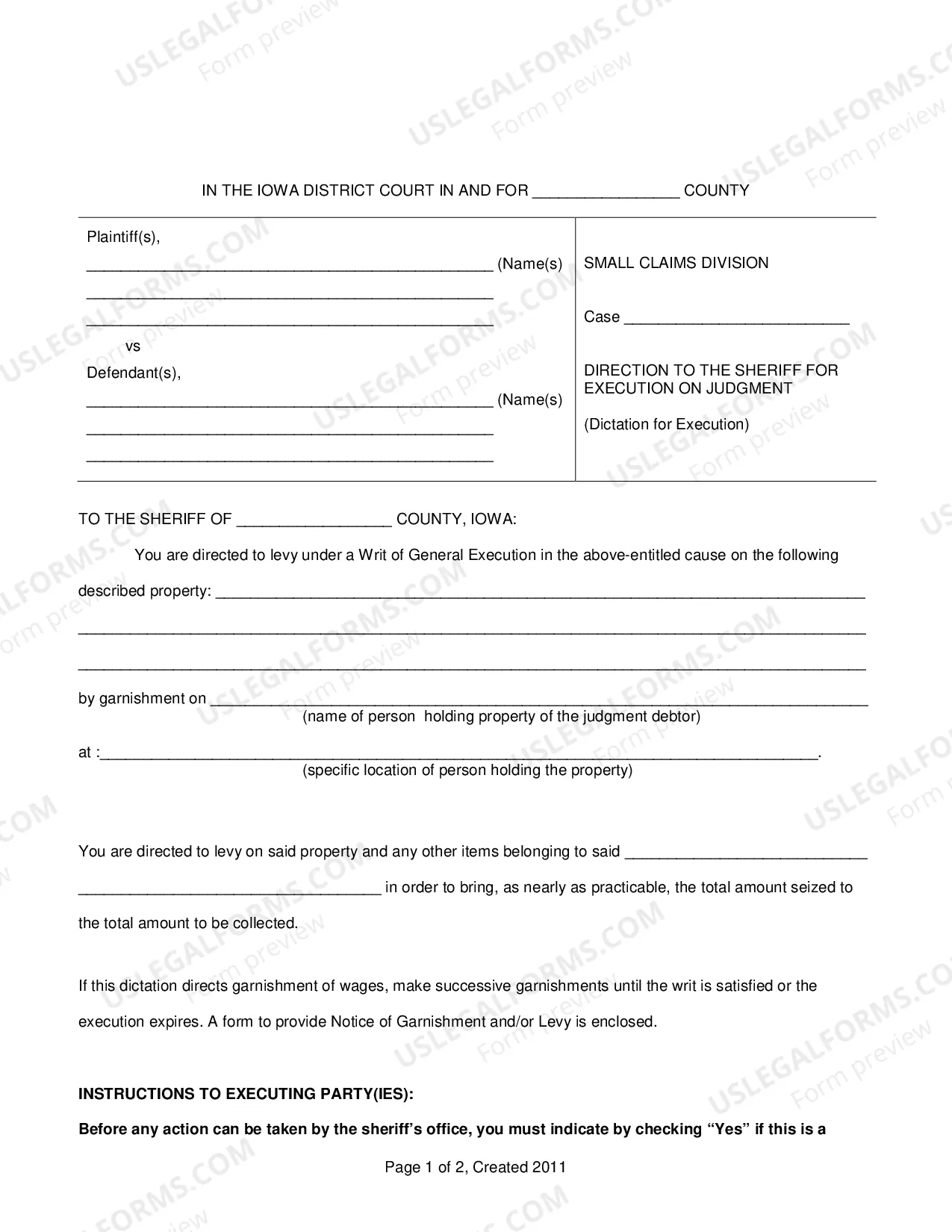
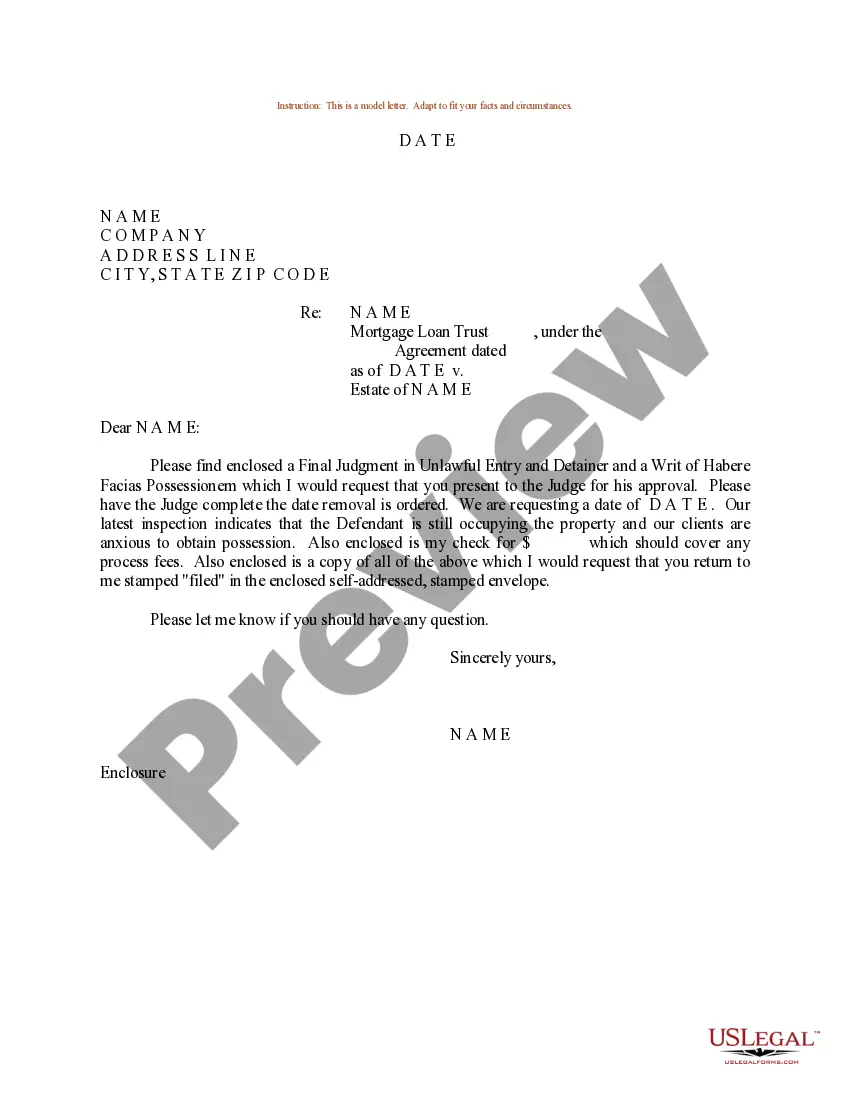
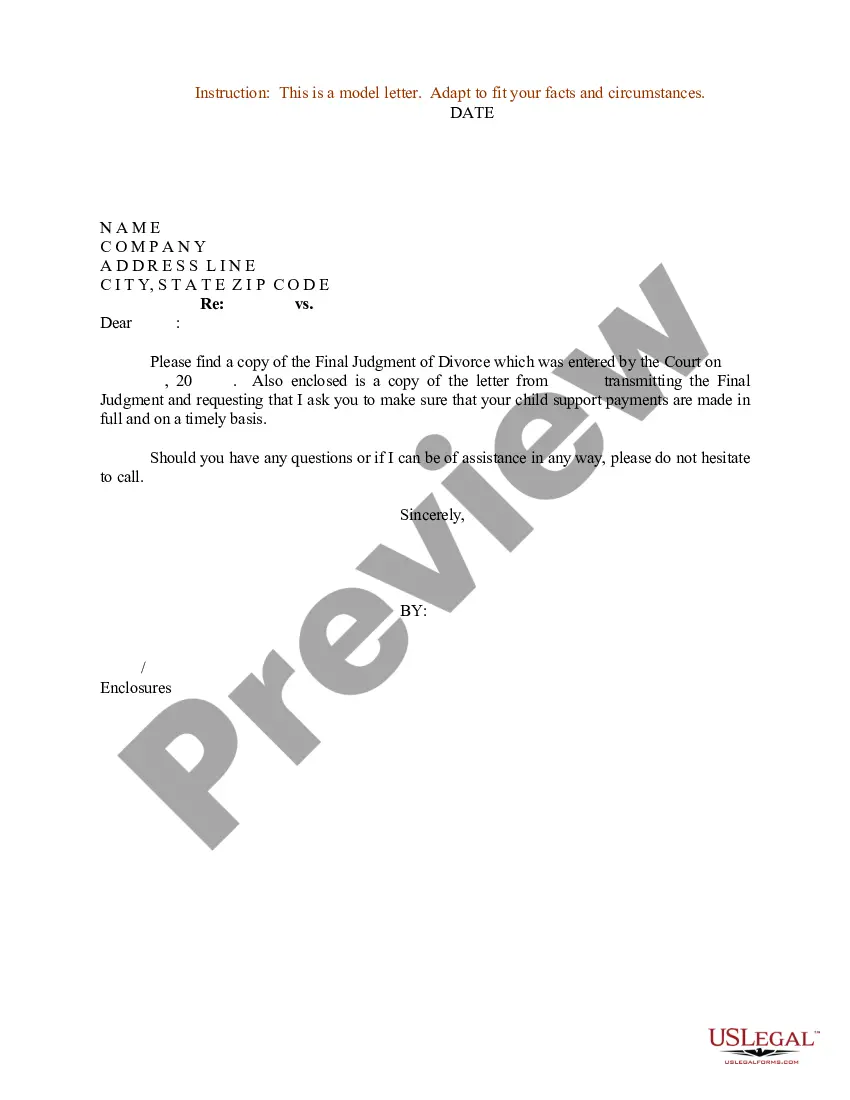
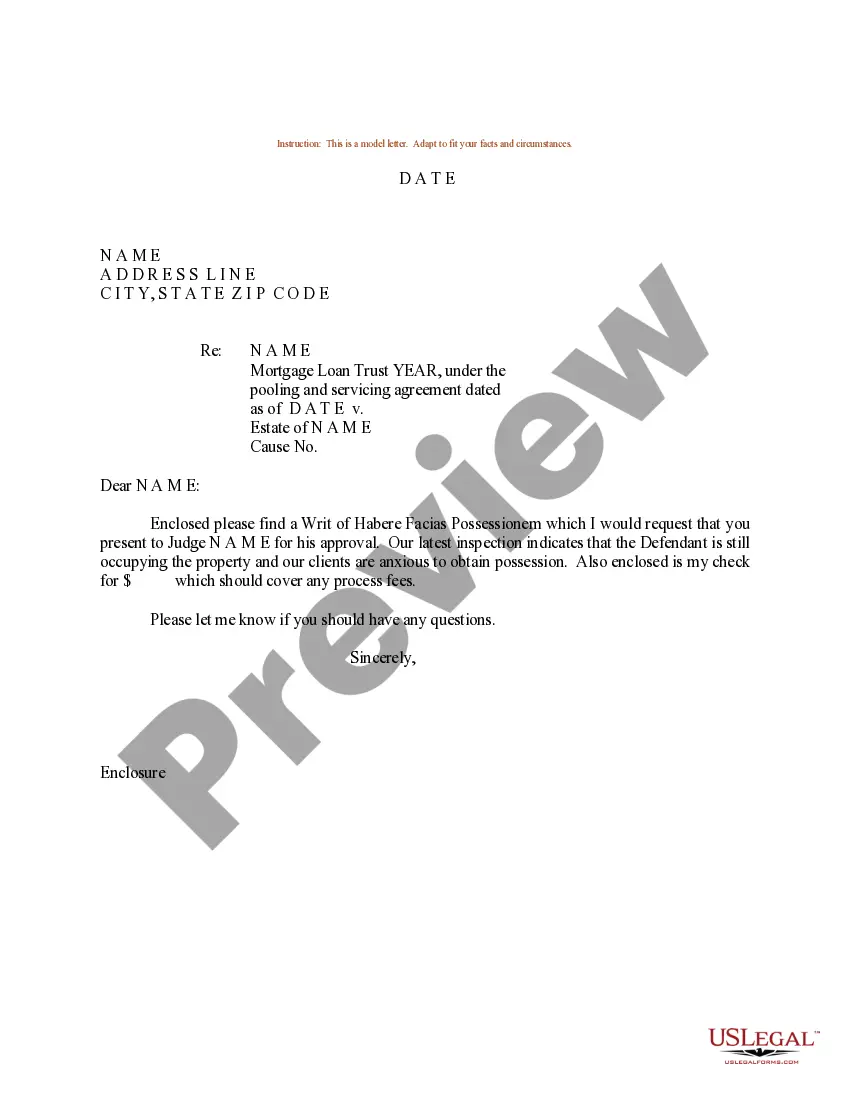
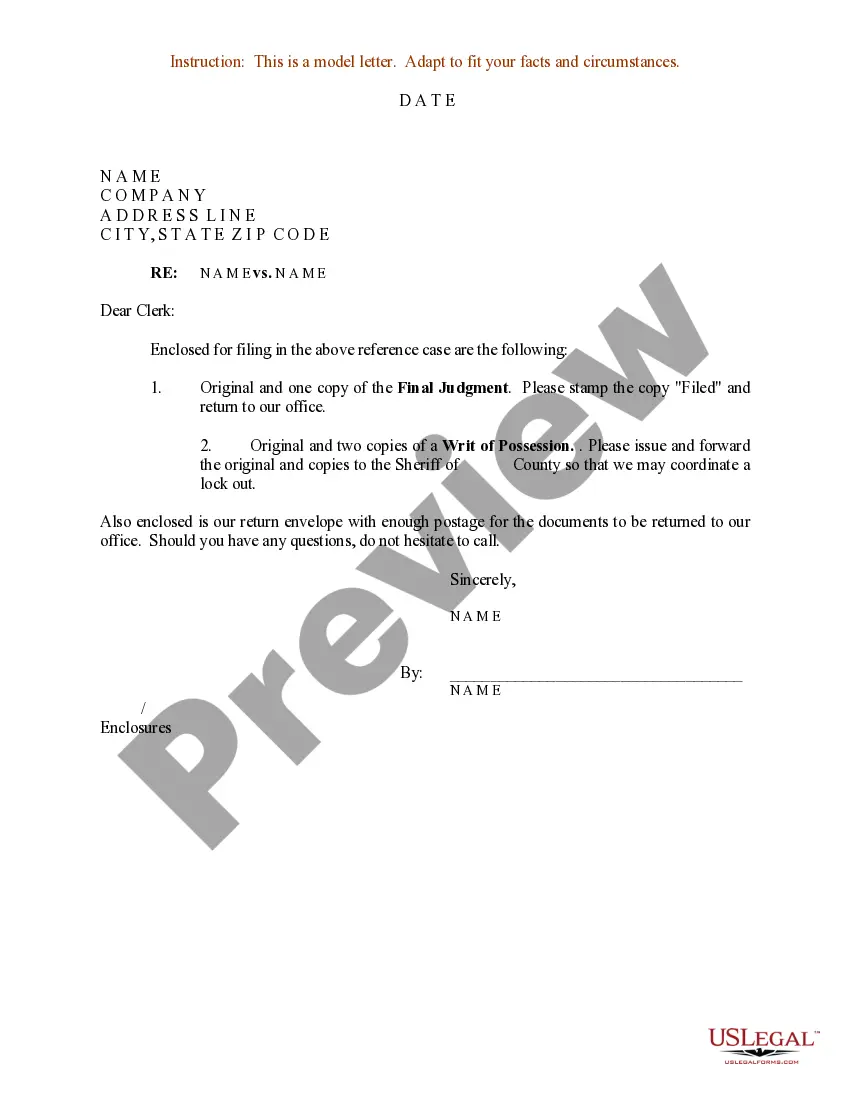
The Sample Letter for Final Judgment in Unlawful Entry - Detainer - Writ of Habere Facias Possessionem is a legal template designed to assist landlords and property owners in formalizing a request for possession of property following a final judgment in an unlawful detainer action. This form provides a structured format to communicate your request to the court, ensuring clarity and legal compliance. It differs from similar forms by specifically addressing unlawful entry and detainer issues, making it suitable for situations where possession is contested after eviction proceedings.
What’s included in this form
- Date of the letter
- Name and address of the recipient
- Subject line referencing the judgment and possession
- Details outlining the request for possession
- Senderâs name and signature block
When to use this document
This form is used when a landlord or property owner has received a final judgment in an unlawful detainer case and needs to formally request enforcement of that judgment to regain possession of their property. It is appropriate in situations where previous attempts to regain possession have failed or after a court decision has confirmed the landlord's right to the property.
Who needs this form
The following individuals should consider using this form:
- Landlords seeking to enforce a court order for possession
- Property owners involved in unlawful entry and detainer disputes
- Legal representatives acting on behalf of landlords
Steps to complete this form
- Identify the date the letter is being prepared.
- Enter the recipient's name and full address in the appropriate fields.
- Clearly state the subject to ensure the purpose of the letter is understood.
- Provide details outlining the judgment and request for possession.
- Sign the letter to authenticate your request.
Is notarization required?
This form does not typically require notarization unless specified by local law. However, it is advisable to check specific state regulations to ensure compliance.
Get your form ready online
Our built-in tools help you complete, sign, share, and store your documents in one place.
Make edits, fill in missing information, and update formatting in US Legal Forms—just like you would in MS Word.
Download a copy, print it, send it by email, or mail it via USPS—whatever works best for your next step.
Sign and collect signatures with our SignNow integration. Send to multiple recipients, set reminders, and more. Go Premium to unlock E-Sign.
If this form requires notarization, complete it online through a secure video call—no need to meet a notary in person or wait for an appointment.
We protect your documents and personal data by following strict security and privacy standards.

Make edits, fill in missing information, and update formatting in US Legal Forms—just like you would in MS Word.

Download a copy, print it, send it by email, or mail it via USPS—whatever works best for your next step.

Sign and collect signatures with our SignNow integration. Send to multiple recipients, set reminders, and more. Go Premium to unlock E-Sign.

If this form requires notarization, complete it online through a secure video call—no need to meet a notary in person or wait for an appointment.

We protect your documents and personal data by following strict security and privacy standards.
Common mistakes
- Failing to provide a clear subject line.
- Incorrectly stating the recipient's address.
- Neglecting to include the court case number or judgment details.
- Not signing the letter or including required signatures.
Why complete this form online
- Immediate access to a professionally drafted template.
- Edit and customize the document to meet specific needs.
- Downloadable in Word format for easy use and printing.
- Ensures compliance with legal requirements in your area.
Legal use & context
- This form is legally recognized for enforcing judgments related to unlawful detainers.
- It serves as an official communication to tenants regarding their obligation to vacate the premises.
- The proper execution of this document establishes a clear record of intent to enforce a court order.
Main things to remember
- The form is essential for landlords seeking to execute eviction judgments.
- Ensure all relevant details and legal requirements are accurately included.
- Use this form to communicate effectively with tenants regarding compliance.
Looking for another form?

Form popularity
FAQ
Sorry, Unlawful Entry is not available on American Netflix.
Unlawful entry is a crime. It is generally considered a misdemeanor, but the charges can increase to a class A misdemeanor or a felony if: The offender is armed during the unlawful entry. Serious damage is caused to the property.
Unlawful entry happens when a person enters the property of another without consent from the owner. Unlawful entry is not only a crime in its own way but an element of other crimes, in which it needs to be accomplished before those crimes can be charged. Crimes such as: Breaking and entering; Burglary; and.
Unlawful entry happens when a person enters the property of another without consent from the owner. Unlawful entry is not only a crime in its own way but an element of other crimes, in which it needs to be accomplished before those crimes can be charged. Crimes such as: Breaking and entering; Burglary; and.
In the majority of cases, trespassing in California is misdemeanor crime. If you are convicted of penal Code 602, the legal penalties include up to 6 months in a county jail and a fine of up to $1,000.
In most cases, California trespass is a misdemeanor. This means it can lead to penalties of: up to six months in county jail, and/or. a fine of up to $1,000.
Only the DA can dismiss a case, so there is no way for you to directly get it dropped. However, if you get an attorney they can certainly present your case to the prosecutor and see whether they would consider dismissing the matter.