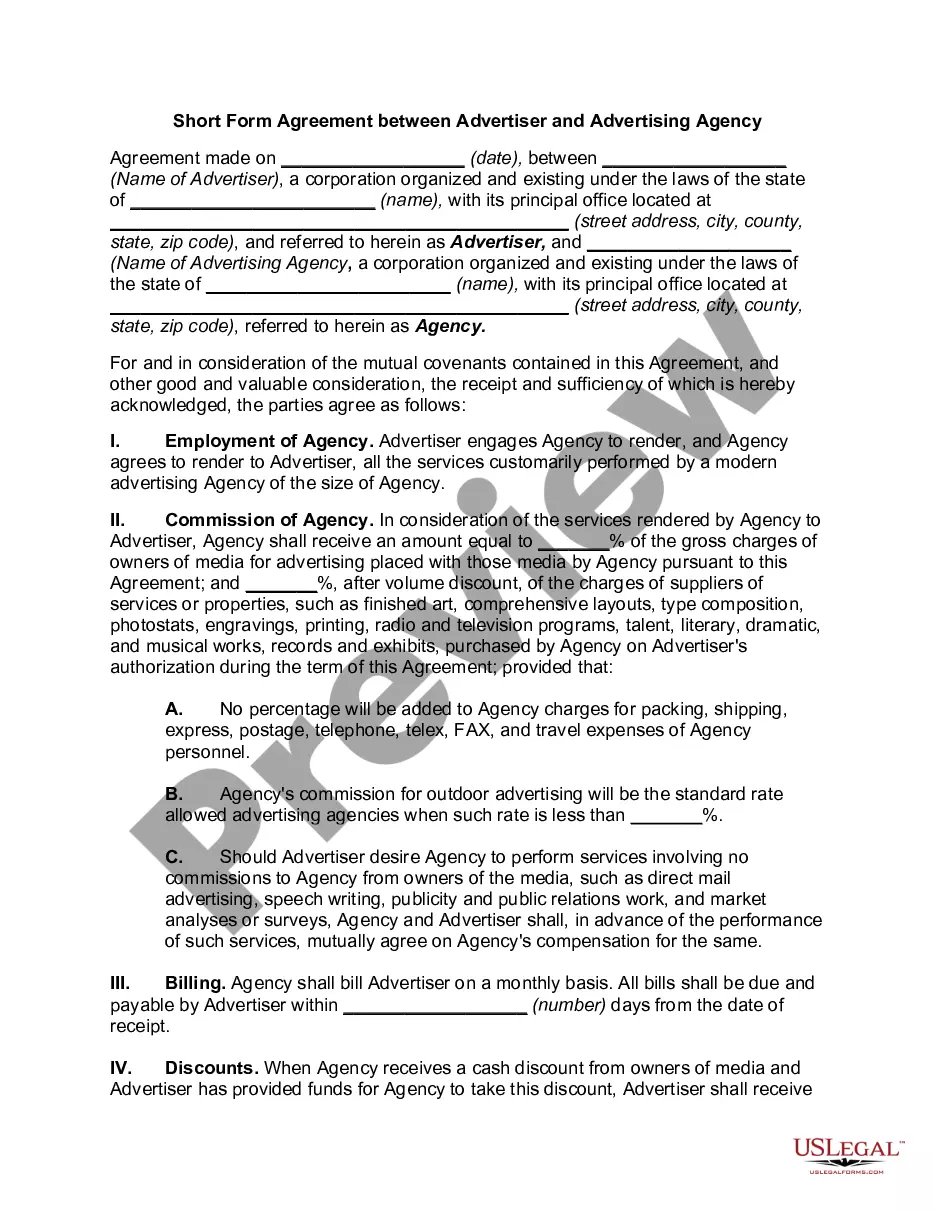
Short Form Agreement between Advertiser and Advertising Agency
What is this form?
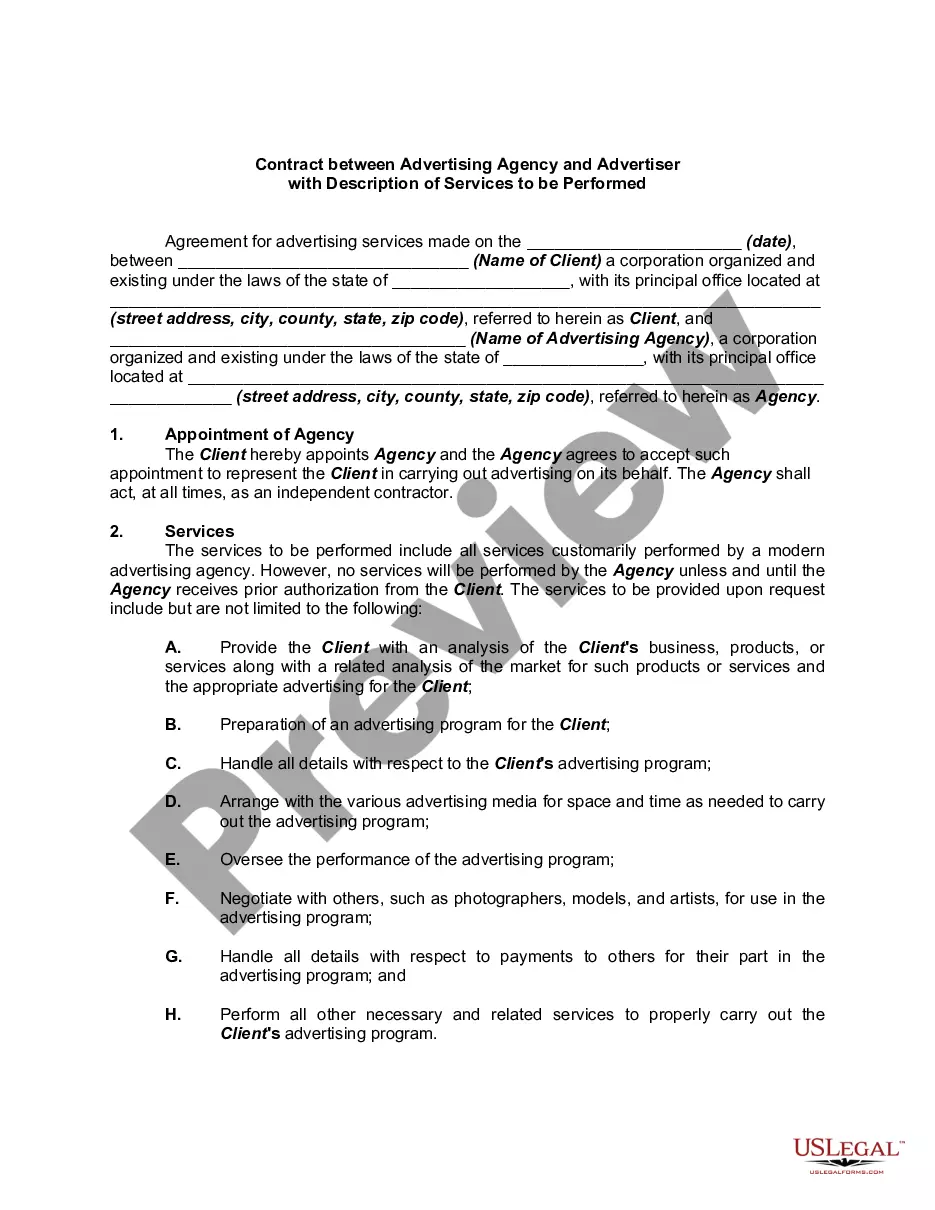
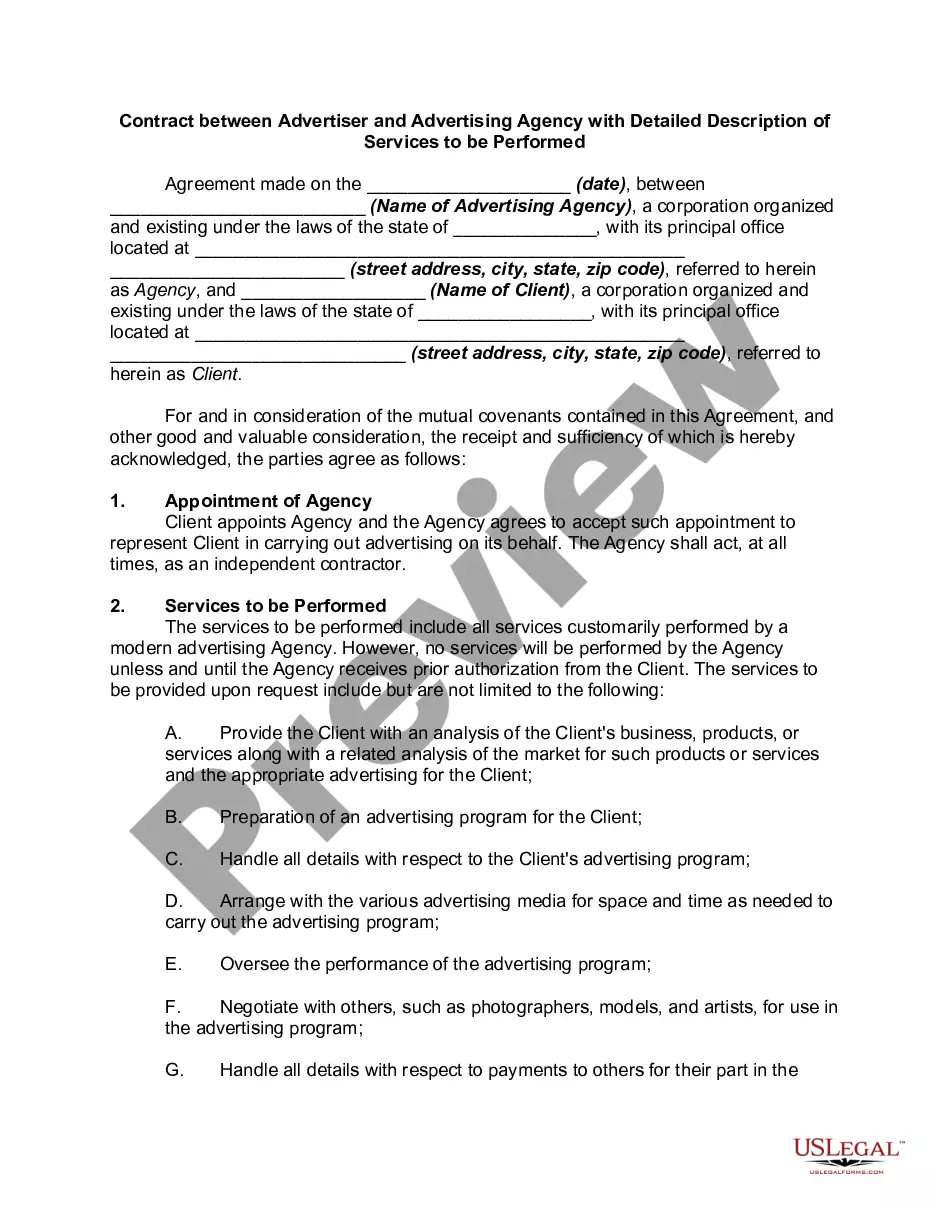
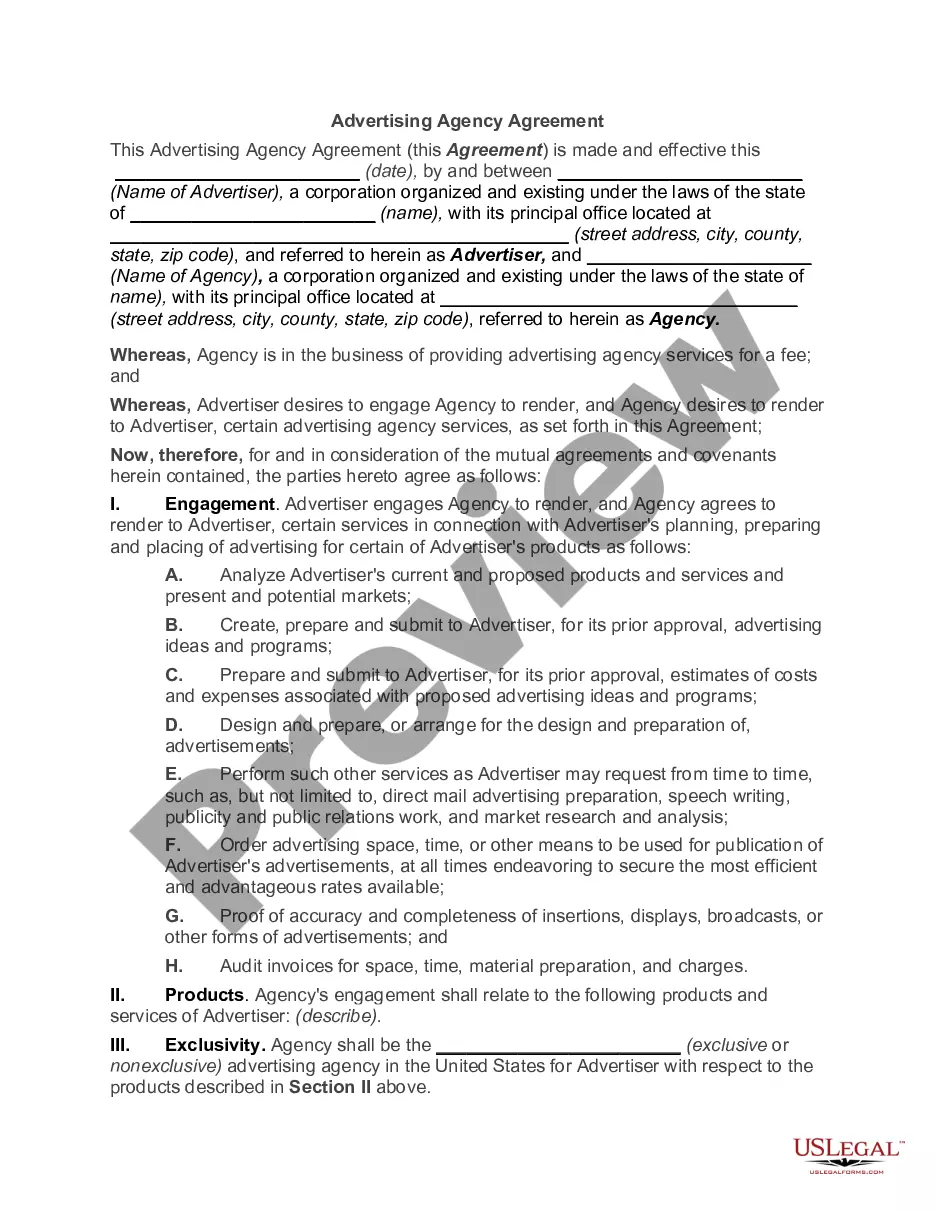
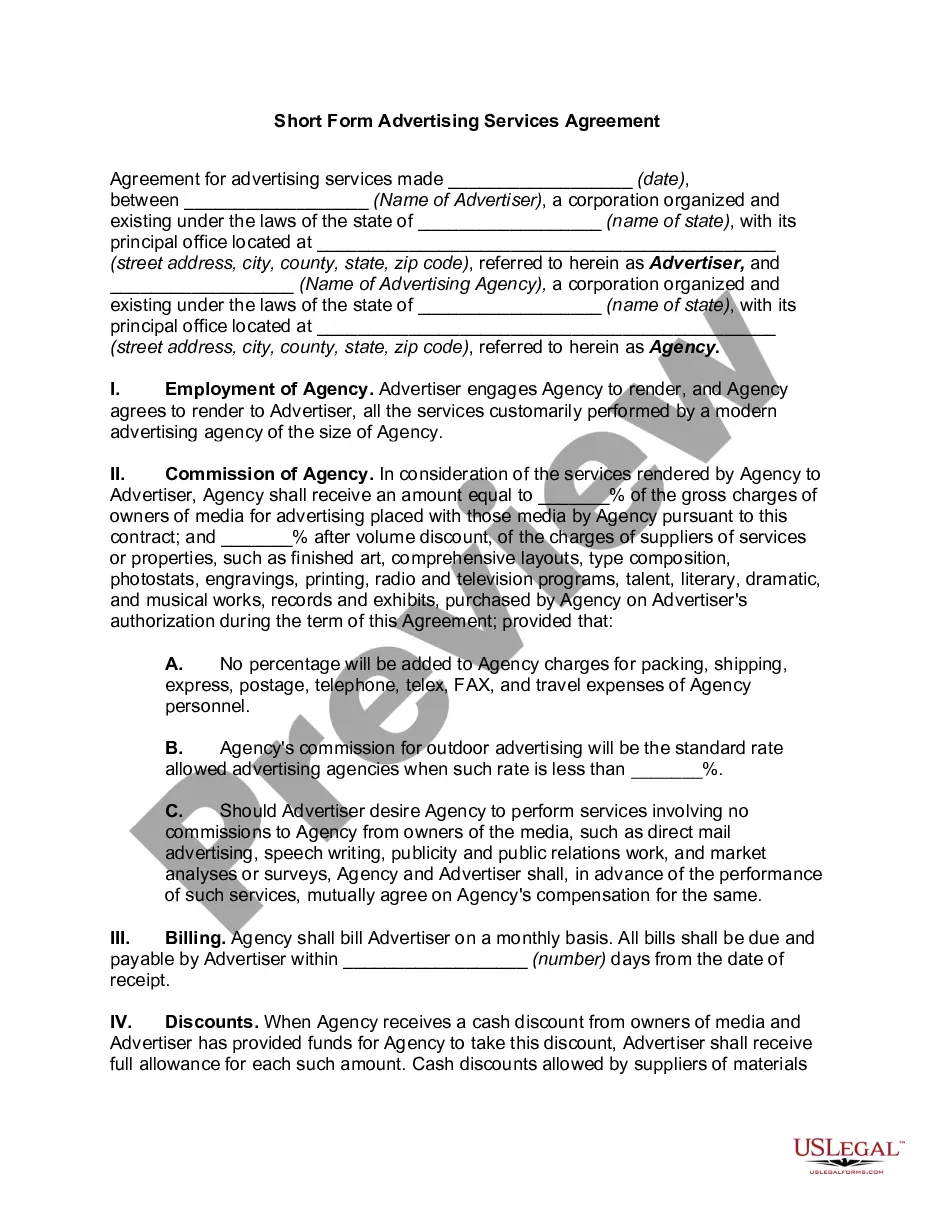
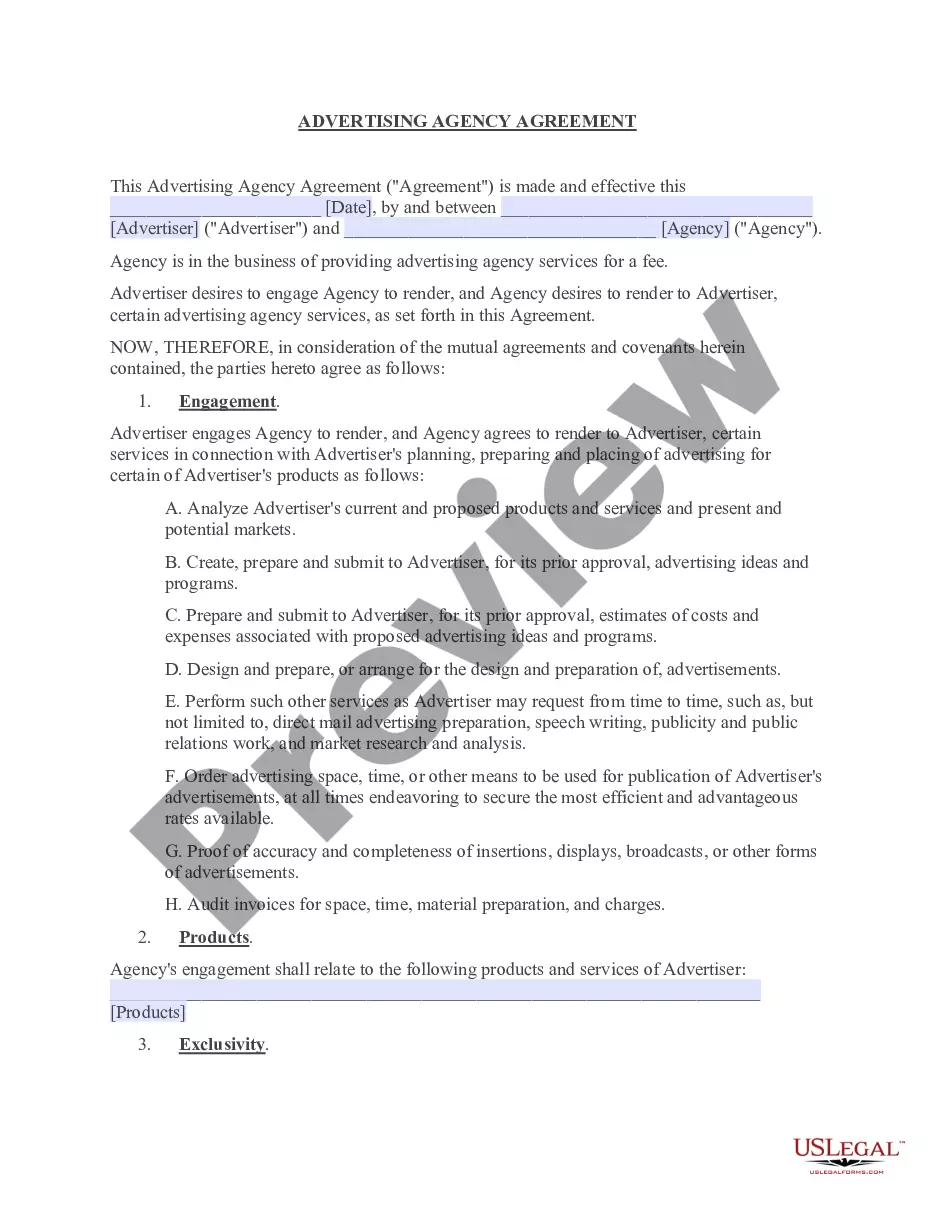
The Short Form Agreement between Advertiser and Advertising Agency is a written contract that establishes the terms of engagement between an advertiser and an advertising agency. This form outlines the responsibilities, compensation, and conditions under which the parties will operate. Unlike a more detailed advertising agreement, this short form is simplified to ensure clarity while maintaining flexibility for both parties to terminate if needed.
Main sections of this form
- Employment of Agency: Details the services the agency will provide.
- Commission of Agency: Specifies the compensation structure for the agency's services.
- Billing: Establishes the billing frequency and payment terms.
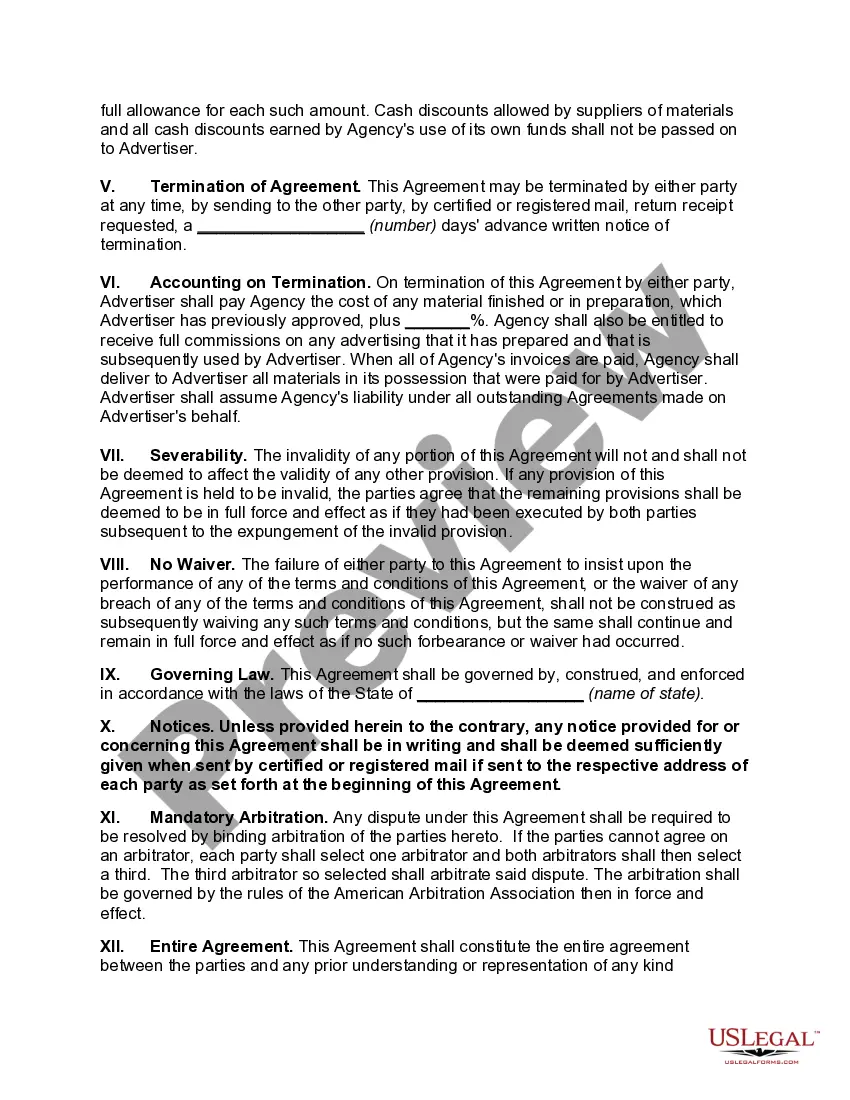
- Termination of Agreement: Outlines how and when either party can terminate the agreement.
- Mandatory Arbitration: Describes the process for resolving disputes between the parties.
Situations where this form applies
This form is useful when an advertiser wishes to engage an advertising agency for marketing services. It is particularly beneficial for businesses looking to establish a quick yet formal understanding of expectations and compensation. Use this form when initiating a relationship that includes payment for advertising services, especially if you need a clear agreement that allows for easy modification or termination.
Who this form is for
- Advertisers seeking professional advertising services from an agency.
- Advertising agencies looking to define their roles and compensation with clients.
- Businesses of all sizes that need a clear, concise agreement without extensive legal jargon.
Steps to complete this form
- Identify the parties: Fill in the names and addresses of the advertiser and the advertising agency.
- Specify the services: Clearly define the advertising services the agency will provide.
- Enter commission details: Indicate the percentage of commissions and any applicable discounts for services rendered.
- Set billing terms: Specify the payment schedule and deadlines for payment after invoices are received.
- Include termination conditions: Agree on the notice period required for ending the contract.
Does this document require notarization?
This form usually doesn’t need to be notarized. However, local laws or specific transactions may require it. Our online notarization service, powered by Notarize, lets you complete it remotely through a secure video session, available 24/7.
Get your form ready online
Our built-in tools help you complete, sign, share, and store your documents in one place.
Make edits, fill in missing information, and update formatting in US Legal Forms—just like you would in MS Word.
Download a copy, print it, send it by email, or mail it via USPS—whatever works best for your next step.
Sign and collect signatures with our SignNow integration. Send to multiple recipients, set reminders, and more. Go Premium to unlock E-Sign.
If this form requires notarization, complete it online through a secure video call—no need to meet a notary in person or wait for an appointment.
We protect your documents and personal data by following strict security and privacy standards.

Make edits, fill in missing information, and update formatting in US Legal Forms—just like you would in MS Word.

Download a copy, print it, send it by email, or mail it via USPS—whatever works best for your next step.

Sign and collect signatures with our SignNow integration. Send to multiple recipients, set reminders, and more. Go Premium to unlock E-Sign.

If this form requires notarization, complete it online through a secure video call—no need to meet a notary in person or wait for an appointment.

We protect your documents and personal data by following strict security and privacy standards.
Common mistakes to avoid
- Failing to clearly define the services to be provided can lead to misunderstandings.
- Not specifying the commission structure, which may result in disputes over payment.
- Overlooking the termination clause, making it difficult to exit the agreement if needed.
Why complete this form online
- Convenience of downloading the form anytime, enabling quick engagement.
- Editability allows for customization to fit specific needs.
- Reliability of having a legally vetted document prepared by licensed attorneys.
Looking for another form?



Form popularity
FAQ
An advertising agreement is a contract used by an advertising agency or consultant to summarize advertising goals, strategies, and tactics for a business client, along with the associated costs and a clear description of what your advertising services will include.
What is an Advertising Agency Agreement? An advertising agency agreement is a legal contract between two or more parties, which sets out the terms of their business relationship. It typically includes provisions for payment, licensing rights, confidentiality, and termination.
An agency agreement is a contract that creates a ?fiduciary? relationship between two parties. Party A (sometimes called the ?principal?) agrees that the actions of Party B (sometimes called the ?agent?) can bind Party A to an agreement with a third party.
When a manager gives a worker permission to complete a specific task while they are employed, that is an example of an agency agreement in action. Here, a contract outlining the various responsibilities of the agent may be drafted.
An agency agreement details the terms of the agency, such as what the agent can do and the amount of money paid for the agent's work. The contract also gives the agent the authority the principal determines, such as the exclusive right to act on her behalf.
Here are 11 must-haves for any client contract. Names and addresses of the agency and client.Outline the contract's duration.Make your scope of work bulletproof.Set a clear payment schedule.Don't be a pushover with late payments.If a client wants to add on work, write down your conditions.
An agency agreement defines the legal relationship between the agency and its client. It ensures both parties understand their roles and responsibilities in a project, creating mutual awareness that the client should pay compensation in exchange for services provided.