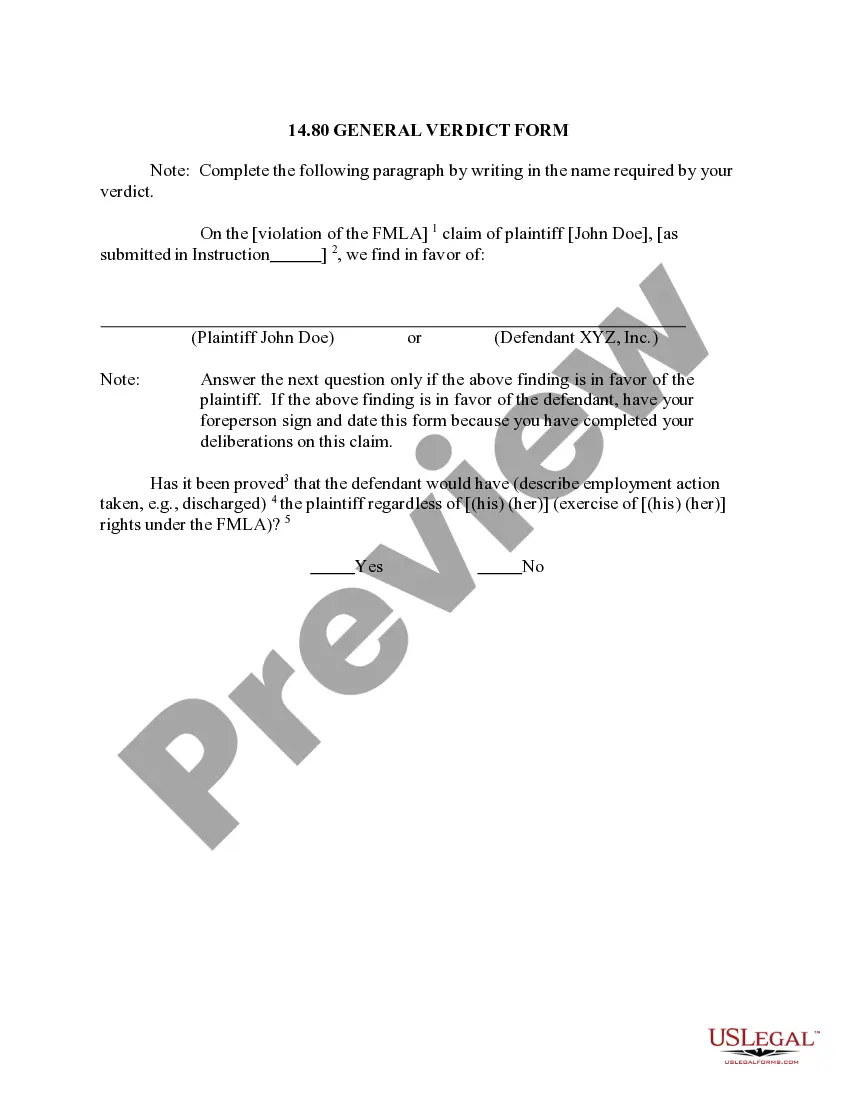
14.80 GENERAL VERDICT FORM
Overview of this form
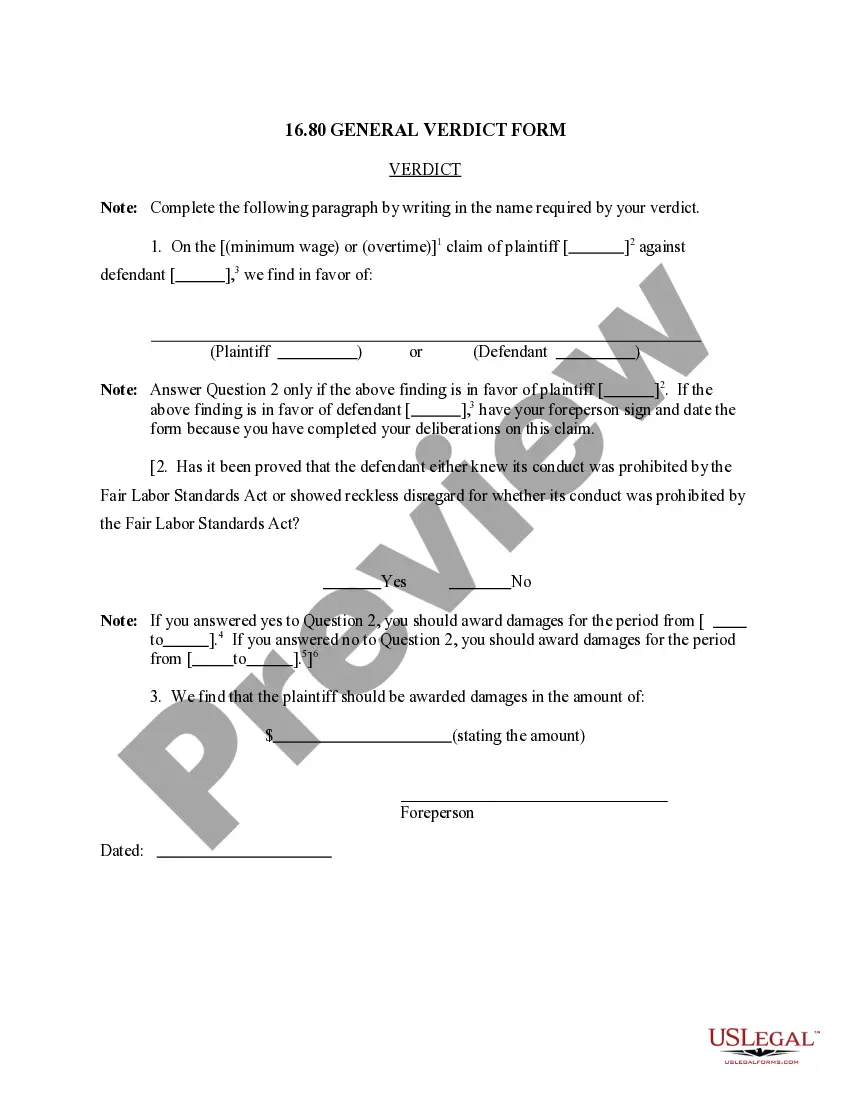
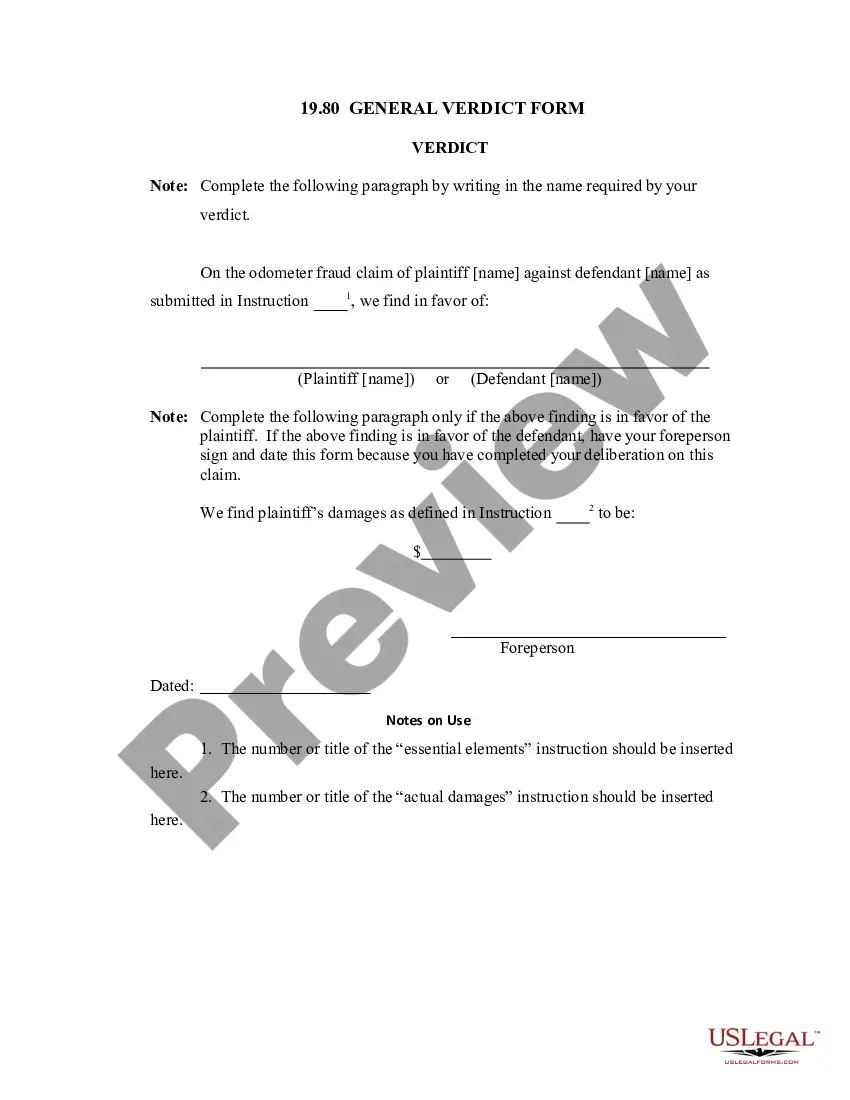
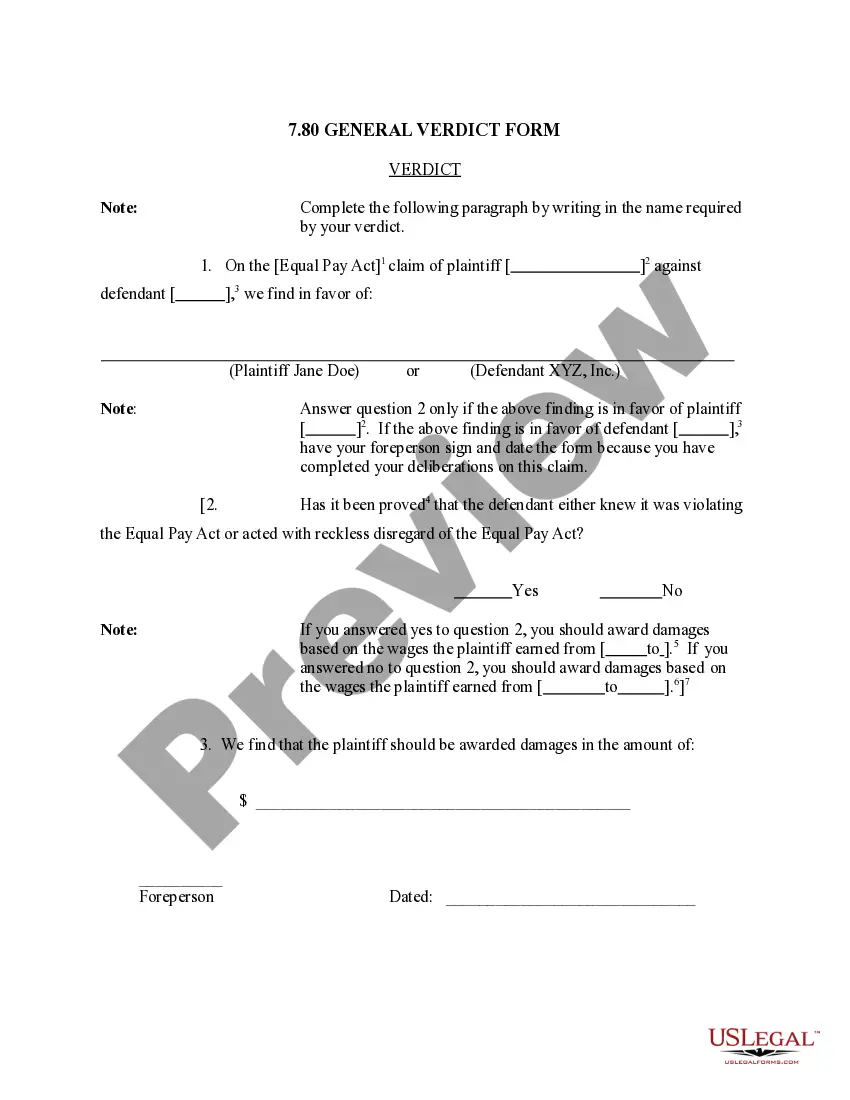
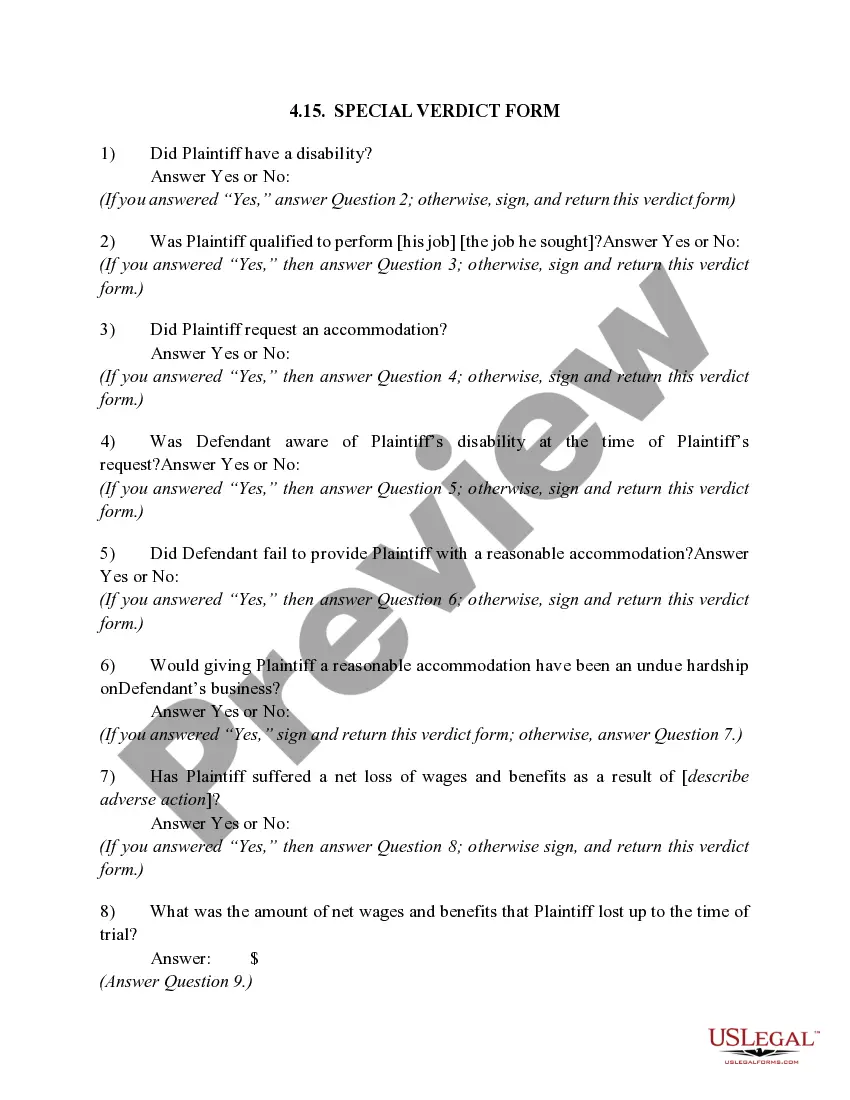
The 14.80 General Verdict Form is a legal document used by juries to communicate their decisions in civil cases, specifically relating to claims under the Family and Medical Leave Act (FMLA). This form outlines the jury's findings regarding whether the plaintiff has been wrongfully treated in relation to their rights under FMLA and includes sections for detailing damages if applicable. It is distinct from other verdict forms due to its focus on employment actions associated with FMLA claims.
What’s included in this form
- Initial determination: Jury's decision in favor of plaintiff or defendant.
- Follow-up question: Assessing if the defendant would have taken the same employment action regardless of the plaintiff's FMLA rights.
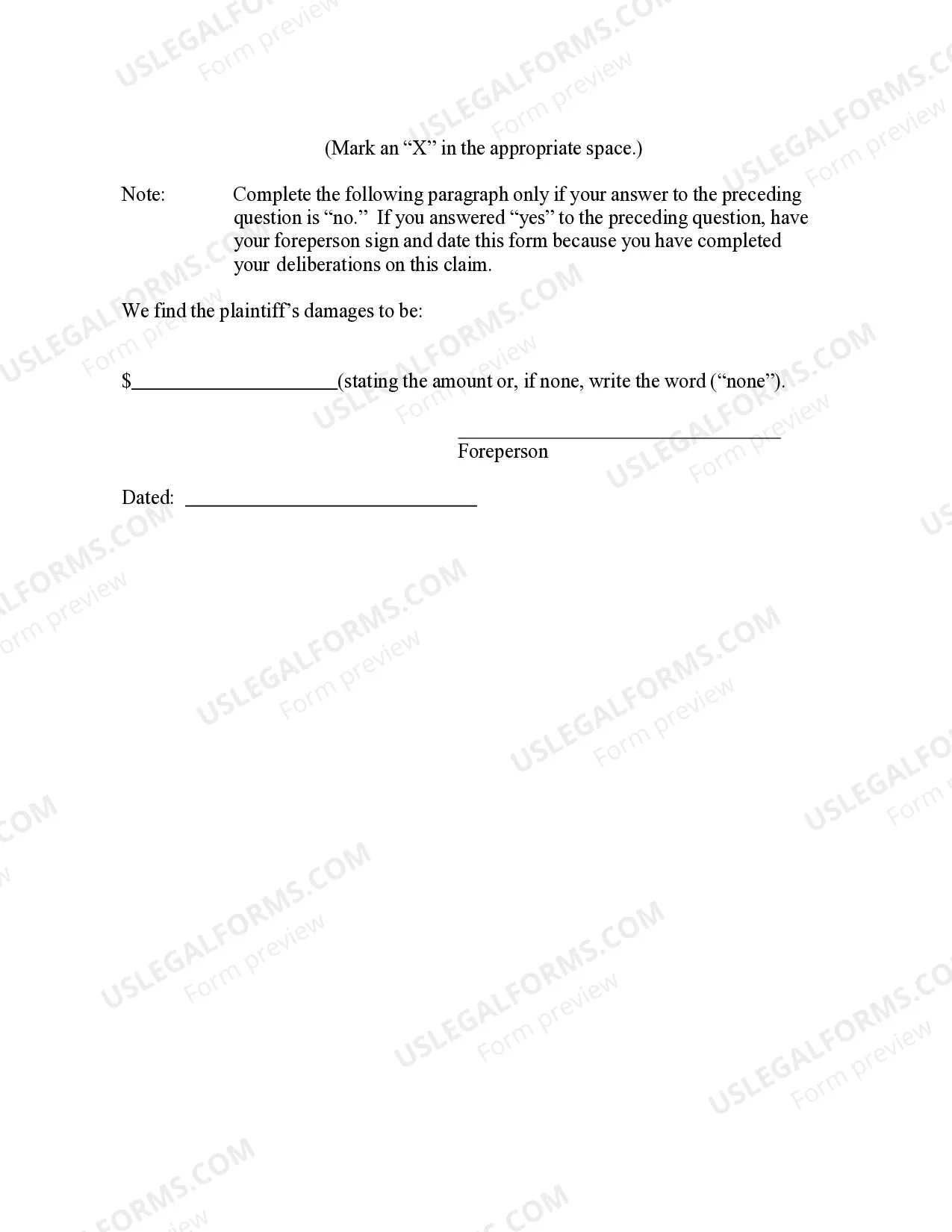
- Damages section: Specifies the amount of damages awarded to the plaintiff, if applicable.
- Signature line: Space for the foreperson to sign and date the form to indicate completion.
Situations where this form applies
This form should be used during trials involving claims of wrongful termination or discrimination by an employer under the FMLA. It is applicable when jurors need to finalize their verdict and provide a formal record of their decision regarding the allegations presented by the plaintiff. This form is essential in documenting whether or not the jury finds the employer liable for damages related to FMLA violations.
Who should use this form
- Juries presiding over civil cases involving FMLA claims.
- Court officials needing a formal verdict document to finalize court proceedings.
- Legal professionals requiring clarity on jury findings related to employment actions.
Steps to complete this form
- Identify the claimant and the defendant within the provided spaces.
- Mark the jury's decision regarding liability as either in favor of the plaintiff or defendant.
- Only if the verdict favors the plaintiff, answer the follow-up question about the employment action taken by the defendant.
- If applicable, state the amount of damages awarded, or write "none."
- Have the foreperson sign and date the form to finalize the verdict.
Does this document require notarization?
Notarization is generally not required for this form. However, certain states or situations might demand it. You can complete notarization online through US Legal Forms, powered by Notarize, using a verified video call available anytime.
Get your form ready online
Our built-in tools help you complete, sign, share, and store your documents in one place.
Make edits, fill in missing information, and update formatting in US Legal Forms—just like you would in MS Word.
Download a copy, print it, send it by email, or mail it via USPS—whatever works best for your next step.
Sign and collect signatures with our SignNow integration. Send to multiple recipients, set reminders, and more. Go Premium to unlock E-Sign.
If this form requires notarization, complete it online through a secure video call—no need to meet a notary in person or wait for an appointment.
We protect your documents and personal data by following strict security and privacy standards.

Make edits, fill in missing information, and update formatting in US Legal Forms—just like you would in MS Word.

Download a copy, print it, send it by email, or mail it via USPS—whatever works best for your next step.

Sign and collect signatures with our SignNow integration. Send to multiple recipients, set reminders, and more. Go Premium to unlock E-Sign.

If this form requires notarization, complete it online through a secure video call—no need to meet a notary in person or wait for an appointment.

We protect your documents and personal data by following strict security and privacy standards.
Common mistakes to avoid
- Failing to complete all necessary sections, particularly the damages section if the plaintiff prevails.
- Not marking the decision clearly, leading to ambiguity regarding the jury's findings.
- Overlooking the need for the foreperson's signature, which validates the verdict.
Benefits of using this form online
- Convenience: Downloadable and easily accessible, allowing for immediate use by juries and court officials.
- Editability: Users can tailor the form to fit the specific facts and findings of their case.
- Reliability: Drafted by licensed attorneys, ensuring adherence to legal standards.
Looking for another form?
Form popularity
FAQ
The verdict of a jury is either general or special. A general verdict is that by which they pronounce generally upon all or any of the issues, either in favor of the plaintiff or defendant; a special verdict is that by which the jury find the facts only, leaving the judgment to the Court.
(b) General Verdict Accompanied by Answer to Interrogatories. The court may submit to the jury, together with appropriate forms for a general verdict, written interrogatories upon one or more issues of fact the decision of which is necessary to a verdict.
A verdict in which the jury gives its findings on factual issues in the case, without necessarily stating which party should win.
Primary tabs. A directed verdict is a ruling entered by a trial judge after determining that there is no legally sufficient evidentiary basis for a reasonable jury to reach a different conclusion. The trial court may grant a directed verdict either sua sponte or upon a motion by either party.
General verdict with interrogatories refers to a general verdict accompanied by answers to written interrogatories on one or more issues of fact that bear on the verdict. A interrogatory is submitted by the judge to a jury when the court asks for a general verdict and wants to know the basis of the decision.
The verdict form, in turn, formalizes the jury's decisions on the case, telling us how it will answer the claims and defenses. Its structure and language could influence the jury's ultimate answers. It may also control what issues may be raised on appeal.
A general verdict is one that decides which party should win but does not make findings on any specific factual issues. A special verdict is one in which the jury provides its findings on specific factual issues.