14.70 DAMAGES: ACTUAL
Understanding this form
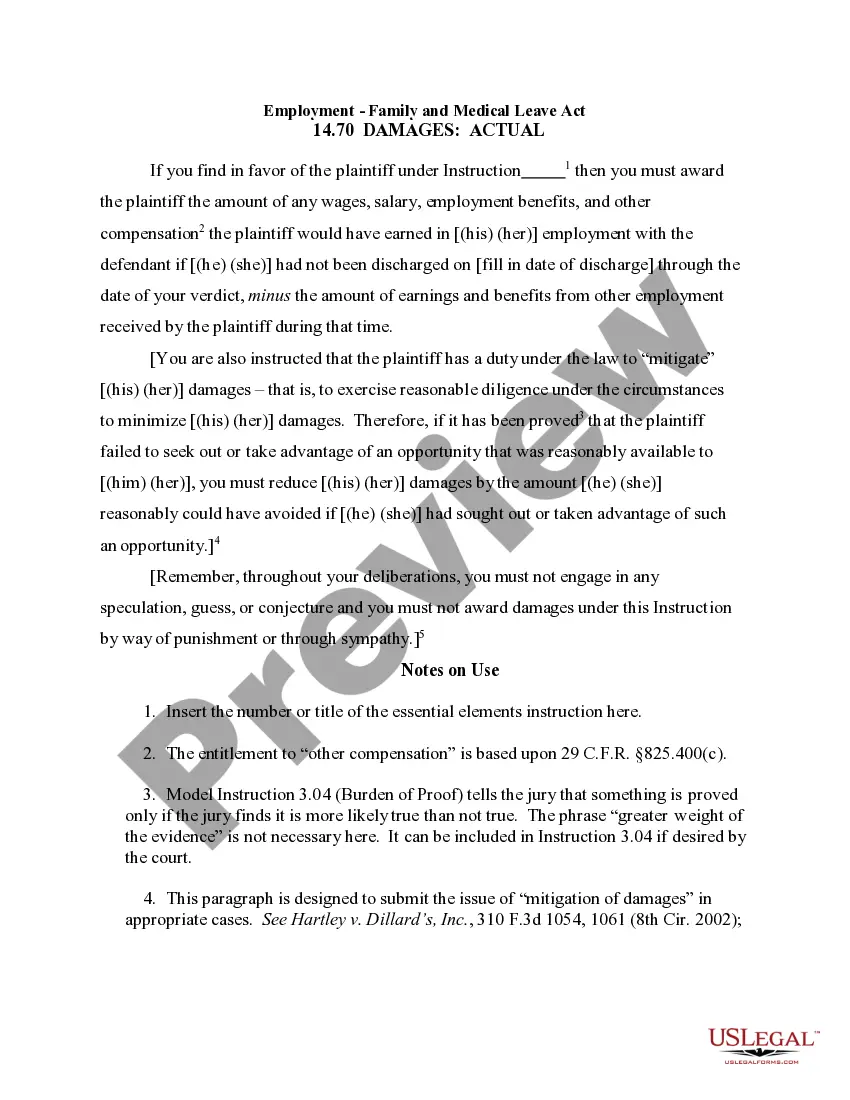
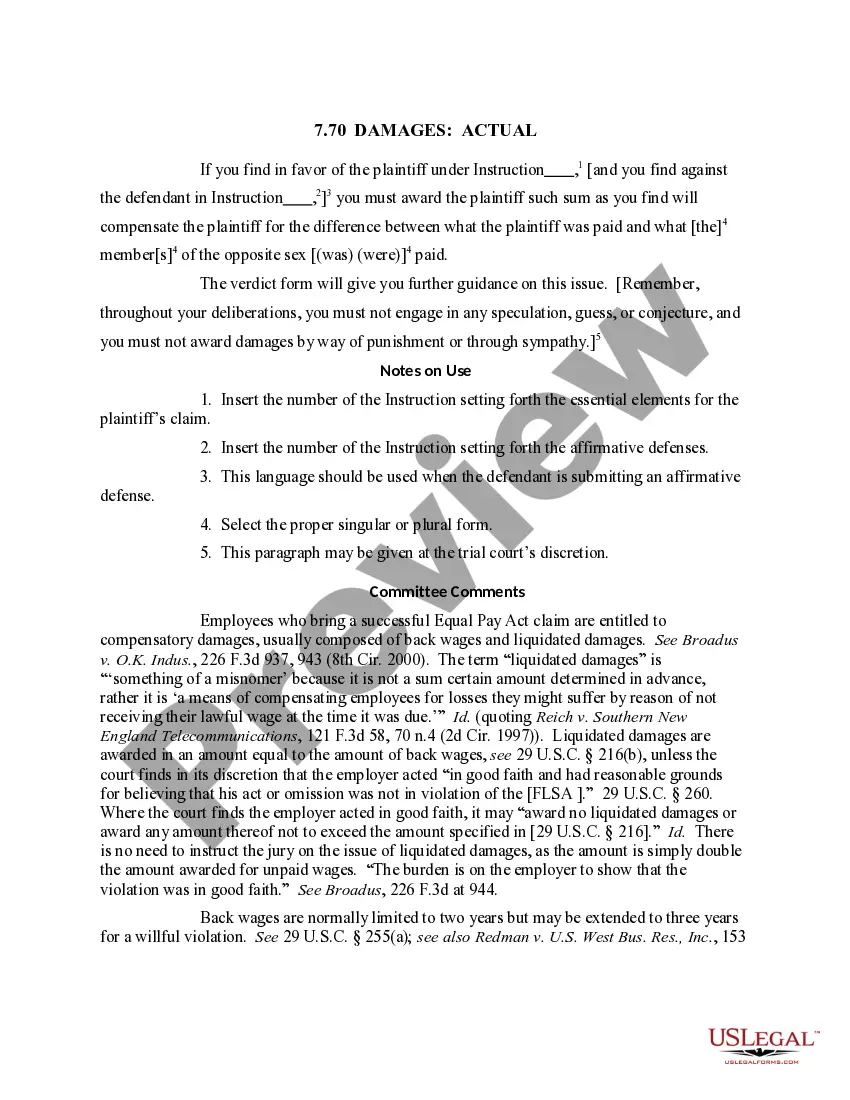
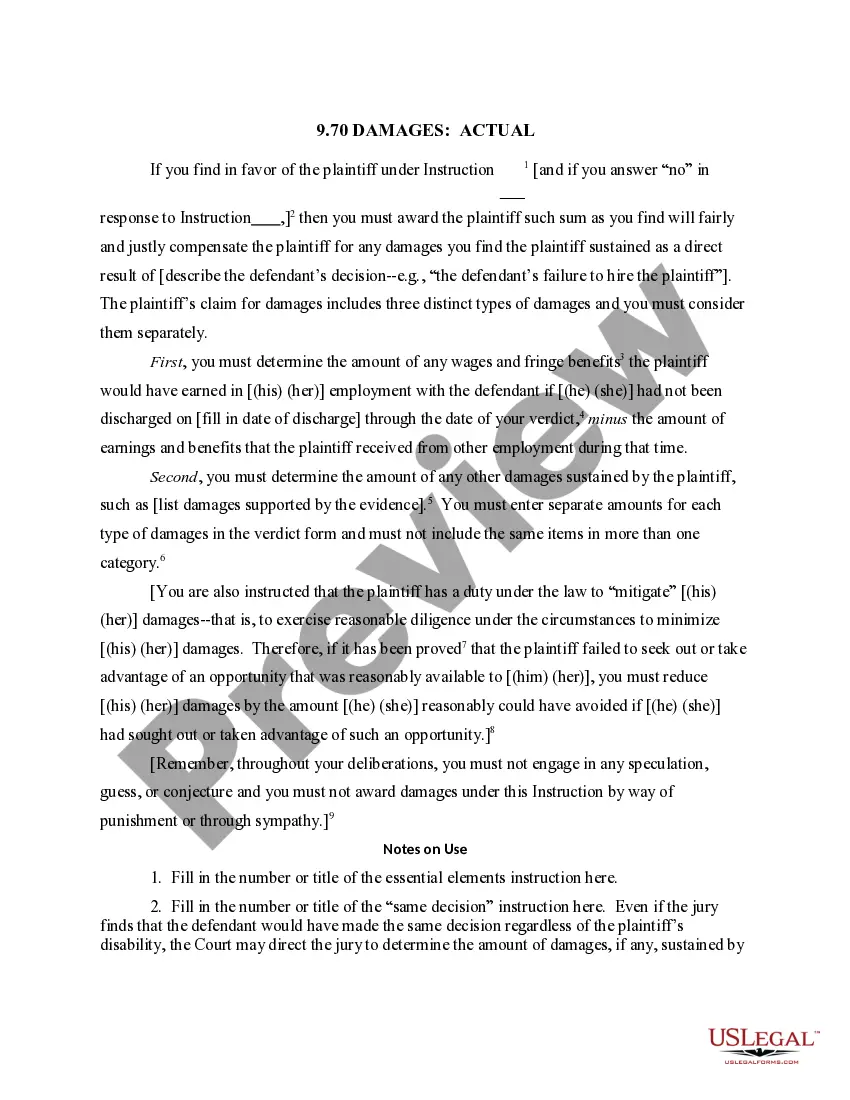
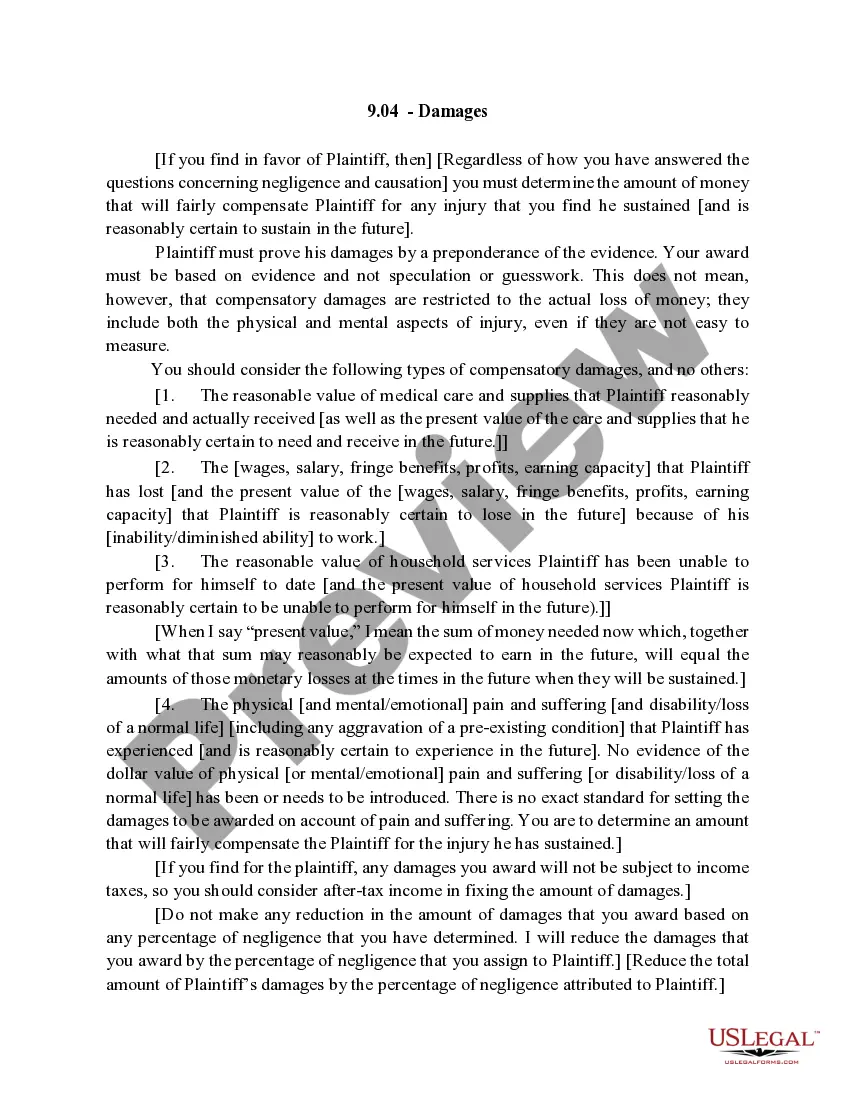
The 14.70 Damages: Actual form is a legal document used in civil litigation to calculate and award actual damages to a plaintiff who has suffered from wrongful termination or similar employment issues. This form focuses on determining lost wages and compensation that the plaintiff would have earned if not for their discharge. Unlike other forms that may cover additional types of damages, this specific form is centered only on actual monetary losses under the relevant laws.
Form components explained
- Details on lost wages and employment benefits from the date of discharge to the present verdict date.
- Instructions for accounting any earnings from other employment to offset damages.
- A requirement for the plaintiff to mitigate damages by seeking alternative employment opportunities.
- Clarifications to avoid speculation in damage awards, emphasizing evidence-based conclusions.
Common use cases
This form should be used in cases where a plaintiff claims actual damages due to wrongful discharge. Scenarios may include situations where an employee is terminated unjustly, resulting in lost earnings. It assists the jury or legal parties in calculating the compensation owed by the defendant based on actual financial losses incurred by the plaintiff, ensuring that the plaintiff is compensated fairly for their lost income during the litigation process.
Who this form is for
This form is intended for:
- Plaintiffs in employment-related lawsuits seeking to recover lost wages and benefits.
- Legal professionals representing clients in litigation involving wrongful termination claims.
- Jurors tasked with determining compensation amounts in civil cases related to employment disputes.
Completing this form step by step
- Identify the plaintiff and defendantâs details, including names and addresses.
- Specify the date of discharge for the plaintiff.
- Calculate the total wages, salary, and benefits lost from the date of discharge to the present verdict date.
- Document any earnings from other jobs that must be deducted from the total damages.
- Ensure all calculations are based on evidence presented during the trial.
Is notarization required?
Notarization is generally not required for this form. However, certain states or situations might demand it. You can complete notarization online through US Legal Forms, powered by Notarize, using a verified video call available anytime.
Get your form ready online
Our built-in tools help you complete, sign, share, and store your documents in one place.
Make edits, fill in missing information, and update formatting in US Legal Forms—just like you would in MS Word.
Download a copy, print it, send it by email, or mail it via USPS—whatever works best for your next step.
Sign and collect signatures with our SignNow integration. Send to multiple recipients, set reminders, and more. Go Premium to unlock E-Sign.
If this form requires notarization, complete it online through a secure video call—no need to meet a notary in person or wait for an appointment.
We protect your documents and personal data by following strict security and privacy standards.

Make edits, fill in missing information, and update formatting in US Legal Forms—just like you would in MS Word.

Download a copy, print it, send it by email, or mail it via USPS—whatever works best for your next step.

Sign and collect signatures with our SignNow integration. Send to multiple recipients, set reminders, and more. Go Premium to unlock E-Sign.

If this form requires notarization, complete it online through a secure video call—no need to meet a notary in person or wait for an appointment.

We protect your documents and personal data by following strict security and privacy standards.
Avoid these common issues
- Failing to accurately calculate lost earnings and benefits.
- Not considering earnings from alternative employment when calculating total damages.
- Ignoring the importance of evidence to support claims for lost wages.
- Providing speculative or emotional reasoning instead of factual calculations for damages.
Benefits of completing this form online
- Immediate access to downloadable templates ensures that users can start working on their cases without delay.
- Customizable fields allow for precise calculations tailored to each specific case.
- Easy to understand format aids users with limited legal knowledge, making it straightforward to fill out and understand each section.
Legal use & context
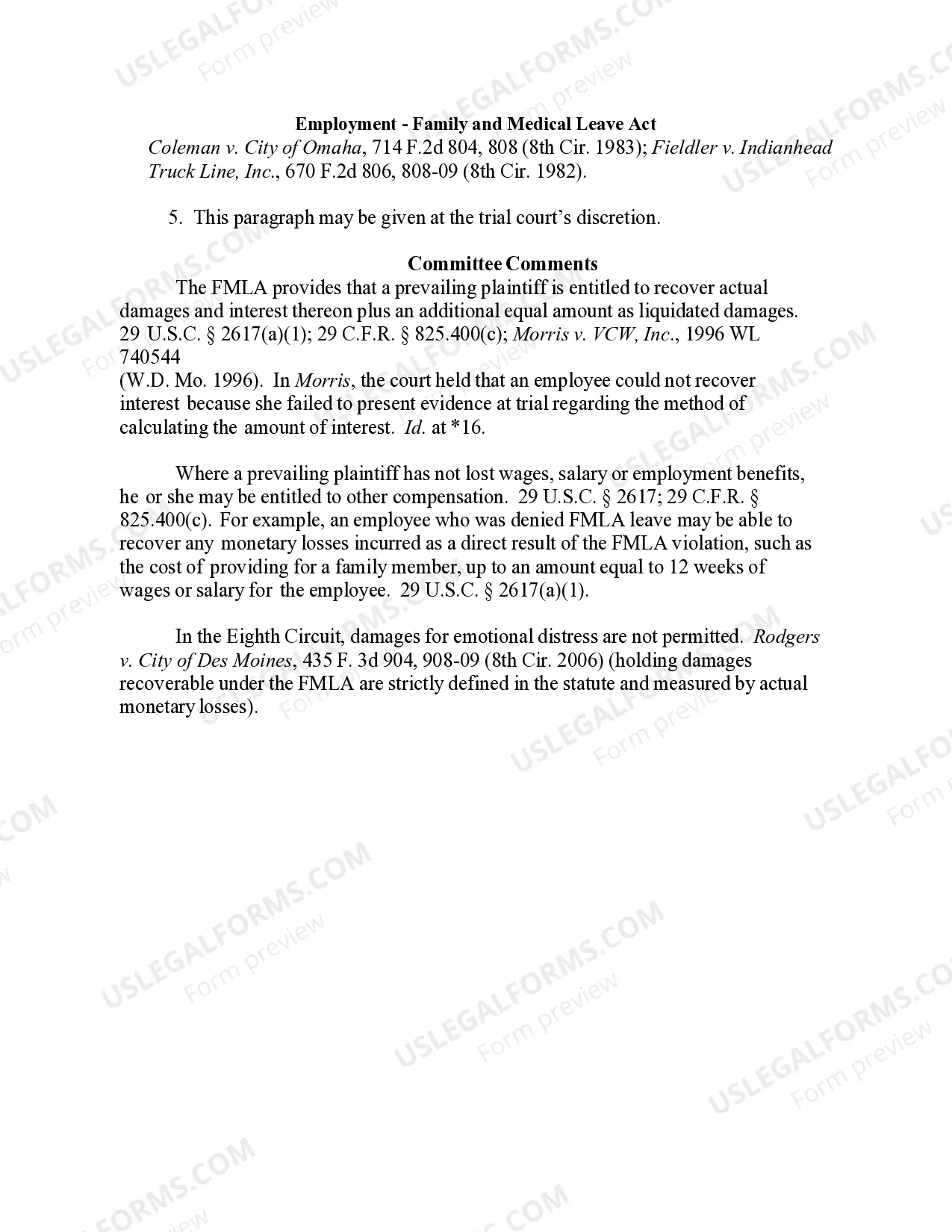
- This form is essential for establishing a plaintiff's right to recover actual damages under employment law.
- It is guided by laws and precedents in the relevant jurisdiction, notably the Fair Labor Standards Act.
- Failure to use this form correctly could result in an inadequate claim for damages, impacting the outcome of the trial.
Looking for another form?

Form popularity
FAQ
The term "actual damages" is synonymous with compensatory damages and excludes punitive damages. In a contract case, punitive damages are generally not awarded. This is because the law generally recognizes that parties should be allowed to breach a contract where it would be more economically efficient to do so.
Today, we're looking into four types of damages you may be able to receive in a breach of contract case. Compensatory damages.Punitive damages.Nominal damages.Liquidated damages.
In tort law, actual damages, also known as compensatory damages, are damages awarded by a court equivalent to the loss a party suffered. If a party's right was technically violated but they suffered no harm or losses, a court may instead grant nominal damages.
An award of compensatory damages is the most common of the legal remedies for breach of contract. The calculation of compensatory damages is based on the actual losses you have sustained as a result of the breach of contract. They typically fall into two categories: expectation damages and consequential damages.
There is no specific formula to calculate damages as they are usually determined based on the actual expenses of the victim and compensation for their pain and anguish. Compensation should make the injured person ?whole? again.
Additionally, in order to receive punitive damages in Texas, the plaintiff must prove actual damages. Actual damages, also known as compensatory damages, are awarded based on proven injuries suffered by the plaintiff such as medical bills and lost wages.