Preferred Stock Provisions
Overview of this form
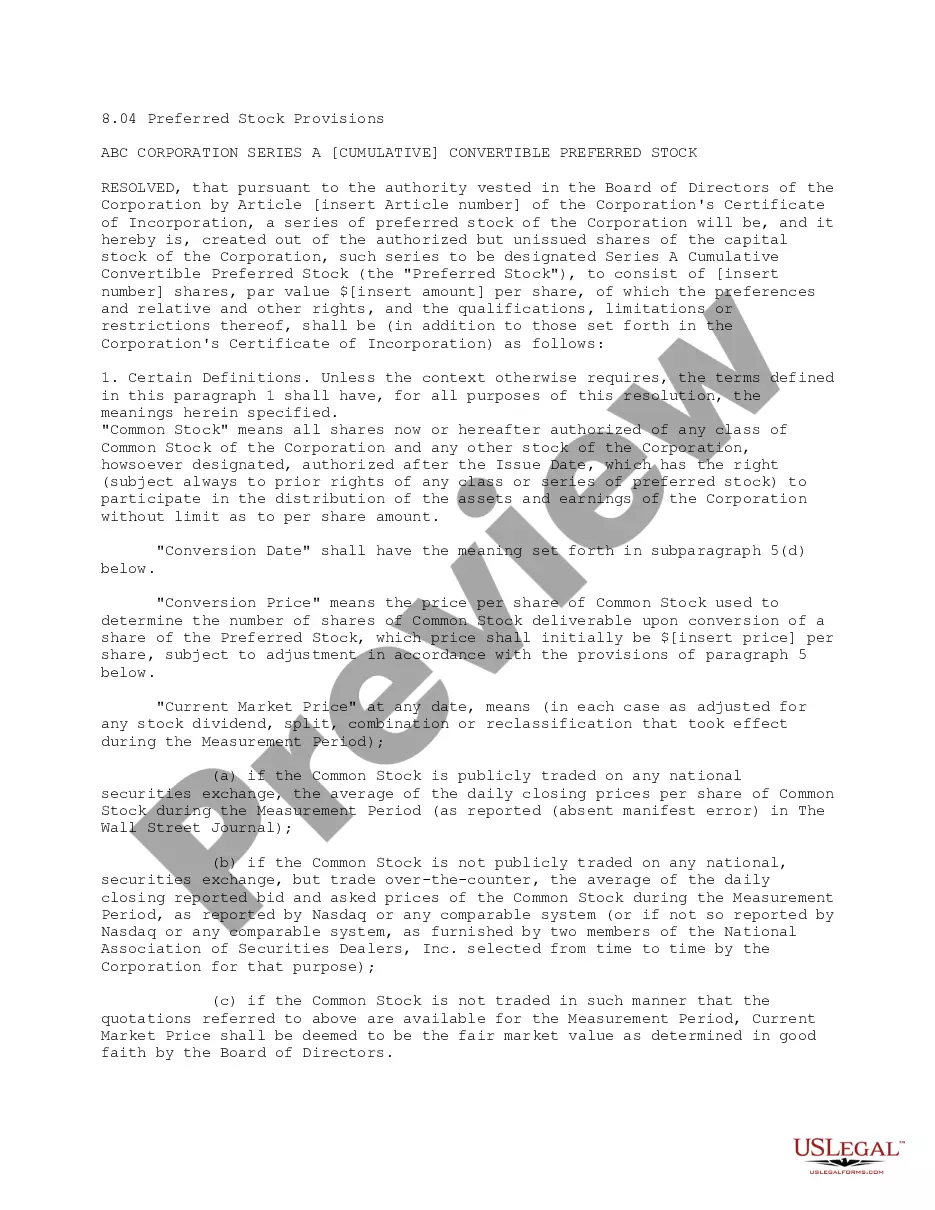
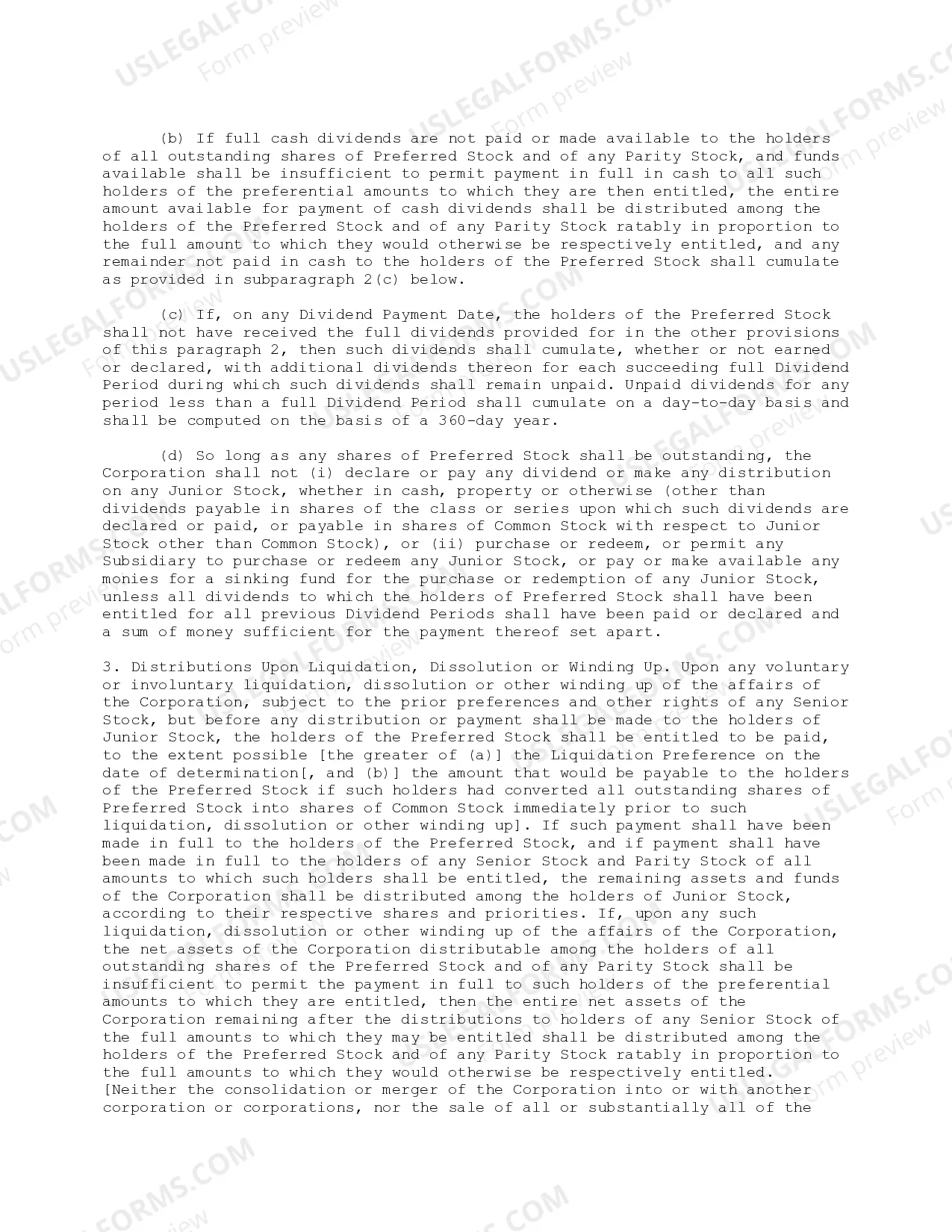
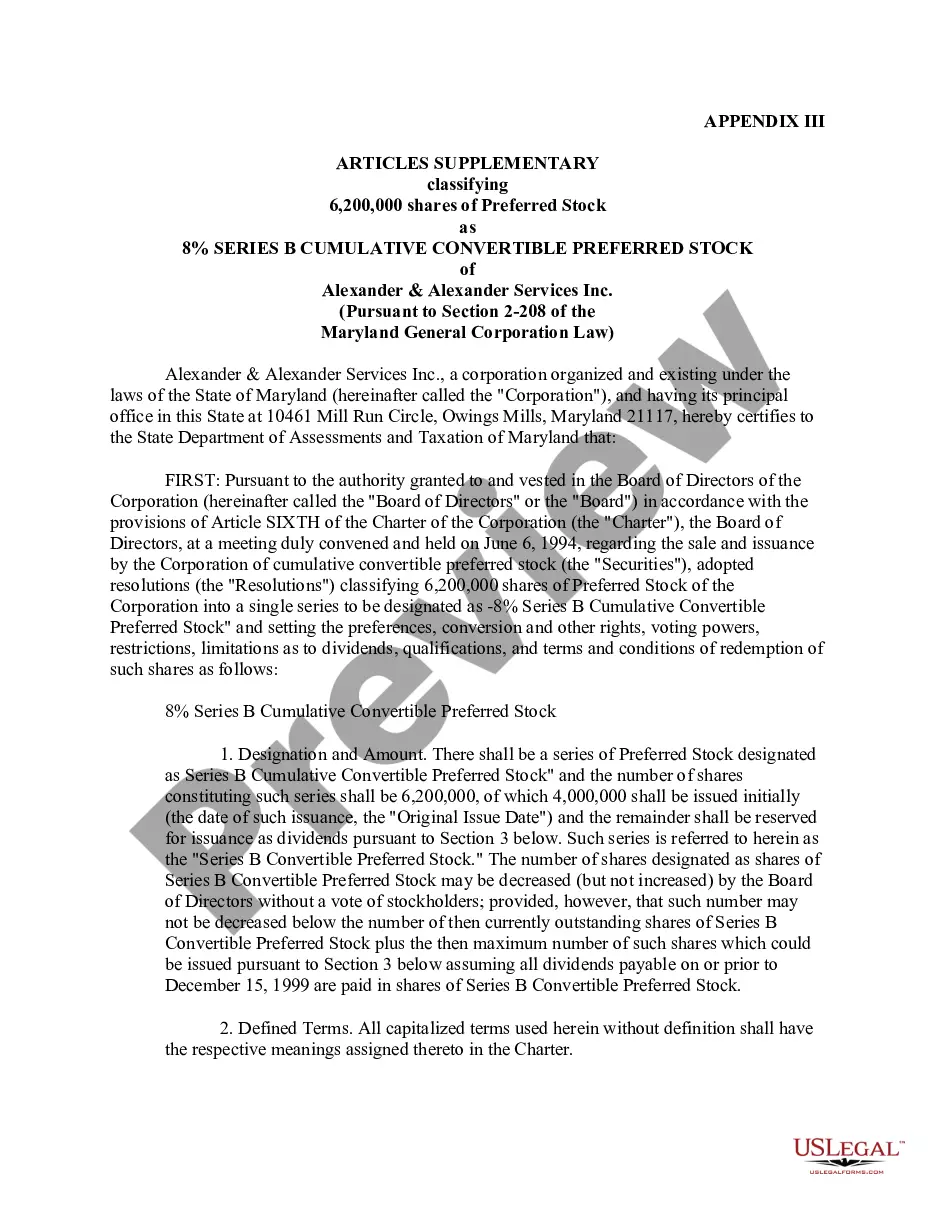
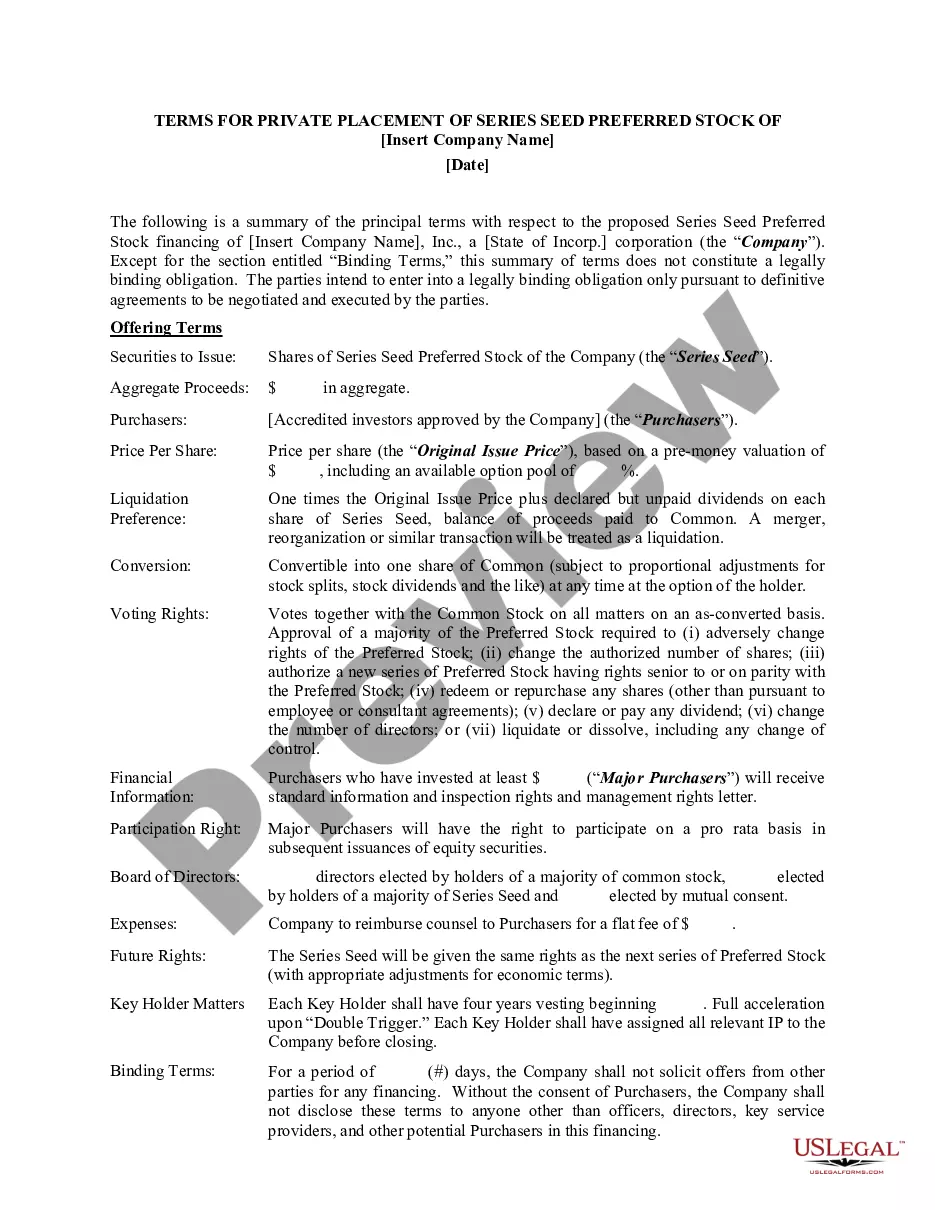
The Preferred Stock Provisions form outlines the rights, preferences, and privileges of a specific series of preferred stock within a corporation. This model form is essential for businesses that are establishing preferred stock provisions as part of their corporate structure. It differs from other corporate forms by specifically addressing cumulative and convertible aspects of preferred stock, which can be crucial for attracting investment and defining shareholder rights.
Key parts of this document
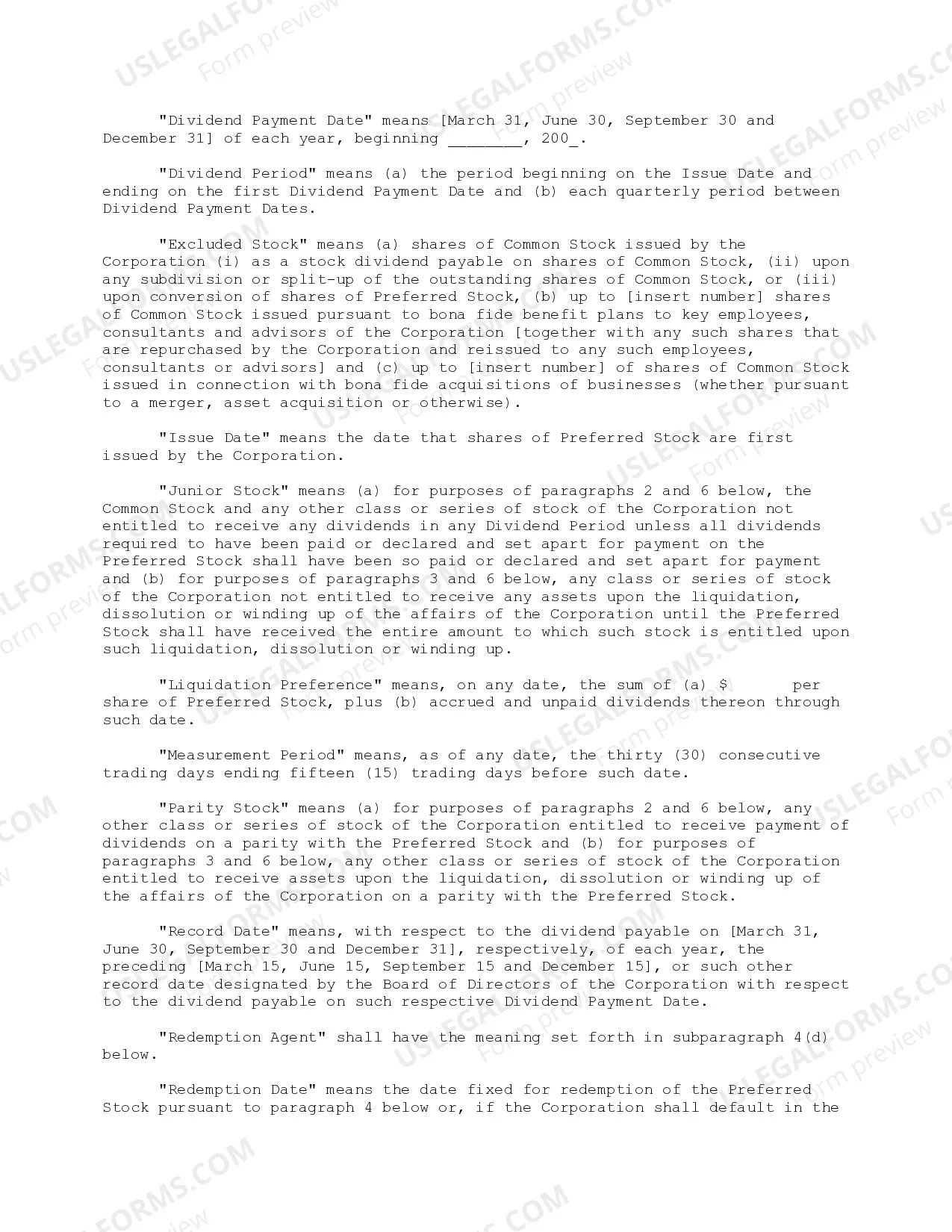
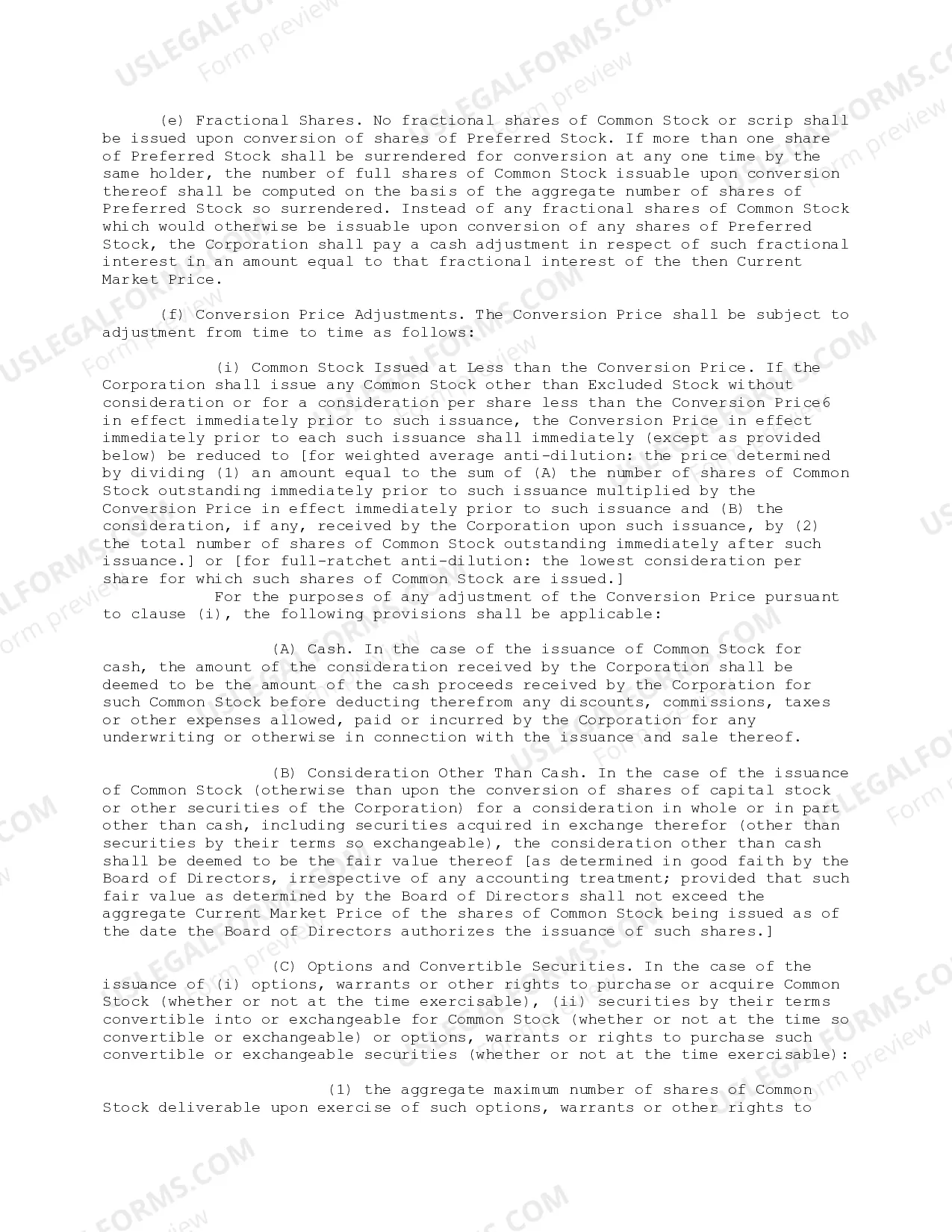
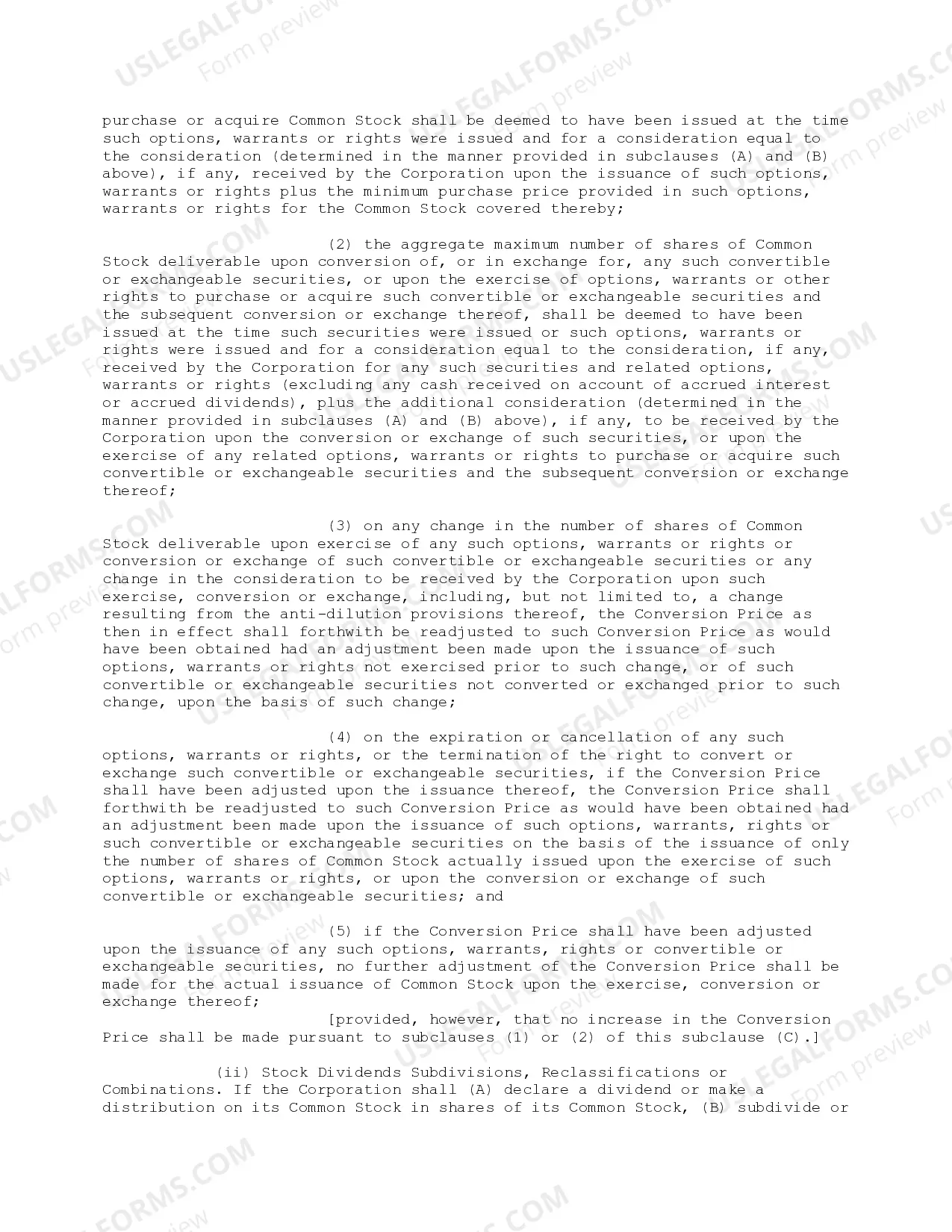
- Certain definitions explaining key terms like Common Stock, Preferred Stock, Liquidation Preference, and Conversion Price.
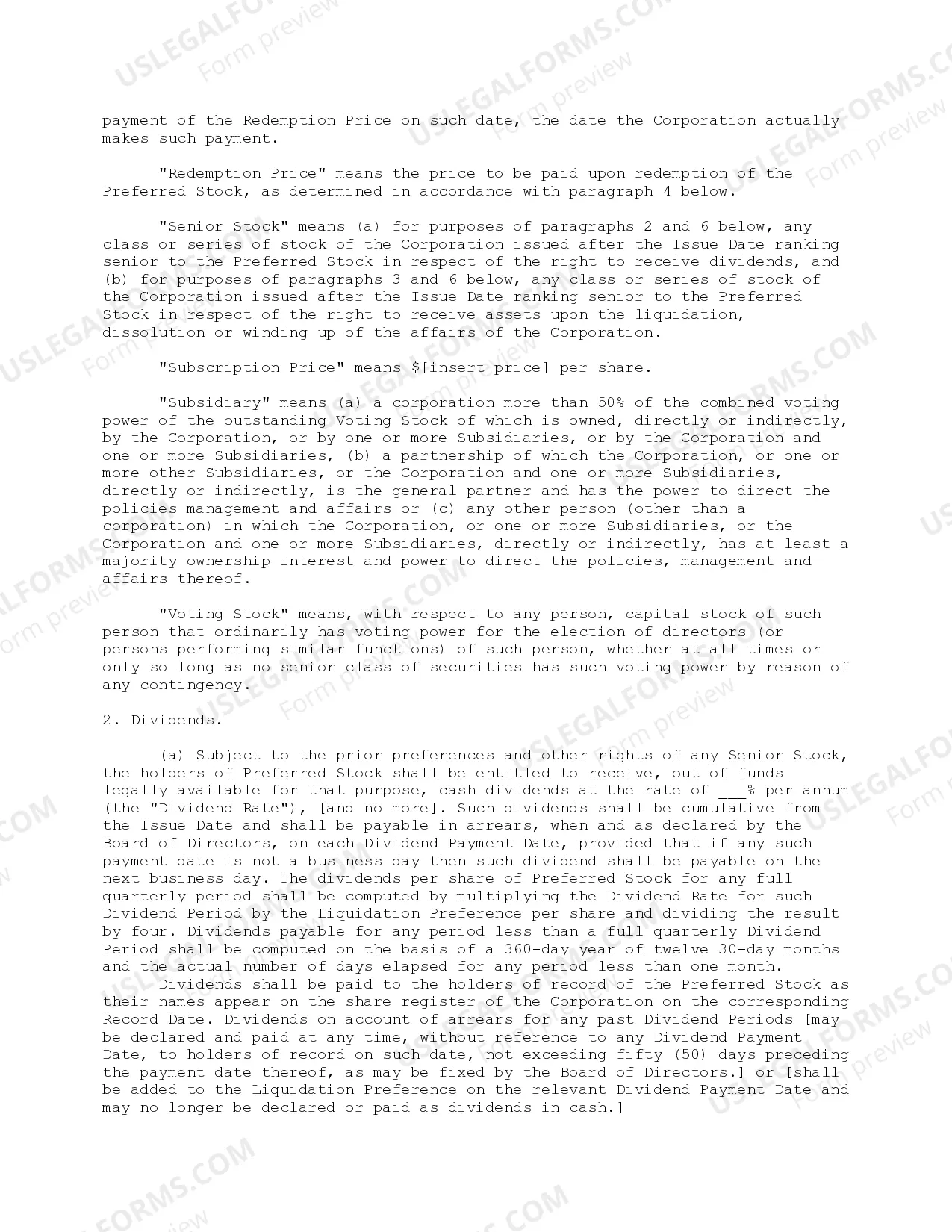
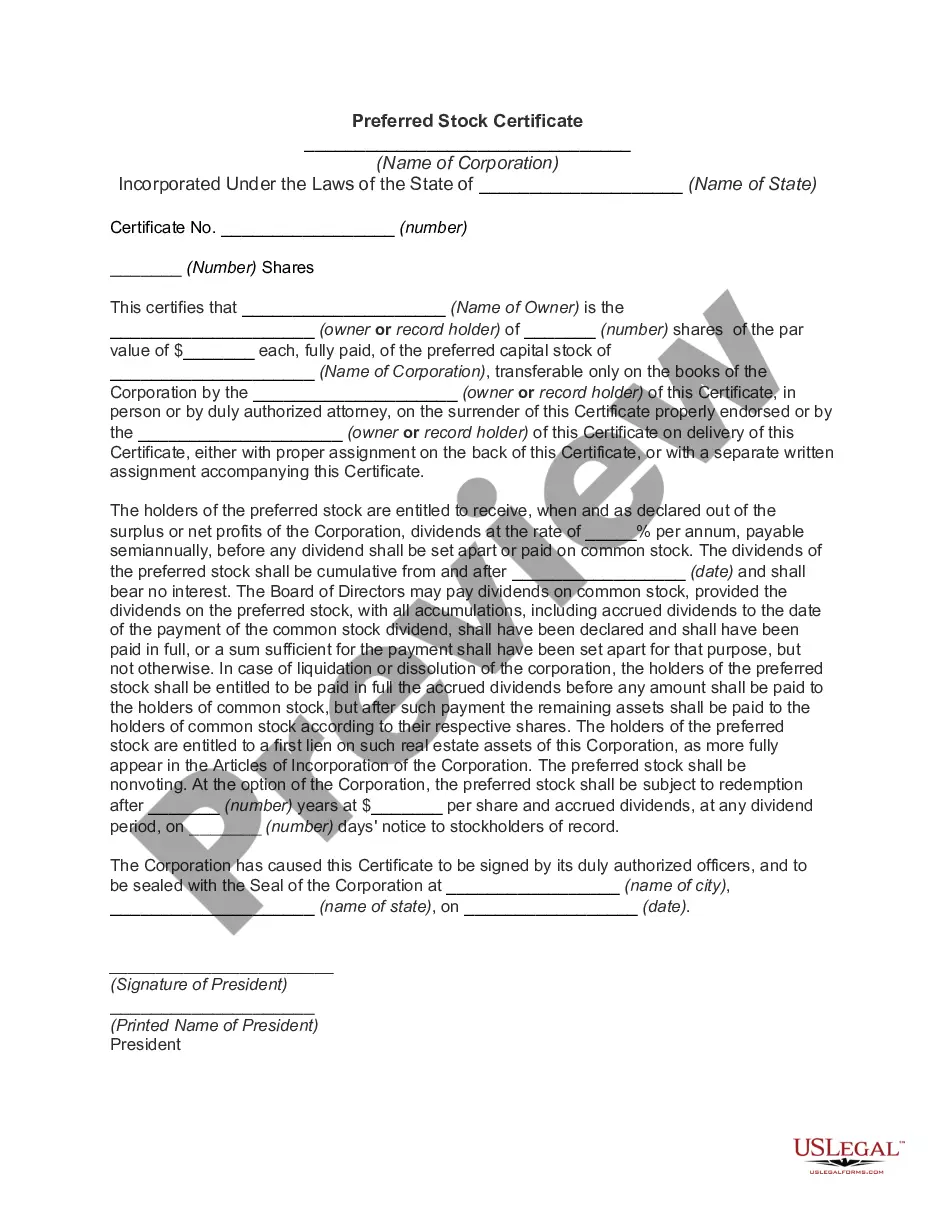
- Terms regarding dividend payments, including rates, periods, and conditions for payment.
- Provisions for liquidation and dissolution distributions, outlining how assets are distributed among stockholders.
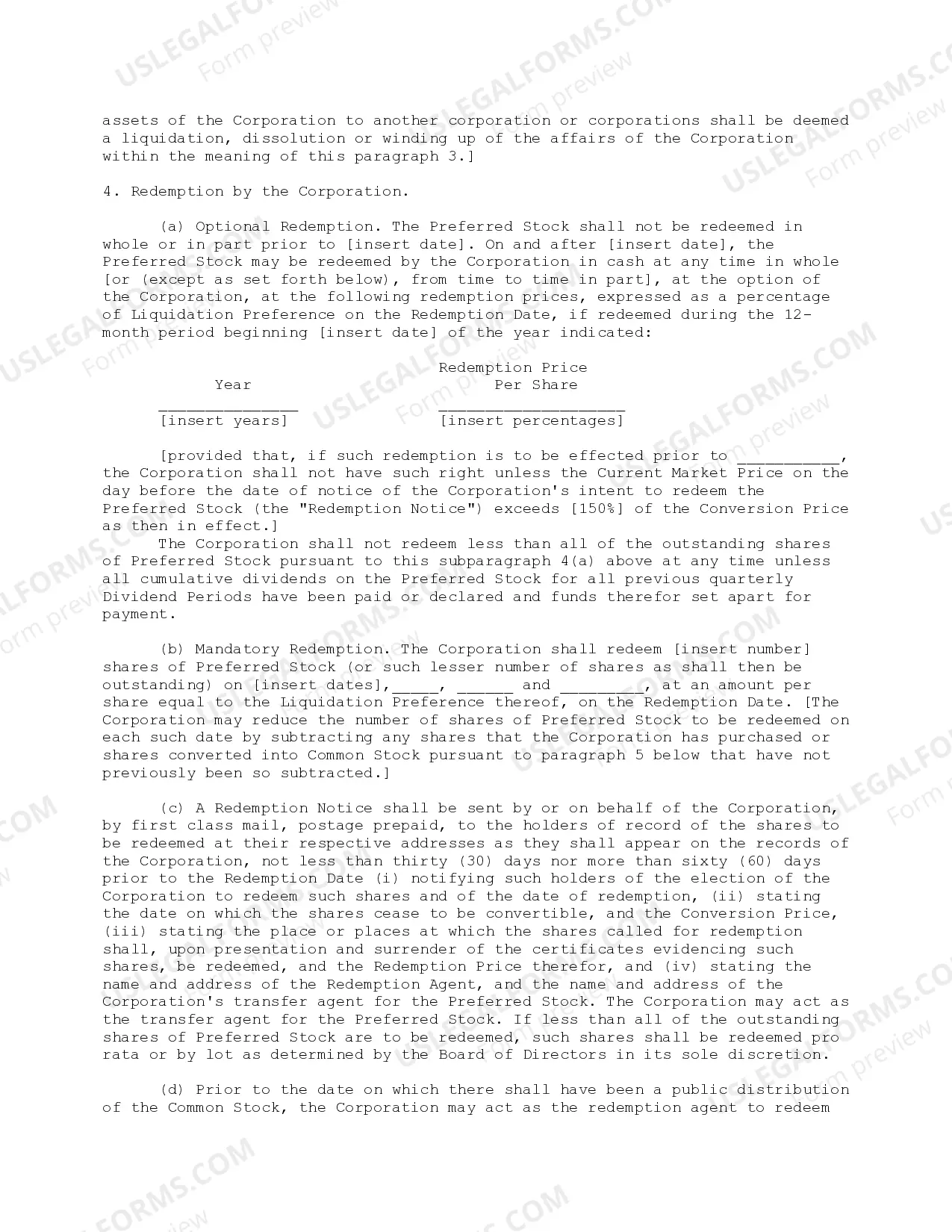
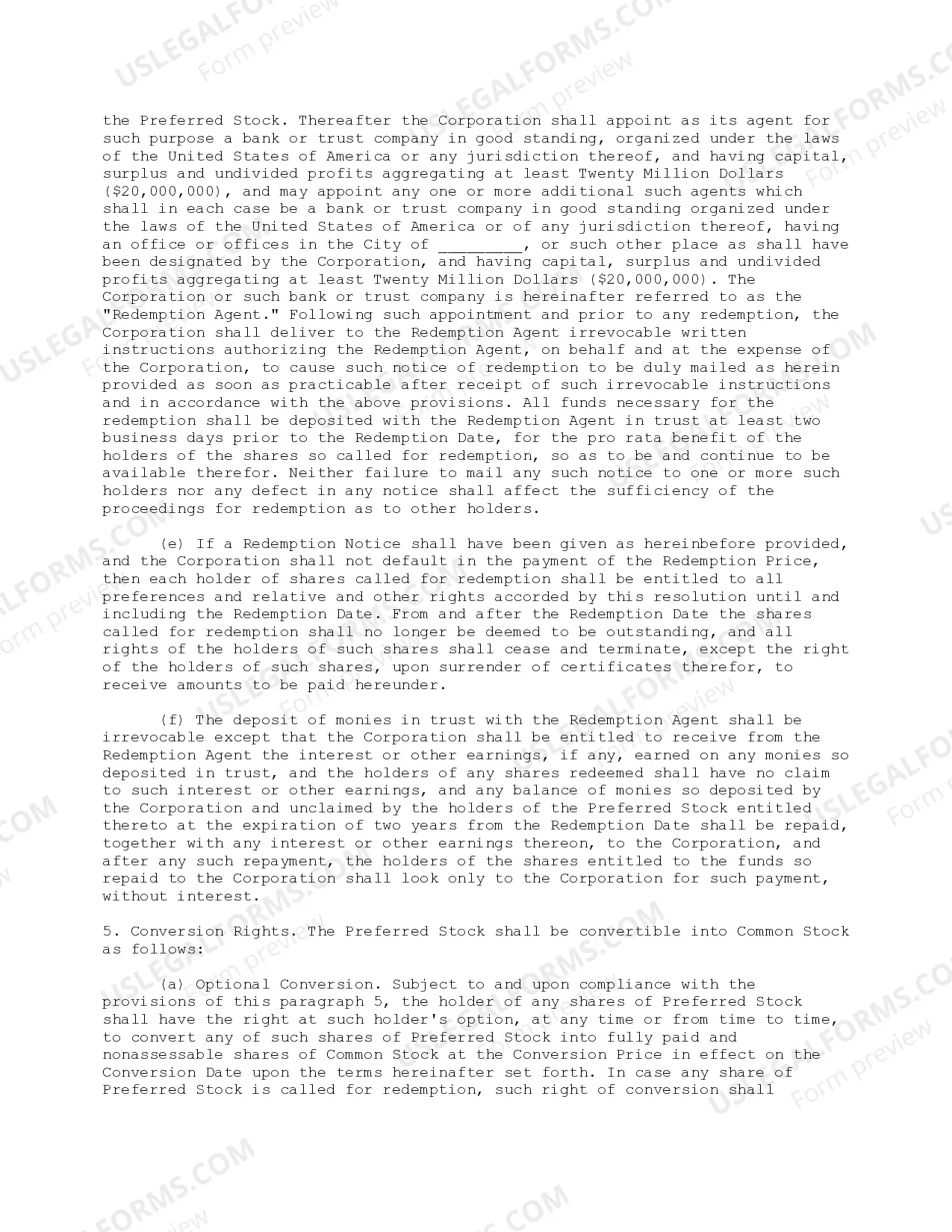
- Redemption rights that describe how and when the corporation may redeem preferred stock.
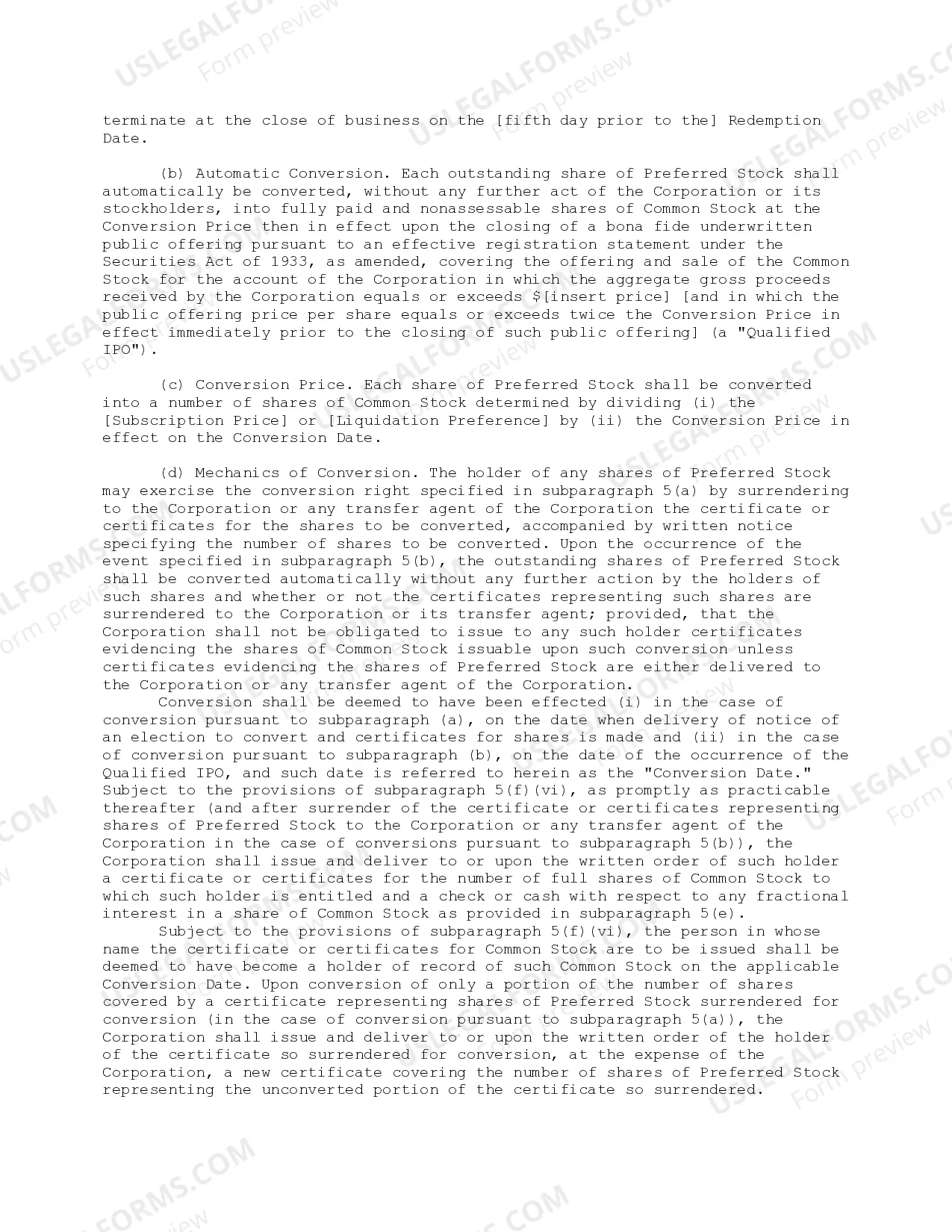
- Conversion rights detailing how preferred stockholders can convert their shares into Common Stock.
- Voting rights that specify the circumstances under which preferred stockholders can influence corporate decisions.




When this form is needed
This form should be used when a corporation intends to issue preferred stock as part of its financing strategy. It is particularly applicable during initial public offerings (IPOs), capital raising efforts, or restructuring of shareholder agreements. If a corporation seeks to attract investment while providing specific rights to preferred shareholders, this is the appropriate form to utilize.
Intended users of this form
This form is intended for:
- Corporations looking to create or amend preferred stock provisions.
- Corporate executives or legal advisers managing stock issuance strategies.
- Investors interested in understanding their rights in relation to preferred stock ownership.
Steps to complete this form
- Identify and define the series of preferred stock, including its name and number of shares.
- Specify the dividend rate and payment dates applicable to the preferred stock.
- Outline the liquidation preferences for holders in case of asset distribution.
- Detail the redemption terms and conditions under which the corporation may repurchase preferred stock.
- Describe the conversion rights, including the process for converting preferred stock into common shares.
Does this document require notarization?
This form does not typically require notarization unless specified by local law.
Get your form ready online
Our built-in tools help you complete, sign, share, and store your documents in one place.
Make edits, fill in missing information, and update formatting in US Legal Forms—just like you would in MS Word.
Download a copy, print it, send it by email, or mail it via USPS—whatever works best for your next step.
Sign and collect signatures with our SignNow integration. Send to multiple recipients, set reminders, and more. Go Premium to unlock E-Sign.
If this form requires notarization, complete it online through a secure video call—no need to meet a notary in person or wait for an appointment.
We protect your documents and personal data by following strict security and privacy standards.

Make edits, fill in missing information, and update formatting in US Legal Forms—just like you would in MS Word.

Download a copy, print it, send it by email, or mail it via USPS—whatever works best for your next step.

Sign and collect signatures with our SignNow integration. Send to multiple recipients, set reminders, and more. Go Premium to unlock E-Sign.

If this form requires notarization, complete it online through a secure video call—no need to meet a notary in person or wait for an appointment.

We protect your documents and personal data by following strict security and privacy standards.
Mistakes to watch out for
- Failing to accurately define the key terms leads to ambiguity in rights and responsibilities.
- Omitting crucial information regarding redemption and dividend payments.
- Not adhering to state-specific regulations can cause legal complications.
Benefits of completing this form online
- Easy access to a legally drafted template saves time and reduces the need for costly legal consultations.
- Editable format allows customization to fit specific corporate needs and requirements.
- Secure storage and retrieval options ensure that important documents are easily accessible when needed.
Legal use & context
The Preferred Stock Provisions form is legally recognized in structuring a corporationâs equity. It ensures that rights and obligations of preferred shareholders are clearly defined, which can affect investment decisions and corporate governance. Itâs important to comply with both state and federal regulations when using this form.
Main things to remember
- The Preferred Stock Provisions form is essential for corporations planning to issue preferred stock.
- It defines crucial elements such as dividends, voting rights, and redemption terms.
- Proper completion and adherence to legal requirements will help avoid common pitfalls in corporate governance.
Looking for another form?

Form popularity
FAQ
Preferred Stock Preferred stock gets its name from the preferences granted to its owners. These include a preference as to payment of dividends, and may include a preference in the distribution of assets (after creditors are paid) if the corporation is liquidated.
For example, the holder of 100 shares of a corporation's 8% $100 par preferred stock will receive annual dividends of $800 (8% X $100 = $8 per share X 100 shares) before the common stockholders are allowed to receive any cash dividends for the year.
According to some estimates, there's $80 of common stock circulating in the United States for every dollar of preferred stock. None of the heavyweights Apple Inc.(MSFT), etc., offer preferred stock.
The main difference between preferred and common stock is that preferred stock gives no voting rights to shareholders while common stock does. Preferred shareholders have priority over a company's income, meaning they are paid dividends before common shareholders.
Increases or decreases to the authorized number of shares of common stock or preferred stock. Amendments to any provision of the certificate of incorporation or bylaws. Issuances of any new class or series of shares having rights, preferences or privileges senior to or on parity with the preferred stock.
The following features are usually associated with preferred stock: Preference in dividends preference in assets, in the event of liquidation, convertibility to common stock, callability, and at the option of the corporation.
Preferred shares are an asset class somewhere between common stocks and bonds, so they can offer companies and their investors the best of both worlds.Some companies like to issue preferred shares because they keep the debt-to-equity ratio lower than issuing bonds and give less control to outsiders than common stocks.
Searching for Preferred Securities. On Fidelity.com, you can search for preferred securities-a type of security that shares some of the characteristics of bonds and common stock. You can begin a preferred security search by clicking Start a Preferred Securities Screen from the Stock Screeners page.