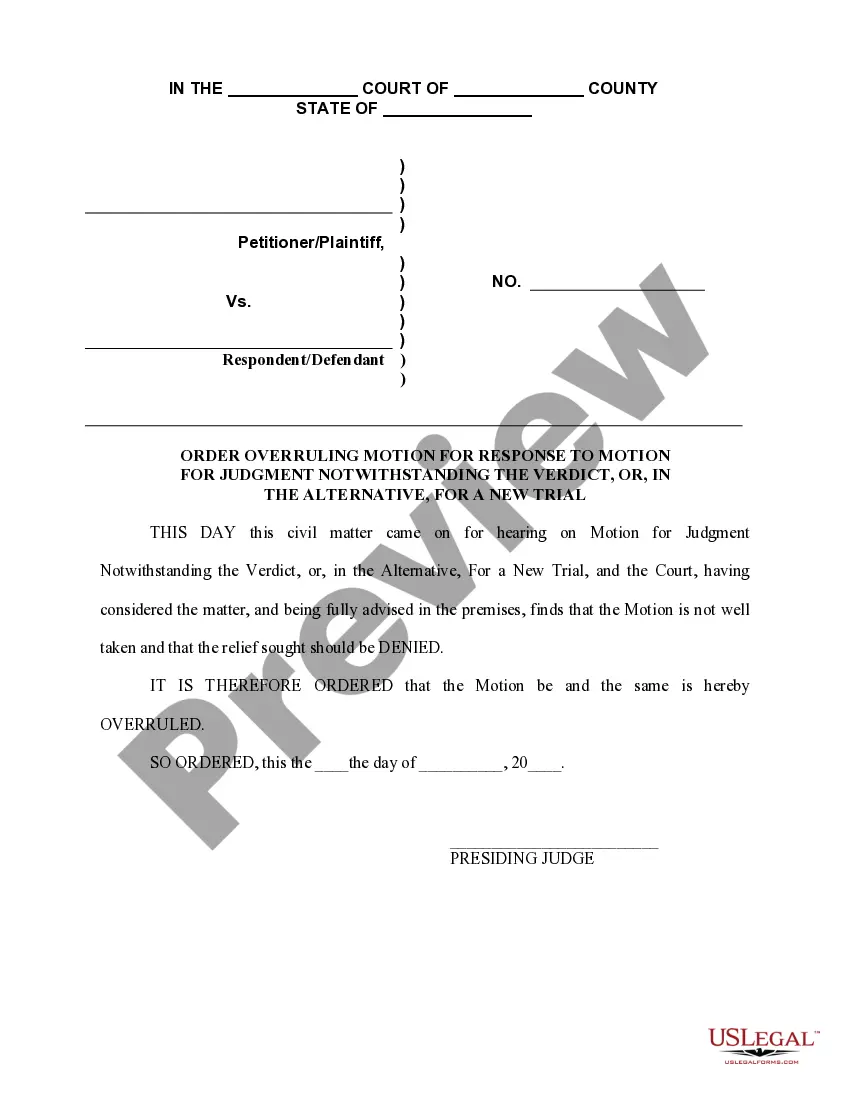
Order Overruling Motion for JNOV
About this form
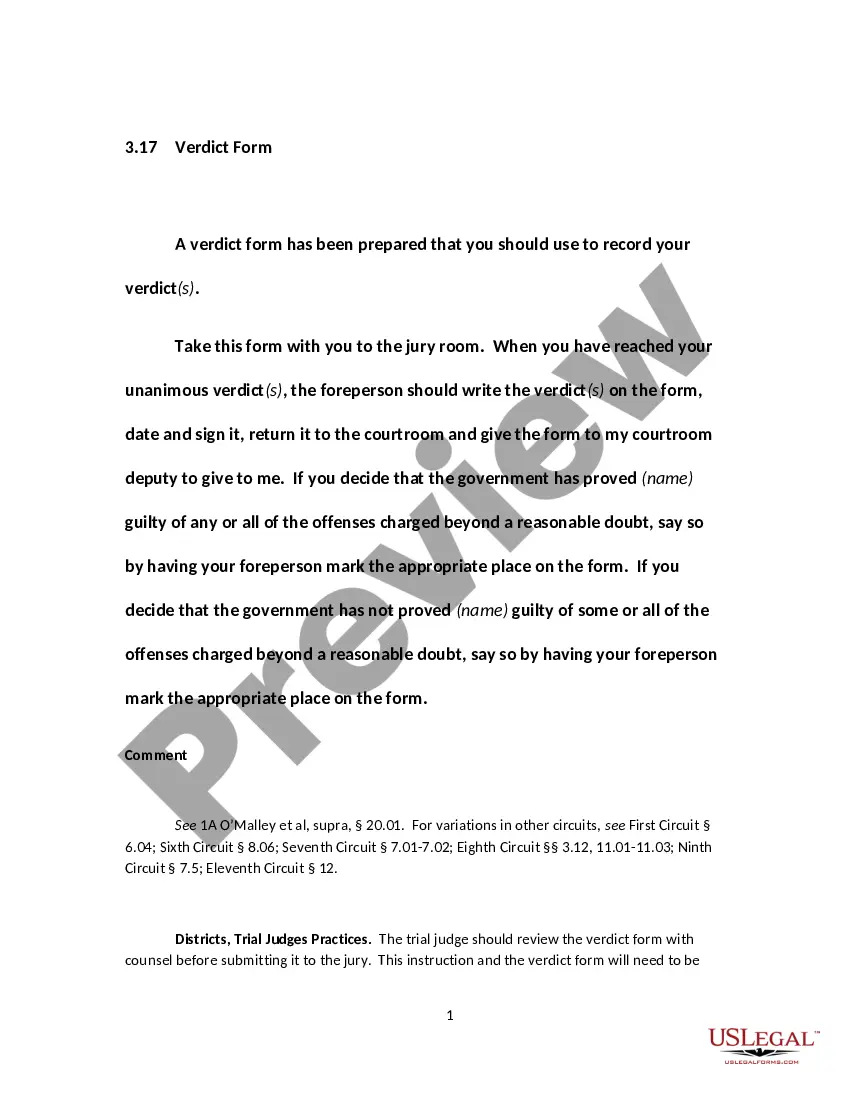
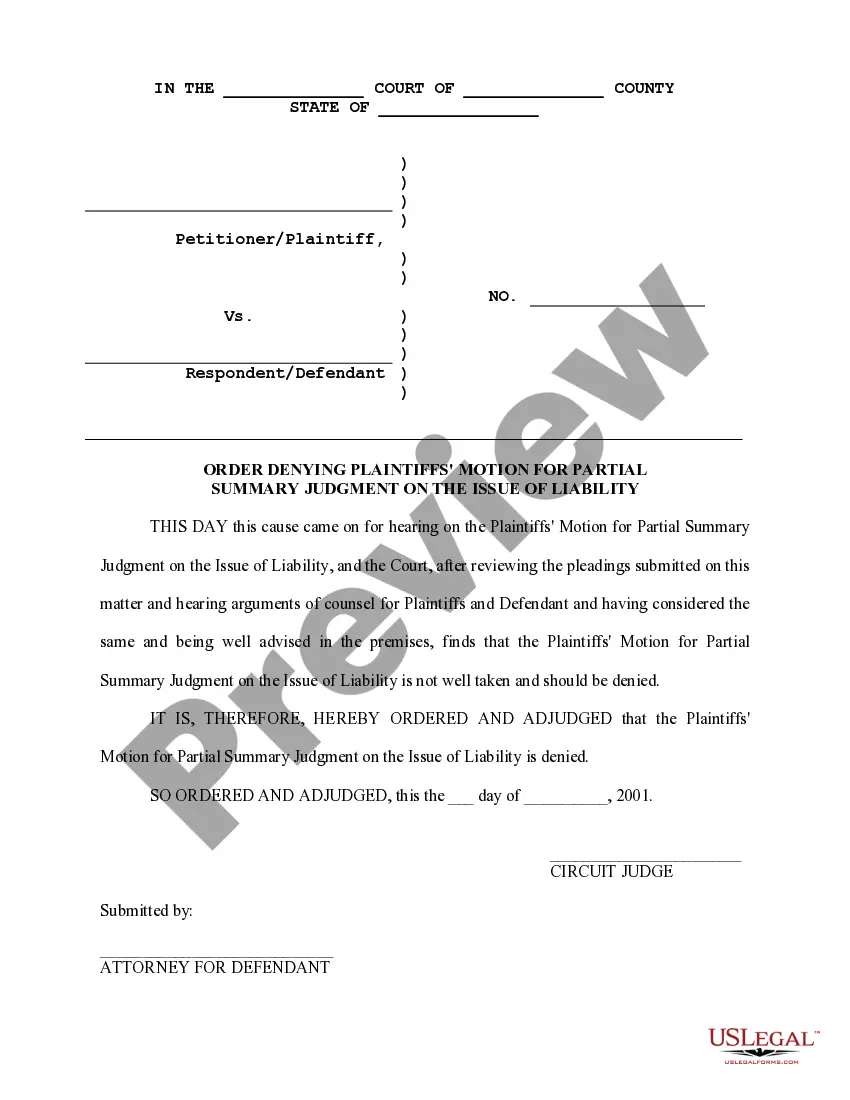
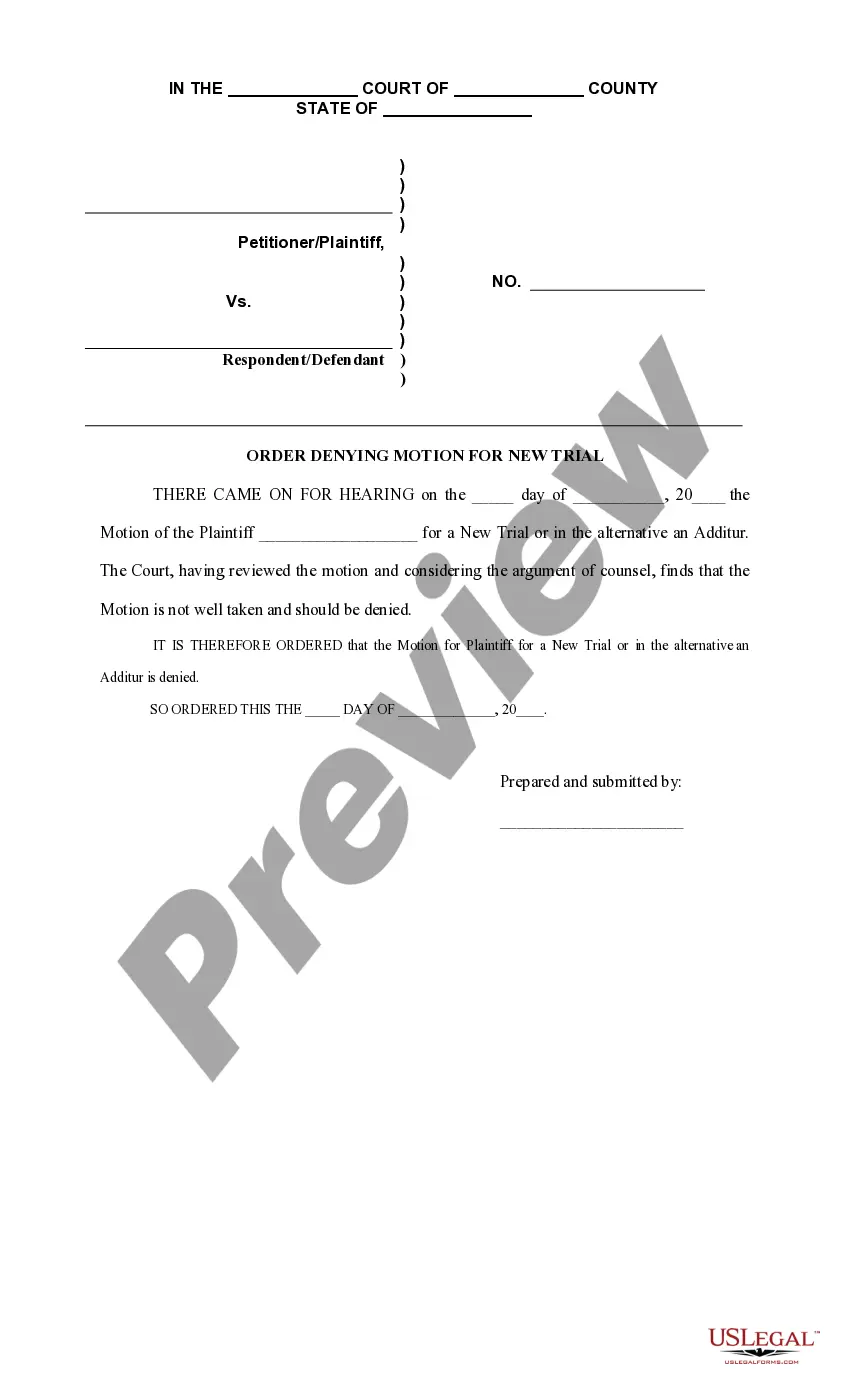
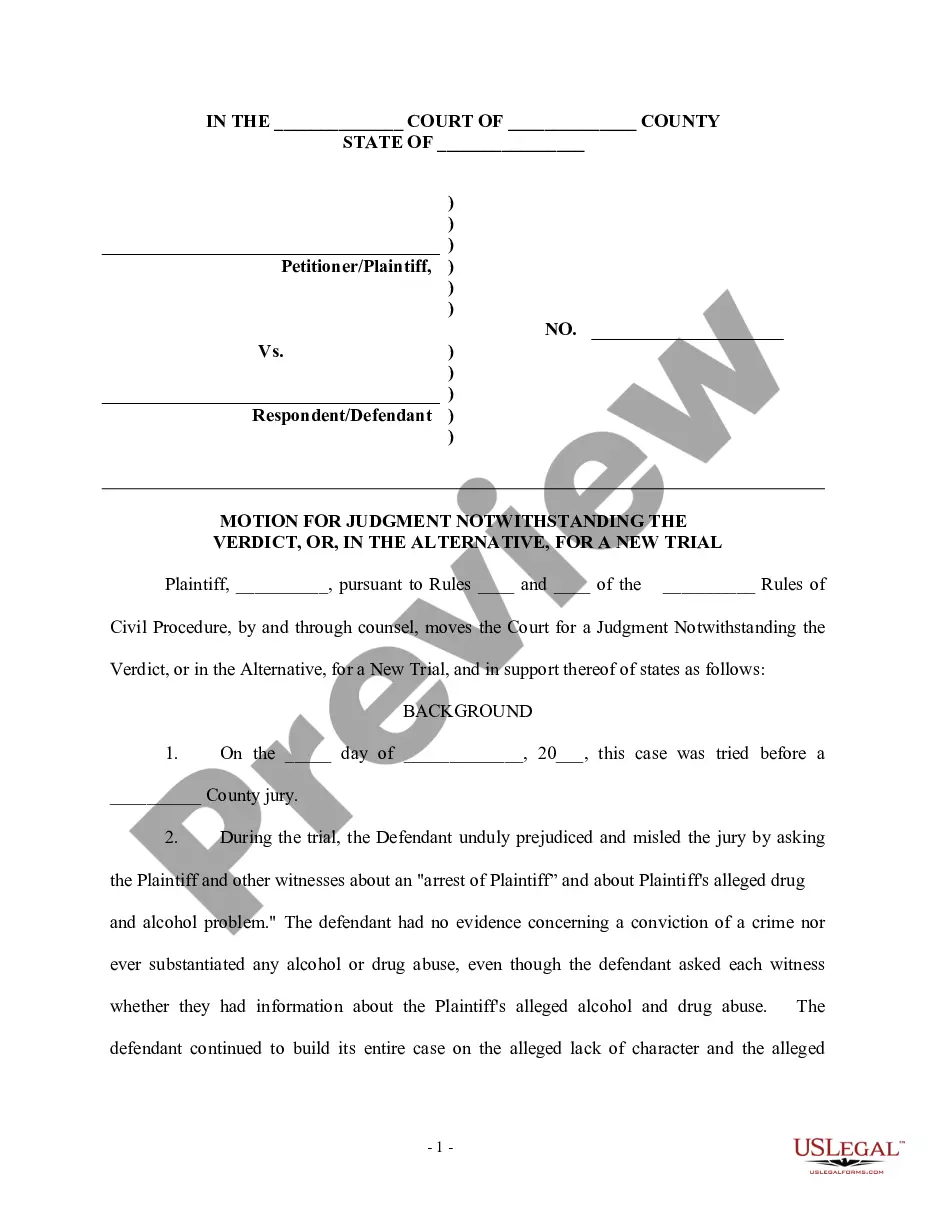
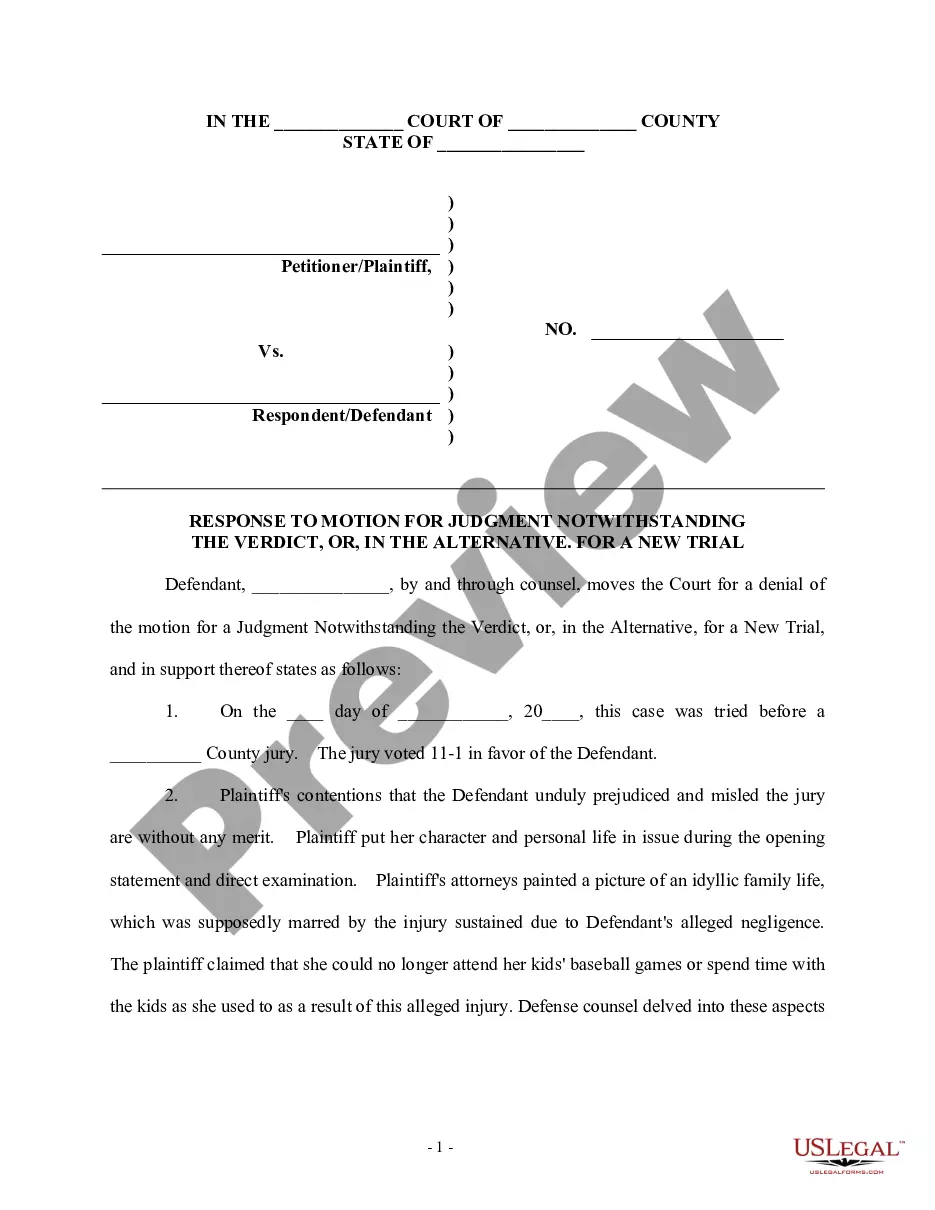
The Order Overruling Motion for JNOV is a legal document used by a judge to deny a plaintiff's request for a judgment notwithstanding the verdict, or alternatively, for a new trial. This form helps clarify the court's decision following a trial, outlining reasons that support the verdict reached by the jury. It is distinct from other motions as it specifically addresses the request for post-verdict relief after a trial has concluded.
Main sections of this form
- Ordinary order granting a ruling against the JNOV motion.
- Space for the date to indicate when the order is signed.
- Signature line for the presiding judge to authorize the order.
When to use this document
This form is typically used after a jury has made a verdict in a civil case. If a party believes that the verdict was against the weight of the evidence or that legal errors were made during the trial, they may file a motion for a judgment notwithstanding the verdict (JNOV). If this motion is denied, an Order Overruling Motion for JNOV is issued to formally record the court's decision to uphold the jury's verdict.
Who needs this form
- Attorneys representing clients in civil litigation cases.
- Parties involved in a lawsuit who wish to formally contest the jury's verdict.
- Litigants seeking to preserve their right to appeal based on motions filed.
How to complete this form
- Clearly reference the motion being overruled in the introductory clause.
- Leave the date line blank for the judge to fill in upon approval of the order.
- Provide the presiding judge's name where indicated, ensuring the correct spelling.
Is notarization required?
This form does not typically require notarization unless specified by local law. However, always confirm any jurisdiction-specific requirements before submitting.
Get your form ready online
Our built-in tools help you complete, sign, share, and store your documents in one place.
Make edits, fill in missing information, and update formatting in US Legal Forms—just like you would in MS Word.
Download a copy, print it, send it by email, or mail it via USPS—whatever works best for your next step.
Sign and collect signatures with our SignNow integration. Send to multiple recipients, set reminders, and more. Go Premium to unlock E-Sign.
If this form requires notarization, complete it online through a secure video call—no need to meet a notary in person or wait for an appointment.
We protect your documents and personal data by following strict security and privacy standards.

Make edits, fill in missing information, and update formatting in US Legal Forms—just like you would in MS Word.

Download a copy, print it, send it by email, or mail it via USPS—whatever works best for your next step.

Sign and collect signatures with our SignNow integration. Send to multiple recipients, set reminders, and more. Go Premium to unlock E-Sign.

If this form requires notarization, complete it online through a secure video call—no need to meet a notary in person or wait for an appointment.

We protect your documents and personal data by following strict security and privacy standards.
Avoid these common issues
- Failing to provide proper references to the original motion.
- Omitting the date when the order is finalized.
- Not having the presiding judge's name accurately filled out.
Advantages of online completion
- Convenient access to legal templates anytime, anywhere.
- Edit and customize the form as needed to suit specific case details.
- Reliable formats drafted by licensed attorneys for accuracy and compliance.
Legal use & context
- This form serves as an official court record of the judge's decision regarding the motion.
- It establishes the court's position on the validity of the jury's verdict.
- A properly executed order may be critical in any subsequent appeals or legal actions.
Key takeaways
- The Order Overruling Motion for JNOV is important for formalizing court decisions against motions seeking to overturn jury verdicts.
- Correct completion and filing of this form are vital to maintain the integrity of the legal process.
Looking for another form?
Form popularity
FAQ
A motion for a judgment notwithstanding the verdict is often filed together with a motion for a new trial by the losing party in response to the jury's verdict. A judge's decision to grant or deny a motion for JNOV is often reviewable on appeal.
Directed Verdict a) After Plaintiff201fs evidence or after the close of all the evidence, a party may move for a directed verdict in its favor. Standard: If the non-moving party201fs evidence is insufficient as a matter of law to go to a jury, the Court should grant a directed verdict for the moving party.
A motion for judgment as a matter of law may be made at any time before the case is submitted to the jury. The motion must specify the judgment sought and the law and facts that entitle the movant to the judgment.
A JNOV is proper when the court finds that the party bearing the BURDEN OF PROOF fails to make out a PRIMA FACIE case (a case that on first appearance will prevail unless contradicted by evidence). To be granted relief by a JNOV, a party must make a motion seeking that relief.
A motion for a judgment notwithstanding the verdict is often filed together with a motion for a new trial by the losing party in response to the jury's verdict. A judge's decision to grant or deny a motion for JNOV is often reviewable on appeal.
A directed verdict may be granted at any time, but usually occurs after at least one party has been fully heard. Motions for a directed verdict are governed by Rule 50 of the Federal Rules of Civil Procedure and Rule 29 of the Federal Rules of Criminal Procedure.
Dispositive motions therefore can accelerate the resolution of a claim or lawsuit, promote efficiency, and conserve judicial resources. For example, motions for default judgment, motions to dismiss, and motions for summary judgment all may result in the disposition of claims without a trial.
Rule 50(a) provides for a motion for judgment as a matter of law (JMOL) which may be made at any time before submission of the case to the jury. This was previously known as a motion for a directed verdict.
A judgment notwithstanding the verdict (or JNOV) is an order by a judge after a jury has returned its verdict. The judge can overturn the jury's verdict if he or she feels it cannot reasonably be supported by the evidence or if it contradicts itself. This rarely happens.