Geophysical and Seismic Operations
What this document covers
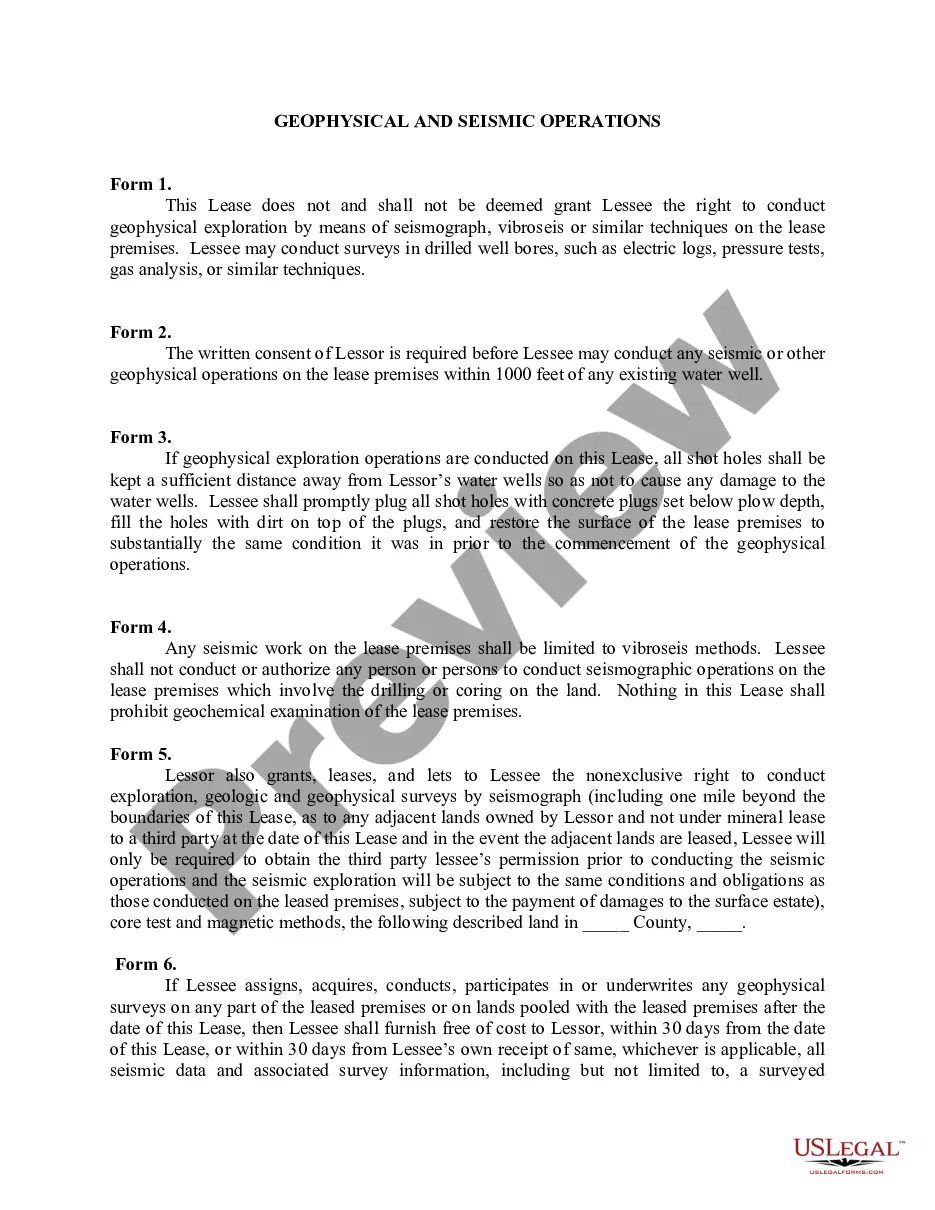
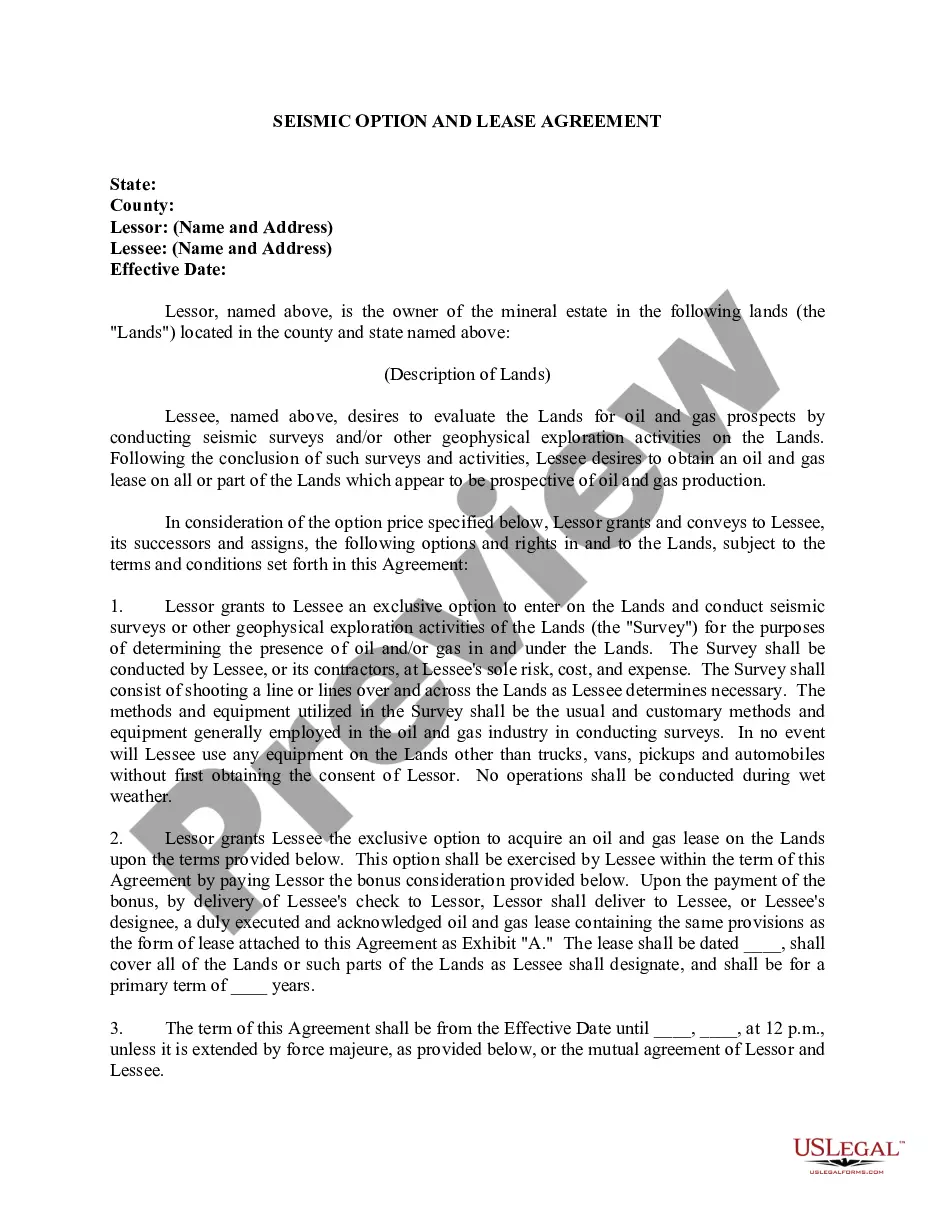
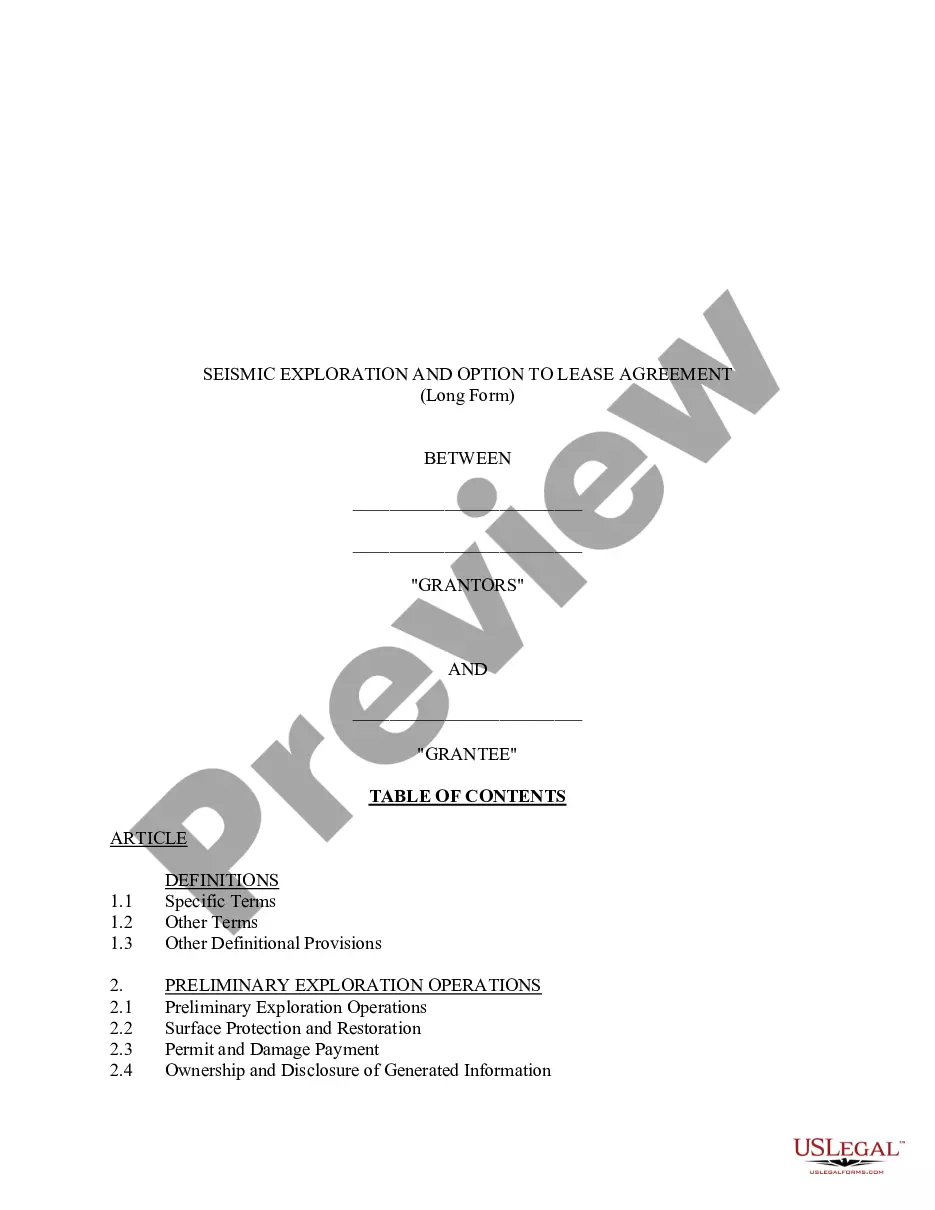
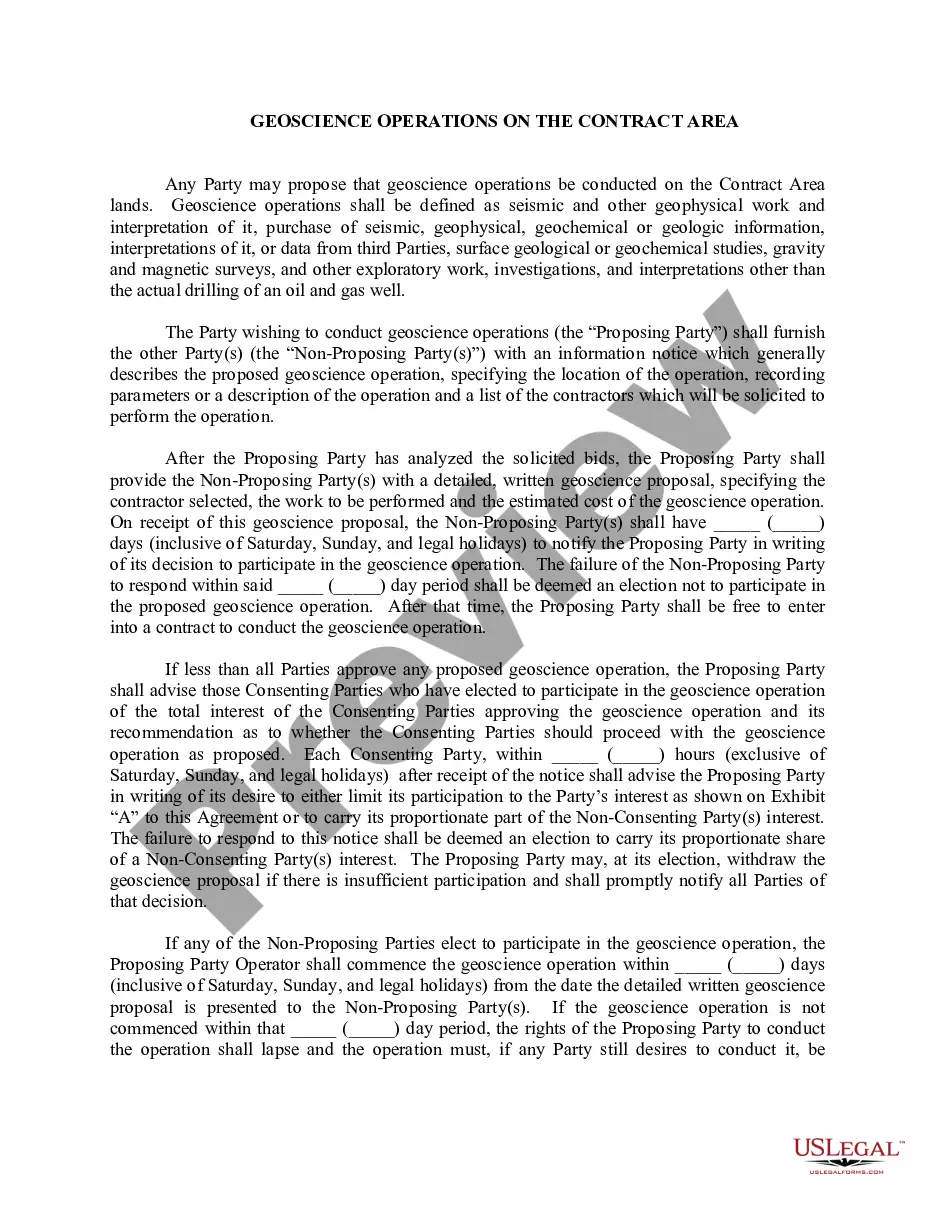
The Geophysical and Seismic Operations lease rider form is a legal document used in lease transactions to outline specific provisions regarding geophysical exploration rights. Unlike standard lease agreements, this form allows lessors to set limitations on the lessee's rights to conduct various seismic operations, helping to address any unique concerns regarding land use and environmental protection.
Key parts of this document
- The lease explicitly states that the lessee does not have the right to conduct geophysical exploration using certain methods, including seismographs.
- Written consent from the lessor is required before any seismic operations can occur near existing water wells.
- Requirements for any shot holes created during geophysical operations to be filled and surface restored.
- Limitations on seismic methods allowed, specifying vibroseis techniques while prohibiting drilling or coring.
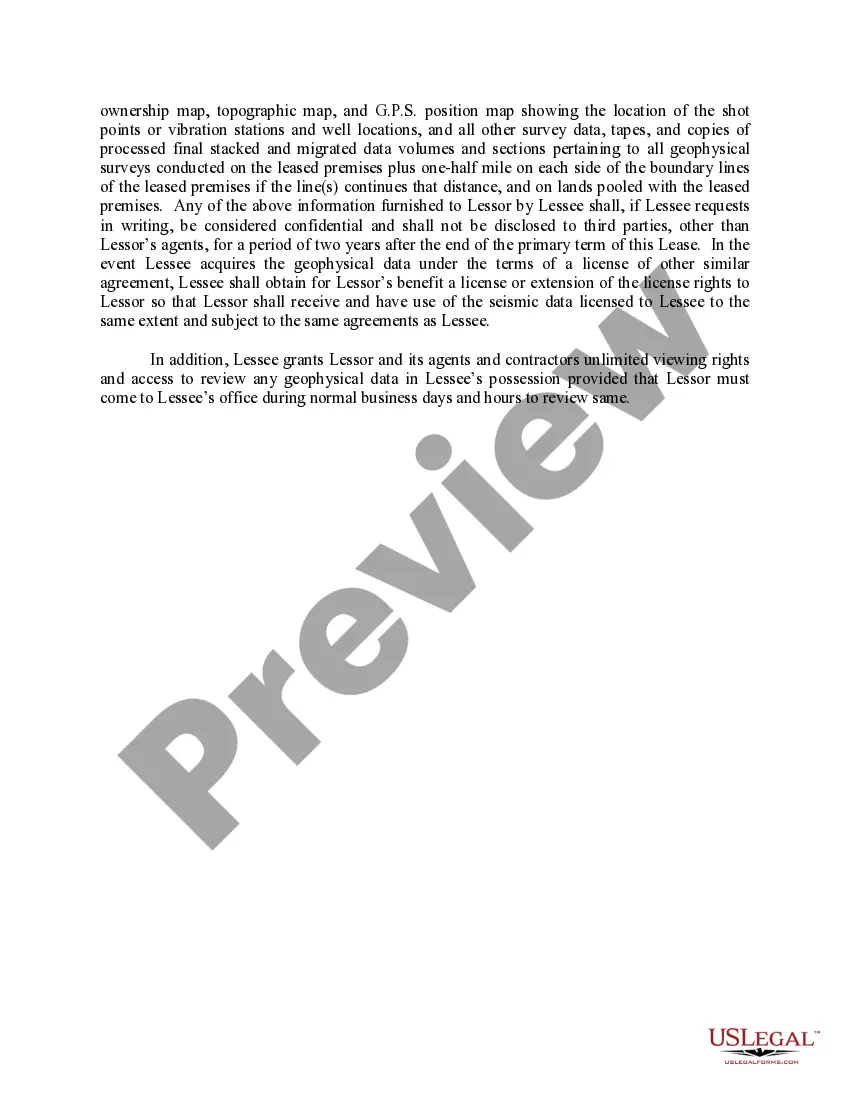
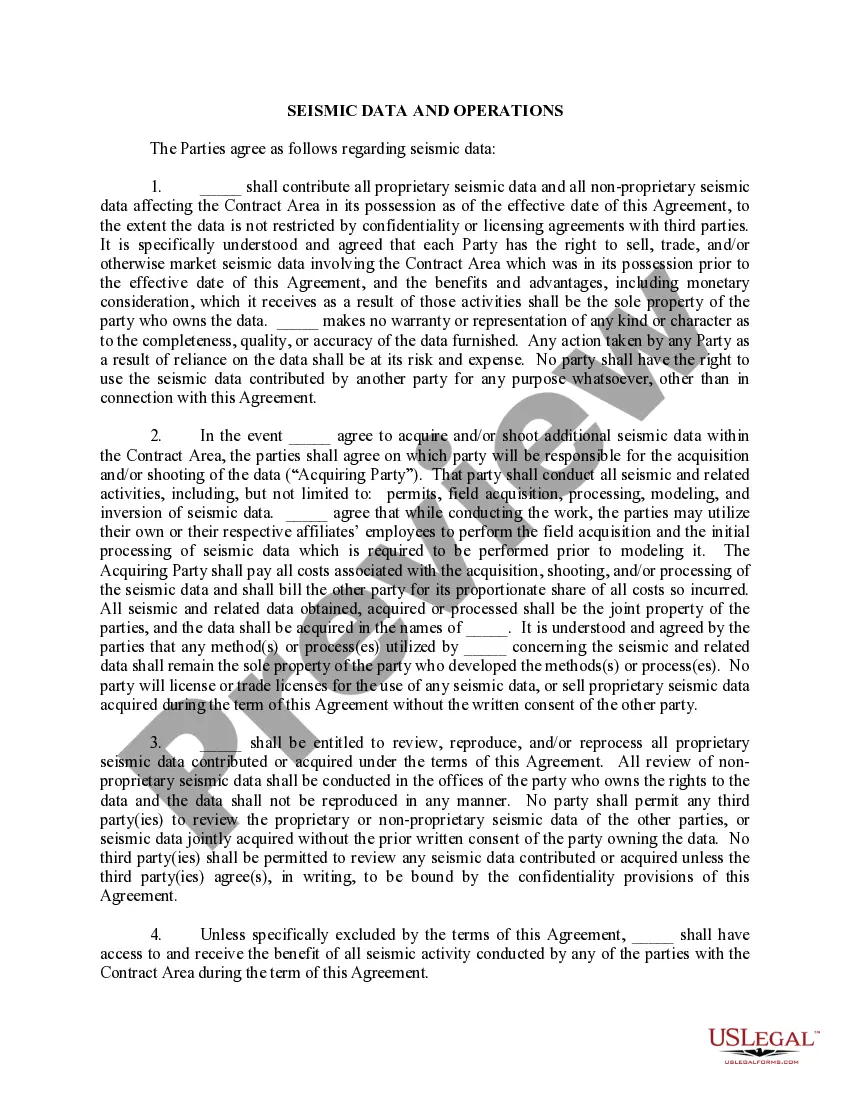
- Outlines the obligation of the lessee to provide the lessor with seismic data and survey information within a specified timeframe.
Situations where this form applies
This form should be used when entering into leasing agreements that involve geophysical operations. It is particularly relevant when there are specific concerns about environmental impact, water well contamination, or land use rights that need to be clearly defined in the lease terms. This form can help protect the rights of the lessor while allowing for necessary exploration activities to take place.
Intended users of this form
- Landowners (lessors) who are leasing their land for oil and gas exploration.
- Applicants (lessees) looking to include specific provisions in their lease agreements regarding geophysical operations.
- Legal professionals drafting lease agreements involving seismic and geophysical activities.
Completing this form step by step
- Identify the parties involved in the lease agreement by entering their full names and contact information.
- Clearly specify the property being leased, including legal descriptions and boundaries.
- Detail any specific limitations on geophysical operations you want to impose on the lessee.
- Enter consent requirements for seismic operations, particularly those near existing water wells.
- Obtain all necessary signatures from both lessor and lessee to finalize the agreement.
Is notarization required?
Notarization is generally not required for this form. However, certain states or situations might demand it. You can complete notarization online through US Legal Forms, powered by Notarize, using a verified video call available anytime.
Get your form ready online
Our built-in tools help you complete, sign, share, and store your documents in one place.
Make edits, fill in missing information, and update formatting in US Legal Forms—just like you would in MS Word.
Download a copy, print it, send it by email, or mail it via USPS—whatever works best for your next step.
Sign and collect signatures with our SignNow integration. Send to multiple recipients, set reminders, and more. Go Premium to unlock E-Sign.
If this form requires notarization, complete it online through a secure video call—no need to meet a notary in person or wait for an appointment.
We protect your documents and personal data by following strict security and privacy standards.

Make edits, fill in missing information, and update formatting in US Legal Forms—just like you would in MS Word.

Download a copy, print it, send it by email, or mail it via USPS—whatever works best for your next step.

Sign and collect signatures with our SignNow integration. Send to multiple recipients, set reminders, and more. Go Premium to unlock E-Sign.

If this form requires notarization, complete it online through a secure video call—no need to meet a notary in person or wait for an appointment.

We protect your documents and personal data by following strict security and privacy standards.
Common mistakes
- Failing to specify all areas near water wells where seismic operations require consent.
- Not detailing surface restoration requirements after operations are completed.
- Overlooking the need for both parties to sign the form, which can invalidate the agreement.
- Using vague language that may lead to disputes regarding what seismic operations are allowed.
Advantages of online completion
- Convenience of downloading and filling out the form at any time.
- Editability allows users to customize provisions based on specific needs and circumstances.
- Access to templates drafted by licensed attorneys ensures legal compliance.
- Availability of guidance resources to assist in completing the form correctly.
Looking for another form?


Form popularity
FAQ
Exploration geophysics is an applied branch of geophysics and economic geology, which uses physical methods, such as seismic, gravitational, magnetic, electrical and electromagnetic at the surface of the Earth to measure the physical properties of the subsurface, along with the anomalies in those properties.
A seismic operation is conducted by sending a seismic wave into the ground and recording the reflected energy back at the surface. The recorded data needs to go under processing in order to be ready for interpretation.
Seismic surveys use reflected sound waves to produce a CAT scan of the Earth's subsurface. Seismic surveys can help locate ground water, are used to investigate locations for landfills, and characterize how an area will shake during an earthquake, but they are primarily used for oil and gas exploration.
Seismic methods, such as reflection seismology, seismic refraction, and seismic tomography. Seismoelectrical method. Geodesy and gravity techniques, including gravimetry and gravity gradiometry. Magnetic techniques, including aeromagnetic surveys and magnetometers.
Seismic waves, the same type of waves used to study earthquakes, are also used to explore deep underground for reservoirs of oil and natural gas. Seismic waves the same tool used to study earthquakes are frequently used to search for oil and natural gas deep below Earth's surface.
Seismic methods are the most commonly conducted geophysical surveys for engineering investigations. Seismic refraction provides engineers and geologists with the most basic of geologic data via simple procedures with common equipment.These vibrations are seismic waves.
Seismic reflection is a method of exploration geophysics that provides information about the sub-surface structure of the seafloor.These reflected energy waves are recorded by hydrophones, and the data are processed to produce a visual representation of the seabed sub-surface.
A seismic survey is a low impact, non-invasive method of gathering information about the location and characteristics of geological structures beneath the Earth's surface.This plate generates an acoustic sound signal that is transmitted into the earth's surface which then reflects off the various geological layers.
Seismic surveys use reflected sound waves to produce a CAT scan of the Earth's subsurface. Seismic surveys can help locate ground water, are used to investigate locations for landfills, and characterize how an area will shake during an earthquake, but they are primarily used for oil and gas exploration.