Rights Not Assigned
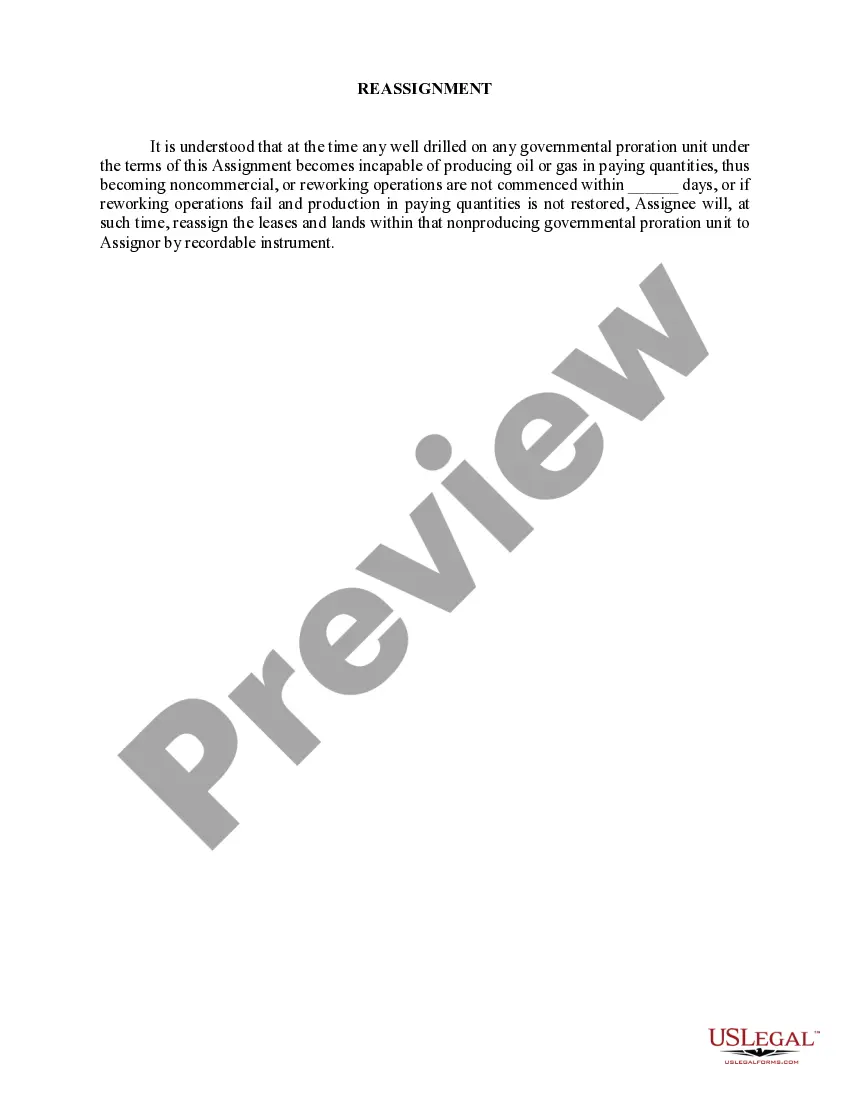
The Rights Not Assigned form is a legal document used by an assignor to maintain ownership of certain oil and gas rights even when those rights are not explicitly included in an assignment. This form is particularly useful in the context of oil, gas, and mineral rights, as it helps ensure that all surface, leasehold, and access rights are preserved for the assignor. Unlike other assignment forms, this one explicitly addresses the retention of additional rights necessary for the enjoyment of mineral resources.
- This form reserves all oil and gas rights not specifically assigned.
- It covers all mineral and leasehold rights at any depths.
- It includes rights of ingress and egress, which allow access to the land.
- It mentions all surface rights granted by Oil and Gas Leases that are key to exercising the rights reserved.
- The language specifically details the rights reserved to the assignor, distinguishing them from the rights assigned.
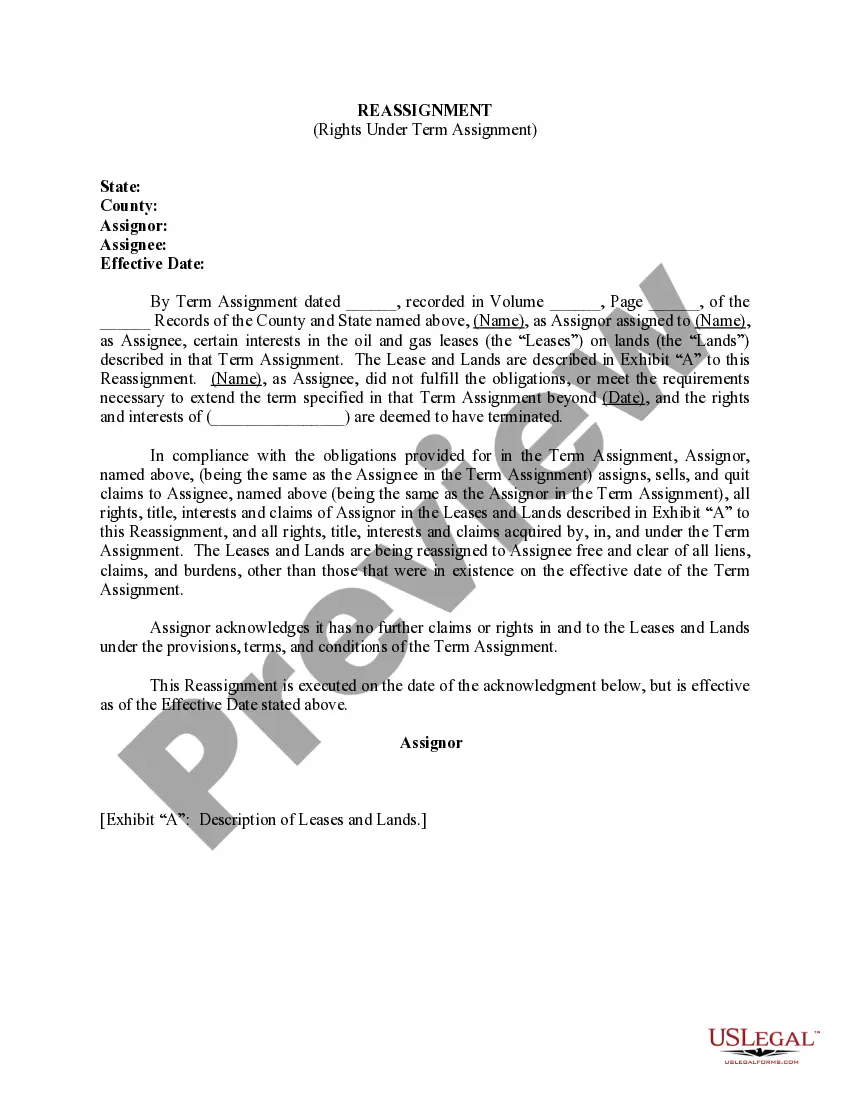
You should use the Rights Not Assigned form in situations where you are transferring certain oil and gas rights while wishing to retain others. This can arise in transactions where a party wants to sell mineral interests but keep specific rights necessary for exploration or development. It is crucial to clarify any remaining rights that are not part of the transaction to avoid future disputes.
This form is suitable for:
- Individuals or entities engaging in the sale or transfer of oil and gas rights.
- Property owners who want to maintain certain mineral interests while selling others.
- Attorneys representing clients in real estate or mineral rights transactions.
- Landowners looking to clarify their remaining rights after a sale.
To complete the Rights Not Assigned form, follow these steps:
- Identify the assignor and the assignee by providing their legal names and contact information.
- Clearly outline the specific oil and gas rights that are assigned and those that remain reserved.
- Contextualize the property or lease by including physical descriptions or lot numbers, if applicable.
- Sign and date the document, ensuring that all parties involved do so.
- Consider having the form notarized for added legal assurance, depending on jurisdictional requirements.
Is notarization required?
This form does not typically require notarization to be legally valid. However, some jurisdictions or document types may still require it. US Legal Forms provides secure online notarization powered by Notarize, available 24/7 for added convenience.
Get your form ready online
Our built-in tools help you complete, sign, share, and store your documents in one place.
Make edits, fill in missing information, and update formatting in US Legal Forms—just like you would in MS Word.
Download a copy, print it, send it by email, or mail it via USPS—whatever works best for your next step.
Sign and collect signatures with our SignNow integration. Send to multiple recipients, set reminders, and more. Go Premium to unlock E-Sign.
If this form requires notarization, complete it online through a secure video call—no need to meet a notary in person or wait for an appointment.
We protect your documents and personal data by following strict security and privacy standards.
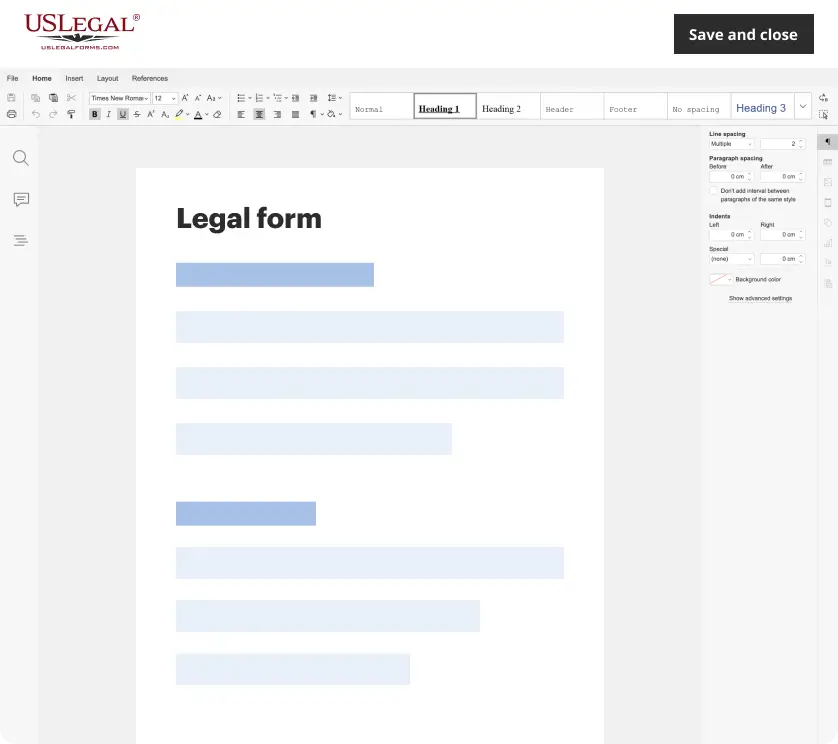
Make edits, fill in missing information, and update formatting in US Legal Forms—just like you would in MS Word.
Download a copy, print it, send it by email, or mail it via USPS—whatever works best for your next step.
Sign and collect signatures with our SignNow integration. Send to multiple recipients, set reminders, and more. Go Premium to unlock E-Sign.

If this form requires notarization, complete it online through a secure video call—no need to meet a notary in person or wait for an appointment.
We protect your documents and personal data by following strict security and privacy standards.
- Failing to clearly specify which rights are assigned and which are reserved can lead to confusion.
- Not including complete and accurate descriptions of the property may render the assignment invalid.
- Omitting signatures from all parties involved could jeopardize the enforceability of the agreement.
- Neglecting to consult local regulations regarding oil and gas rights may result in non-compliance.
- The convenient online format allows for easy access and customization of the form.
- Users can quickly download and complete the form from home, avoiding lengthy appointments.
- Legal forms offered are drafted by licensed attorneys, ensuring reliability and compliance with legal standards.
- Editable templates allow users to tailor the document to their specific situation.
What to keep in mind
- The Rights Not Assigned form preserves important mineral and leasehold rights for the assignor.
- Clear delineation of retained rights is essential for preventing future disputes.
- This form is applicable in multiple jurisdictions without state-specific requirements.
Looking for another form?





Form popularity
FAQ
A contract may contain a non-assignment clause, which prohibits the assignment of specific rights and some various rights, or of the entire contract, to another. However, such a clause does not necessarily destroy the power of either party to make an assignment.
Personal Service Contracts. Partnership Agreements. Patent Licenses. Copyright Licenses. Trademark Licenses. Government Contracts. Franchise Agreements. Limited Liability Company Agreements and Joint Venture Agreements.
An assignment of rights agreement refers to a situation in which one party, known as the assignor, shifts contract rights to another party. The party taking on the rights is known as the assignee.
The delegation would change the entire nature of the agreement. The delegation involves a promise to pay a financial debt. The parties have agreed in their original contract that delegation is not allowed.
No payment due any person under the Plan shall be subject in any manner to anticipation, alienation, sale, transfer, assignment, pledge, encumbrance, or charge. Any attempt to anticipate, alienate, sell, transfer, assign, pledge, encumber, or charge such payment shall be void.
A right cannot be assigned if the assignment will significantly increase or alter the risks to or the duties of the obligor (the party owing performance under the contract).
An assignable contract has a provision allowing the holder to give away the obligations and rights of the contract to another party or person before the contract's expiration date. The assignee would be entitled to take delivery of the underlying asset and receive all of the benefits of that contract before its expiry.
What Is a Non-Assignment Provision and Why Do You Need It? Generally speaking, contracts can be freely assigned to third parties. Non-assignment provisions are designed so that contracts cannot be as freely assigned to third parties; or at least, not without first obtaining the contracting counterparty's consent.