Binding Nature of Assignment
Understanding this form
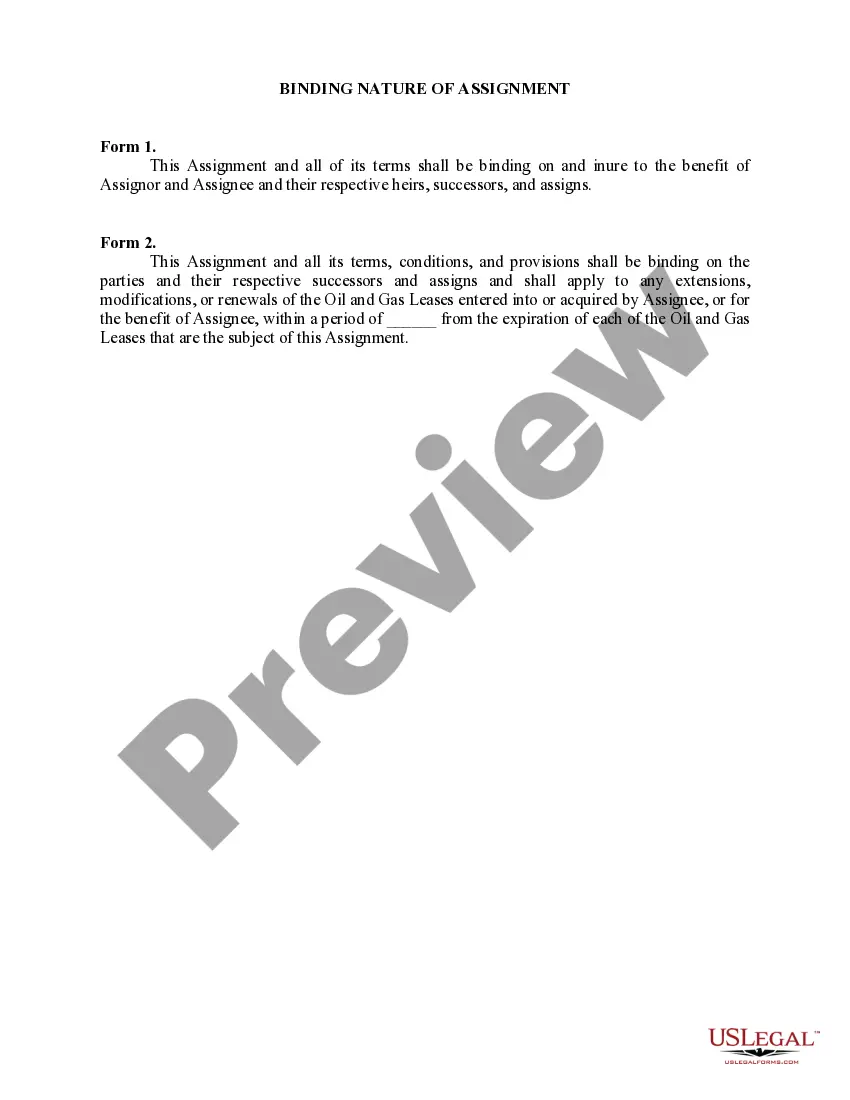
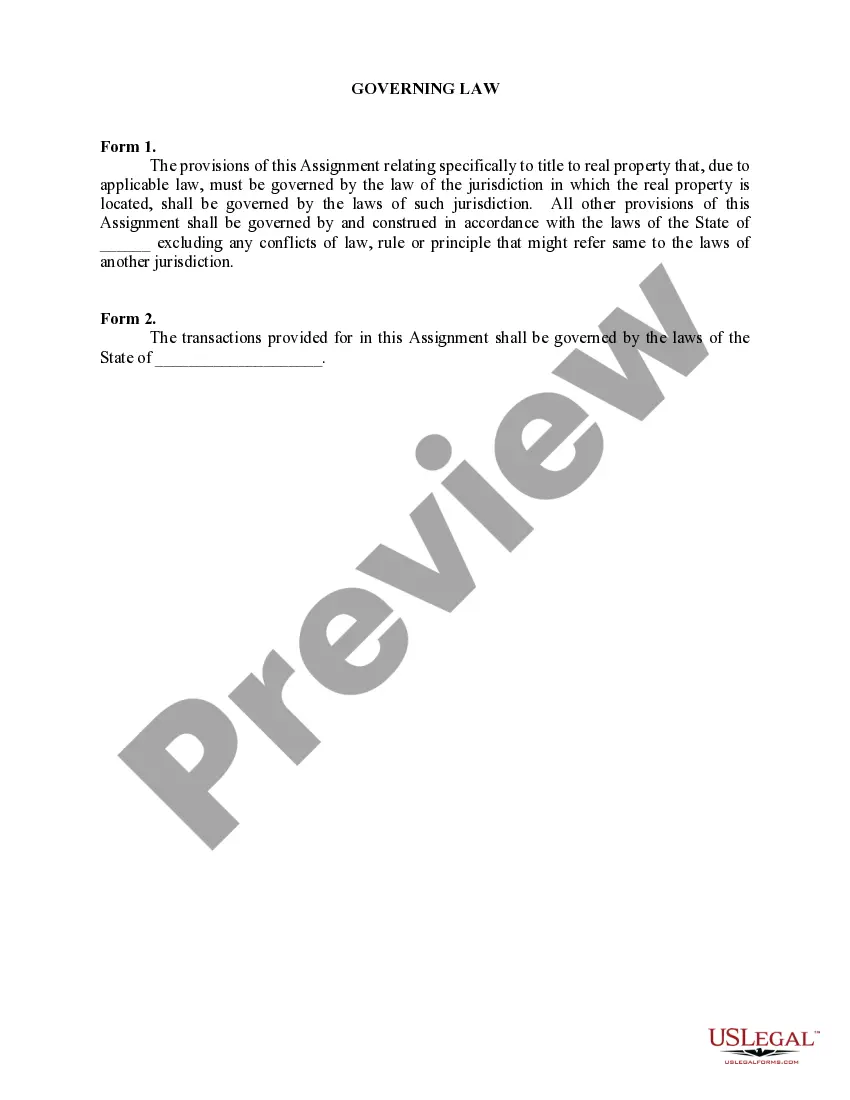
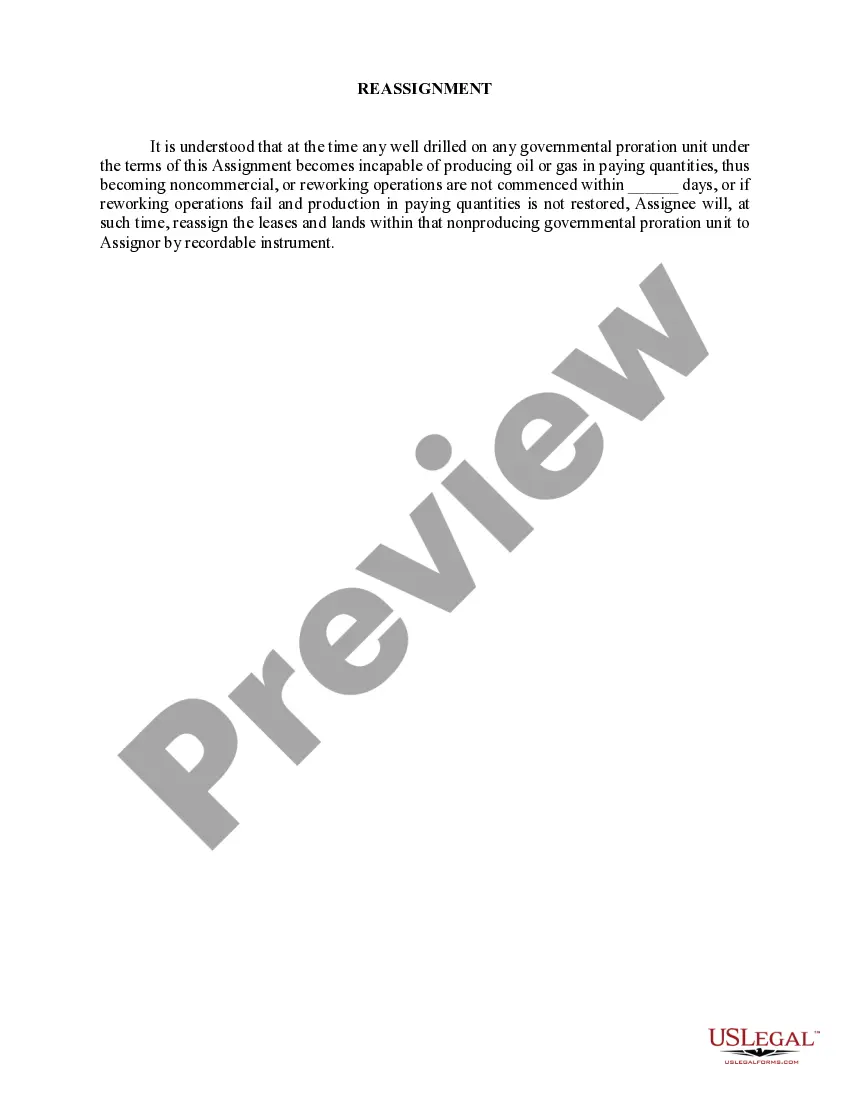
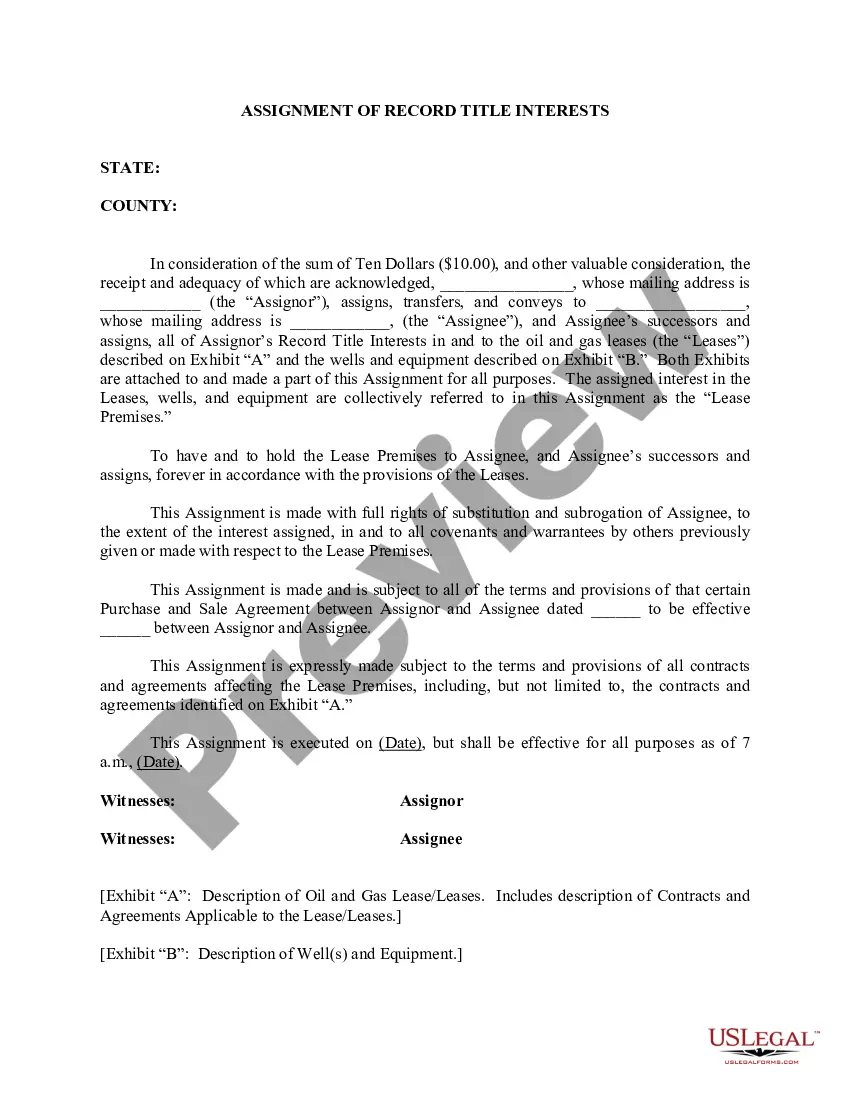
The Binding Nature of Assignment form is a legal document that ensures the assignment and all its terms are binding on both the assignor and assignee, as well as their respective heirs, successors, and assigns. This form is crucial for solidifying rights and obligations under an assignment, distinguishing it from informal agreements or contracts that may lack enforceability.
Main sections of this form
- The binding agreement clause that confirms the assignment is enforceable.
- Terms concerning the rights and obligations of the assignor and assignee.
- Provisions for heirs, successors, and assigns, ensuring continuity of obligations.
- References to any extensions or modifications regarding specific properties, such as Oil and Gas Leases.
When to use this form
This form is necessary in situations where an individual or entity is transferring rights or interests in a specific asset or contract. It is particularly important in cases involving real estate, intellectual property, or oil and gas leases, to formalize and protect the transfer of these rights. Use this form when you want to ensure that the terms of the assignment are clear, specific, and legally binding.
Who needs this form
- Individuals or entities looking to formally assign their rights to another party.
- Assignors who wish to transfer interests in contracts, properties, or leases.
- Assignees who need a legal basis to receive those rights and benefits.
- Heirs or successors who may inherit or take over rights under the assignment.
How to prepare this document
- Identify the parties involved: the assignor (the person giving up the rights) and the assignee (the person receiving the rights).
- Clearly specify the property or rights being assigned, including references to any relevant contracts or leases.
- Fill in the terms and conditions that govern the assignment, ensuring all parties understand their obligations.
- Include the duration of any rights transferred, particularly for any extensions or renewals related to the assignment.
- Have both parties sign and date the form to finalize the agreement.
Does this form need to be notarized?
Notarization is generally not required for this form. However, certain states or situations might demand it. You can complete notarization online through US Legal Forms, powered by Notarize, using a verified video call available anytime.
Get your form ready online
Our built-in tools help you complete, sign, share, and store your documents in one place.
Make edits, fill in missing information, and update formatting in US Legal Forms—just like you would in MS Word.
Download a copy, print it, send it by email, or mail it via USPS—whatever works best for your next step.
Sign and collect signatures with our SignNow integration. Send to multiple recipients, set reminders, and more. Go Premium to unlock E-Sign.
If this form requires notarization, complete it online through a secure video call—no need to meet a notary in person or wait for an appointment.
We protect your documents and personal data by following strict security and privacy standards.

Make edits, fill in missing information, and update formatting in US Legal Forms—just like you would in MS Word.

Download a copy, print it, send it by email, or mail it via USPS—whatever works best for your next step.

Sign and collect signatures with our SignNow integration. Send to multiple recipients, set reminders, and more. Go Premium to unlock E-Sign.

If this form requires notarization, complete it online through a secure video call—no need to meet a notary in person or wait for an appointment.

We protect your documents and personal data by following strict security and privacy standards.
Common mistakes to avoid
- Failing to clearly specify the rights being assigned, leading to ambiguity.
- Not including relevant heirs or successors, which can create complications in enforceability.
- Omitting necessary signatures, which invalidates the agreement.
- Using vague language that can be interpreted in multiple ways.
Why use this form online
- Quick access to professionally drafted legal documents, saving time.
- The ability to edit and customize the form according to your specific needs.
- Reliable and up-to-date legal templates that comply with current laws.
- Convenience of downloading and printing the form immediately upon completion.
Legal use & context
- The form helps in establishing a clear legal relationship between parties.
- It ensures that terms are enforceable in court should disputes arise.
- Transfer agreements are essential in industries involving large contracts, like real estate and oil and gas.
Main things to remember
- The Binding Nature of Assignment form ensures that all terms are legally enforceable.
- It is essential for transferring rights in various legal contexts, especially in real estate and agreements.
- Proper completion of the form is crucial to avoid common mistakes and ensure clarity.
- Using this form online streamlines the process and guarantees you have access to accurate legal templates.
Looking for another form?

Form popularity
FAQ
All parties must be in agreement (after an offer has been made by one party and accepted by the other). Something of value must be exchanged -- such as cash, services, or goods (or a promise to exchange such an item) -- for something else of value.
Get it in writing. Keep it simple. Deal with the right person. Identify each party correctly. Spell out all of the details. Specify payment obligations. Agree on circumstances that terminate the contract. Agree on a way to resolve disputes.
For an agreement to constitute a legally binding contract, a number of criteria must be met, such as offer, acceptance, and consideration. In some instances, the criteria may be met, but the agreement will not be enforced by a judge because the contract is invalid.
The simple answer is YES. You can write your own contracts. There is no requirement that they must be written by a lawyer. There is no requirement that they have to be a certain form or font.
Offer: One party makes an offer. Acceptance: The other party accepts the offer. Consideration: Each party provides consideration to the other.
The most basic rule of contract law is that a legal contract exists when one party makes an offer and the other party accepts it. For most types of contracts, this can be done either orally or in writing.
A contract typically does not have to be notarized. A notary public (or simply notary) provides an acknowledgment that the signature appearing on the document is that of the person whose signature it purports to be. There is a requirement that some documents be notarized, such as a real property deed.
It isn't illegal to write a contract without an attorney. A contract can be simple or complex and is an agreement between two or more parties. It can be a written or oral agreement.Contract law, however, requires that all contracts must contain certain elements to be valid and enforceable.