Delaware Protecting Deceased Persons from Identity Theft
What is this form package?
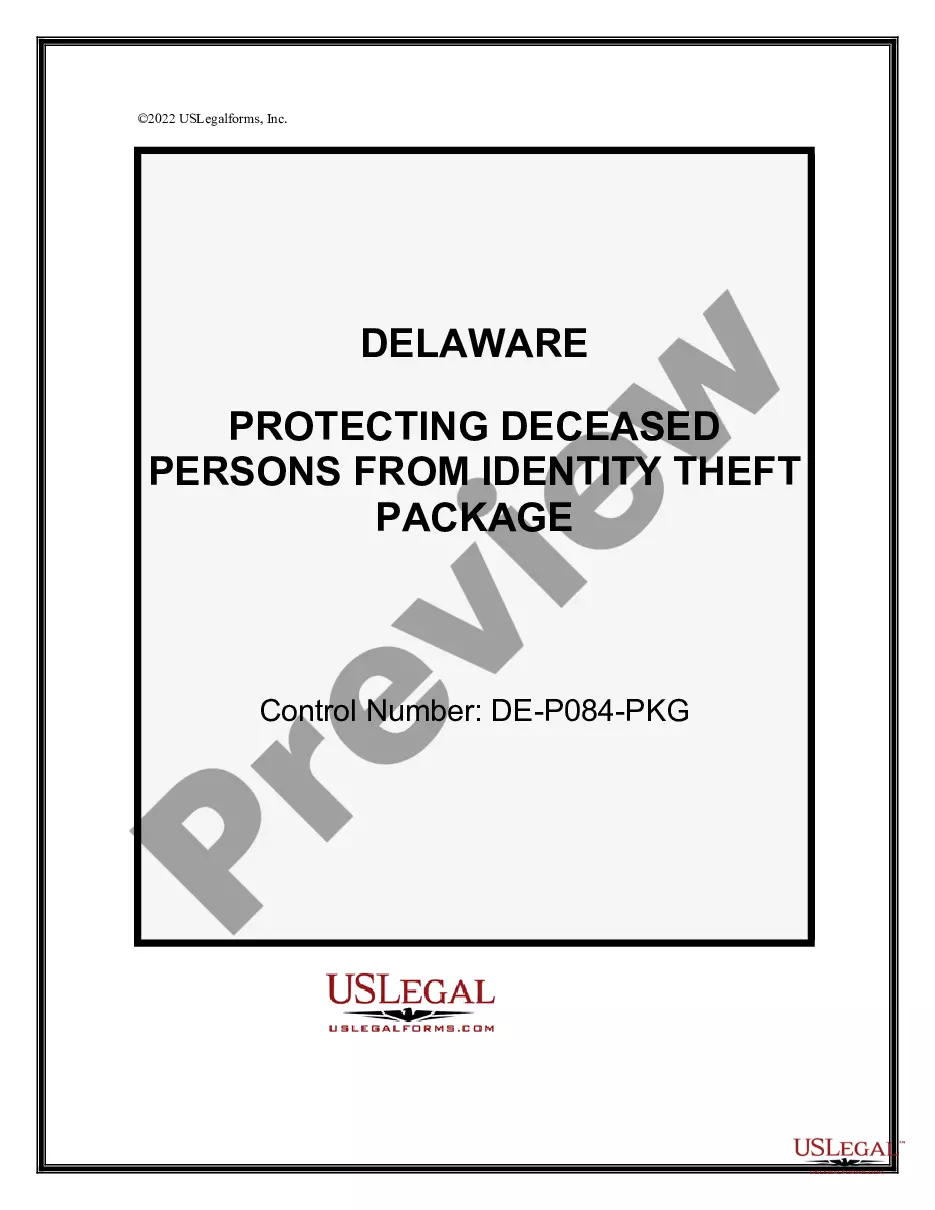
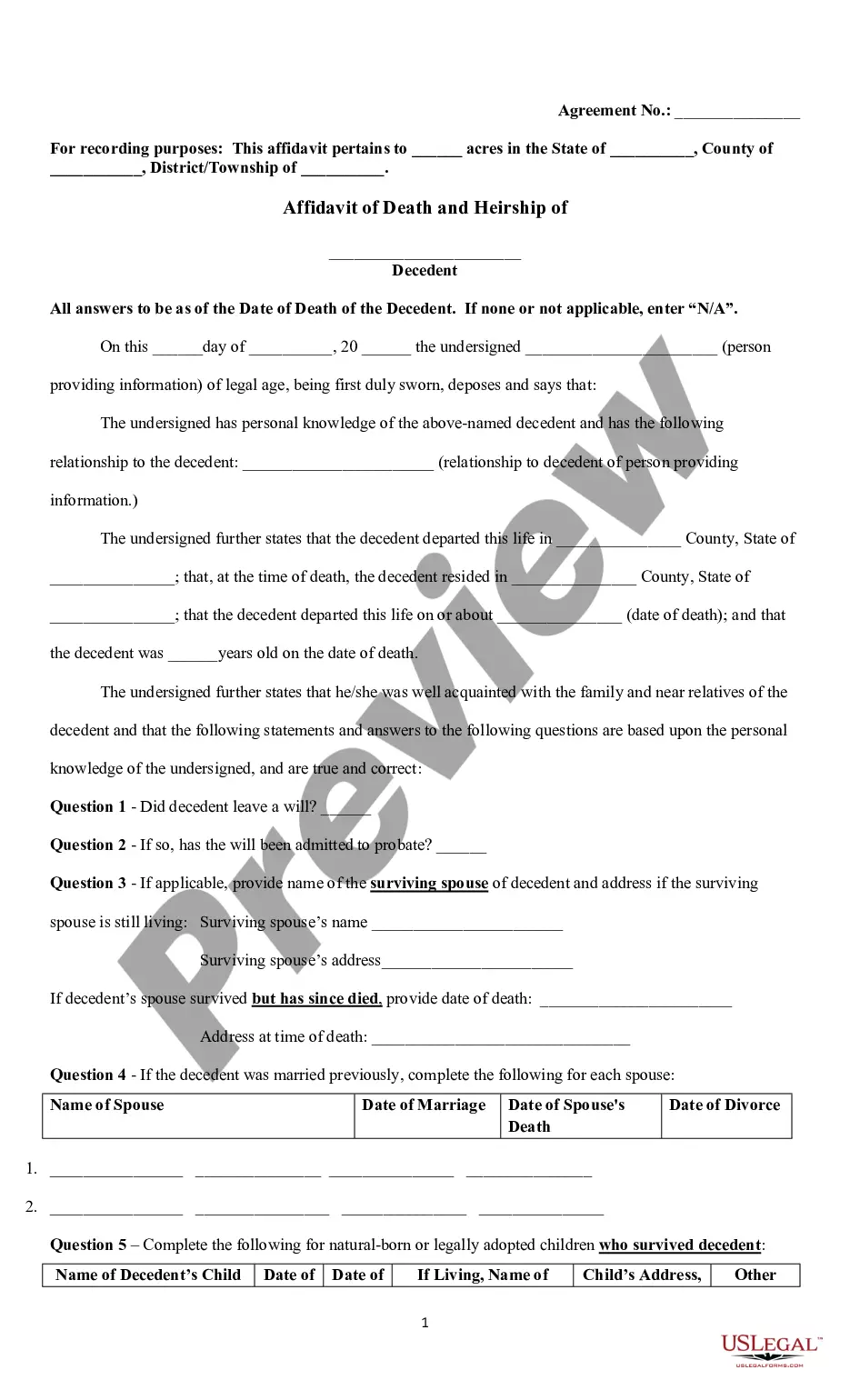
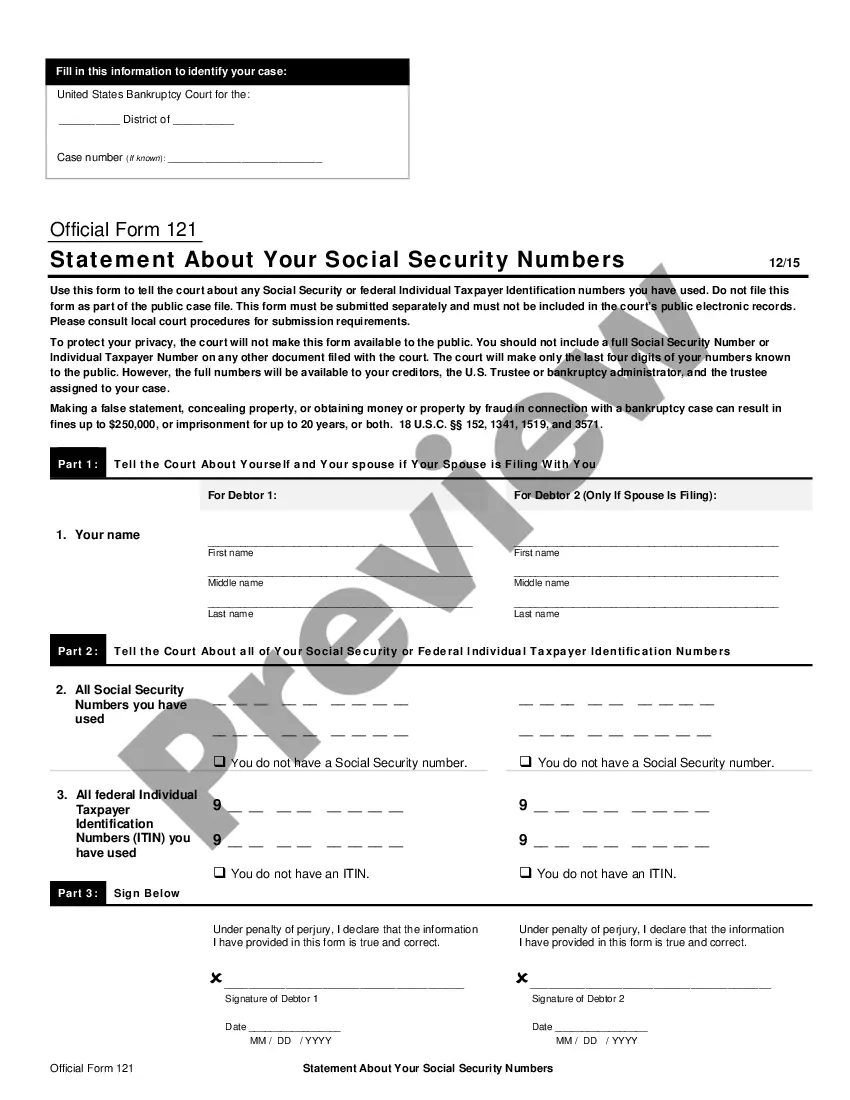
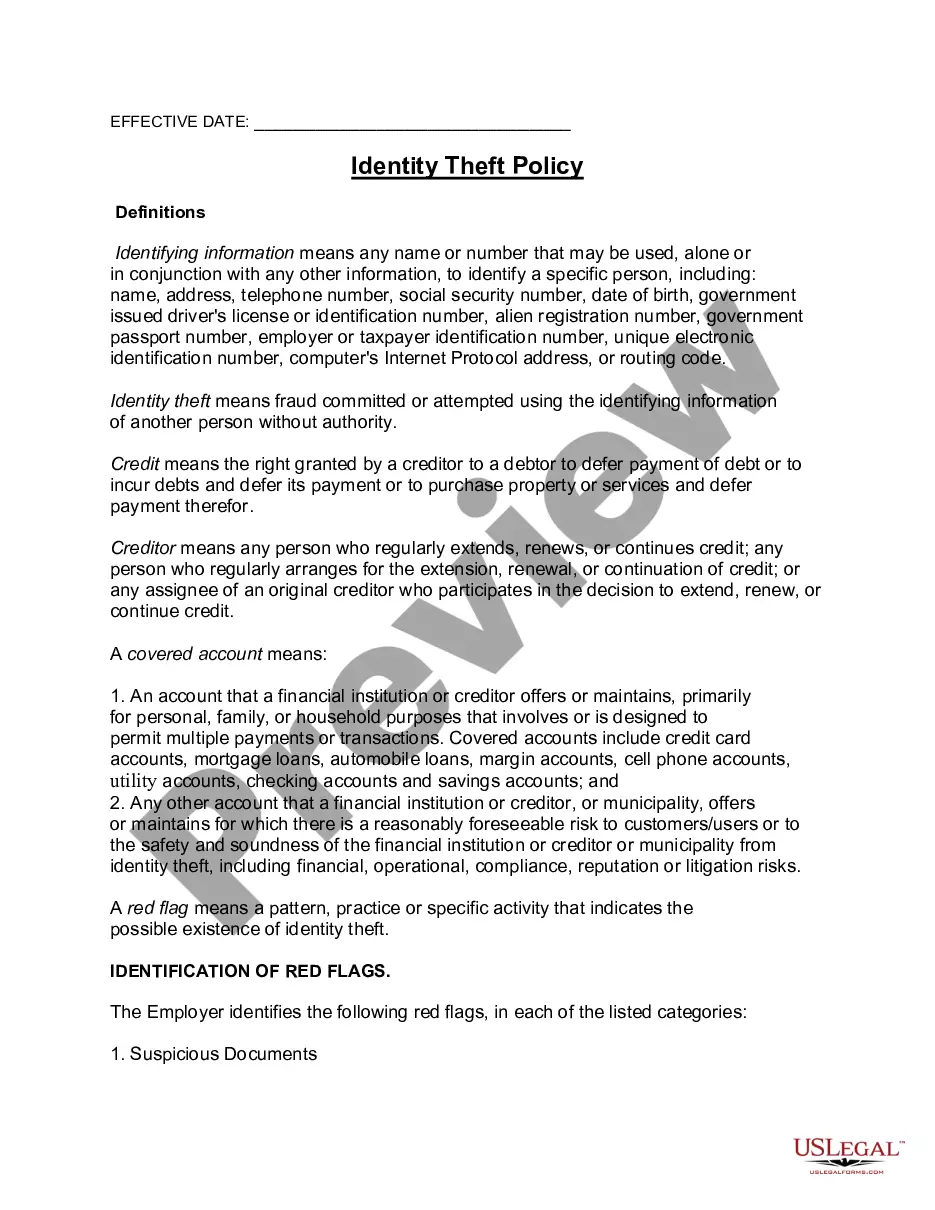
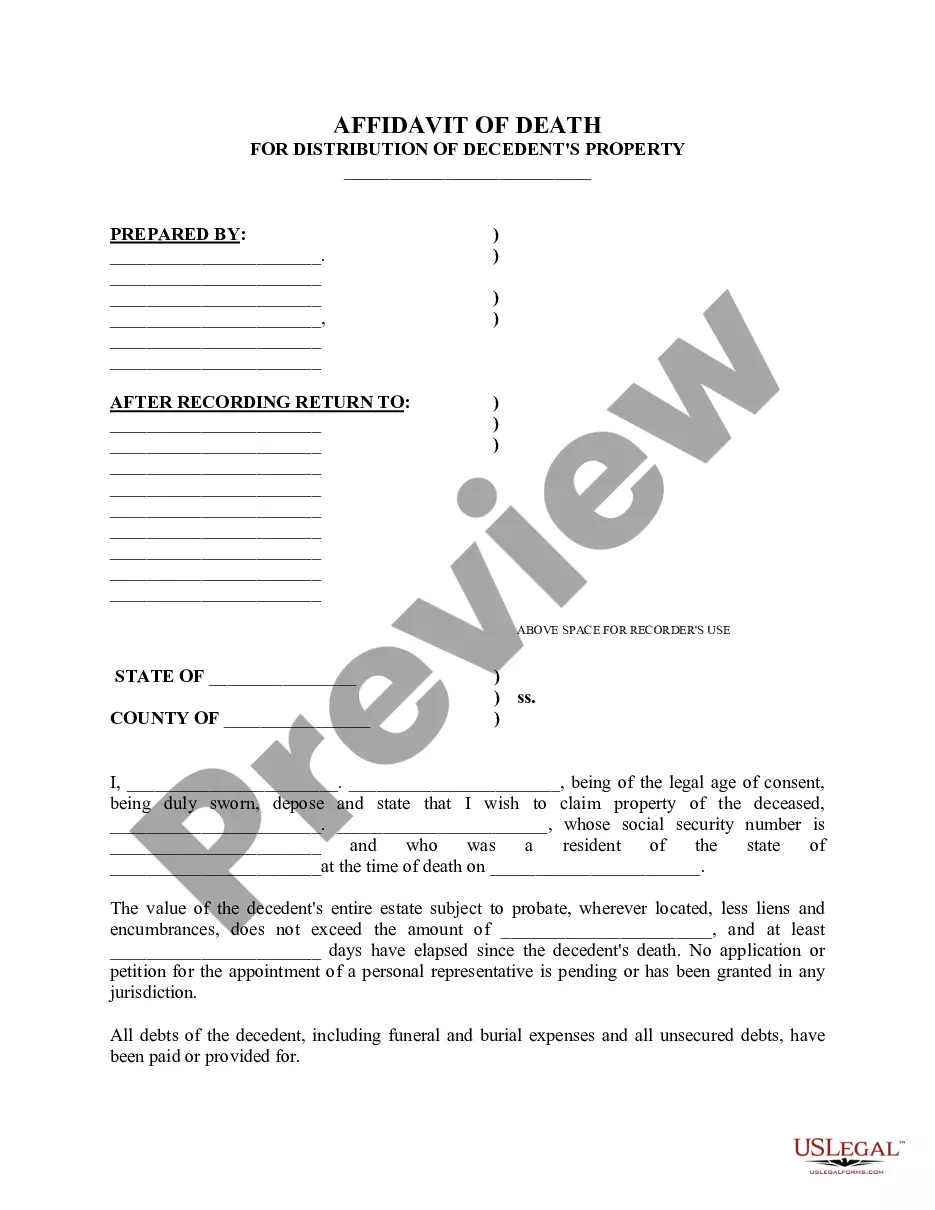
The Delaware Protecting Deceased Persons from Identity Theft form package provides a comprehensive set of legal documents designed to help families and executors protect the identities of deceased individuals from potential theft. This package stands out by offering crucial forms to notify various creditors, government agencies, and other relevant entities about the death while also addressing identity theft concerns, specifically tailored for the state of Delaware.
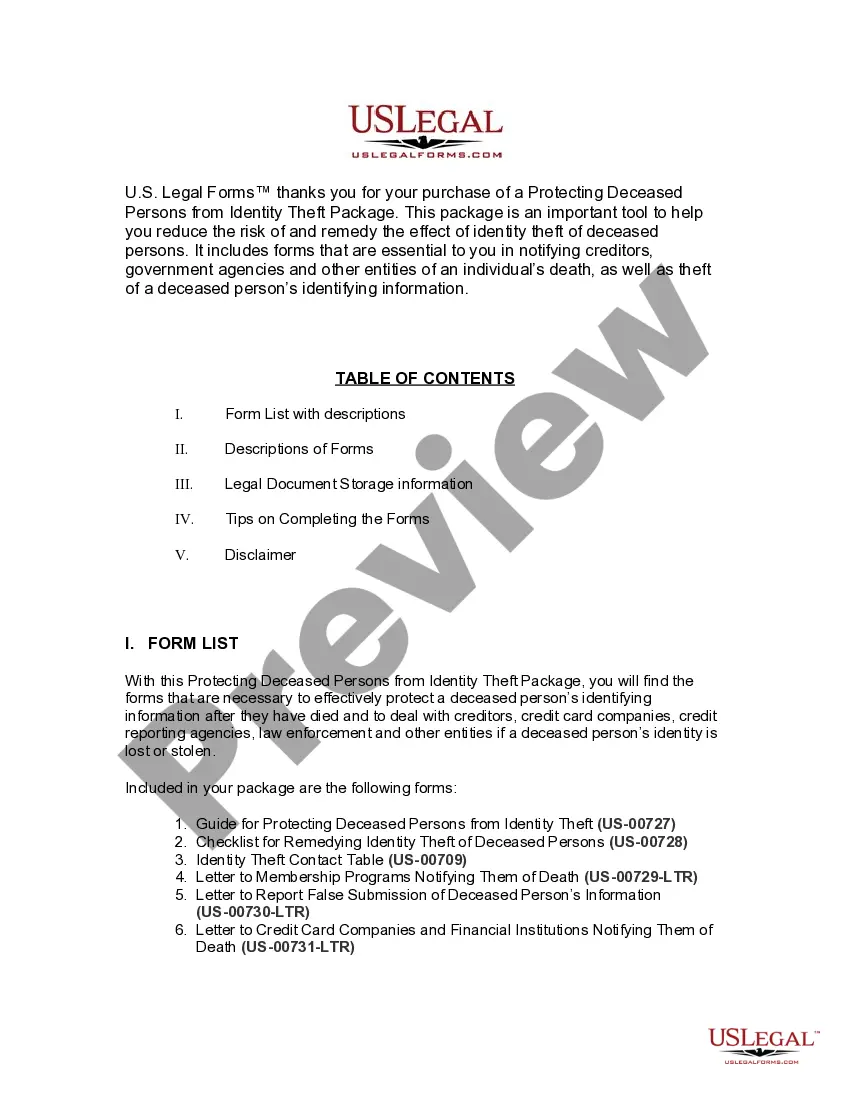
Forms you’ll find in this package
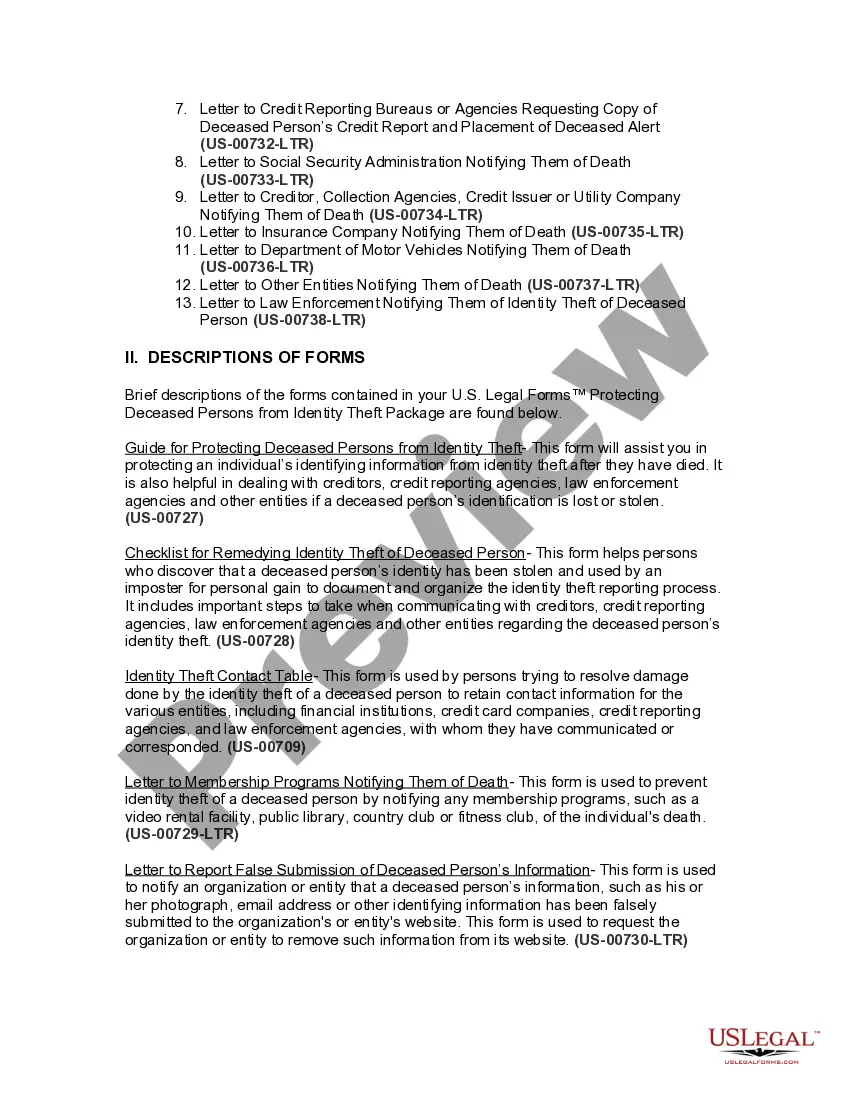
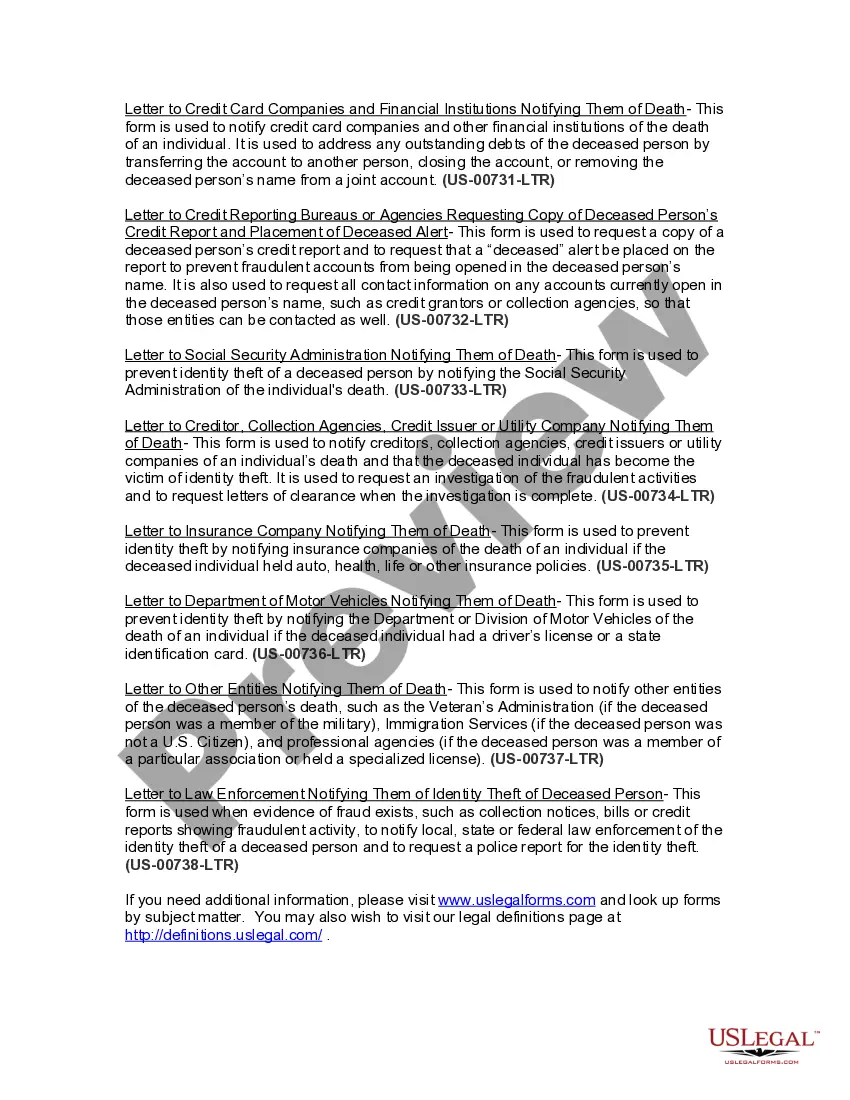
- Identity Theft Contact Table
- Guide for Protecting Deceased Persons from Identity Theft
- Checklist for Remedying Identity Theft of Deceased Persons
- Letter to Membership Programs Notifying Them of Death
- Letter to Report False Submission of Deceased Person's Information
- Letter to Credit Card Companies and Financial Institutions Notifying Them of Death
- Letter to Credit Reporting Bureaus or Agencies Requesting Copy of Deceased Person's Credit Report and Placement of Deceased Alert
- Letter to Social Security Administration Notifying Them of Death
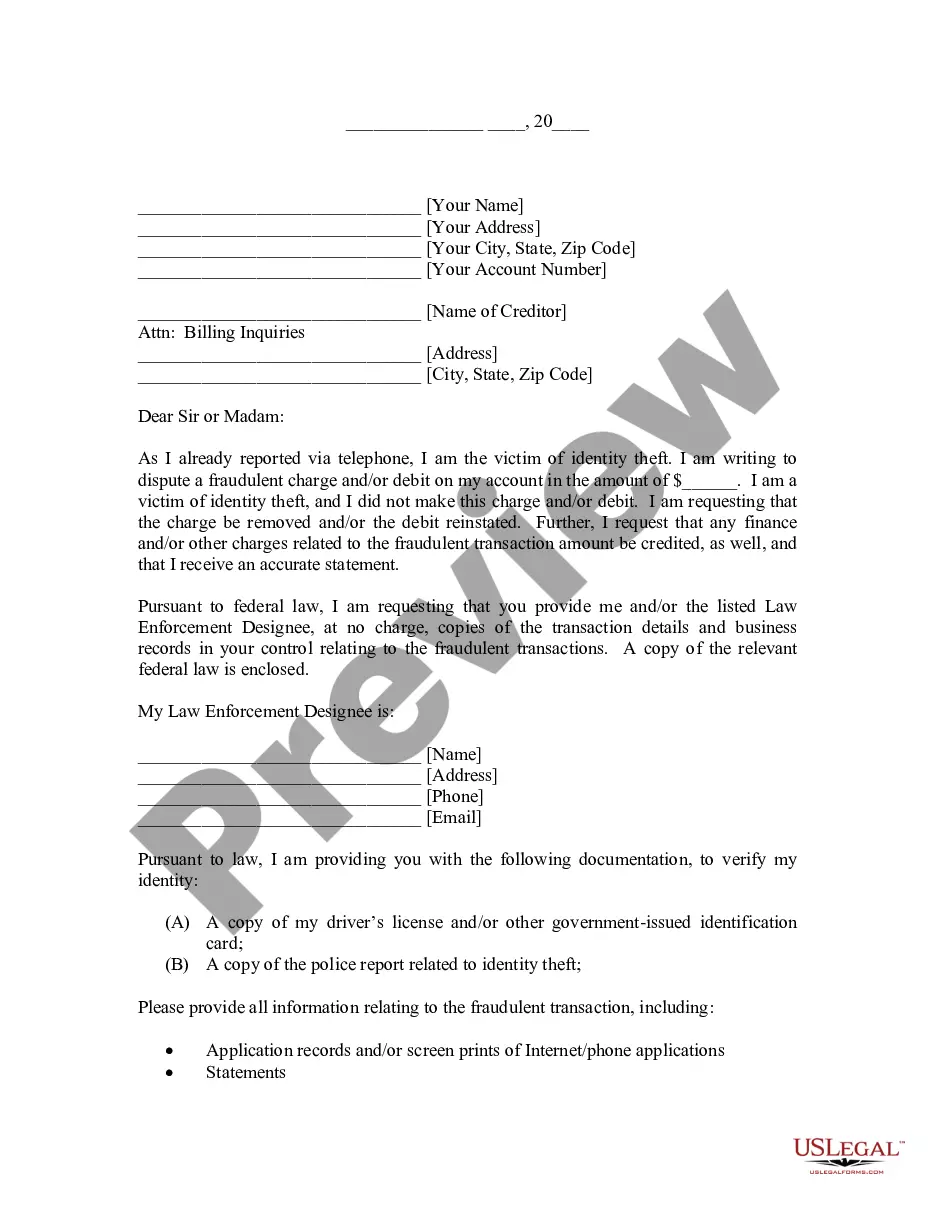
- Letter to Creditor, Collection Agencies, Credit Issuer or Utility Company Notifying Them of Death
- Letter to Insurance Company Notifying Them of Death
- Letter to Department of Motor Vehicles Notifying Them of Death
- Letter to Other Entities Notifying Them of Death
- Letter to Law Enforcement Notifying Them of Identity Theft of Deceased Person
When this form package is needed
This package is essential when an individual passes away and there are concerns regarding identity theft. You should consider using it in situations such as:
- Upon the death of a loved one, to ensure their identity is protected
- If you discover that a deceased person's identity may have been compromised
- When notifying financial institutions or government agencies about the death
- To address fraudulent accounts opened in the name of the deceased
Who can use this document
- Family members of the deceased
- Executors or administrators of the deceased's estate
- Individuals managing the affairs of someone who has passed away
- Anyone tasked with protecting the identity of a deceased person
Steps to complete these forms
- Review the included forms to understand their purposes and requirements.
- Gather necessary information about the deceased individual.
- Complete each form, ensuring that all relevant details are accurately entered.
- Sign and date the forms as required, and make copies for your records.
- Send the completed forms to the appropriate agencies, creditors, and other entities as outlined in the package.
Do documents in this package require notarization?
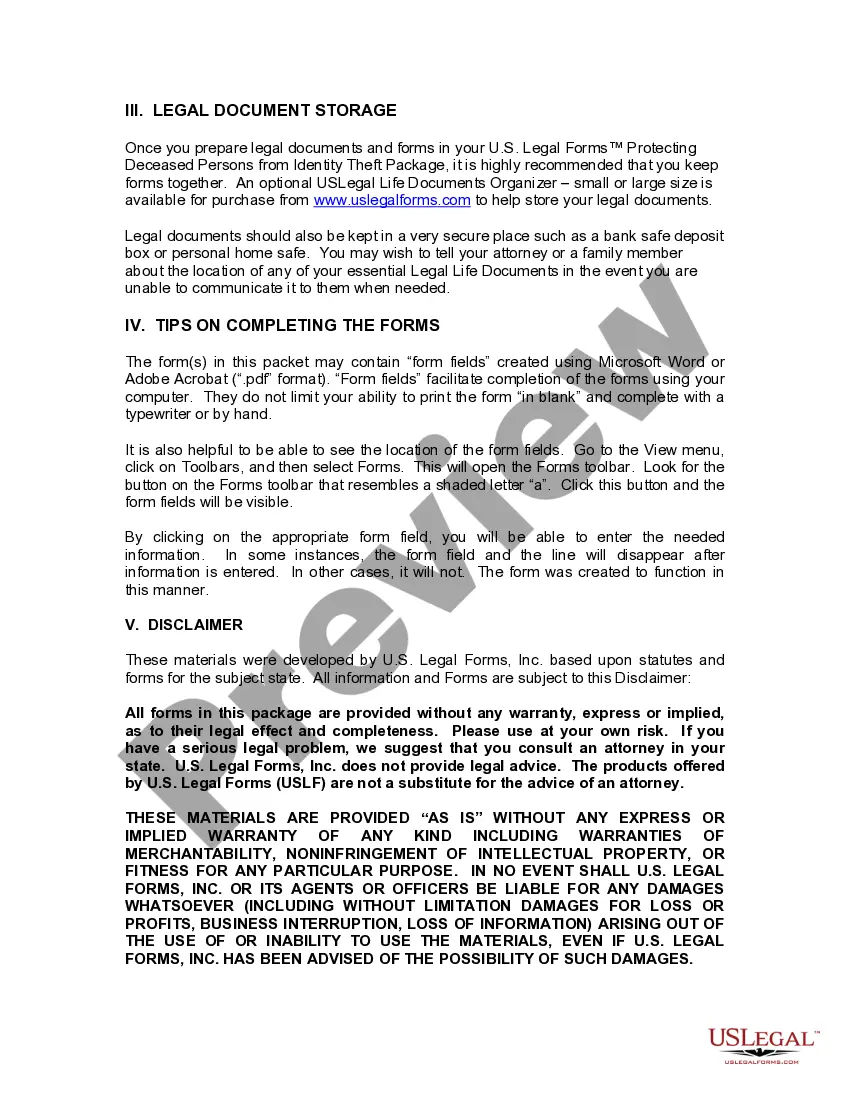
Forms in this package typically do not require notarization unless required by local law. However, it is important to verify if notarization is necessary for specific forms based on any unique circumstances or agency requirements.
Get your form ready online
Our built-in tools help you complete, sign, share, and store your documents in one place.
Make edits, fill in missing information, and update formatting in US Legal Forms—just like you would in MS Word.
Download a copy, print it, send it by email, or mail it via USPS—whatever works best for your next step.
Sign and collect signatures with our SignNow integration. Send to multiple recipients, set reminders, and more. Go Premium to unlock E-Sign.
If this form requires notarization, complete it online through a secure video call—no need to meet a notary in person or wait for an appointment.
We protect your documents and personal data by following strict security and privacy standards.

Make edits, fill in missing information, and update formatting in US Legal Forms—just like you would in MS Word.

Download a copy, print it, send it by email, or mail it via USPS—whatever works best for your next step.

Sign and collect signatures with our SignNow integration. Send to multiple recipients, set reminders, and more. Go Premium to unlock E-Sign.

If this form requires notarization, complete it online through a secure video call—no need to meet a notary in person or wait for an appointment.

We protect your documents and personal data by following strict security and privacy standards.
Typical mistakes to avoid
- Failing to notify all relevant creditors or agencies.
- Not including all required personal information of the deceased.
- Overlooking important deadlines for notifications.
- Submitting forms without proper signatures or dates.
Why use this package online
- Convenient access to all necessary forms in one package.
- Editable forms that allow for customization based on individual circumstances.
- Reliability of forms drafted by licensed attorneys, ensuring legal compliance.
- Immediate download and availability for use, saving time and expense.
What to keep in mind
- The Delaware Protecting Deceased Persons from Identity Theft form package is vital for safeguarding a deceased person's identity.
- Using the package helps ensure that all relevant notifications are made, protecting against potential identity theft.
- The forms are specifically designed to comply with Delaware laws and regulations.
Looking for another form?


Form popularity
FAQ
To ensure no one is using your identity, regularly monitor your credit reports for any unauthorized activity. Set up alerts on your financial accounts for unusual transactions and take advantage of services that specialize in identity theft protection. Staying vigilant and using resources, including those focused on Delaware protecting deceased persons from identity theft, will further safeguard your personal information.
Assuming the identity of a deceased person is illegal and unethical, constituting identity theft. Instead, focus on measures that protect deceased individuals from having their identities misused. Promoting responsible acts and utilizing resources that contribute to Delaware protecting deceased persons from identity theft can create a safer environment for everyone.
The best defense against identity theft involves a combination of preventive measures and education. Regularly check your financial statements for irregularities, use secure networks, and be cautious about sharing personal information. Moreover, support systems that focus on Delaware protecting deceased persons from identity theft will bolster your defenses, ensuring safety for both the living and the deceased.
The highest-rated identity theft protection services often provide comprehensive monitoring, alerts, and recovery assistance. Look for features such as credit monitoring, identity recovery plans, and help with removing fraudulent accounts. Research rankings and customer reviews to find the best option that suits your needs and ensures maximum protection.
The best way to protect against identity theft includes monitoring personal accounts regularly and securing sensitive information. Use strong passwords and two-factor authentication whenever possible. Additionally, utilizing services that focus on Delaware protecting deceased persons from identity theft can further shield against potential misuse of information.
To report identity theft of a deceased person online, visit the Federal Trade Commission's website, where you can file a report. Include the necessary information about the deceased individual and any fraudulent activity that has occurred. Reporting can help mitigate further issues and enable action against identity theft, providing peace of mind for families during a difficult time.
To protect a deceased person from identity theft, you should take several proactive steps. First, notify credit reporting agencies to flag the deceased person's credit file. Next, close any accounts that belonged to the deceased individual to limit access. Lastly, you can consider using services for Delaware protecting deceased persons from identity theft that monitor for any unauthorized use of the deceased's information.
To report identity theft in Delaware, begin by filing a report with the Federal Trade Commission and then contact local law enforcement. You can also consult the resources provided by Delaware Protecting Deceased Persons from Identity Theft to understand specific state procedures. Ensuring you have comprehensive documentation can help streamline the process and provide protection against further theft.
The first step when reporting identity theft is to contact the Federal Trade Commission and create your identity theft report. This report will help you document the incident and dispute fraudulent accounts. If you are concerned about a deceased family member, Delaware Protecting Deceased Persons from Identity Theft offers avenues to initiate legal action on their behalf, ensuring their identity remains secure.
The primary form you need is the Identity Theft Report, which you can submit to the Federal Trade Commission. This document helps you outline the details surrounding the theft. Delaware Protecting Deceased Persons from Identity Theft may provide specific forms tailored for reporting fraudulent activities affecting deceased individuals, ensuring their estates are protected.