Sample Founder Stock Purchase Agreement between MachOne Communications, Inc. and Peter D. Olson
What this document covers
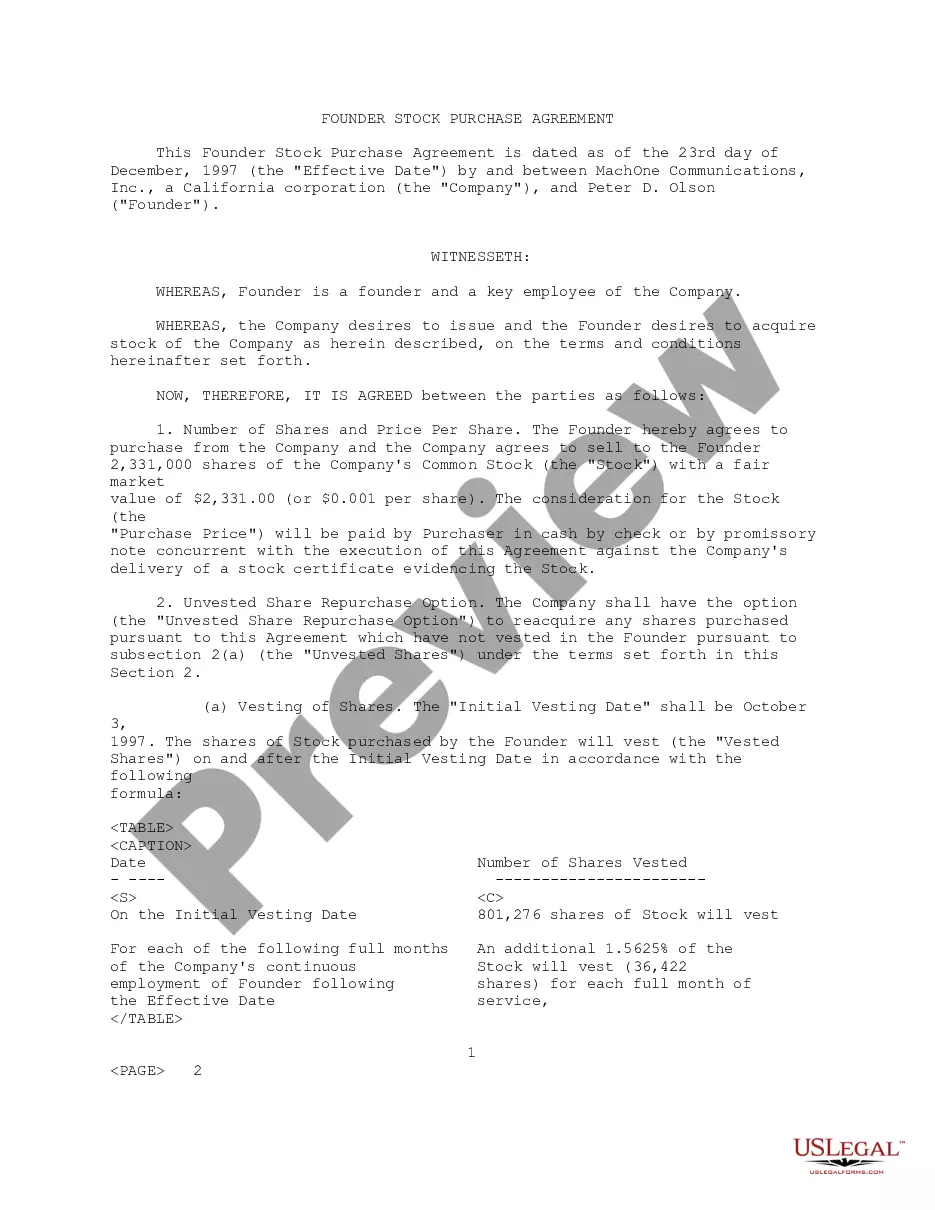
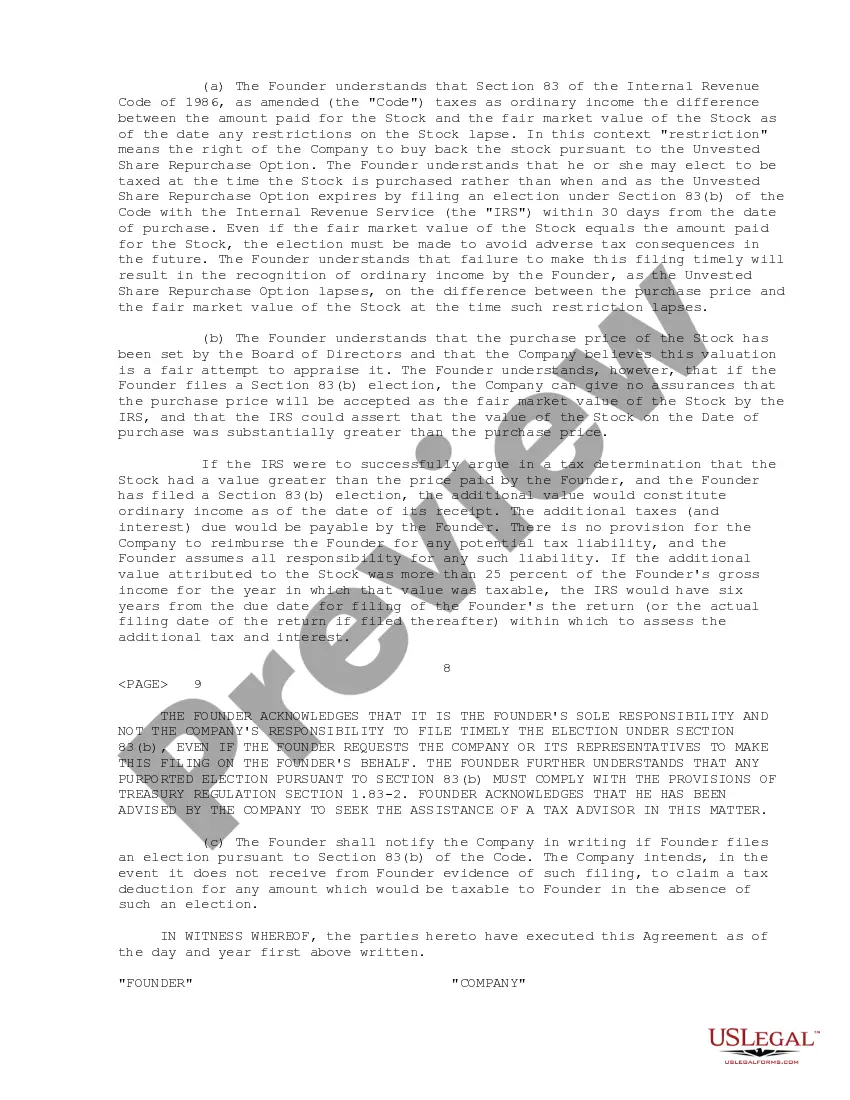
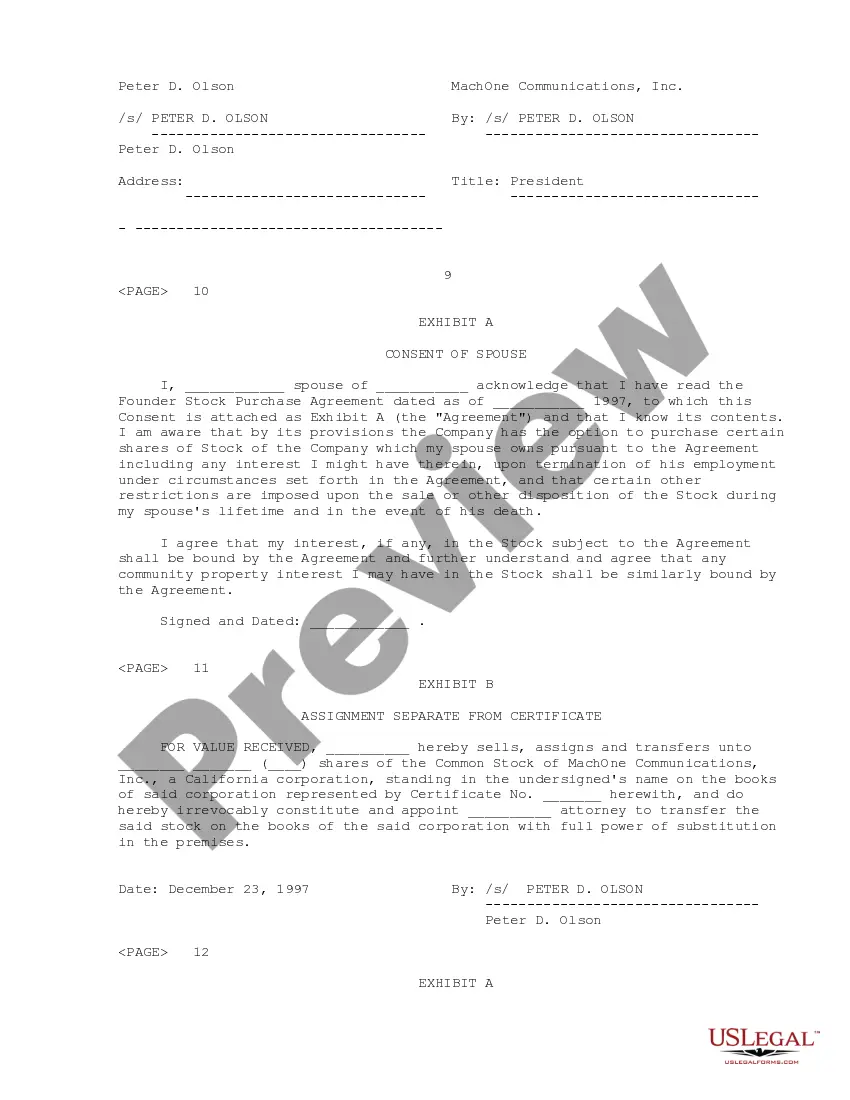
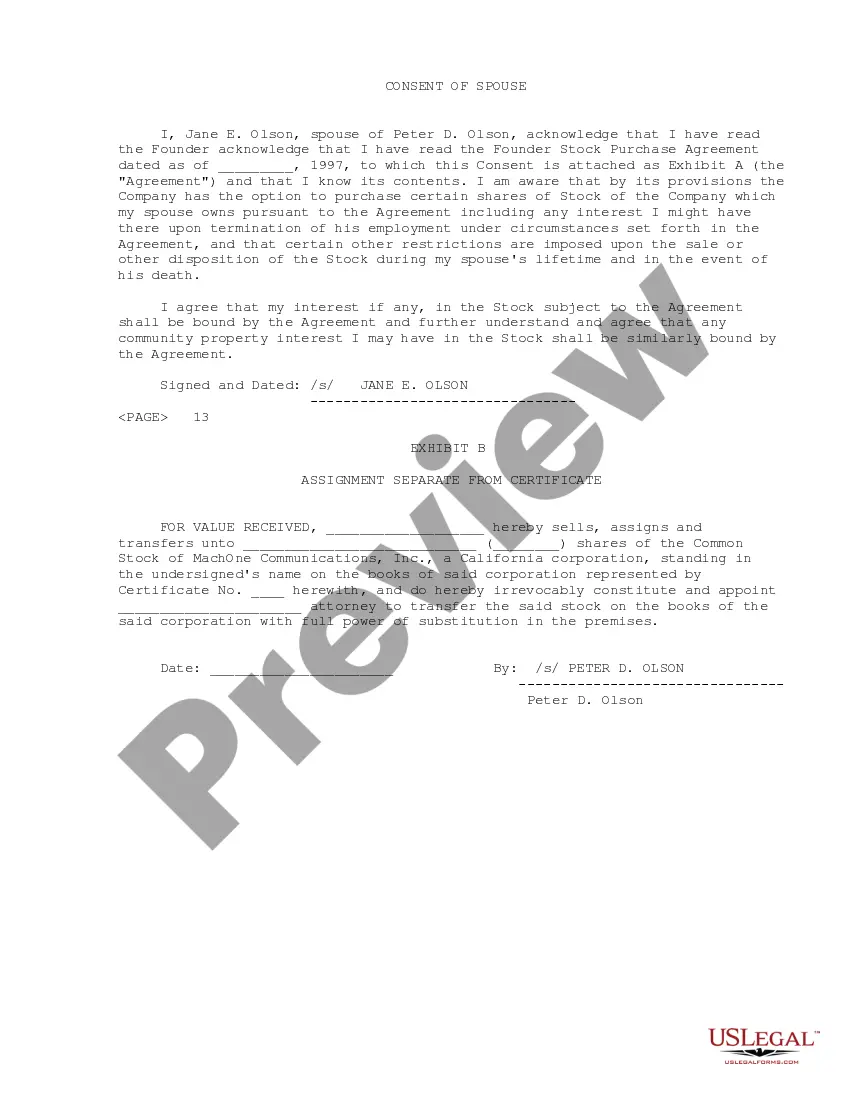
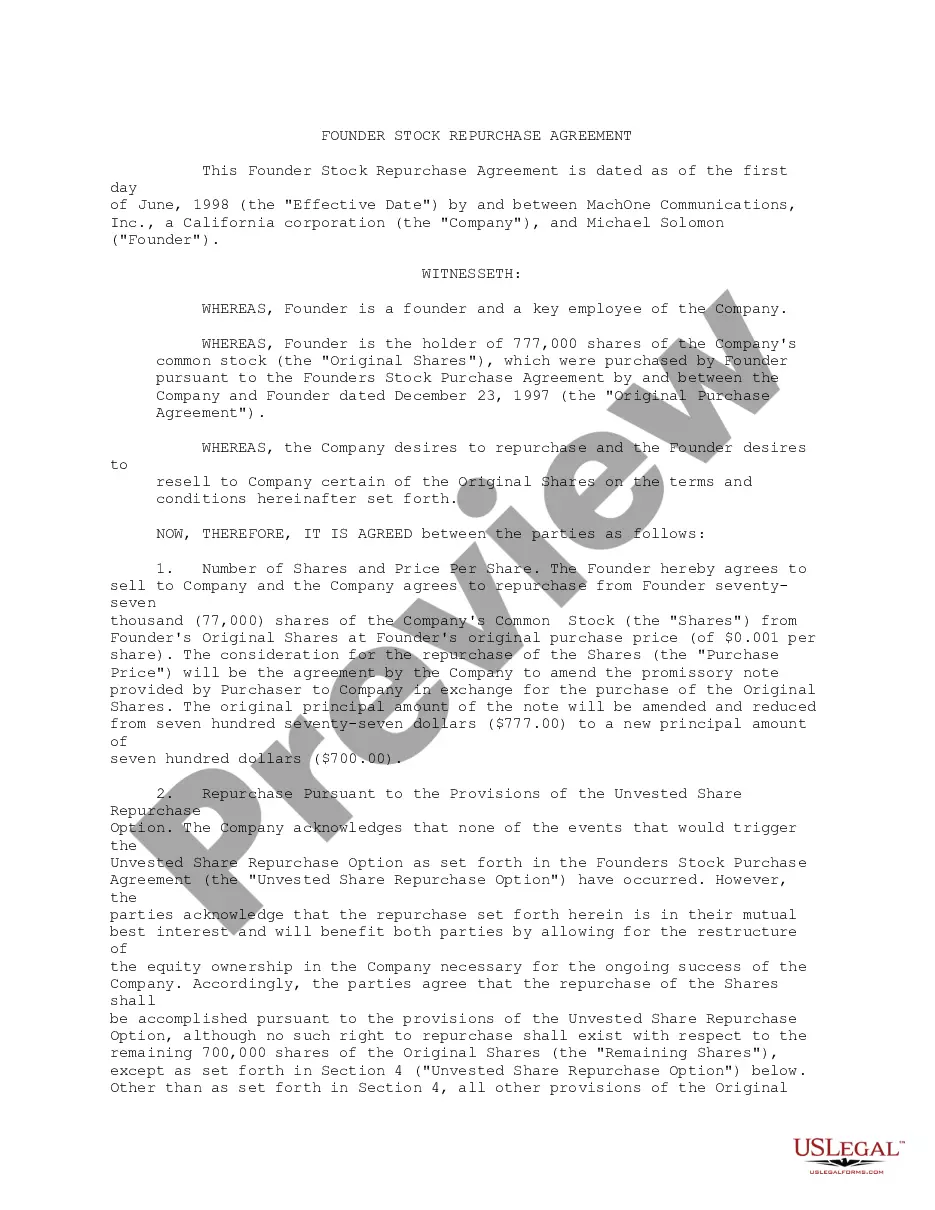
The Sample Founder Stock Purchase Agreement establishes the terms under which an individual, in this case, Peter D. Olson, agrees to purchase stock from a company, MachOne Communications, Inc. This form outlines key elements such as the number of shares, purchase price, and terms of vesting. Unlike generic stock purchase agreements, this specific agreement is tailored for founders and includes clauses related to unvested shares, rights of first refusal, and other unique conditions reflecting the relationship between the founder and the corporation.
Key parts of this document
- Effective Date: Establishes when the agreement takes effect.
- Number of Shares and Price: Details the quantity of shares being purchased and their price per share.
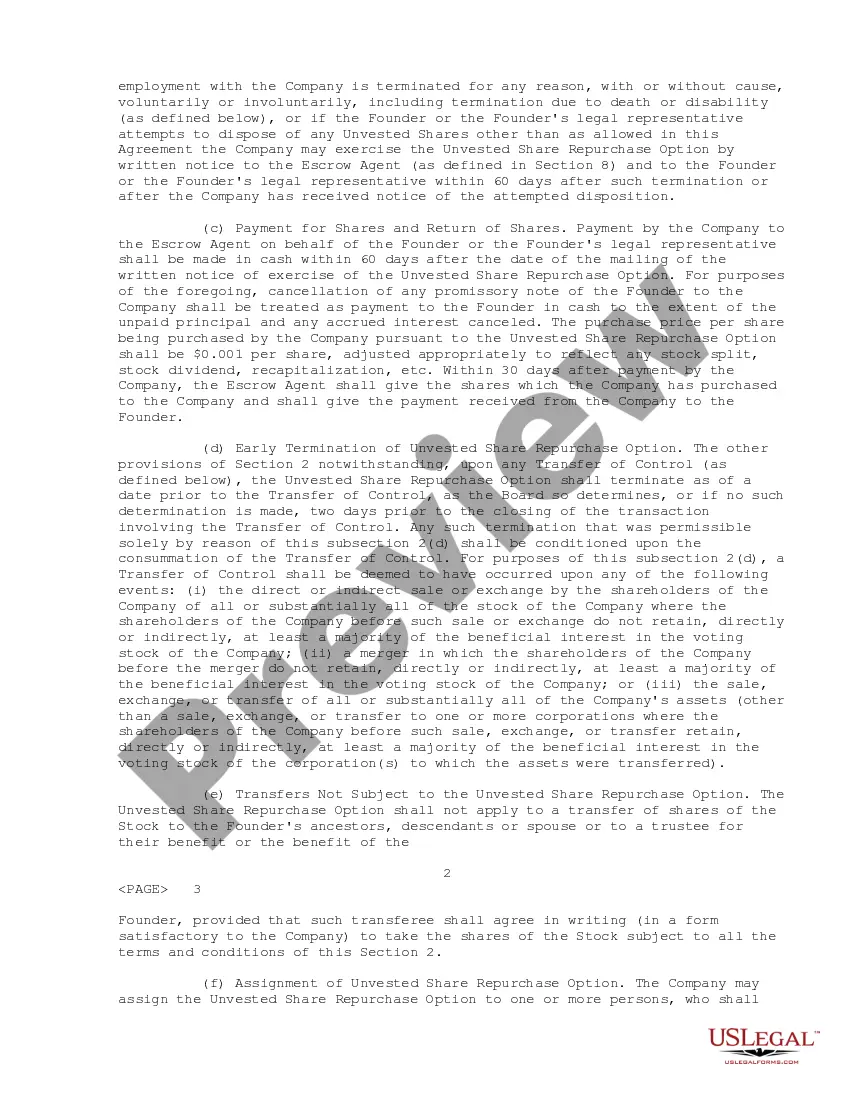
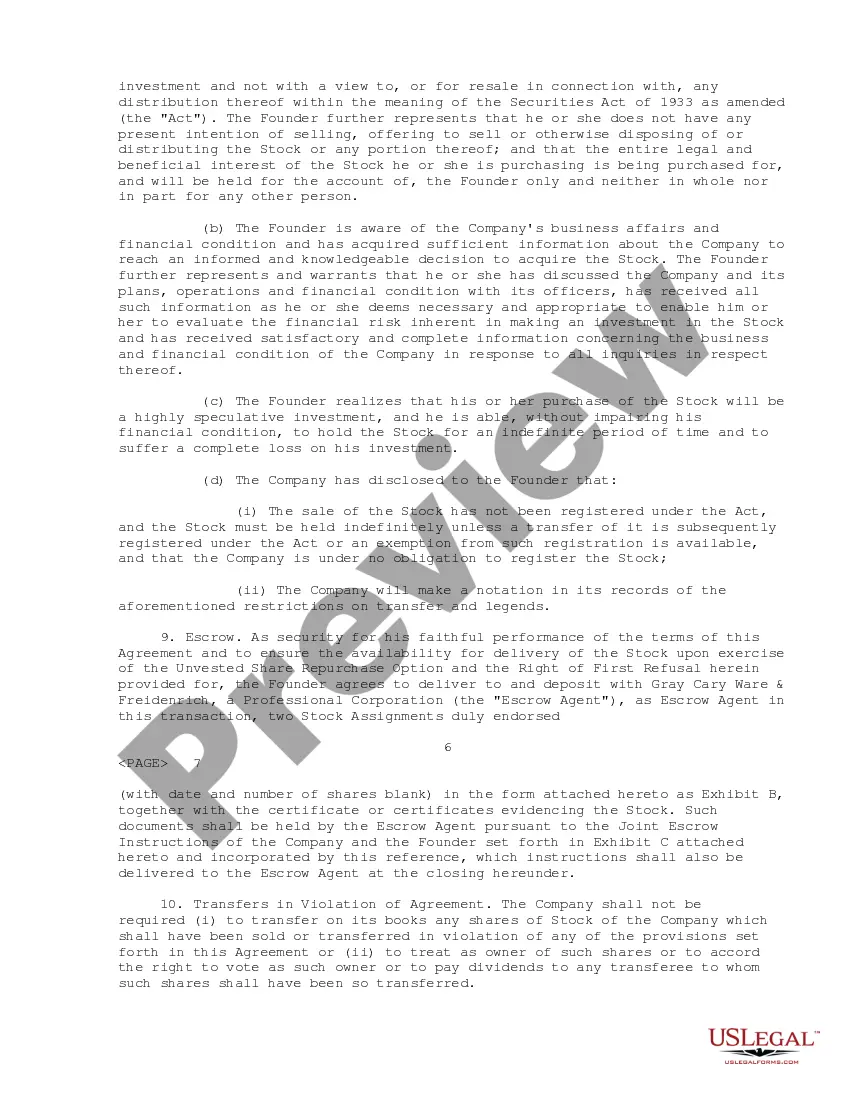
- Unvested Share Repurchase Option: Outlines conditions under which the company can buy back unvested shares.
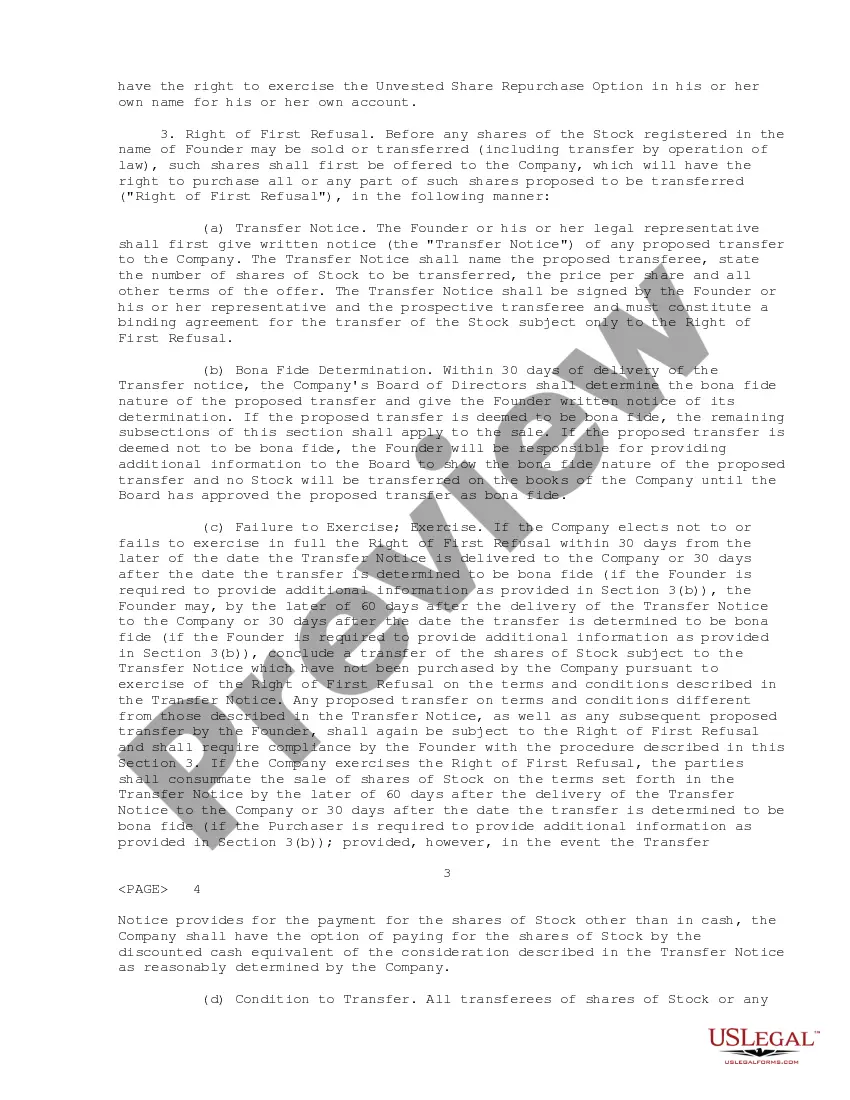
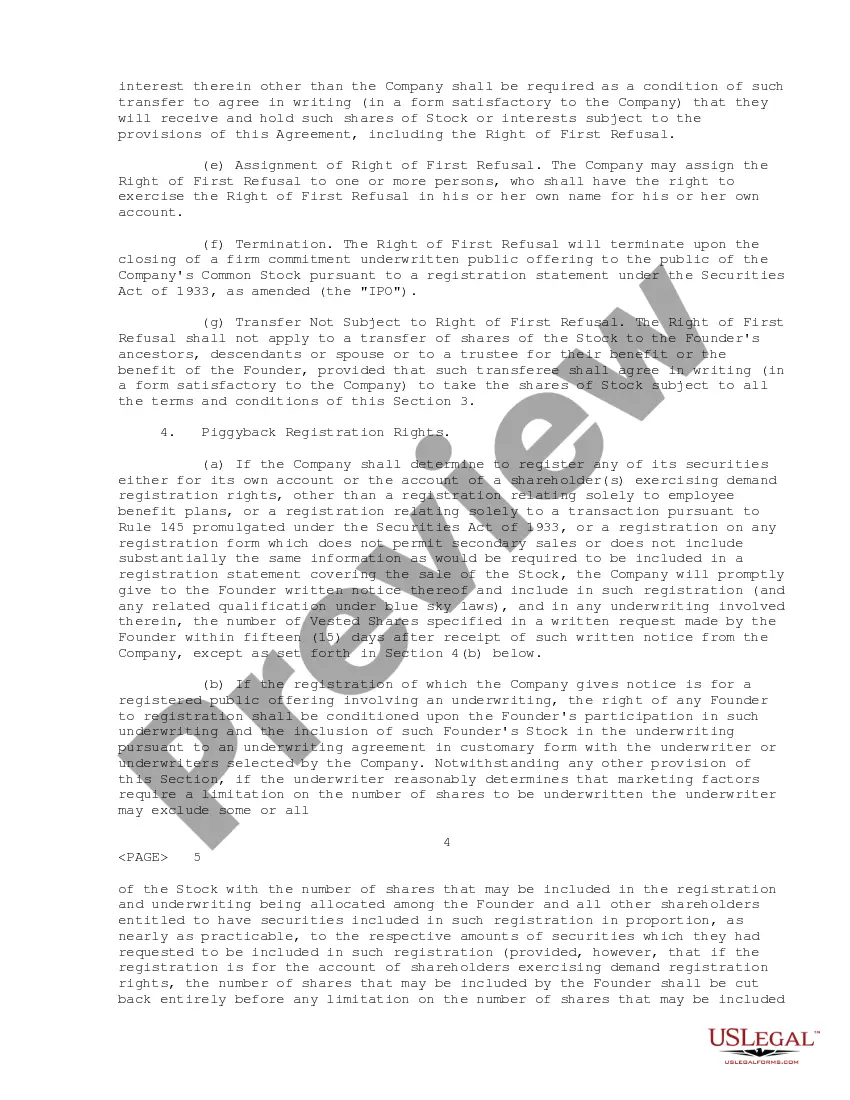
- Right of First Refusal: Provides the company a right to purchase shares before they can be sold to third parties.
- Registration Rights: Describes the founder's rights concerning the registration of shares for public offering.
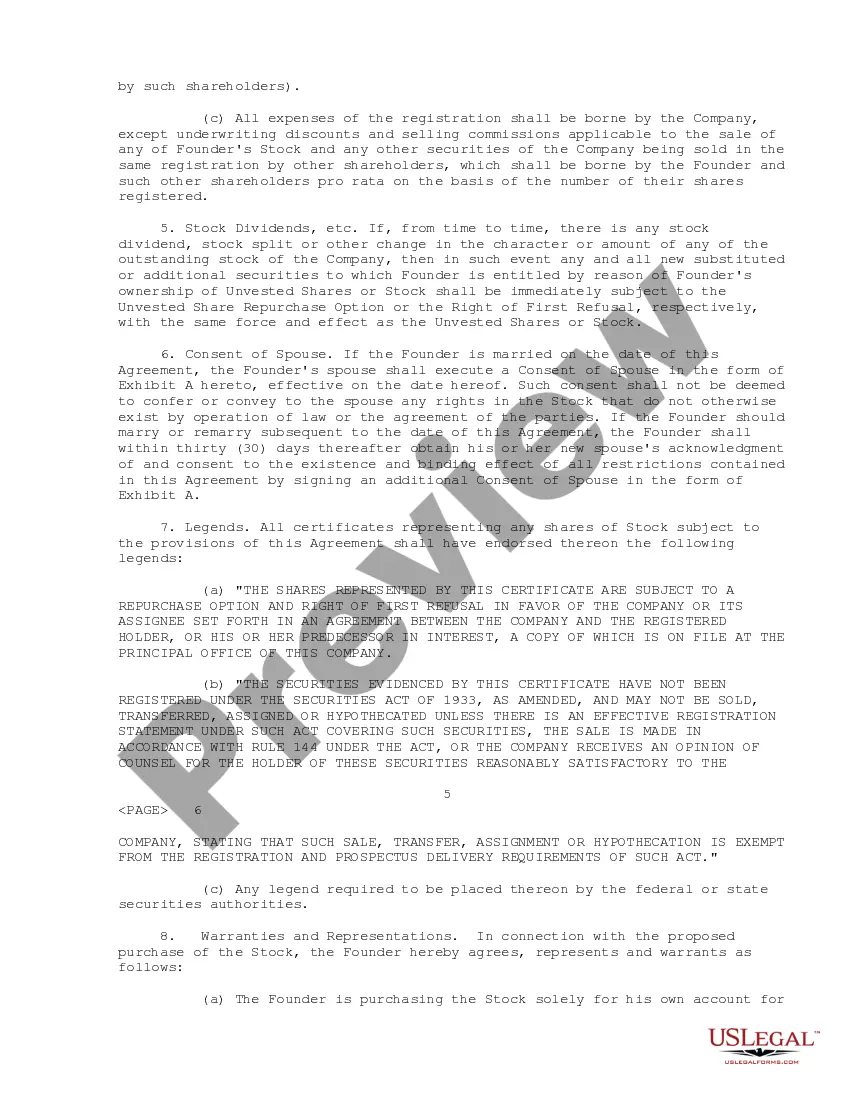
- Warranties and Representations: Includes assurances provided by the founder regarding their intent and knowledge related to the stock purchase.
When to use this document
This form should be used when a company wishes to grant stock ownership to a founder as compensation or incentivization for their early contributions. It is essential in startups where the founder is expected to contribute significantly to the companyâs success. The agreement caters to scenarios involving new stock issuance and specifies rights and responsibilities for both the founder and the company.
Who needs this form
- Founders of a startup or corporation seeking to formalize their ownership of company shares.
- Corporations issuing stock to specific key employees or founders as part of an equity compensation plan.
- Legal professionals assisting clients in structuring stock agreements.
Completing this form step by step
- Identify the parties involved: Enter the names and addresses of the founder and the company.
- Specify the number of shares and the purchase price: Complete the section detailing the equity being exchanged.
- Detail the vesting schedule: Include timelines and conditions under which shares vest.
- Include rights and clauses: Make sure to review and fill in the sections on the right of first refusal and repurchase options.
- Sign and date the agreement: Ensure all parties sign and date the document to make it legally binding.
Does this document require notarization?
This form does not typically require notarization unless specified by local law. It is best practice, however, to have the agreement witnessed or notarized to enhance its enforceability.
Get your form ready online
Our built-in tools help you complete, sign, share, and store your documents in one place.
Make edits, fill in missing information, and update formatting in US Legal Forms—just like you would in MS Word.
Download a copy, print it, send it by email, or mail it via USPS—whatever works best for your next step.
Sign and collect signatures with our SignNow integration. Send to multiple recipients, set reminders, and more. Go Premium to unlock E-Sign.
If this form requires notarization, complete it online through a secure video call—no need to meet a notary in person or wait for an appointment.
We protect your documents and personal data by following strict security and privacy standards.

Make edits, fill in missing information, and update formatting in US Legal Forms—just like you would in MS Word.

Download a copy, print it, send it by email, or mail it via USPS—whatever works best for your next step.

Sign and collect signatures with our SignNow integration. Send to multiple recipients, set reminders, and more. Go Premium to unlock E-Sign.

If this form requires notarization, complete it online through a secure video call—no need to meet a notary in person or wait for an appointment.

We protect your documents and personal data by following strict security and privacy standards.
Mistakes to watch out for
- Failing to specify the vesting terms clearly, which can lead to disputes later.
- Not including the right of first refusal, which protects the company's interests.
- Forgetting to have all relevant parties sign the agreement.
- Using outdated legal language or templates not reflective of current laws.
Benefits of completing this form online
- Convenience: Easily accessible and editable from any location.
- Reliability: Templates are drafted by licensed attorneys to ensure legal compliance.
- Time-saving: Instant download allows for immediate use without waiting for physical copies.
- User-friendly: Simple language and straightforward format make it easy to understand for individuals with little legal experience.
- This agreement is legally binding once signed by both parties, provided all legal prerequisites are met.
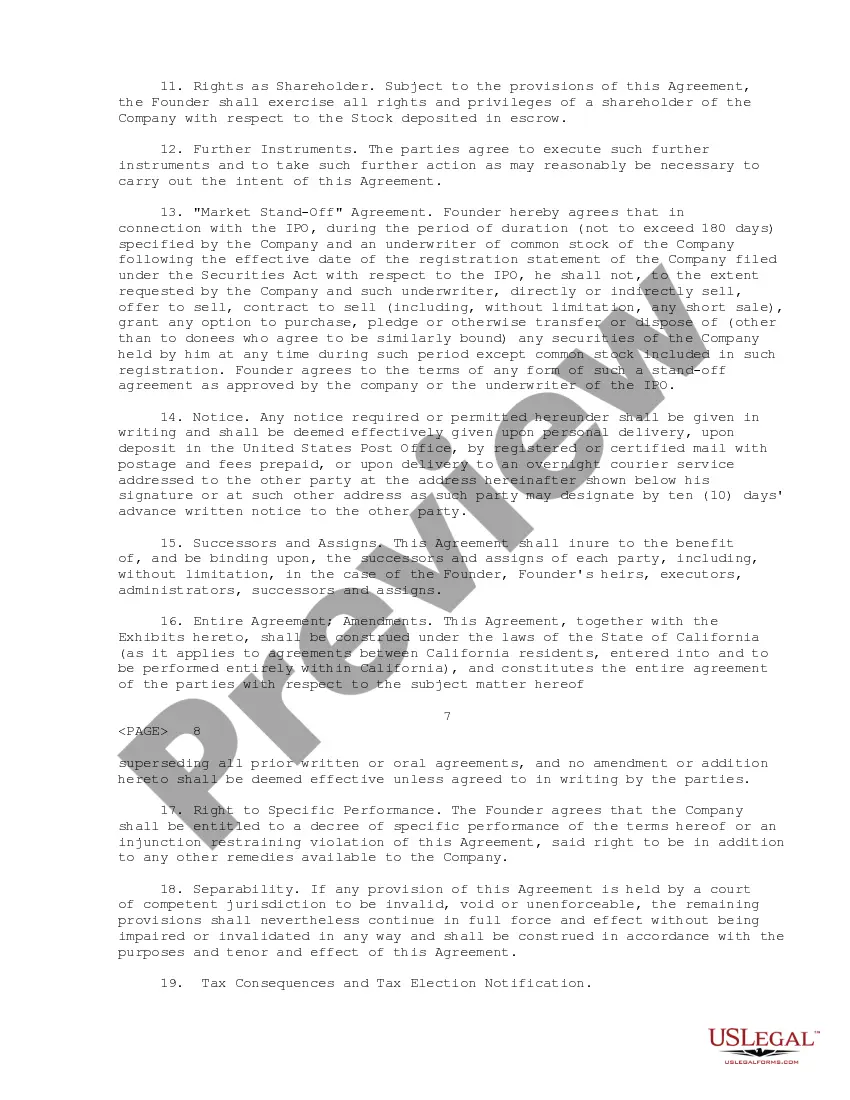
- It offers protectable rights to both the Company and the Founder, formalizing their agreement regarding stock ownership.
Key takeaways
- The Sample Founder Stock Purchase Agreement is essential for startups issuing stock to founders under specific terms.
- Understanding the vesting schedule and rights of first refusal is crucial for all parties involved.
- Proper completion and consent from partners are necessary for the agreement's enforceability.
Looking for another form?


Form popularity
FAQ
A founders' agreement is a legally binding contract, usually in writing, that outlines the roles, rights, and responsibilities of each owner in a business.
Founders' stock is the common stock issued to the founders of a company. These stocks have slightly different characteristics when compared to the common stocks sold in the secondary market. The main difference is that founders' stock is issued only at par value and has a vesting schedule that comes with it.
A Founders' Agreement is a contract that a company's founders enter into that governs their business relationships. The Agreement lays out the rights, responsibilities, liabilities, and obligations of each founder.
As a rule, independent startup advisors get up to 5% of shares (or no equity at all). Investors claim 20-30% of startup shares, while founders should have over 60% in total. You may also leave some available pool (5%), but don't forget to allocate 10% to employees.
Founders receive direct issuances of Common Stock (not options) Non-Founder employees receive ISOs (options)Investors receive Preferred Stock, or SAFEs/Convertible Notes that convert into Preferred Stock.
Rather, when a startup first forms, the founders grant themselves Restricted Stock Awards (RSAs) instead of common stock options. Essentially the company sells them the stock at zero cost. In the 20th century founders were taking a real risk on salary, betting their mortgage and future.
Wrap Up. Founders stock refers to the shares issued to the originators of a company. Often, the stock does not receive any returns up to the point that a dividend is payable to the common stockholders. Founders stock comes with a vesting schedule, which determines when the shares are exercisable.