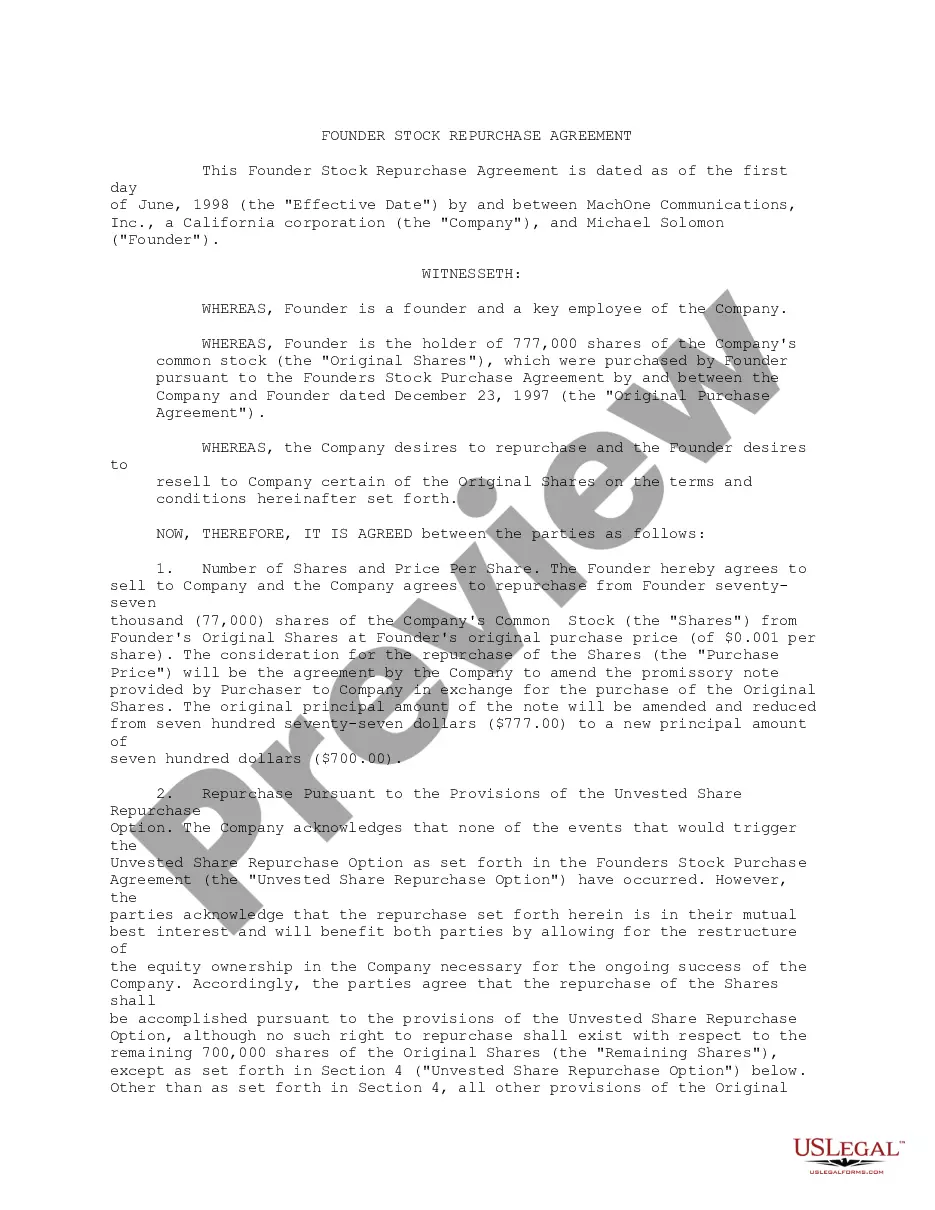
Sample Founder Stock Repurchase Agreement between MachOne Communications, Inc. and Michael Solomon
What this document covers
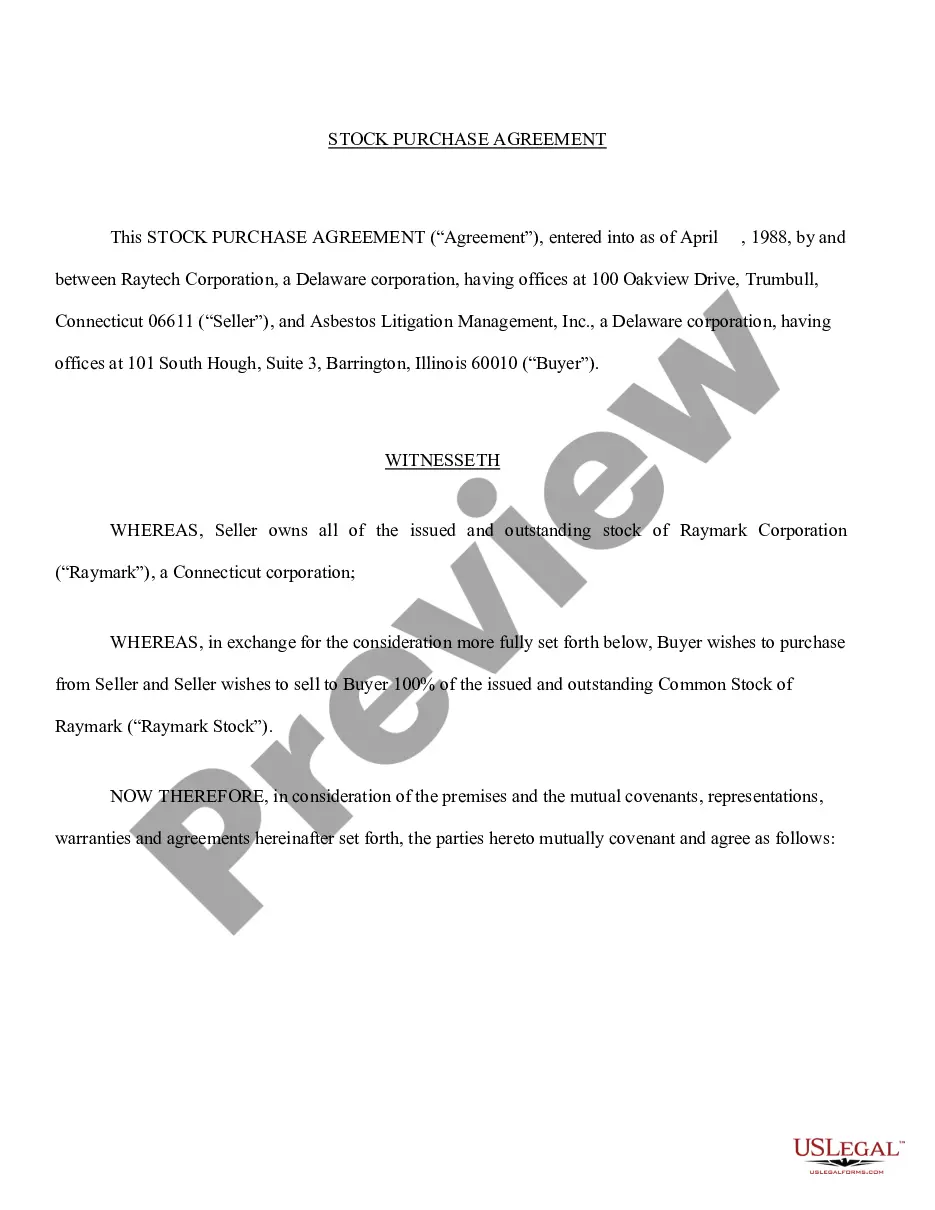
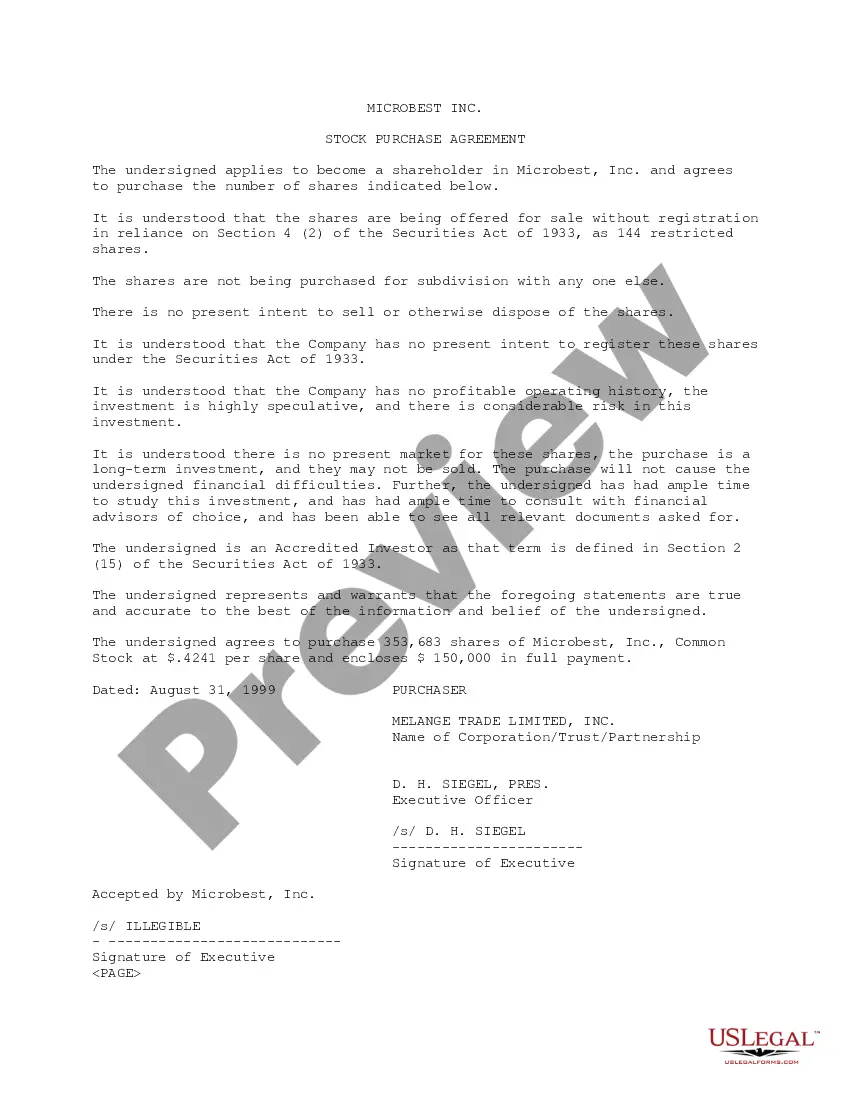
The Sample Founder Stock Repurchase Agreement is a legal document crafted to facilitate the repurchase of stock from a founder by a corporation. Specifically designed for scenarios where the relationship between the founding member and the company changes, this agreement outlines the terms under which the shares are repurchased. Unlike typical stock sale agreements, this form includes specific provisions related to unvested shares, making it essential for companies aiming to manage their equity structure effectively.
Form components explained
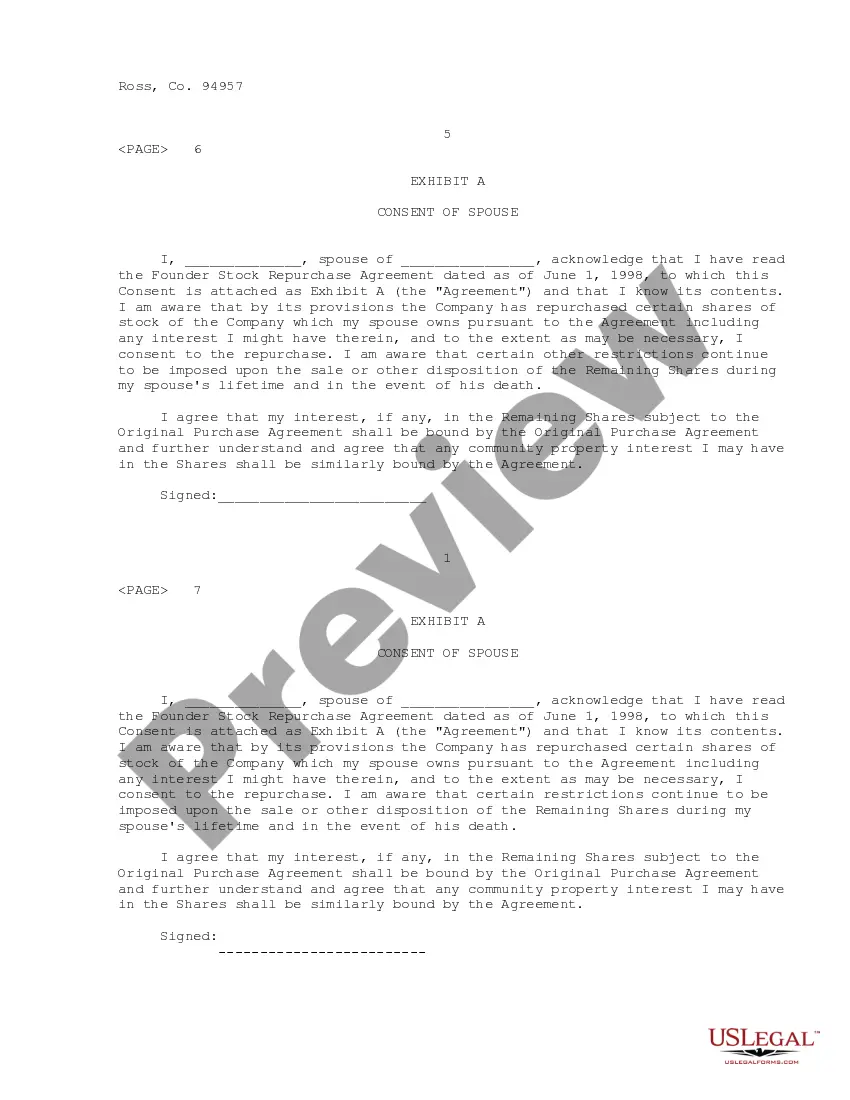
- Identification of the parties involved: MachOne Communications, Inc. and the founder, Michael Solomon.
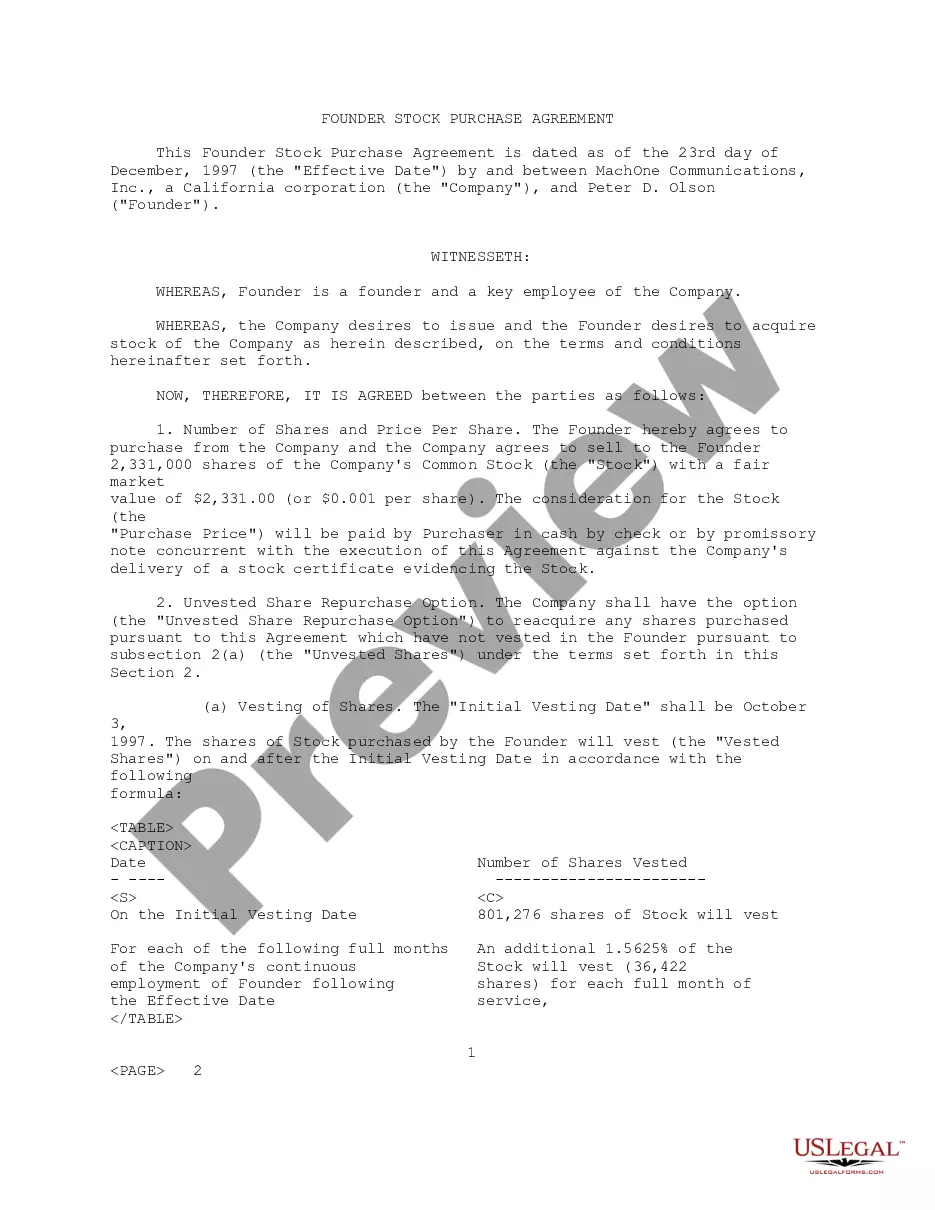
- Details regarding the number of shares being repurchased and the price per share.
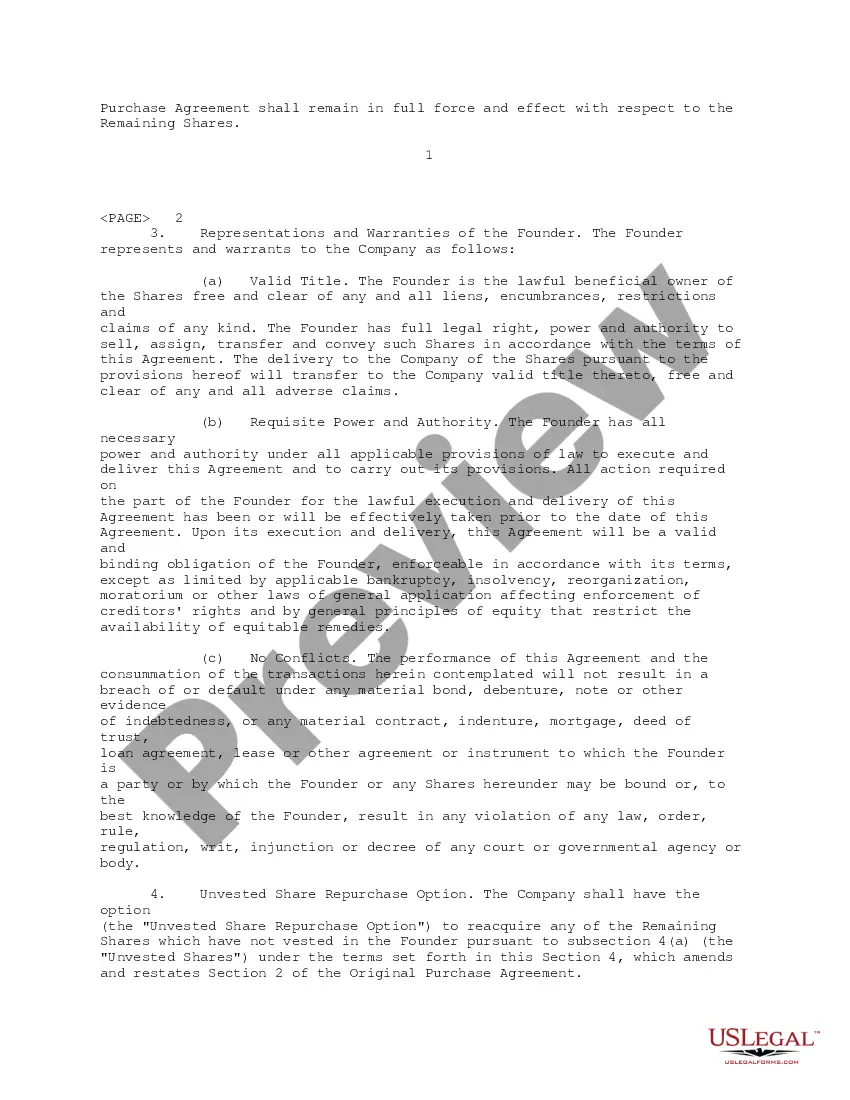
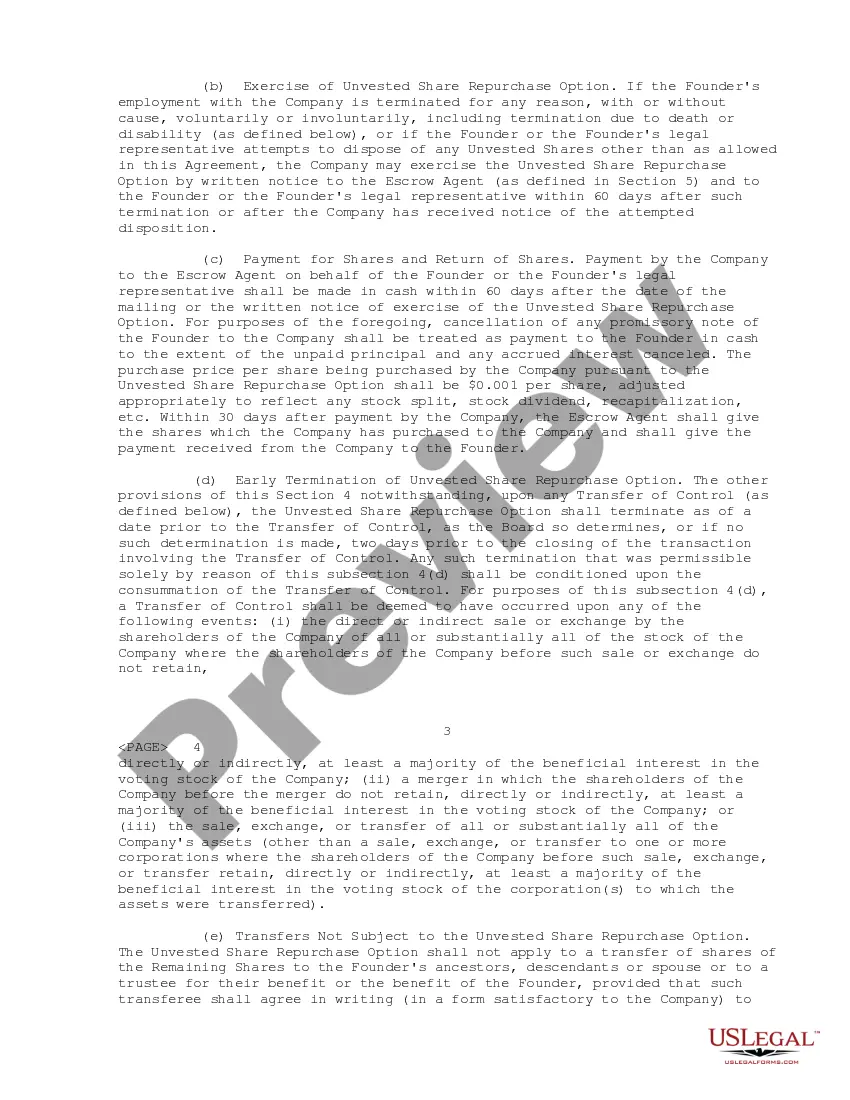
- Provisions related to the Unvested Share Repurchase Option, outlining when the company can reclaim shares.
- Representations and warranties from the founder regarding the ownership of shares.
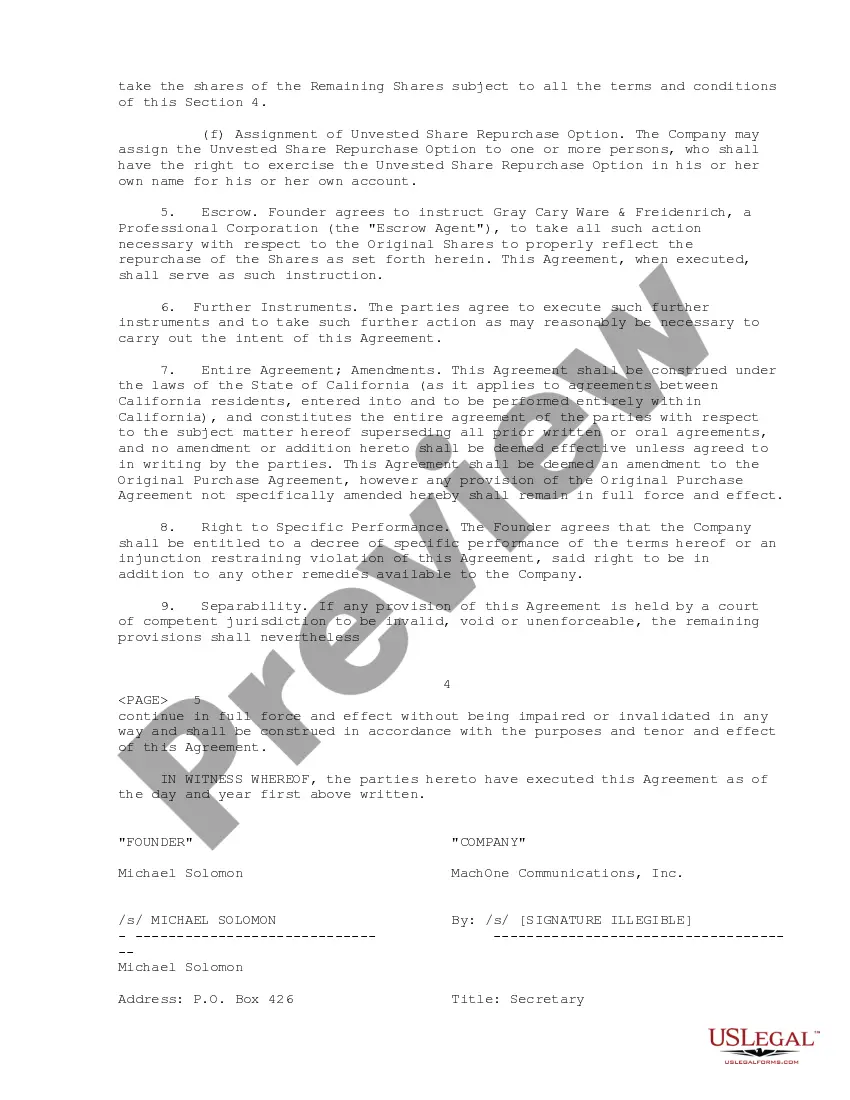
- Instruction for escrow services to handle the repurchase process.
When to use this form
This form should be used when a company intends to repurchase shares from a founder. It is relevant in various scenarios, such as restructuring ownership or managing outstanding share ownership after a founder's employment ends. Use this agreement to clarify terms around stock buybacks when founders leave the company or when unvested shares are involved.
Who needs this form
This form is suitable for:
- Companies wishing to repurchase shares from their founders.
- Founders looking to negotiate the sale of their unvested stock back to the company.
- Legal professionals seeking a structured arrangement for ownership transitions.
Instructions for completing this form
- Identify the parties involved, including the company and the founder.
- Specify the number of shares being repurchased and confirm the purchase price.
- Include any representations and warranties relevant to the share ownership of the founder.
- Detail the terms governing the Unvested Share Repurchase Option, if applicable.
- Ensure that all parties sign the agreement in the presence of the escrow agent.
Does this document require notarization?
This form does not typically require notarization to be legally valid. However, some jurisdictions or document types may still require it. US Legal Forms provides secure online notarization powered by Notarize, available 24/7 for added convenience.
Get your form ready online
Our built-in tools help you complete, sign, share, and store your documents in one place.
Make edits, fill in missing information, and update formatting in US Legal Forms—just like you would in MS Word.
Download a copy, print it, send it by email, or mail it via USPS—whatever works best for your next step.
Sign and collect signatures with our SignNow integration. Send to multiple recipients, set reminders, and more. Go Premium to unlock E-Sign.
If this form requires notarization, complete it online through a secure video call—no need to meet a notary in person or wait for an appointment.
We protect your documents and personal data by following strict security and privacy standards.

Make edits, fill in missing information, and update formatting in US Legal Forms—just like you would in MS Word.

Download a copy, print it, send it by email, or mail it via USPS—whatever works best for your next step.

Sign and collect signatures with our SignNow integration. Send to multiple recipients, set reminders, and more. Go Premium to unlock E-Sign.

If this form requires notarization, complete it online through a secure video call—no need to meet a notary in person or wait for an appointment.

We protect your documents and personal data by following strict security and privacy standards.
Common mistakes
- Failing to clearly define the number of shares being repurchased.
- Omitting necessary signatures from both parties or the escrow agent.
- Neglecting to specify the terms of the Unvested Share Repurchase Option.
- Using outdated versions of the agreement that may not reflect current law.
Benefits of using this form online
- Convenience: Downloadable access allows for efficient completion anytime, anywhere.
- Editability: Easily customize the agreement to fit specific circumstances.
- Reliability: Forms are drafted by licensed attorneys to ensure compliance with legal standards.
Legal use & context
- This agreement is enforceable in California under corporate law guidelines.
- It is advisable to retain legal counsel when finalizing the terms to avoid disputes later.
- Share repurchase agreements can be crucial in managing company equity and protecting interests during founder transitions.
Main things to remember
- The agreement is essential for formalizing stock repurchase from a founder.
- Understanding the terms of unvested shares can prevent future conflicts.
- Compliance with California laws is crucial for the agreement's enforcement.
Looking for another form?

Form popularity
FAQ
It's normal to have let a co-founder go. In fact, over 50% of co-founder relationships end in failure. Your other employees and co-founders will be relieved that you took action.
Under a typical vesting schedule, the stock vests in monthly or quarterly increments over four years; if the Founder leaves the company before the stock is fully vested, the company has the right to buy back the unvested shares at the lower of cost or the then fair market value.
A Chief Executive Officer (CEO) is the highest-ranking executive in the business.Some founders are also CEOs. For example, Steve Jobs was a co-founder of Apple, but also a CEO.
Vesting is the process of accruing a full right that cannot be taken away by a third party. In the context of the founders' equity, a startup initially grants a package of stock to each founder.Over a period of time called a vesting schedule, a founder acquires a full ownership that cannot be forfeited by the company.
And the answer is pretty simple it's yes. Founders must pay for their own stock under corporate statutes like the Delaware General Corporation Law, Section 152. When a corporation issues stock to a founder, the stock must be what's called fully paid and non-assessable.
Wrap Up. Founders stock refers to the shares issued to the originators of a company. Often, the stock does not receive any returns up to the point that a dividend is payable to the common stockholders. Founders stock comes with a vesting schedule, which determines when the shares are exercisable.
Founder vesting, is a process by which you earn your stock over a period of time depending on your performance and commitment to the startup. The company gets the right to buy back the stock if one or more of the co-founders leave.
Heed the warning signs. The members of a good team like one another. Ask your advisers and mentors for council. Talk out options with your legal council. Check in with advisers again (this is not an easy decision). Bite the bullet. Be open with your company's stakeholders.
What happens if a founder leaves before fully vesting? In most cases, the company will elect to exercise the remaining portion of its repurchase right against any unvested shares the departing founder has purchased.