Oklahoma Separation, Spousal Support, Child Custody and Support, and Property Settlement
What is this form?
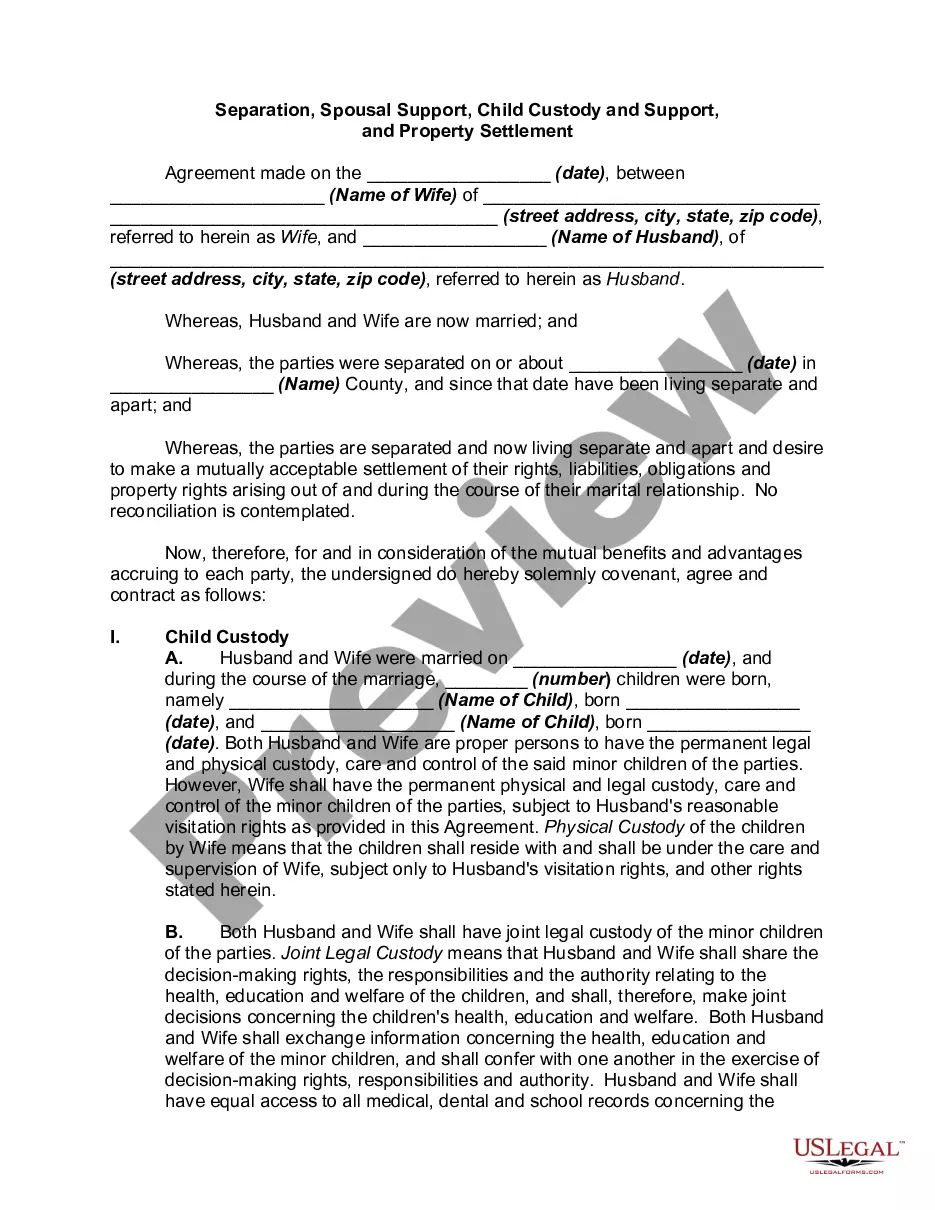
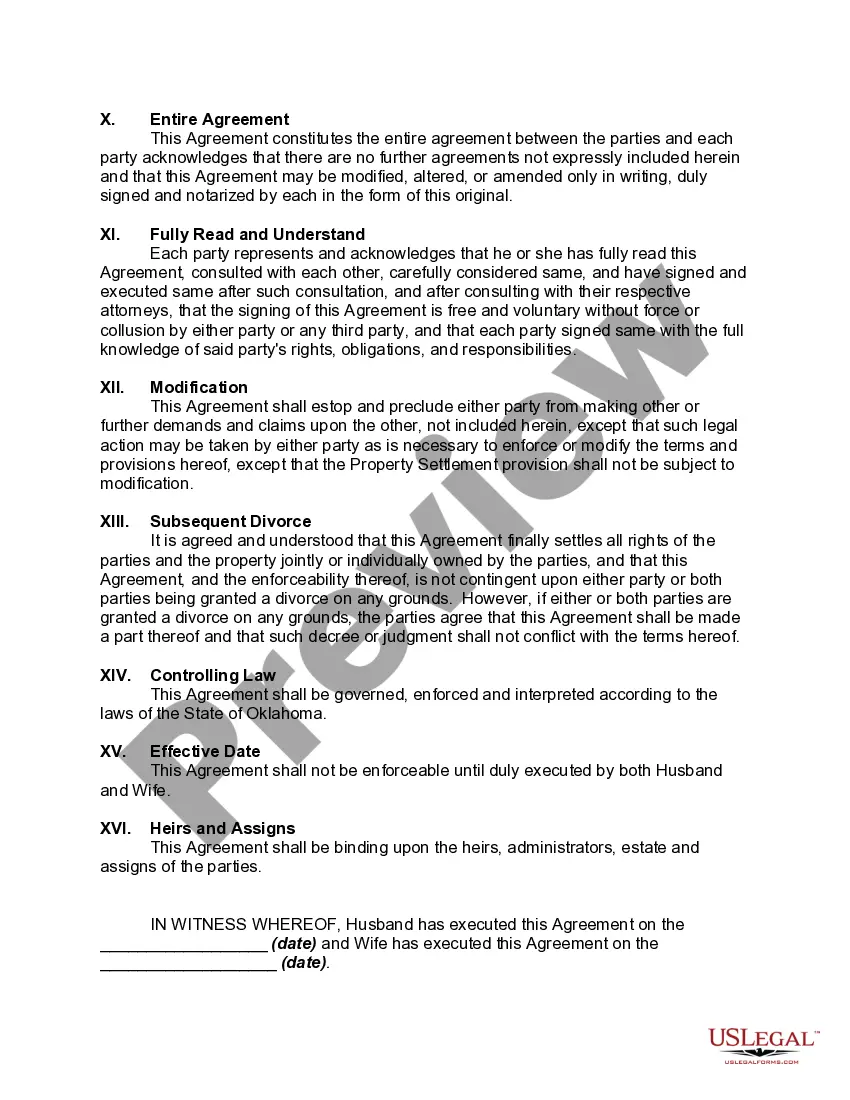
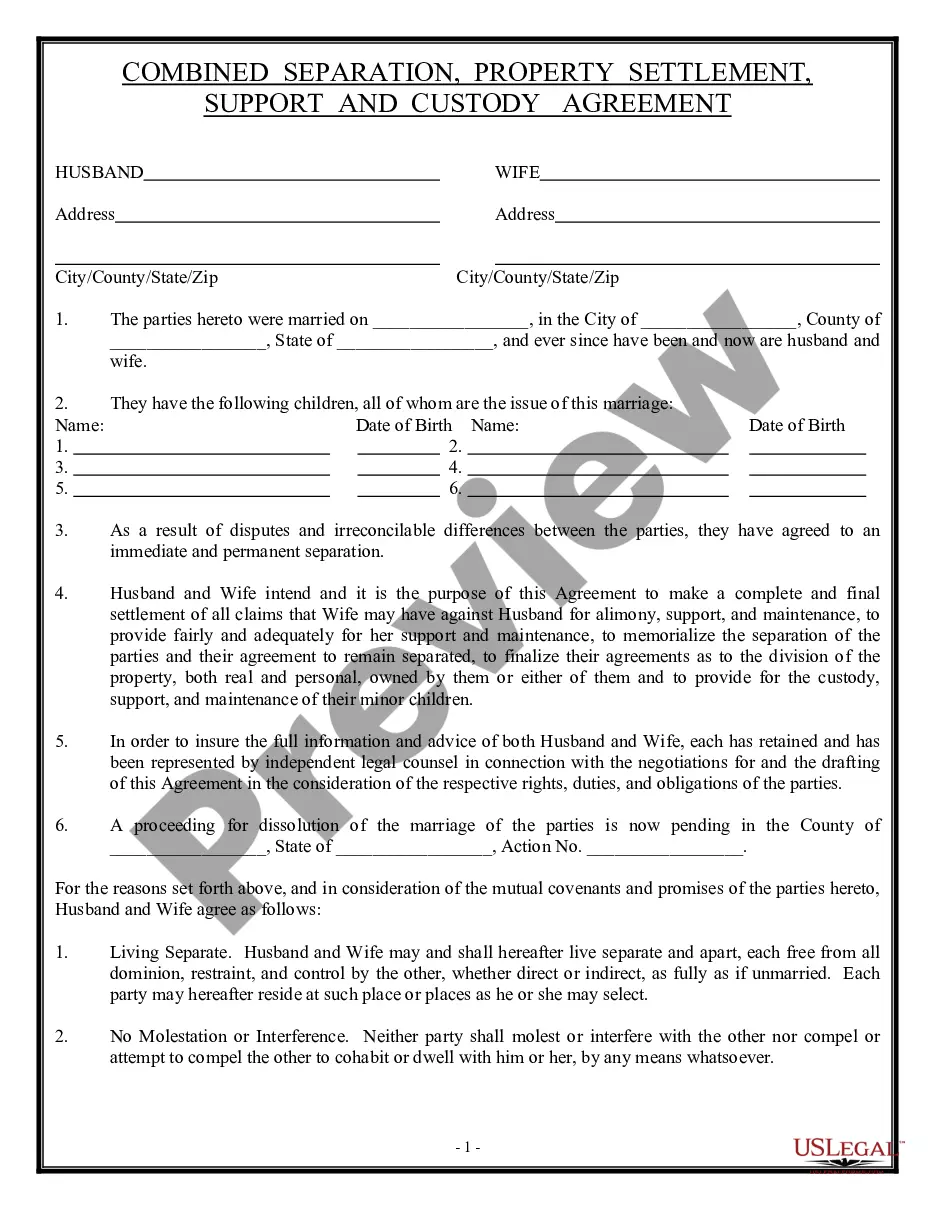
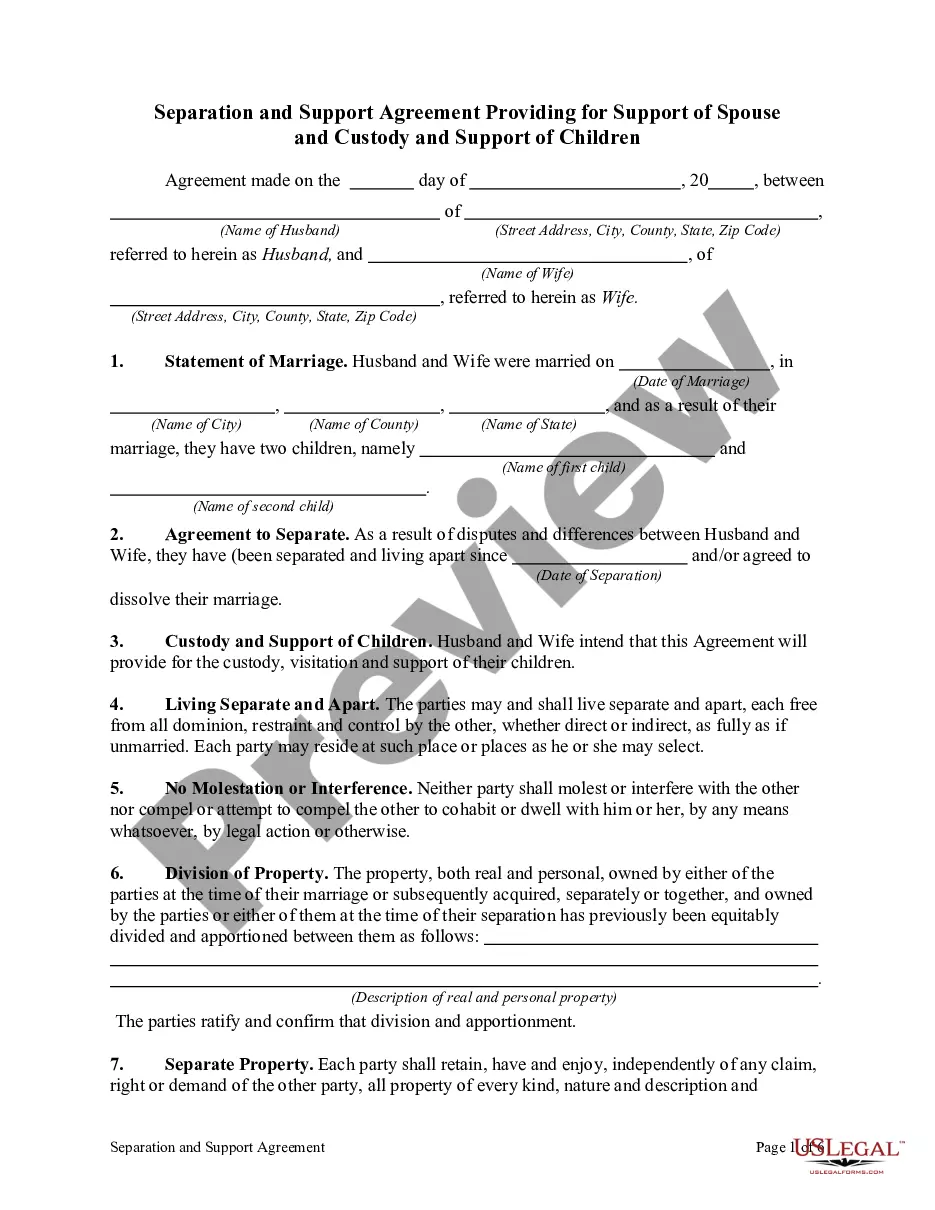
This Separation, Spousal Support, Child Custody and Support, and Property Settlement form is designed for couples who are separated and wish to establish agreements regarding child custody, support, and the division of property. This form helps to outline joint legal custody arrangements and specifies the rights related to visitation and financial responsibilities. It differs from other family law forms by addressing multiple aspects of separation in one comprehensive document, providing clarity and structure for the parties involved.
Key components of this form
- Details of the parties involved, including their names and addresses.
- Agreements on child custody, specifying physical and legal custody arrangements.
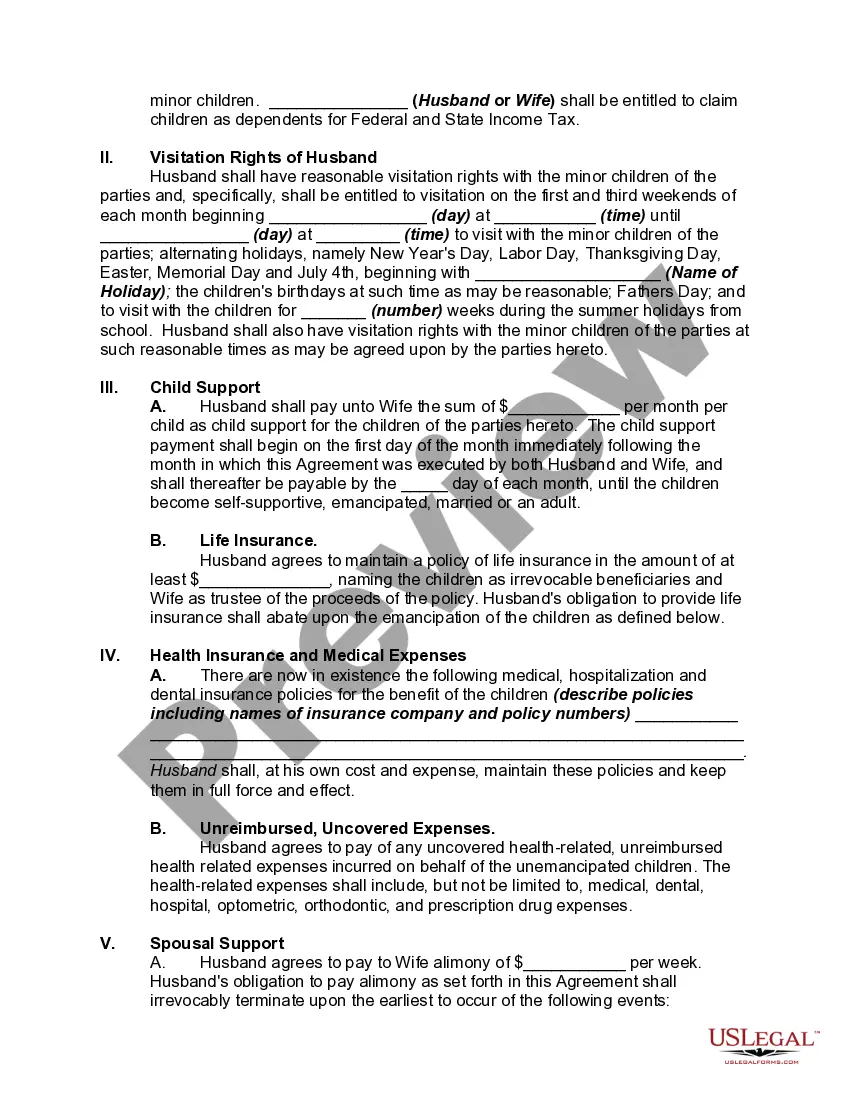
- Visitation rights outlining the schedule for the non-custodial parent.
- Child support payment terms, including amounts and payment schedules.
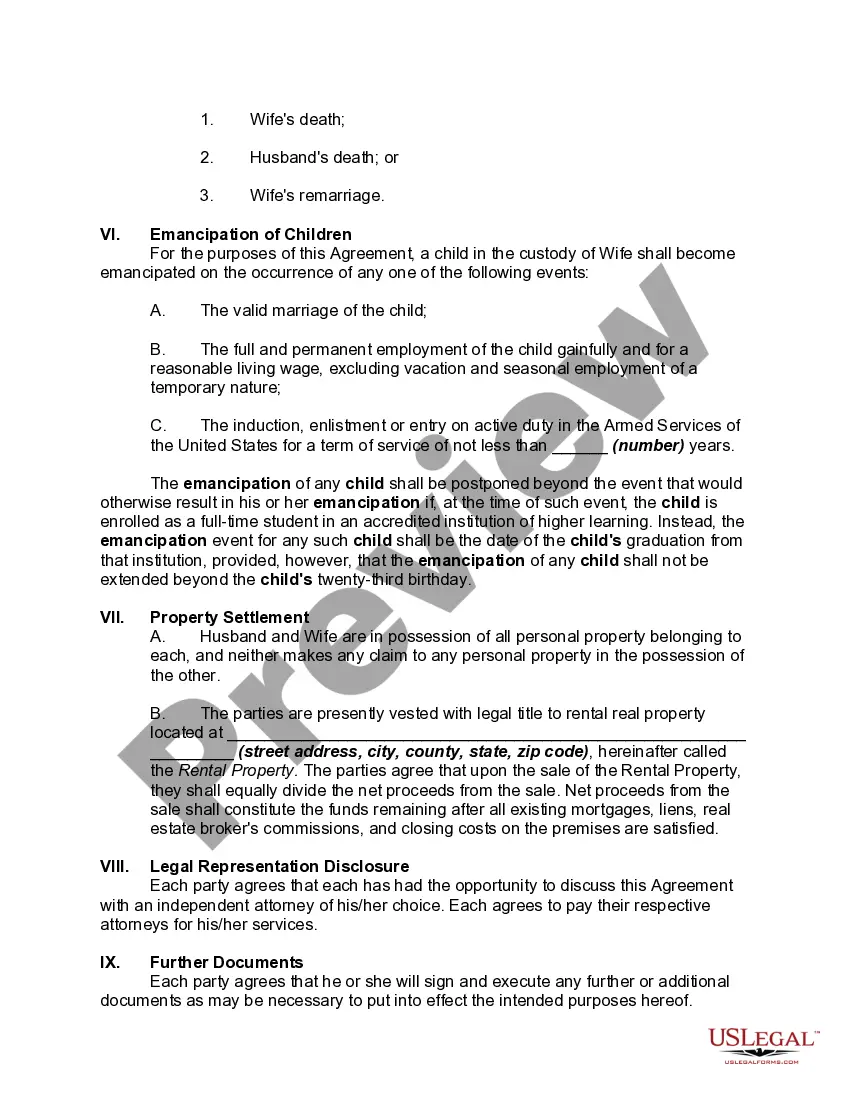
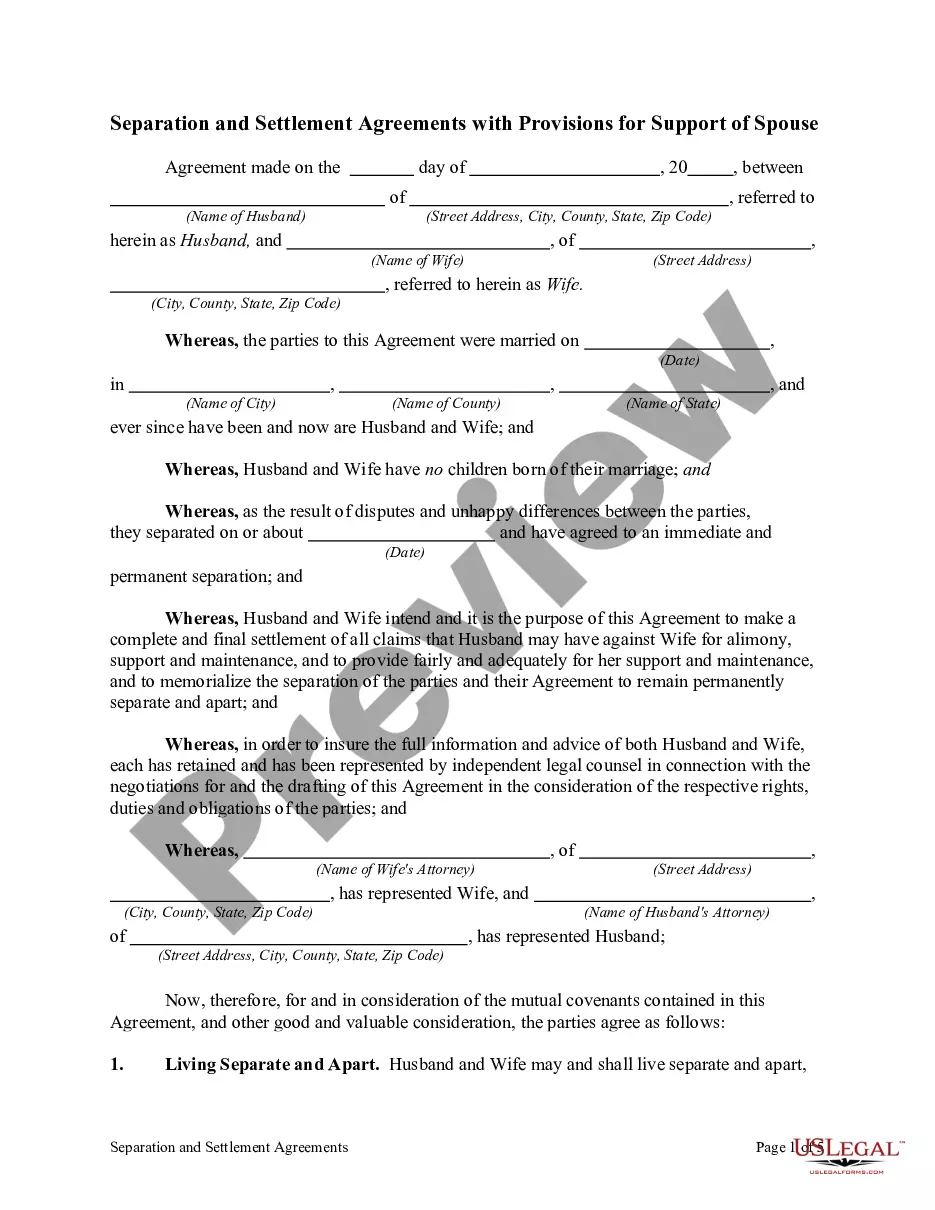
- Provisions for spousal support and its termination conditions.
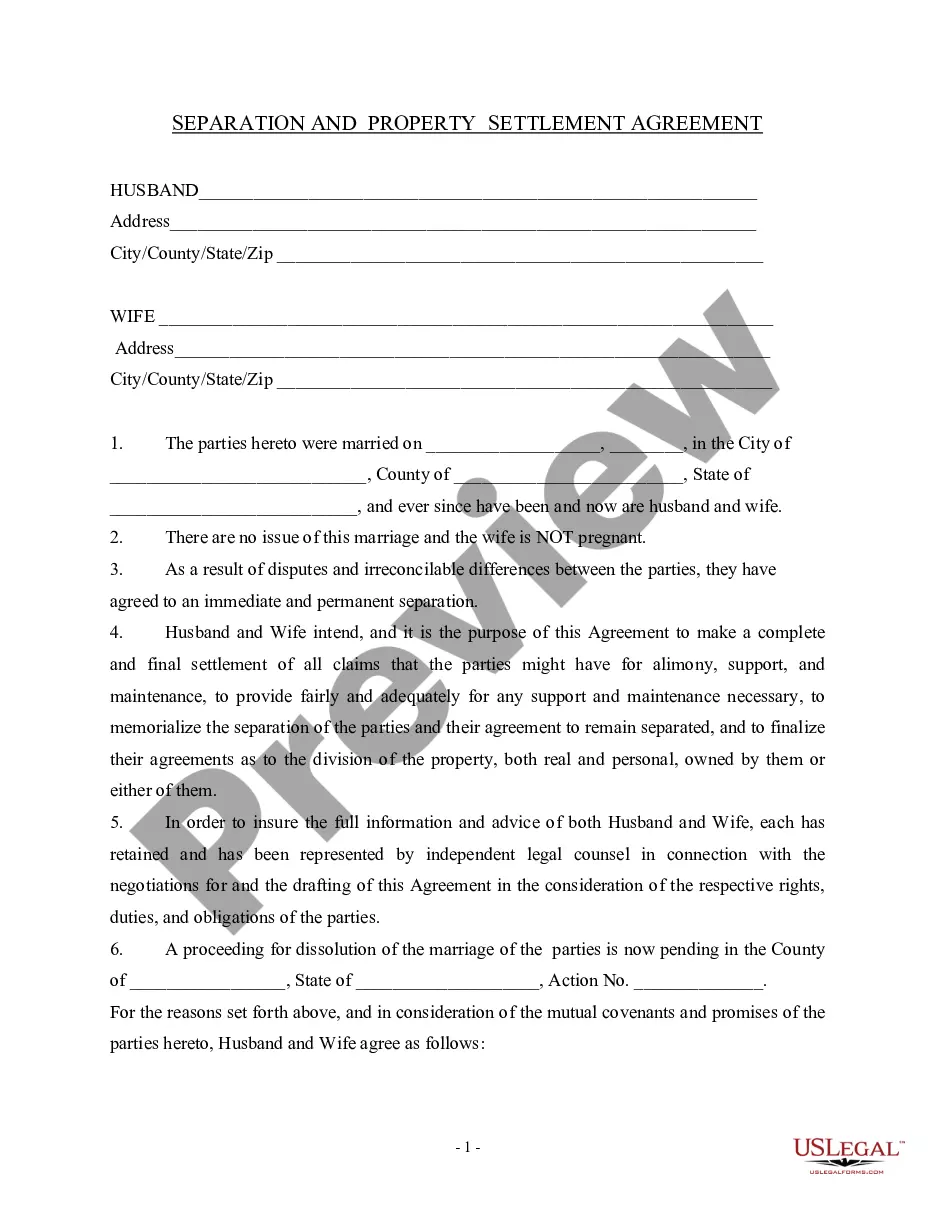
- Property settlement agreements regarding the division of assets and liabilities.
When this form is needed
This form should be used when a married couple has decided to separate and is living apart, especially when there are minor children involved. It is most relevant in situations where both parties want to formalize their agreements regarding custody, child and spousal support, and the settlement of marital property without going through a lengthy court process.
Intended users of this form
- Couples who are legally married and have decided to separate.
- Parents seeking to establish joint custody and visitation arrangements for their children.
- Individuals needing a formal written agreement regarding child and spousal support.
- Parties involved in a property settlement and want to document their agreement.
Steps to complete this form
- Identify the parties by entering their full names and addresses.
- Specify the date of separation and any details concerning previous custody arrangements.
- Detail the child custody arrangement, clearly defining legal and physical custody roles.
- Determine and insert the child support amounts, payment frequency, and spousal support details.
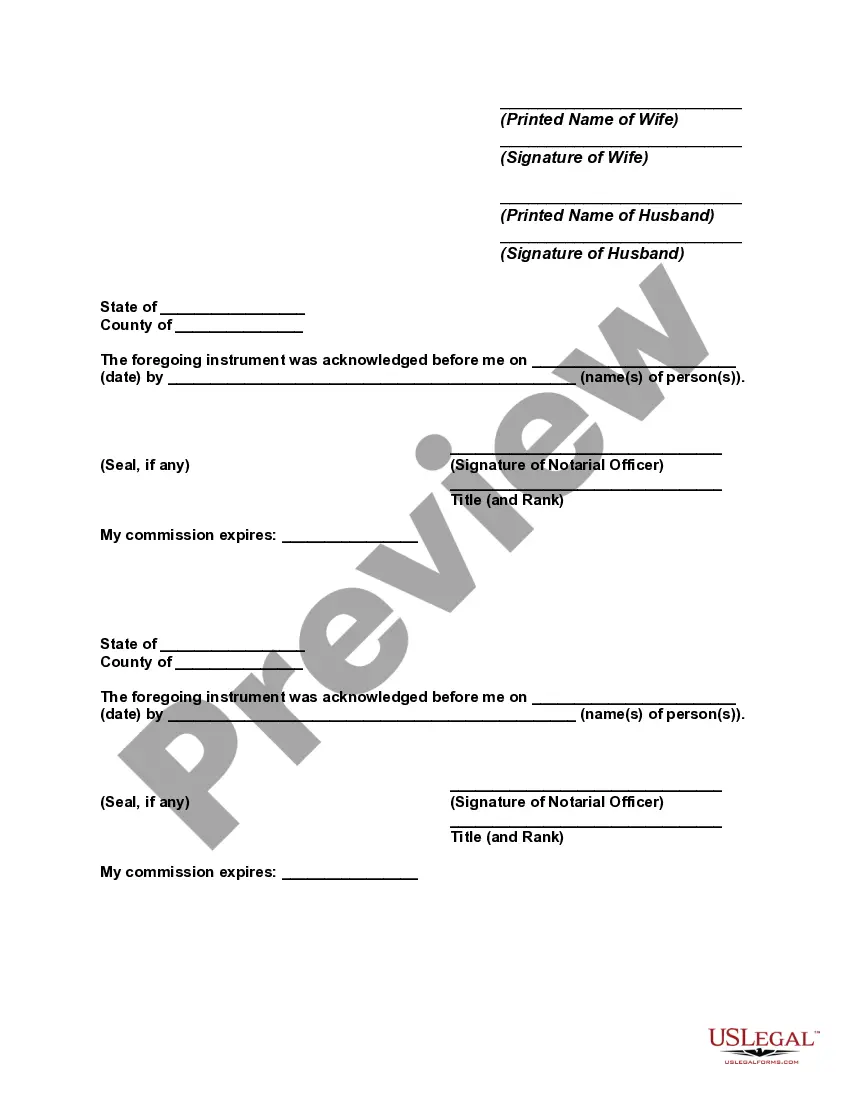
- Sign the agreement in the presence of a notary public to ensure its legality.
Does this form need to be notarized?
To make this form legally binding, it must be notarized. Our online notarization service, powered by Notarize, lets you verify and sign documents remotely through an encrypted video session.
Get your form ready online
Our built-in tools help you complete, sign, share, and store your documents in one place.
Make edits, fill in missing information, and update formatting in US Legal Forms—just like you would in MS Word.
Download a copy, print it, send it by email, or mail it via USPS—whatever works best for your next step.
Sign and collect signatures with our SignNow integration. Send to multiple recipients, set reminders, and more. Go Premium to unlock E-Sign.
If this form requires notarization, complete it online through a secure video call—no need to meet a notary in person or wait for an appointment.
We protect your documents and personal data by following strict security and privacy standards.

Make edits, fill in missing information, and update formatting in US Legal Forms—just like you would in MS Word.

Download a copy, print it, send it by email, or mail it via USPS—whatever works best for your next step.

Sign and collect signatures with our SignNow integration. Send to multiple recipients, set reminders, and more. Go Premium to unlock E-Sign.

If this form requires notarization, complete it online through a secure video call—no need to meet a notary in person or wait for an appointment.

We protect your documents and personal data by following strict security and privacy standards.
Typical mistakes to avoid
- Failing to list all children involved in the custody agreement.
- Not specifying visitation schedules clearly, leading to misunderstandings.
- Inadequately detailing financial support obligations.
- Omitting to have the agreement notarized, which can affect its enforceability.
Benefits of completing this form online
- Convenient access allows you to complete the form at your own pace.
- Editable templates make it easy to adjust terms specific to your situation.
- Reliable legal language drafted by licensed attorneys ensures compliance with state laws.
Looking for another form?

Form popularity
FAQ
Both parents have an obligation to financially support their children until they are at least 18 years of age, even after separation. That legal obligation does not change when one or both parents repartner. A parent's new partner does not have a legal obligation to support another person's child.
Child support affects alimony because it's considered income; and, therefore, it increases the net monthly income of the person who receives it. So, if we take person #1 from above and give her $700 per month in child support, then her net income would be $4200.
Marital Settlement Agreements, reached between the parties in writing and signed by the parties, become legally binding when approved by the court at the time of the final court hearing.Once approved by the court, such post judgment stipulations do become legally binding and enforceable between the parties.
A fair settlement should include ample parenting time for each parent. An equitable visitation agreement may not give parents equal custodial time, but it should provide for frequent and continuing contact with each parent.
#1. Start with the Basics. #2. Include the Details. #3. Confirm Your Agreement. #4. Identify and Divide Assets and Debts. #5. Create a Parenting Plan for Custody and Visitation. #6. Agree on Child Support and Spousal Support (Alimony) #7. Polishing Your Agreement. Conclusion.
Rights to Property after Separation: When You're Married and Getting a Divorce. The benefit of getting married is that, in the event of a divorce or separation, you are entitled to a share of the property.The right to stay in your home unless a court order excludes it.
Your divorce settlement agreement should cover everything that is important to you, including custody of your children, child support payments, alimony, and the separation of your property, such as your family home, vehicles, and other assets.
There are many factors to consider, including assets, incomes, living expenses, inflation, alimony, child support, taxes, retirement plans, investments, medical expenses and health insurance costs, and child-related expenses such as education.
Do I still have to pay child support? Both parents have an obligation to financially support their children until they are at least 18 years of age, even after separation.A parent's new partner does not have a legal obligation to support another person's child.