Maine Construction or Mechanics Lien Package - Corporation or LLC

What is this form package?
The Maine Construction or Mechanics Lien Package is specifically designed for corporations or limited liability companies (LLCs) providing labor, materials, or services to improve real property. This package allows businesses to recover money owed through a lien on the improved property. It includes essential forms and guidance on the entire lien creation process, which sets it apart from similar packages that may not focus specifically on corporate or LLC needs.
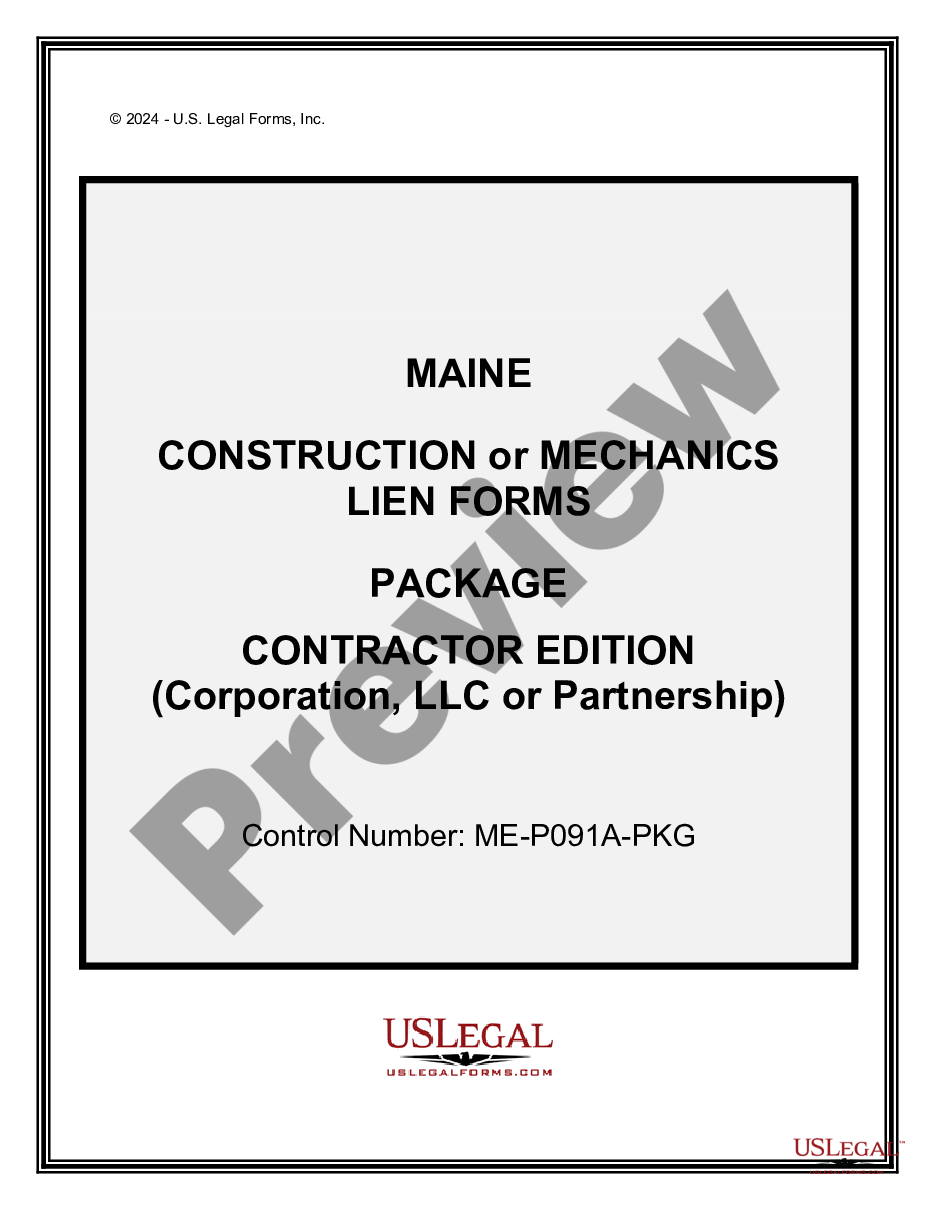
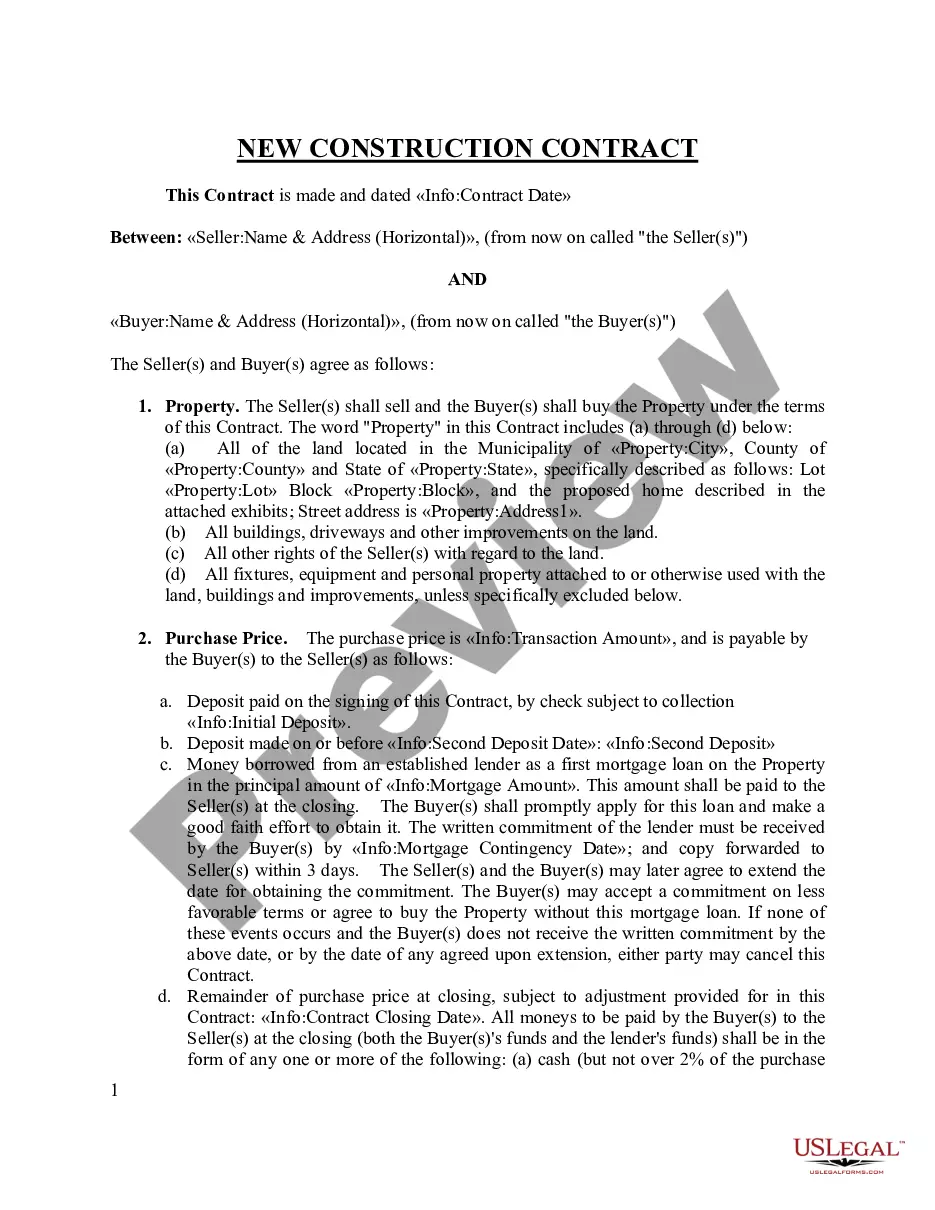
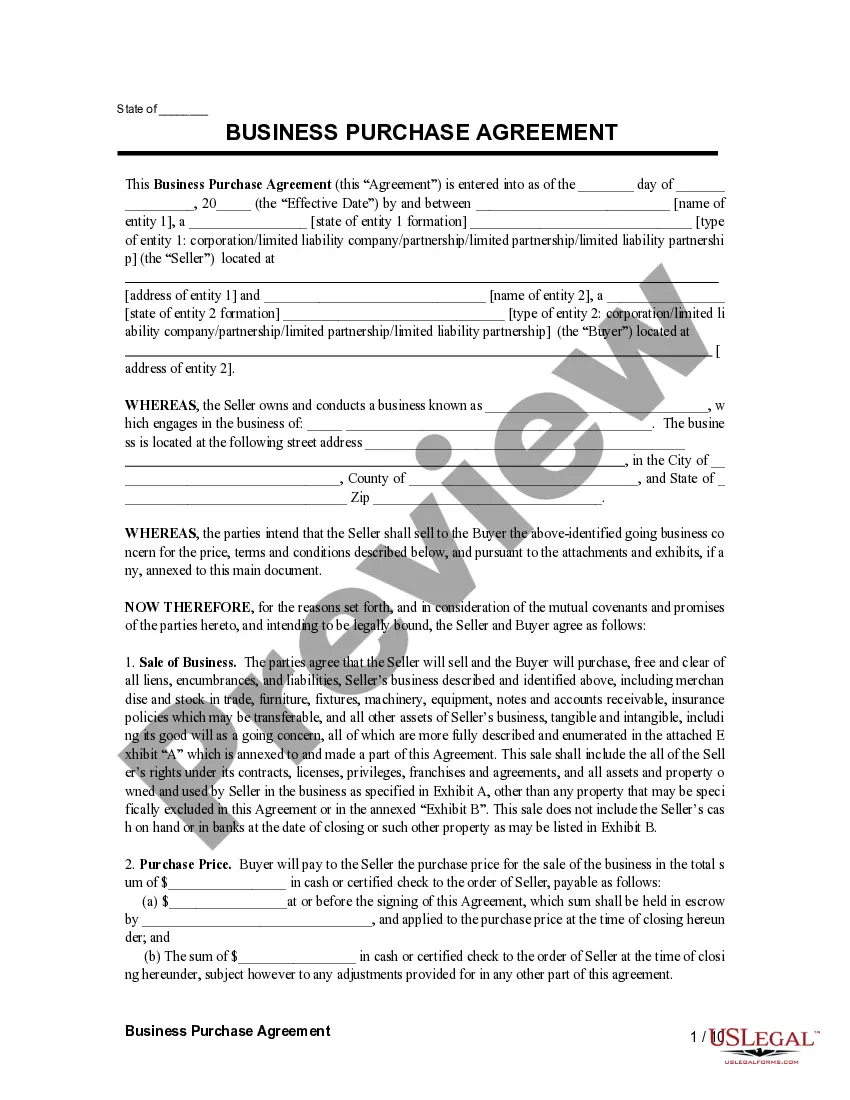
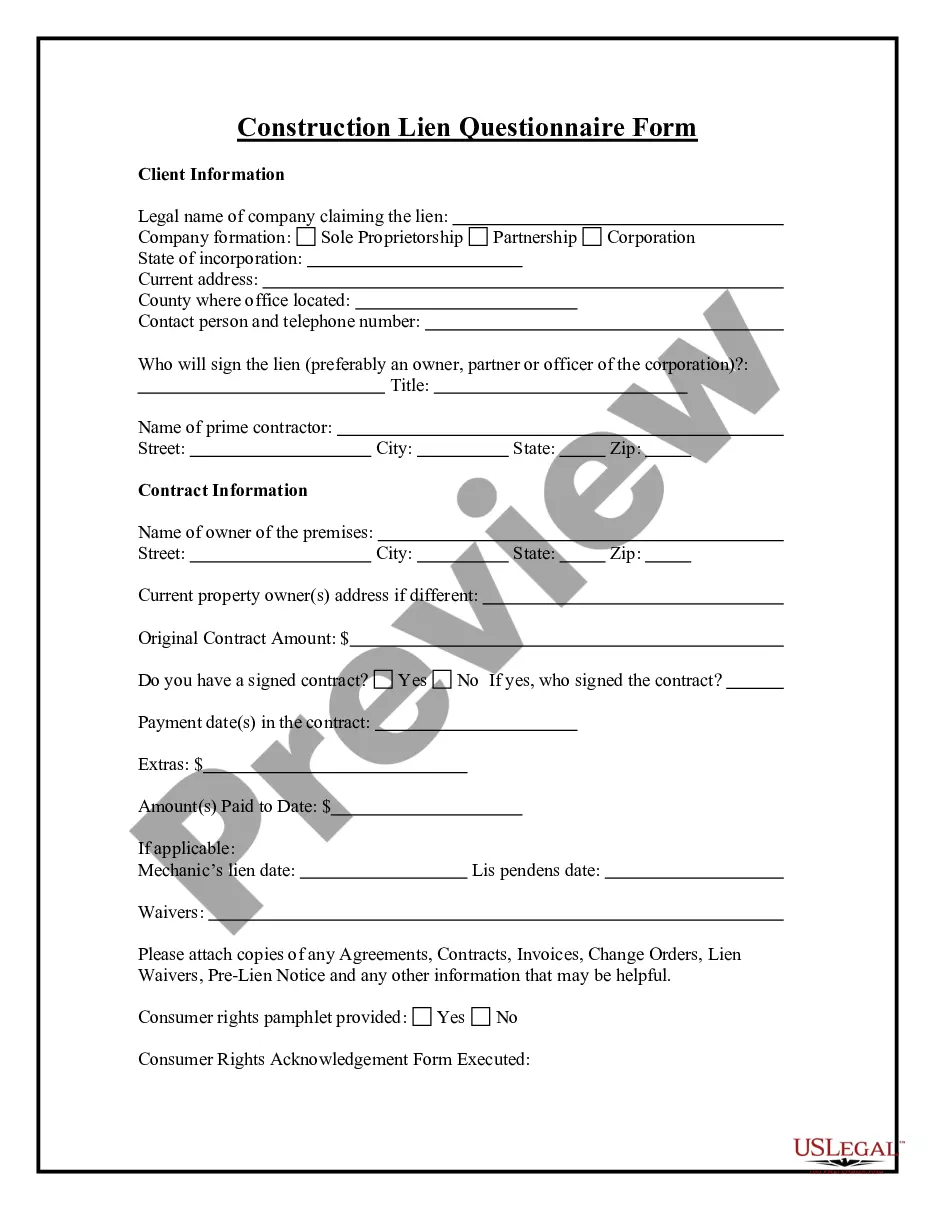
Forms you’ll find in this package
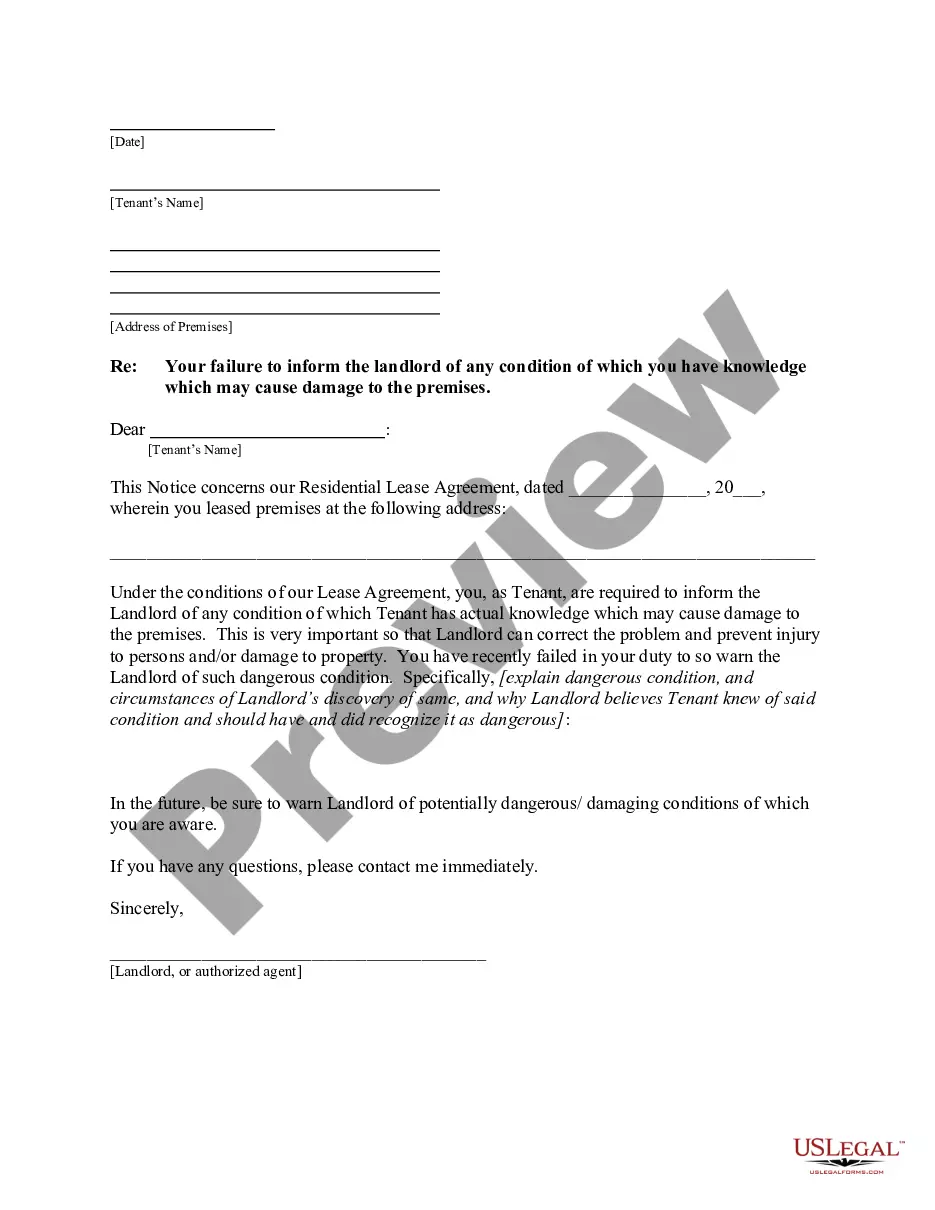
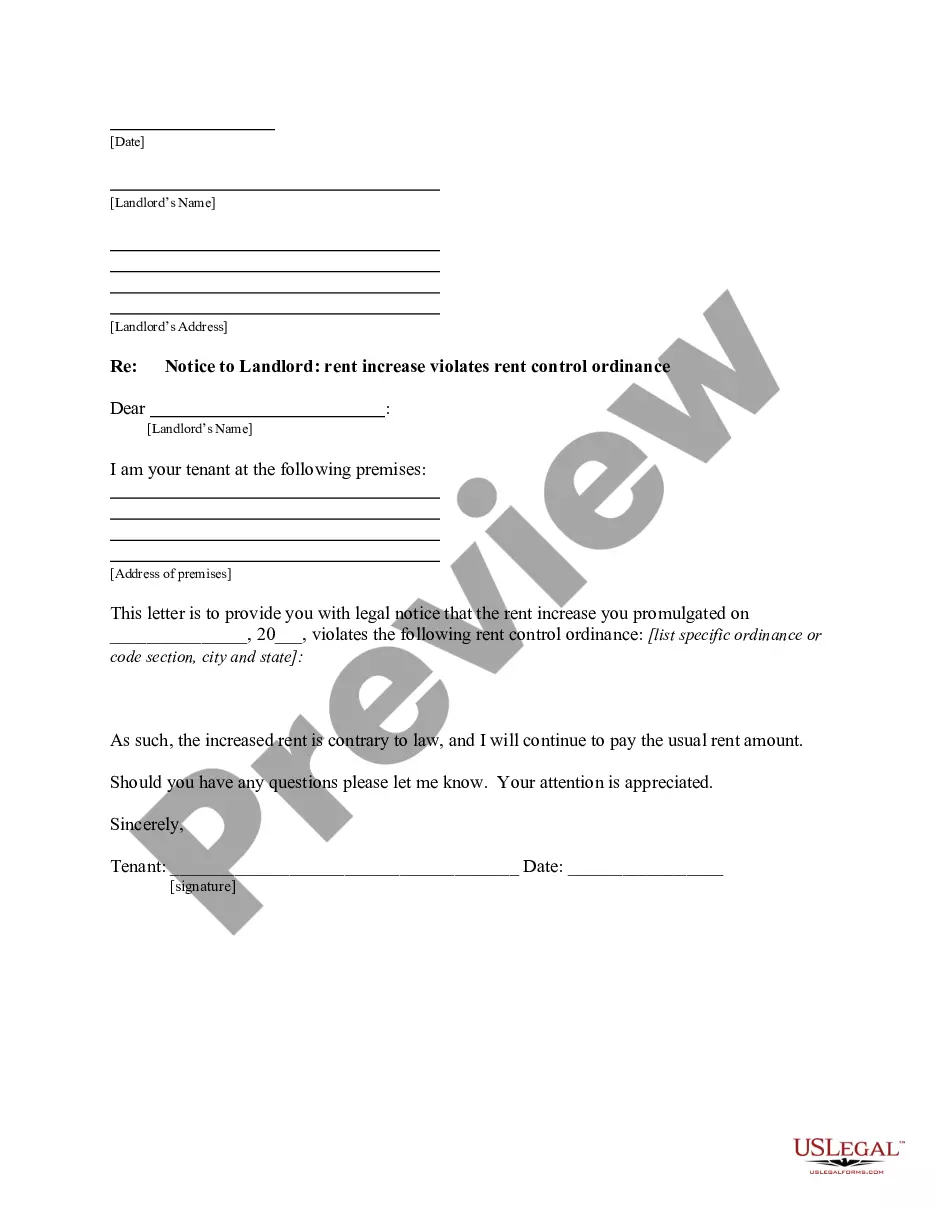
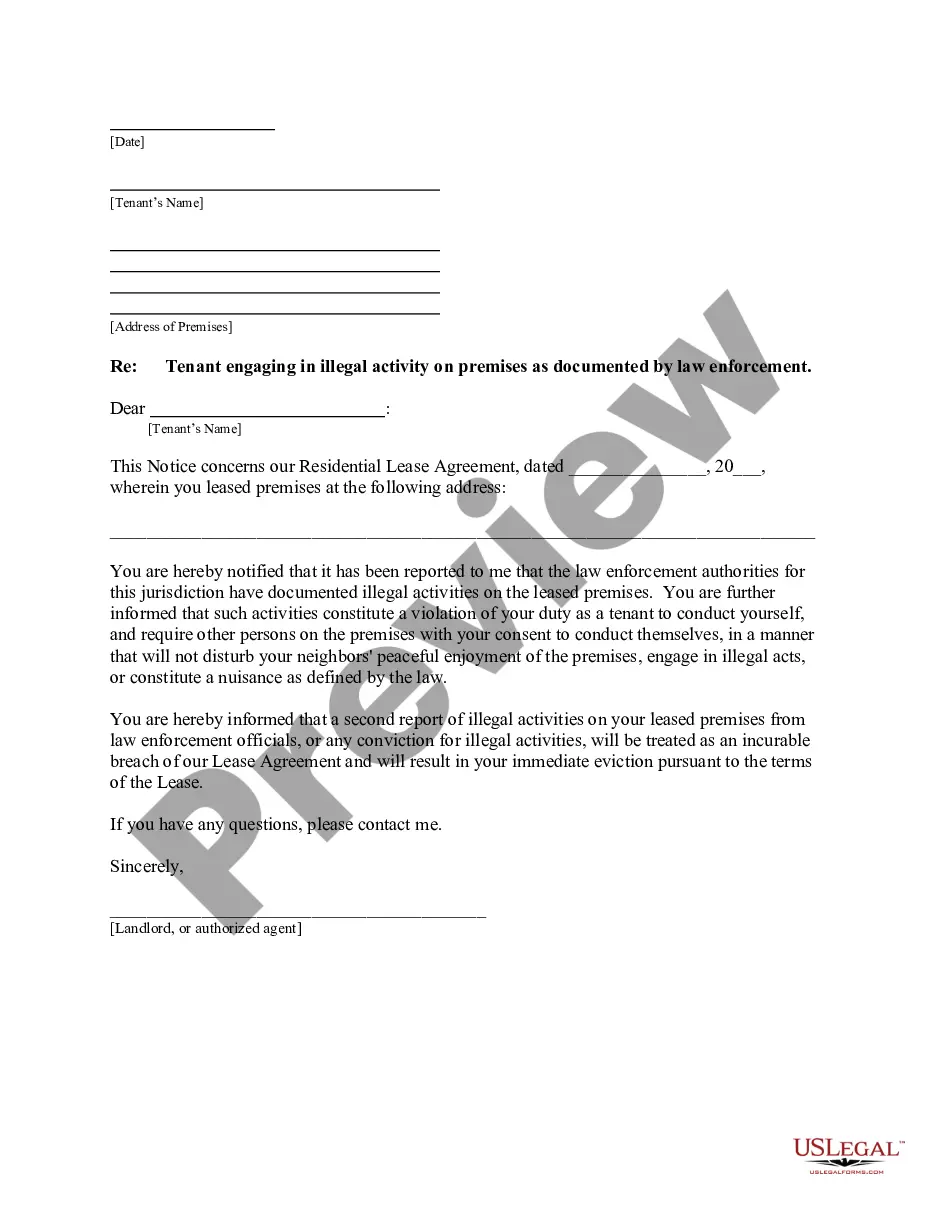
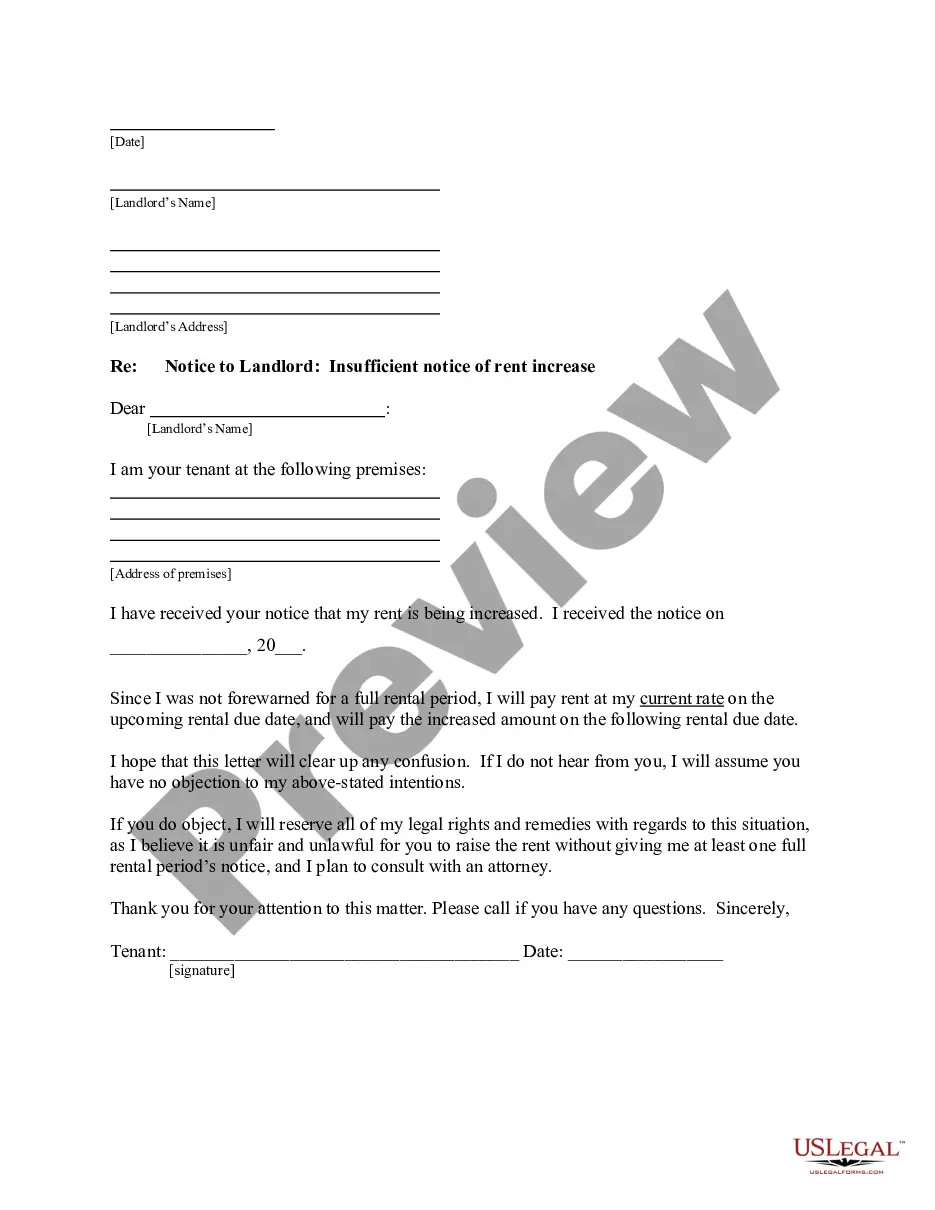
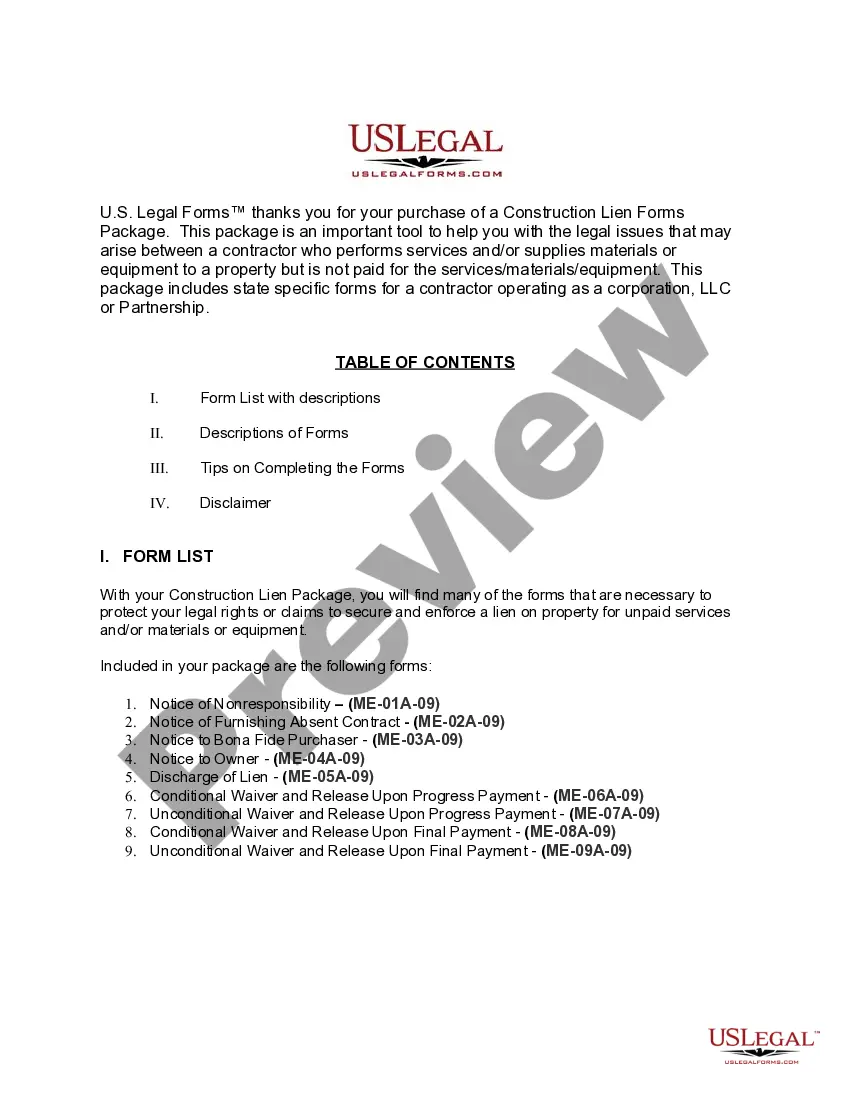
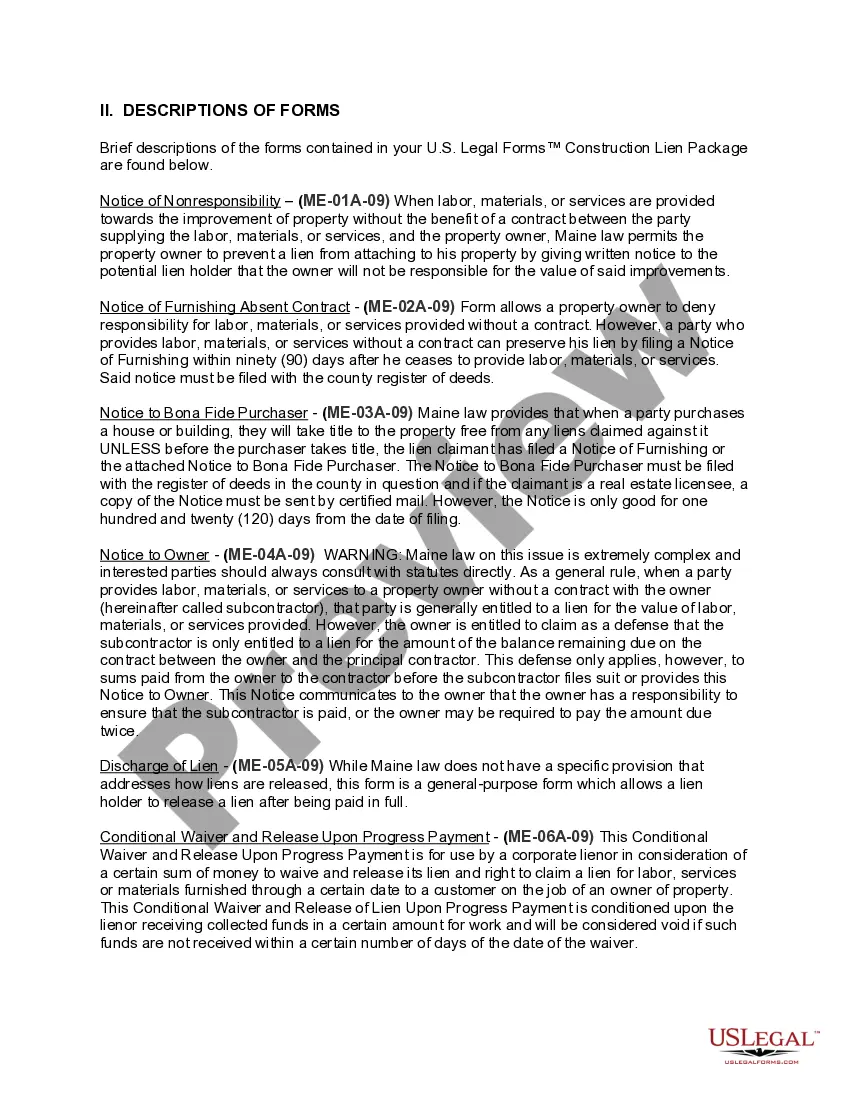
- Notice of Nonresponsibility - Corporation or LLC
- Notice of Furnishing Absent Contract - Corporation or LLC
- Notice to Bona Fide Purchaser - Corporation or LLC
- Notice to Owner - Corporation or LLC
- Discharge of Lien by Corporation or LLC
- Conditional Waiver and Release Upon Progress Payment - Corporation or LLC
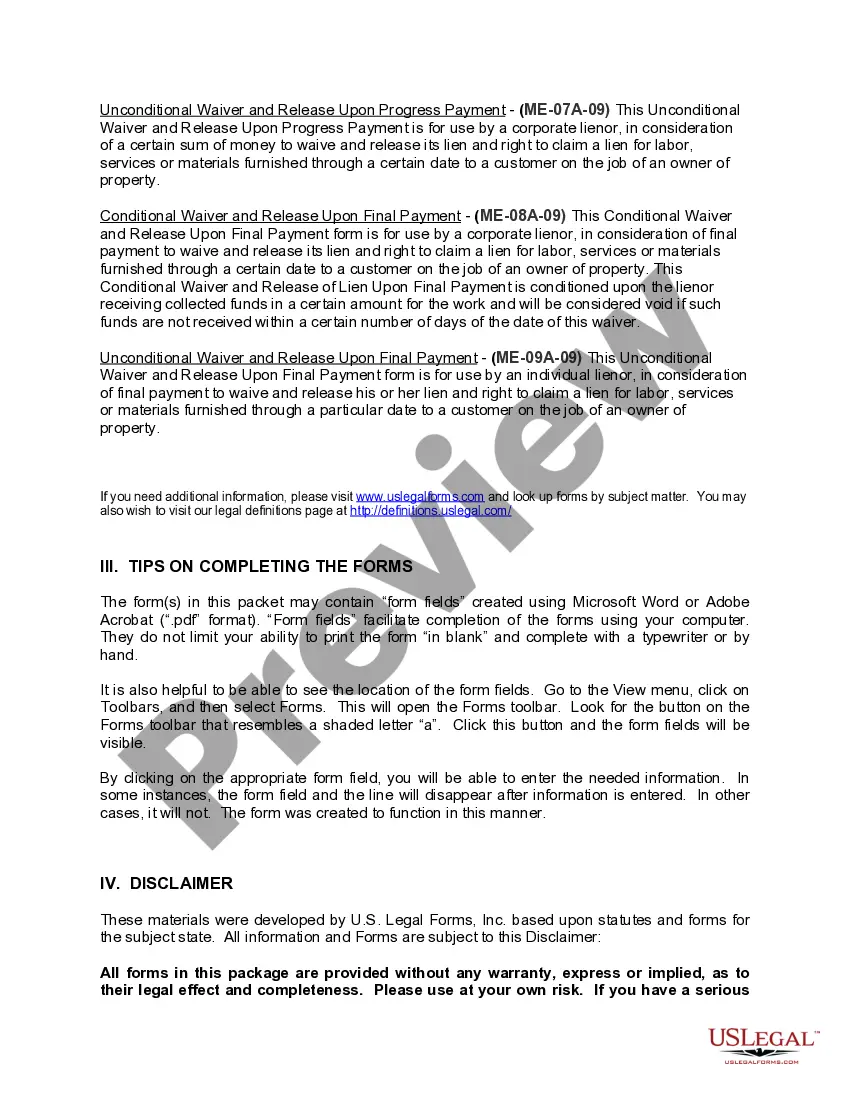
- Unconditional Waiver and Release Upon Progress Payment - Corporation or LLC
- Conditional Waiver and Release Upon Final Payment - Corporation or LLC
- Unconditional Waiver and Release Upon Final Payment - Corporation or LLC
When this form package is needed
This form package is essential when a corporation or LLC has provided labor or materials for a construction project but has not been paid. It should be used to formally secure a mechanic's lien on the property to ensure that the business can legally pursue payment through the lien process.
Who this form package is for
- Corporations or LLCs involved in construction, renovations, or improvements to real estate.
- Contractors, subcontractors, and suppliers who are seeking to recover unpaid dues.
- Business owners who need to understand the lien process in Maine.
How to prepare this document
- Review the included forms and information provided.
- Identify the necessary parties involved in the lien process.
- Fill out the required forms, ensuring all information is accurate.
- File the completed forms with the appropriate county register of deeds.
- Keep copies of all submitted documents for your records.
Do documents in this package require notarization?
Notarization is not commonly needed for forms in this package. However, if your state’s laws require it, our notarization service, powered by Notarize, allows you to finalize documents online 24/7 without in-person visits.
Get your form ready online
Our built-in tools help you complete, sign, share, and store your documents in one place.
Make edits, fill in missing information, and update formatting in US Legal Forms—just like you would in MS Word.
Download a copy, print it, send it by email, or mail it via USPS—whatever works best for your next step.
Sign and collect signatures with our SignNow integration. Send to multiple recipients, set reminders, and more. Go Premium to unlock E-Sign.
If this form requires notarization, complete it online through a secure video call—no need to meet a notary in person or wait for an appointment.
We protect your documents and personal data by following strict security and privacy standards.

Make edits, fill in missing information, and update formatting in US Legal Forms—just like you would in MS Word.

Download a copy, print it, send it by email, or mail it via USPS—whatever works best for your next step.

Sign and collect signatures with our SignNow integration. Send to multiple recipients, set reminders, and more. Go Premium to unlock E-Sign.

If this form requires notarization, complete it online through a secure video call—no need to meet a notary in person or wait for an appointment.

We protect your documents and personal data by following strict security and privacy standards.
Common mistakes
- Failing to file the Notice of Furnishing within 90 days after ceasing to provide services.
- Not notifying the bona fide purchaser before they take title to the property.
- Neglecting to keep copies of all filed documents, which can be critical for future disputes.
Benefits of completing this package online
- Convenient access to all necessary forms for completing the lien process.
- Edit and fill out forms digitally, ensuring clarity and accuracy.
- Reliability of forms drafted by licensed attorneys familiar with Maine laws.
Legal use & context
- Using these forms helps ensure your lien is enforceable under Maine law.
- Failure to follow the correct procedures can result in the loss of your lien rights.
- Consulting an attorney for complex situations is advisable for best practices.
Key takeaways
- This form package is vital for corporations and LLCs seeking to secure payment for construction work in Maine.
- Timely filing of forms is crucial for maintaining lien rights.
- Utilizing the package online simplifies the completion and filing processes.
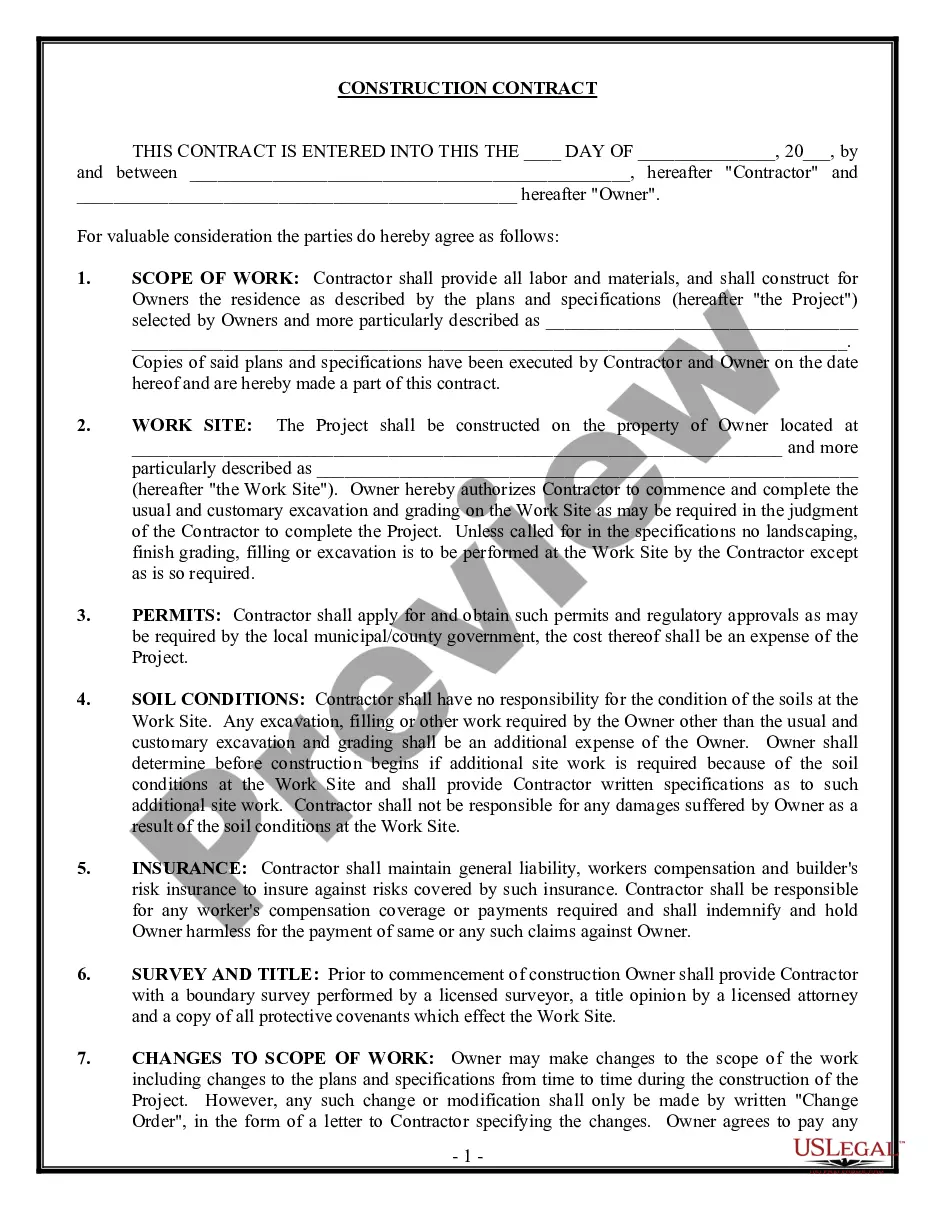
Looking for another form?

Form popularity
FAQ
Even though these states may permit project participants to secure lien rights and claim a mechanics lien even without a written contract, it is generally best practice to have a signed written contract for work provided.
Who you are. The services or materials you provided. The last date you provided the services or materials. How much payment should be. The date on which you will file a lien if you do not receive payment. How the debtor should pay.
A mechanics lien is a legal claim for unpaid construction work. When a contractor files a mechanics lien, they gain a security interest in the home or property. The lien clouds the real estate title, making it difficult for the homeowner or property owner to sell it until the lien claim is paid.
Be sure to include the following pieces of information in your lien: The name, company name and address (including county) of the property owner against whom your lien is filed; the same information about the delinquent client, if different; the beginning and ending dates of the unpaid service; the due date for payment
A construction lien is a claim made against a property by a contractor or subcontractor who has not been paid for work done on that property.A construction lien makes it difficult or impossible to sell or refinance a property because it makes its title unclear.
Parties that did not contract directly with the property owner must file the mechanics lien claim in the county registry of deeds within 90 days of last furnishing materials or labor to the project, as well as filing the lien like the general contractor (file a complaint in the Superior Court or District Court) within
Who you are. The services or materials you provided. The last date you provided the services or materials. How much payment should be. The date on which you will file a lien if you do not receive payment. How the debtor should pay.
While they don't require lien filings to be notarized, they do require a lien filer to jump through various other hoops that, if not done properly, might cause your filing to be rejected or invalidated: Delaware.