Provisional Patent Application for Software Example
Understanding this form
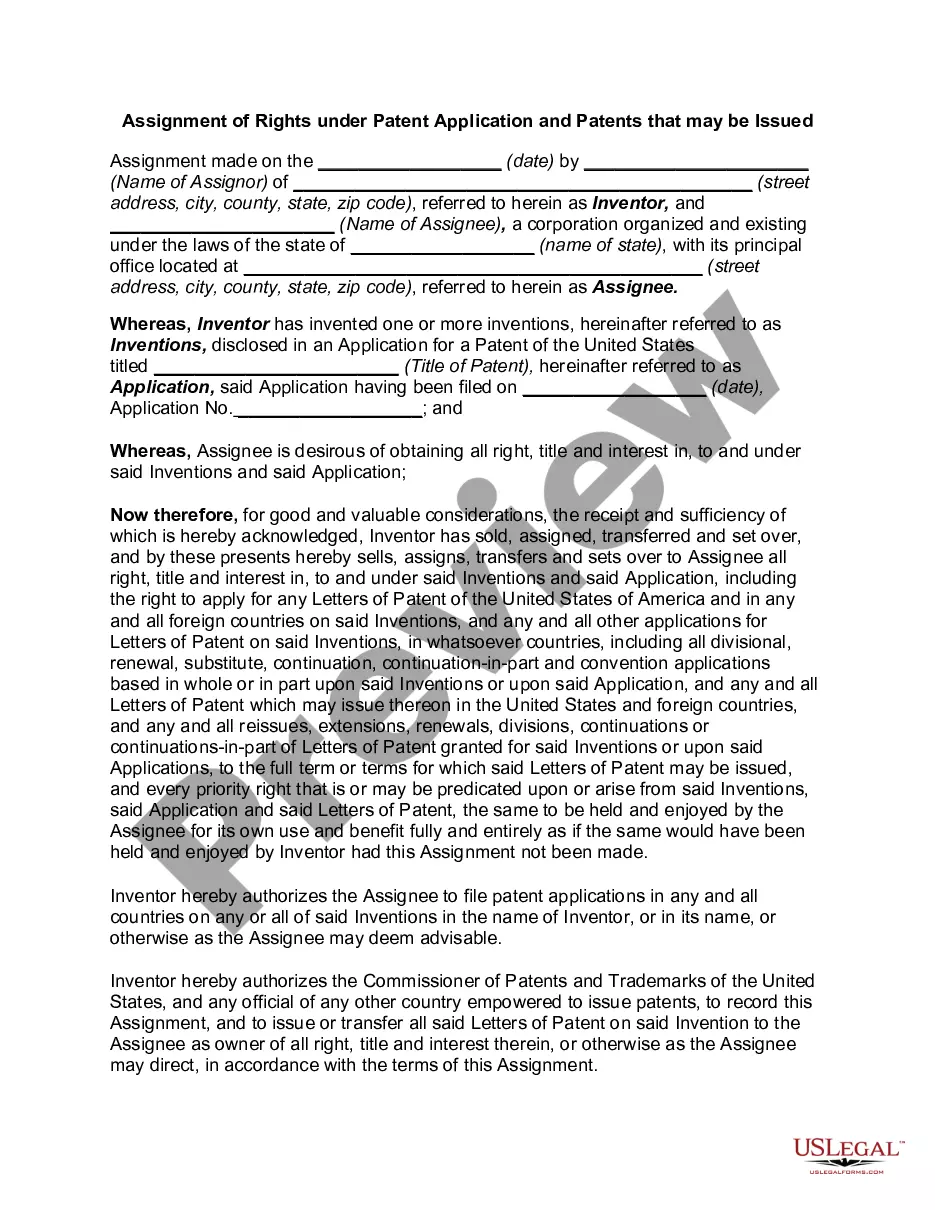
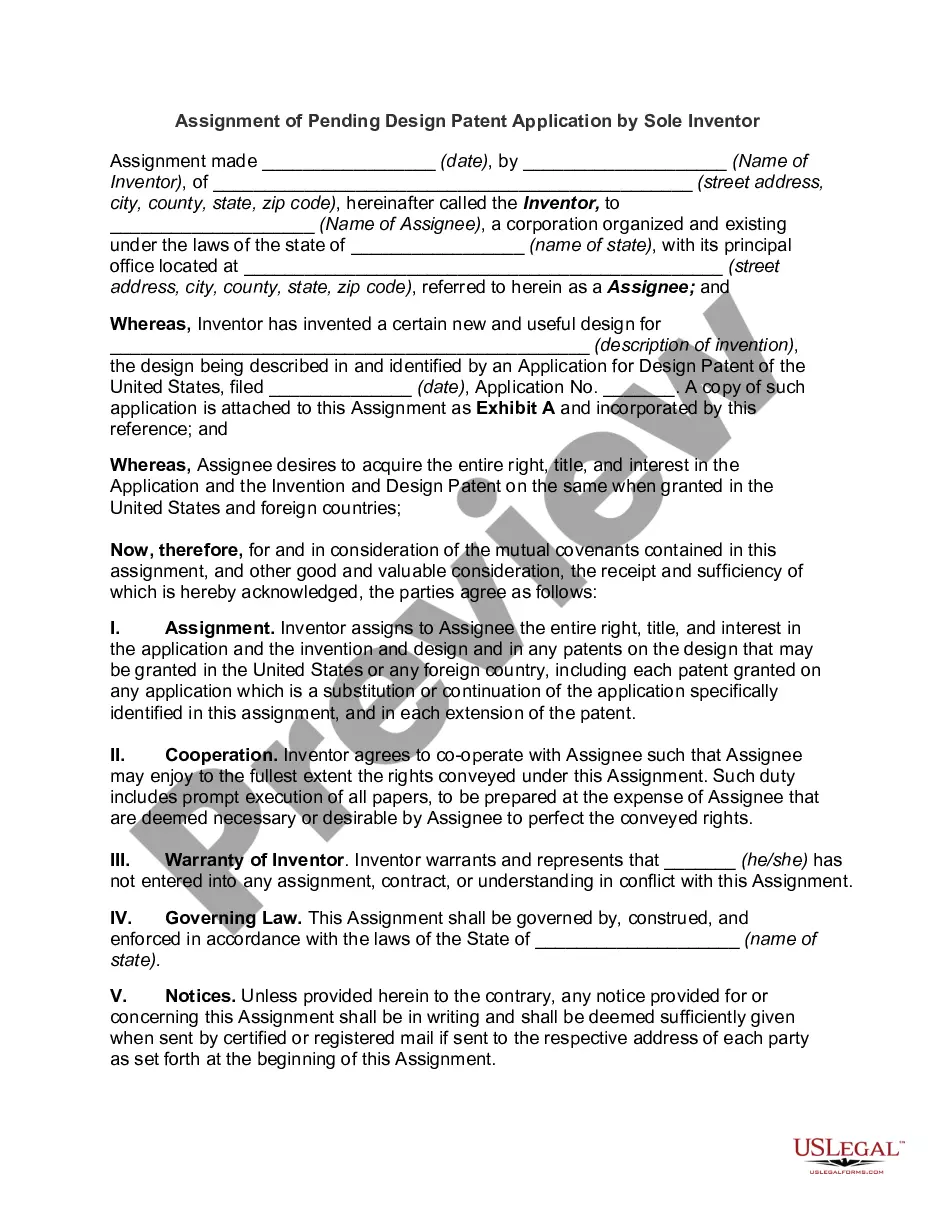
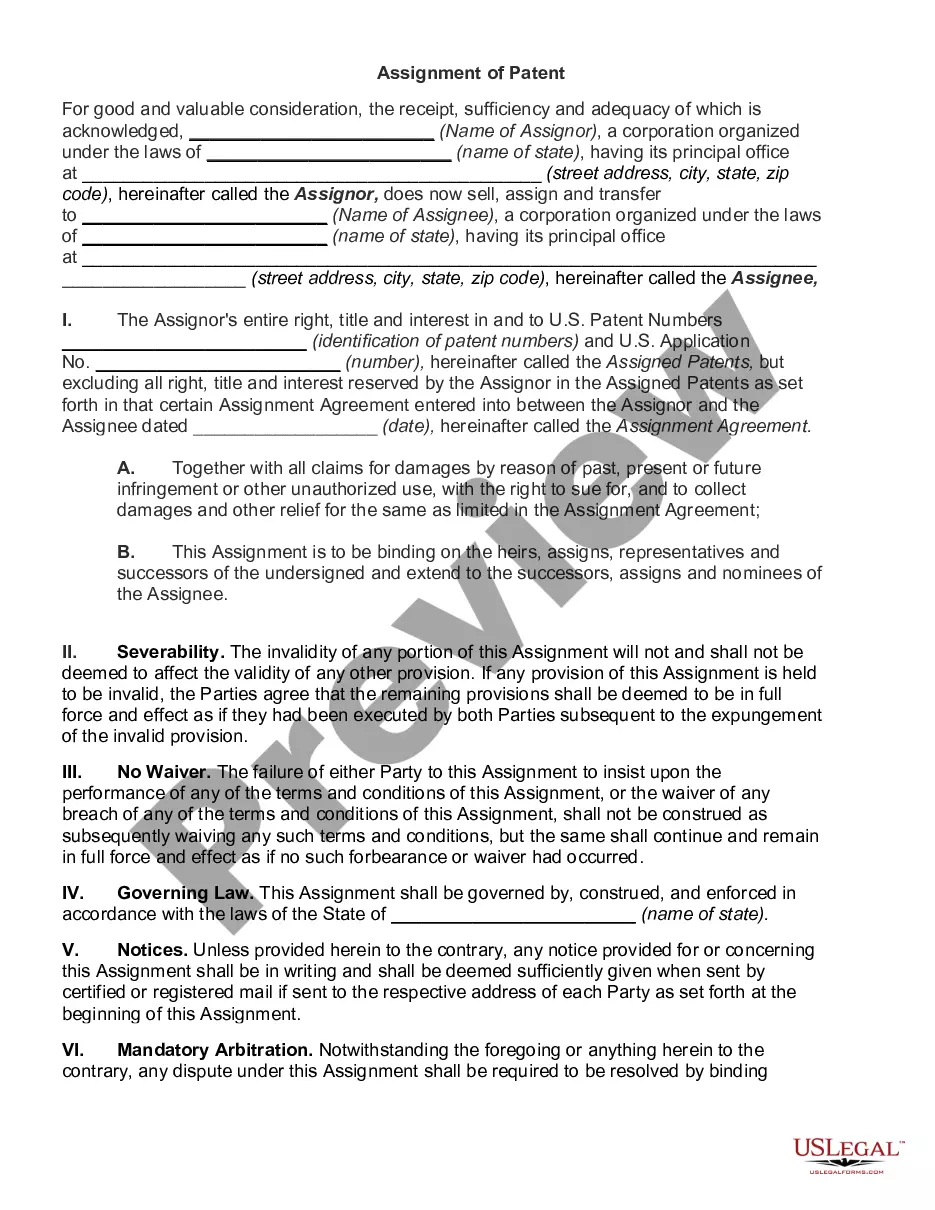
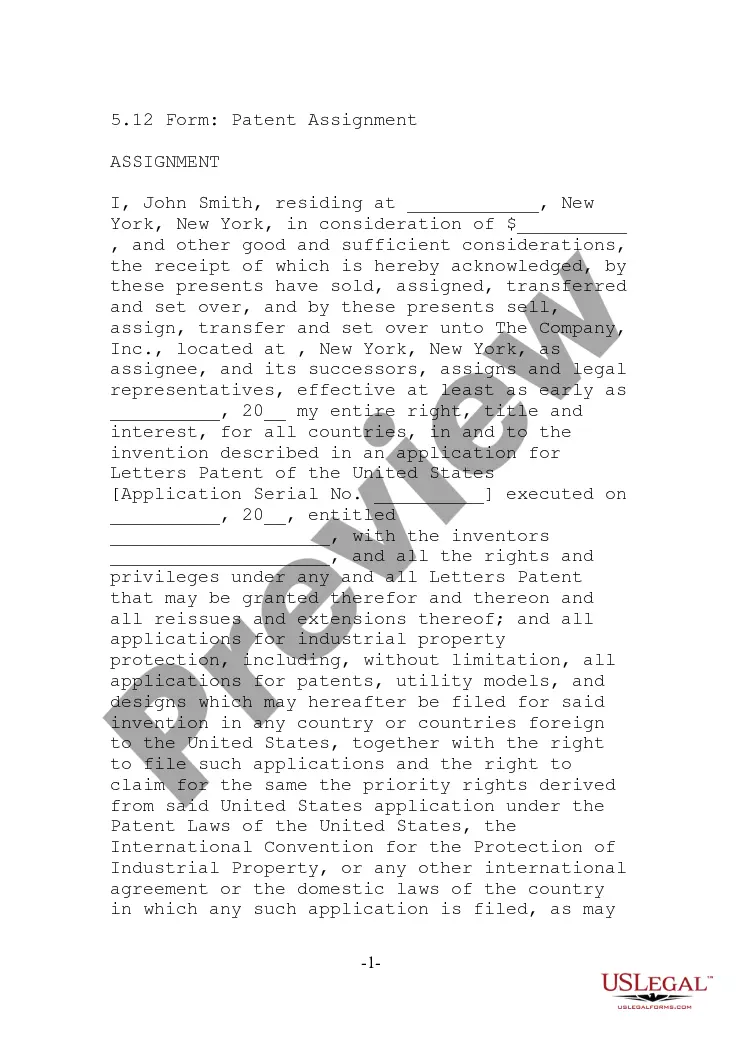
The Provisional Patent Application for Software Example is a legal document that allows inventors to secure their rights in an invention while filing for a patent. This form specifically addresses the assignment of rights from the inventor (the Assignor) to a corporation or individual (the Assignee), covering any inventions detailed in the patent application. Unlike a full patent application, a provisional application does not require formal claims or prior art searches, making it a simpler and quicker pathway for inventors to establish a priority date for their inventions.
Key components of this form
- Date of assignment
- Name and address of the Assignor (the inventor)
- Name and address of the Assignee (the entity receiving rights)
- Title of the patent application
- Date of filing the patent application
- Details on rights being assigned, including global patent rights
Common use cases
This form should be used when an inventor seeks to transfer their rights to a patent application to another party. It is particularly relevant in situations where an inventor is collaborating with a company or a partner that will develop and commercialize the invention. Using this form ensures that the Assignee has the legal authority to further the patent application and protect the invention.
Who should use this form
This form is intended for:
- Inventors who wish to assign their patent rights to a corporation or individual
- Businesses that require formal assignment of rights from inventors to pursue patent protection
- Individuals developing software inventions who need to secure patent rights for future deployment or commercialization
Instructions for completing this form
- Enter the date of the assignment at the top of the form.
- Fill in the full name and address of the Assignor (the inventor).
- Provide the name and address of the Assignee, with the state of incorporation.
- Specify the title of the patent application and the filing date.
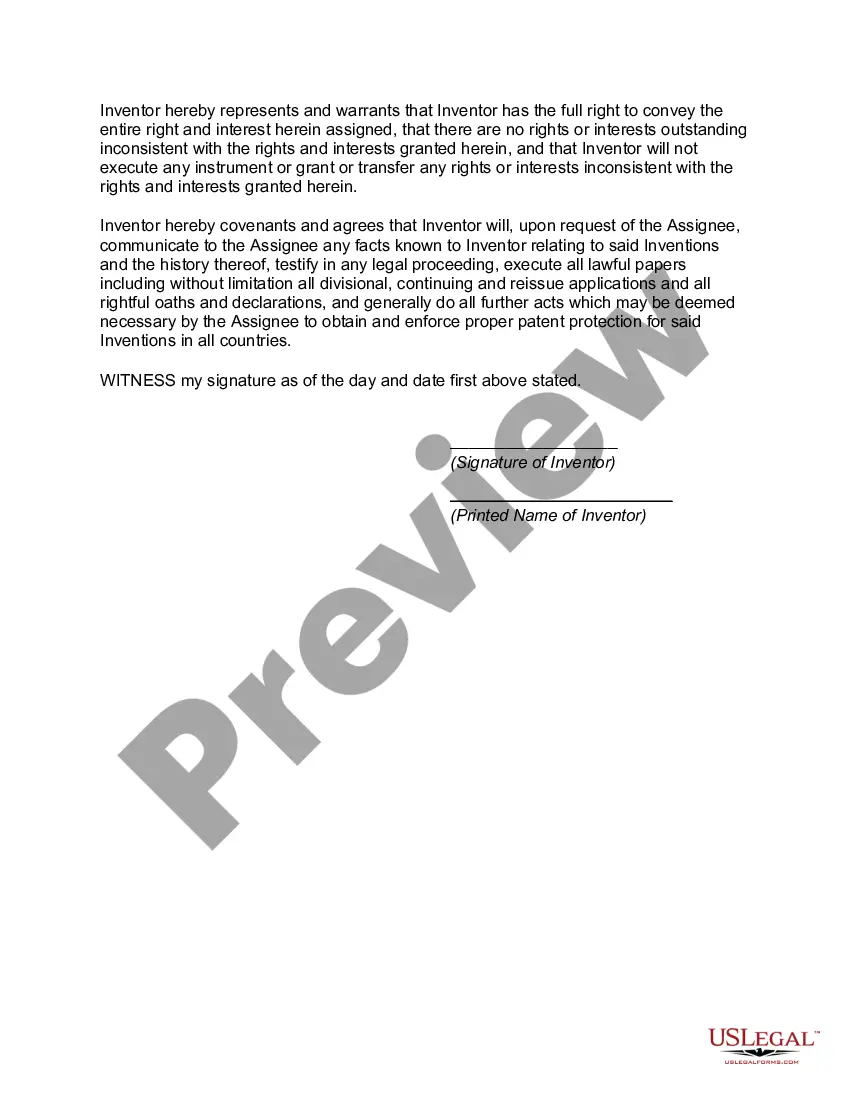
- Sign the form as the Assignor to validate the assignment.
Notarization guidance
This form does not typically require notarization unless specified by local law. However, notarization may enhance its legal validity and provide an official record of the assignment.
Get your form ready online
Our built-in tools help you complete, sign, share, and store your documents in one place.
Make edits, fill in missing information, and update formatting in US Legal Forms—just like you would in MS Word.
Download a copy, print it, send it by email, or mail it via USPS—whatever works best for your next step.
Sign and collect signatures with our SignNow integration. Send to multiple recipients, set reminders, and more. Go Premium to unlock E-Sign.
If this form requires notarization, complete it online through a secure video call—no need to meet a notary in person or wait for an appointment.
We protect your documents and personal data by following strict security and privacy standards.

Make edits, fill in missing information, and update formatting in US Legal Forms—just like you would in MS Word.

Download a copy, print it, send it by email, or mail it via USPS—whatever works best for your next step.

Sign and collect signatures with our SignNow integration. Send to multiple recipients, set reminders, and more. Go Premium to unlock E-Sign.

If this form requires notarization, complete it online through a secure video call—no need to meet a notary in person or wait for an appointment.

We protect your documents and personal data by following strict security and privacy standards.
Common mistakes to avoid
- Leaving fields incomplete, especially names and addresses.
- Not providing the correct title or filing date of the patent application.
- Failing to sign the document, which may invalidate the assignment.
Benefits of completing this form online
- Easy access to download and complete the form from anywhere.
- Editable fields allow for customization without needing to start from scratch.
- Ensures you have an accurate and legally compliant document prepared by professionals.
Looking for another form?
Form popularity
FAQ
Title of the invention. Names of the inventors. A short abstract (150 words maximum) Specification describing how to make and use the invention, including the best mode contemplated by the inventor at the time of the invention. Claims (not required for a provisional application)
Plan the document before writing anything, making an outline and listing all points that need to be covered. Use a readable typeface such as Times New Roman. Divide the application into sections, and then divide those sections into smaller sections if necessary.
A written description of the invention. Any necessary drawings. The USPTO filing fee.
In the United States software is patentable, and recent decisions from the Federal Circuit are providing new hope that hasn't existed in the industry for years. We typically refer to such inventions as computer implemented processes, but in the end it is software that is being protected.
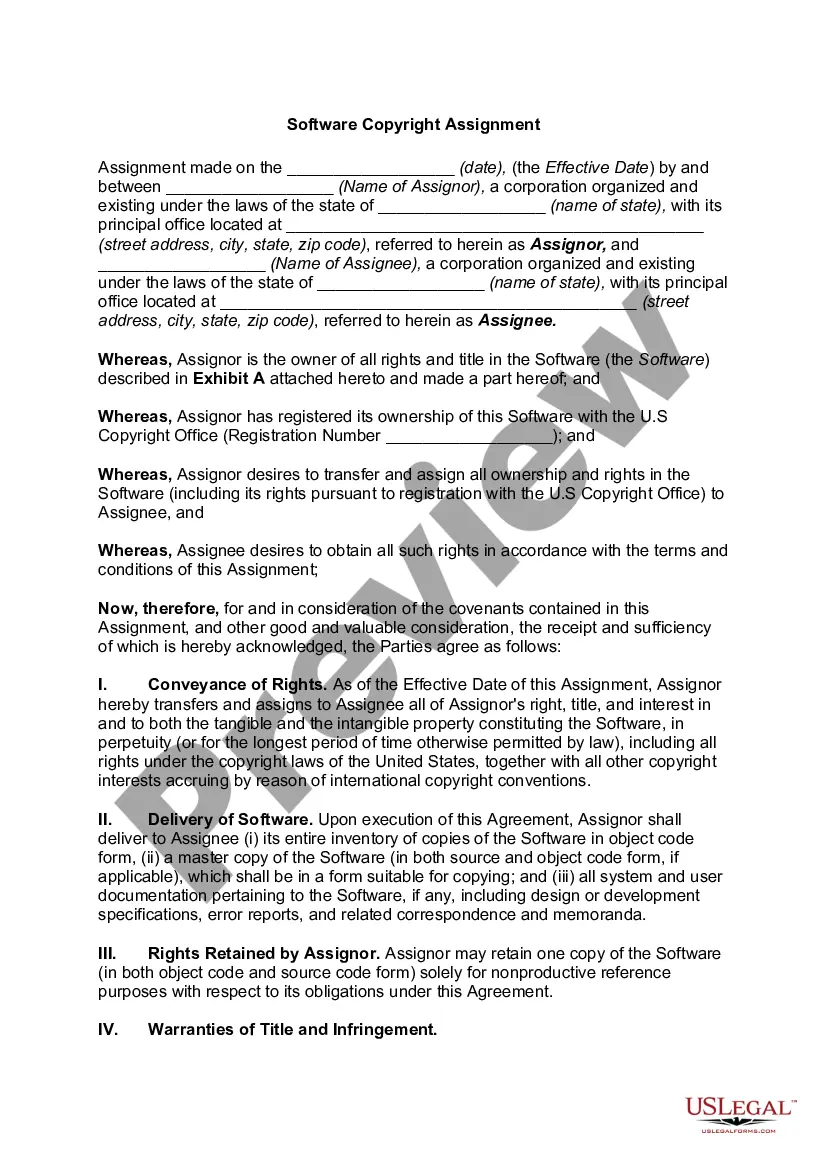
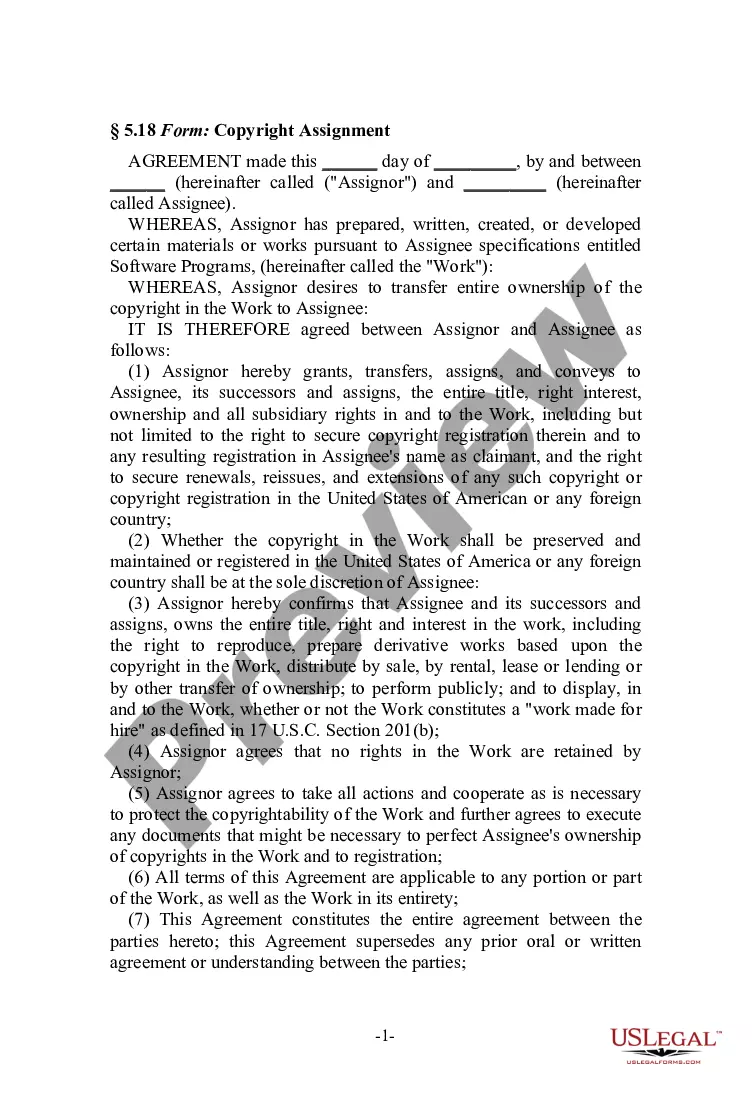
Computer software or programs are instructions that are executed by a computer. Software is protected under copyright law and the inventions related to software are protected under patent law.
The parts of a provisional patent application should be: The specification (the written description of your invention) The figures (show what your invention looks like) The transmittal letter or cover sheet (this shows who the inventors are and who is filing the application)
A software patent may not be worth your time or money, but there are other ways to protect yourself.Although patents for things other than software are legitimate and have a clear purpose, software patents feel like a joke.
TL;DR. Software based inventions are still patentable in the United States. But, in order to patent eligible, software patent applications must meet certain technical requirements, and must be written very carefully.
You can't patent an existing or old product. However, you can patent a new use for an existing or old product as long as the new use is nonobvious.The product is old, and you can't get a patent on the product. But, you can get a patent on the new method of using the old product.