INTRODUCTION
Understanding this form
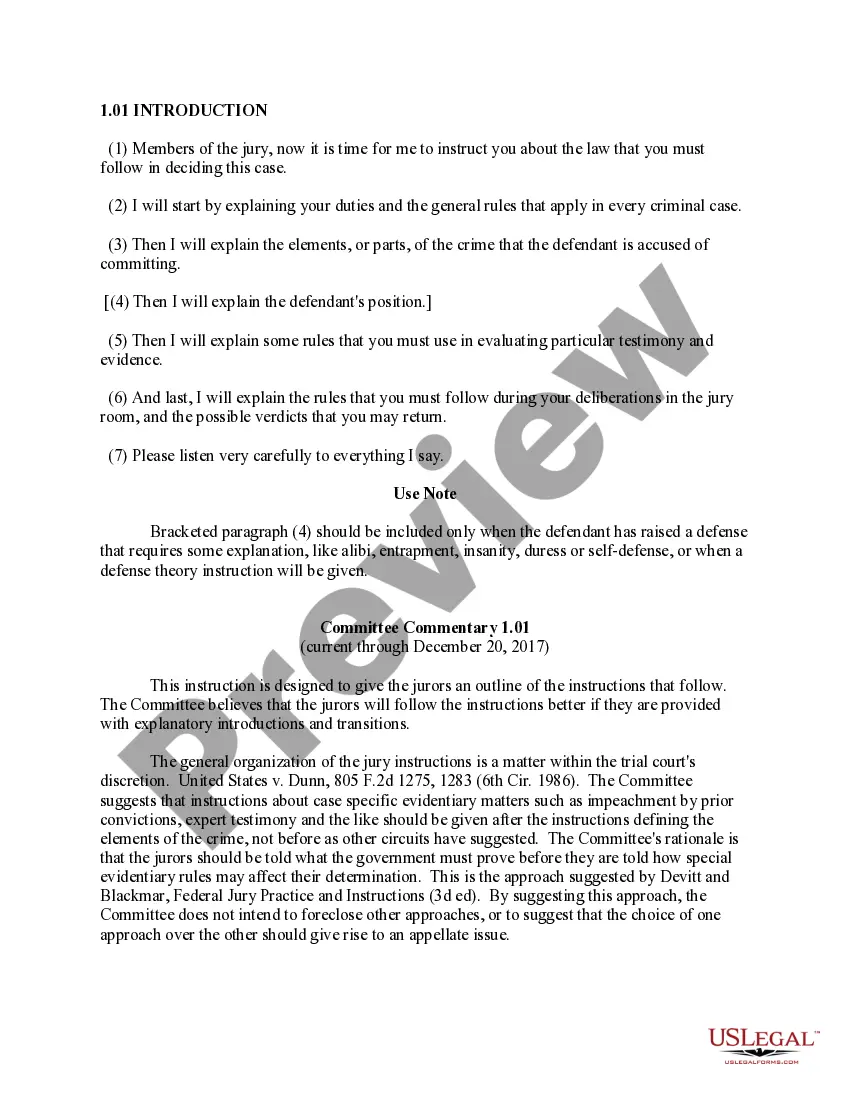
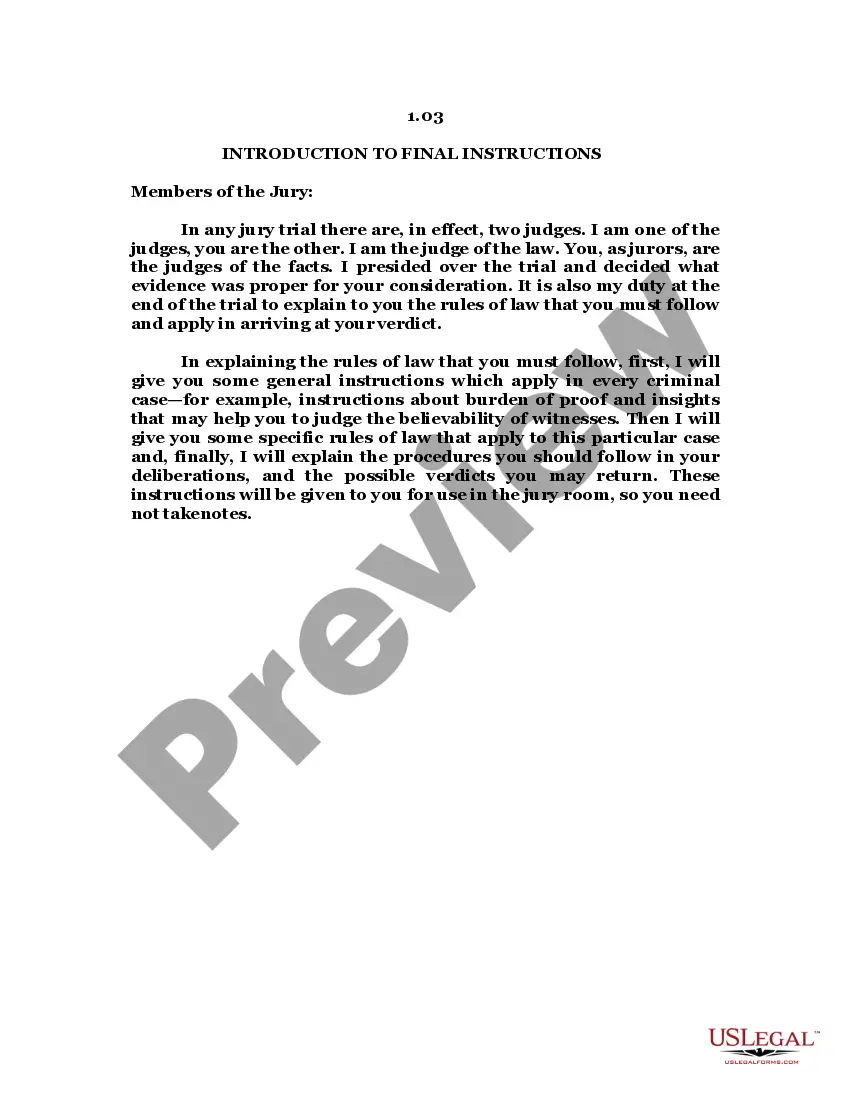
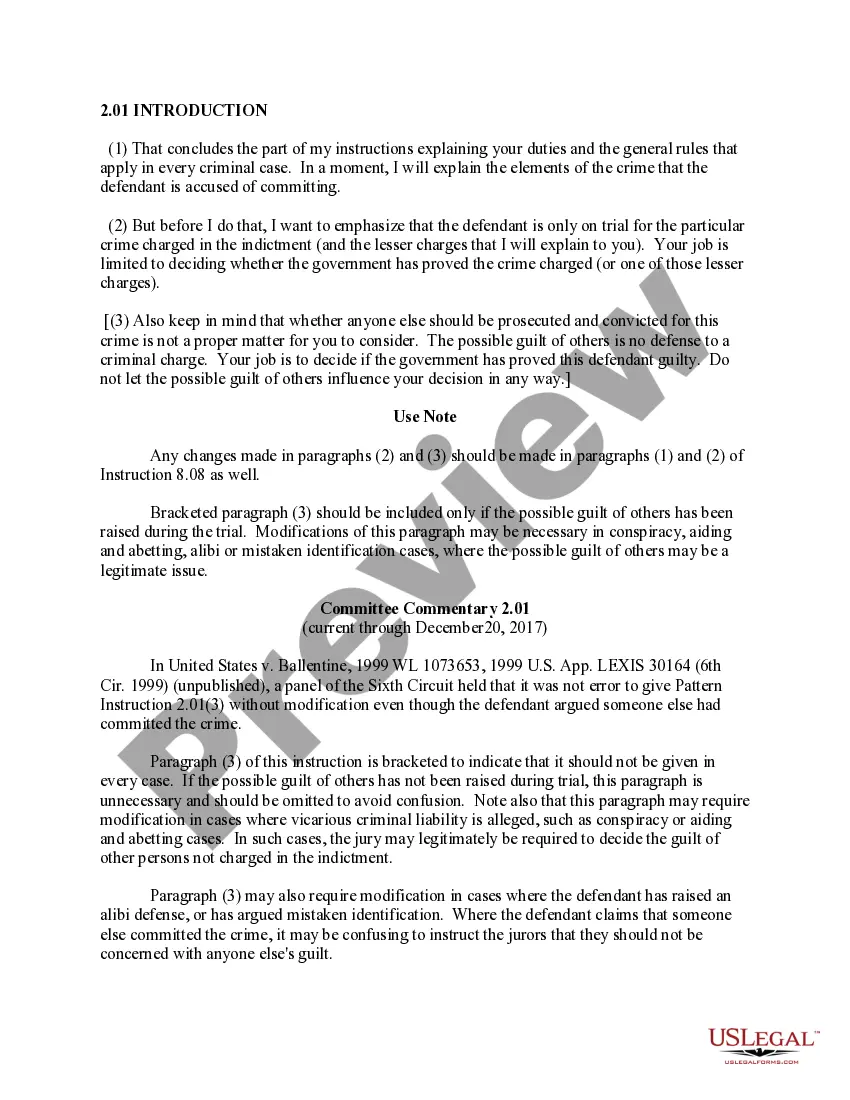
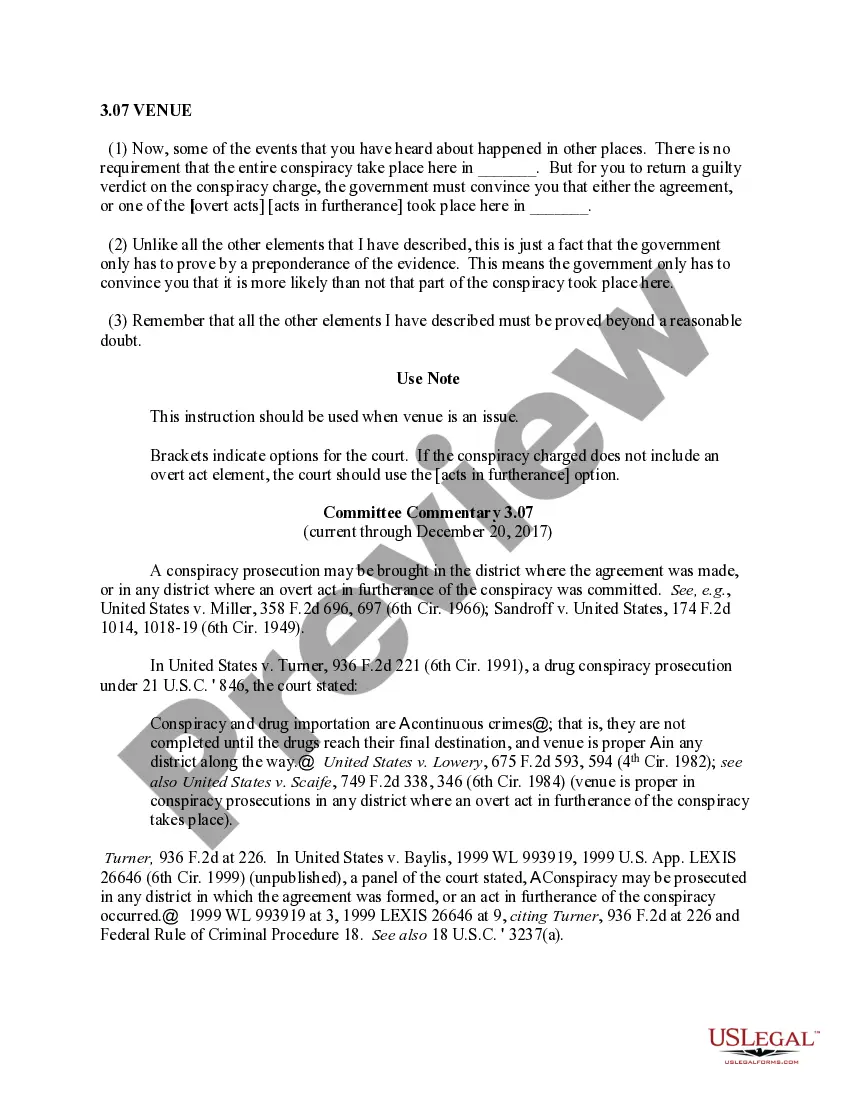
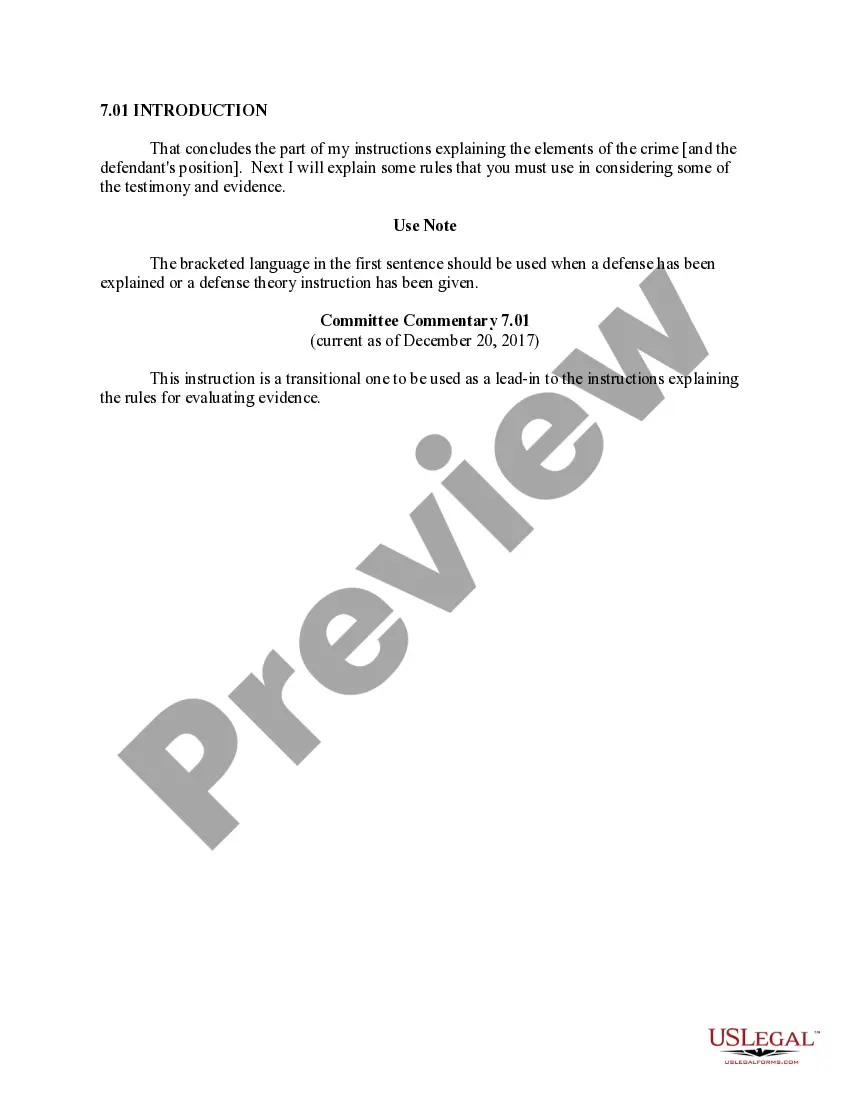
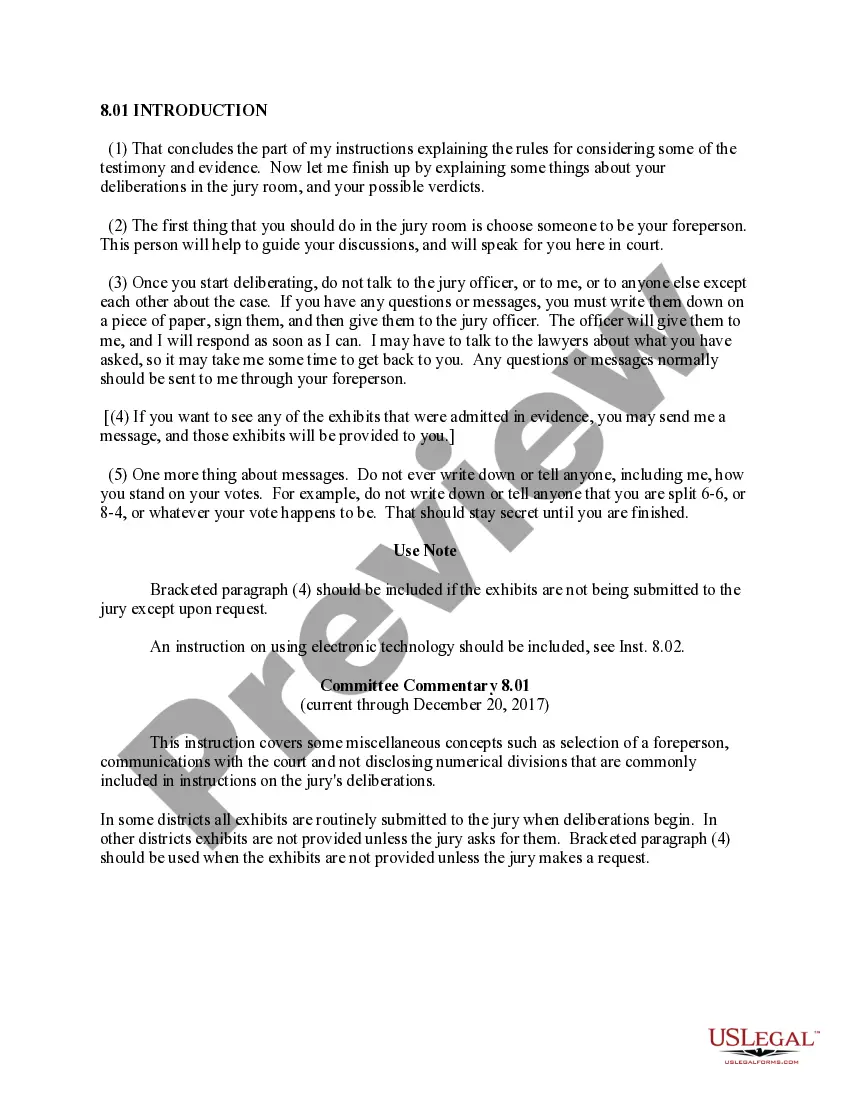
This introduction form serves as a foundational guide for jurors in a criminal case, outlining the laws and duties they must follow in their decision-making process. It differs from other legal forms in that it specifically addresses the jury's responsibilities and the legal principles applicable to the case at hand, ensuring that jurors have a clear understanding of the trial process and the elements of the crime being considered.
Main sections of this form
- Overview of jurors' duties and responsibilities.
- Explanation of the general rules applicable to all criminal cases.
- Breakdown of the elements of the crime the defendant is accused of.
- Details regarding the defendant's position, when applicable.
- Guidelines for evaluating testimony and evidence.
- Instructions for deliberation in the jury room and returning a verdict.

When to use this document
This form is used during criminal trials to instruct jurors on the legal standards they must apply in their deliberations. It is particularly utilized when the jury is asked to consider their duties, evaluate specific defenses, and understand the framework for reaching a verdict.
Who can use this document
- Judges presiding over criminal trials.
- Legal professionals involved in jury instruction.
- Jurors serving on a criminal case.
Instructions for completing this form
- Begin with a clear introduction to the jurors about their role in the case.
- Outline the general rules of law applicable to the trial.
- Detail the essential elements of the alleged crime.
- If applicable, explain the defendant's position and any defenses being presented.
- Provide guidelines for evaluating evidence presented during the trial.
- Conclude with instructions for jury deliberation and the process for reaching a verdict.
Does this form need to be notarized?
This form does not typically require notarization to be legally valid. However, some jurisdictions or document types may still require it. US Legal Forms provides secure online notarization powered by Notarize, available 24/7 for added convenience.
Get your form ready online
Our built-in tools help you complete, sign, share, and store your documents in one place.
Make edits, fill in missing information, and update formatting in US Legal Forms—just like you would in MS Word.
Download a copy, print it, send it by email, or mail it via USPS—whatever works best for your next step.
Sign and collect signatures with our SignNow integration. Send to multiple recipients, set reminders, and more. Go Premium to unlock E-Sign.
If this form requires notarization, complete it online through a secure video call—no need to meet a notary in person or wait for an appointment.
We protect your documents and personal data by following strict security and privacy standards.

Make edits, fill in missing information, and update formatting in US Legal Forms—just like you would in MS Word.
Download a copy, print it, send it by email, or mail it via USPS—whatever works best for your next step.
Sign and collect signatures with our SignNow integration. Send to multiple recipients, set reminders, and more. Go Premium to unlock E-Sign.

If this form requires notarization, complete it online through a secure video call—no need to meet a notary in person or wait for an appointment.

We protect your documents and personal data by following strict security and privacy standards.
Typical mistakes to avoid
- Neglecting to properly explain the elements of the crime.
- Using overly complex language that jurors may not understand.
- Failing to address specific defenses when they are raised.
Why use this form online
- Convenience of accessing legal forms from anywhere.
- Editability allows for tailoring instructions to specific cases.
- Reliable templates drafted by licensed attorneys ensure accuracy.
Legal use & context
- The introduction form provides crucial guidelines that jurors must follow, enhancing the fairness of the trial.
- It is legally binding as part of the jury instructions given by the judge, establishing the framework for decision-making.
Quick recap
- This form outlines the duties and legal priors for jurors in a criminal trial.
- A clear understanding of the elements of the crime aids in proper deliberation.
- Jurors must be well-informed about evaluation of testimony and evidence.
Looking for another form?
Form popularity
FAQ
Here are a few examples of statements you can use to inform others you are making an introduction: "I would like you to meet..." "It's a pleasure to introduce..." "I would like to introduce..." "I would like to present..."
An introduction is the first paragraph of your paper. The goal of your introduction is to let your reader know the topic of the paper and what points will be made about the topic. The thesis statement that is included in the introduction tells your reader the specific purpose or main argument of your paper.
There are four different ways of writing an introduction to an academic essay. These include; funnel, quotations, dramatic, and the turn-about form.
The three parts of an introduction are typically the hook, the background information or topical sentence, and the thesis statement.
Introduce Yourself Start with a quotation. Open with a relevant stat or fun fact. Start with a fascinating story. Ask your readers an intriguing question. Set the scene.
An introduction should include three things: a hook to interest the reader, some background on the topic so the reader can understand it, and a thesis statement that clearly and quickly summarizes your main point.
The act of introducing or fact of being introduced. a presentation of one person to another or others. a means of presenting a person to another person, group, etc, such as a letter of introduction or reference. a preliminary part, as of a book, speech, etc.