Public Ingress-Egress Easement
Overview of this form
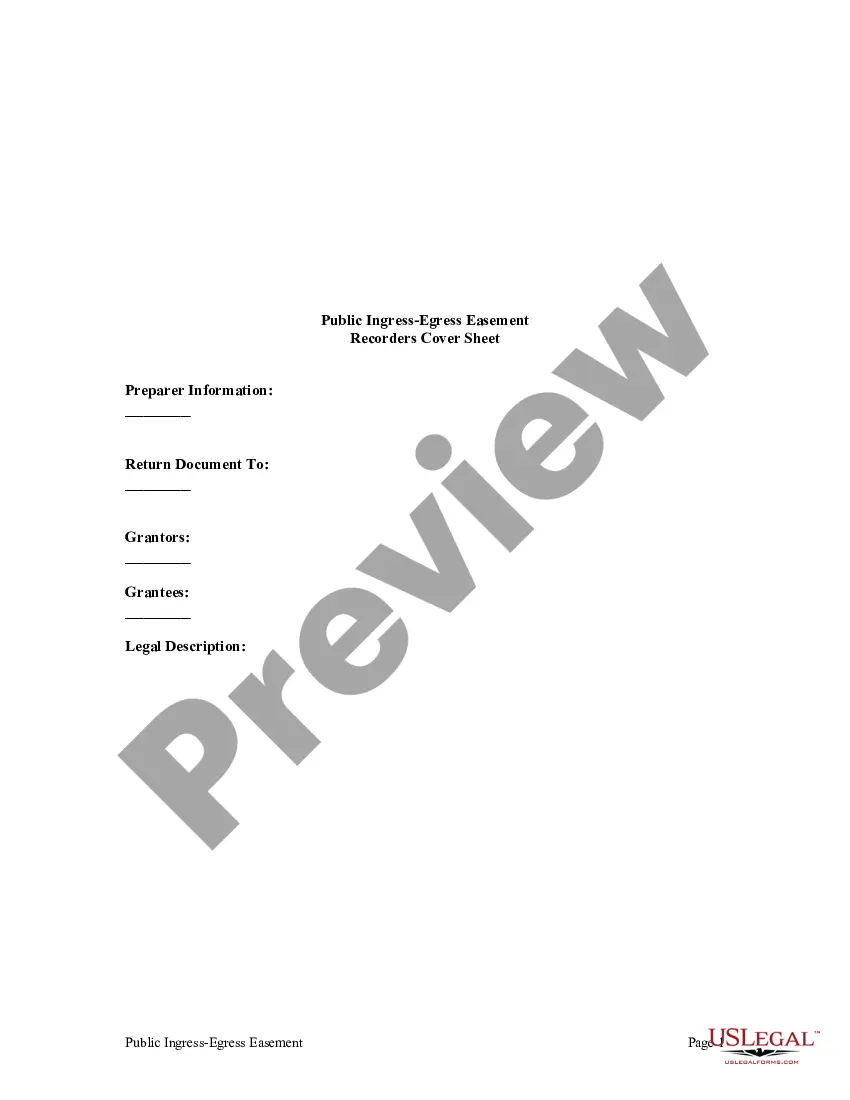
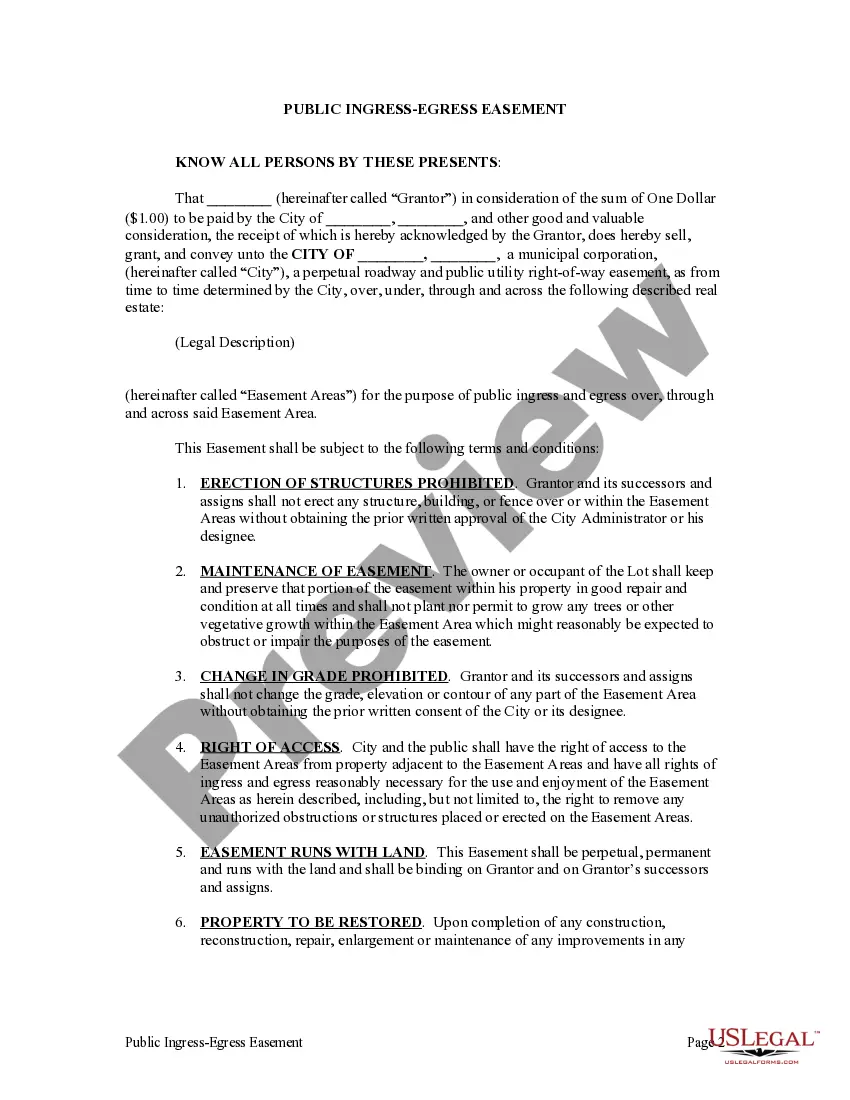
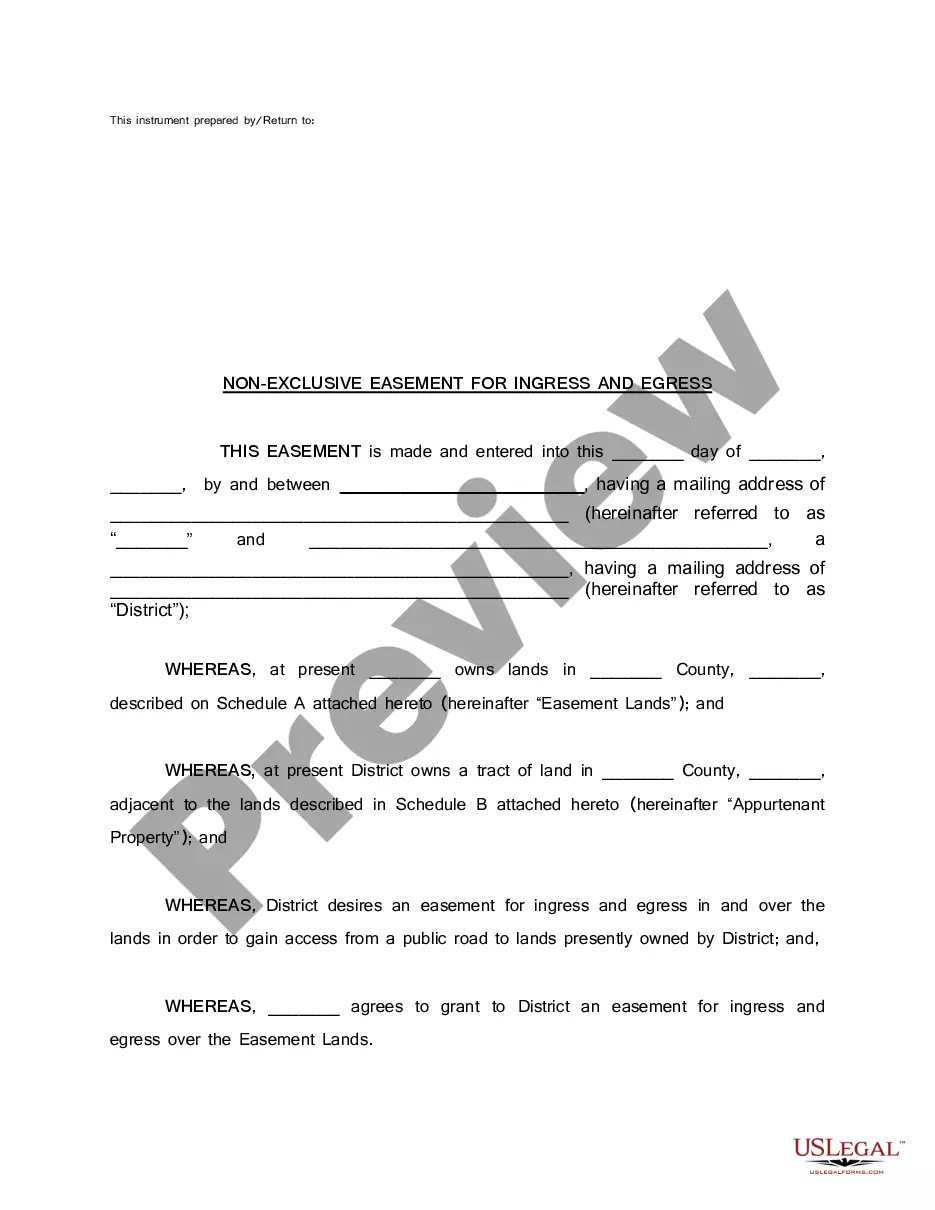
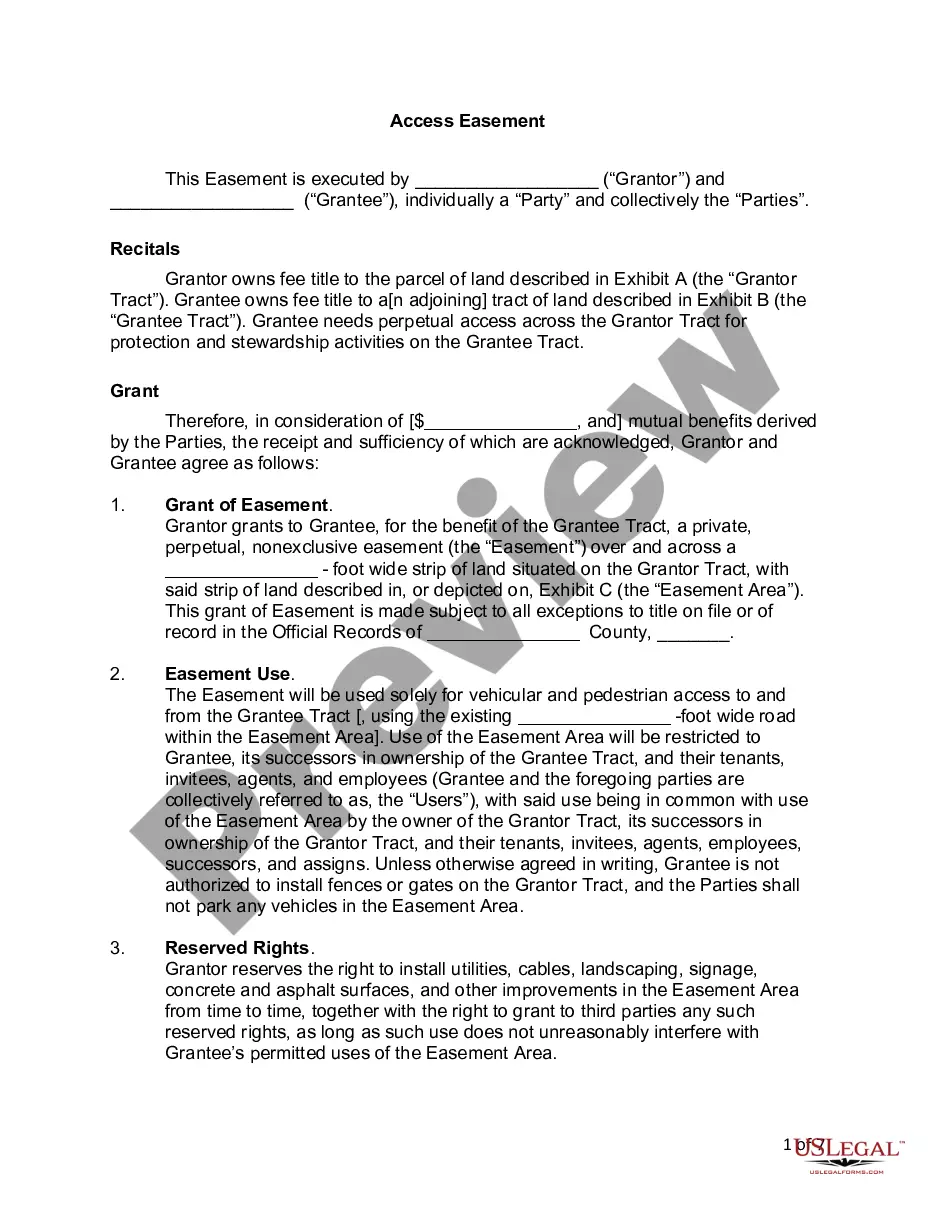
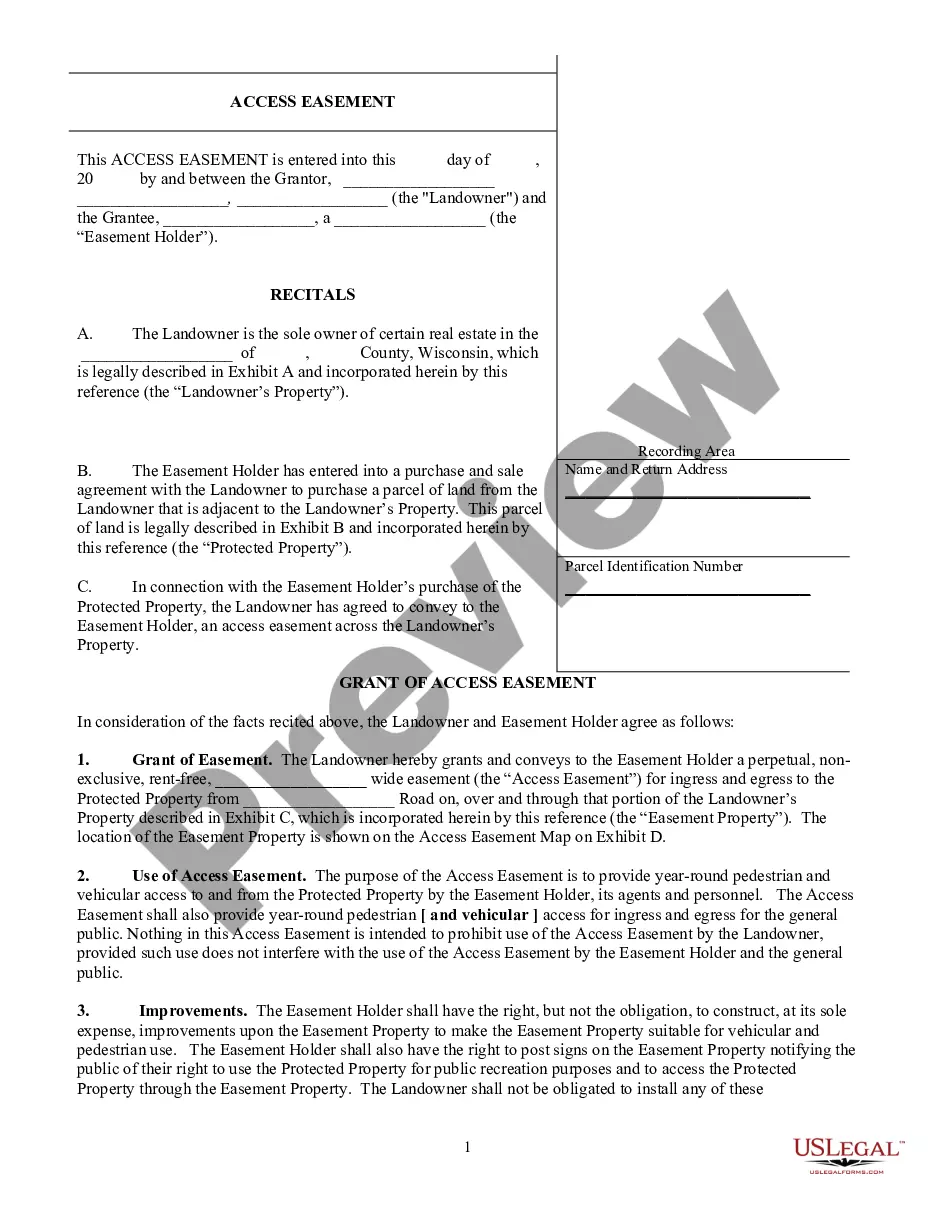
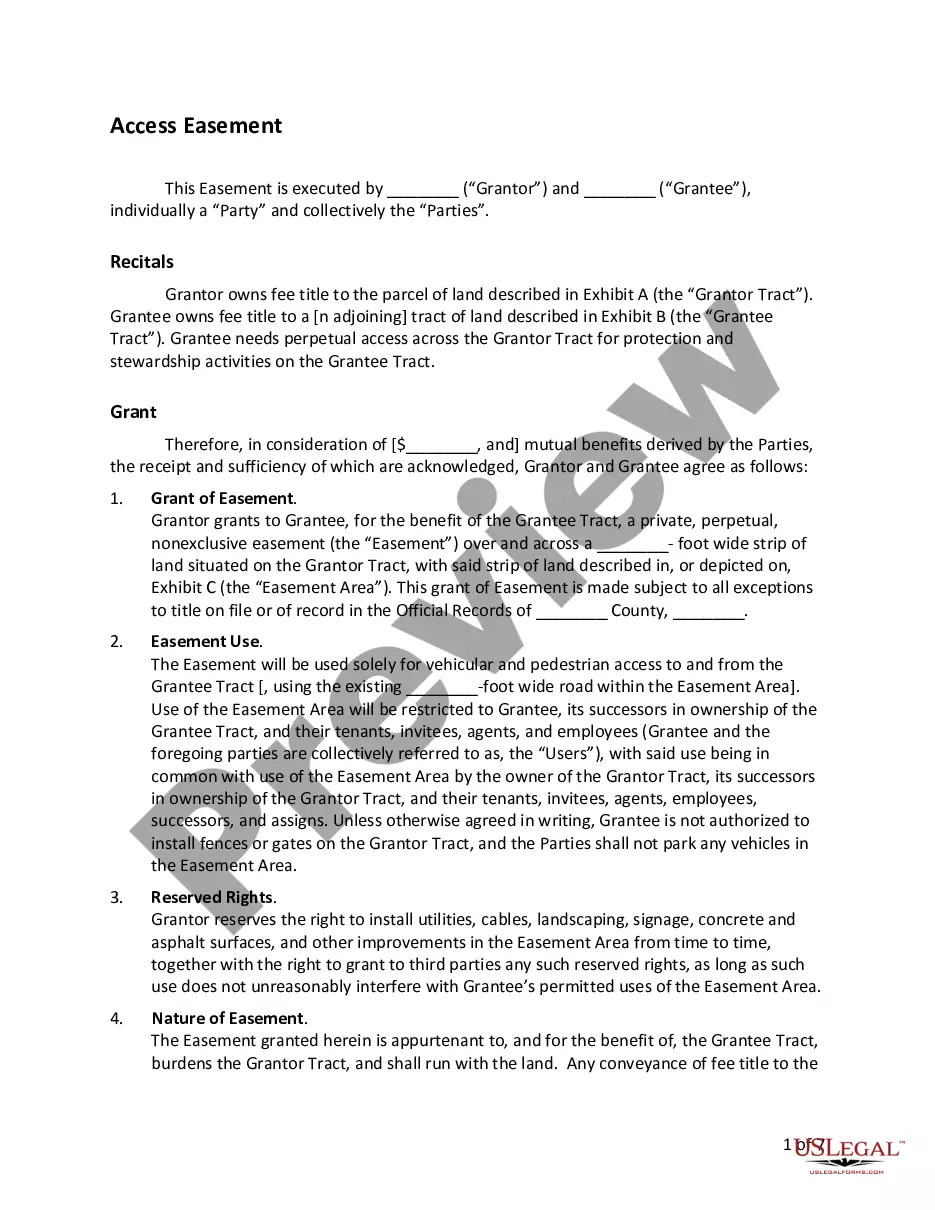
The Public Ingress-Egress Easement is a legal document that grants the right to use a specific tract of land for public access purposes without transferring ownership. This easement allows a city or municipality to establish pathways for public ingress and egress, distinguishing it from other types of easements that might grant more extensive property rights.
Form components explained
- Grantor and Grantee identification fields for parties involved.
- Legal description section outlining the specific property covered by the easement.
- Terms and conditions governing the easement, including restrictions on structures and maintenance responsibilities.
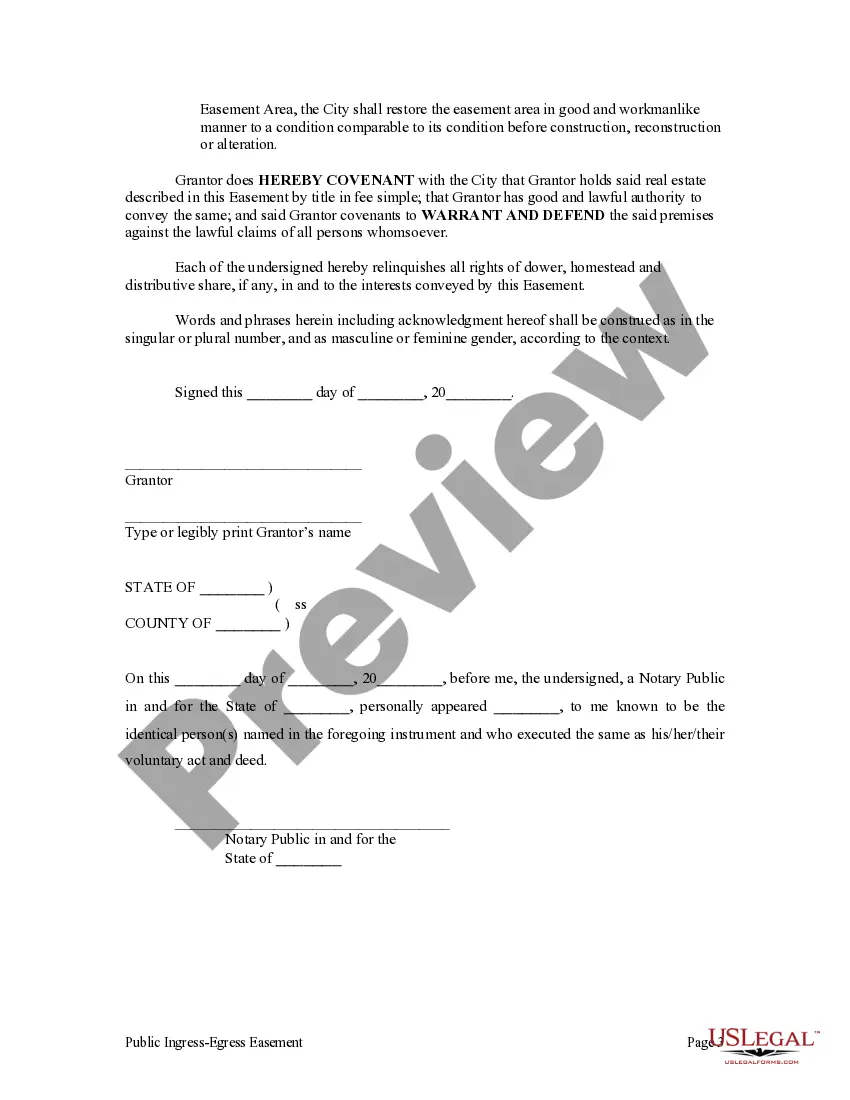
- Provisions for the easement's perpetual nature and its binding effect on successors.
- Notary acknowledgment section for legal validation.
Situations where this form applies
This form is typically used when a municipality requires access to a parcels of land for public ways or utilities. It is essential in situations where the public must have a legal path through private property, ensuring that land is accessible while retaining the property owner's rights over the land itself.
Who can use this document
- Property owners looking to grant public access to their land.
- Municipal governments seeking to establish a public easement.
- Real estate developers needing to confirm access routes in new developments.
How to complete this form
- Identify the Grantor and Grantee by entering their names in the designated fields.
- Provide a detailed legal description of the property involved in the easement.
- Review and fill in the terms and conditions to customize the easement terms.
- Sign the document as the Grantor in the presence of a Notary Public.
- Ensure the Notary Public completes the acknowledgment section to validate the document.
Does this document require notarization?
Yes, this form must be notarized to be legally valid. US Legal Forms offers integrated online notarization services, available 24/7, ensuring a secure and convenient process without the need for travel.
Get your form ready online
Our built-in tools help you complete, sign, share, and store your documents in one place.
Make edits, fill in missing information, and update formatting in US Legal Forms—just like you would in MS Word.
Download a copy, print it, send it by email, or mail it via USPS—whatever works best for your next step.
Sign and collect signatures with our SignNow integration. Send to multiple recipients, set reminders, and more. Go Premium to unlock E-Sign.
If this form requires notarization, complete it online through a secure video call—no need to meet a notary in person or wait for an appointment.
We protect your documents and personal data by following strict security and privacy standards.

Make edits, fill in missing information, and update formatting in US Legal Forms—just like you would in MS Word.

Download a copy, print it, send it by email, or mail it via USPS—whatever works best for your next step.

Sign and collect signatures with our SignNow integration. Send to multiple recipients, set reminders, and more. Go Premium to unlock E-Sign.

If this form requires notarization, complete it online through a secure video call—no need to meet a notary in person or wait for an appointment.

We protect your documents and personal data by following strict security and privacy standards.
Avoid these common issues
- Failing to accurately describe the property boundaries.
- Not obtaining necessary approvals before altering the property within the easement.
- Omitting the Notary Public acknowledgment, which may render the document invalid.
Why use this form online
- Convenience of downloading and filling out the form at any time.
- Accessible templates drafted by licensed attorneys to ensure legal correctness.
- Editable formats allow for customization to meet specific needs.
Quick recap
- The Public Ingress-Egress Easement is crucial for public access to private lands without transferring ownership.
- Proper completion, including notarization, is essential for the legal enforceability of the easement.
- Understanding the terms and obligations outlined in the easement is necessary for both Grantor and Grantee.
Looking for another form?
Form popularity
FAQ
Ingress means to enter, and egress means to exit. In terms of easements, this typically pertains to entering and exiting a property parcel. It can also grant access to utility companies and water drainage.
Ingress can refer to both the act of entering or to an entryway (an entrance) itself. Egress refers to both the act of exiting or to an exit itself. In astronomy, they're used in a more specific way relating to heavenly bodies (like planets) entering into or emerging from an eclipse.
Ingress (inbound) describes packets entering a network interface of a target. Egress (outbound) describes packets leaving a network interface of a target. If you don't specify a direction, Google Cloud uses ingress.
Prescriptive easements ? To obtain a prescriptive easement in Washington, one property owner must openly, hostilely, and continuously use part of another's land for 10 years without permission. The laws for establishing a prescriptive easement are almost the same as the requirements for establishing adverse possession.
In this case, ingress refers to having the right to enter a property, while egress refers to the right to exit a property. An example of this type of easement is a shared driveway where your neighbor may own the property but you have the right to drive on your neighbor's property to access your home.
Ingress and egress rules allow you to grant access to Google Cloud resources in a perimeter based on the context of the API request: Constrain identity types or identities that can be used given a source network, IP address, or device.
It means the act of leaving or going out or a location where one can leave or go out. In real estate and property law, ?egress? refers to a person's right to exit from a parcel of property.