Licensee Oriented Software License Agreement
What is this form?
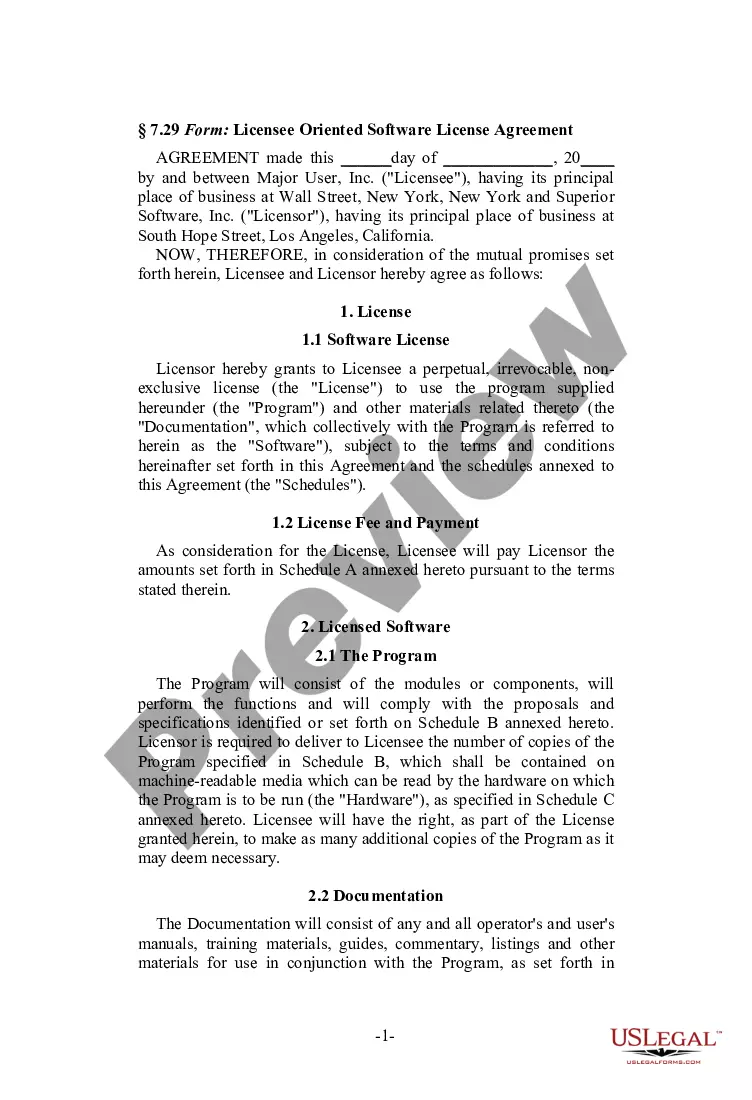
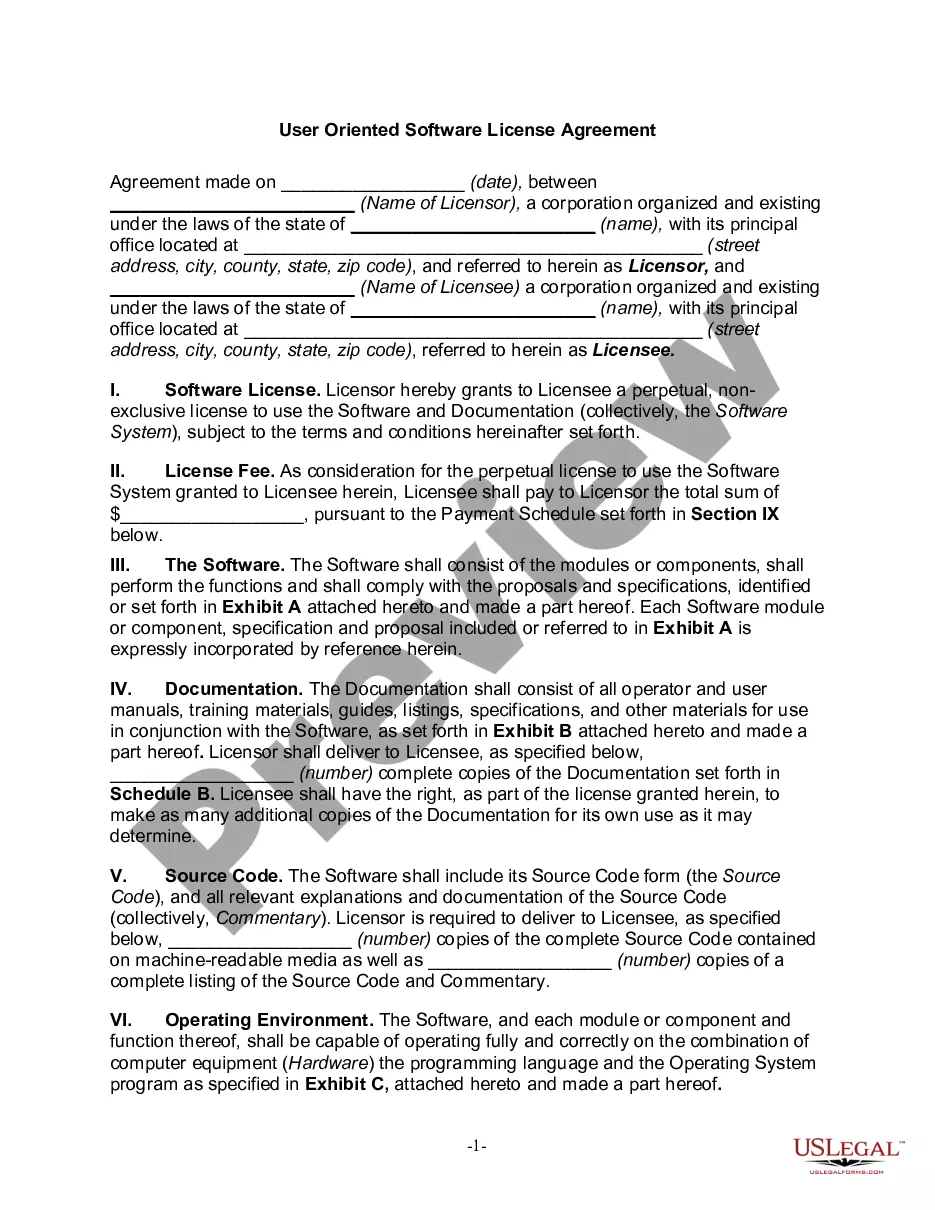
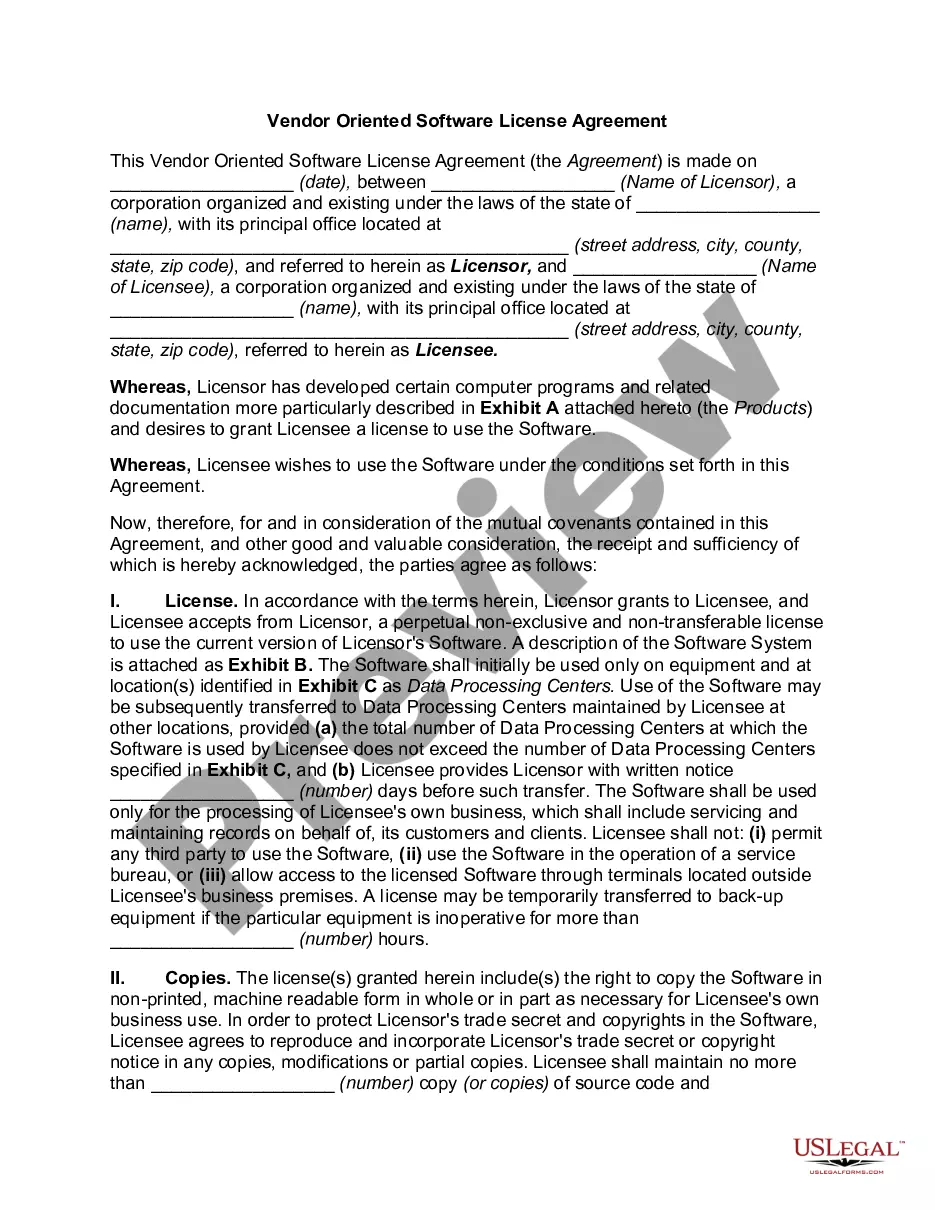
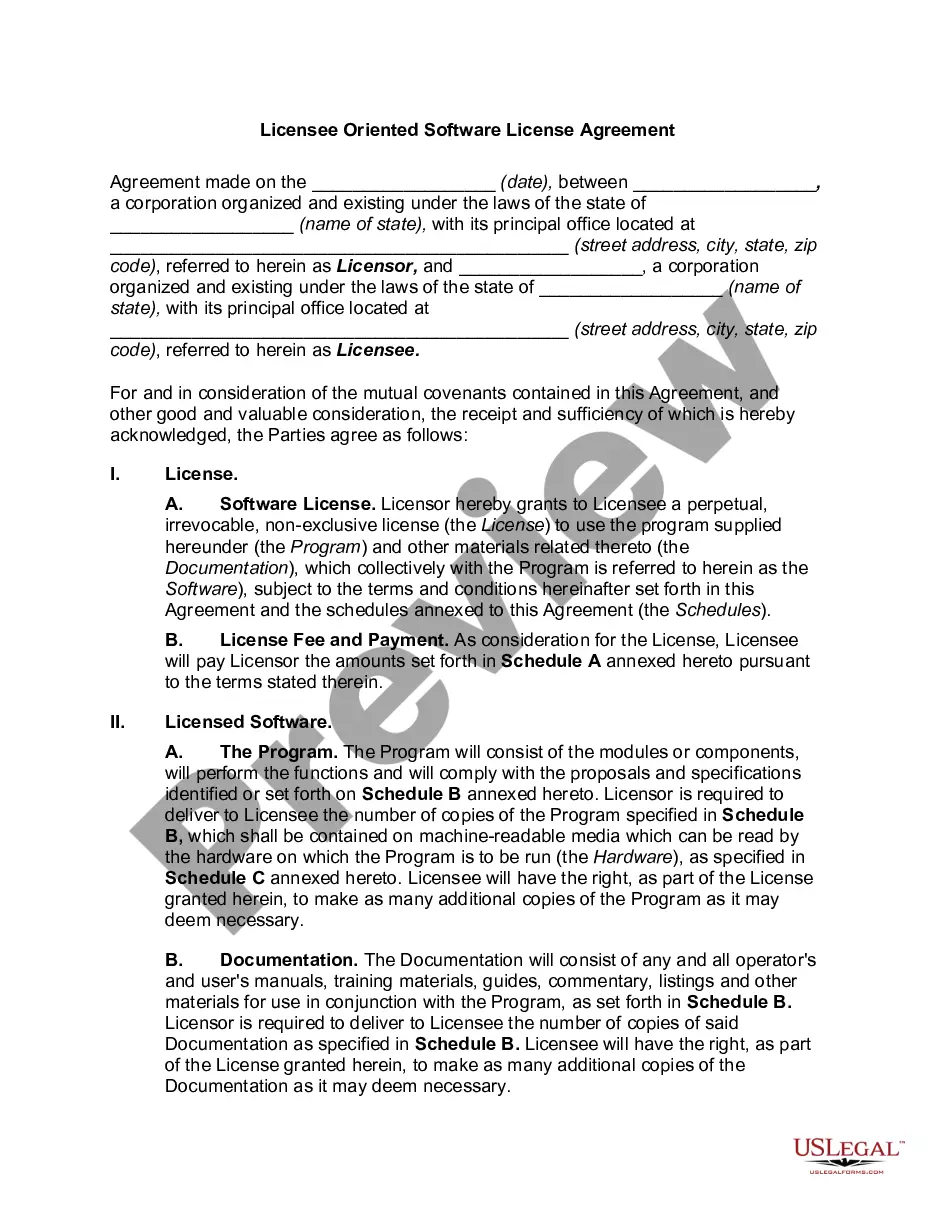
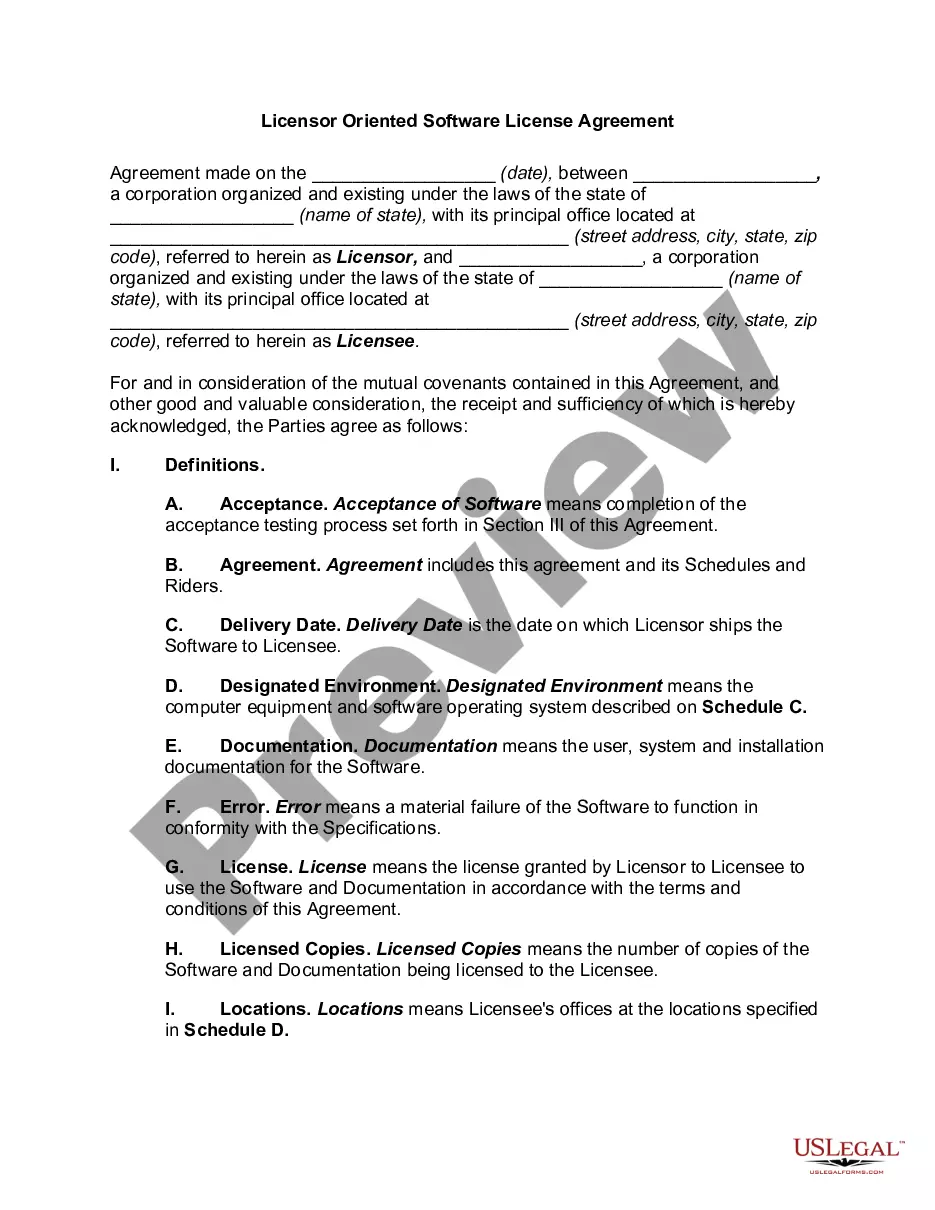
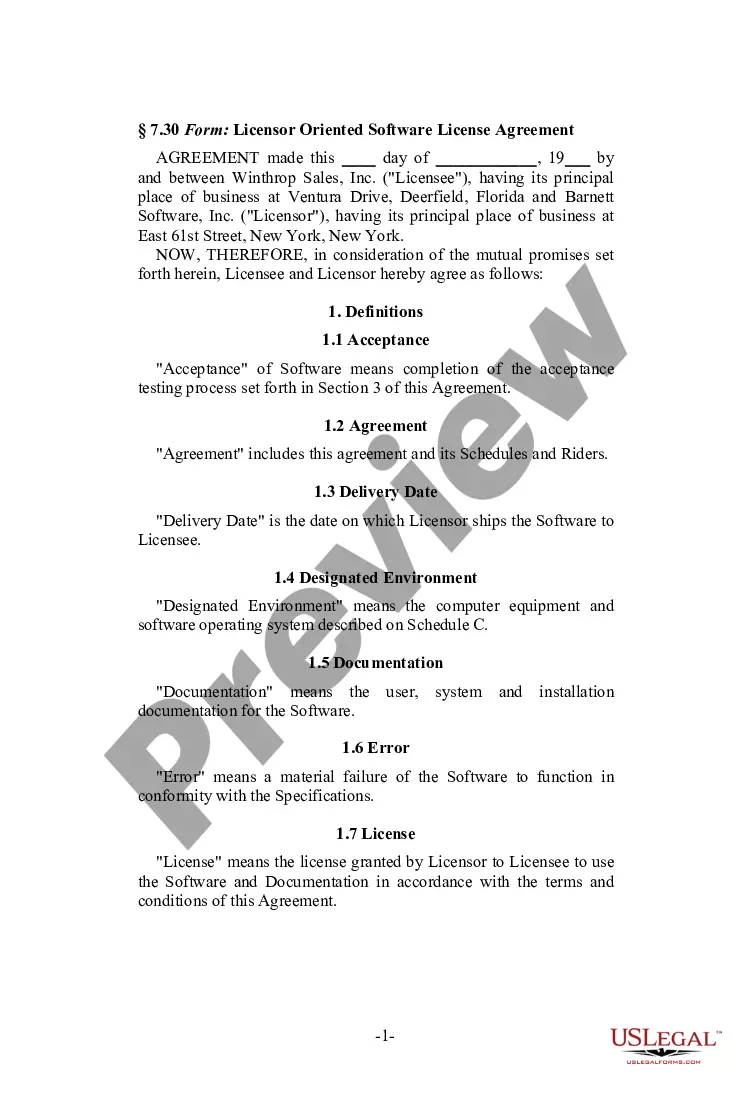
The Licensee Oriented Software License Agreement is a legal document that outlines the terms under which a software program may be used by a business or individual. This agreement details the rights and responsibilities of both the licensee (the user) and the licensor (the provider) regarding the software and any related materials. It is essential for ensuring that both parties have a clear understanding of software usage rights, payment terms, and obligations, differentiating it from general software usage agreements by its detailed clauses and customization options for specific needs.
Form components explained
- License Grant: Details the scope of use for the software and related documentation.
- License Fee and Payment: Outlines the payment structure and any additional costs related to the software.
- Delivery and Installation: Specifies delivery timelines and procedures for software installation and acceptance testing.
- Warranties: Describes the licensorâs responsibilities for software performance and defect corrections.
- Indemnification: Details the liabilities each party has concerning third-party claims about the software.


When to use this form
This form should be used when a business or individual intends to license software from a developer or provider. It is particularly useful when entering into an agreement for proprietary software, ensuring that both parties outline their rights, responsibilities, and warranties clearly. Scenarios include when a company requires a specific software solution for its operations, when developers create custom software for clients, or when a user needs to comply with licensing restrictions.
Who should use this form
This form is intended for:
- Businesses seeking to license software for their operations.
- Independent contractors creating or purchasing software for client use.
- Software developers providing proprietary software to clients.
- Organizations needing to ensure compliance with software licensing laws.
How to prepare this document
- Identify the parties involved, including full legal names and addresses of both the licensee and licensor.
- Specify the software and its related materials in detail, referring to any relevant schedules attached to the agreement.
- Outline the payment terms by filling in the payment schedule and any fees associated with the licensing agreement.
- Include any relevant installation and acceptance testing procedures that form part of the agreement.
- Complete all necessary fields for warranties and liabilities to ensure clarity on each party's responsibilities.
Does this form need to be notarized?
This form does not typically require notarization unless specified by local law. However, having a notarized agreement can add a layer of authenticity and protection for both parties.
Get your form ready online
Our built-in tools help you complete, sign, share, and store your documents in one place.
Make edits, fill in missing information, and update formatting in US Legal Forms—just like you would in MS Word.
Download a copy, print it, send it by email, or mail it via USPS—whatever works best for your next step.
Sign and collect signatures with our SignNow integration. Send to multiple recipients, set reminders, and more. Go Premium to unlock E-Sign.
If this form requires notarization, complete it online through a secure video call—no need to meet a notary in person or wait for an appointment.
We protect your documents and personal data by following strict security and privacy standards.

Make edits, fill in missing information, and update formatting in US Legal Forms—just like you would in MS Word.

Download a copy, print it, send it by email, or mail it via USPS—whatever works best for your next step.

Sign and collect signatures with our SignNow integration. Send to multiple recipients, set reminders, and more. Go Premium to unlock E-Sign.

If this form requires notarization, complete it online through a secure video call—no need to meet a notary in person or wait for an appointment.

We protect your documents and personal data by following strict security and privacy standards.
Avoid these common issues
- Failing to specify the software's intended use can lead to disputes.
- Not detailing payment terms and conditions, which may create financial misunderstandings.
- Ignoring the installation and acceptance testing procedures can lead to acceptance of faulty software.
- Overlooking the indemnity clause, which can leave one party vulnerable to liability.
Benefits of completing this form online
- Convenient access on-demand, allowing for quick adjustments and immediate use.
- Editability ensures you can tailor the agreement to your specific needs without requiring legal aid.
- Secure storage of your completed forms minimizes the risk of loss and allows for easy retrieval.
Legal use & context
- This agreement establishes clear rights and responsibilities between the Licensee and Licensor.
- It may serve as a resource for resolving disputes regarding software usage.
- Non-compliance with the terms outlined can result in legal action or penalties.
Quick recap
- The Licensee Oriented Software License Agreement is vital for protecting software usage rights.
- Clearly defined terms assist in avoiding misunderstandings between parties.
- This agreement covers important aspects such as fees, delivery, modifications, and warranties.
Looking for another form?


Form popularity
FAQ
Exclusive or non-exclusive. In an exclusive license, the intellectual property holder is licensing the work only to one person, for that particular use/territory. Territory. Use. Attribution. Derivative works. Confidentiality. Time frame. Termination.
An example of a licensing agreement is a contract between the copyright holders of software and another company, allowing the latter to use the computer software for their daily business operations.
Setting up Your Licensing Agreement. Granting the License. Limiting Your Liability. Adding Boilerplate Clauses. Finalizing the Licensing Agreement.
Download a template for a licensing agreement. Choose your role as the licensor or licensee. Define the license(s) in the agreement. Decide whether the license is exclusive or not. Settle the matter of fees and payment schedule. Add a renewal date and rules.
A software license agreement typically has broad-form confidentiality provisions that also provide that certain items fall into the bucket of one or the other party (e.g., the software for a licensor, certain data for a licensee, etc.).
What is a Licensing Agreement? A licensing agreement is a contract between two parties (the licensor and licensee) in which the licensor grants the licensee the right to use the brand name, trademark, patented technology, or ability to produce and sell goods owned by the licensor.