North Carolina Employment Separation and General Release
What is this form?
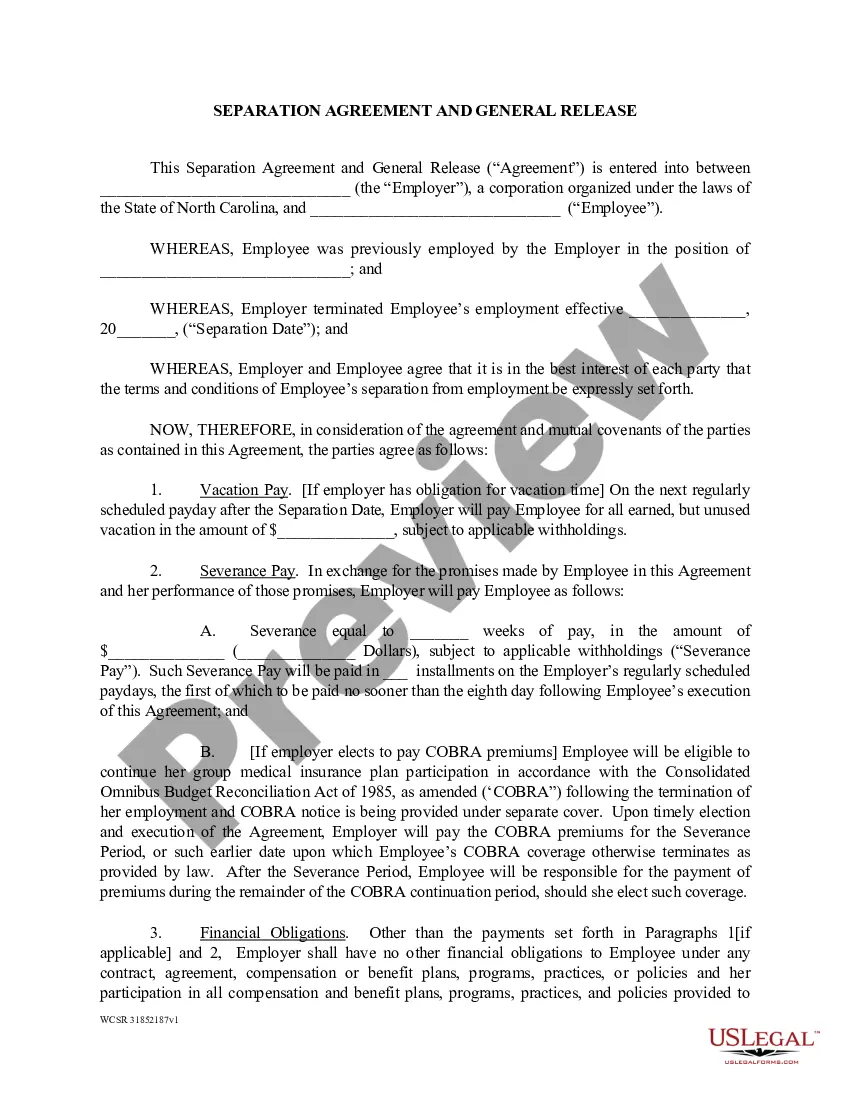
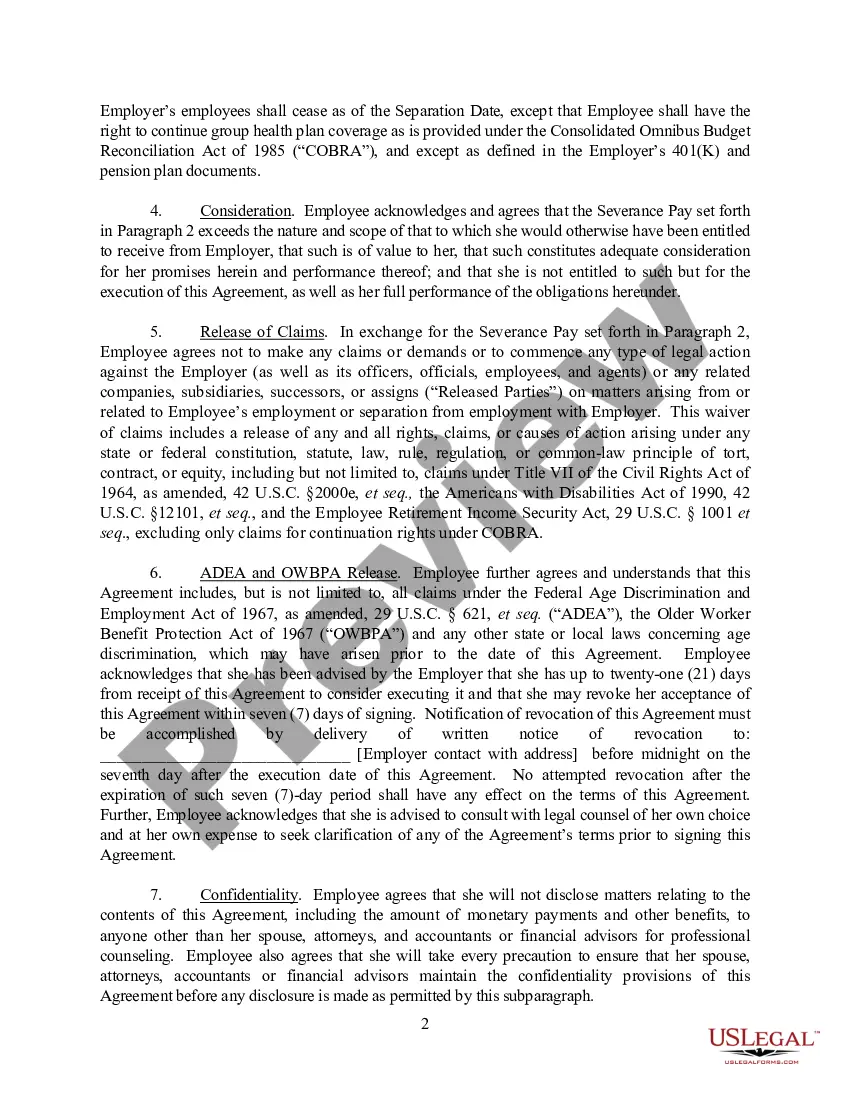
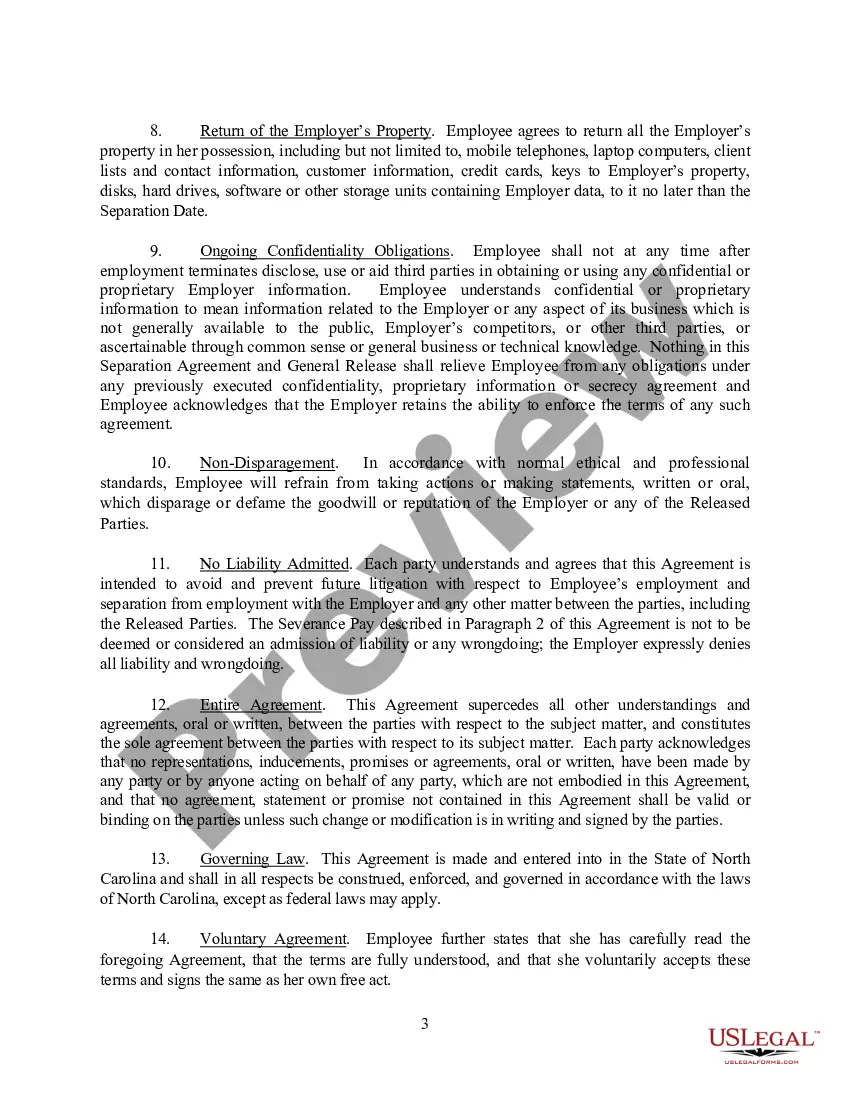
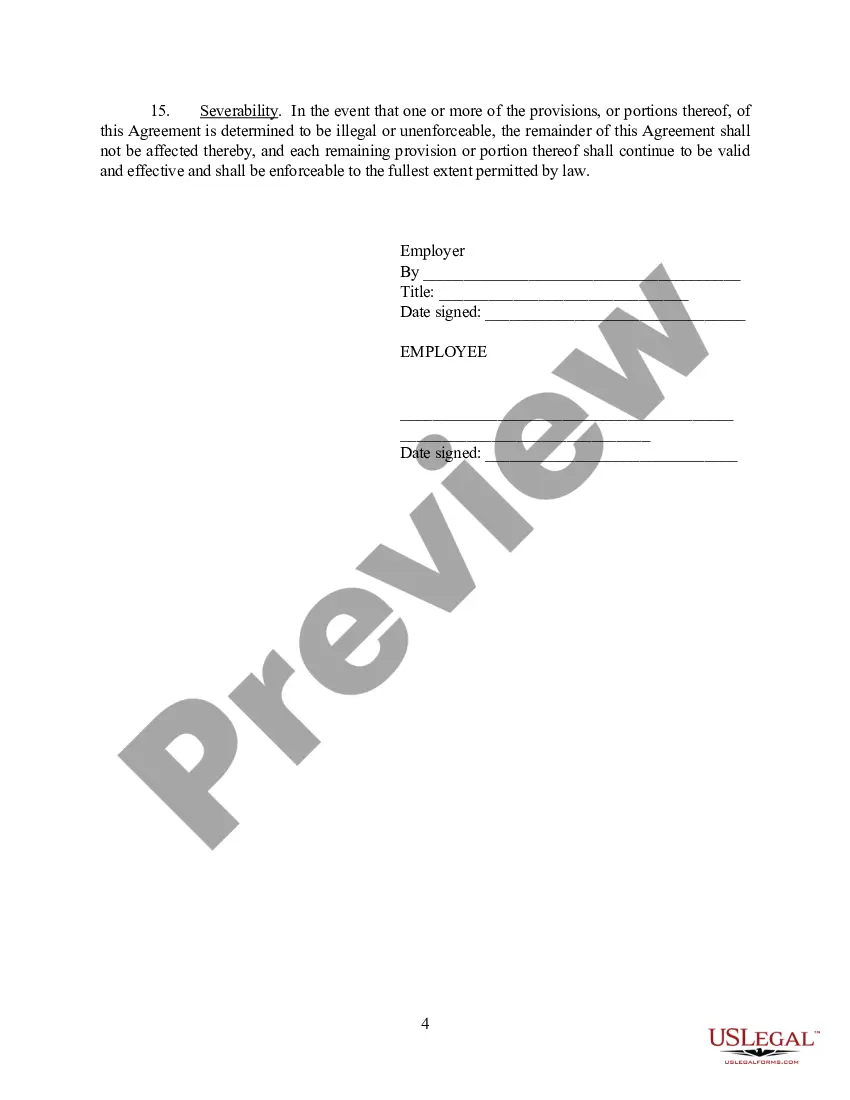
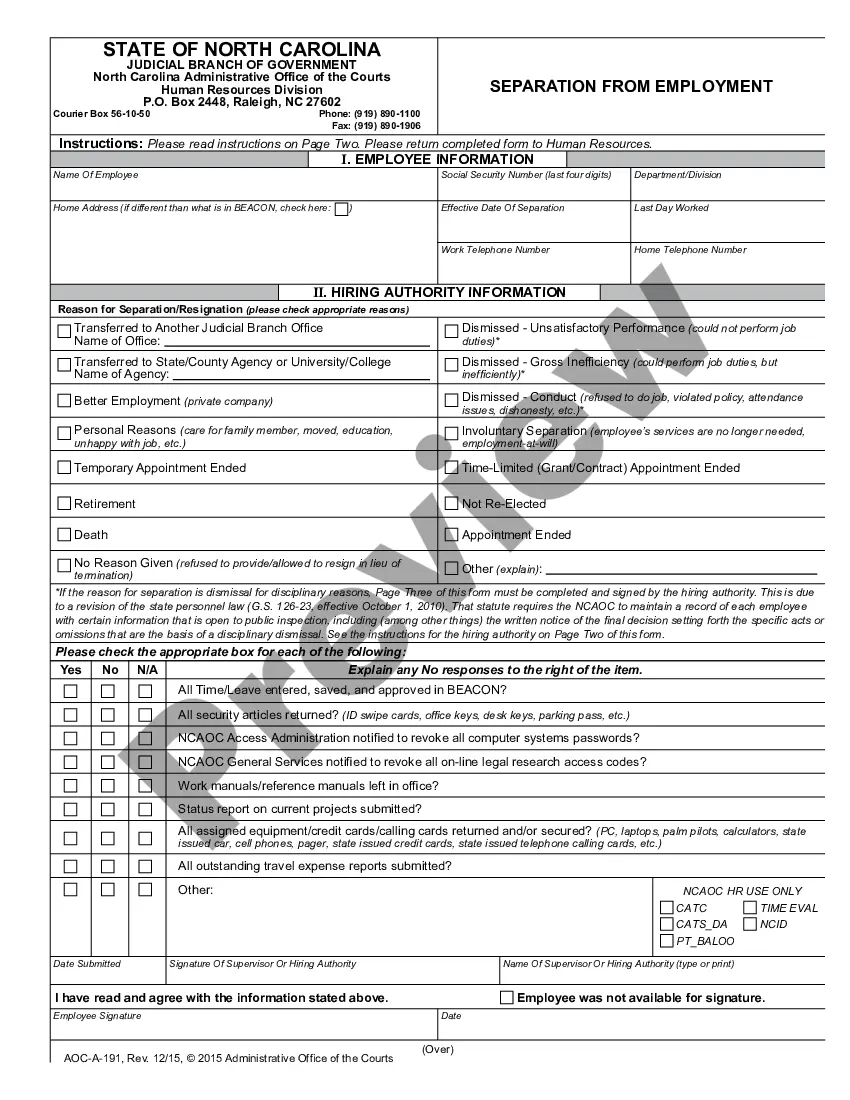
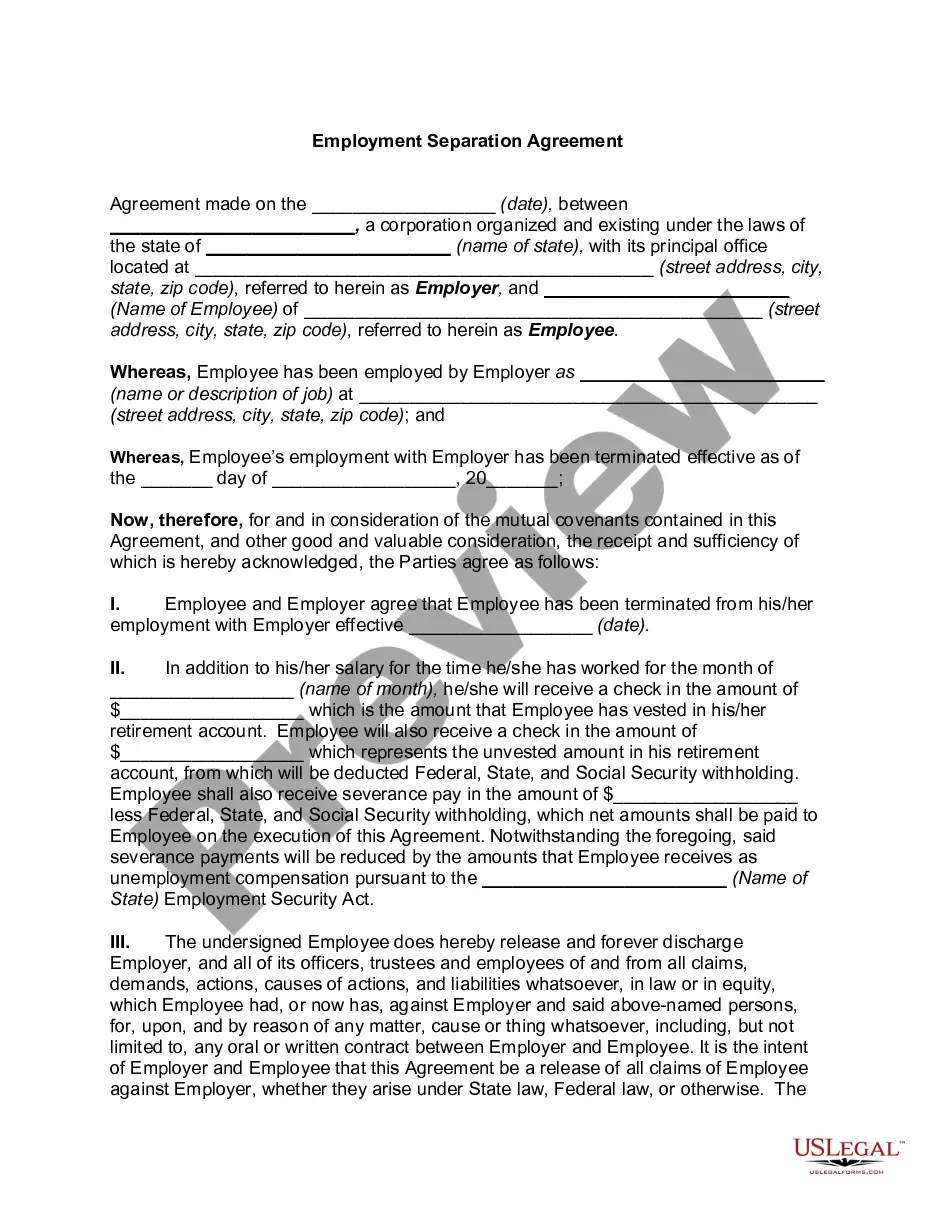
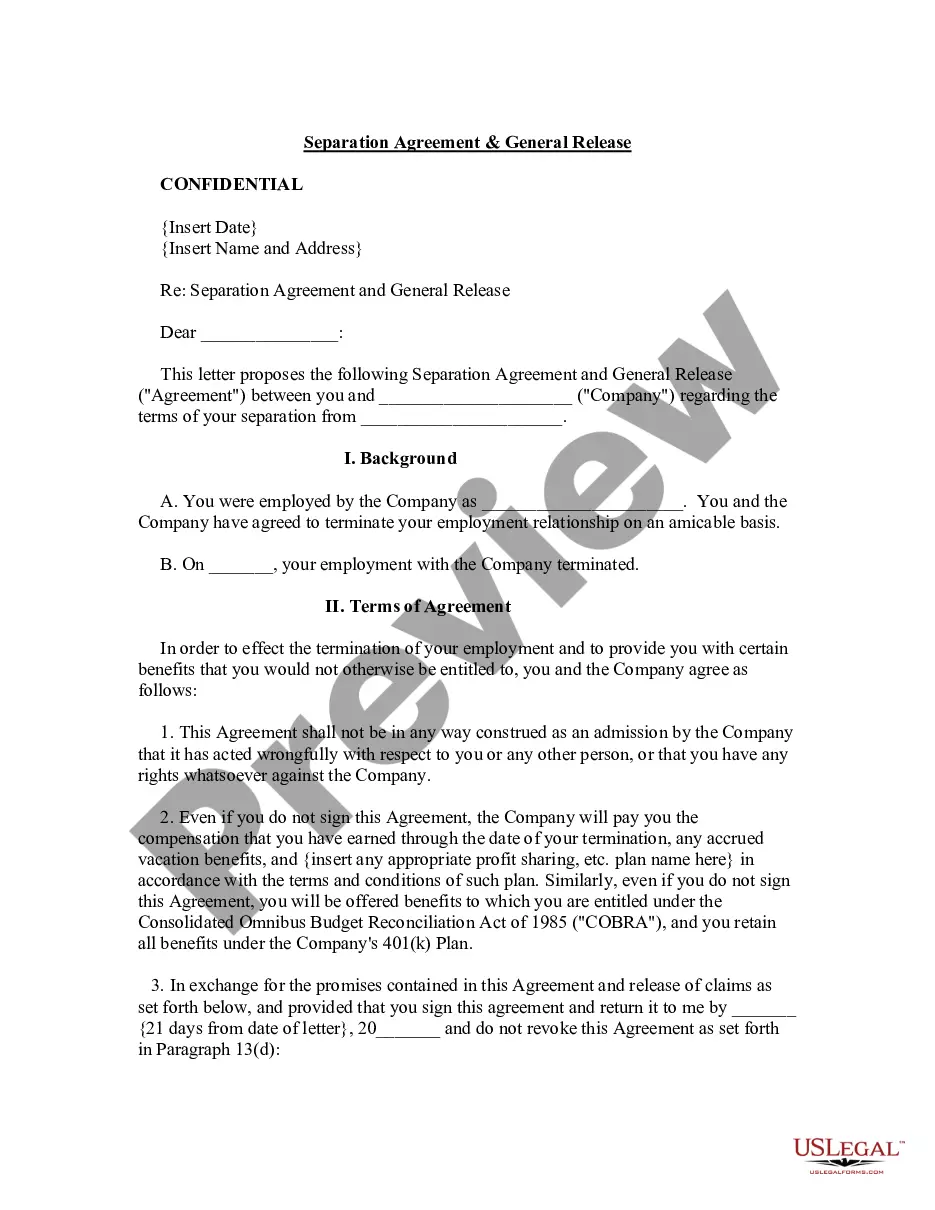
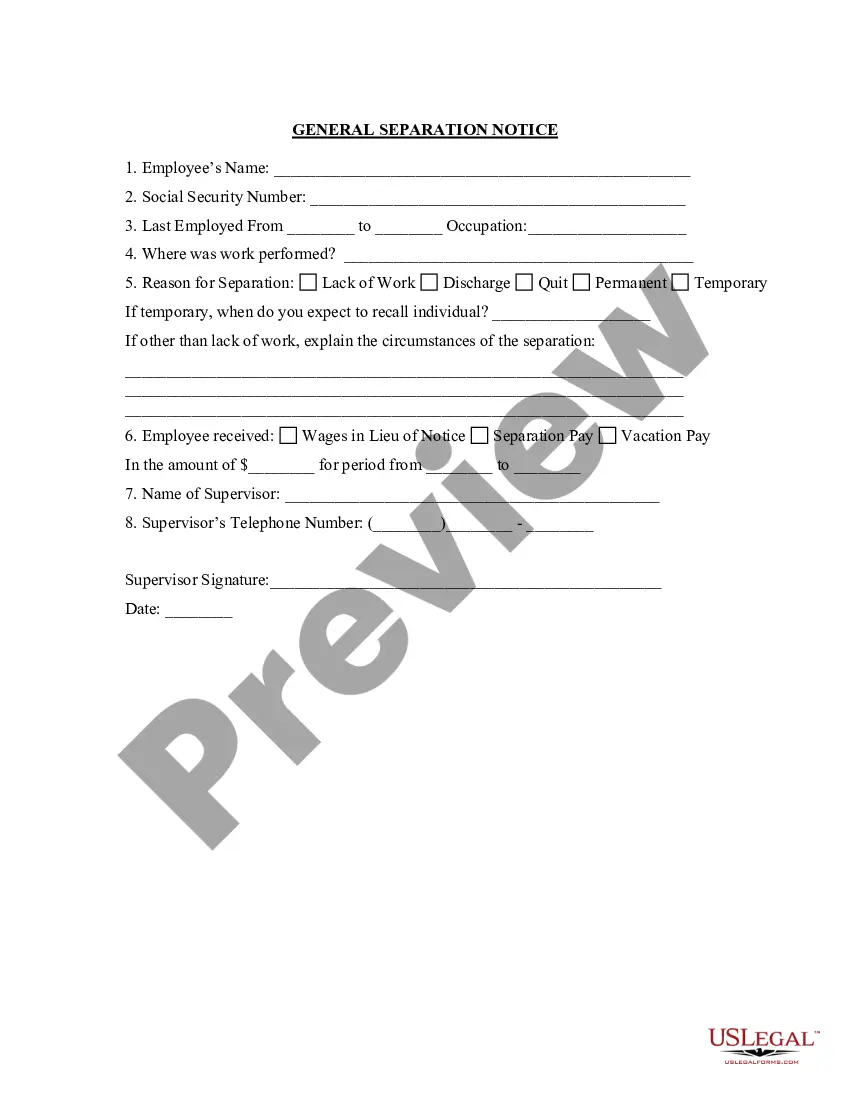
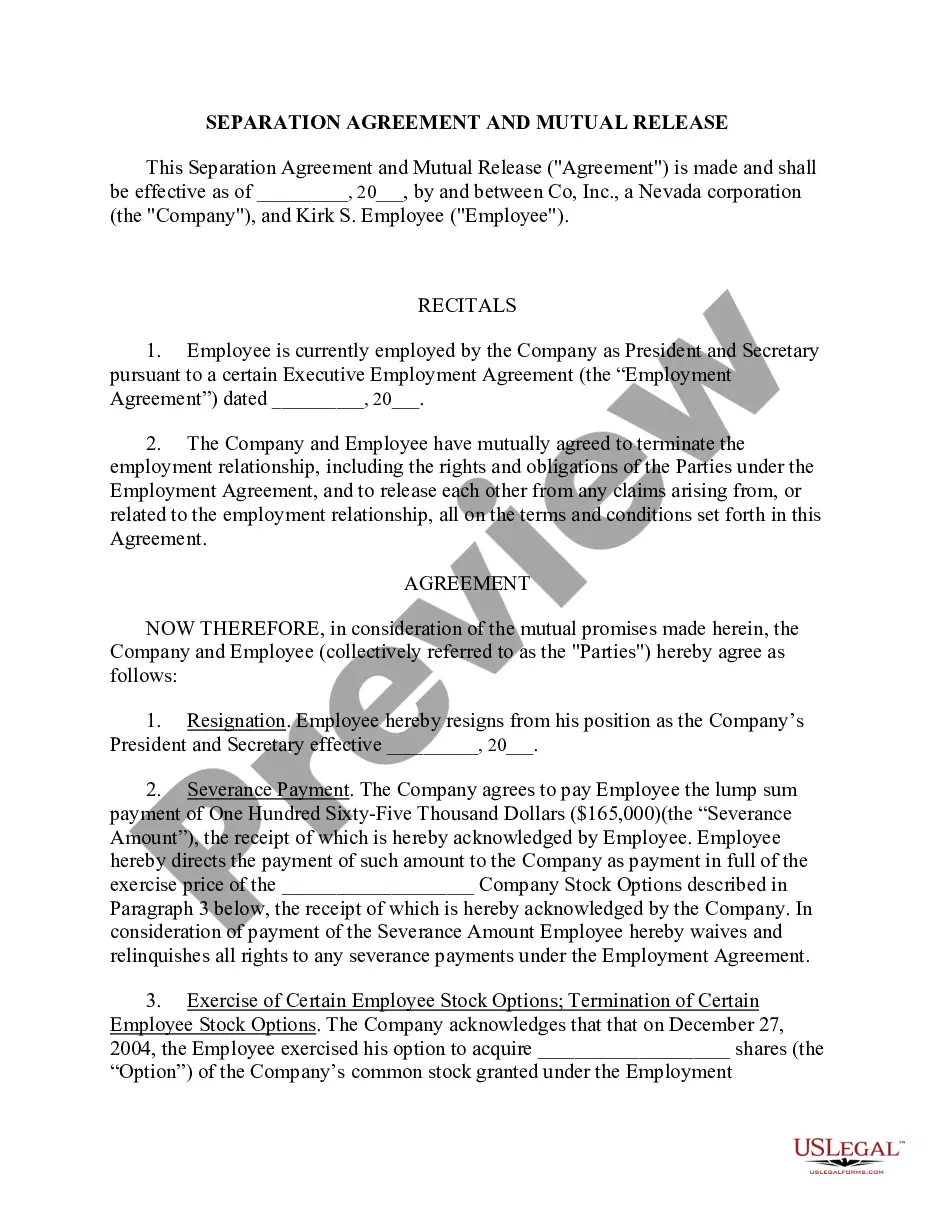
The Employment Separation and General Release is a legal document that formalizes the terms of an employee's departure from a company. This form outlines the rights and responsibilities of both the employer and the employee, including severance pay and the release of claims against the employer. It is essential for ensuring that both parties clearly understand their obligations, protecting the employer from future claims, and providing the employee with agreed-upon compensation.
Main sections of this form
- Employer and Employee identification, including addresses and positions held.
- Separation Date, detailing when the employment officially ends.
- Terms of payment, including any severance and vacation pay due to the employee.
- A release of claims against the employer by the employee.
- Confidentiality provisions regarding the agreement.
- Conditions for returning the employer's property.
Situations where this form applies
This form is needed when an employee is leaving a position, whether voluntarily or due to termination. It is especially important for employees who are receiving severance pay or other benefits as part of their separation agreement. Additionally, employers should use it to formalize the separation process and limit future liability related to employment claims.
Who needs this form
This form is intended for:
- Employees who are separating from their employer and negotiating severance or other payments.
- Employers who wish to protect themselves from potential future claims by former employees.
- HR professionals managing the employment exit process.
Completing this form step by step
- Identify the Employer and Employee by filling in their names and addresses.
- Specify the position held by the Employee and the official Separation Date.
- Detail the amounts for vacation and severance pay, including the payment schedule.
- Complete the release of claims section, ensuring clarity on what is being waived.
- Sign and date the agreement to finalize the separation terms.
Does this document require notarization?
This form does not typically require notarization unless specified by local law. However, having it notarized can provide an extra layer of authenticity and assurance for both parties.
Get your form ready online
Our built-in tools help you complete, sign, share, and store your documents in one place.
Make edits, fill in missing information, and update formatting in US Legal Forms—just like you would in MS Word.
Download a copy, print it, send it by email, or mail it via USPS—whatever works best for your next step.
Sign and collect signatures with our SignNow integration. Send to multiple recipients, set reminders, and more. Go Premium to unlock E-Sign.
If this form requires notarization, complete it online through a secure video call—no need to meet a notary in person or wait for an appointment.
We protect your documents and personal data by following strict security and privacy standards.

Make edits, fill in missing information, and update formatting in US Legal Forms—just like you would in MS Word.

Download a copy, print it, send it by email, or mail it via USPS—whatever works best for your next step.

Sign and collect signatures with our SignNow integration. Send to multiple recipients, set reminders, and more. Go Premium to unlock E-Sign.

If this form requires notarization, complete it online through a secure video call—no need to meet a notary in person or wait for an appointment.

We protect your documents and personal data by following strict security and privacy standards.
Common mistakes to avoid
- Failing to specify the exact amount of severance pay.
- Not entering the correct Separation Date.
- Ignoring confidentiality and non-disparagement clauses.
- Not providing adequate time for consideration before signing.
- Forgetting to collect all employer property prior to separation.
Benefits of completing this form online
- Convenience of downloading and completing the form at your own pace.
- Ability to edit the document to fit specific situations or agreements.
- Access to professionally drafted templates that comply with legal standards.
Looking for another form?
Form popularity
FAQ
A separation agreement and general release is an employment agreement that allows a company and an employee to go their separate ways while also releasing one or both parties of future liability.
Separation agreements must be in writing (not verbal), must be signed by both parties, and both signatures must be notarized. Can a separation agreement include decisions about child custody and child support? Yes, you can include provisions about child custody and child support in a separation agreement.
Coercion, fraud, undue influence or lack of knowledge will void the terms of a separation agreement. A separation agreement is not proof of the parties' separation. It is not required for a divorce in North Carolina, and it doesn't make a divorce in North Carolina easier or more difficult to obtain.
An employee may terminate services with the State by submitting a resignation to the appointing authority. Normally, it is expected that an employee will give at least two weeks' notice prior to the last day of work.
A separation agreement or other written document is not required to be legally separated in North Carolina. To be considered separated from your spouse, you need to be living in different homes, and at least one of you needs to intend that the separation be permanent.
For most couples in NC, there is no legal separation. As long as you have not been granted a divorce or a legal separation, you are still married as far as the IRS is concerned. To be considered single for the filing year by the IRS, you must be granted a divorce by December 31 of the filing year.
The answer is yes, after you have legally separated, you are free to date as if you are not married. But the truth is, you should be careful. Anything beyond casual socializing may complicate the divorce process and even negatively affect the outcome when it comes to finances and child custody.
Refusing to agree contact arrangements with the children or not attending the family home for agreed contact with the children. Not turning up to pre-arranged Relate or counselling sessions or telling your partner that they are a waste of time before you give the sessions a chance.