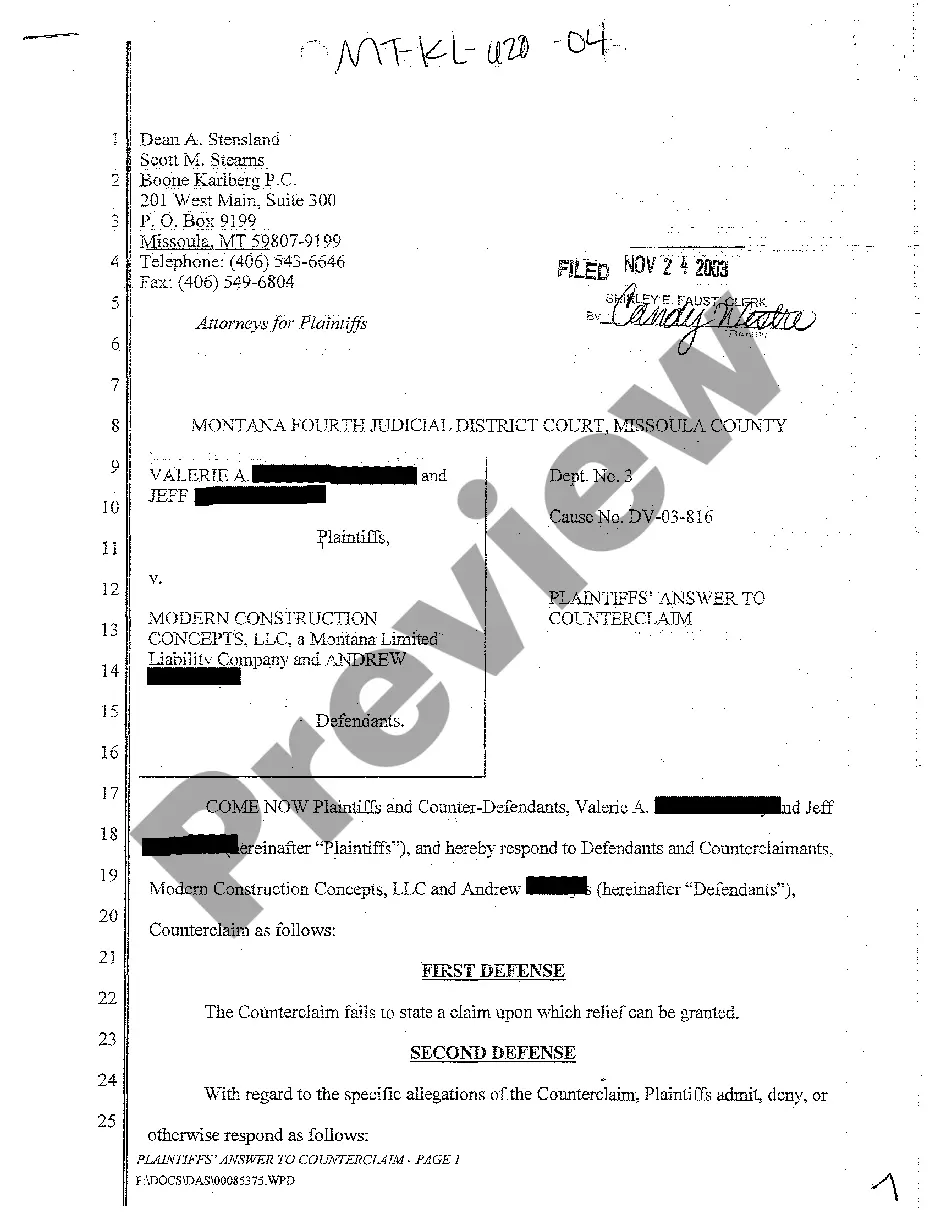
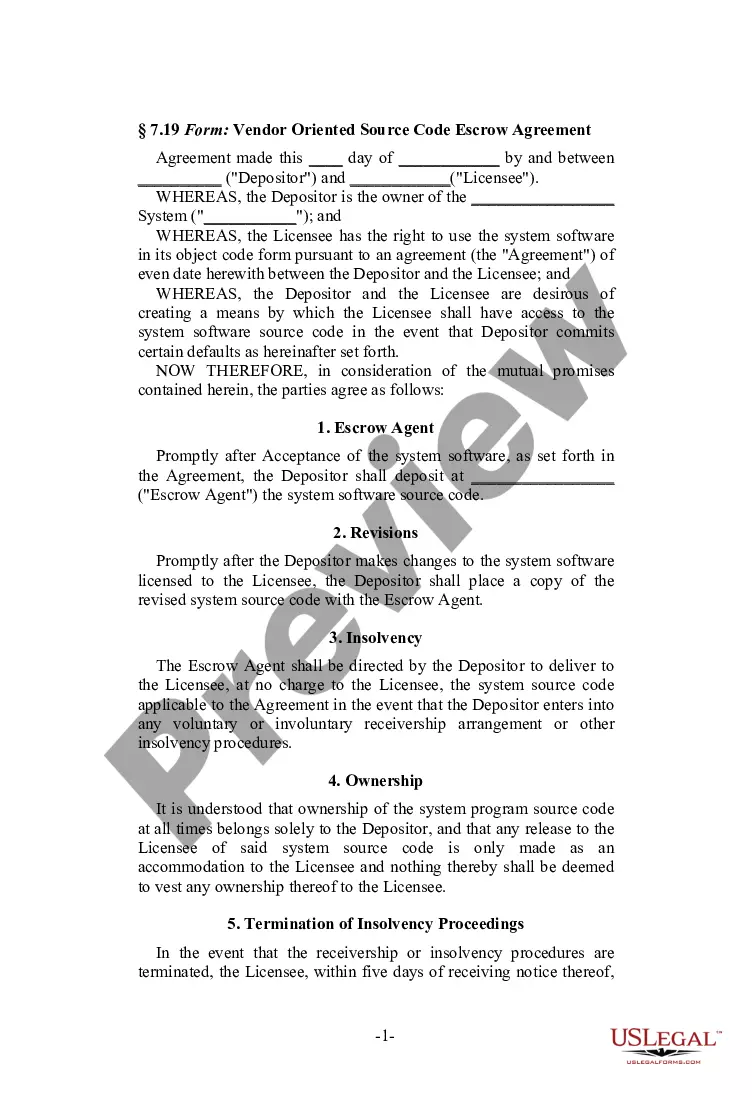
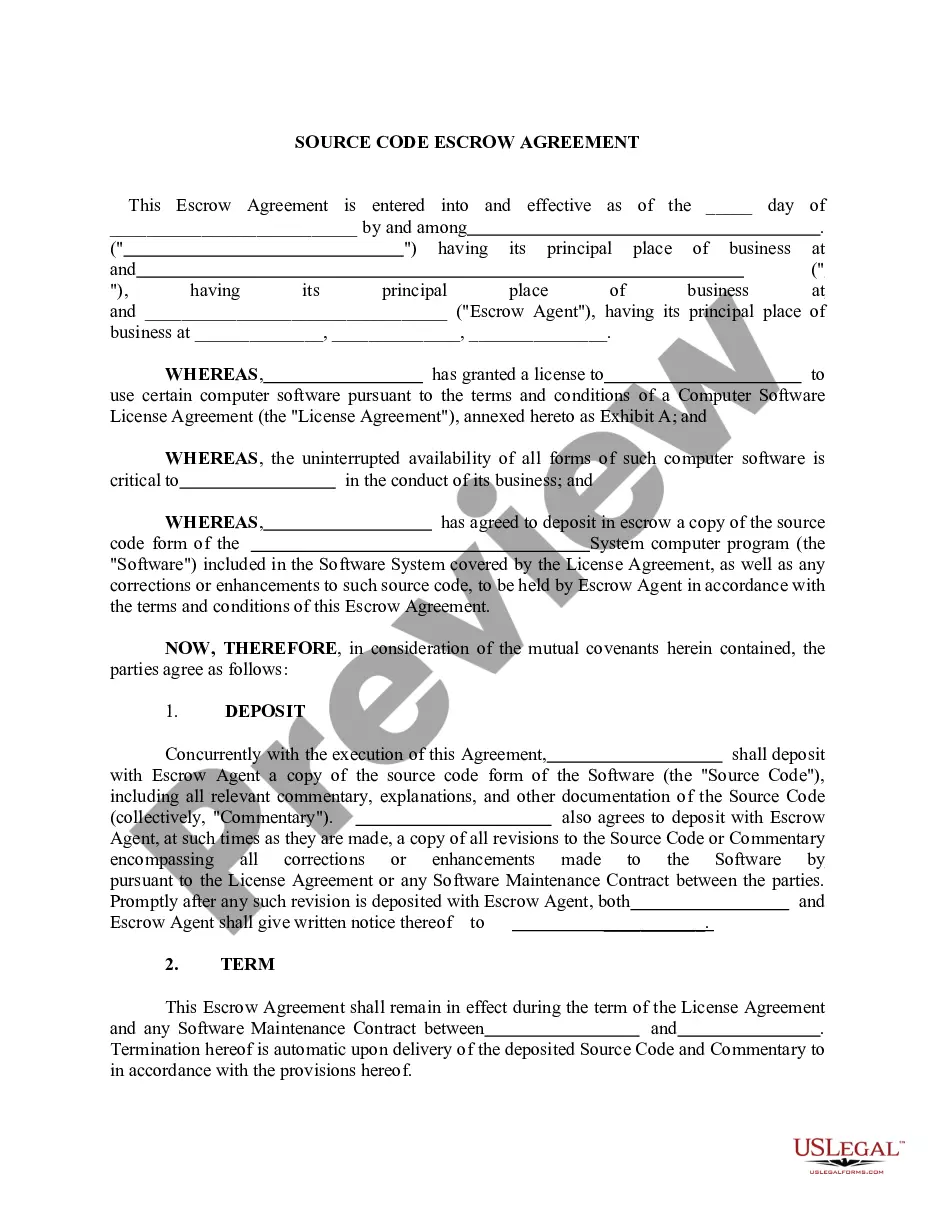
User oriented Source Code Escrow Agreement
What is this form?
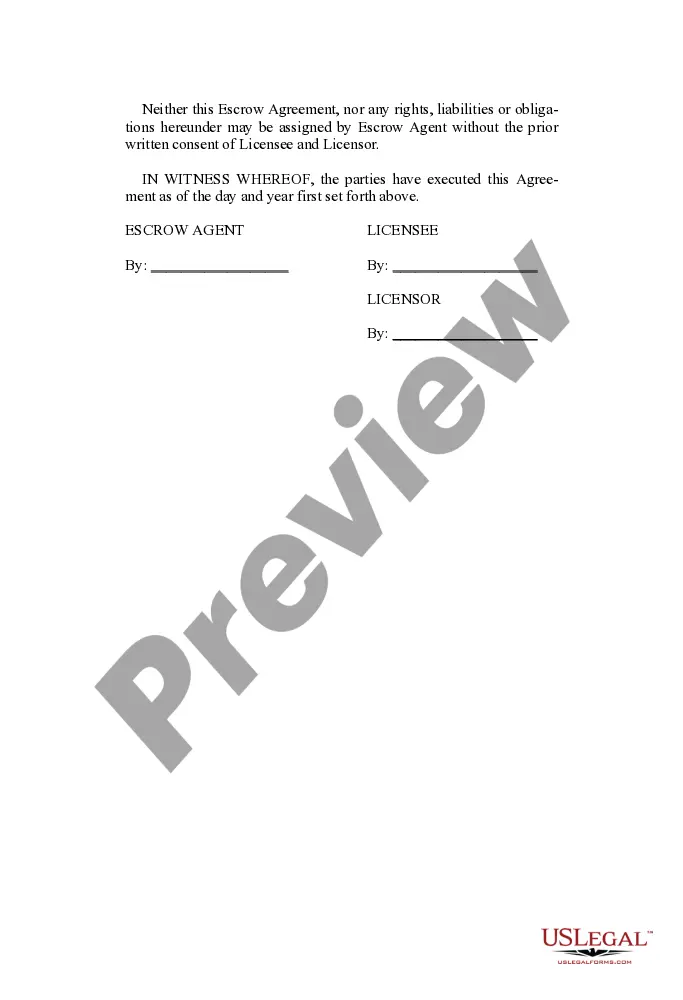
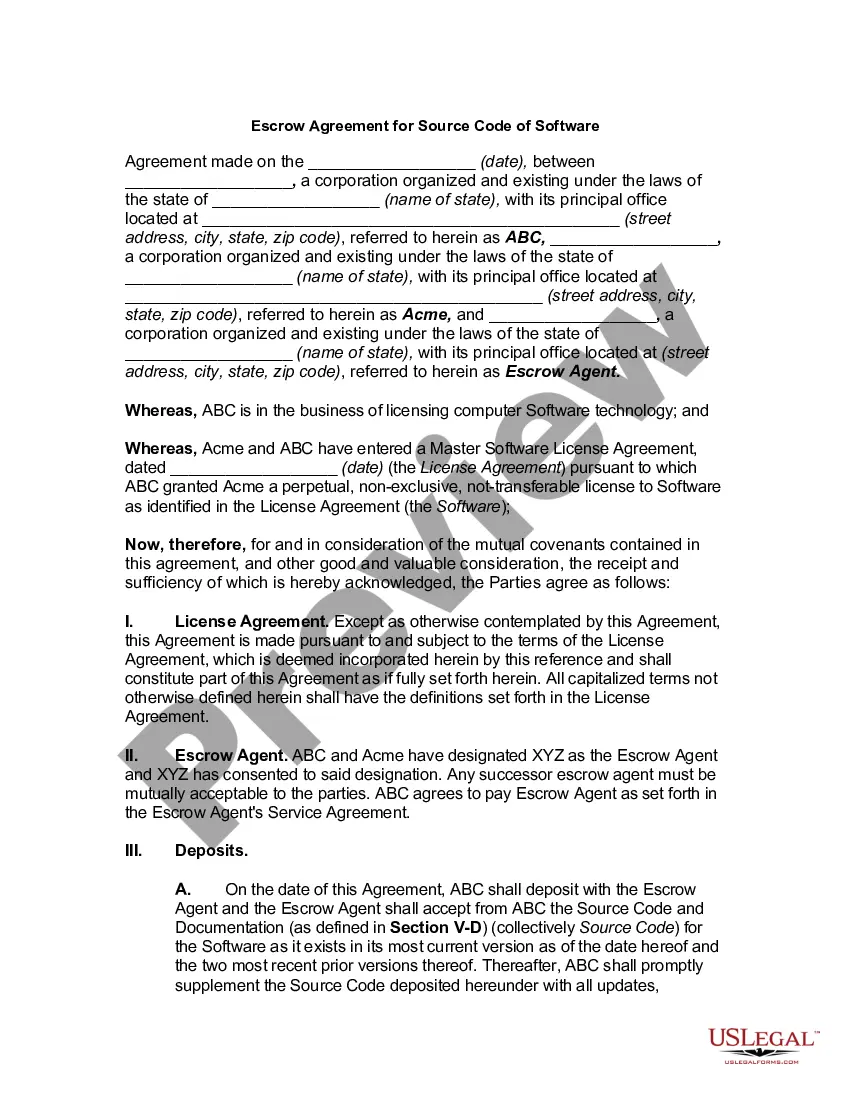
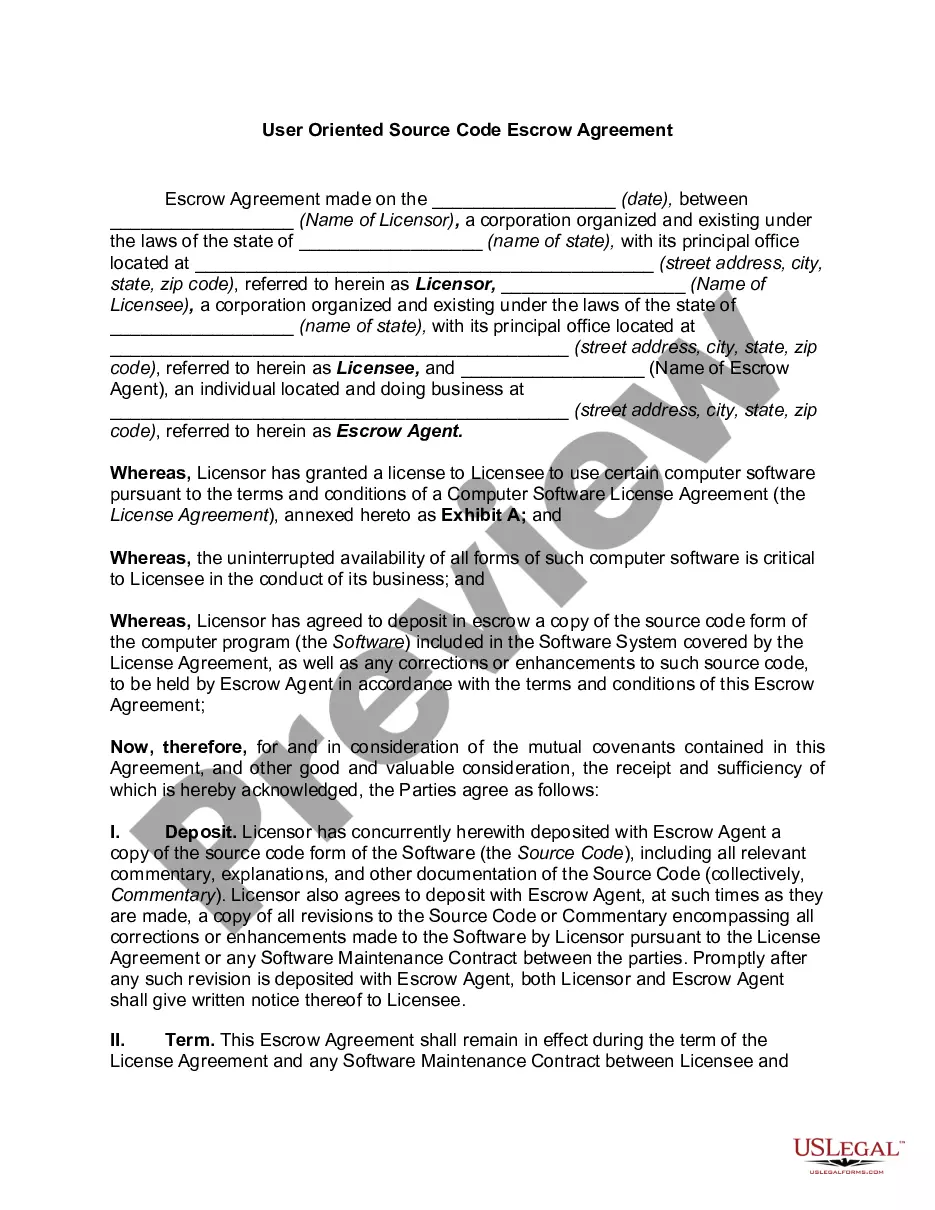
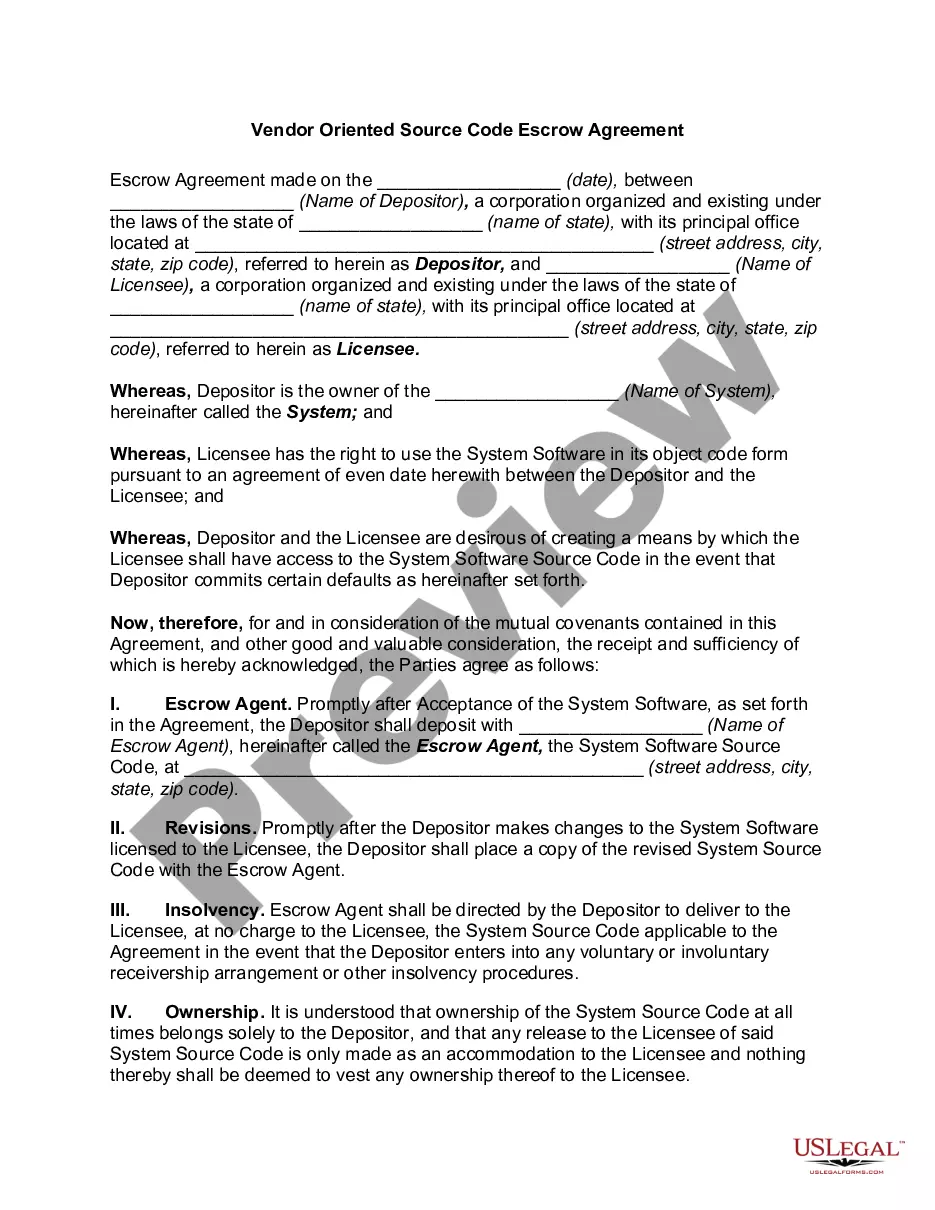
The User Oriented Source Code Escrow Agreement is a legal document designed specifically for businesses in the computer, internet, and software industries. This form establishes the conditions under which source code for software is deposited in escrow, ensuring that the licensee has access to the software's code in case of specific events impacting the licensor's ability to provide support. Unlike standard contracts, this agreement focuses on protecting the interests of both the licensee and licensor by outlining comprehensive terms for the handling of source code.
Form components explained
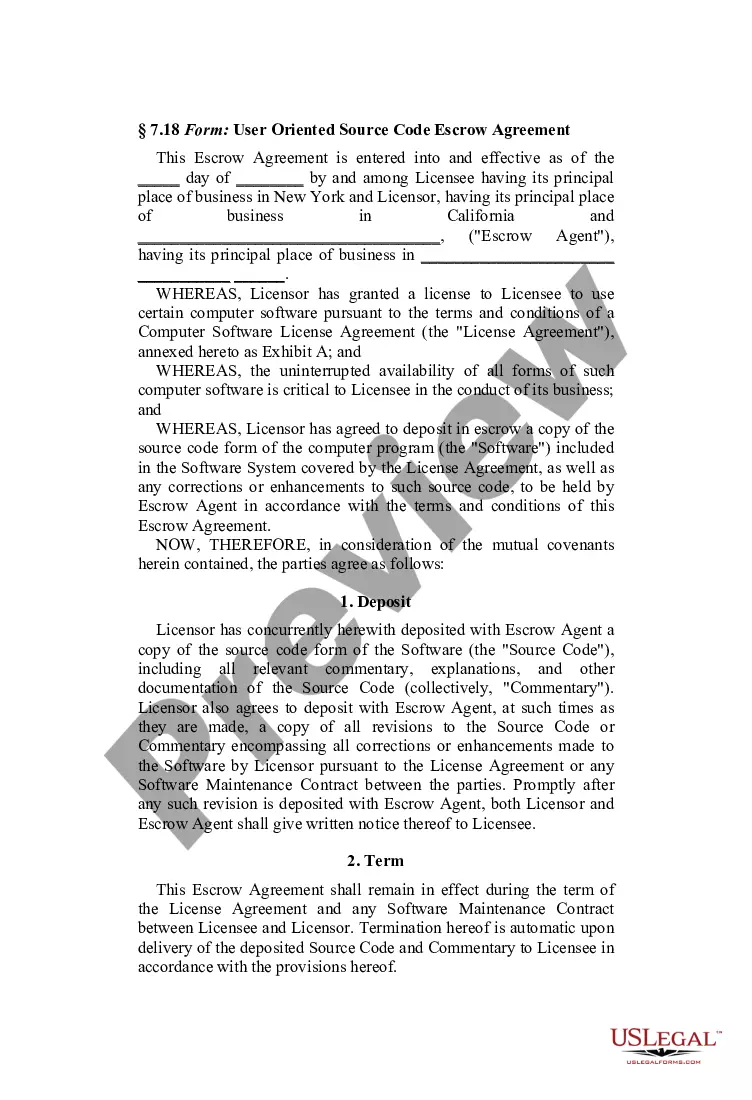
- Deposit: Licensor agrees to place a copy of the source code and accompanying documentation in escrow.
- Term: Specifies the duration of the agreement, which aligns with the License Agreement.
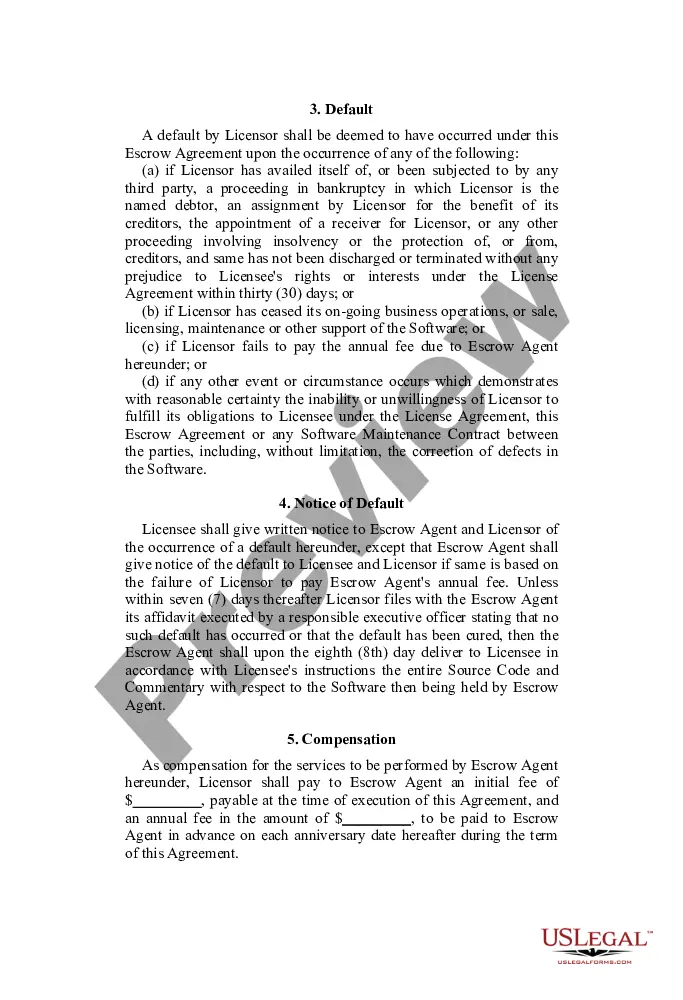
- Default: Details the conditions under which a default may occur, such as bankruptcy or cessation of business operations.
- Notice of Default: Outlines the procedure for notifying the parties of any defaults.
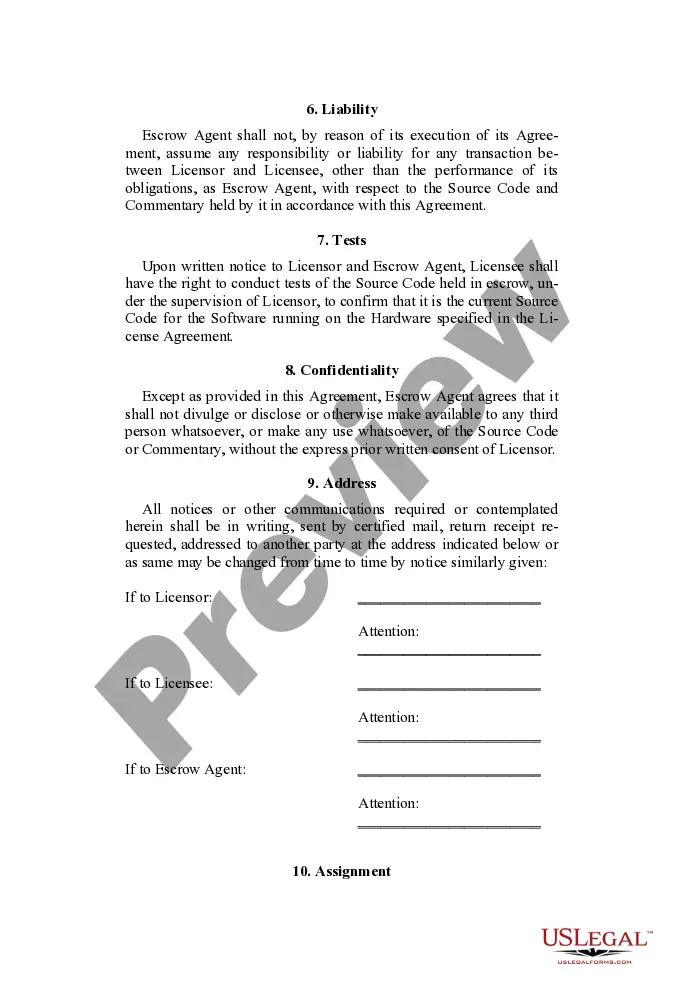
- Confidentiality: Ensures that the source code and commentary remain confidential.
- Tests: Licensee retains the right to test the source code under certain conditions.
Common use cases
This agreement is essential for software developers and businesses that depend on specific software for their operations. Use this form when entering a licensing agreement for software, especially when there is a need to secure the software's source code. Situations that warrant this agreement include concerns over the software's continued maintenance, the absence of ongoing support from the licensor, or potential bankruptcy risks involving the licensor.
Who should use this form
- Software developers who provide proprietary software solutions.
- Businesses that rely on licensed software for critical operations.
- Legal professionals assisting clients in negotiating software licenses.
- Licensors concerned about ensuring access to source code for their clients.
- Licensees looking to safeguard their interests in software agreements.
How to complete this form
- Identify the parties involved: Enter the information for the Licensor, Licensee, and Escrow Agent, including their principal places of business.
- Specify the source code: Clearly define the software and relevant documentation to be deposited in escrow.
- Enter the term of the agreement: Note the effective date and duration aligned with the License Agreement.
- Include compensation details: Document any applicable fees to be paid to the Escrow Agent for their services.
- Review and sign: Ensure all parties sign the agreement to validate it legally.
Is notarization required?
In most cases, this form does not require notarization. However, some jurisdictions or signing circumstances might. US Legal Forms offers online notarization powered by Notarize, accessible 24/7 for a quick, remote process.
Get your form ready online
Our built-in tools help you complete, sign, share, and store your documents in one place.
Make edits, fill in missing information, and update formatting in US Legal Forms—just like you would in MS Word.
Download a copy, print it, send it by email, or mail it via USPS—whatever works best for your next step.
Sign and collect signatures with our SignNow integration. Send to multiple recipients, set reminders, and more. Go Premium to unlock E-Sign.
If this form requires notarization, complete it online through a secure video call—no need to meet a notary in person or wait for an appointment.
We protect your documents and personal data by following strict security and privacy standards.

Make edits, fill in missing information, and update formatting in US Legal Forms—just like you would in MS Word.

Download a copy, print it, send it by email, or mail it via USPS—whatever works best for your next step.

Sign and collect signatures with our SignNow integration. Send to multiple recipients, set reminders, and more. Go Premium to unlock E-Sign.

If this form requires notarization, complete it online through a secure video call—no need to meet a notary in person or wait for an appointment.

We protect your documents and personal data by following strict security and privacy standards.
Common mistakes to avoid
- Failing to specify the exact software covered under the agreement.
- Not outlining clear terms for default or termination.
- Omitting signatures from key parties, which can invalidate the agreement.
- Neglecting to update the escrow when software revisions are made.
Why complete this form online
- Convenience of immediate download and use, eliminating the need for in-person meetings.
- Editability allows users to tailor the agreement to specific needs easily.
- Reliability from access to legally vetted forms crafted by licensed attorneys.
Legal use & context
- This form is legally binding once signed by all parties.
- It protects both the Licensor and Licensee by stipulating clear terms regarding source code access.
- Compliance with the terms ensures that both parties can take legal action in case of a default.
Main things to remember
- The User Oriented Source Code Escrow Agreement secures access to source code necessary for business continuity.
- Understanding the key components helps prevent misunderstandings and legal disputes.
- Properly completing the form is essential to ensure its enforceability.
Looking for another form?



Form popularity
FAQ
A thorough verification of the materials provides assurance that, in the event of a deposit release, the technology user (also known as the licensee or the escrow beneficiary) would be able to read, recreate and maintain the developer's technology in-house in essence, step into the shoes of their vendor.
A thorough escrow agreement will list out the information that should be included in JWI or any instructions, such as the amount to be released, the party to whom the funds should be delivered, payment instructions and tax characterizations, or alternatively attach an instructions template to the escrow agreement.
Source code escrow is the deposit of the source code of software with a third-party escrow agent. Escrow is typically requested by a party licensing software (the licensee), to ensure maintenance of the software instead of abandonment or orphaning.
A software escrow is a service that helps protect all parties involved in a software license by having a neutral 3rd party escrow agent hold source code, data, and documentation until a mutually-agreed-upon event occurs.
Escrow is a legal arrangement in which a third party temporarily holds large sums money or property until a particular condition has been met (e.g., the fulfillment of a purchase agreement).
Source code escrow is the deposit of the source code of software with a third-party escrow agent. Escrow is typically requested by a party licensing software (the licensee), to ensure maintenance of the software instead of abandonment or orphaning.
Software escrow, also known as technology escrow, is for both the developer and the licensee to mitigate risk when negotiating a software or technology license.The goal is to get the end user up and running whether the technology is on-premises or Software-as-a-Service.
A thorough verification of the materials provides assurance that, in the event of a deposit release, the technology user (also known as the licensee or the escrow beneficiary) would be able to read, recreate and maintain the developer's technology in-house in essence, step into the shoes of their vendor.