Debt Conversion Agreement with exhibit A only
What this document covers
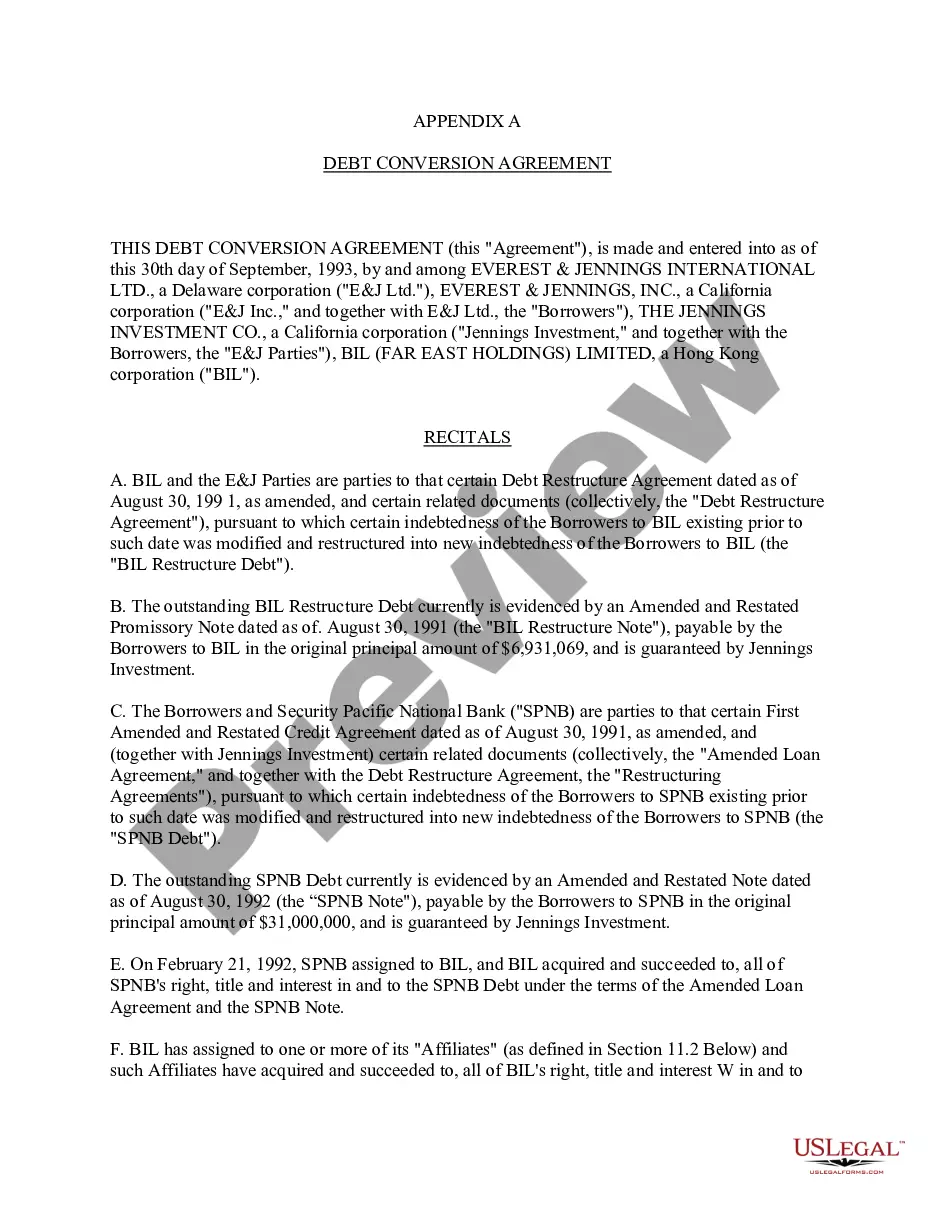
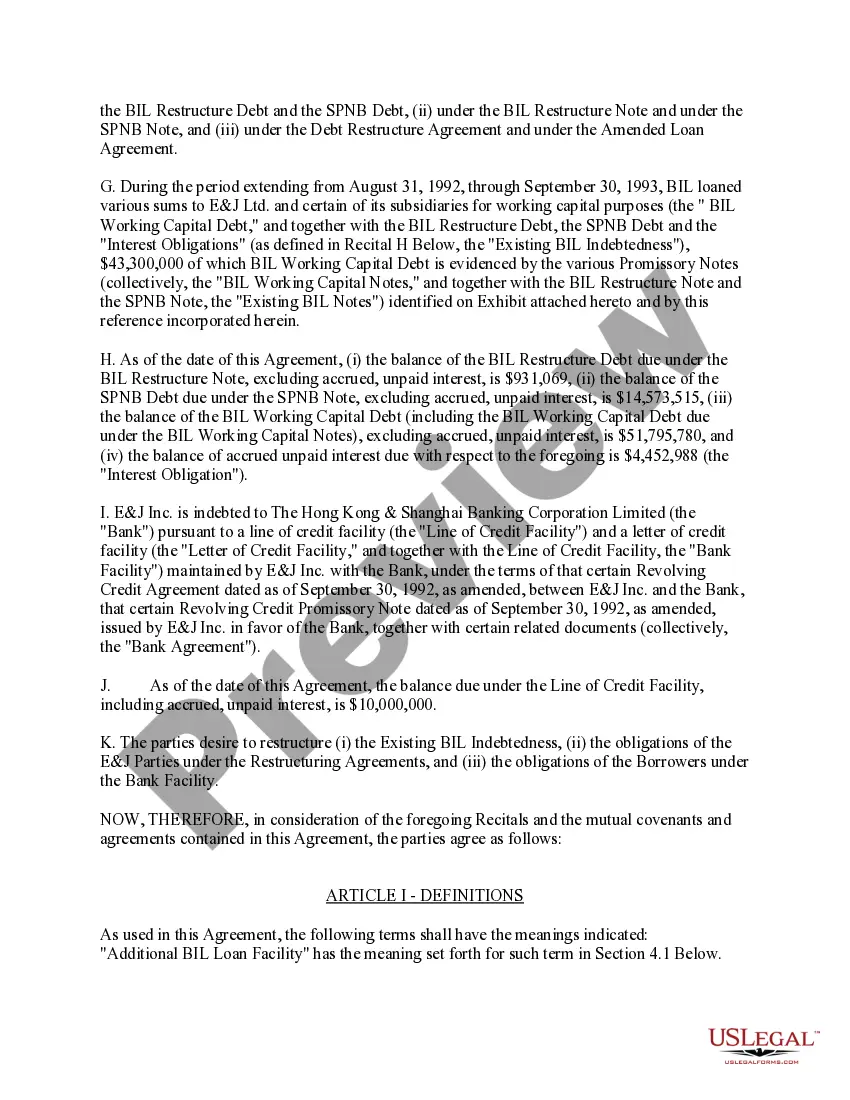
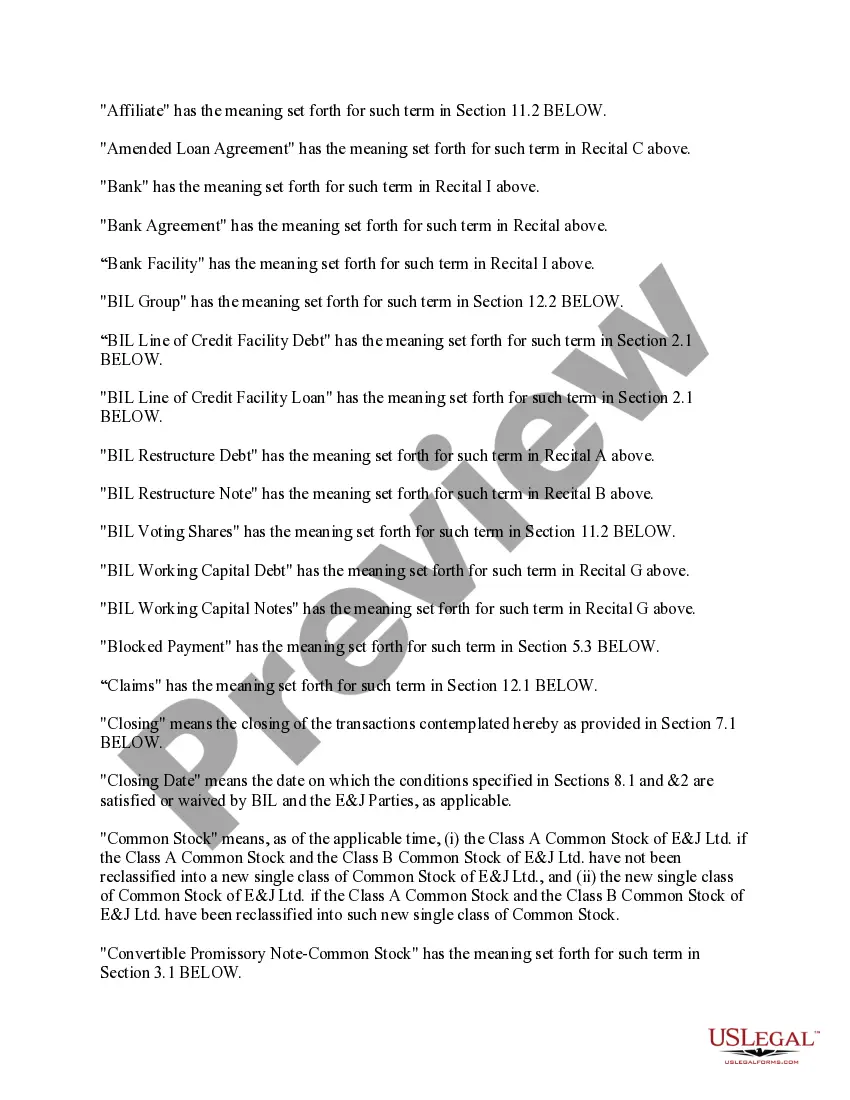
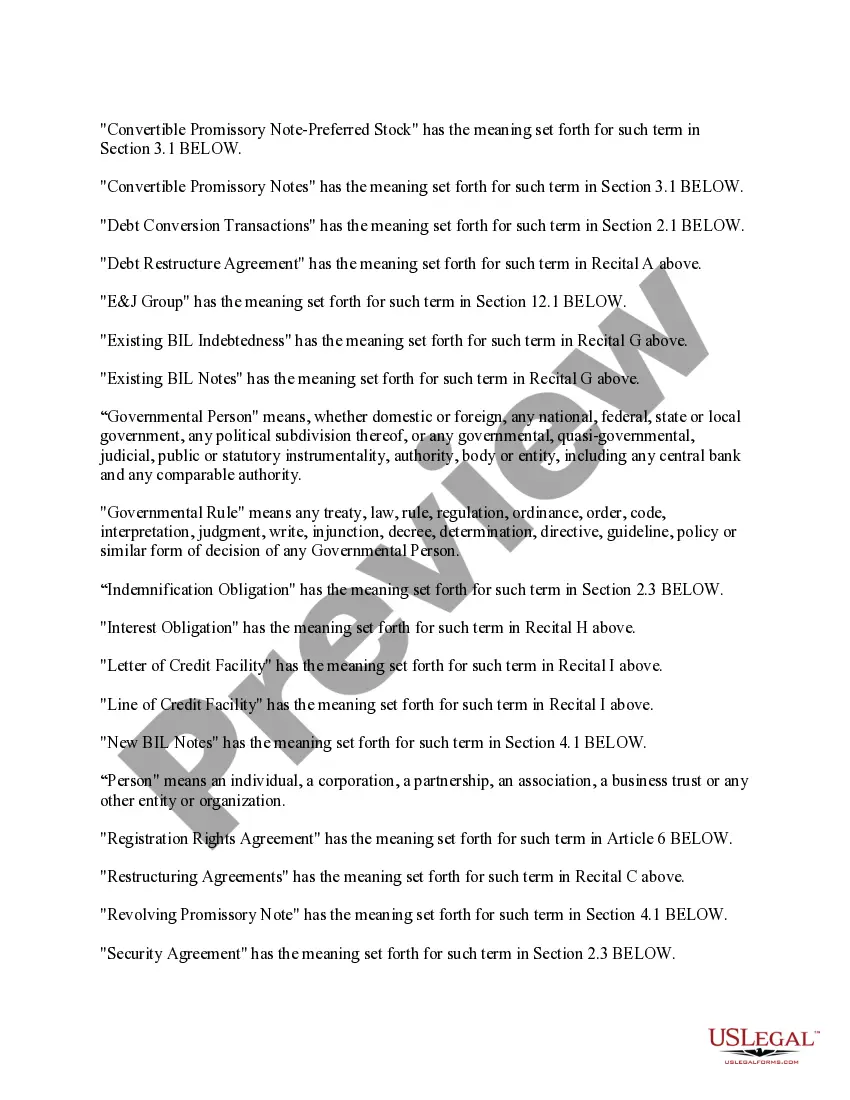
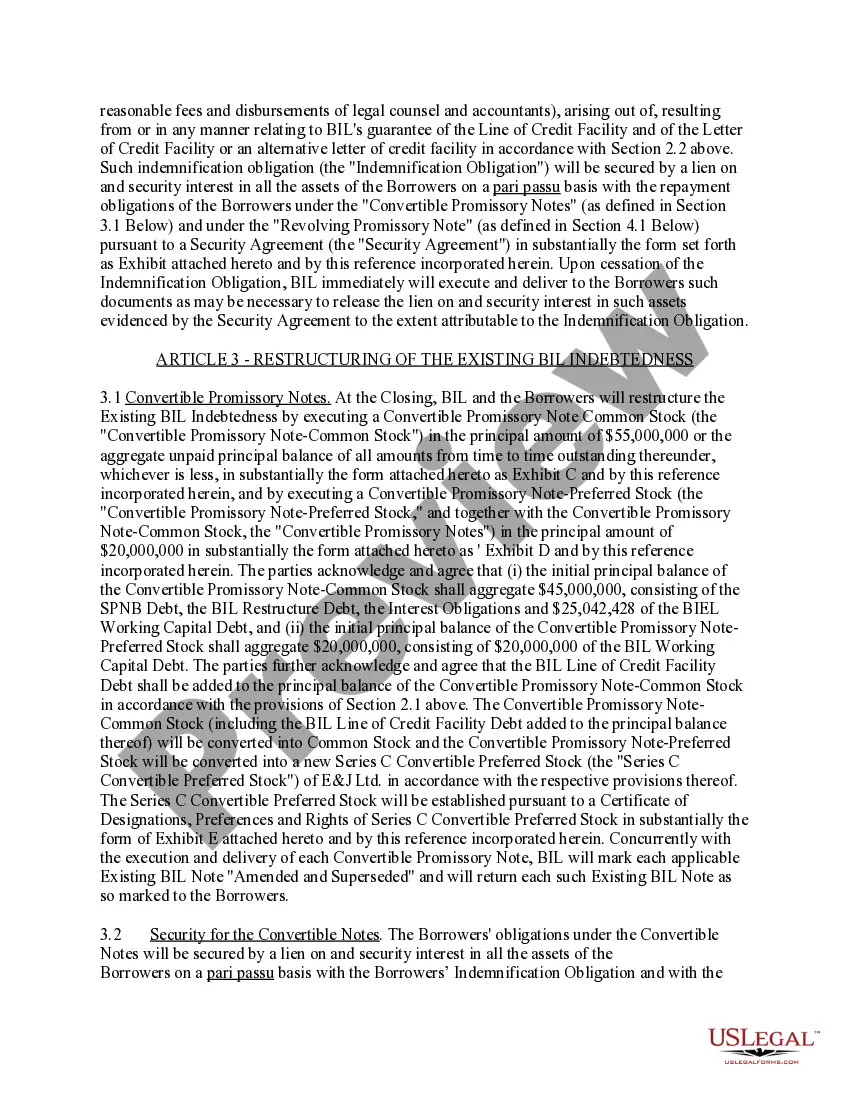
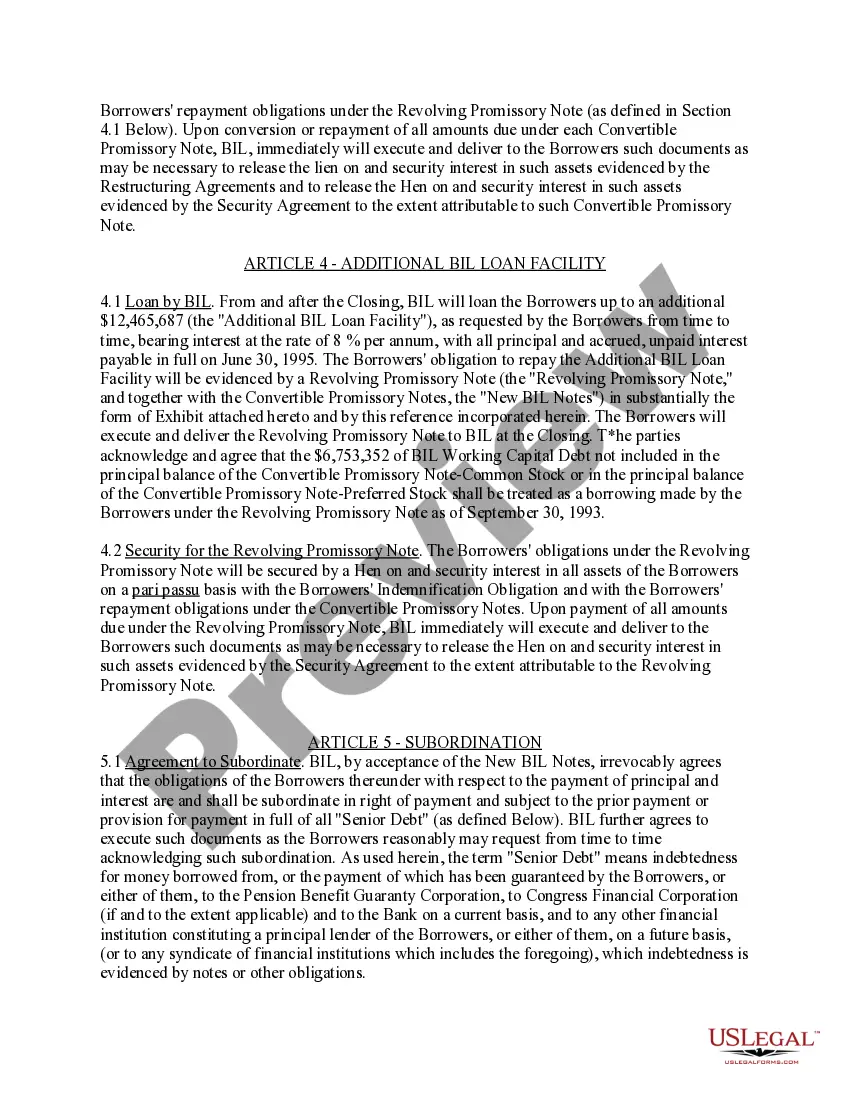
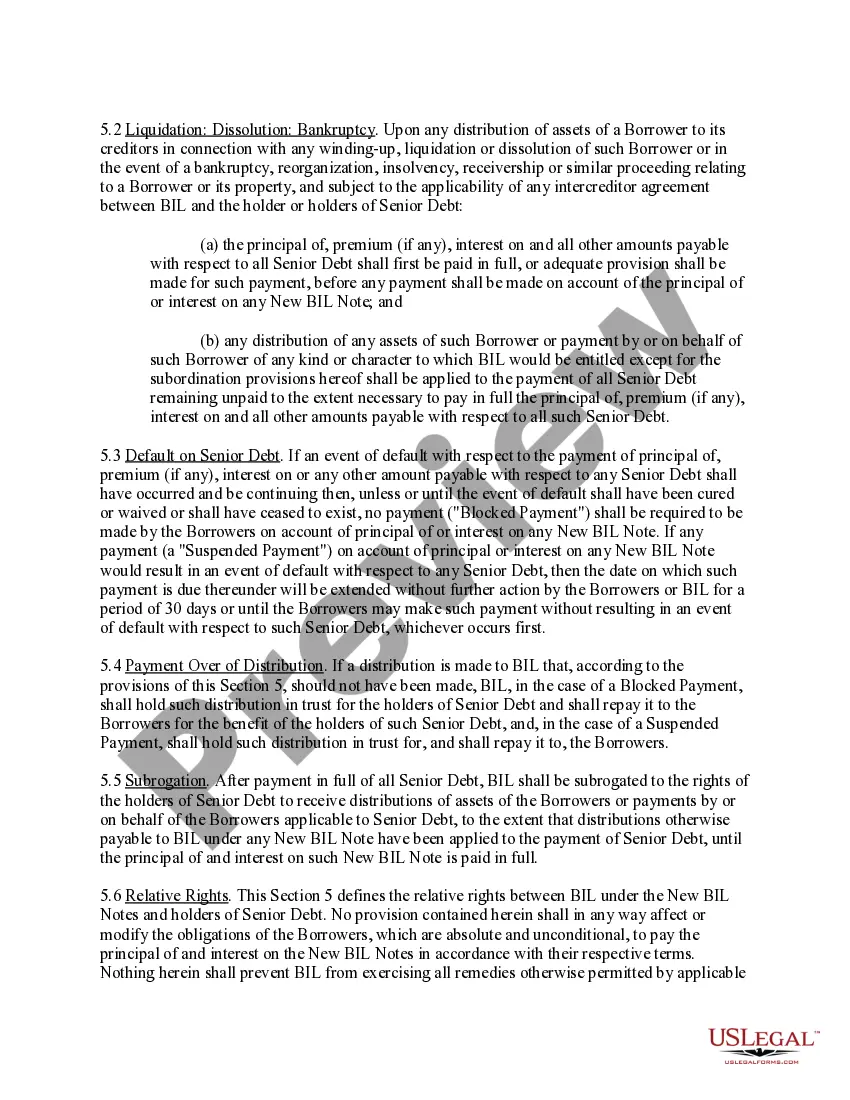
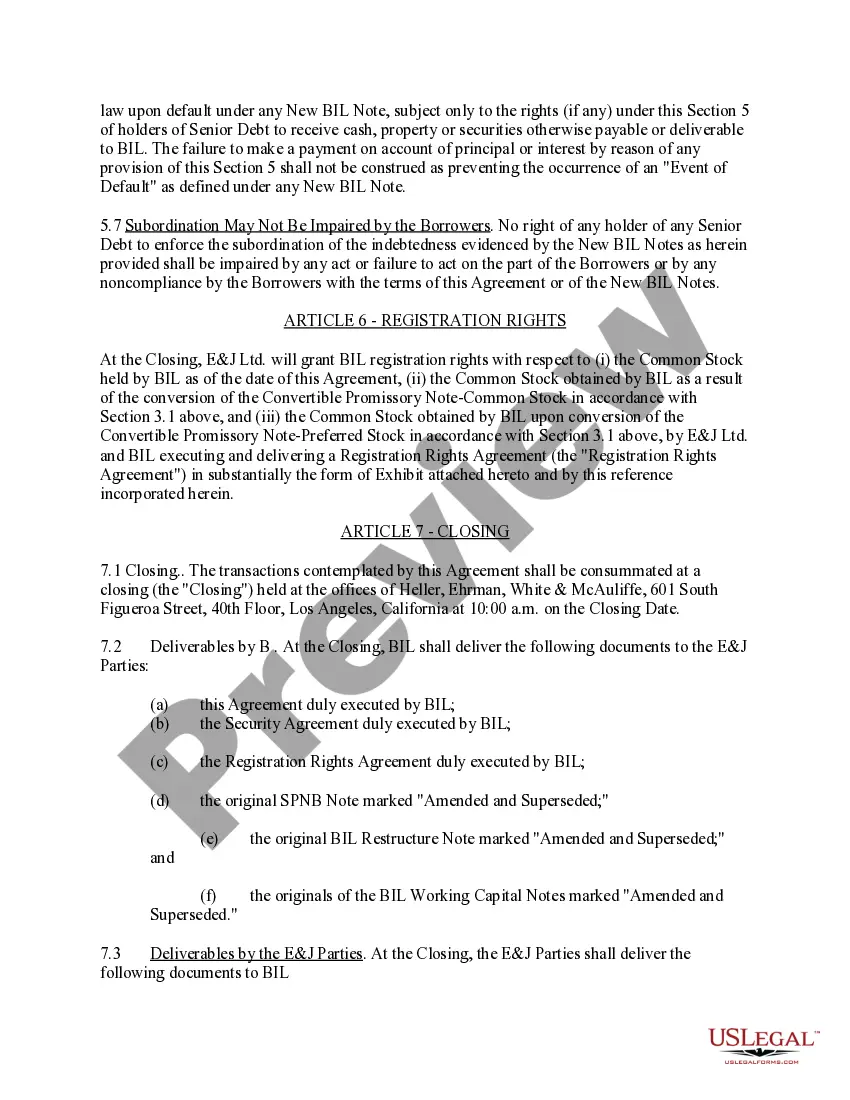
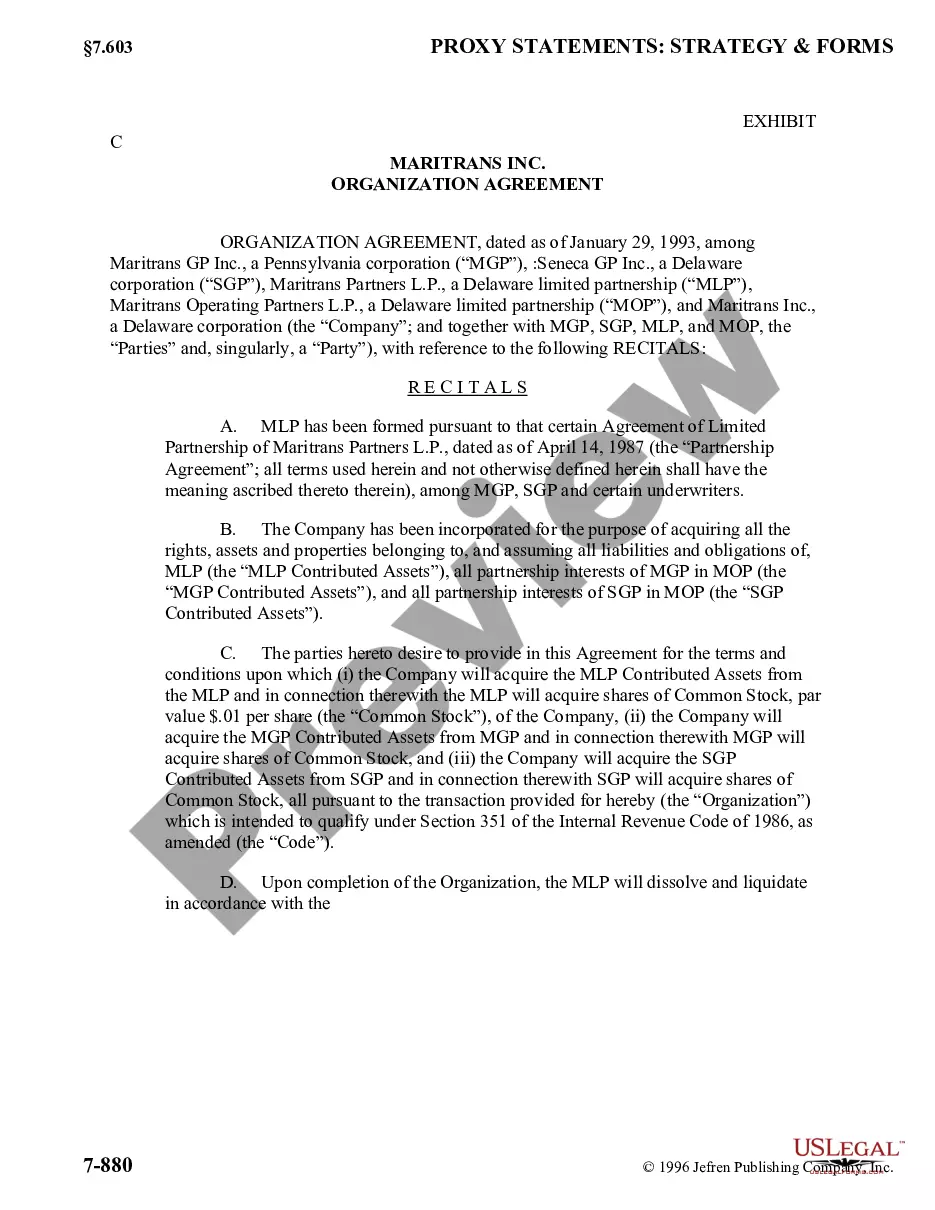
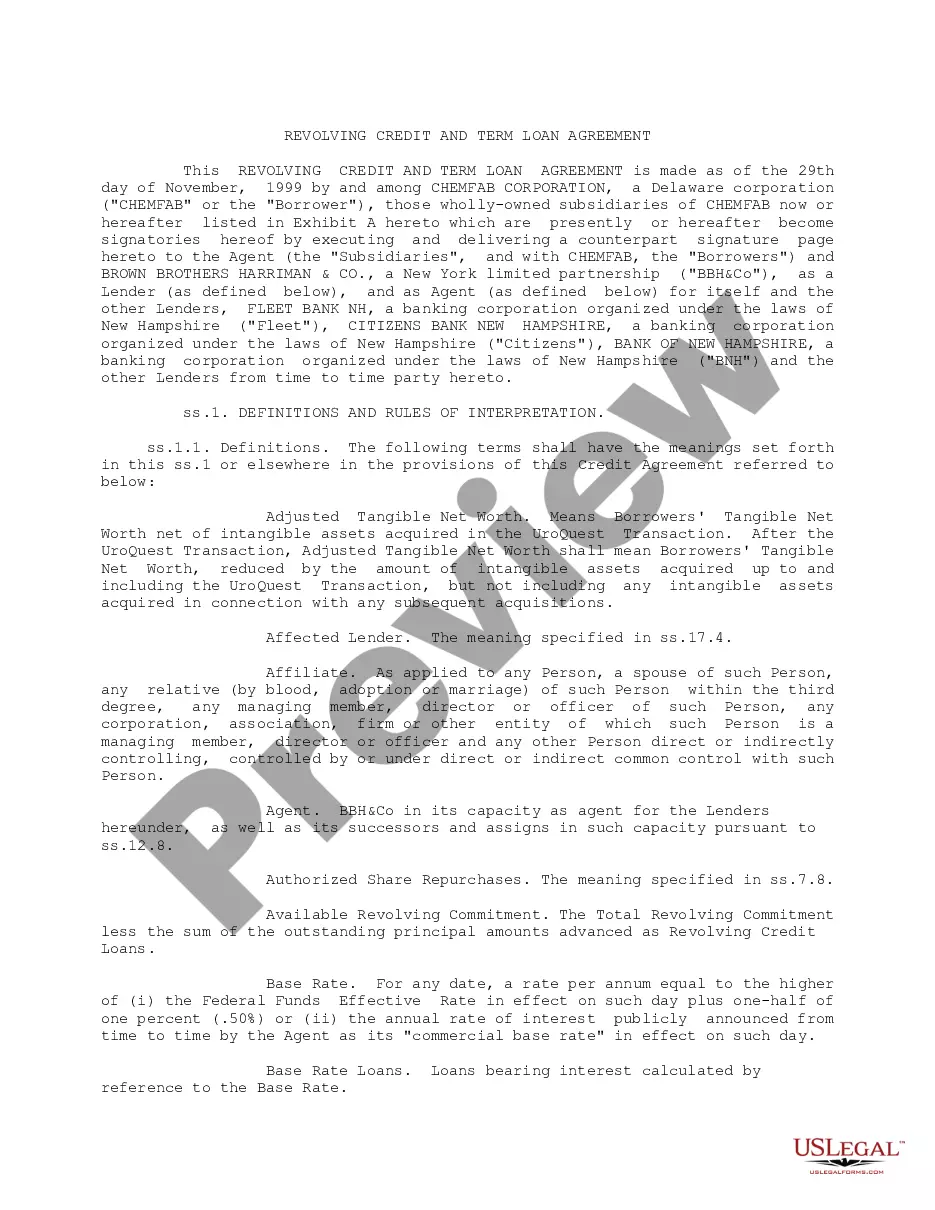
The Debt Conversion Agreement is a legal document that outlines the terms under which a debtor's financial obligations are converted into equity or stock in the creditor's company. This particular form, which includes Exhibit A, is tailored for corporate entities involved in debt restructuring, making it distinct from standard loan agreements or promissory notes. Utilizing this form can help parties streamline the process of converting existing debts into equity solutions, thus facilitating financial restructuring.
Main sections of this form
- Definitions of key terms relevant to the agreement and parties involved.
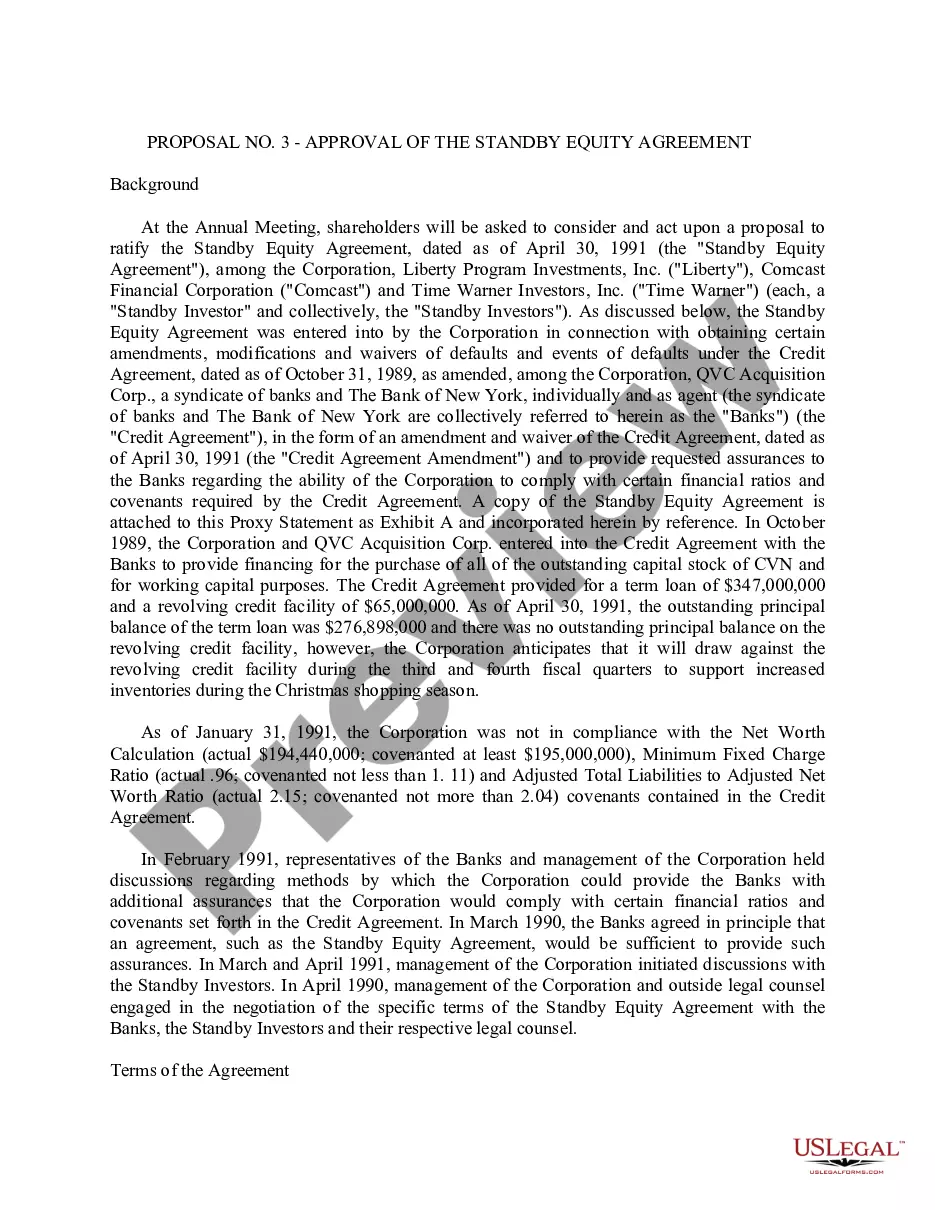
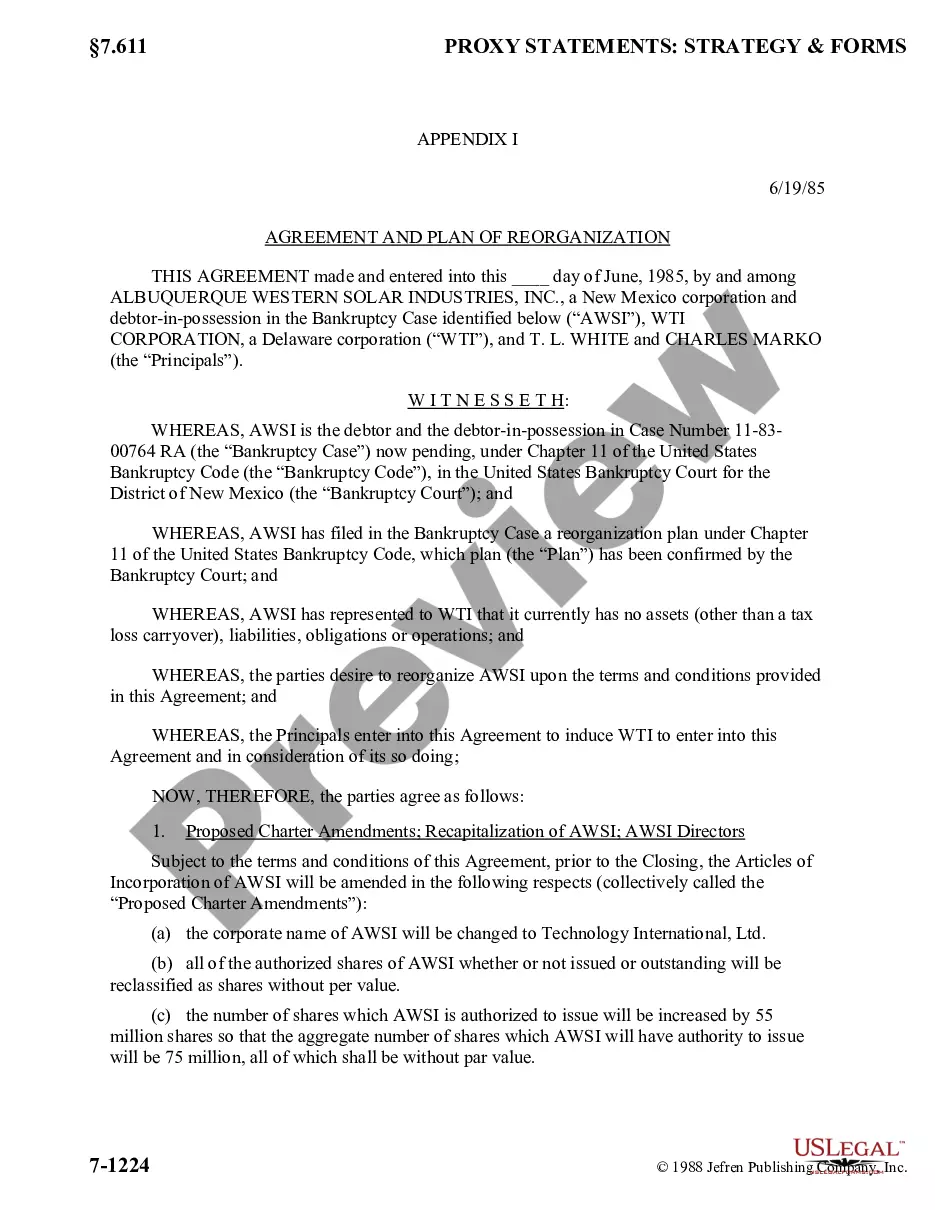
- Recitals explaining the background and context of the debt to be converted.
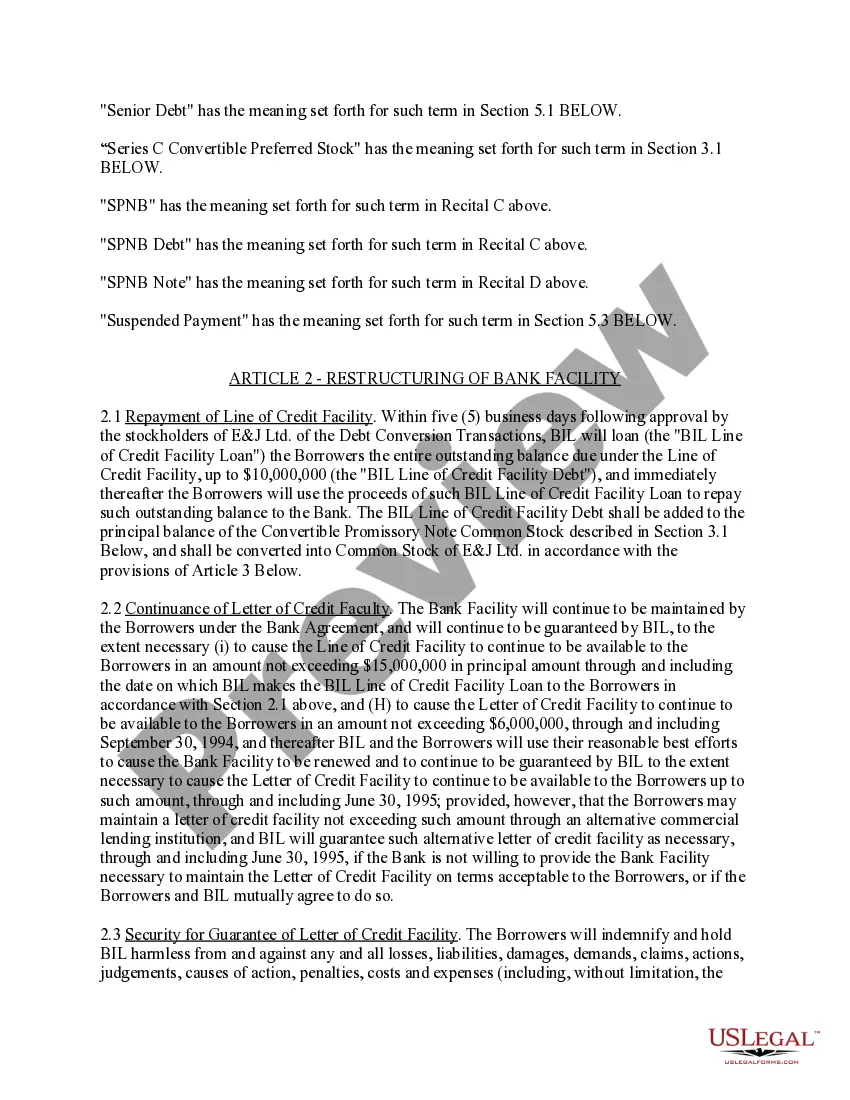
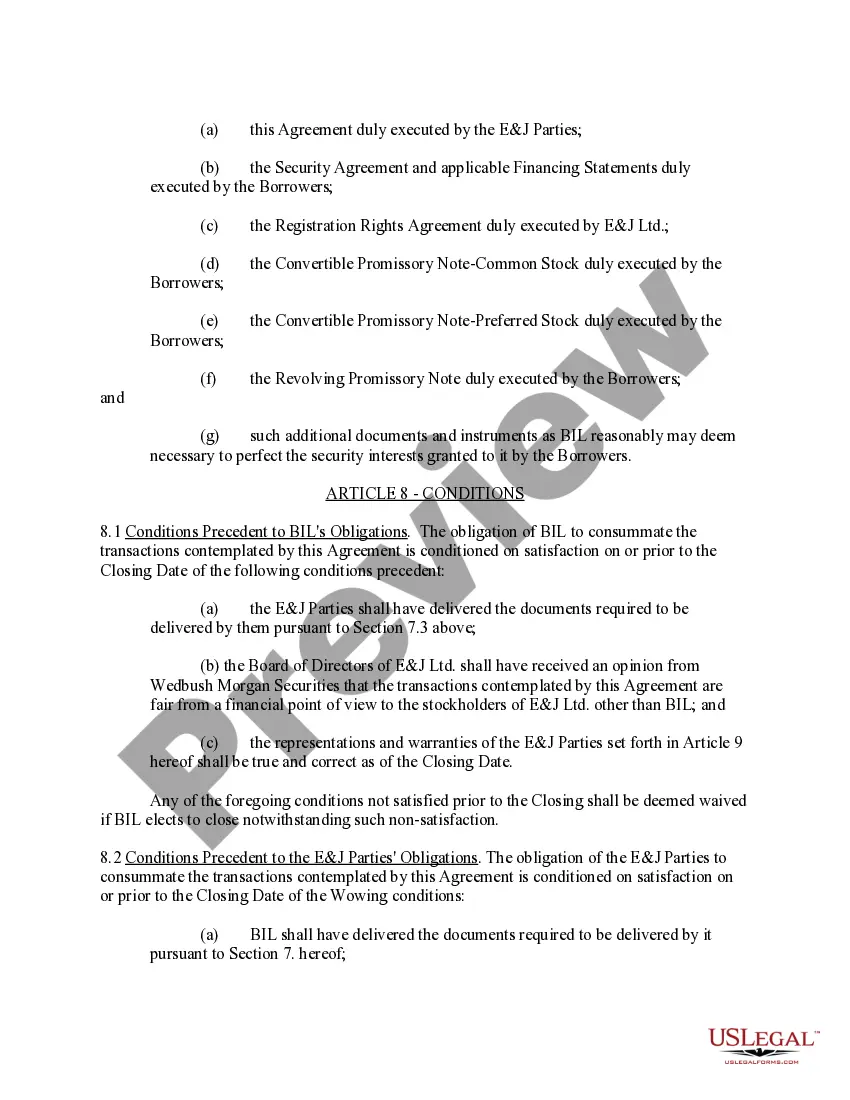
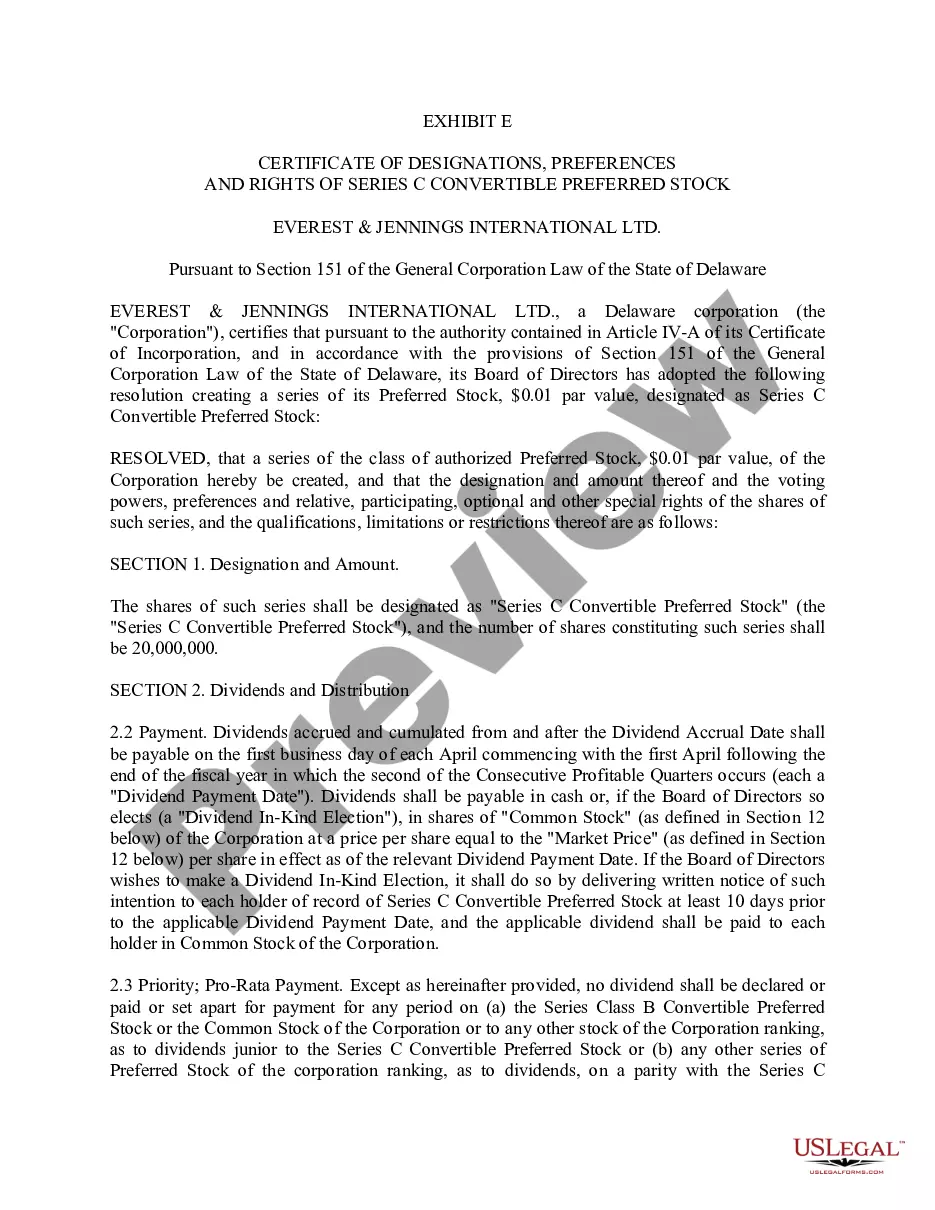
- Details about the structure and terms for debt conversion, including amounts and types of securities.
- Clauses concerning the obligations and responsibilities of each party after the conversion.
- Provisions for security interests and indemnification obligations related to the agreement.

When to use this document
This form should be used when a company needs to convert its existing debt obligations into equity, either to enhance its financial stability or to attract more favorable investment terms. Typical scenarios include situations where a company is restructuring its debts, negotiating with creditors to reduce liabilities, or seeking to leverage current debts for future equity opportunities.
Who should use this form
- Corporate entities involved in debt restructuring negotiations.
- Businesses looking to convert outstanding loans into ownership stakes.
- Investors and creditors interested in restructuring financial agreements.
- Legal professionals advising companies on debt-related agreements.
Completing this form step by step
- Identify the parties involved, including the creditor and debtor.
- Clearly define the terms of the debt being converted, including amounts and types of securities.
- Include relevant background information and context for the debt restructure.
- Specify the rights and obligations of each party after the agreement is executed.
- Ensure signatures are obtained from all parties to validate the agreement.
Does this document require notarization?
This form does not typically require notarization to be legally valid. However, some jurisdictions or document types may still require it. US Legal Forms provides secure online notarization powered by Notarize, available 24/7 for added convenience.
Get your form ready online
Our built-in tools help you complete, sign, share, and store your documents in one place.
Make edits, fill in missing information, and update formatting in US Legal Forms—just like you would in MS Word.
Download a copy, print it, send it by email, or mail it via USPS—whatever works best for your next step.
Sign and collect signatures with our SignNow integration. Send to multiple recipients, set reminders, and more. Go Premium to unlock E-Sign.
If this form requires notarization, complete it online through a secure video call—no need to meet a notary in person or wait for an appointment.
We protect your documents and personal data by following strict security and privacy standards.

Make edits, fill in missing information, and update formatting in US Legal Forms—just like you would in MS Word.

Download a copy, print it, send it by email, or mail it via USPS—whatever works best for your next step.

Sign and collect signatures with our SignNow integration. Send to multiple recipients, set reminders, and more. Go Premium to unlock E-Sign.

If this form requires notarization, complete it online through a secure video call—no need to meet a notary in person or wait for an appointment.

We protect your documents and personal data by following strict security and privacy standards.
Avoid these common issues
- Failing to clearly define the types of securities being issued.
- Not including all parties involved in the debt agreement.
- Neglecting to reference past agreements or relevant documents accurately.
- Omitting necessary signatures or legal validations which can render the document unenforceable.
Benefits of completing this form online
- Convenient download options that allow immediate access to customizable templates.
- Support from licensed attorneys in ensuring the document meets legal standards.
- Ability to edit the document to tailor it to specific corporate needs and scenarios.
- Secure storage and easy retrieval of forms when needed for future reference.
Legal use & context
- The Debt Conversion Agreement is often used in corporate restructuring initiatives.
- It establishes a legally binding framework for converting debts into equity instruments.
- Proper execution ensures enforceability in accordance with relevant corporate and securities laws.
Looking for another form?
Form popularity
FAQ
Debt for debt exchange means the exchange of an existing debt with a new debt by the debtor. An existing debt can be exchanged even by combining debt and equity securities. A debt for debt exchange procedure benefits both the creditor and the debtor.
The debt to equity ratio shows a company's debt as a percentage of its shareholder's equity. If the debt to equity ratio is less than 1.0, then the firm is generally less risky than firms whose debt to equity ratio is greater than 1.0.
Debt conversion is the exchange of debt - typically at a substantial discount - for equity, or counterpart domestic currency funds to be used to finance a particular project or policy. Debt for equity, debt for nature and debt for development swaps are all examples of debt conversion.
The optimal debt-to-equity ratio will tend to vary widely by industry, but the general consensus is that it should not be above a level of 2.0. While some very large companies in fixed asset-heavy industries (such as mining or manufacturing) may have ratios higher than 2, these are the exception rather than the rule.
Debt-to-Assets Ratio = Total Debt / Total Assets. Debt-to-Equity Ratio = Total Debt / Total Equity.
Updated October 04, 2019. Debt-to-equity swaps are common transactions in the financial world. They enable a borrower to transform loans into shares of stock or equity. Most commonly, a financial institution such as an insurer or a bank will hold the new shares after the original debt is transformed into equity shares.
At its simplest, a debt for equity swap is an exchange of (usually lender) debt for shares in the borrower, and has the advantage of improving the capital position of the borrower as it results in reduced leverage and a lower interest bill whilst offering the lender a share in any upside when the restructured
Conversion Agreement means any agreement entered into from time to time between the Borrower or Guarantor (or their respective agents) and any maintenance facility with respect to the conversion of an ACS Group Aircraft to a freighter or mixed-use aircraft.