Montana Agreement for Delayed or Partial Rent Payments
What this document covers
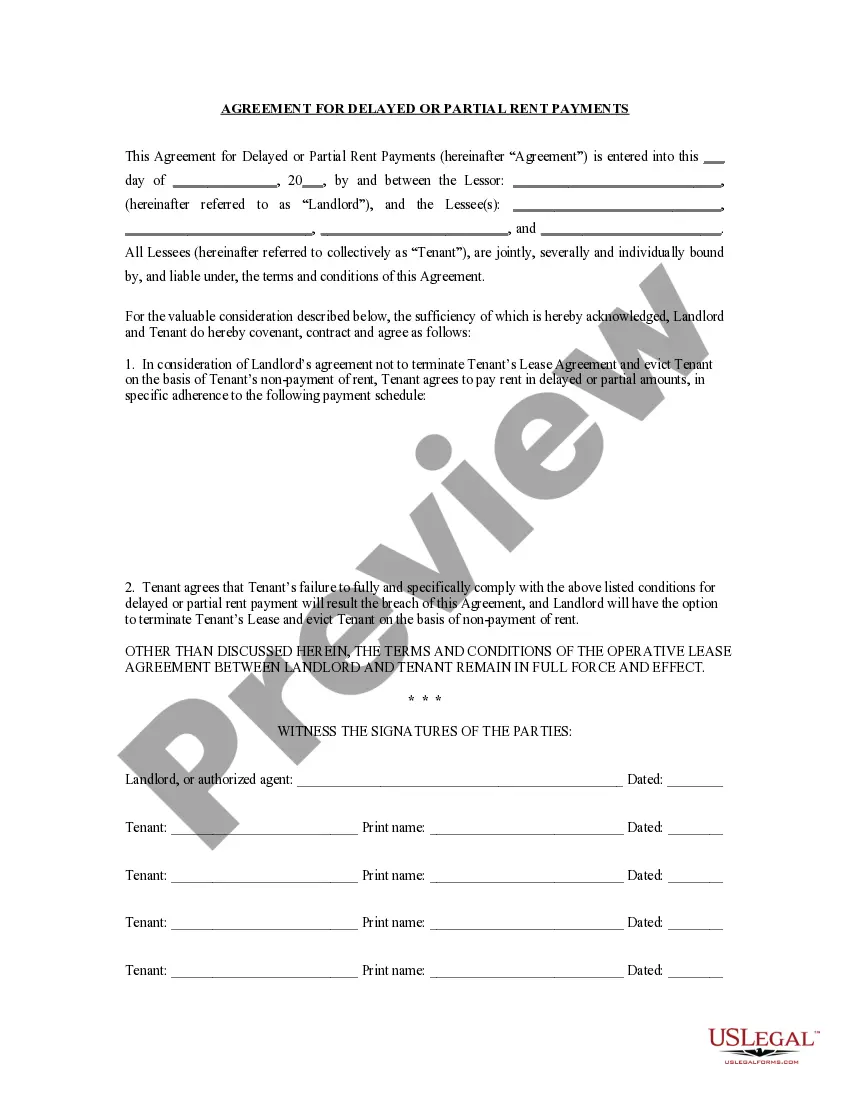
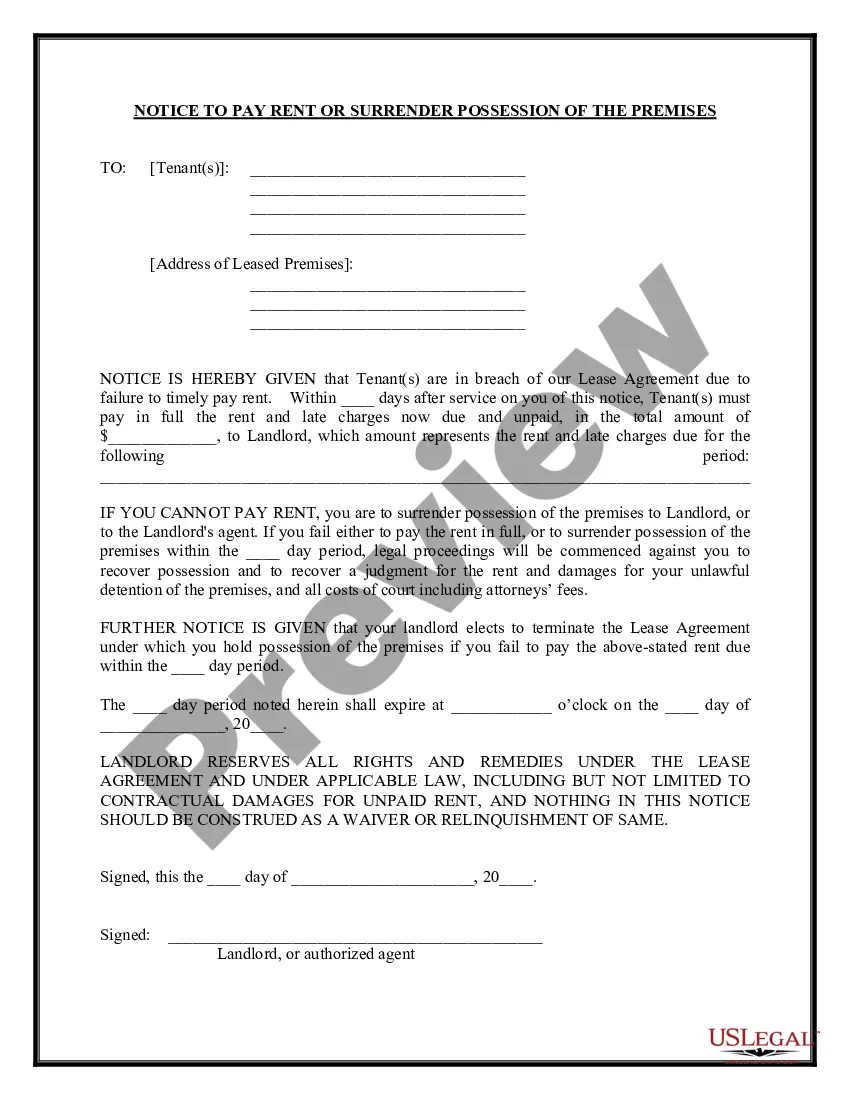
The Agreement for Delayed or Partial Rent Payments is a legal document that outlines the terms between a landlord and a tenant regarding the payment of rent in a delayed or partial manner. This agreement establishes specific deadlines and conditions under which the tenant can submit rent payments late or only partially without facing eviction. It distinguishes itself from regular lease agreements by explicitly addressing the terms of delayed payments to provide both parties with clarity and protection during financial hardships.
Key parts of this document
- Parties involved: Identification of the landlord and tenant(s).
- Payment terms: Specific dates and amounts for delayed or partial payments.
- Consideration clause: Acknowledgment of the landlord's agreement not to terminate the lease due to non-payment.
- Remaining lease terms: Confirmation that the original lease remains in effect except for the specified changes.
- Signatures: Space for both landlord and tenant signatures to validate the agreement.
When this form is needed
This form is useful in situations where a tenant is experiencing financial difficulties and is unable to pay rent in full by the due date. It allows the tenant to establish a mutually agreed-upon schedule for delayed or partial payments, ensuring that they can stay in their rental property while meeting their financial obligations. Landlords can use this form to document the agreement and avoid eviction while offering their tenants relief during challenging times.
Who can use this document
- Landlords who wish to establish a formal agreement for delayed or partial rent payments.
- Tenants facing temporary financial hardships who need flexibility in paying rent.
- Property managers who oversee rental agreements and need to document modifications to payment terms.
- Individuals seeking clarity and legal protection during negotiations about rent payments.
Steps to complete this form
- Identify the parties: Enter the full names of the landlord and all tenants involved.
- Specify the payment terms: Include the specific amounts and due dates for delayed or partial payments.
- Review the lease terms: Confirm that the original lease agreement remains applicable, except for the modifications established in this agreement.
- Sign the document: Ensure all parties sign the agreement and date it appropriately.
- Keep a copy: Provide copies of the signed agreement to all parties for their records.
Notarization requirements for this form
This form does not typically require notarization unless specified by local law. It is advisable to check local regulations to ensure compliance with any state-specific requirements regarding the execution of rental agreements.
Get your form ready online
Our built-in tools help you complete, sign, share, and store your documents in one place.
Make edits, fill in missing information, and update formatting in US Legal Forms—just like you would in MS Word.
Download a copy, print it, send it by email, or mail it via USPS—whatever works best for your next step.
Sign and collect signatures with our SignNow integration. Send to multiple recipients, set reminders, and more. Go Premium to unlock E-Sign.
If this form requires notarization, complete it online through a secure video call—no need to meet a notary in person or wait for an appointment.
We protect your documents and personal data by following strict security and privacy standards.

Make edits, fill in missing information, and update formatting in US Legal Forms—just like you would in MS Word.

Download a copy, print it, send it by email, or mail it via USPS—whatever works best for your next step.

Sign and collect signatures with our SignNow integration. Send to multiple recipients, set reminders, and more. Go Premium to unlock E-Sign.

If this form requires notarization, complete it online through a secure video call—no need to meet a notary in person or wait for an appointment.

We protect your documents and personal data by following strict security and privacy standards.
Avoid these common issues
- Failing to specify the exact payment amounts and deadlines.
- Not involving all relevant tenants in the agreement.
- Neglecting to confirm that the original lease terms remain unchanged.
- Forgetting to sign the agreement, which could invalidate it.
Why complete this form online
- Convenience of accessing and downloading the document from anywhere, at any time.
- Editable template that can be personalized to fit specific situations.
- Reliability in having a document drafted under legal guidance, ensuring compliance and clarity.
Quick recap
- The Agreement for Delayed or Partial Rent Payments provides a structured way to address late or partial rent payments.
- It is beneficial for both landlords and tenants facing financial challenges.
- Ensuring all parties involved sign the document helps protect everyone's rights and responsibilities.
Looking for another form?


Form popularity
FAQ
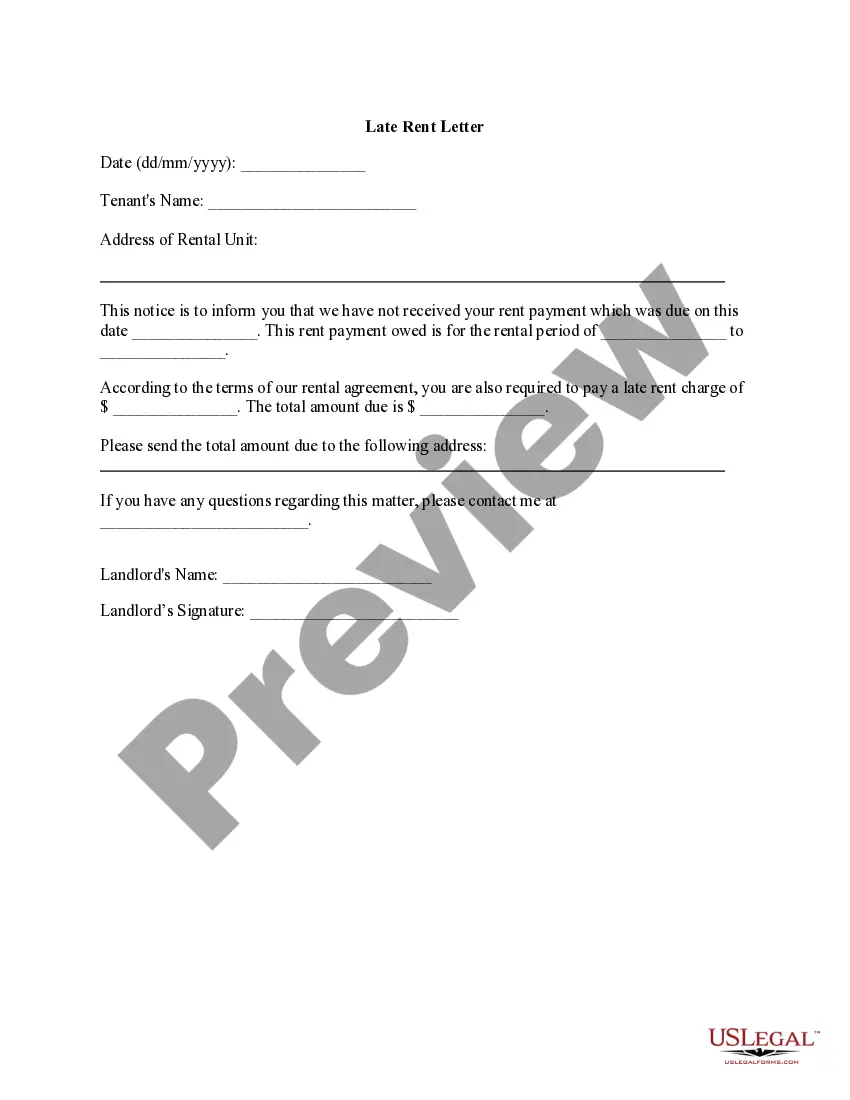
Clearly Outline Your Late Rent Procedure in the Lease. Late Rent Fees. Find Out Why Your Tenant's Rent is Late. Refer Your Tenant to Rent Assistance Programs. Make Rent Easier by Having Tenants Pay Rent Online.
Late fees add up and missing a rent payment can significantly impact your credit score. By law, your rent is due on the date that's specified in your lease. There's usually a grace period of five days, so if you pay your bill just a few days late, you probably don't need to worry about it.
Grace periods are quite common, usually varying between three and five days. Grace periods provide tenants extra time to pay rent before the landlord can legally charge a late fee.
Late fees Most rental agreements include a late fee clause. You might have to pay a late fee if you're even a few minutes past the due date. Or, you might have a grace period of a day or two.If you pay on the second, you won't have to pay a late fee, but your payment may still be flagged as a late payment.
The most your landlord can charge as a late fee is 5% of your monthly rent. For example, if your monthly rent is $1,000, the landlord can charge you up to $50 as a late fee. If you receive a rent subsidy, you may not pay all of your rent yourself.
A five day grace period means that rent due on the 1st wouldn't get a late fee until the 6th. However, this does not mean that rent is actually due on the 5th but that's the message that is inadvertently conveyed. Rent is due on the due date please don't make a habit out of paying within the grace period.
Grace periods are quite common, usually varying between three and five days. Grace periods provide tenants extra time to pay rent before the landlord can legally charge a late fee.
Although landlords won't fine tenants during 'grace periods', the payment of the rent is still considered legally delinquent. Normally, rent should be paid on or before the established due date. This is a clause that is included in all lease agreements.