Equity Incentive Plan
About this form
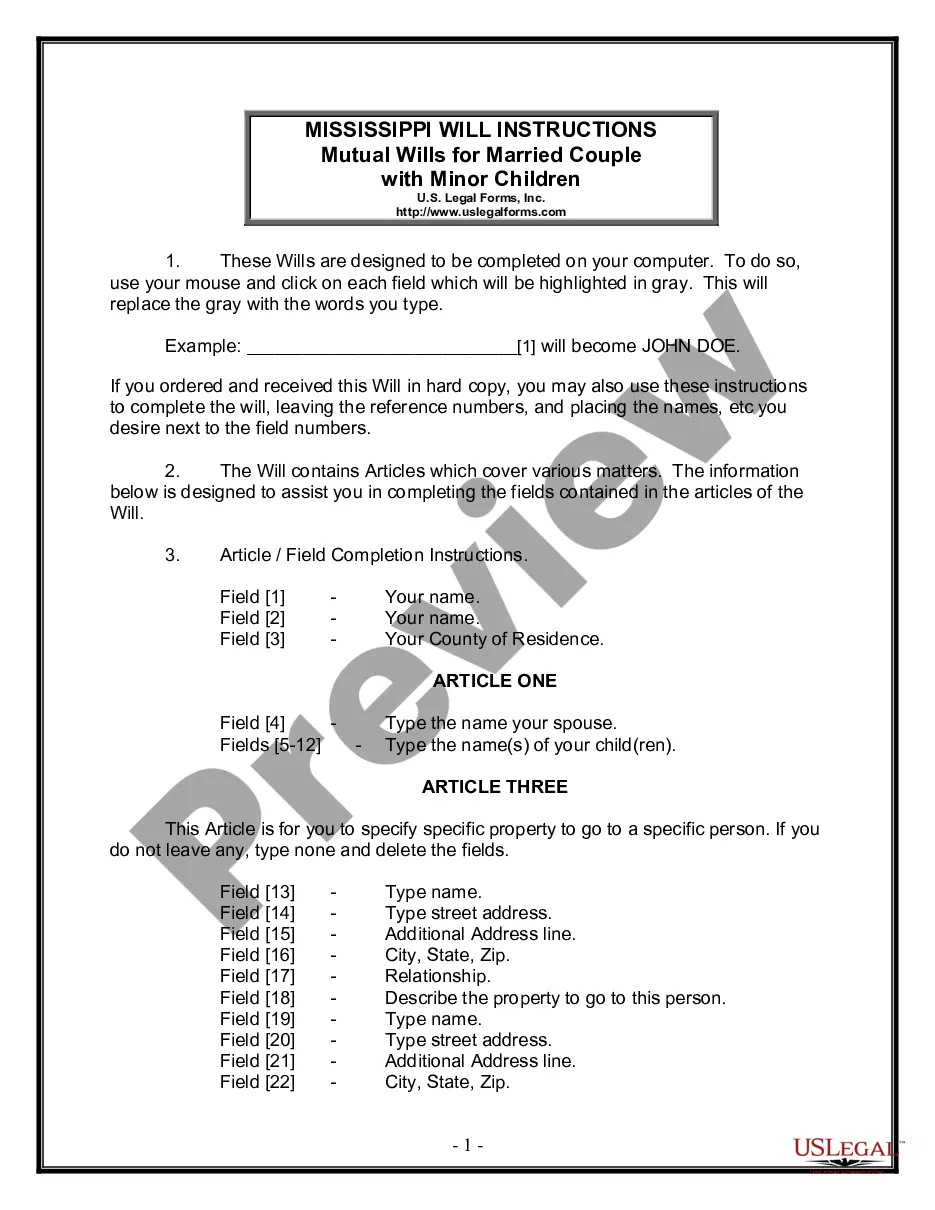
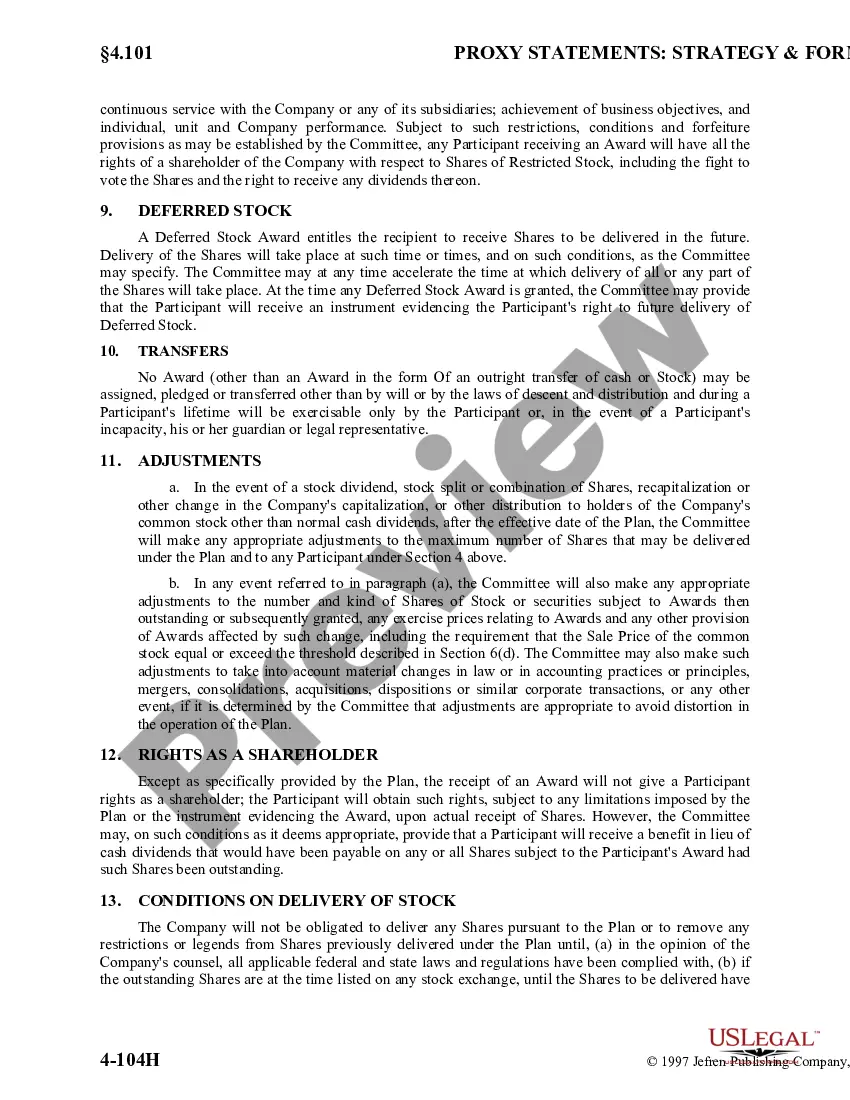
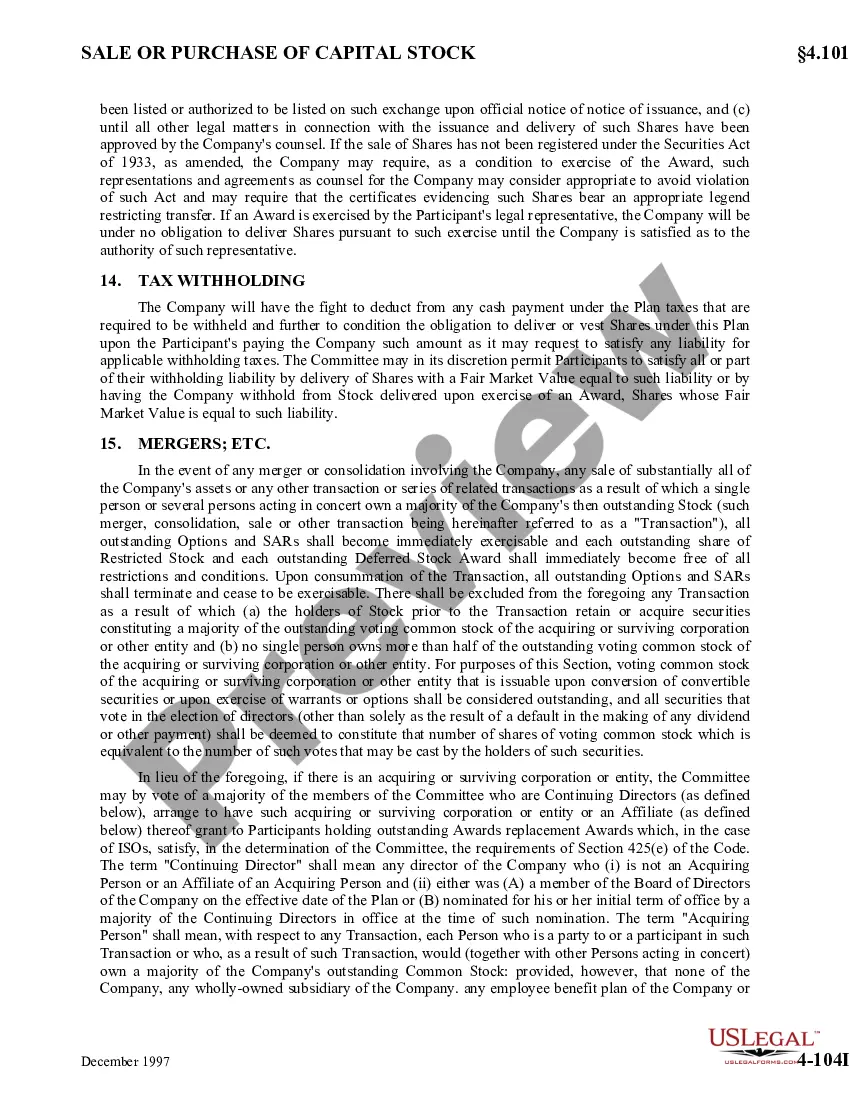
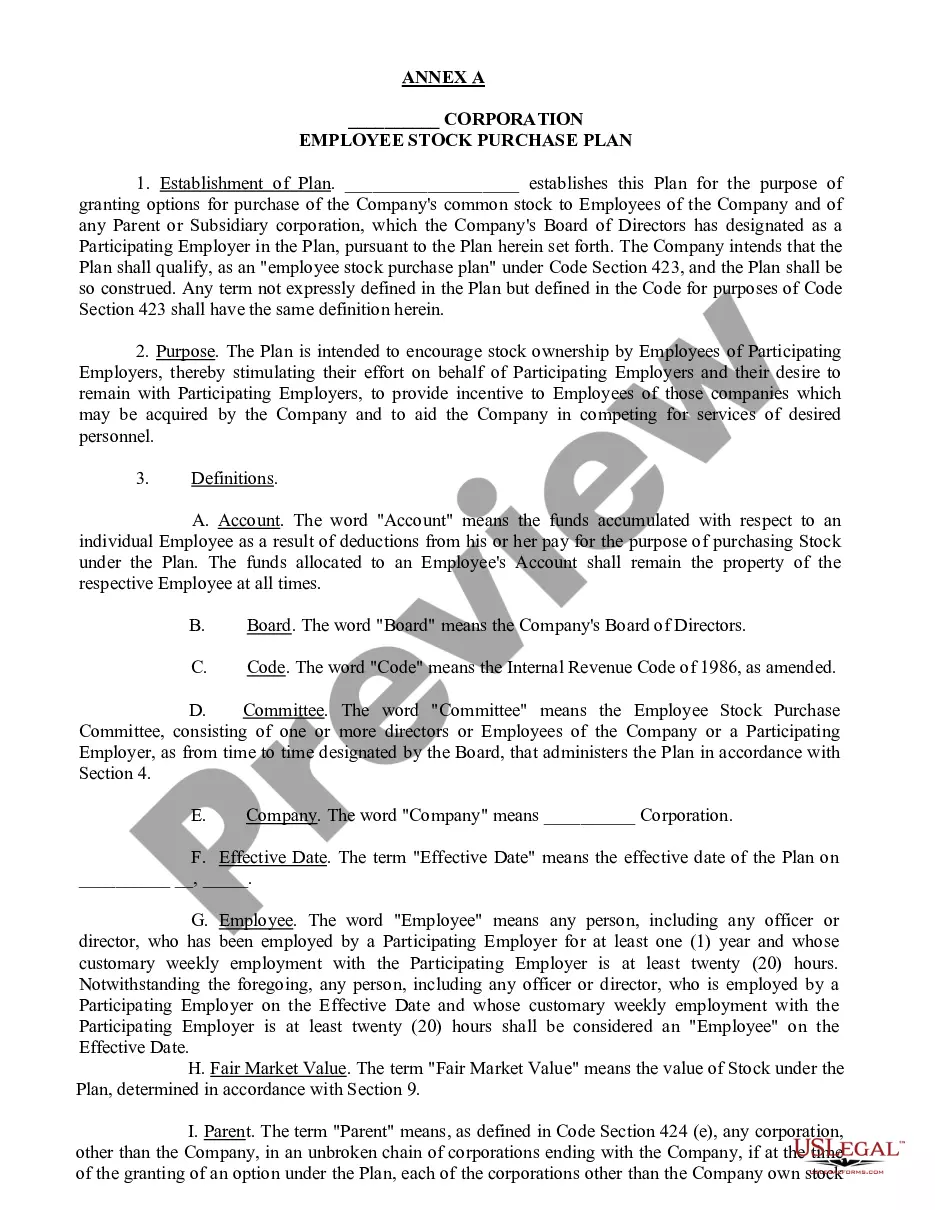
The Equity Incentive Plan is a legal document designed to assist companies in creating a structured framework for granting equity awards. This form is specifically tailored for businesses looking to incentivize employees and other contributors through stock options, stock appreciation rights, restricted stock, or deferred stock. It helps differentiate between various types of equity awards and outlines the rules governing their administration, making it easier for organizations to attract and retain top talent while aligning their interests with long-term company success.
What’s included in this form
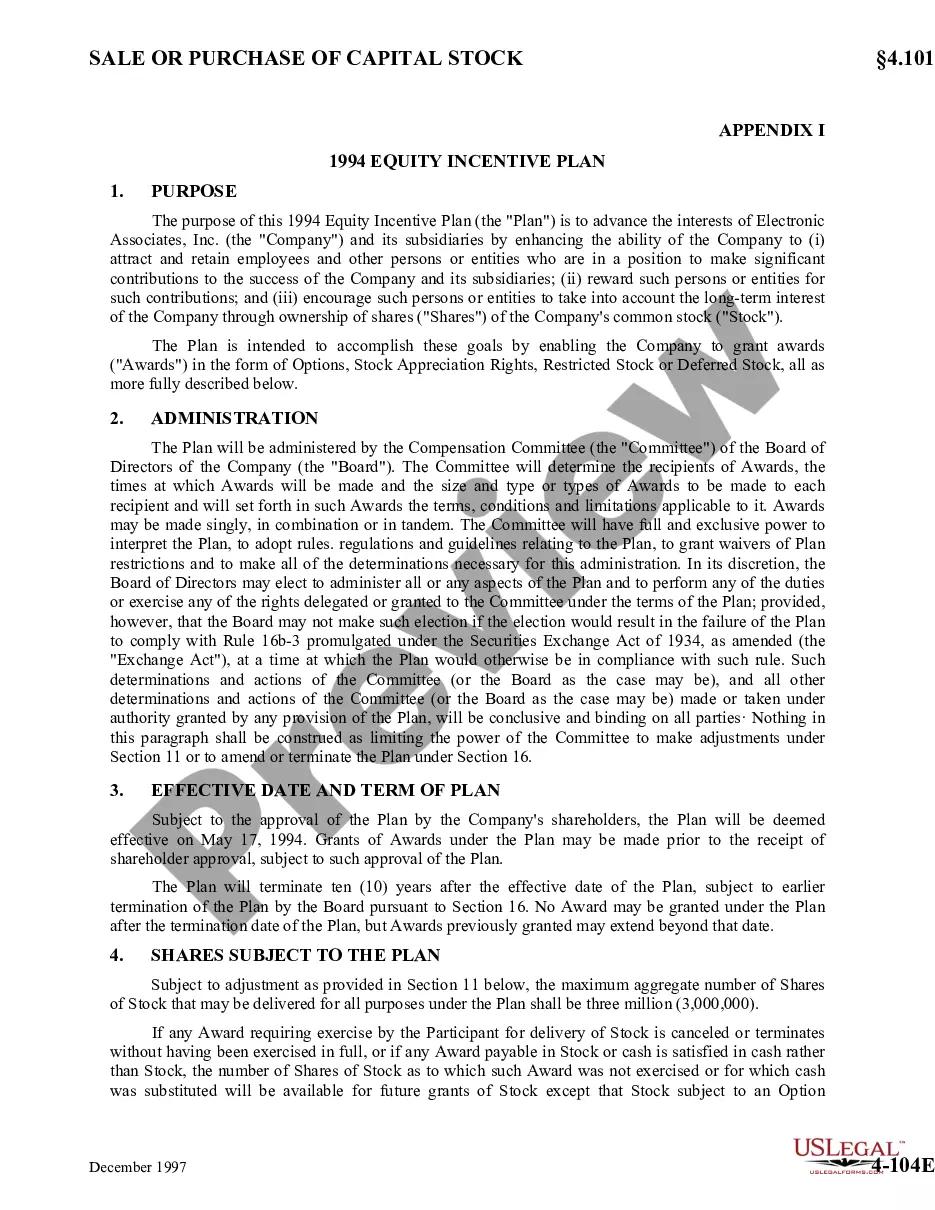
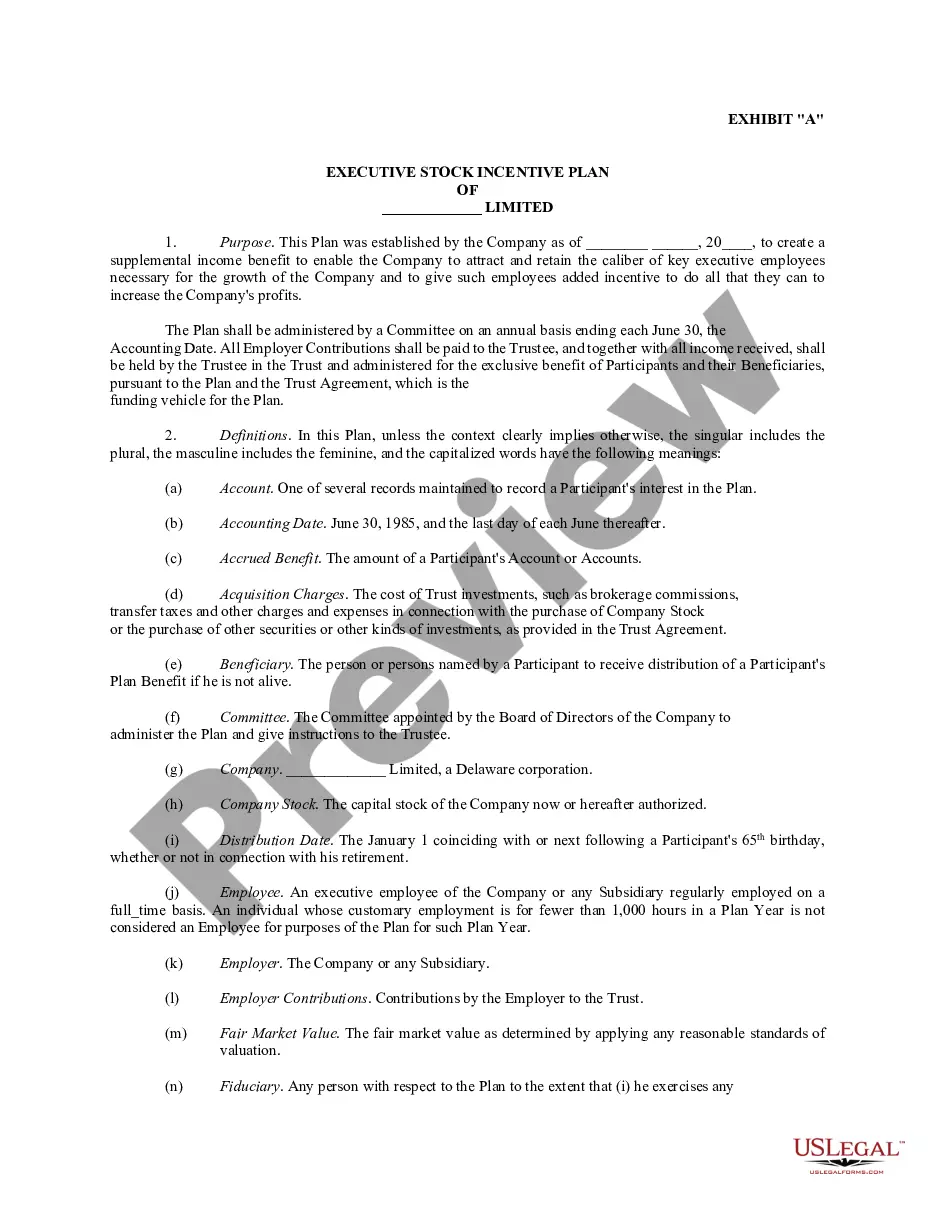
- Purpose: Establishes the goals of the Equity Incentive Plan for enhancing employee contribution and ownership.
- Administration: Details the roles of the Compensation Committee in managing the plan and making key decisions.
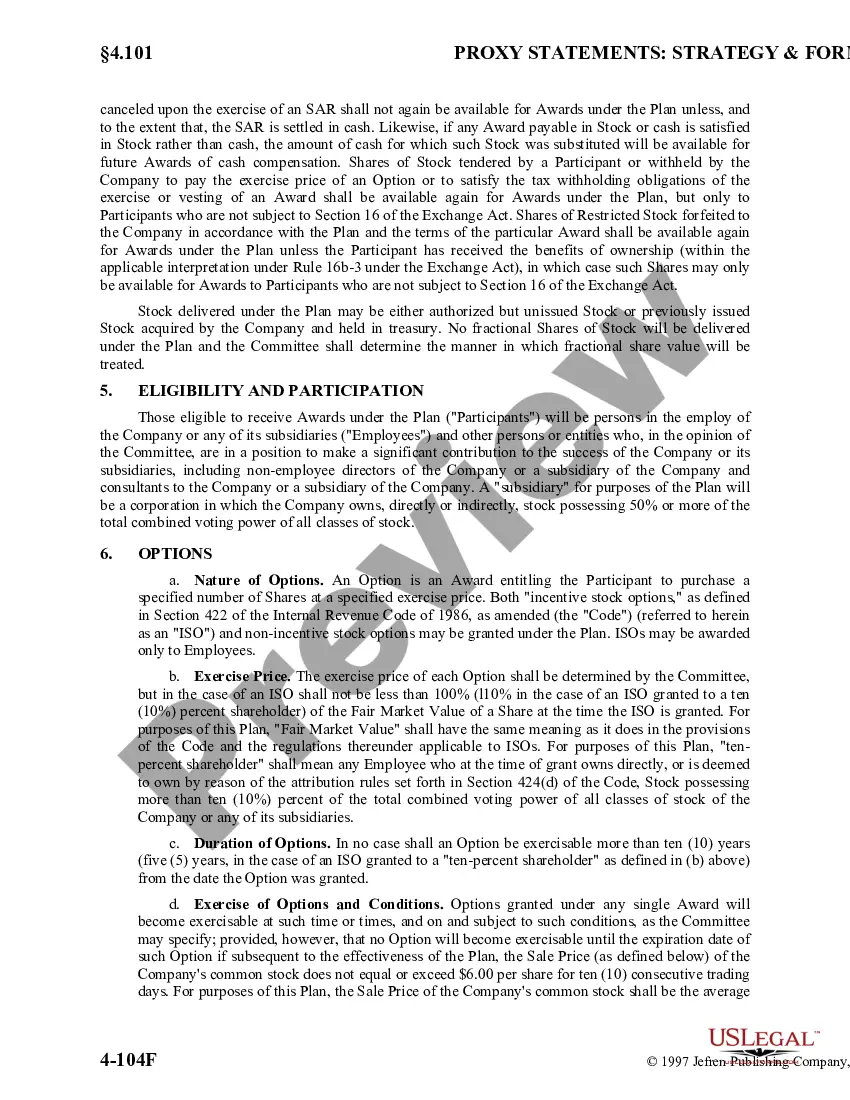
- Eligibility: Clarifies who can participate in the plan, including employees and non-employee directors.
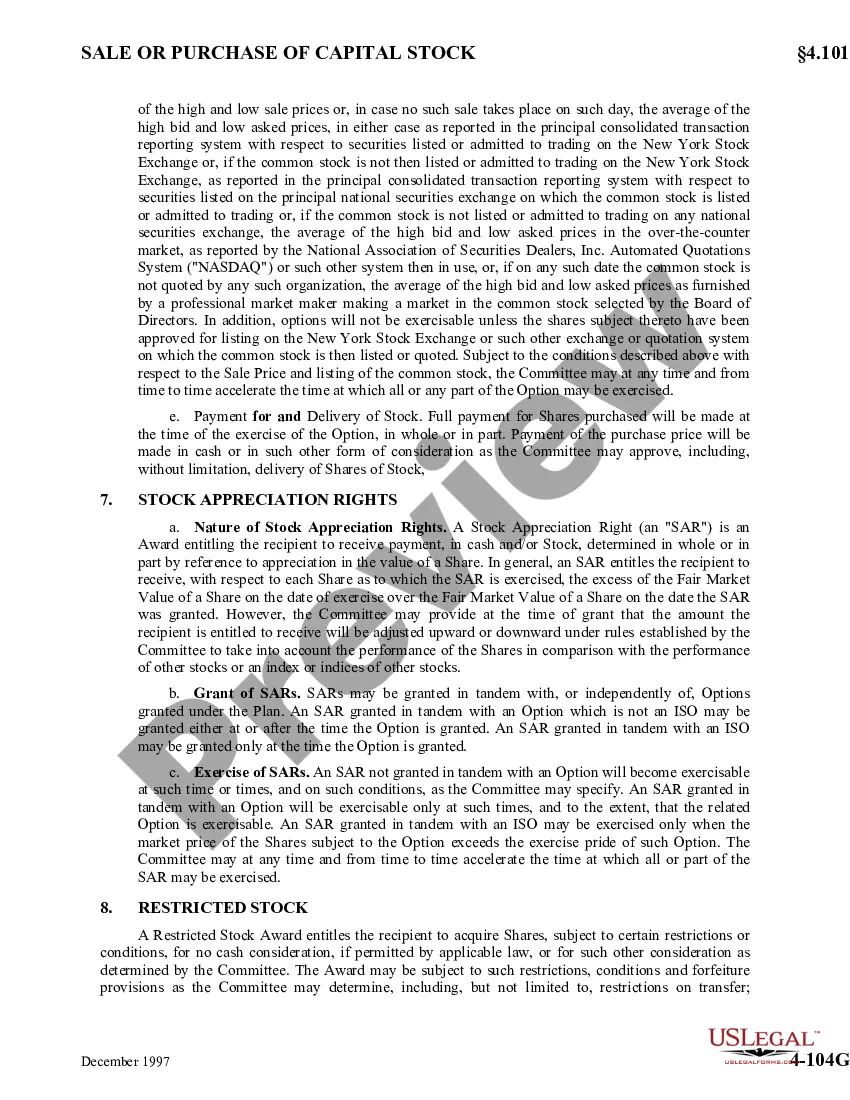
- Types of Awards: Explains the different equity awards available, including options and restricted stock.
- Shares Subject to the Plan: States the maximum number of shares available for distribution under the plan.
- Amendments and Termination: Outlines the process for modifying or terminating the plan by the Board of Directors.

When to use this document
This form should be used when a company wants to implement an equity incentive program for its employees and key contributors. It is particularly relevant during the establishment of a new plan or when modifying an existing one. Companies planning to offer stock options or other equity awards as part of their compensation strategy would benefit from using this form to ensure compliance and clarity.
Who this form is for
- Employers seeking to establish an equity incentive program.
- Compensation Committees tasked with designing and implementing the plan.
- HR professionals responsible for employee compensation and benefits.
- Legal advisors assisting companies in drafting and reviewing equity incentive plans.
- Non-employee directors and consultants involved in the plan's administration and oversight.
Instructions for completing this form
- Identify the purpose of the plan and the specific awards to be offered.
- Designate the Compensation Committee responsible for administering the plan.
- Define the eligibility criteria for participants in the equity program.
- Specify the number of shares available under the plan and any conditions for their allocation.
- Include provisions for amending, terminating, and addressing compliance with securities laws.
Notarization guidance
This form usually doesn’t need to be notarized. However, local laws or specific transactions may require it. Our online notarization service, powered by Notarize, lets you complete it remotely through a secure video session, available 24/7.
Get your form ready online
Our built-in tools help you complete, sign, share, and store your documents in one place.
Make edits, fill in missing information, and update formatting in US Legal Forms—just like you would in MS Word.
Download a copy, print it, send it by email, or mail it via USPS—whatever works best for your next step.
Sign and collect signatures with our SignNow integration. Send to multiple recipients, set reminders, and more. Go Premium to unlock E-Sign.
If this form requires notarization, complete it online through a secure video call—no need to meet a notary in person or wait for an appointment.
We protect your documents and personal data by following strict security and privacy standards.

Make edits, fill in missing information, and update formatting in US Legal Forms—just like you would in MS Word.

Download a copy, print it, send it by email, or mail it via USPS—whatever works best for your next step.

Sign and collect signatures with our SignNow integration. Send to multiple recipients, set reminders, and more. Go Premium to unlock E-Sign.

If this form requires notarization, complete it online through a secure video call—no need to meet a notary in person or wait for an appointment.

We protect your documents and personal data by following strict security and privacy standards.
Mistakes to watch out for
- Failing to confer with legal counsel before finalizing the plan's terms.
- Not clearly defining the eligibility criteria for participants.
- Omitting necessary provisions regarding the administration of the awards.
- Neglecting to obtain shareholder approval before implementing the plan.
- Ignoring state-specific regulations that may impact the equity awards.
Advantages of online completion
- Easy access to professionally drafted templates, ensuring legal compliance.
- Editability allows for customization to fit specific company needs.
- Streamlined process helps save time compared to drafting from scratch.
- Reliable and up-to-date resources reflective of current laws and regulations.
Looking for another form?




Form popularity
FAQ
Equity compensation is non-cash pay that is offered to employees. Equity compensation may include options, restricted stock, and performance shares; all of these investment vehicles represent ownership in the firm for a company's employees.
An example of incentive is extra money offered to those employees who work extra hours on a project. Incentive is defined as something that encourages someone to do something or work harder. An example of incentive is an ice cold beer at the end of a long bike ride.
Target the Audience. Similar to a marketing plan or a training plan, your incentive plan needs to be targeted to a specific audience. Establish SMART Goals. Offer Appealing Rewards. Align with Your Culture. Incorporate Training. Communicate, Track, Report, Communicate.
Evergreen. After two-and-a-half years with your company, Rachleff's WEP calls for annual grants to all your employees. Each grant should be equal to one quarter of what a new hire would be granted for the same role and experience.
Stock Options If you give your employee a Stock Option, you are basically giving them the promise of purchasing company stocks from you with a certain price. This price is normally better than one could ever find in the market. To give out equity in the form of stock options, you need to start with a stock option plan.
Broadly speaking, equity incentive compensation refers to the grant by a company to its key employees and service providers of an ownership stake.
Most grants of equity under an Equity Incentive Plan are subject to some form of vesting, with time-based vesting being the most common.Under this vesting structure, none of the equity vests until the one year anniversary of the vesting start date, at which point 25% of the equity vests (i.e., the one year cliff).
Never say a number first. Do your research. Know what parts of the equity grant are negotiable. See if you can negotiate other aspects of your offer. Know what you care about most.
On an amortized basis, . 35% equity is $105,000 per year. On average, about 20% of companies that make it to Series A successfully exit, which makes the expected value of the equity portion $21,000 per year. This means that, in total, the average early startup employee earns $131,000 per year.