Montana Letter from Landlord to Tenant about time of intent to enter premises
About this form
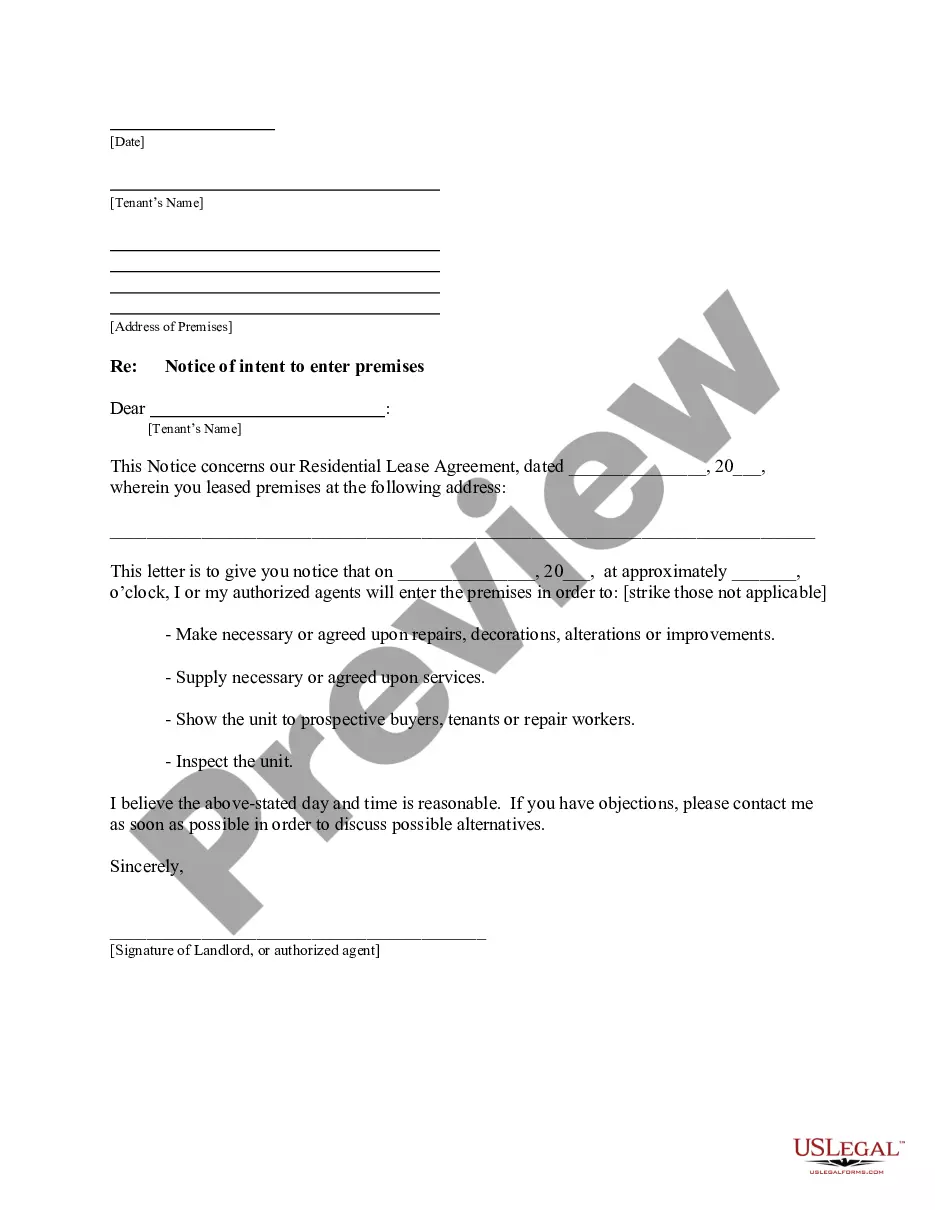
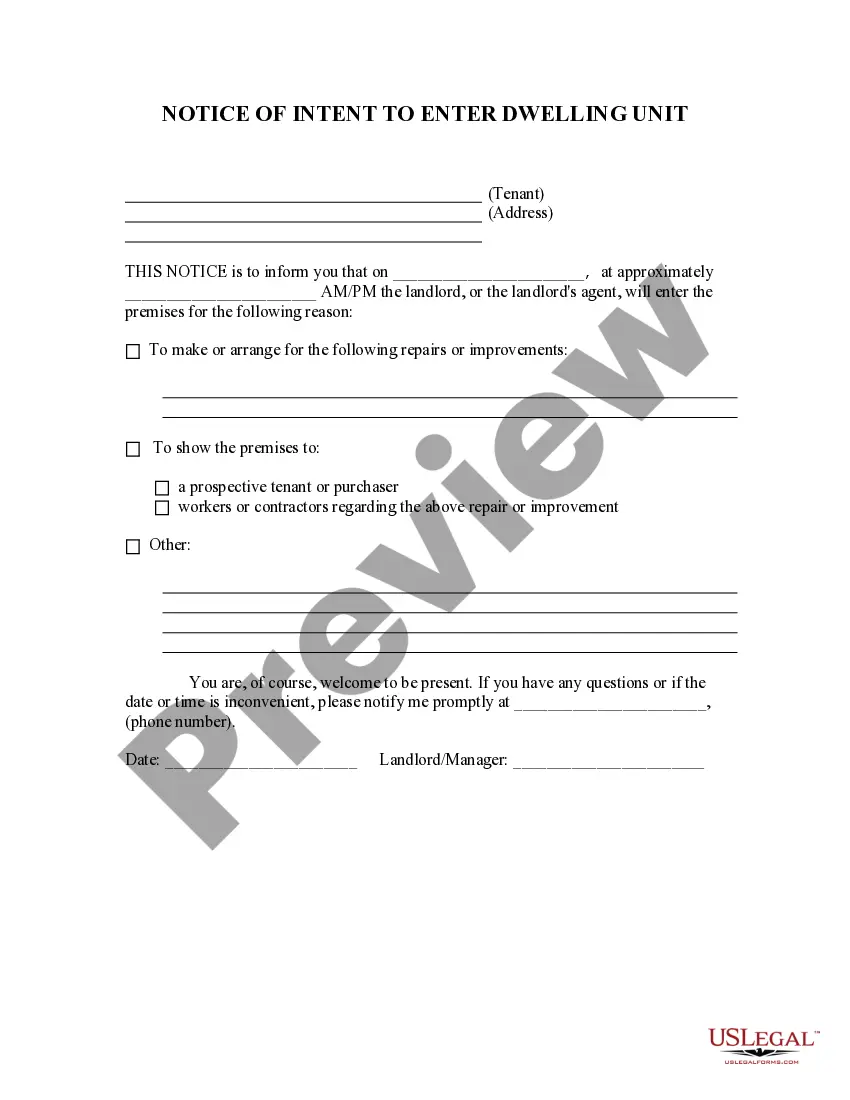
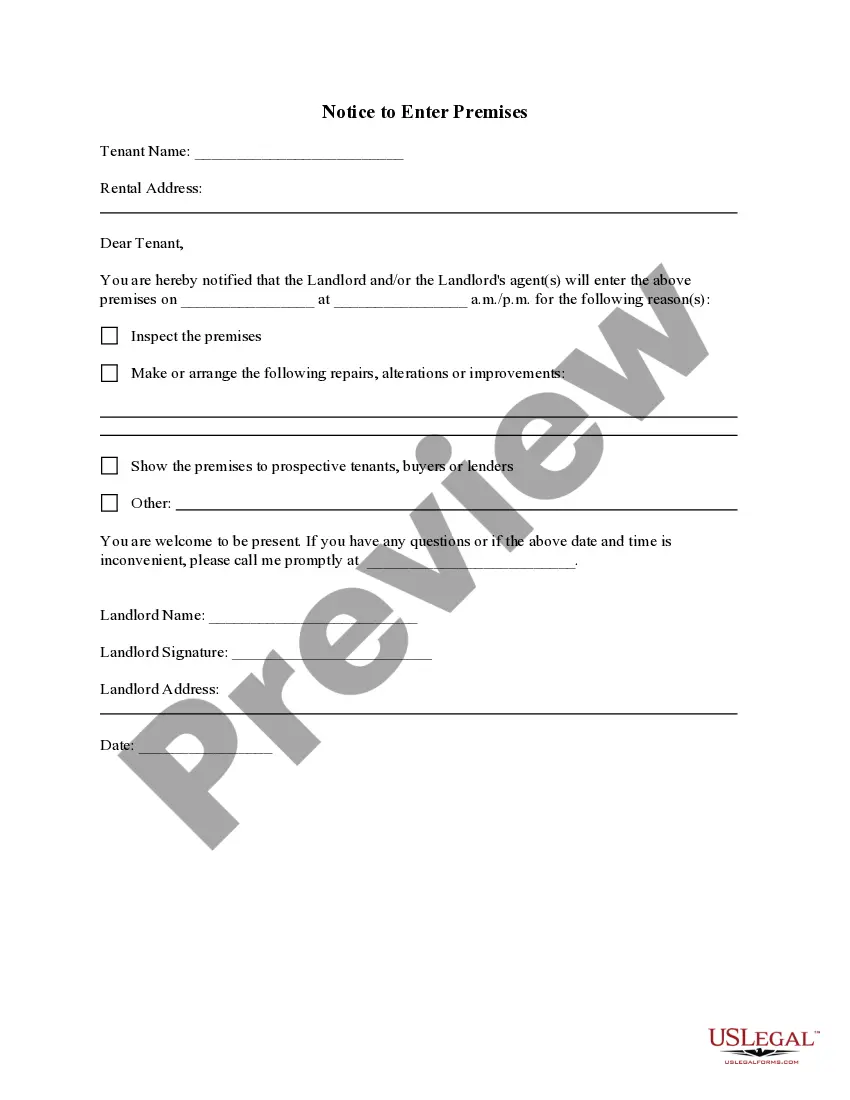
This document is a formal notice from a landlord to a tenant regarding the intent to enter the leased property. It notifies the tenant about the specific reasons and timing of the expected entry, which can include repairs, inspections, or showing the property. This form ensures that tenants are informed in advance, providing clarity and setting expectations, which is essential for maintaining a good landlord-tenant relationship.
What’s included in this form
- Date of the original lease agreement.
- Address of the leased premises.
- Date and approximate time of intended entry.
- Specific reasons for entering the premises.
- Landlord's or authorized agent's signature.
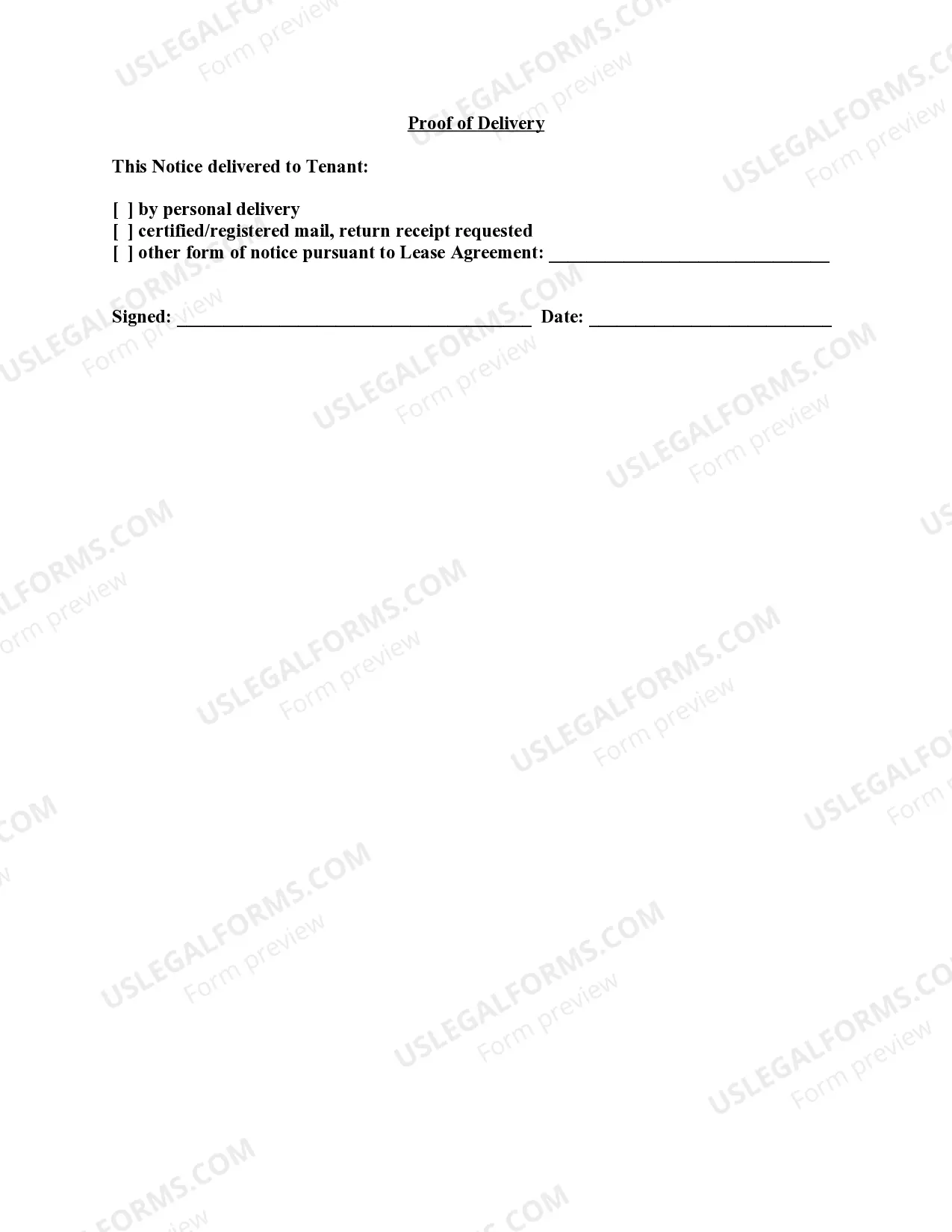
- Proof of delivery method to tenant.
Common use cases
This form is necessary when a landlord needs to inform a tenant of scheduled visits to the leased property. Situations include conducting maintenance, making repairs, inspecting the property, or showing it to potential buyers or new tenants. Using this form helps avoid potential misunderstandings and ensures compliance with legal notice requirements.
Who this form is for
- Landlords managing residential properties.
- Property managers acting on behalf of landlords.
- Real estate agents showing properties for sale or rent.
- Tenants needing to understand their rights regarding access to the property.
Steps to complete this form
- Identify the date of the original lease agreement.
- Enter the complete address of the leased premises.
- Specify the date and time for the intended entry.
- Clearly outline the reasons for entering the property.
- Sign the letter, either as the landlord or authorized agent.
- Select and indicate the method of delivery to the tenant.
Does this form need to be notarized?
This form does not typically require notarization unless specified by local law. It serves as a written notice, ensuring transparency between landlords and tenants without the need for a notary seal.
Get your form ready online
Our built-in tools help you complete, sign, share, and store your documents in one place.
Make edits, fill in missing information, and update formatting in US Legal Forms—just like you would in MS Word.
Download a copy, print it, send it by email, or mail it via USPS—whatever works best for your next step.
Sign and collect signatures with our SignNow integration. Send to multiple recipients, set reminders, and more. Go Premium to unlock E-Sign.
If this form requires notarization, complete it online through a secure video call—no need to meet a notary in person or wait for an appointment.
We protect your documents and personal data by following strict security and privacy standards.

Make edits, fill in missing information, and update formatting in US Legal Forms—just like you would in MS Word.

Download a copy, print it, send it by email, or mail it via USPS—whatever works best for your next step.

Sign and collect signatures with our SignNow integration. Send to multiple recipients, set reminders, and more. Go Premium to unlock E-Sign.

If this form requires notarization, complete it online through a secure video call—no need to meet a notary in person or wait for an appointment.

We protect your documents and personal data by following strict security and privacy standards.
Common mistakes to avoid
- Failing to provide adequate notice as required by state law.
- Not specifying the exact time of entry, leading to misunderstandings.
- Leaving out the reasons for entry, which can create confusion.
- Forgetting to sign the letter or include the delivery method.
Benefits of using this form online
- Convenient access to the form anytime, allowing for quick preparation.
- Editable templates tailored to meet state-specific needs.
- Secure downloading ensures you have a final copy ready for use.
- Forms drafted by licensed attorneys, ensuring legal compliance.
Legal use & context
- This form supports landlords in fulfilling their legal obligation to notify tenants before entering the premises.
- Proper use of this notice can protect landlords from potential legal disputes over unauthorized entry.
- Enforceability varies based on adherence to local laws governing landlord-tenant relationships.
Looking for another form?

Form popularity
FAQ
If the tenant refuses, you are permitted to send them a notice to agree or quit the property. The tenant refusing you access constitutes a breach in the lease agreement, so they could be evicted if they continue to deny access.
In California, landlords cannot conduct random inspections. California Civil Code Section 1954 limits the access landlords have to an occupied rental property to only four instances: in case of an emergency, in the event of abandonment by the tenant, to do repairs or improvements, or to show the apartment to
1 a brief summary or record in writing, esp. a jotting for future reference. 2 a brief letter, usually of an informal nature.
California law requires landlords to give the tenant reasonable notice. The law presumes twenty-four hours is reasonable. However, if the notice is only mailed, the law presumes that six days prior to an intended entry is reasonable.
A landlord may have the right to enter his property, even against his tenant's wishes, as long as he has given proper written notice and the entry occurs during normal business hours. California requires a landlord provide reasonable advance notice of intent to enter and considers 24 hours reasonable absent
Landlords are required to provide a specific amount of notice (usually 24 hours) before entering a rental unit. In California, landlords must provide a reasonable amount of notice, legally presumed to be 24 hours.
Unless there is a term in your tenancy agreement which allows you to schedule viewings during the last month of a tenancy, your sitting tenants are entitled to refuse any agent or viewers access to the property.