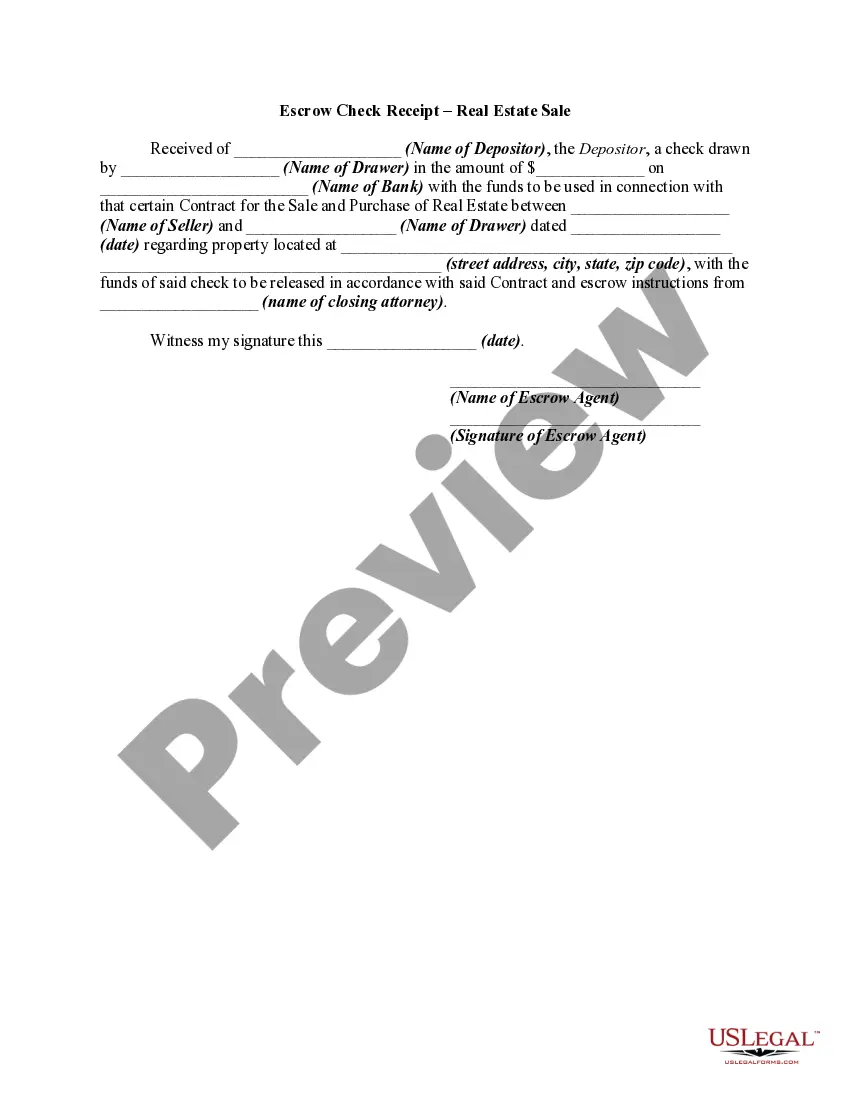
Escrow Check Receipt for Real Estate Sale
Understanding this form
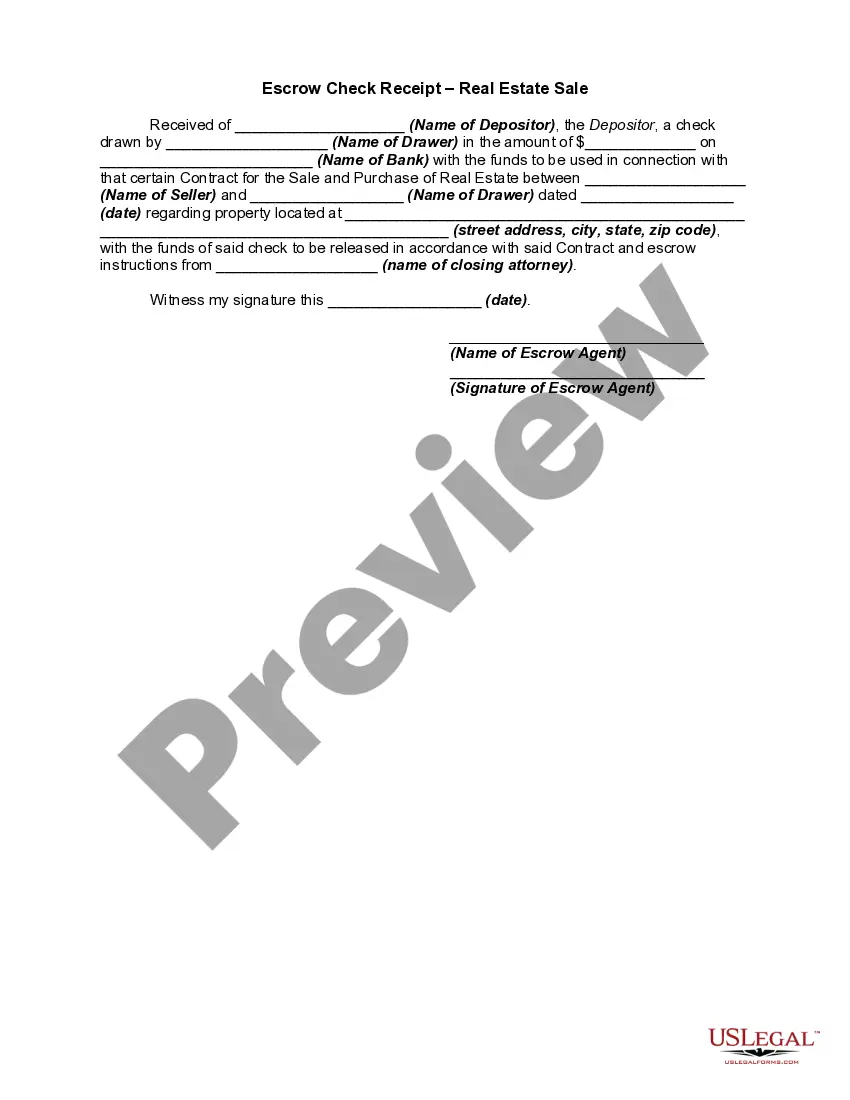
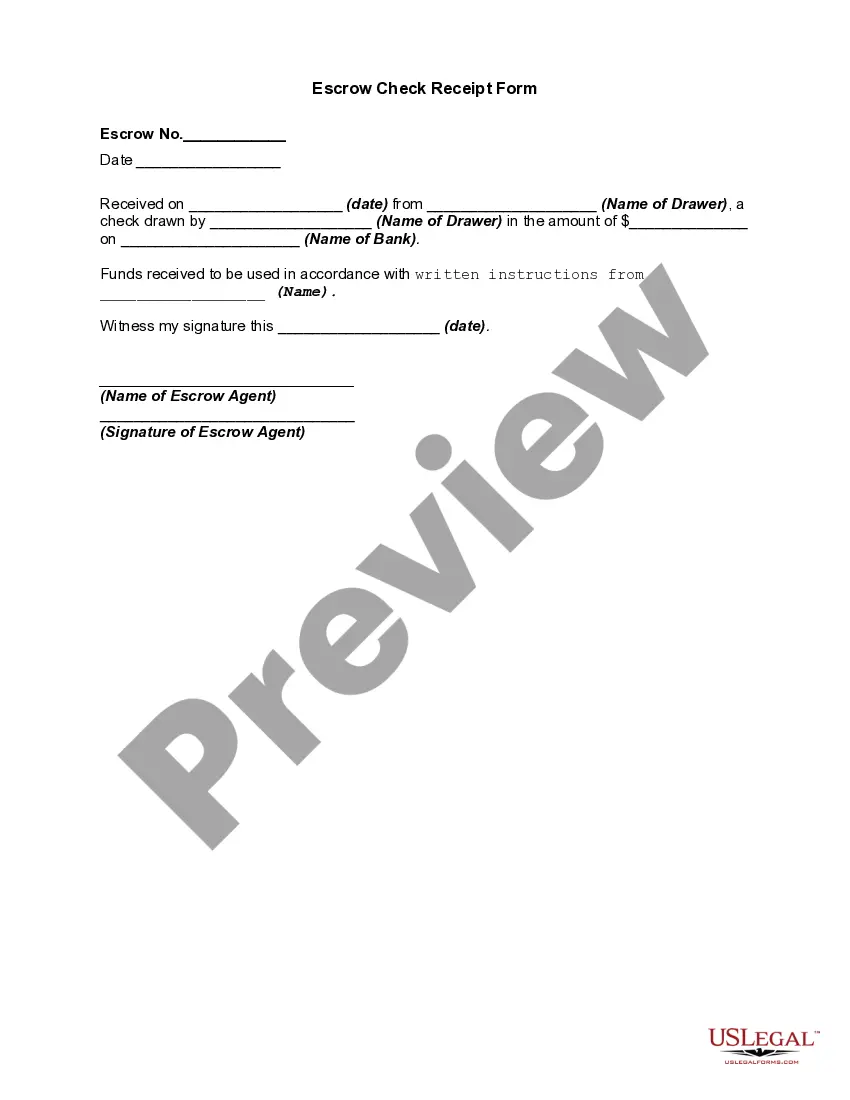
The Escrow Check Receipt for Real Estate Sale is a legal document that acknowledges the receipt of a check deposited with an escrow agent for a real estate transaction. This form serves to outline the terms under which the funds will be held and eventually released based on the conditions set forth in the related sales contract. Unlike other agreements that may not specify the handling of funds, this receipt ensures clarity and protection for both buyers and sellers throughout the property sale process.
Form components explained
- Name of Depositor: Identifies the individual or entity providing the funds.
- Name of Drawer: Specifies the party that issued the check.
- Check Amount: Details the exact amount of money being deposited.
- Bank Information: Includes the name of the bank where the check is drawn.
- Contract Details: Mentions the specific real estate sales contract related to the transaction.
- Signature of Escrow Agent: Confirms acceptance and acknowledgment of the funds by the escrow agent.

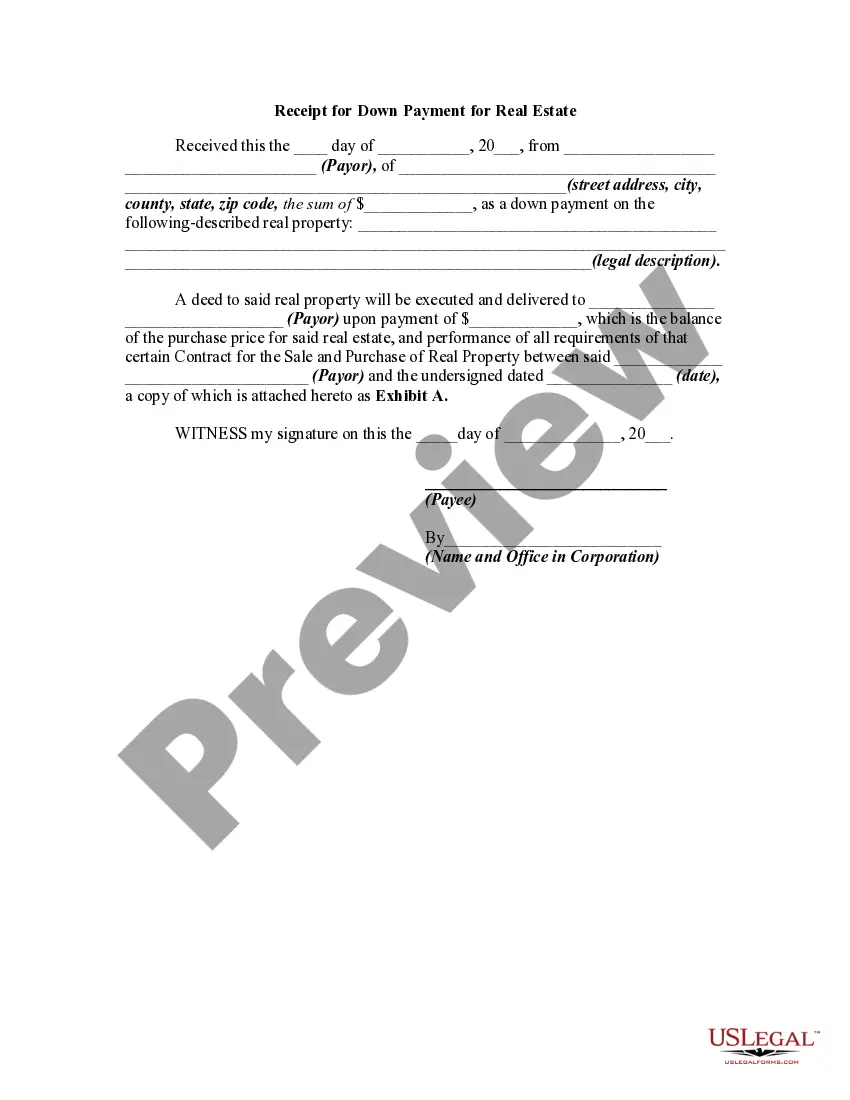
Common use cases
This form is used during a real estate transaction when a buyer deposits funds with an escrow agent as part of the agreement for purchasing a property. It is essential when both parties need proof that the deposit has been made and that the funds are being held securely until the sale is finalized. This receipt helps prevent disputes regarding the handling and release of the deposit.
Who should use this form
- Buyers who are making a deposit as part of a real estate sales agreement.
- Sellers who require assurance that the buyer's funds are secure during the transaction.
- Escrow agents responsible for managing deposits in real estate transactions.
- Real estate attorneys involved in finalizing property sales.
How to complete this form
- Identify the parties: Enter the names of the depositor and the drawer.
- Specify the amount: Provide the exact dollar amount of the check.
- Enter bank details: Write the name of the bank where the check is drawn.
- Detail property information: Specify the address and contract details related to the sale.
- Obtain signatures: Ensure the escrow agent signs and dates the receipt.
Notarization guidance
To make this form legally binding, it must be notarized. Our online notarization service, powered by Notarize, lets you verify and sign documents remotely through an encrypted video session.
Get your form ready online
Our built-in tools help you complete, sign, share, and store your documents in one place.
Make edits, fill in missing information, and update formatting in US Legal Forms—just like you would in MS Word.
Download a copy, print it, send it by email, or mail it via USPS—whatever works best for your next step.
Sign and collect signatures with our SignNow integration. Send to multiple recipients, set reminders, and more. Go Premium to unlock E-Sign.
If this form requires notarization, complete it online through a secure video call—no need to meet a notary in person or wait for an appointment.
We protect your documents and personal data by following strict security and privacy standards.

Make edits, fill in missing information, and update formatting in US Legal Forms—just like you would in MS Word.

Download a copy, print it, send it by email, or mail it via USPS—whatever works best for your next step.

Sign and collect signatures with our SignNow integration. Send to multiple recipients, set reminders, and more. Go Premium to unlock E-Sign.

If this form requires notarization, complete it online through a secure video call—no need to meet a notary in person or wait for an appointment.

We protect your documents and personal data by following strict security and privacy standards.
Common mistakes
- Failing to enter the correct date, which can delay the processing of the escrow.
- Not including all necessary parties in the document, leading to potential disputes.
- Using incorrect bank details that can cause confusion in fund release.
- Not ensuring the escrow agent's signature is present, making the receipt invalid.
Benefits of using this form online
- Convenient access to secure legal documentation that can be downloaded instantly.
- Editable templates allow for customization to meet specific transaction needs.
- Streamlined process reduces the risk of errors associated with handwritten forms.
- Reliability of attorney-drafted forms ensures legal compliance and clarity.
Looking for another form?
Form popularity
FAQ
An earnest money deposit receipt is given to a buyer of real estate after entering into a purchase agreement with a seller. The deposit slip is given to the buyer after funds have been received which binds the parties into the agreement.
A broker must deposit money belonging to another into an escrow account by the end of the next business day following its receipt in the real estate office where the escrow records are maintained.
Paying closing costs with a cashier's check A cashier's check is drawn on the issuing bank's escrow account , so the funds are guaranteed by the bank. The funds are moved from your account (or handed over in cash) and placed in the bank's escrow account. The bank then creates a check written out to the payee.
The buyer delivers the earnest money when entering into a purchase agreement with the seller. The seller takes the home off the market while it undergoes a home inspection and appraisal. The earnest money is kept in an escrow account held by the title company or real estate brokerage firm.
In most cases, earnest money is delivered when the sales contract or purchase agreement is signed, but it can also be attached to the offer. Once deposited, the funds are typically held in an escrow account until closing, at which time the deposit is applied to the buyer's down payment and closing costs.
What Is an Escrow Receipt? The term escrow receipt refers to a bank or clearinghouse statement written to guarantee that an options writer has a sufficient amount of the underlying security available for delivery, should the need arise to complete the requirements of the contract.
What is important to remember is that the purchase agreement typically used by Realtors in California has a requirement that the earnest money deposit be place in escrow, within 3 business days of the buyer and seller agreeing to the purchase agreement, or the ?acceptance date?.
Brokers must place trust funds into an escrow account immediately, which means no later than the end of the third business day after their sales associate (or an employee of their brokerage company) has received it (see Time Line to Deposit Escrow Funds).