Ohio General Warranty Deed - Limited Liability Company to an Individual
Understanding this form
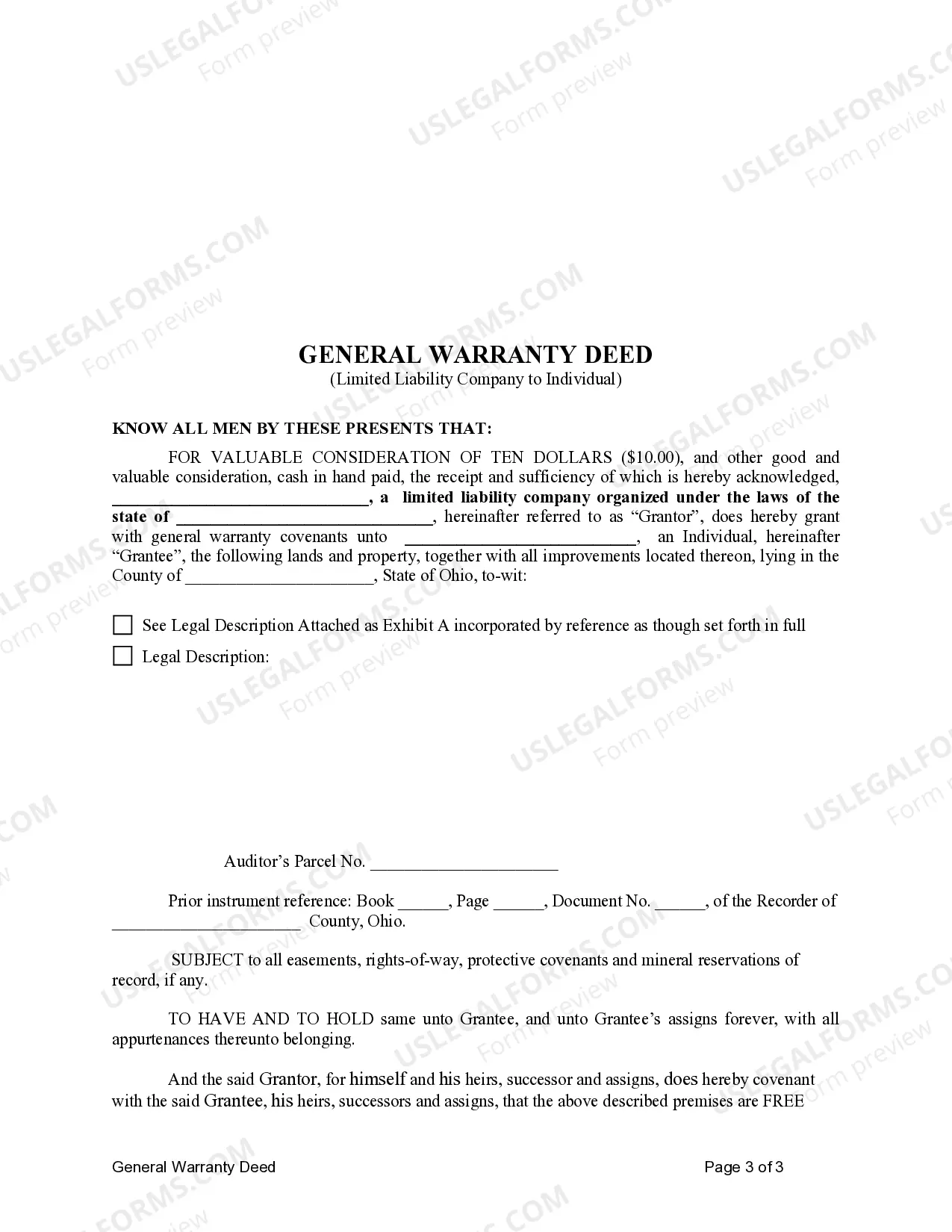
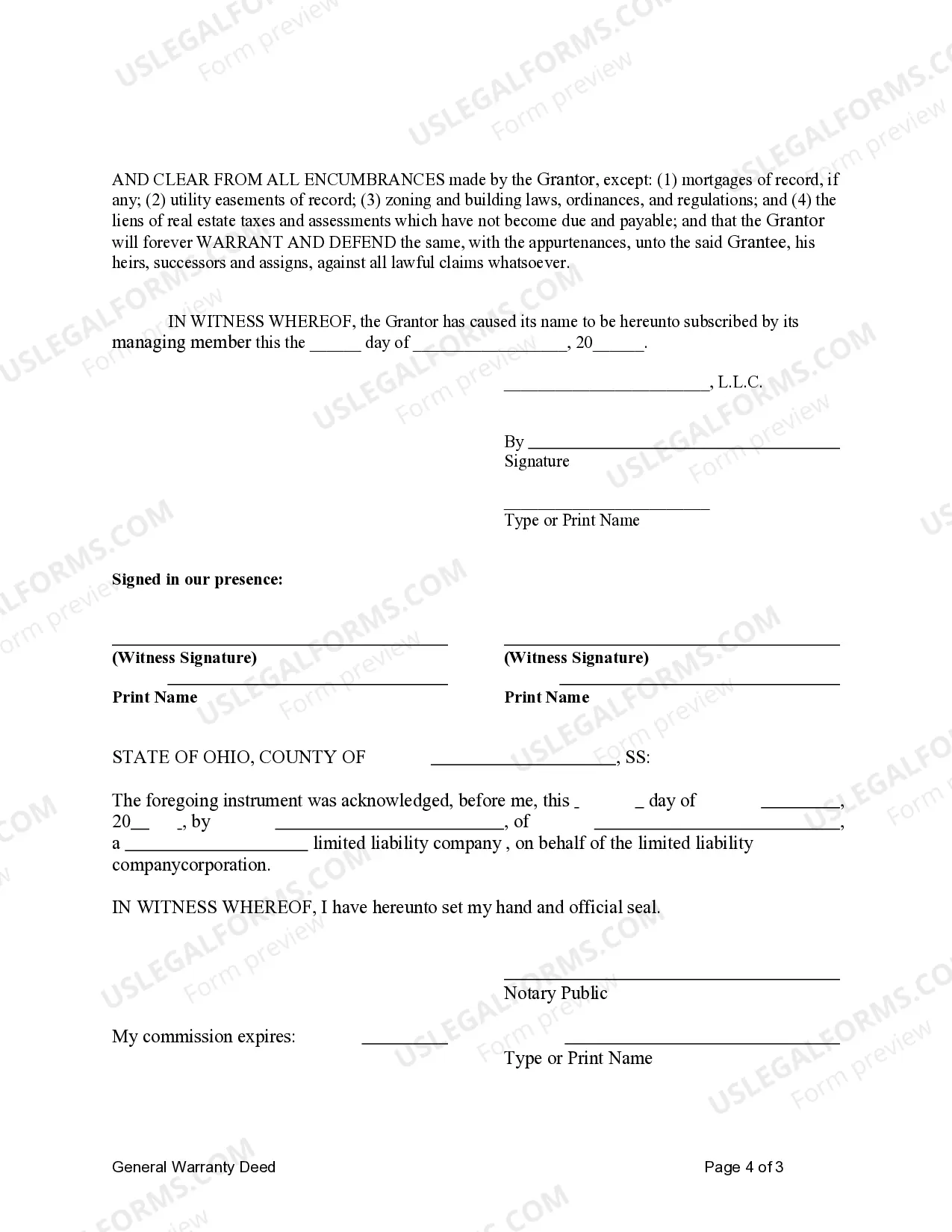
The General Warranty Deed - Limited Liability Company to an Individual is a legal document used to transfer property ownership from a limited liability company (LLC) to an individual. This deed guarantees that the grantor (the LLC) holds clear title to the property, free from any encumbrances, and warrants the property against any claims. This form is specifically tailored for transactions involving an LLC and an individual, ensuring compliance with all applicable state laws.
Key parts of this document
- Identification of the grantor as a limited liability company.
- Identification of the grantee as an individual.
- Legal description of the property being transferred.
- Warranties regarding the title and encumbrances.
- Signature of the LLC's authorized representative.
- Date of the property transfer.






When to use this document
This form should be used when a limited liability company is transferring ownership of real estate to an individual. It's ideal for circumstances such as gaining personal ownership of business-held property or during a business dissolution where assets are distributed among members.
Who can use this document
- Limited liability companies looking to transfer property to an individual.
- Individuals receiving property from an LLC.
- Real estate professionals involved in such transactions.
Completing this form step by step
- Identify the parties involved: the limited liability company (grantor) and the individual (grantee).
- Specify the legal description of the property included in the transfer.
- Enter the date of the transfer in the appropriate field.
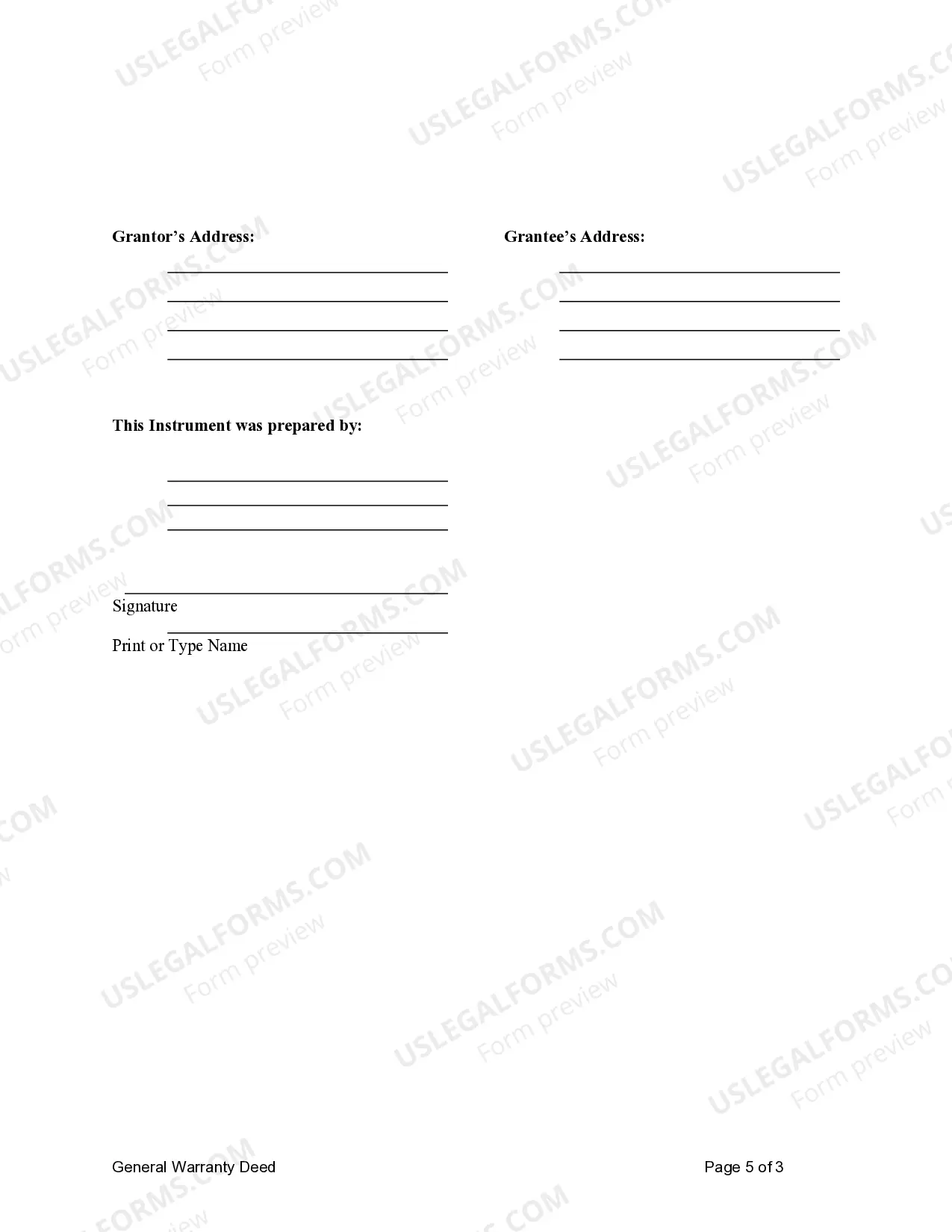
- Ensure the authorized representative of the LLC signs the deed.
- Submit the completed deed to the county recorder's office for proper filing.
Notarization guidance
Yes, this form must be notarized to be legally valid. Notarization helps verify the identity of the signers and ensures that the signing is voluntary. With US Legal Formsâ integrated online notarization service, you can easily complete this step through a secure video call, any time of day.
Get your form ready online
Our built-in tools help you complete, sign, share, and store your documents in one place.
Make edits, fill in missing information, and update formatting in US Legal Forms—just like you would in MS Word.
Download a copy, print it, send it by email, or mail it via USPS—whatever works best for your next step.
Sign and collect signatures with our SignNow integration. Send to multiple recipients, set reminders, and more. Go Premium to unlock E-Sign.
If this form requires notarization, complete it online through a secure video call—no need to meet a notary in person or wait for an appointment.
We protect your documents and personal data by following strict security and privacy standards.

Make edits, fill in missing information, and update formatting in US Legal Forms—just like you would in MS Word.

Download a copy, print it, send it by email, or mail it via USPS—whatever works best for your next step.

Sign and collect signatures with our SignNow integration. Send to multiple recipients, set reminders, and more. Go Premium to unlock E-Sign.

If this form requires notarization, complete it online through a secure video call—no need to meet a notary in person or wait for an appointment.

We protect your documents and personal data by following strict security and privacy standards.
Typical mistakes to avoid
- Failing to properly identify the grantor and grantee.
- Omitting the legal description of the property.
- Not obtaining the required signatures from the LLC representatives.
- Neglecting to file the deed with the appropriate county office.
Benefits of completing this form online
- Convenience of filling out the form from any location.
- Editability allows for easy corrections before finalizing.
- Access to attorney-approved templates assures legal compliance.
Legal use & context
- This deed is a complete and legally binding document once executed and notarized.
- It protects the rights of the grantee by ensuring clear title is transferred.
- The validity of this deed is subject to specific state laws and must be properly recorded.
Main things to remember
- The General Warranty Deed transfers ownership from an LLC to an individual.
- Signature and notarization are essential for validity.
- It offers legal guarantees regarding the property's title.
Looking for another form?
Form popularity
FAQ
To make the form legally binding, you must sign it in front of a notary public. You must then file your signed and notarized deed with the county office that's in charge of recording property documents. Once the grantee signs the warranty deed, he/she legally has ownership and claim to the property.
If you've recently married and already own a home or other real estate, you may want to add your new spouse to the deed for your property so the two of you own it jointly. To add a spouse to a deed, all you have to do is literally fill out, sign and record a new deed in your county recorder's office.
Step 1: Form an LLC or Corporation. You can't transfer your real estate property, or any other personal property, into your LLC or corporation until you've actually formed a new legal entity. Step 2: Complete a Quitclaim Deed. Step 3: Record Your Quitclaim Deed.
The answer is yes. Parties to a transaction are always free to prepare their own deeds. If you do so, be sure your deed measures up to your state's legal regulations, to help avert any legal challenge to the deed later.
Under the Grantor section of the deed, write the name of the person transferring title. Under Grantee, write the name of the person receiving title. Describe the parcel of land. Use the street address and include the North Carolina County where the land is located.
Go to the Deed Transfer Department to obtain a transfer form for a quit claim deed or warranty deed. Take the form, along with the person to whom the the property is being transferred, to a notary public. Take the form back to the Deed Transfer Department and turn it in to the County Auditor.
A warranty deed, also known as a general warranty deed, is a legal real estate document between the seller (grantor) and the buyer (grantee). The deed protects the buyer by pledging that the seller holds clear title to the property and there are no encumbrances, outstanding liens, or mortgages against it.
Adding someone to your house deed requires the filing of a legal form known as a quitclaim deed. When executed and notarized, the quitclaim deed legally overrides the current deed to your home. By filing the quitclaim deed, you can add someone to the title of your home, in effect transferring a share of ownership.
The name and address of the seller (called the grantor) The name and address of the buyer (called the grantee) A legal description of the property (found on the previous deed) A statement that the grantor is transferring the property to the grantee.