Incentive Compensation Plan
What this document covers
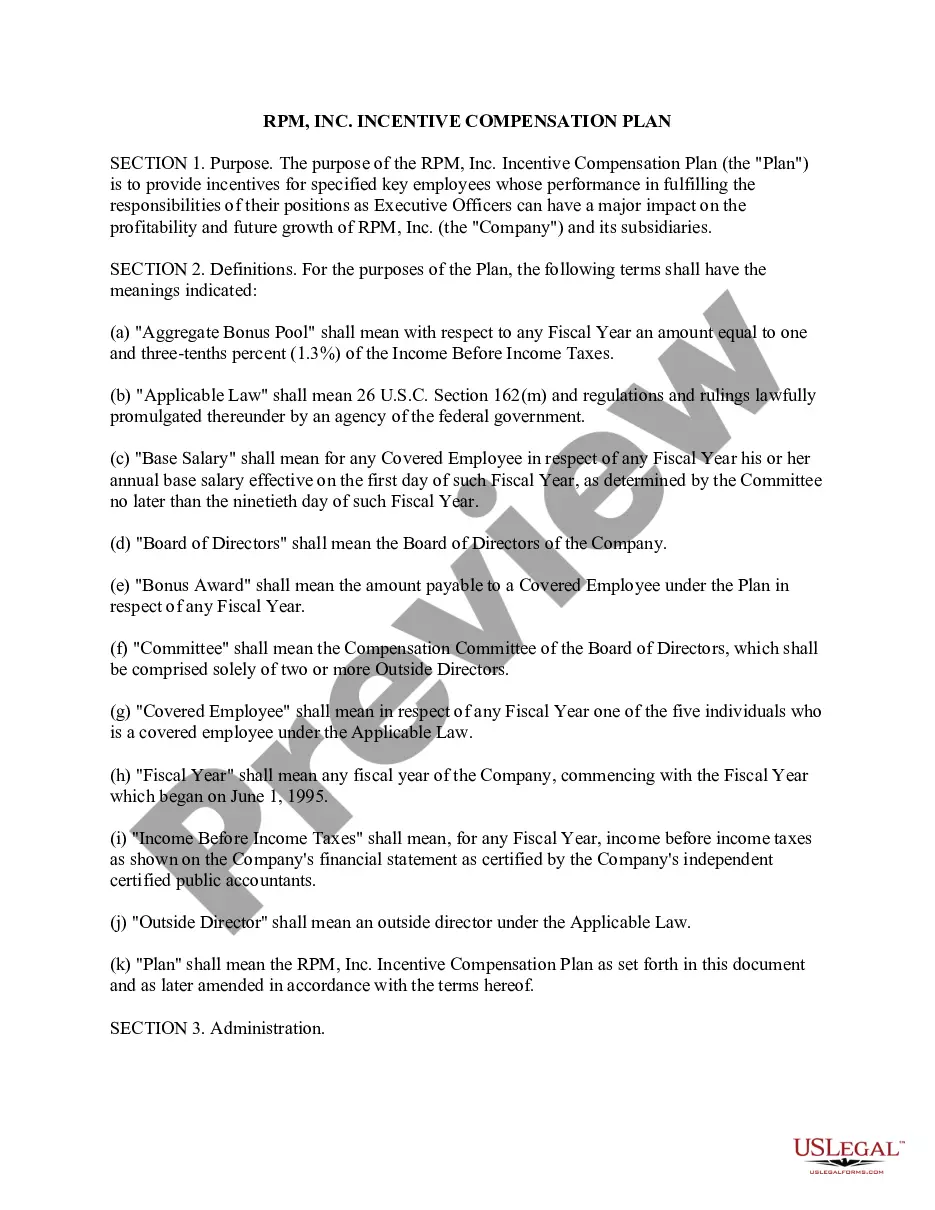
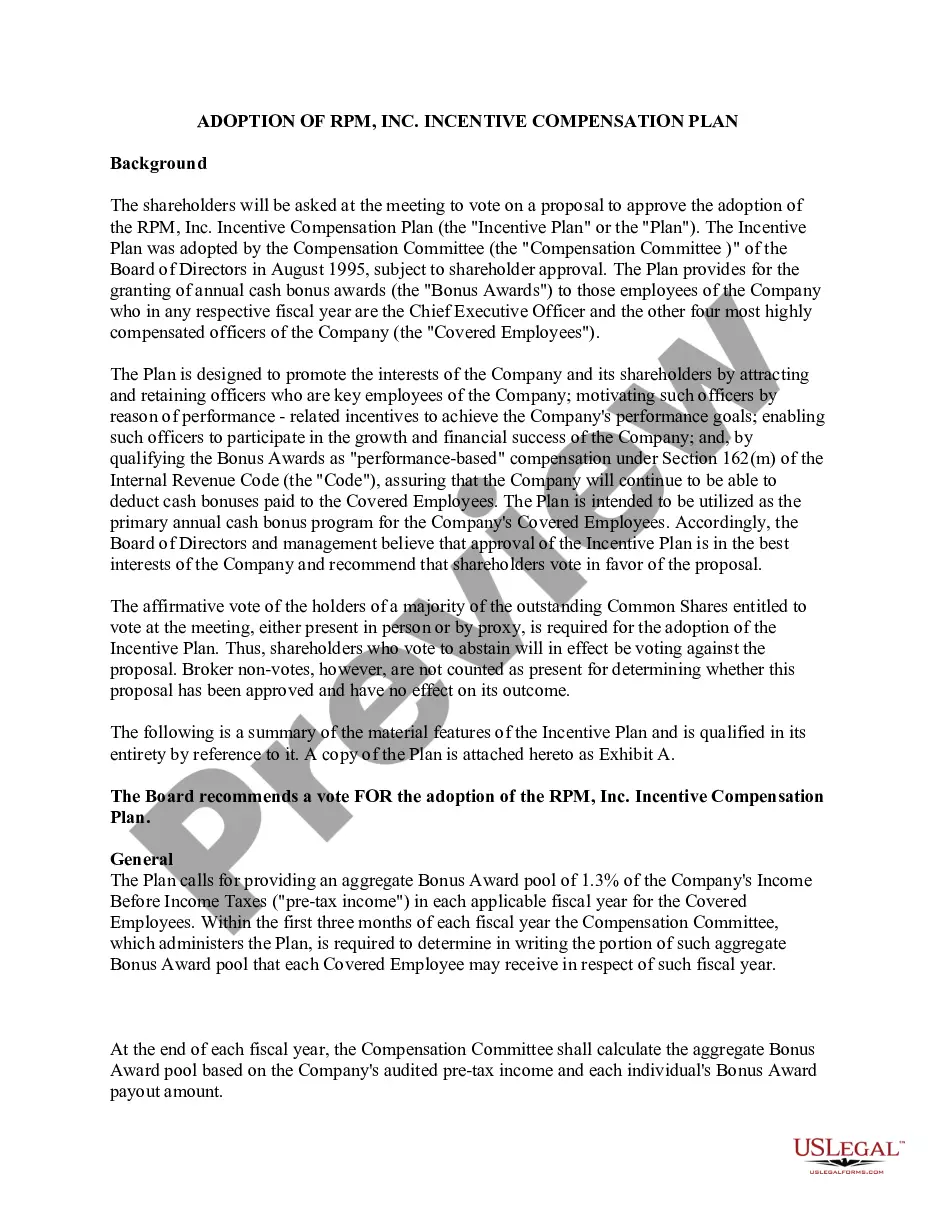
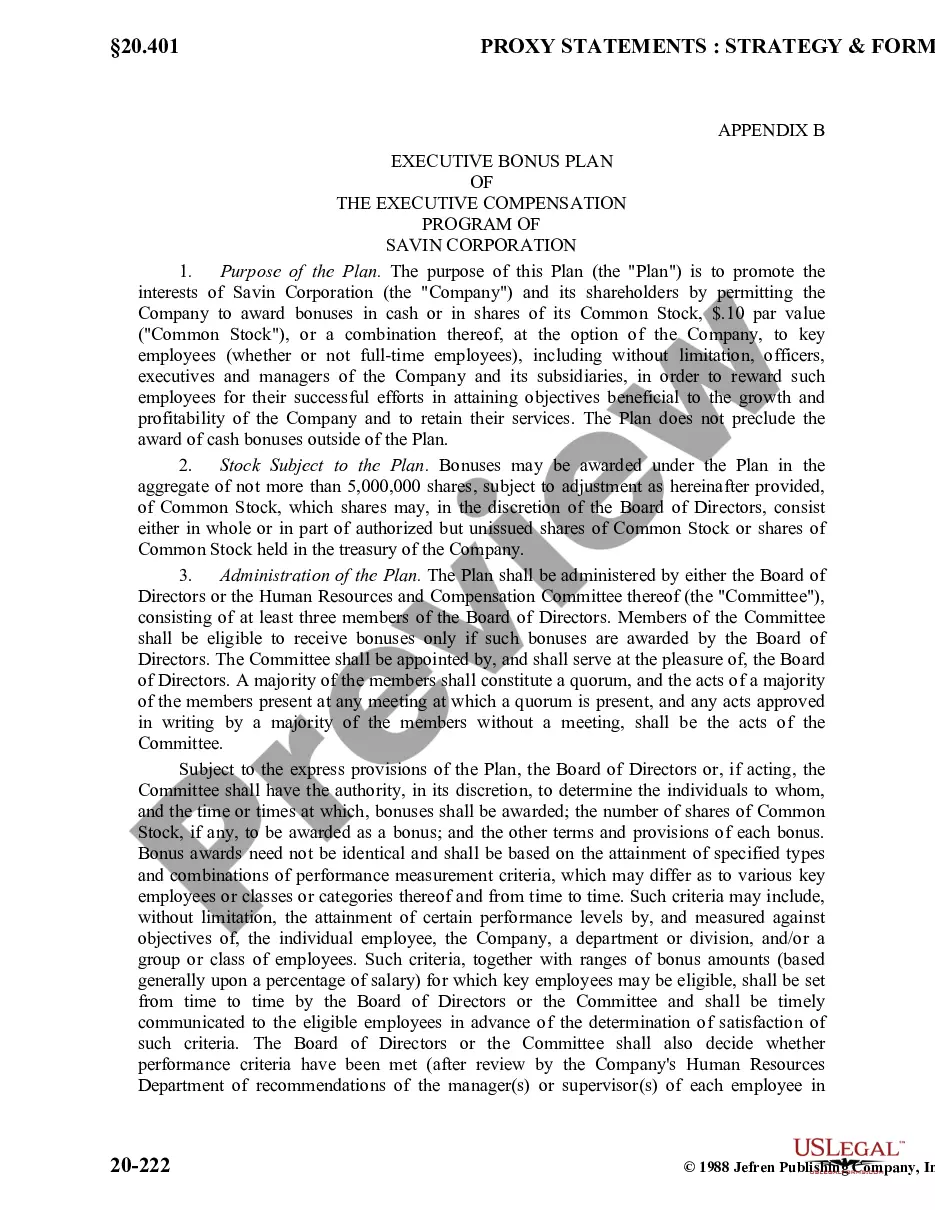
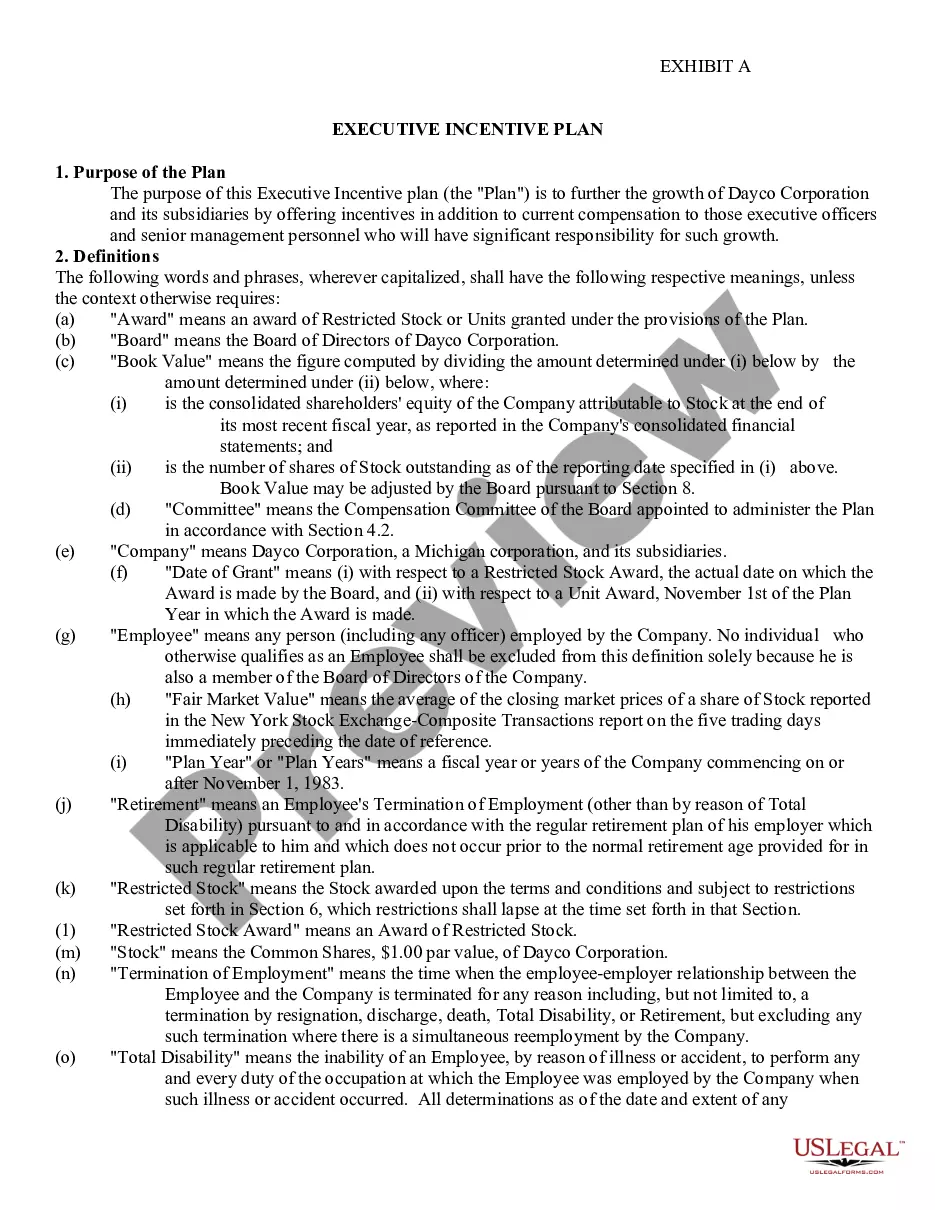
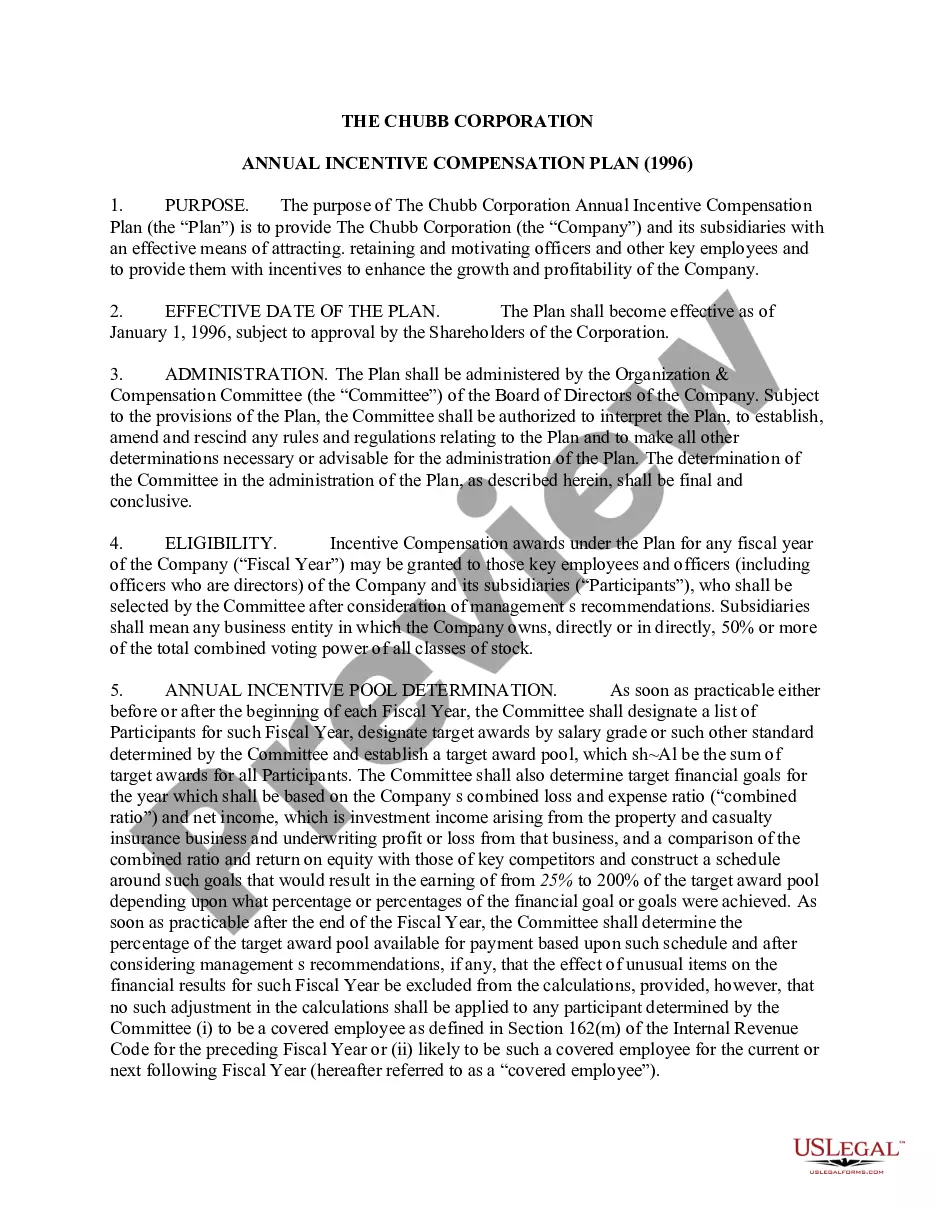
The Incentive Compensation Plan is a formal document designed to outline a structure for providing financial bonuses to key employees based on their performance. It helps to motivate Executive Officers by offering incentives tied to the company's profitability, ensuring that their interests align with those of RPM, Inc. and its subsidiaries. This plan differs from other compensation agreements by its focus on specific performance metrics and the defined roles of oversight committees in determining bonus allocations.
Key components of this form
- Purpose: Establishes the rationale for implementing the incentive program.
- Definitions: Clarifies key terms used in the plan, including roles such as "Covered Employee" and "Committee."
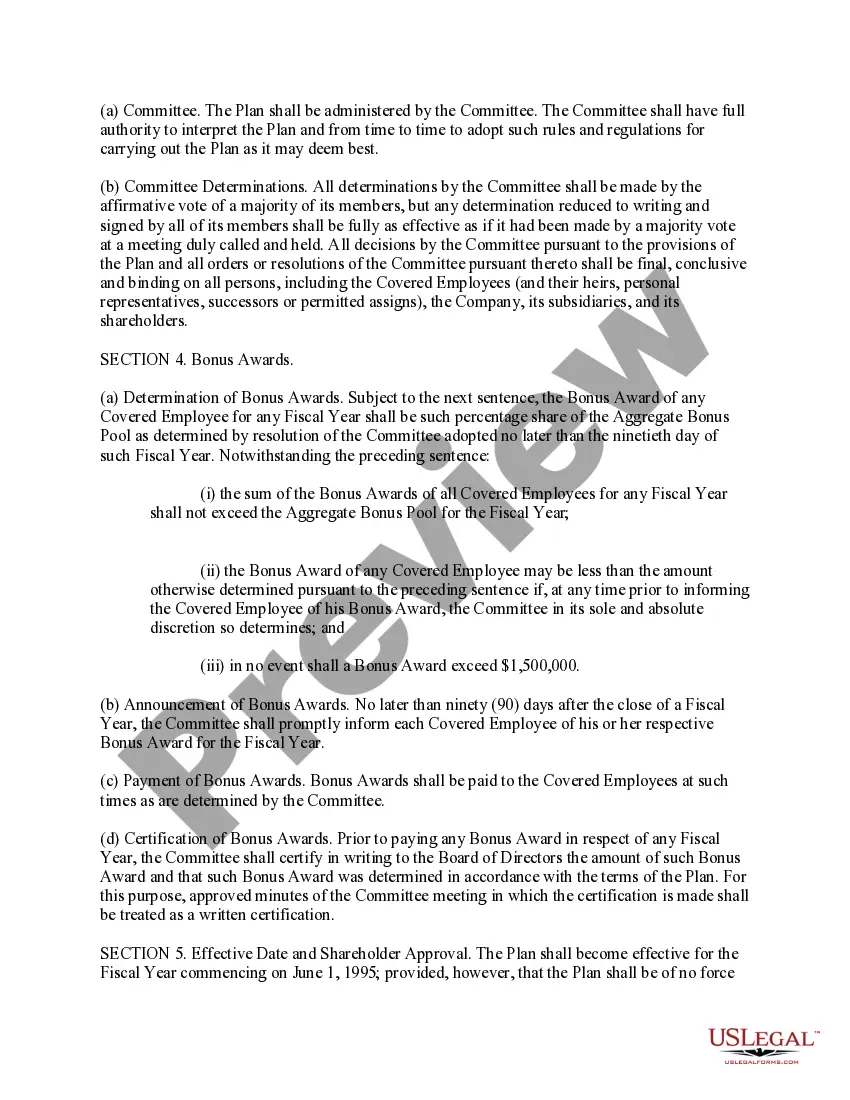
- Administration: Details the governing body responsible for overseeing the plan, including the powers of the Compensation Committee.
- Bonus Awards: Explains how bonuses are calculated, announced, and paid to eligible employees.
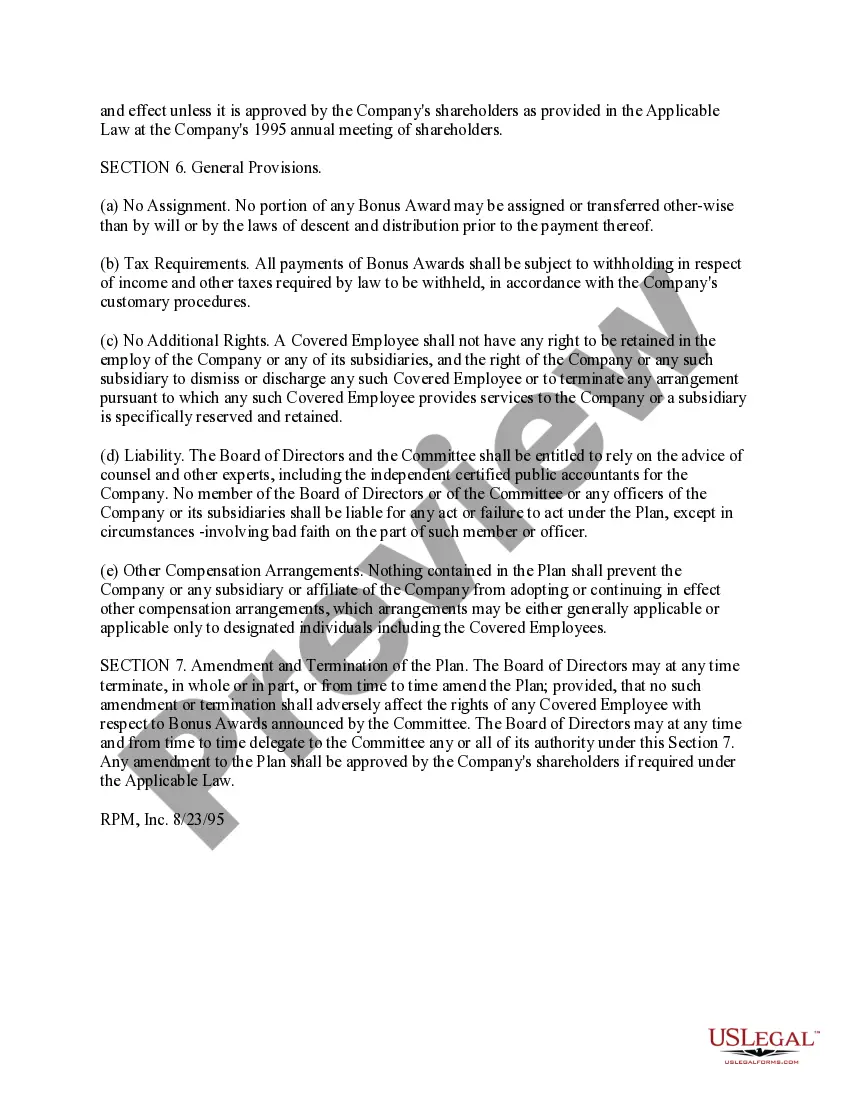
- General Provisions: Outlines restrictions on the assignment of bonuses, tax implications, and liability issues.
Common use cases
This Incentive Compensation Plan should be used by companies looking to implement a performance-based bonus system for their executive team. It is particularly useful when an organization aims to enhance productivity through financial incentives or when transitioning to a new compensation structure that aligns management performance with company profitability.
Who can use this document
- HR managers and leadership teams at corporations seeking to enhance employee performance through incentive programs.
- Company boards and compensation committees responsible for designing and overseeing executive compensation structures.
- Legal professionals advising companies on compliance with relevant laws concerning executive compensation.
How to complete this form
- Identify the key employees who will be classified as Covered Employees under the plan.
- Establish the Aggregate Bonus Pool based on company financial performance for the fiscal year.
- Determine the percentage share of the Bonus Pool that each Covered Employee will receive, as decided by the Committee.
- Inform each Covered Employee of their respective Bonus Award within ninety days after the fiscal year ends.
- Document the Committee's certification of the Bonus Awards before payment is issued.
Is notarization required?
This form usually doesn’t need to be notarized. However, local laws or specific transactions may require it. Our online notarization service, powered by Notarize, lets you complete it remotely through a secure video session, available 24/7.
Get your form ready online
Our built-in tools help you complete, sign, share, and store your documents in one place.
Make edits, fill in missing information, and update formatting in US Legal Forms—just like you would in MS Word.
Download a copy, print it, send it by email, or mail it via USPS—whatever works best for your next step.
Sign and collect signatures with our SignNow integration. Send to multiple recipients, set reminders, and more. Go Premium to unlock E-Sign.
If this form requires notarization, complete it online through a secure video call—no need to meet a notary in person or wait for an appointment.
We protect your documents and personal data by following strict security and privacy standards.

Make edits, fill in missing information, and update formatting in US Legal Forms—just like you would in MS Word.

Download a copy, print it, send it by email, or mail it via USPS—whatever works best for your next step.

Sign and collect signatures with our SignNow integration. Send to multiple recipients, set reminders, and more. Go Premium to unlock E-Sign.

If this form requires notarization, complete it online through a secure video call—no need to meet a notary in person or wait for an appointment.

We protect your documents and personal data by following strict security and privacy standards.
Mistakes to watch out for
- Failing to properly define the roles and responsibilities of the Committee.
- Neglecting to update the plan according to changes in applicable law.
- Not clearly communicating the criteria for bonus awards to employees.
Why use this form online
- Easy access to templates drafted by licensed attorneys ensures legal compliance.
- Convenient downloading allows for immediate use and customization.
- Streamlined process without the need for extensive legal fees or consultation.
Looking for another form?





Form popularity
FAQ
Incentive compensation is a form of variable compensation in which a salesperson's or other employee's earnings are directly tied to the amount of product they sell, the success of their team, or the success of the organization as a whole.
Incentives in the workplace helps your employees feel that their contribution are valued. Inspiring your staff to make a personal commitment to your company's core values will improve engagement, create employee loyalty, and make your organization a great place to work for years to come.
Incentive programs motivate employees to push and challenge themselves to achieve higher degrees of productivity. This ultimately translates to increased earnings for your company.This can increase the amount of time, effort and energy a staffer is willing to put forth on your company's behalf.
Incentives are a great way to ensure that your employees stay motivated to do their job to the best of their ability. By offering something they can achieve if they hit a certain target or achieve something, they have something to work towards.
Incentive pay is financial reward for performance rather than pay for the number of hours worked.A common form of incentive pay is commission for sales staff where they get a percentage of each sale they make.
Annual incentive plan. A pay plan that rewards the accomplishment of specific results. Discretionary bonus plan. Spot awards. Profit-sharing plan. Gain-sharing plans. Team/small-group incentives. Retention bonus. Project bonus.
Examples of incentive pay include: Cash, including commission, year-end bonuses, sign-on bonuses, and performance bonuses. Shares or company stock options.
Once an incentive award is paid to a non-exempt employee who has worked overtime, a new Average Straight Time Hourly Earnings (ASTHE) must be calculated. The math is the base pay for all hours worked, plus any non-discretionary incentive pay, divided by the number of hours worked.
(1) It induces workers for higher efficiency and more output. (2) Incentives increase the earnings of employees. At times more than wages. (3) Payment of incentives leads to minimum per unit cost of product as there is an increased efficiency and greater output.