Septic Tank-Private Well Clauses: Contract for Real Property
Overview of this form
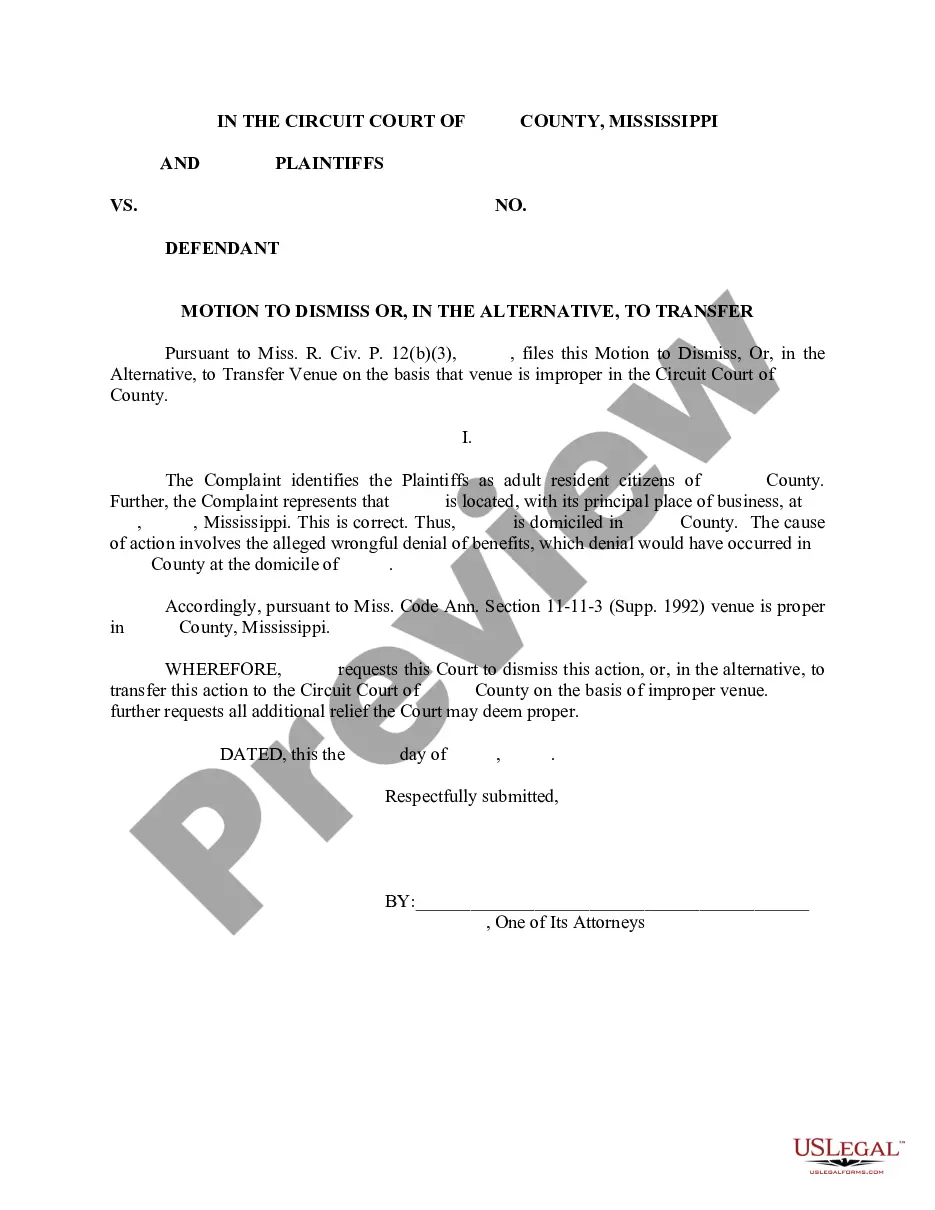
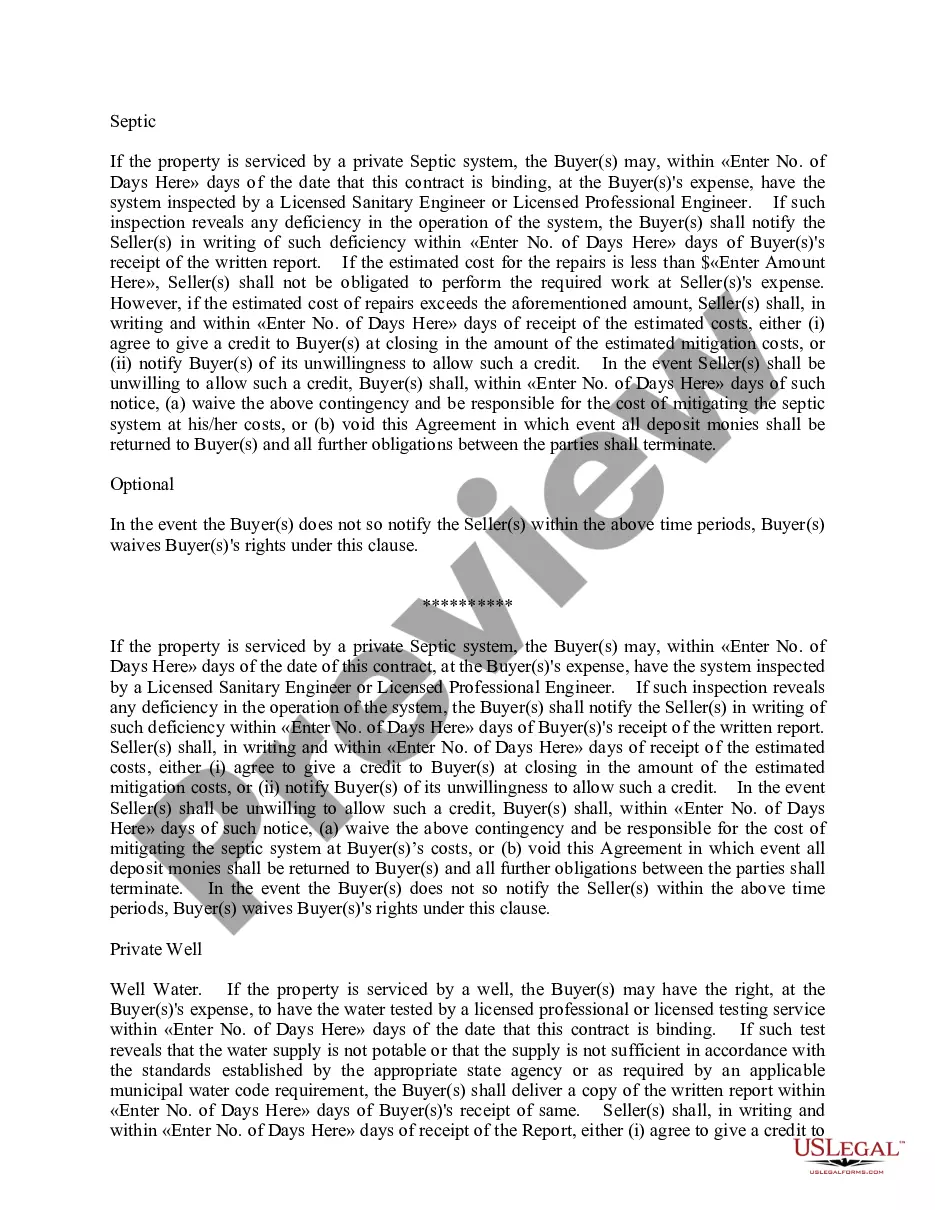
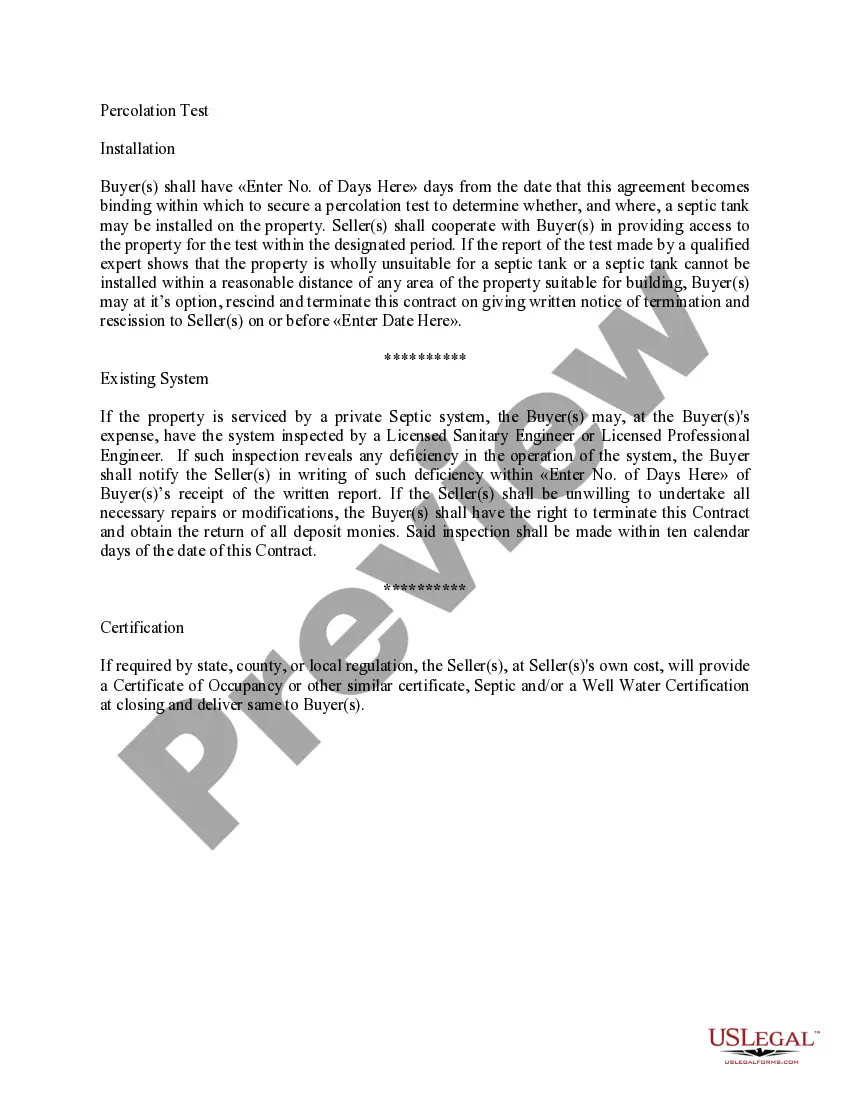
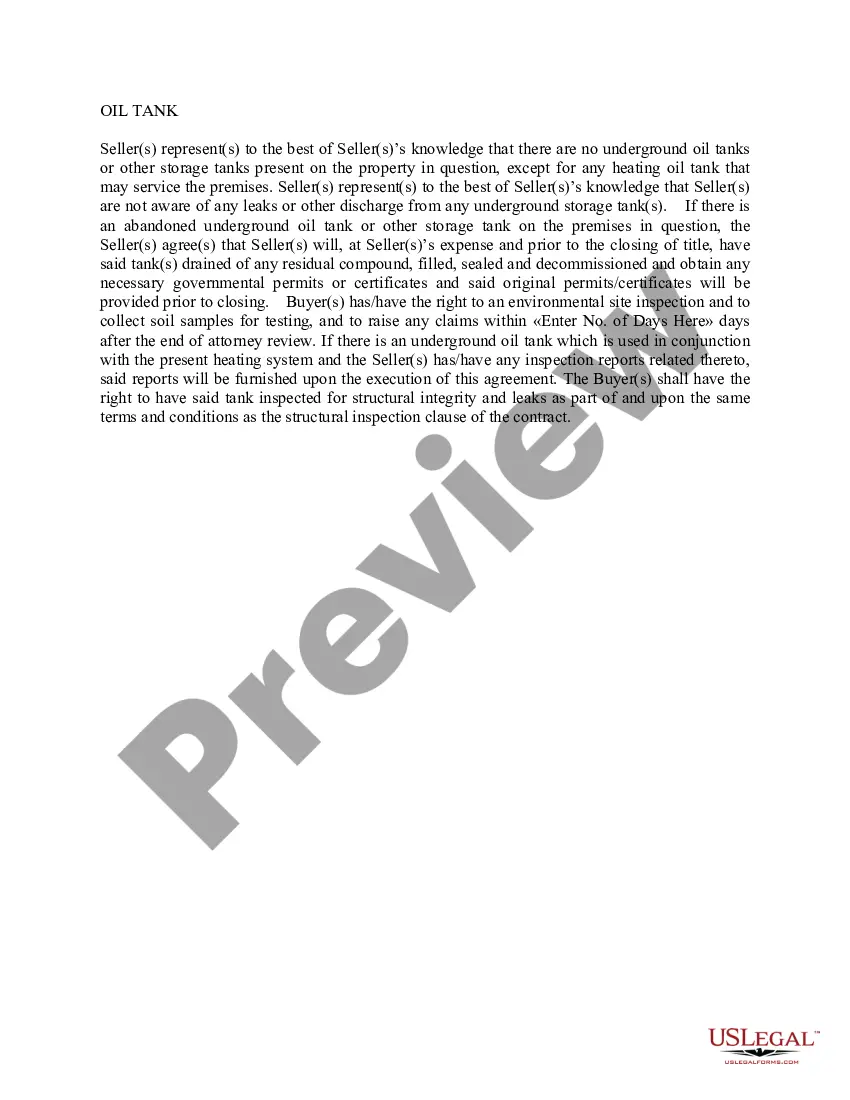
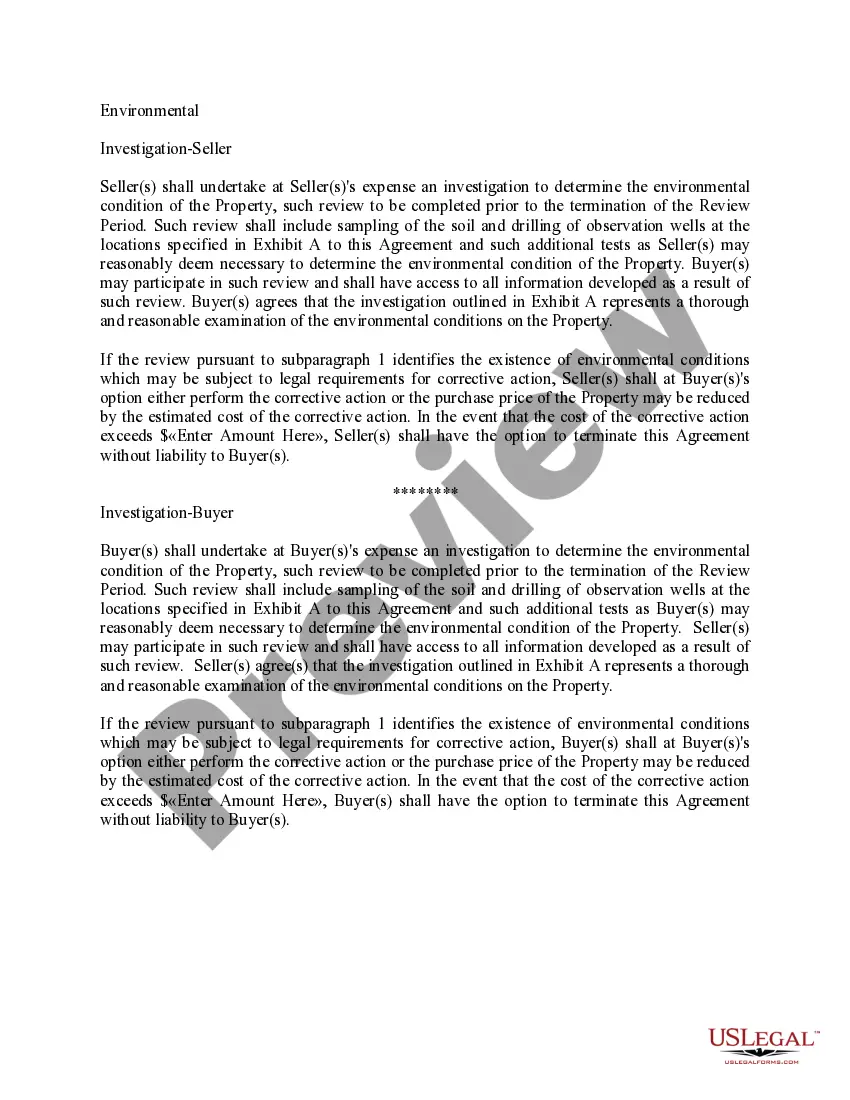
The Septic Tank-Private Well Clauses for Contract for Real Property is a legal document designed to outline specific conditions regarding the septic and well systems on a property. This form is essential for buyers and sellers to ensure both parties understand their responsibilities and rights in relation to the inspection and mitigation of septic and well issues. Unlike standard property contracts, this document specifically addresses the unique considerations surrounding private septic systems and wells, providing clarity on how to handle inspections and repairs.
Key parts of this document
- Inspection clause for septic systems by a licensed engineer.
- Notification requirements for deficiencies found during inspections.
- Conditions under which the seller must perform repairs or provide credits.
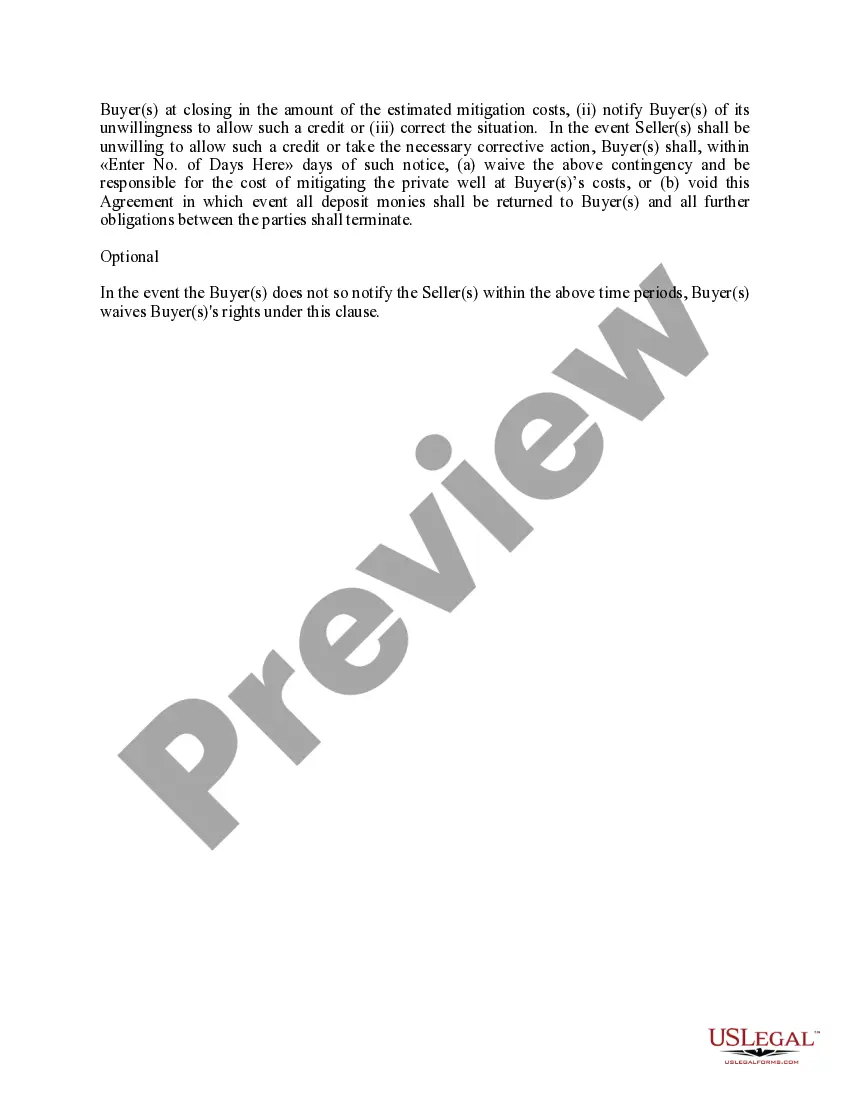
- Rights and obligations related to well water inspections and quality testing.
- Contingencies for buyers if issues arise from inspections.

Situations where this form applies
This form should be used during the sale of real property that includes a private septic system or well. It is particularly relevant when buyers want to ensure the functionality of these systems before completing the purchase. Use this form when you want to outline the specific responsibilities regarding the inspection and repair of the septic and well systems, safeguarding against potential issues related to water quality and septic functionality.
Who this form is for
This form is intended for:
- Property buyers looking to identify and address potential issues with septic or well systems.
- Sellers of real estate who have private septic systems or wells and want to clarify responsibilities.
- Real estate agents involved in transactions where private septic or well systems are present.
- Licensed professionals conducting inspections of septic systems or well water quality.
Instructions for completing this form
- Identify the parties involved in the transaction, including buyers and sellers.
- Specify the property address and details of the septic and well systems.
- Enter the number of days allowed for inspections and notifications regarding deficiencies.
- Clearly define the cost threshold for necessary repairs that would obligate the seller to act.
- Include any necessary certifications from licensed engineers or water testing services.
- Ensure both parties review and sign the document to make it legally binding.
Does this document require notarization?
This form does not typically require notarization unless specified by local law. Always check your jurisdictionâs requirements to ensure proper legal compliance.
Get your form ready online
Our built-in tools help you complete, sign, share, and store your documents in one place.
Make edits, fill in missing information, and update formatting in US Legal Forms—just like you would in MS Word.
Download a copy, print it, send it by email, or mail it via USPS—whatever works best for your next step.
Sign and collect signatures with our SignNow integration. Send to multiple recipients, set reminders, and more. Go Premium to unlock E-Sign.
If this form requires notarization, complete it online through a secure video call—no need to meet a notary in person or wait for an appointment.
We protect your documents and personal data by following strict security and privacy standards.

Make edits, fill in missing information, and update formatting in US Legal Forms—just like you would in MS Word.

Download a copy, print it, send it by email, or mail it via USPS—whatever works best for your next step.

Sign and collect signatures with our SignNow integration. Send to multiple recipients, set reminders, and more. Go Premium to unlock E-Sign.

If this form requires notarization, complete it online through a secure video call—no need to meet a notary in person or wait for an appointment.

We protect your documents and personal data by following strict security and privacy standards.
Mistakes to watch out for
- Failing to specify the time frame for inspections or notifications, leading to misunderstandings.
- Not including sufficient details on the condition of the septic system or well.
- Overlooking the necessity of including professional inspection findings in the contract.
Why complete this form online
- Convenience: Download and complete your form anytime from anywhere.
- Editability: Easily modify the form to fit specific property needs and scenarios.
- Reliability: Access comprehensive legal templates drafted by licensed attorneys.
Legal use & context
- Septic systems and water wells must comply with local health and safety regulations.
- Failure to adhere to this formâs stipulations may lead to disputes between buyers and sellers.
- Understanding your rights and obligations will protect both parties in a real estate transaction.
What to keep in mind
- The Septic Tank-Private Well Clauses are essential for clarity in real estate transactions involving these systems.
- Both buyers and sellers should understand their responsibilities concerning inspections and repairs.
- Using this form helps to prevent disputes and ensures a smoother transaction process.
Looking for another form?

Form popularity
FAQ
How Much Distance Should Be Between My Septic Tank and My Well? ing to recommendations by the United States Environmental Protection Agency, as well as the Department of Housing and Urban Development, a septic tank should be at least 50 feet away from a well that is used for drinking water.
If the property is adjacent to a residential property then local well distance requirements prevail. If the property is adjacent to non-residential property or roadway, then there needs to be a well separation distance of at least 10 feet from the property line.
A drinking water well is drilled or dug into the groundwater so water can be pumped to the surface. Deep wells located farther away from a septic system and not in the path of the groundwater flow from the septic system are least likely to be contaminated.
A well must be a minimum of 50 feet from septic tank. A well must be a minimum of 100 feet from the drain field. However, this distance may be reduced to 75 feet if allowed by the local authority.
A failing septic system likely discharges untreated wastewater, which contains pathogens (e.g., E. coli), nutrients and other harmful substances directly into the groundwater or onto the ground and into surface waters.
A homeowner can do septic work only on his or her owner-occupied, single-family home. A state plumber, licensed pursuant to section 489.105(3)(m), F.S. A septic tank contractor registered pursuant to Part III of Chapter 489, F.S. and Part III of Rule 62-6, F.A.C.
What do we mean by a shared septic tank? Essentially a shared septic tank is one that is shared with other local residents, often your neighbours. They are usually situated within the boundary of one of the properties, or sometimes on third party land.
Leach Lines From ephemeral (seasonal) stream/swale50 feetFrom well, spring, lake, or pond100 feetFrom lake or reservoir used for drinking water200 feetFrom trees5 feetFrom lot lines, roads, driveways, or buildings8 feet5 more rows