Maryland Last Will and Testament for Domestic Partner with Minor Children from Prior Marriage
What is this form?
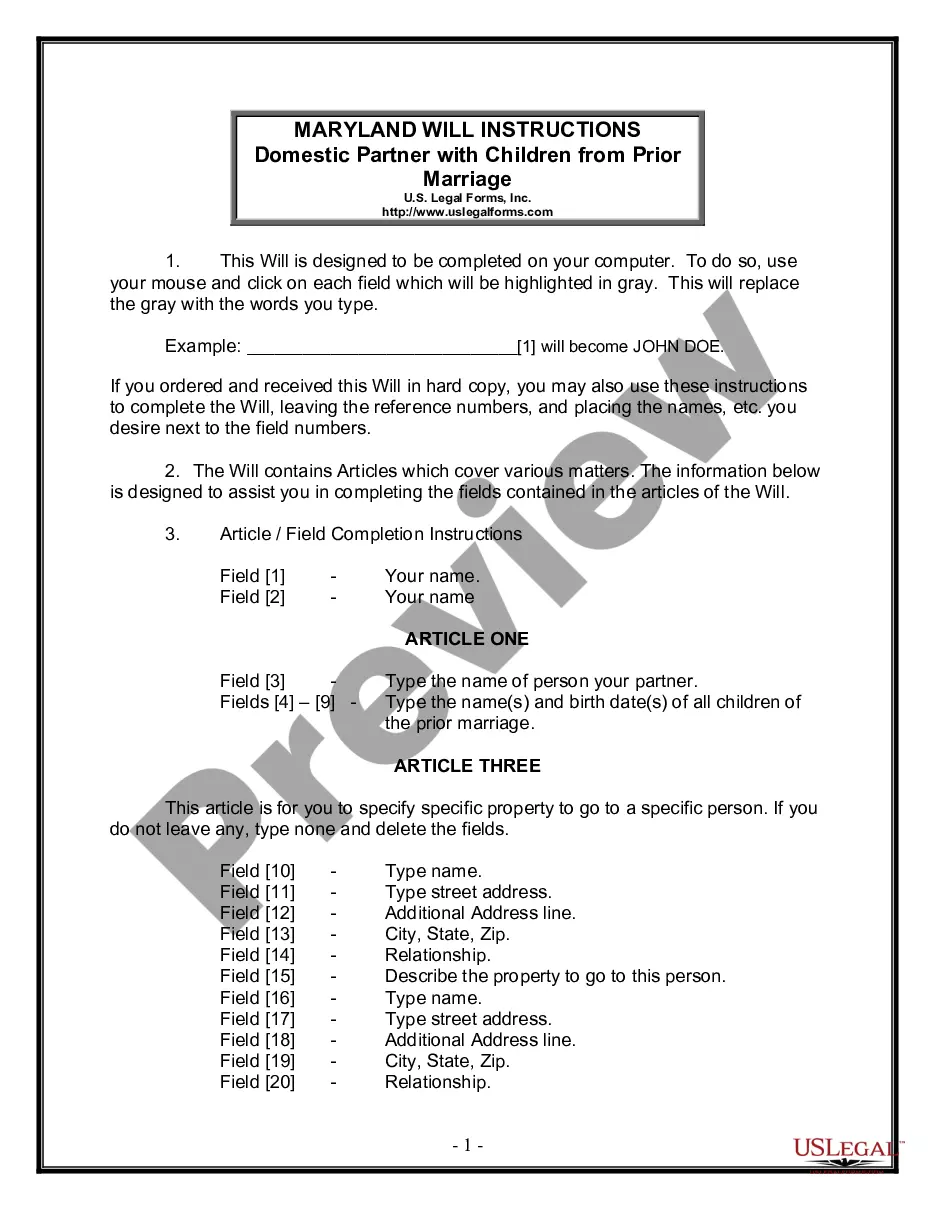
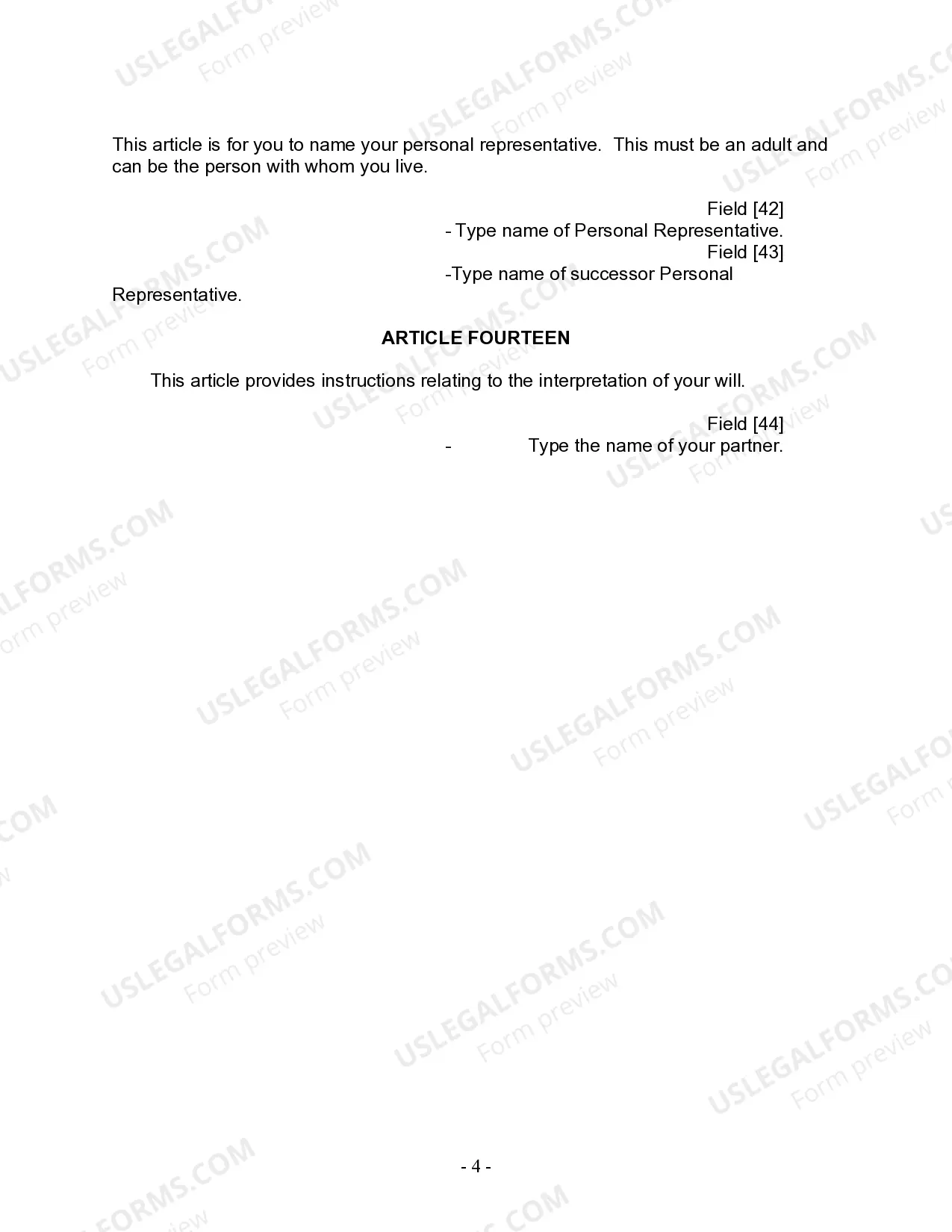
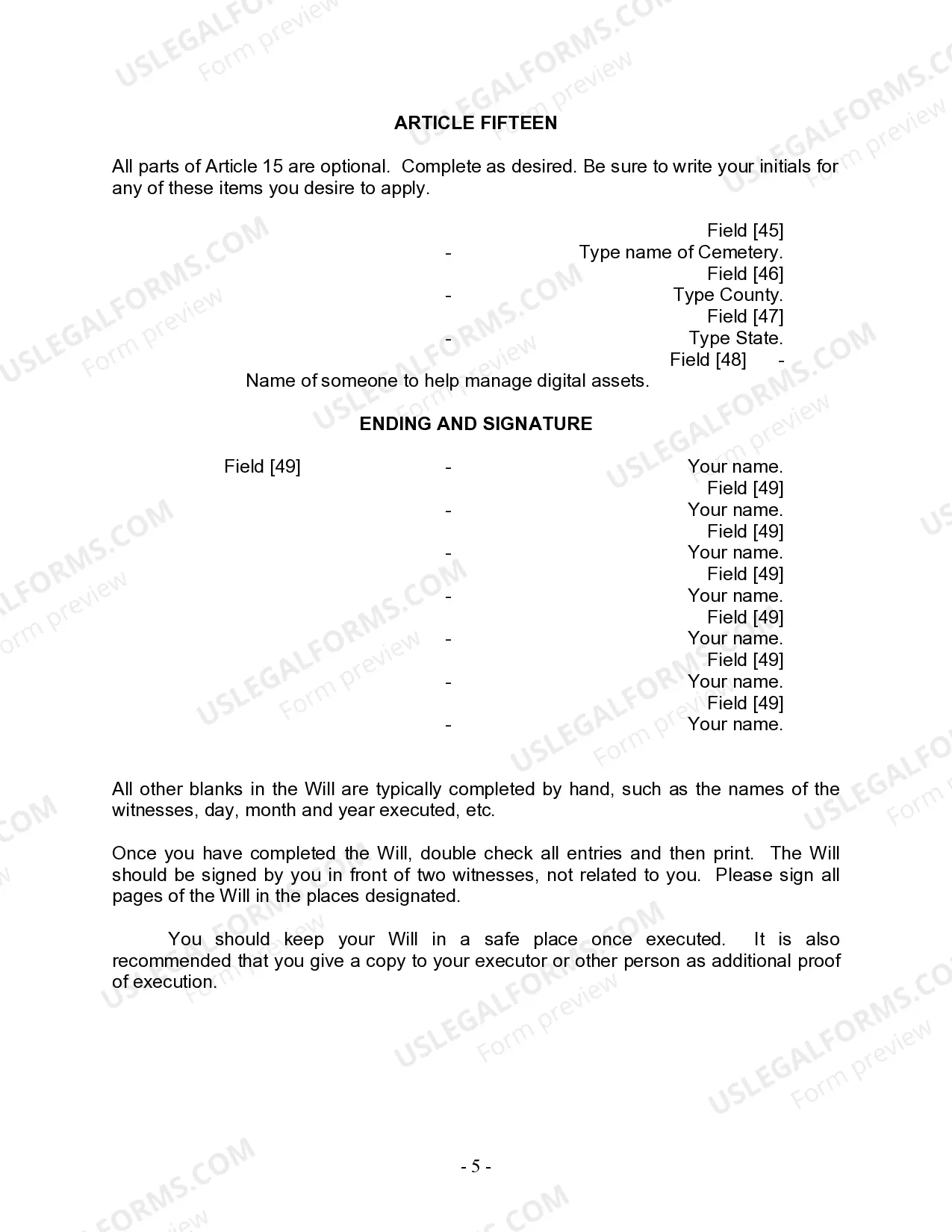
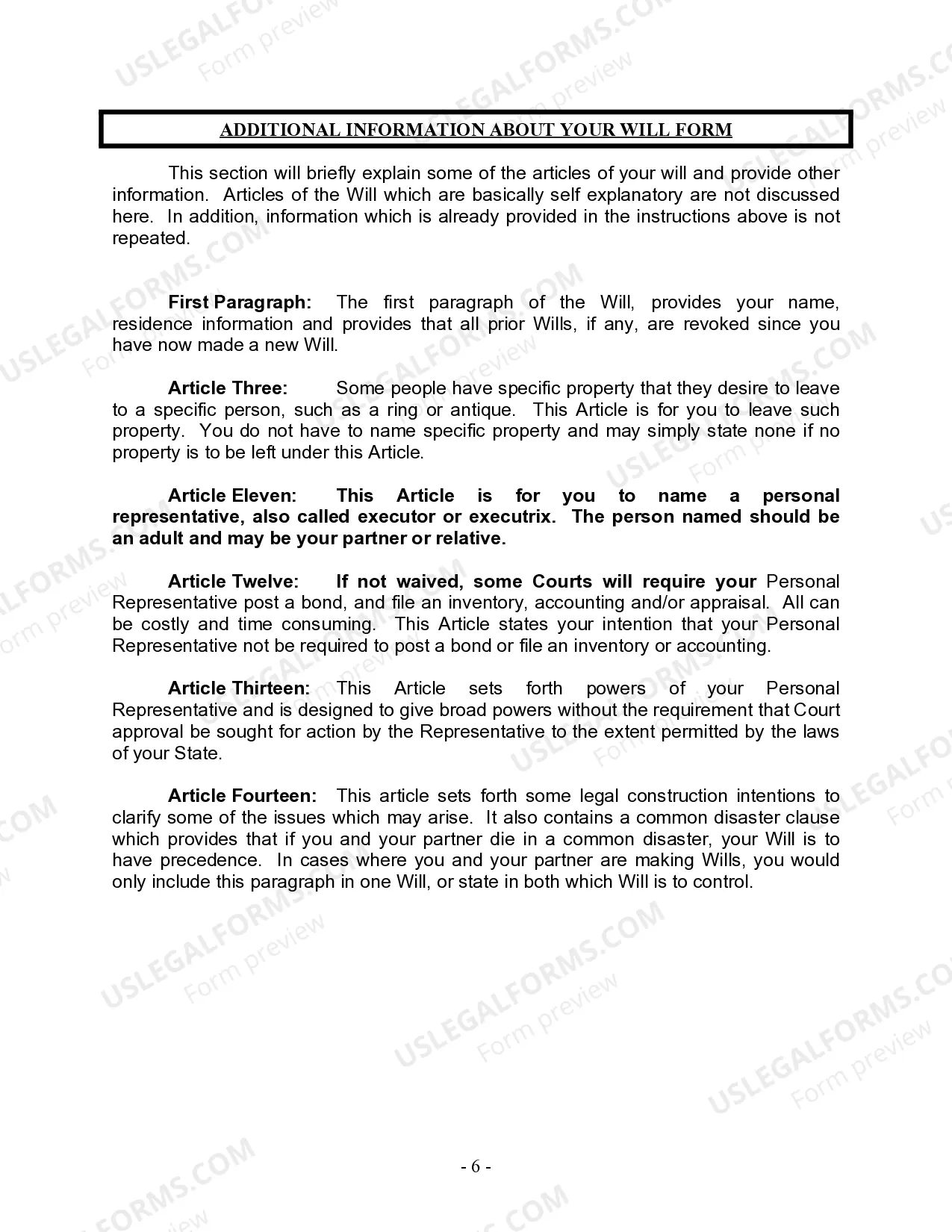
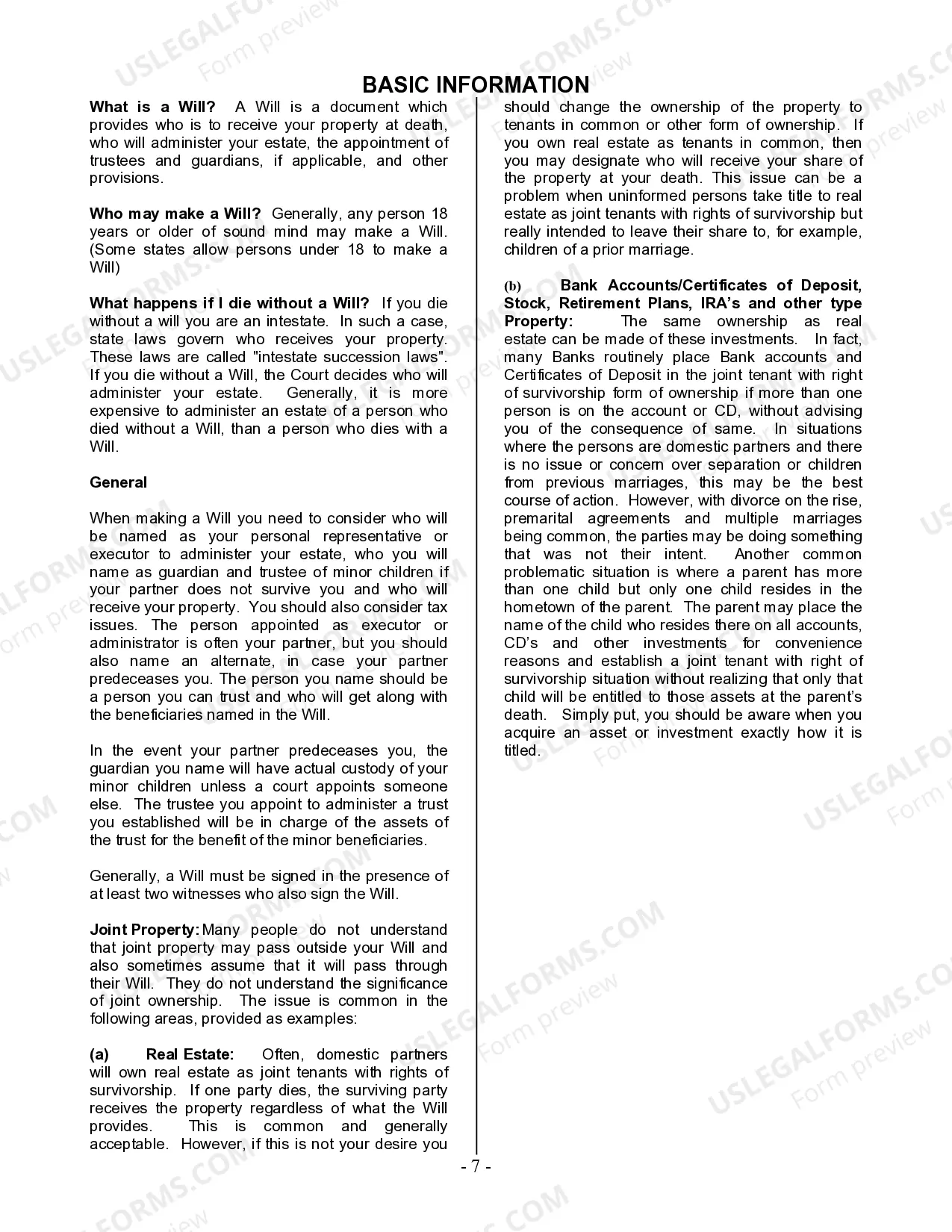
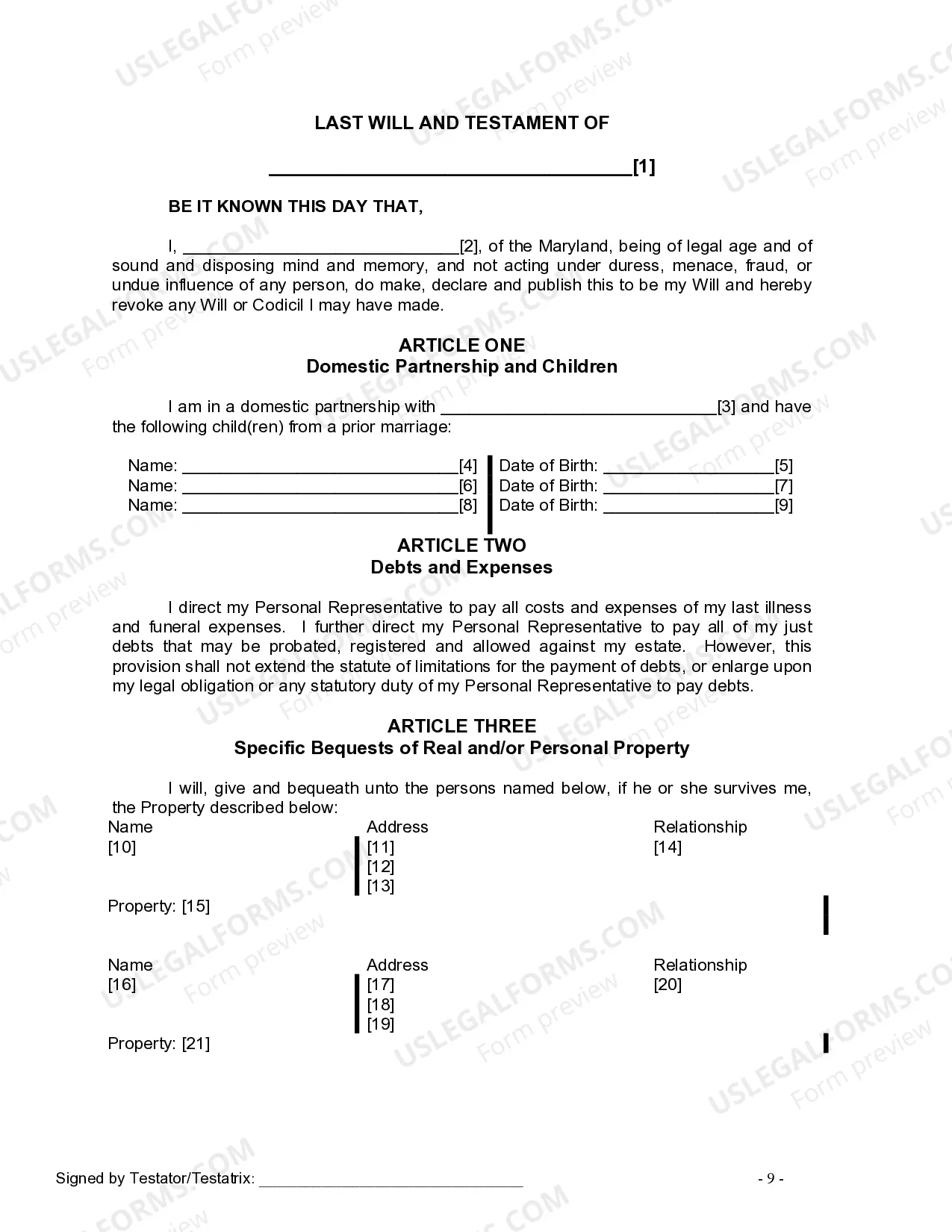
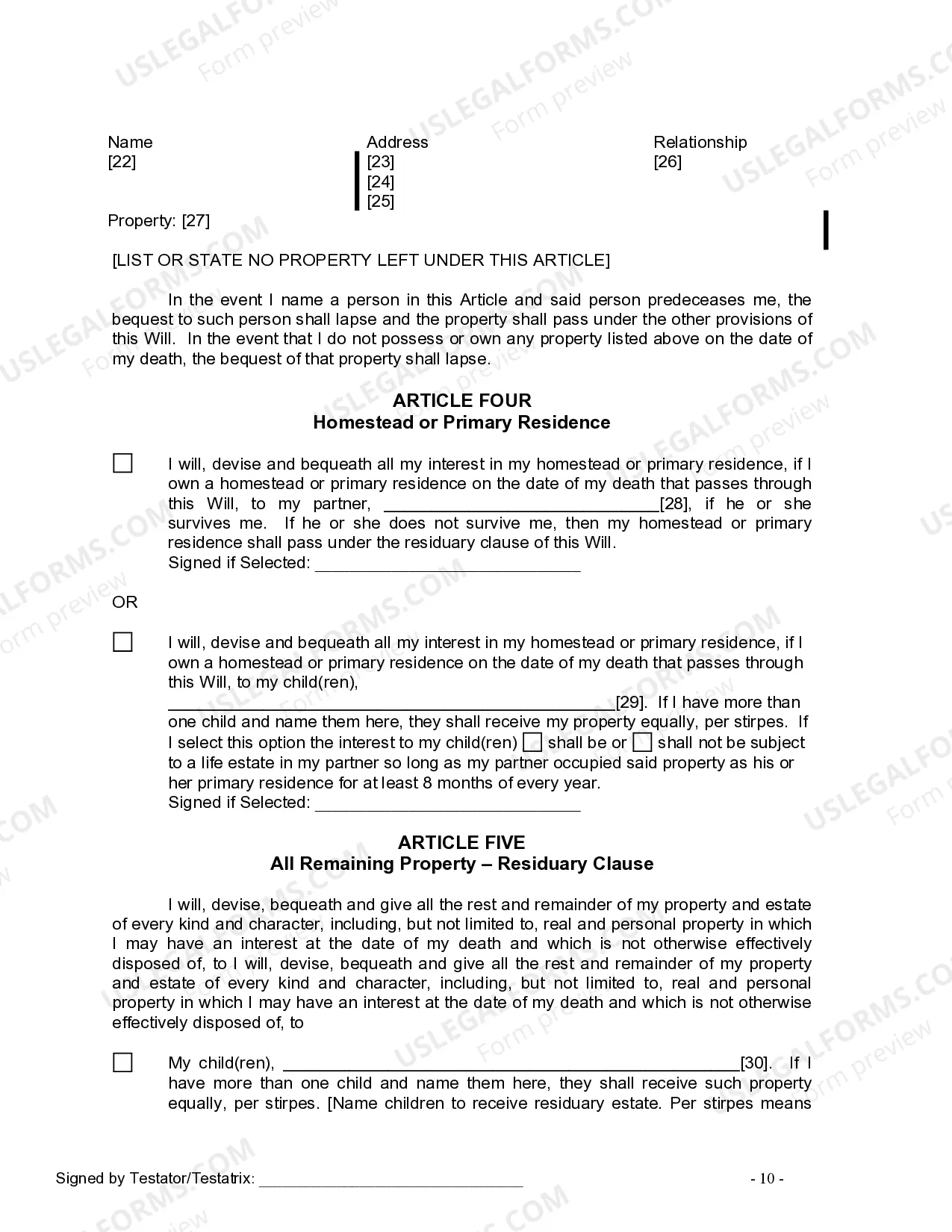
This Last Will and Testament for domestic partners with minor children from a prior marriage is a legally binding document that outlines how your assets will be distributed upon your passing. This form is specifically tailored for individuals in a domestic partnership who have children from a previous marriage, differentiating it from other standard wills by addressing unique considerations regarding property distribution and guardianship.
Key parts of this document
- Appointment of a personal representative or executor to manage the estate.
- Designations for property distribution to your domestic partner and children.
- Special provisions for a trustee to oversee assets intended for minor children.
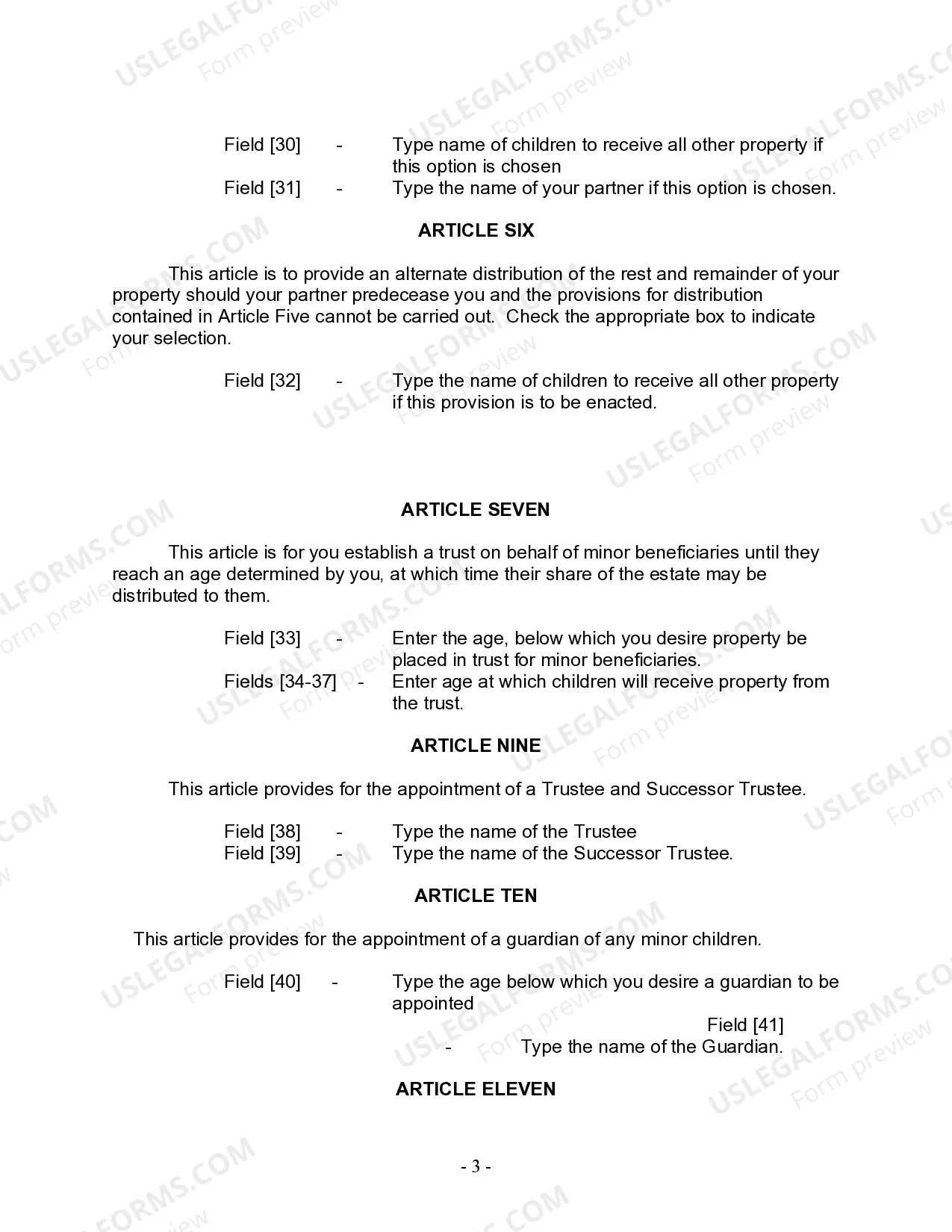
- Provisions for the appointment of guardians for any minor children.
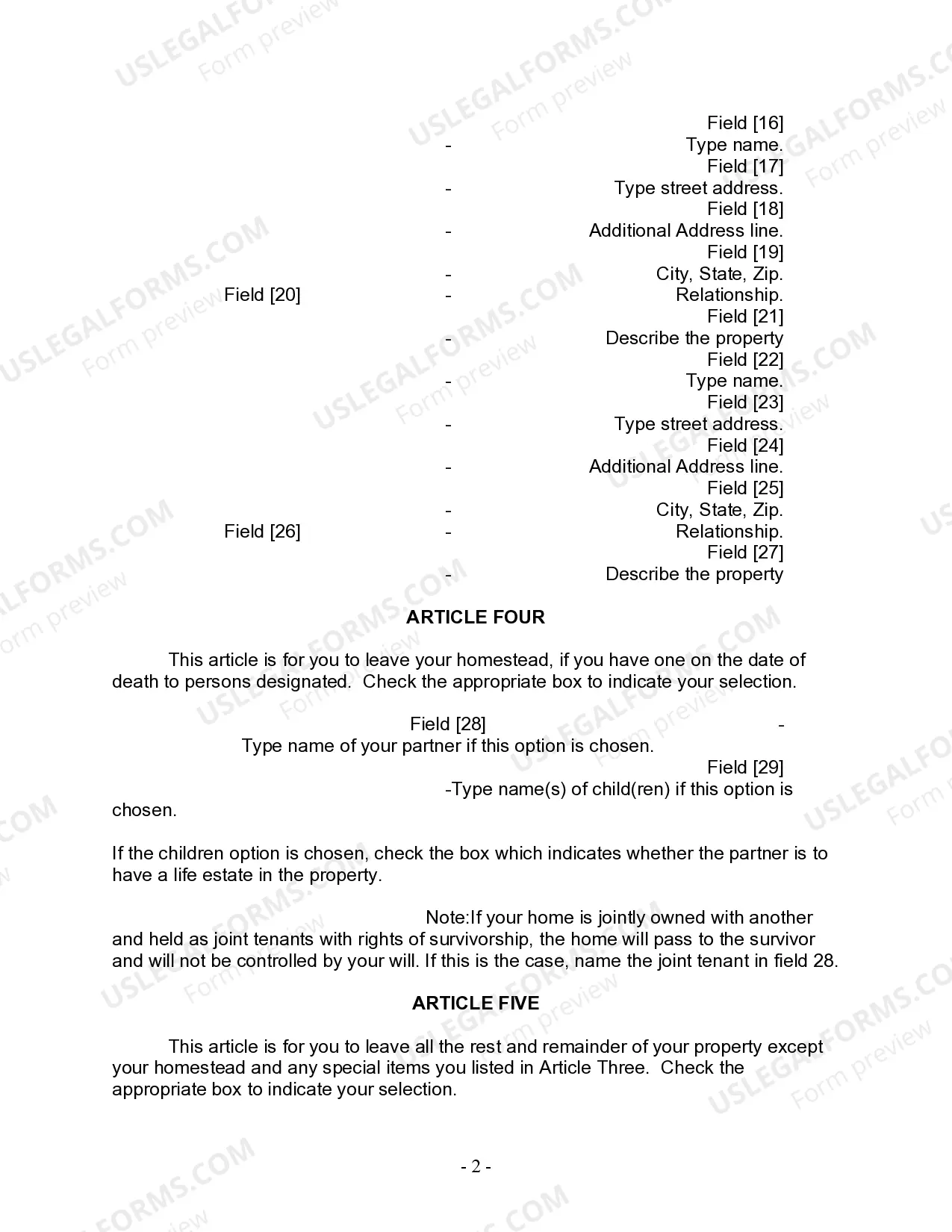
- Customized articles for specific bequests, homestead, and residual estate distribution.



When to use this document
This form should be used when you want to create a will that reflects your wishes for the distribution of your assets after you pass away. It is particularly important for domestic partners who have minor children from a previous marriage, as it ensures that all parties are considered and that the care and financial support for children are addressed clearly. Consider using this will if you are planning your estate and want to establish clear directives for your loved ones.
Who needs this form
This form is ideal for:
- Domestic partners who want to specify how their assets should be distributed after their passing.
- Individuals with minor children from a prior marriage who want to ensure their children are provided for.
- Those who wish to designate guardianship for their children in the event of their death.
How to complete this form
To complete this form, follow these steps:
- Identify and enter your full name and contact information as the testator.
- Provide the names of your domestic partner and minor children from your prior marriage.
- Detail specific property you wish to leave to individuals or entities in the relevant sections.
- Designate a personal representative for your estate and a guardian for your children.
- Sign the will in the presence of two witnesses who are not related to you.
Does this form need to be notarized?
Yes, this form must be notarized to be legally valid. A notary public must witness your signature to confirm your identity and ensure that you are signing willingly. U.S. Legal Forms offers secure online notarization services available twenty-four hours a day, allowing you to complete this requirement conveniently.
Get your form ready online
Our built-in tools help you complete, sign, share, and store your documents in one place.
Make edits, fill in missing information, and update formatting in US Legal Forms—just like you would in MS Word.
Download a copy, print it, send it by email, or mail it via USPS—whatever works best for your next step.
Sign and collect signatures with our SignNow integration. Send to multiple recipients, set reminders, and more. Go Premium to unlock E-Sign.
If this form requires notarization, complete it online through a secure video call—no need to meet a notary in person or wait for an appointment.
We protect your documents and personal data by following strict security and privacy standards.

Make edits, fill in missing information, and update formatting in US Legal Forms—just like you would in MS Word.

Download a copy, print it, send it by email, or mail it via USPS—whatever works best for your next step.

Sign and collect signatures with our SignNow integration. Send to multiple recipients, set reminders, and more. Go Premium to unlock E-Sign.

If this form requires notarization, complete it online through a secure video call—no need to meet a notary in person or wait for an appointment.

We protect your documents and personal data by following strict security and privacy standards.
Mistakes to watch out for
- Failing to properly witness the will, which can lead to challenges in its validity.
- Not including provisions for all significant assets, leaving some out of the distribution plan.
- Overlooking the need for updated information if personal circumstances change.
- Not clarifying the roles of personal representatives or guardians clearly enough.
Benefits of completing this form online
Benefits of using this form online include:
- Convenience of completing the form from home at your own pace.
- Editable fields that allow for clear and accurate information input.
- Assurance that the form has been drafted by licensed attorneys to meet legal standards.
Legal use & context
- The will becomes legally binding once properly executed and witnessed.
- Ensure that all legal formalities are followed to avoid any disputes or challenges after your passing.
- Consider local laws regarding wills and estates, as they may affect the enforceability of the will.
What to keep in mind
- This Last Will and Testament is designed for domestic partners with children from previous relationships.
- It provides clear instructions on asset distribution and guardianship for minor children.
- Proper witnessing and notarization are critical for the will's validity.
- Use this form to ensure your wishes are legally recognized and enforceable.
Looking for another form?
Form popularity
FAQ
No, in Maryland, you do not need to notarize your will to make it legal. Maryland does allow you to make your will "self-proving," which speeds up probate because the court can accept the will without contacting the witnesses who signed it.
As defined in Maryland statute, a domestic partnership means a relationship between two people (opposite sex or same sex) who are at least 18 years old, are not related to one another, are not married or in a civil union or domestic partnership with someone else, and agree to be in a relationship of mutual
Marriage automatically revokes a will that has been made previously, leaving it invalid. This means that if you have a will written out and have since married or remarried, you will need to revisit this document to ensure that your estate will still be passed on as you wish.
Although a Will made before a lawful marriage or civil partnership is automatically revoked by that marriage or civil partnership, it will not be revoked if the Will is made in contemplation.Making a Will before marriage is important, and safer than avoiding making a Will, but there can be complications.
An adult can make a valid will without notifying their wife or husband. Not telling a spouse would be unusual, but not illegal.
Maryland law requires that your will be in writing, signed by the testator (you) and witnessed by two individuals in the testator's presence. This is called "executing a will." When you are ready to execute your will, you should have at least two witnesses, although three is better.
Is a holographic (handwritten) Will legal in Maryland ? Yes, if it complies with Maryland Law.
Unless there is a pre or post-nuptial agreement of some sort there are substantial rights that a surviving spouse always has and it will indeed override whatever is written in a Will, for example, a spouse has specific elective share rights to the...
When you marry, any existing will is automatically revoked (cancelled) and becomes no longer valid. If you do not make a new one, then when you die the law of intestacy decides how your assets are divided. Usually, your entire estate would go to your wife, husband or civil partner.