Defense-Malicious Prosecution-Acting Upon the Advice of Counsel
What this document covers
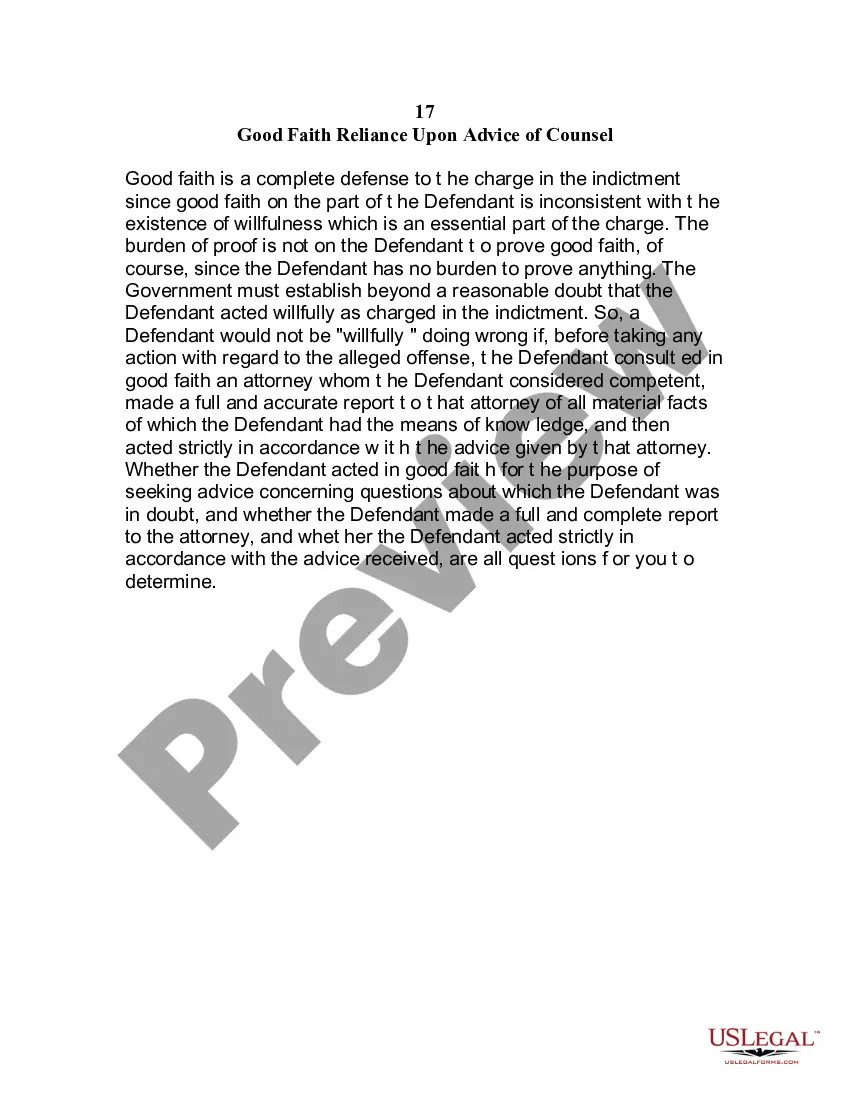
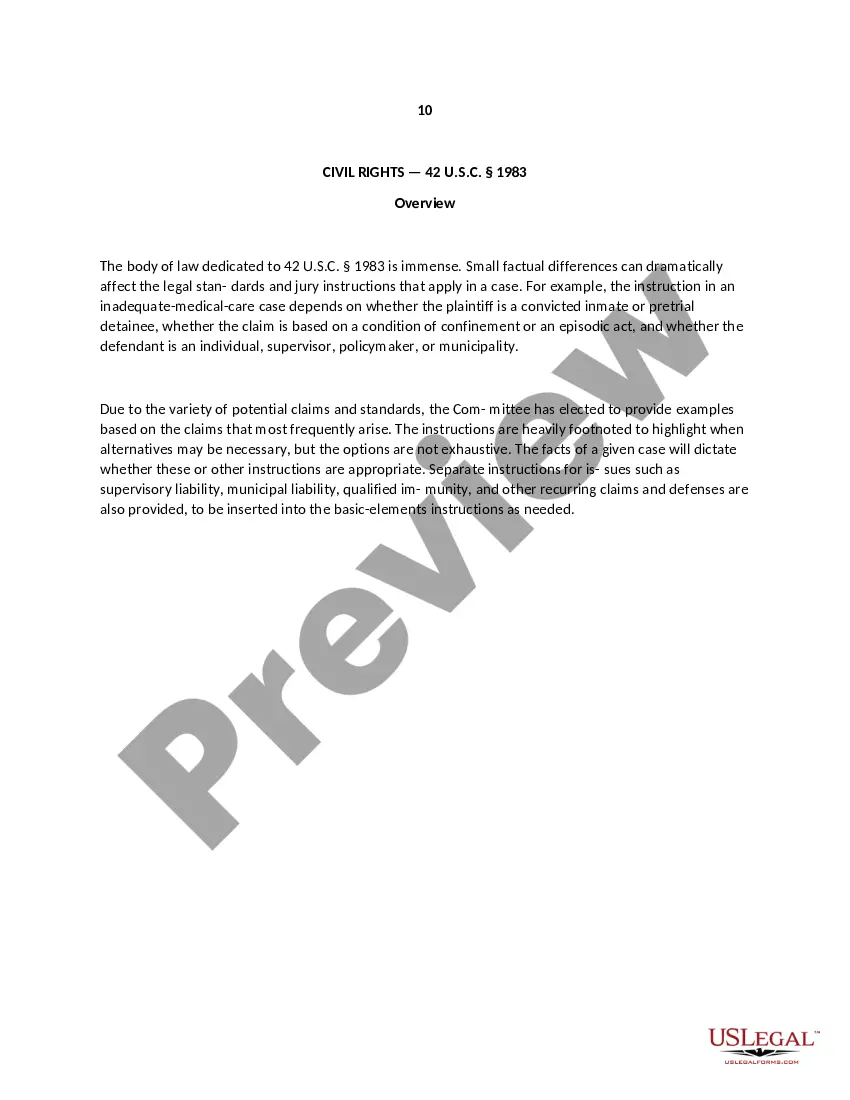
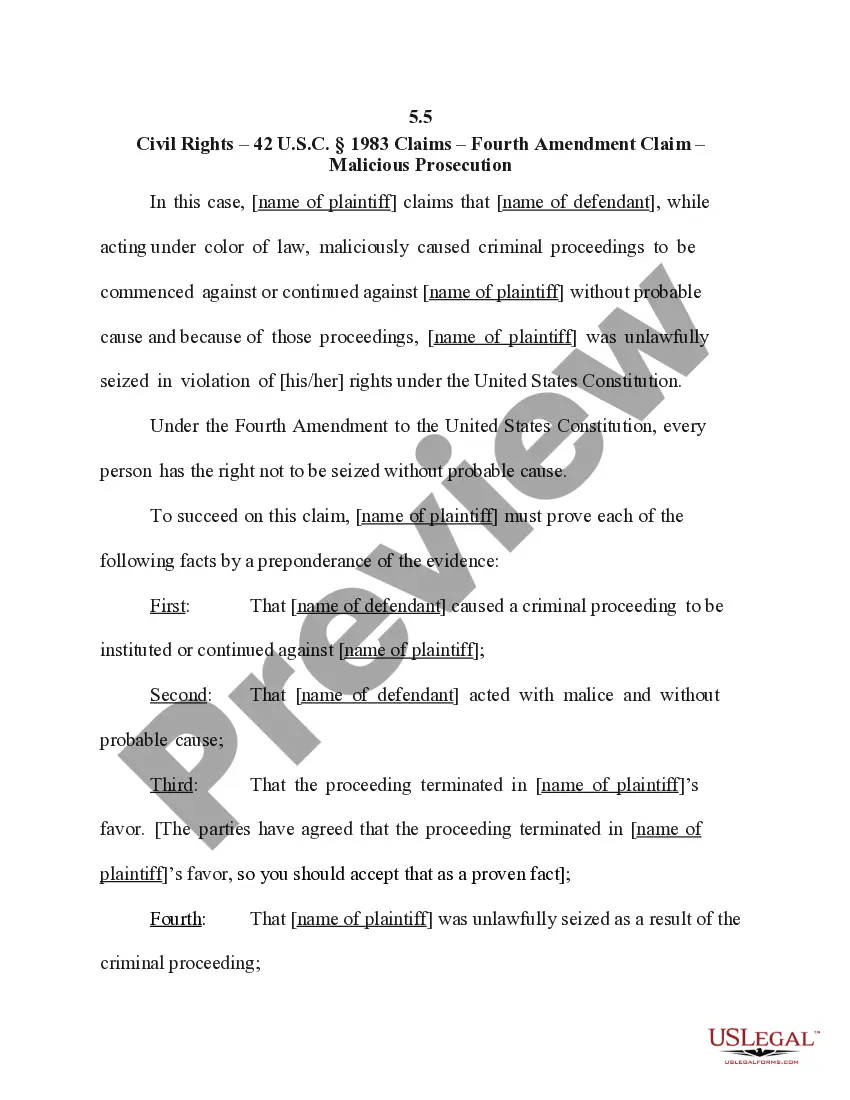
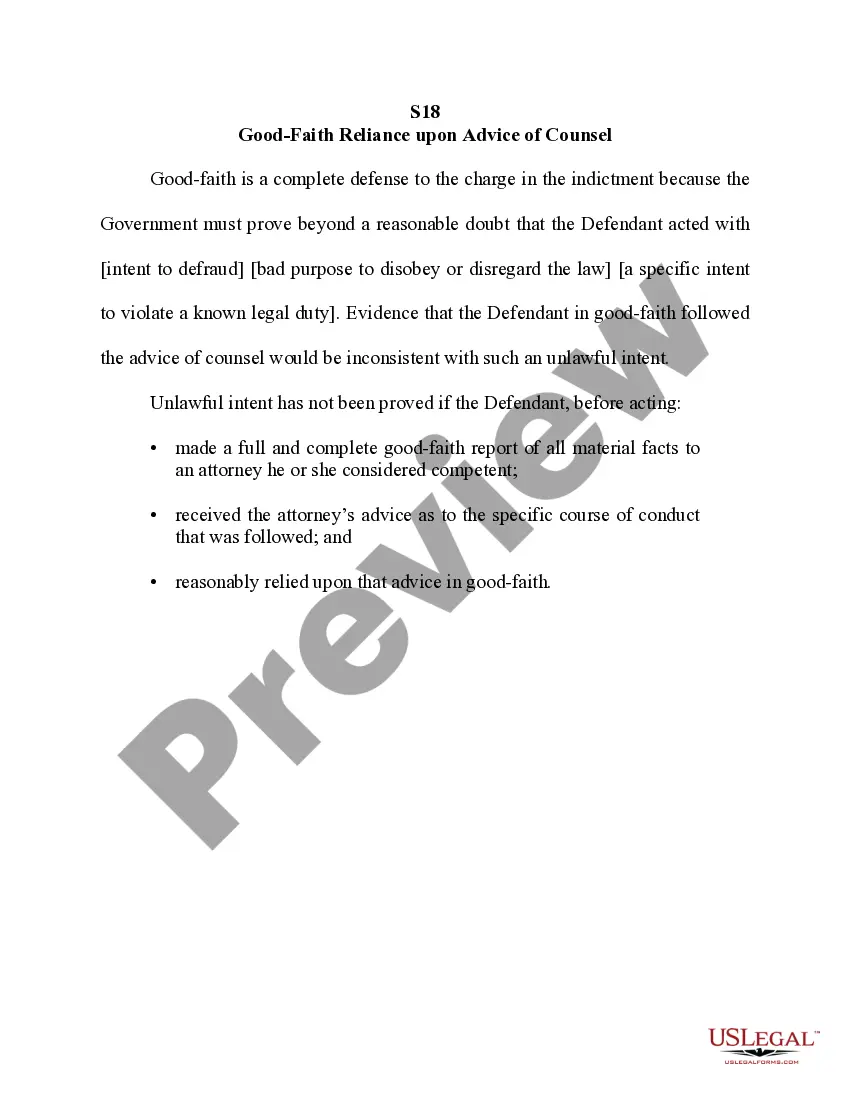
The Defense-Malicious Prosecution-Acting Upon the Advice of Counsel form is a legal document designed to defend against claims of malicious prosecution. It serves to demonstrate that the actions taken were based on sound legal advice, which can be crucial in proving the legitimacy of the defense. This form is distinct from other defense forms as it emphasizes reliance on professional counsel in situations where a legal dispute arises from prior litigation or prosecution.
What’s included in this form
- Identification of the Defendant: States the name of the defendant involved in the malicious prosecution.
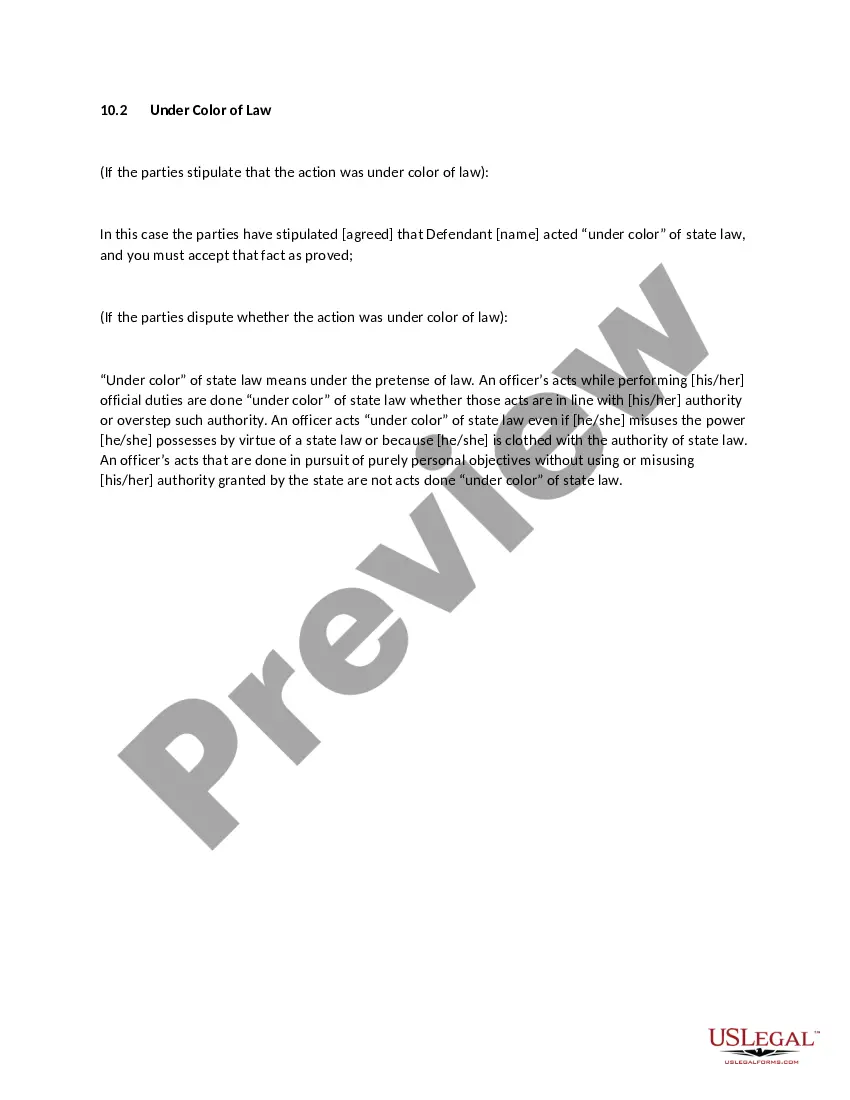
- Under Color of Law Clause: Clarifies whether the actions were taken under the authority of law or not.
- Affirmations of Legal Advice: Sections where the reliance on legal counsel is explicitly stated.
- Signature Section: Area for the defendant or their representative to sign, validating the document.
Situations where this form applies
This form should be utilized when someone faces legal action claiming malicious prosecution but can affirm that their decisions were grounded in the advice of a qualified attorney. It's particularly relevant in cases where an individual has been accused of pursuing legal action that may be deemed unfounded or harassing and they seek to counter those claims effectively.
Who needs this form
- Individuals accused of malicious prosecution who can demonstrate they acted on professional legal advice.
- Legal representatives of defendants in civil litigation concerning malicious prosecution claims.
- Those involved in complex litigation cases requiring a solid defense against accusations of wrongful legal action.
How to complete this form
- Identify the parties involved: Enter the names and designations of the defendant and any other relevant parties.
- Specify the circumstances: Clearly outline the situation leading to the malicious prosecution claim.
- Detail the legal advice received: Provide descriptions of the advice given by the legal counsel.
- Include necessary signatures: Make sure all parties authorized to sign review and sign the form as required.
- Review for accuracy: Double-check all entries to ensure they are accurate and complete.
Does this document require notarization?
Notarization is generally not required for this form. However, certain states or situations might demand it. You can complete notarization online through US Legal Forms, powered by Notarize, using a verified video call available anytime.
Get your form ready online
Our built-in tools help you complete, sign, share, and store your documents in one place.
Make edits, fill in missing information, and update formatting in US Legal Forms—just like you would in MS Word.
Download a copy, print it, send it by email, or mail it via USPS—whatever works best for your next step.
Sign and collect signatures with our SignNow integration. Send to multiple recipients, set reminders, and more. Go Premium to unlock E-Sign.
If this form requires notarization, complete it online through a secure video call—no need to meet a notary in person or wait for an appointment.
We protect your documents and personal data by following strict security and privacy standards.

Make edits, fill in missing information, and update formatting in US Legal Forms—just like you would in MS Word.

Download a copy, print it, send it by email, or mail it via USPS—whatever works best for your next step.

Sign and collect signatures with our SignNow integration. Send to multiple recipients, set reminders, and more. Go Premium to unlock E-Sign.

If this form requires notarization, complete it online through a secure video call—no need to meet a notary in person or wait for an appointment.

We protect your documents and personal data by following strict security and privacy standards.
Common mistakes
- Failing to accurately identify all parties involved.
- Not providing sufficient detail about the legal advice received.
- Neglecting to gather all necessary signatures before submission.
- Overlooking state-specific legal nuances that could affect the form's effectiveness.
Benefits of completing this form online
- Convenience: Downloadable format allows for immediate access and use.
- Editability: Users can fill out the form at their own pace and make necessary adjustments.
- Reliability: Legal forms provided by licensed attorneys ensure that the document meets applicable legal standards.
Looking for another form?

Form popularity
FAQ
Reliance on counsel is but a means of establishing "good faith" or "due care." If a problem requires the use of professional advice of a nonlegal nature, obtaining and relying on such advice should also satisfy these requirements.
In asserting the advice-of-counsel defense a defendant is not saying it did not perform the act. Rather, it asserts that it acted in good faith, and therefore without mens rea (criminal) or knowledge (civil), due to reasonable reliance on advice from counsel.
The advice of counsel defense is based on the substance of legal advice provided by counsel: the defendant argues that there was no fraudulent intent because counsel advised that the disclosure in question was lawful.
The advice of counsel defense is based on the substance of legal advice provided by counsel: the defendant argues that there was no fraudulent intent because counsel advised that the disclosure in question was lawful.
Nevertheless, a contract may provide that reliance on the advice of counsel (or other professionals) is a complete defense to a claim.
The ?advice of counsel defense? is typically raised as an Affirmative Defense to refute the allegation that the insurer acted in ?bad-faith? by showing that it retained expert legal counsel to specifically address the issues regarding the coverage of a property claim or settlement of a liability action.
Elements of a Malicious Prosecution Claim The Original Lawsuit Was Terminated in the Plaintiff's Favor. The case must have been disposed of or won by the original defendant in a civil suit.There Was No Probable Cause.The Defendant Pursued the Lawsuit Maliciously.The Plaintiff Suffered Damages.