Texas Special Warranty Deed from an Individual to a Trust
About this form
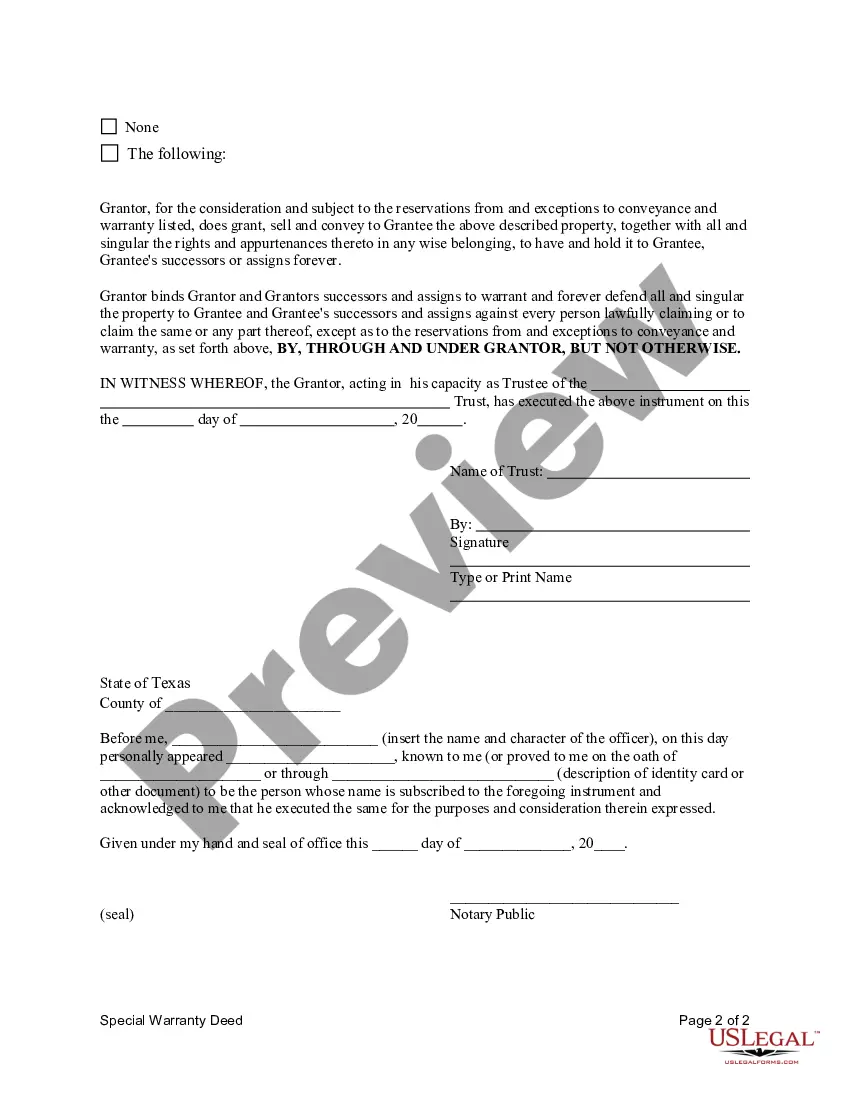
A Special Warranty Deed from an Individual to a Trust is a legal document that transfers property ownership from an individual (the Grantor) to a trust (the Grantee). This form ensures that the Grantor only warrants the property against claims arising from their ownership, providing limited protection to the Grantee. Unlike a general warranty deed, a special warranty deed limits the extent of the Grantor's defense against claims, making it essential for specific transfer scenarios involving trusts.
Form components explained
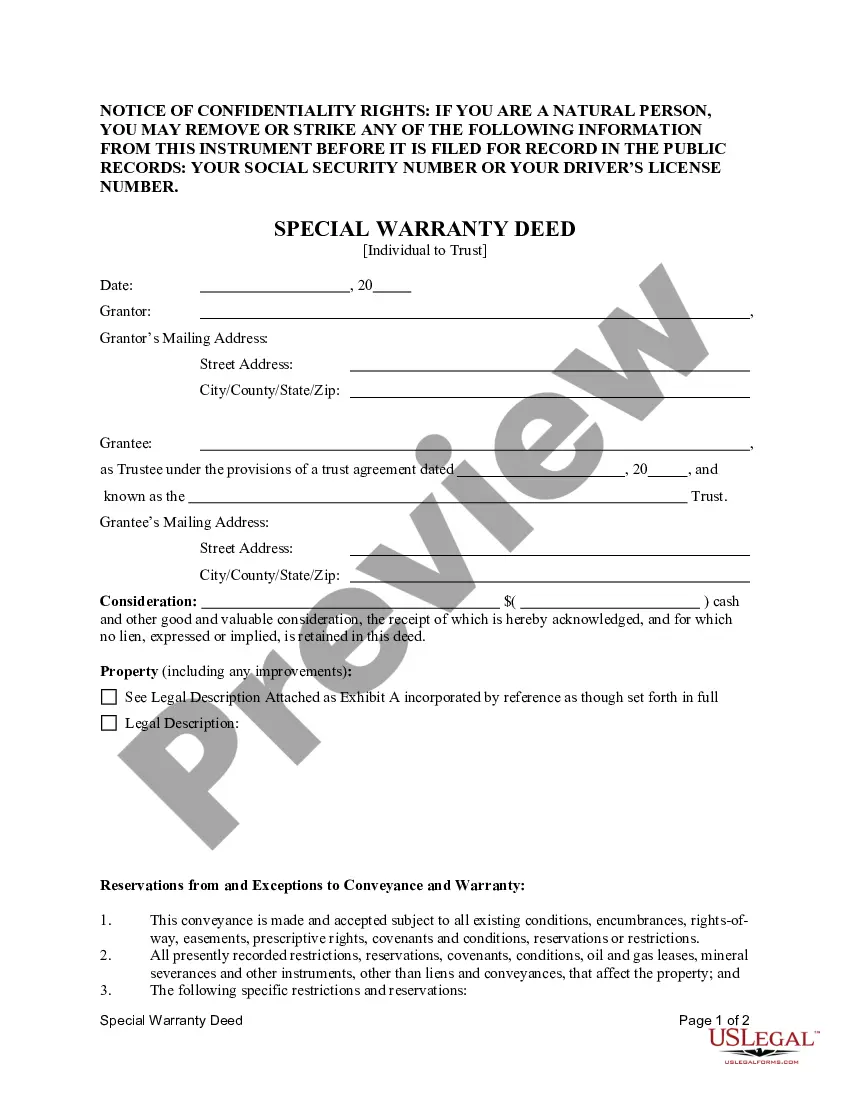
- Grantor details: Information about the individual transferring the property.
- Grantee details: Information about the trust receiving the property.
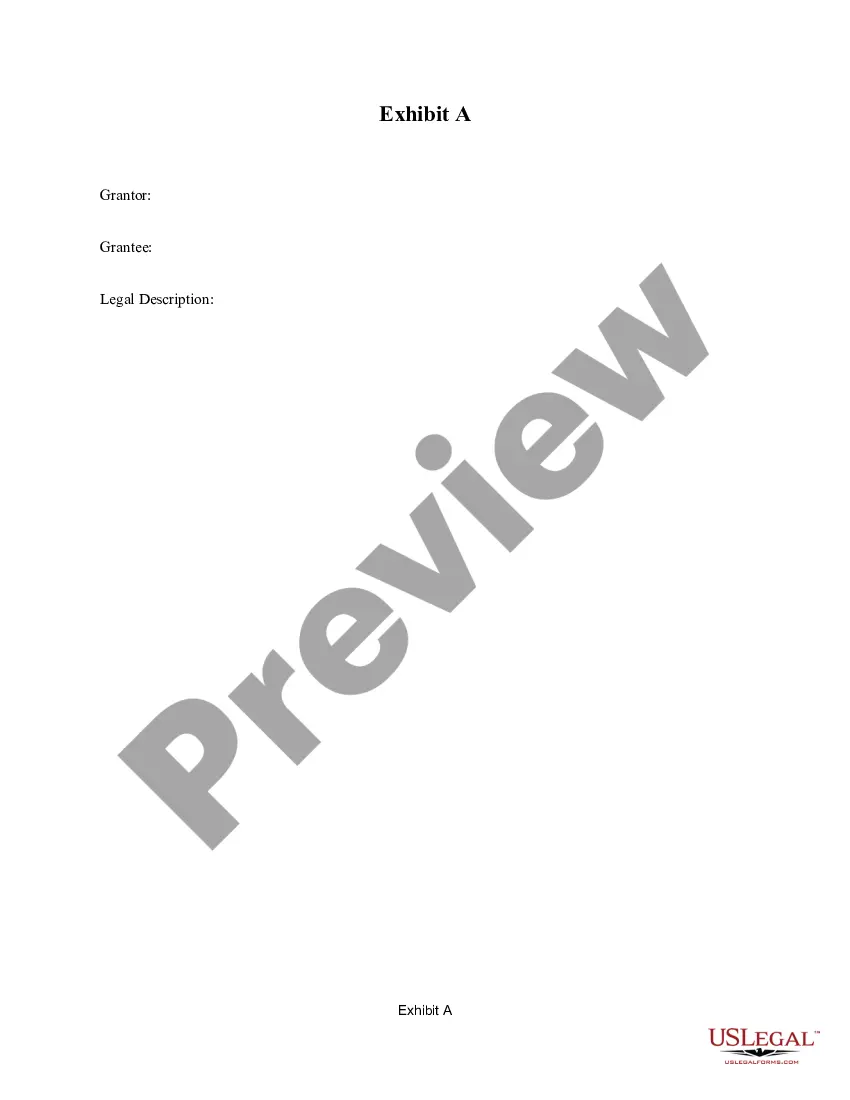
- Property description: A clear and specific description of the property being transferred.
- Warranties section: Clauses outlining the limited warranties provided by the Grantor.
- Signatures: Verification by both Grantor and a witness, if required.





When this form is needed
This form is used when an individual wishes to transfer property to a trust they have established. This could occur during estate planning, setting up a family trust, or when the Grantor wants to manage property under the terms of a trust for tax or asset protection purposes. It is also suitable when the Grantor wants to limit their liability regarding the property's condition and any claims to it.
Who needs this form
- Individuals looking to transfer property into a trust for estate planning.
- Trustees managing estate assets on behalf of a trust.
- Individuals interested in limiting their liability regarding property claims.
How to complete this form
- Identify the parties involved: enter the names and addresses of the Grantor and the trust.
- Specify the property: provide a detailed legal description of the property being transferred.
- Outline any existing restrictions: include information on any encumbrances or claims on the property, if applicable.
- Enter the date of the transfer: specify when the transfer takes effect.
- Complete the signatures section: ensure all necessary parties sign the deed and witness, if required.
Is notarization required?
To make this form legally binding, it must be notarized. Our online notarization service, powered by Notarize, lets you verify and sign documents remotely through an encrypted video session.
Get your form ready online
Our built-in tools help you complete, sign, share, and store your documents in one place.
Make edits, fill in missing information, and update formatting in US Legal Forms—just like you would in MS Word.
Download a copy, print it, send it by email, or mail it via USPS—whatever works best for your next step.
Sign and collect signatures with our SignNow integration. Send to multiple recipients, set reminders, and more. Go Premium to unlock E-Sign.
If this form requires notarization, complete it online through a secure video call—no need to meet a notary in person or wait for an appointment.
We protect your documents and personal data by following strict security and privacy standards.

Make edits, fill in missing information, and update formatting in US Legal Forms—just like you would in MS Word.

Download a copy, print it, send it by email, or mail it via USPS—whatever works best for your next step.

Sign and collect signatures with our SignNow integration. Send to multiple recipients, set reminders, and more. Go Premium to unlock E-Sign.

If this form requires notarization, complete it online through a secure video call—no need to meet a notary in person or wait for an appointment.

We protect your documents and personal data by following strict security and privacy standards.
Avoid these common issues
- Failing to accurately describe the property, leading to potential disputes.
- Omitting required signatures or dates, which may render the form invalid.
- Not understanding the limited warranties provided by the deed.
Advantages of online completion
- Convenience: Easily complete and download forms from the comfort of your home.
- Editability: Fill out the form digitally, reducing errors typically made with handwritten entries.
- Legal reliability: Forms are drafted based on state laws, ensuring compliance with legal standards.
Looking for another form?
Form popularity
FAQ
Write the county where the property is located on line provided next to the words "County of" beneath the words "The State of Texas." Write the name and address of the grantor on the lines provided after the words "Know all men by these presents, That I."
Retrieve your original deed. Get the appropriate deed form. Draft the deed. Sign the deed before a notary. Record the deed with the county recorder. Obtain the new original deed.
Locate your current deed. Use the proper deed. Check with your title insurance company and lender. Prepare a new deed. Sign in the presence of a notary. Record the deed in the county clerk's office. Locate the deed that's in trust. Use the proper deed.
The act of transferring a property that is owned by an individual into a trust, will see the trust liable to pay stamp duty on acquisition of the asset. Additionally, the individual who is transferring ownership to the trust, will be liable to pay capital gains tax on the disposal of the asset.
Transferring Real Property to a Trust You can transfer your home (or any real property) to the trust with a deed, a document that transfers ownership to the trust. A quitclaim deed is the most common and simplest method (and one you can do yourself).
No. And unless the deed identifies the trust as an owner, then father is the owner of an interest. It is a common mistake to set up a trust and then fail to deed property into the trust. However, you cannot force him to make the changes you are...
Special warranties allow the transfer of property title between seller and buyer. The purchase of title insurance can mitigate the risk of prior claims to the special warranty deed.
How To Establish A Trust. You will need to retain an estate attorney to draft and execute your trust document. For a simple revocable or irrevocable trust, it may cost anywhere from $2,000 $5,000.
Fill out the "grantor" section of the warranty deed. The grantors are the givers, or current owners, of the property. Use the legal name of each grantor and insert current addresses after each grantor's name.