Arizona Subpoena in a Civil Case
Understanding this form
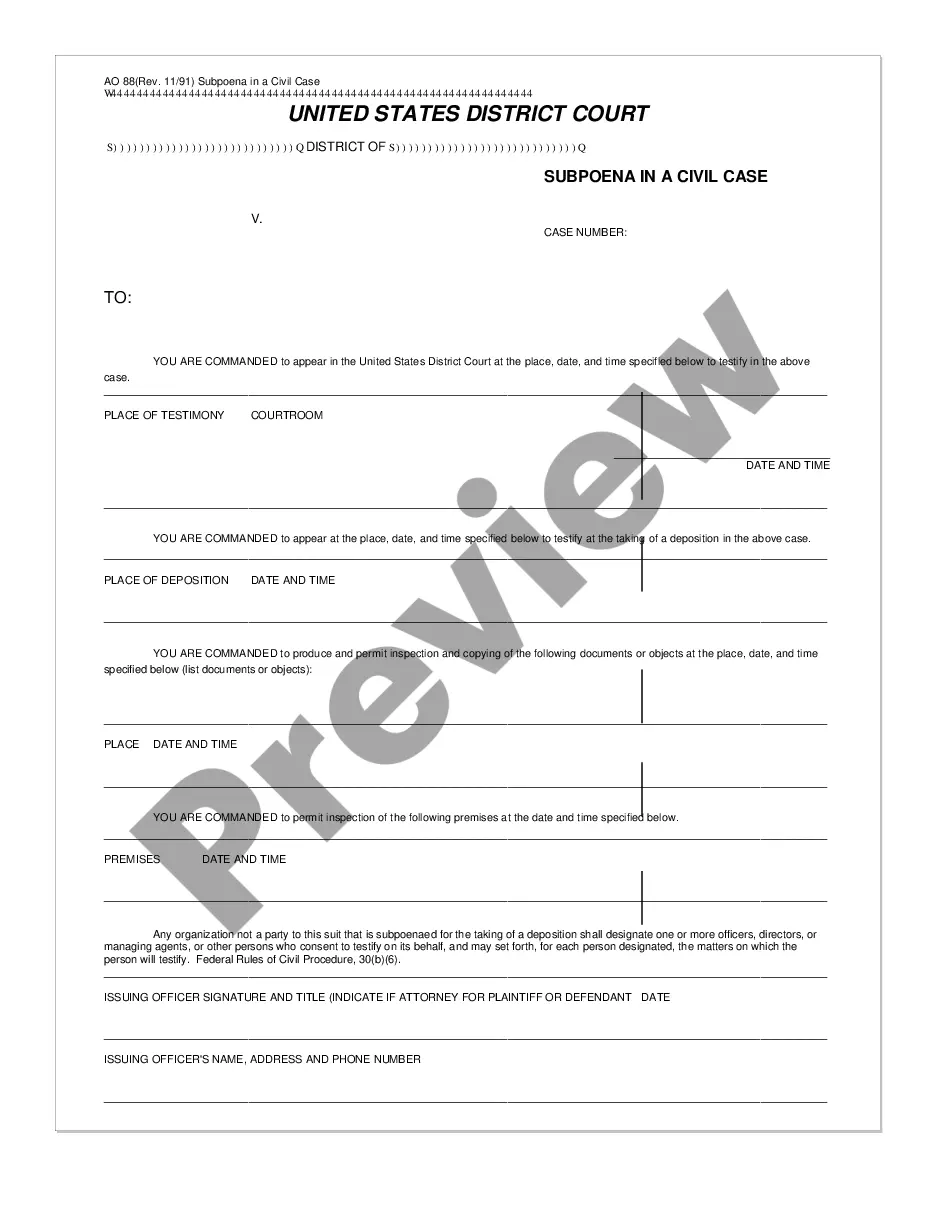
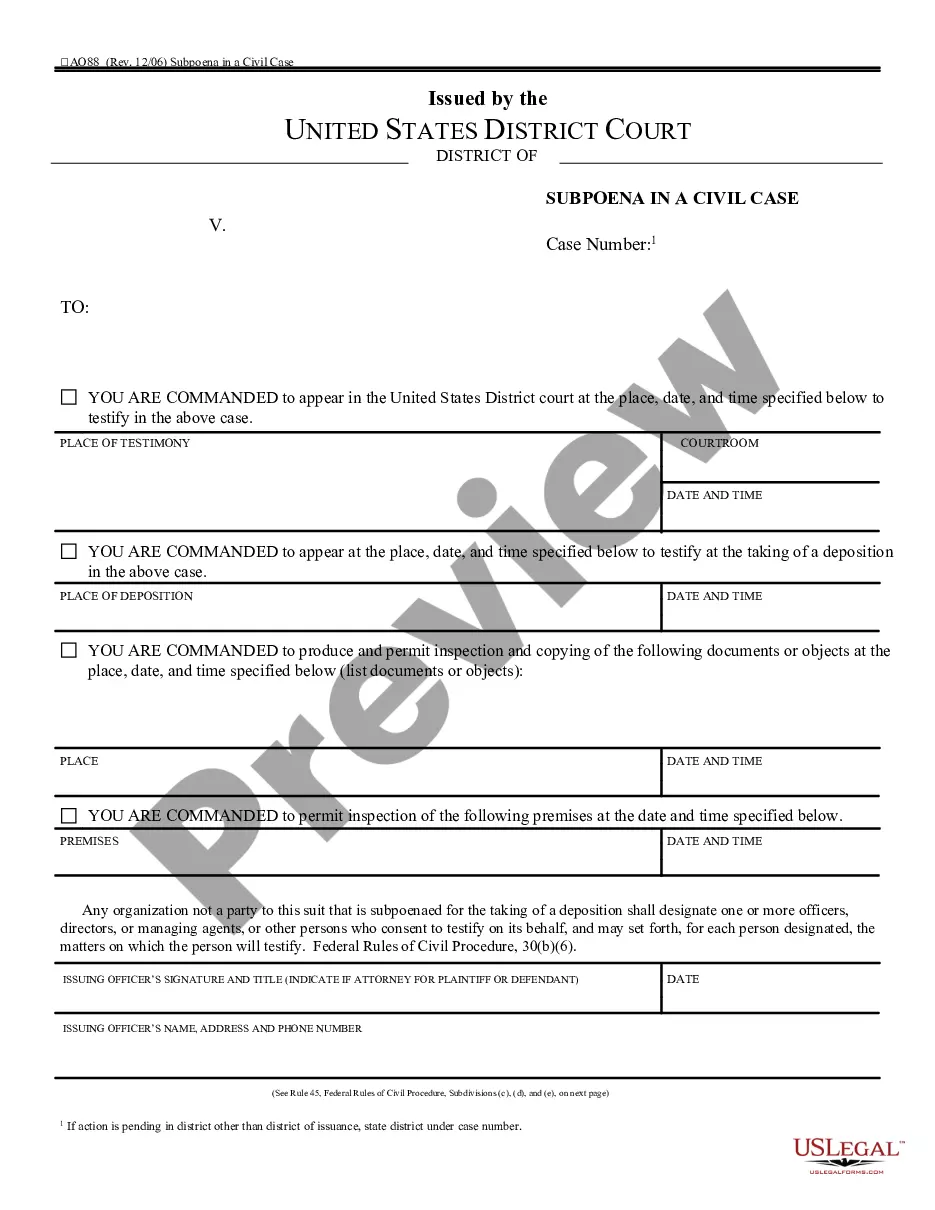
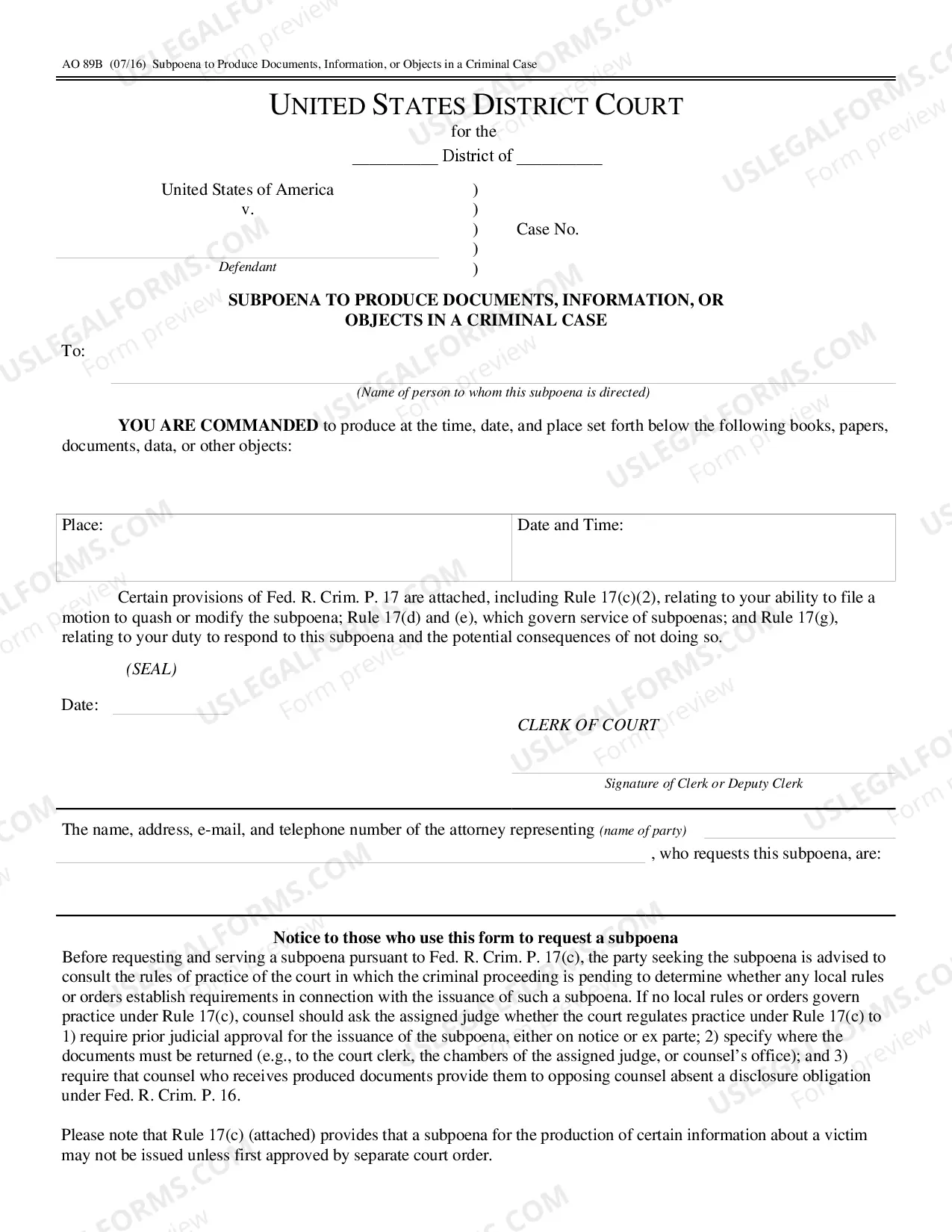
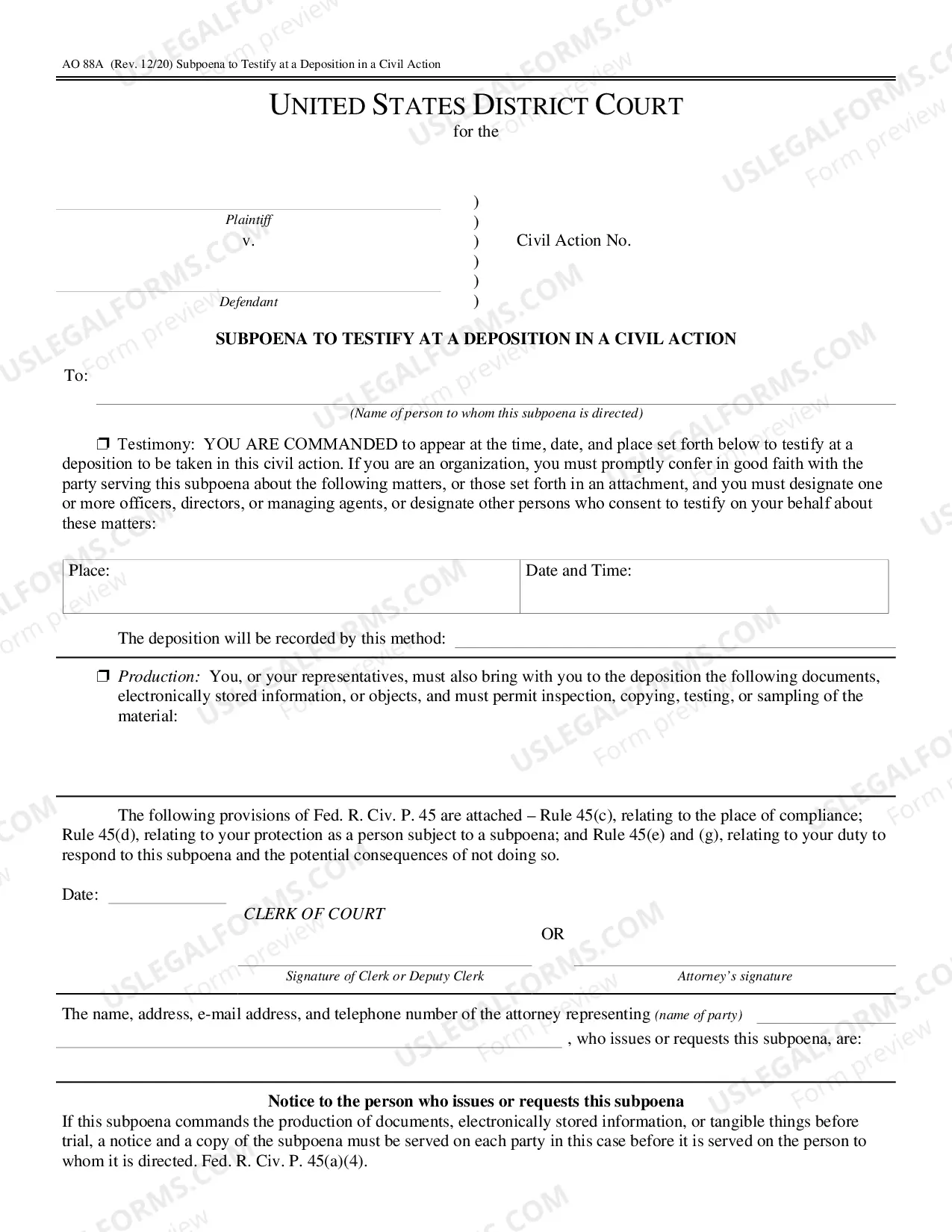
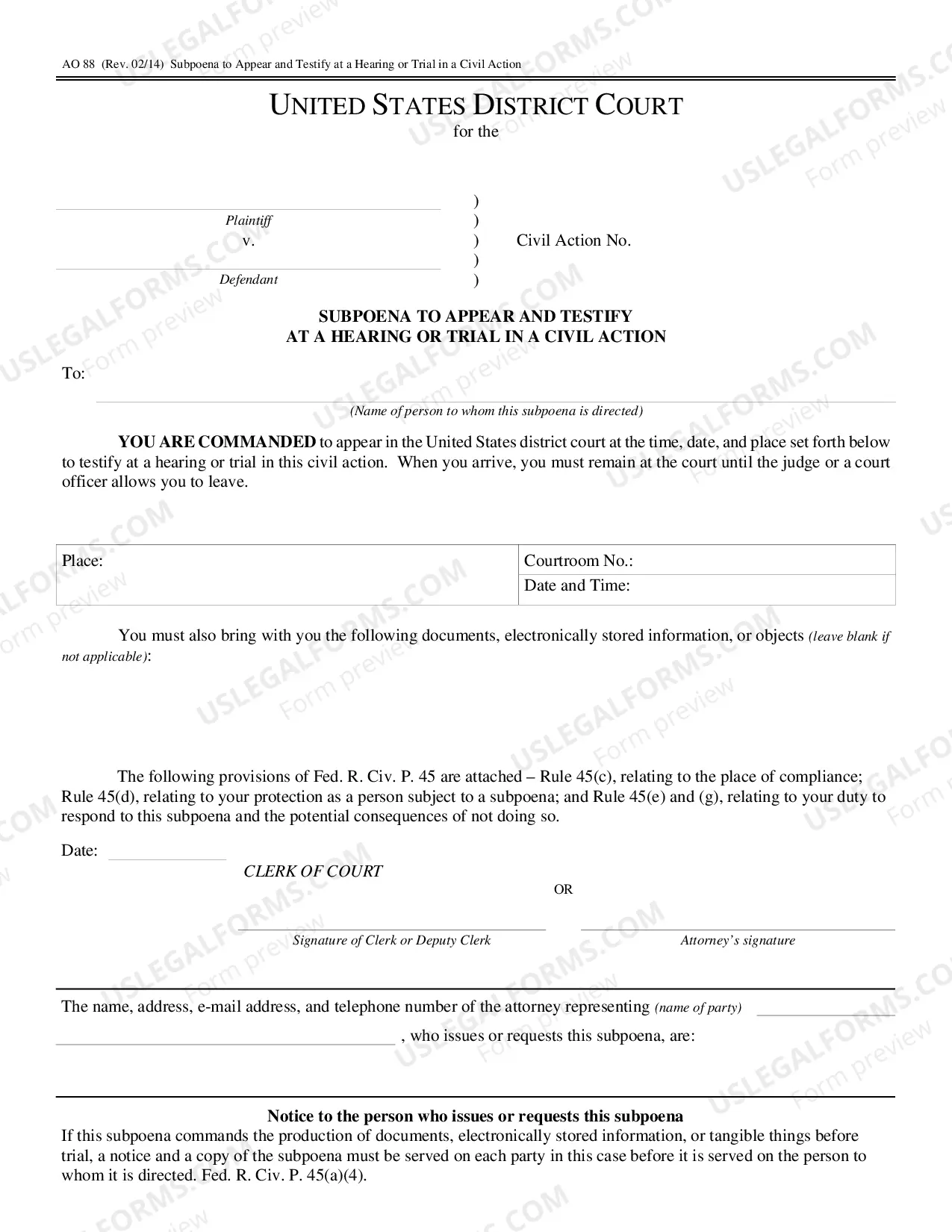
The Subpoena in a Civil Case is a legal document issued by a court that commands a person to appear in court or produce evidence for a civil case. It is a critical part of legal procedures, allowing parties to gather testimony or documents necessary for their case. Unlike criminal subpoenas, this form focuses specifically on civil matters, making it essential for those seeking evidence or witness statements in non-criminal proceedings.
What’s included in this form
- Case Information: Includes case title and case number.
- Recipient Details: Specifies who is being commanded to appear or produce evidence.
- Place and Time: Indicates where and when the recipient must appear or submit documents.
- Documents Requirement: Lists the specific documents or objects to be produced, if applicable.
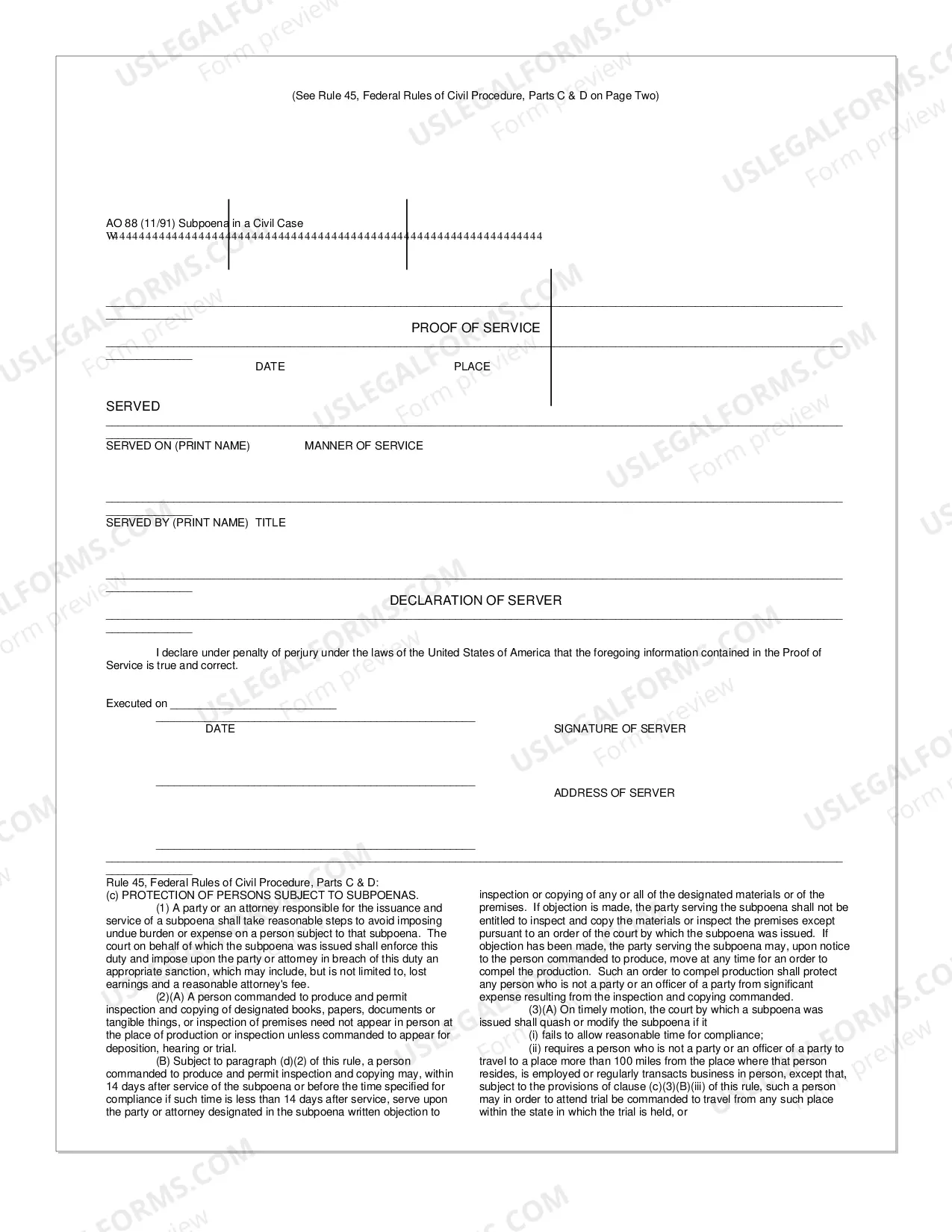
- Proof of Service: Provides a section for verifying that the subpoena was properly served.
- Issuing Officer Information: Details the officerâs signature, title, and contact information.

Common use cases
This form is utilized when a party in a civil case requires testimony from a witness or needs documents relevant to the case. It is typically issued during the discovery phase of litigation, when parties gather evidence. Scenarios include subpoenas for depositions, requests for documents, or requiring individuals to testify in court. If you need to compel a third party to provide evidence that is crucial for your case, this subpoena is essential.
Who can use this document
- Attorneys representing parties in civil litigation.
- Individuals seeking to gather evidence for their civil case.
- Entities like businesses that may possess relevant documents or witnesses.
How to prepare this document
- Fill out the case information, including the case title and number.
- Identify the person or organization to be subpoenaed.
- Specify the location, date, and time for testimony or document production.
- Detail any documents or objects that must be produced for inspection.
- Have the issuing officer sign and provide their contact information.
- Complete the proof of service to confirm the subpoena was delivered appropriately.
Notarization requirements for this form
This form does not typically require notarization unless specified by local law. However, verifying the identity of the issuing officer can enhance the document's integrity.
Get your form ready online
Our built-in tools help you complete, sign, share, and store your documents in one place.
Make edits, fill in missing information, and update formatting in US Legal Forms—just like you would in MS Word.
Download a copy, print it, send it by email, or mail it via USPS—whatever works best for your next step.
Sign and collect signatures with our SignNow integration. Send to multiple recipients, set reminders, and more. Go Premium to unlock E-Sign.
If this form requires notarization, complete it online through a secure video call—no need to meet a notary in person or wait for an appointment.
We protect your documents and personal data by following strict security and privacy standards.

Make edits, fill in missing information, and update formatting in US Legal Forms—just like you would in MS Word.

Download a copy, print it, send it by email, or mail it via USPS—whatever works best for your next step.

Sign and collect signatures with our SignNow integration. Send to multiple recipients, set reminders, and more. Go Premium to unlock E-Sign.

If this form requires notarization, complete it online through a secure video call—no need to meet a notary in person or wait for an appointment.

We protect your documents and personal data by following strict security and privacy standards.
Common mistakes to avoid
- Failing to include the correct case number or title can invalidate the subpoena.
- Not providing sufficient time for the recipient to comply.
- Overlooking the need for specific details regarding documents to be produced.
- Not completing the proof of service properly, which may lead to complications in enforcement.
Advantages of online completion
- Convenience of downloading and filling out the form at your own pace.
- Editability allows for easy updates and adjustments as needed.
- Access to professional templates drafted by licensed attorneys for accuracy.
Looking for another form?
Form popularity
FAQ
Obtaining a subpoena in Arizona involves a straightforward process. Start by referencing the specific rules governing subpoenas in civil cases. You can create a subpoena using online resources or legal forms, such as those provided by uslegalforms. Once prepared, the subpoena must be served to the individual or organization you wish to compel.
To issue a subpoena in Arizona, you will need to prepare the document according to state rules. You can typically draft the subpoena yourself or obtain a template from legal services, like uslegalforms. Once you complete the subpoena, file it with the appropriate court and serve it to the involved parties. This process will ensure your subpoena is valid in an Arizona civil case.
Ignoring a subpoena in Arizona can lead to serious consequences. The court may hold you in contempt, which could result in fines or even jail time. It's crucial to respond to an Arizona subpoena in a civil case to avoid these potential penalties. If you believe the subpoena is not valid, consider consulting with a legal professional to explore your options.
The rules for subpoenas in Arizona mandate how parties can request documents, testimony, or other evidence in civil cases. Understanding these procedures is crucial when issuing or responding to an Arizona subpoena in a civil case, as non-compliance can have serious legal repercussions. To ease the process and ensure compliance, consider using tools and templates from US Legal Forms.
Rule 7.1 of the Arizona Civil Rules of Procedure focuses on the requirements for motion practice in civil cases. This rule details how motions should be filed and presents a framework for court engagement. Grasping this rule is valuable when responding to an Arizona subpoena in a civil case, ensuring you adhere to procedural norms. US Legal Forms can offer helpful forms and explanations to assist you.
Rule 54 in the Arizona Rules of Civil Procedure pertains to judgments and costs. This rule clarifies how judgments are entered and what costs may be awarded. Understanding this rule is essential when dealing with outcomes related to an Arizona subpoena in a civil case. To master the implications of Rule 54, consider seeking guidance from resources like US Legal Forms.
Arizona Rule of Civil Procedure 26.1 outlines the guidelines for disclosure of expert witnesses and related documents. This rule plays a vital role in ensuring transparency during discovery. When managing an Arizona subpoena in a civil case, adhering to these discovery rules can impact your case’s outcome. Utilize resources from US Legal Forms to navigate these procedural requirements effectively.
In Arizona, Rule 52 deals with the requirements for findings of fact and conclusions of law made by the court. This rule is significant as it helps clarify legal judgments and should be understood when responding to an Arizona subpoena in a civil case. Familiarity with Rule 52 can lead to better preparation for court proceedings. Resources from US Legal Forms can provide clarity on this rule.
Mass Rules of Civil Procedure 52 relates to findings of fact and conclusions of law in civil cases. This rule allows a court to make specific determinations essential for legal reasoning. Although this is a Massachusetts rule, similar principles apply in Arizona, especially concerning making an informed response to an Arizona subpoena in a civil case. Checking with US Legal Forms may help clarify cross-jurisdictional aspects.
Arizona Rule of Civil Procedure 5.2 B (1) (B) addresses the service and format of certain pleadings. This rule specifies how documents must be served to all parties involved in a case. Understanding this rule is particularly important when dealing with an Arizona subpoena in a civil case to ensure the proper procedures are followed. For detailed templates and guidance, you can explore offerings on US Legal Forms.