Motion to redeem
About this form
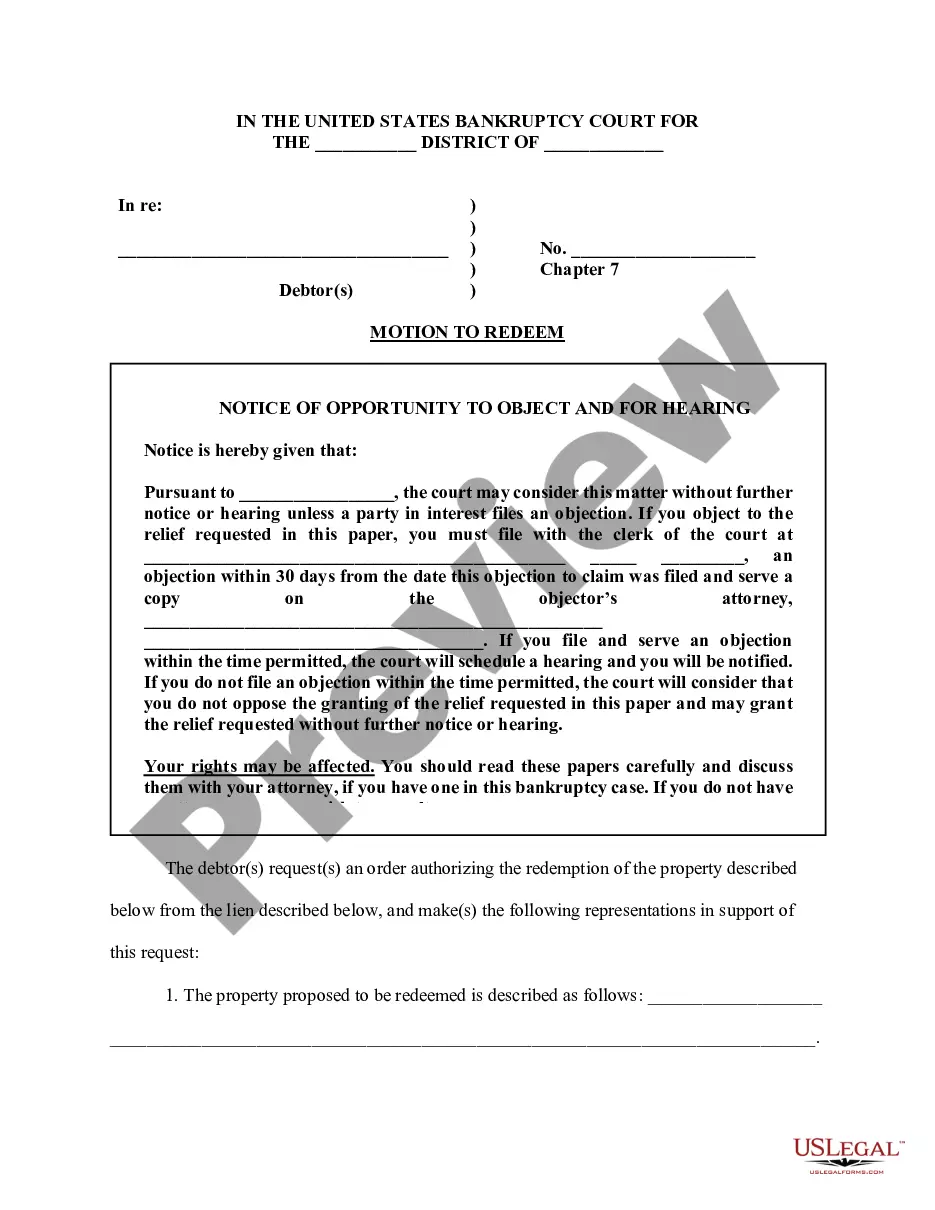
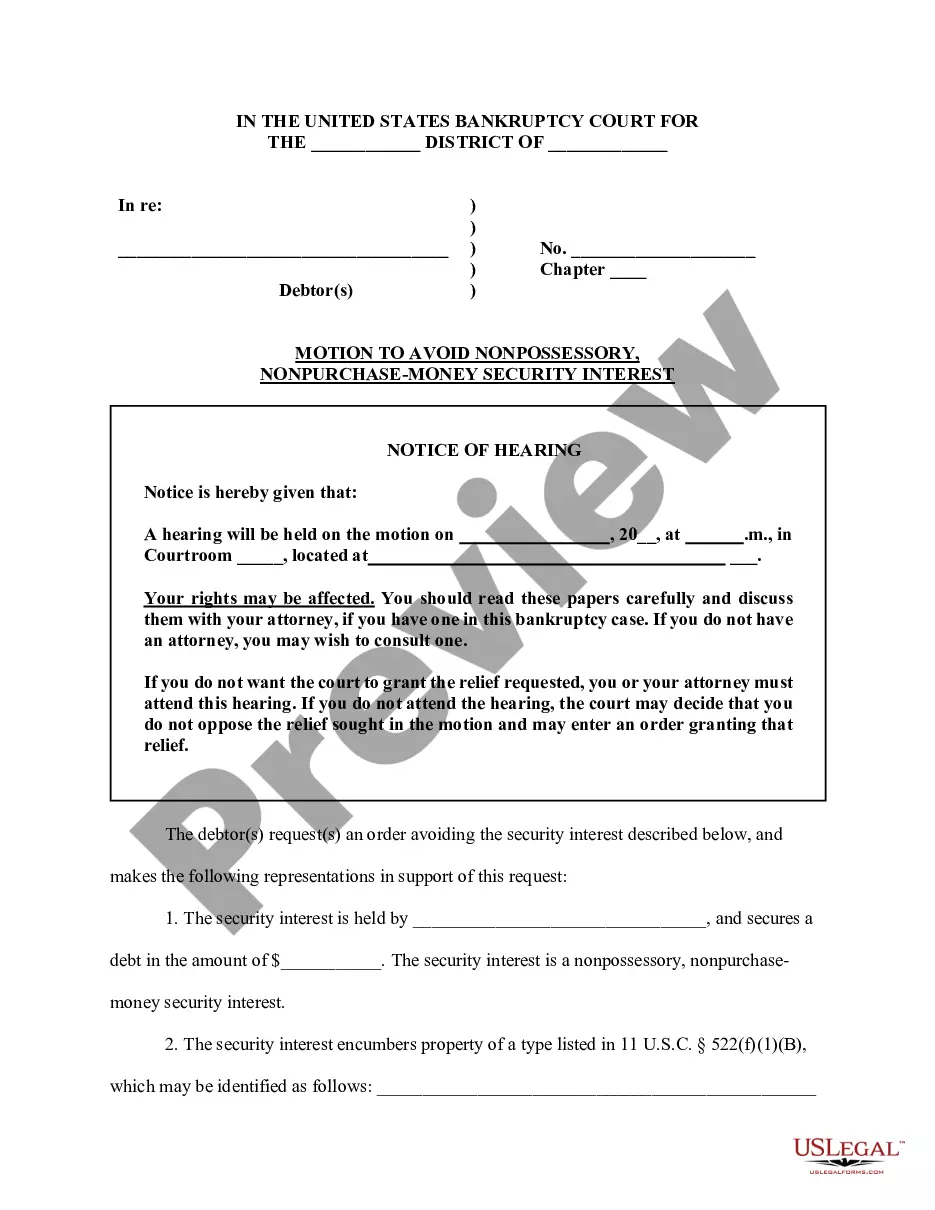
The Motion to Redeem is a legal document filed in bankruptcy court that allows a debtor to reclaim property that has been secured by a lien. This form is specifically designed for Chapter 7 bankruptcy cases, where the debtor seeks to redeem certain assets by paying the lien holder the value of the property. This form differs from other bankruptcy forms, as it focuses solely on the process of redeeming property rather than addressing other aspects of the bankruptcy process.
Key components of this form
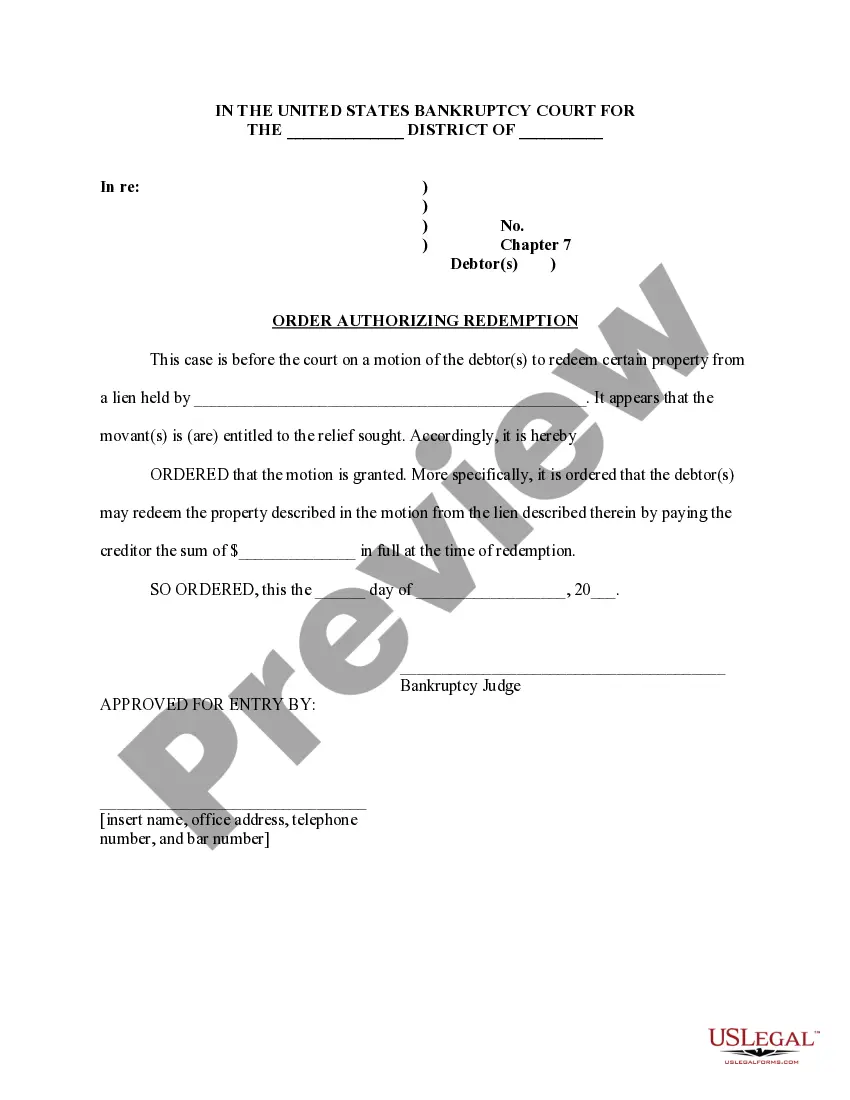
- Identification of the bankruptcy case number and district.
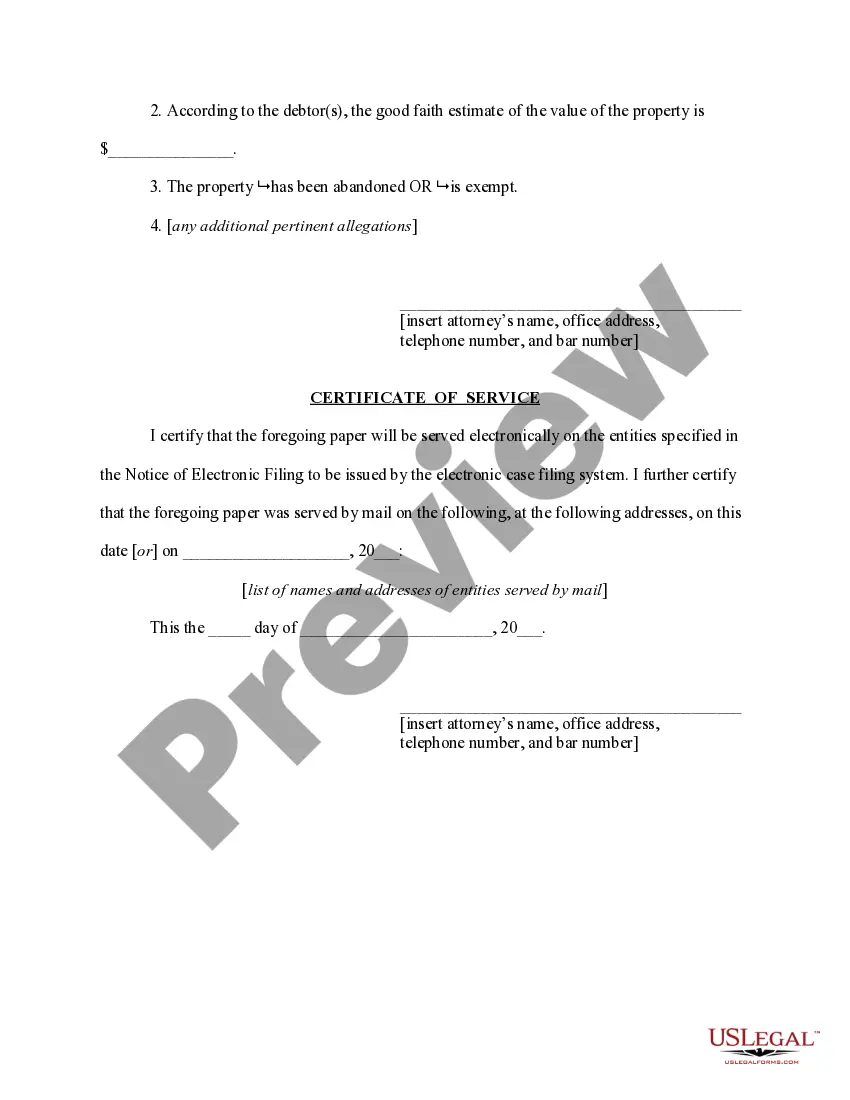
- Description of the property to be redeemed.
- Estimate of the property's value.
- Indication of whether the property has been abandoned or is exempt.
- Attorneyâs details for service of process.
- Certificate of service details confirming how and when the form is served to involved parties.
When to use this form
You should use the Motion to Redeem when you are in a Chapter 7 bankruptcy and wish to regain ownership of property that is currently collateral for a secured debt. Scenarios for using this form include cases where you want to retain your vehicle, machinery, or any valuable asset that the creditor has the right to repossess. Filing this motion can help facilitate your ability to pay only the property's fair value rather than the full amount owed on the lien.
Intended users of this form
- Individuals or businesses filing for Chapter 7 bankruptcy who wish to redeem a specific asset.
- Debtors who believe the value of their property is less than the amount owed on the secured debt.
- Persons looking to retain essential assets that are important for their personal or business use during the bankruptcy process.
Steps to complete this form
- Identify the bankruptcy case number and fill in the appropriate district information.
- Describe the property you wish to redeem, ensuring to include specific details about the asset.
- Enter your good faith estimate of the propertyâs value accurately.
- Indicate if the property has been abandoned or is exempted and provide any additional pertinent information.
- Complete the attorney information section for service of the motion to interested parties.
- Certify the completion of service by listing the mailing details for all relevant parties involved.
Is notarization required?
This form usually doesn’t need to be notarized. However, local laws or specific transactions may require it. Our online notarization service, powered by Notarize, lets you complete it remotely through a secure video session, available 24/7.
Get your form ready online
Our built-in tools help you complete, sign, share, and store your documents in one place.
Make edits, fill in missing information, and update formatting in US Legal Forms—just like you would in MS Word.
Download a copy, print it, send it by email, or mail it via USPS—whatever works best for your next step.
Sign and collect signatures with our SignNow integration. Send to multiple recipients, set reminders, and more. Go Premium to unlock E-Sign.
If this form requires notarization, complete it online through a secure video call—no need to meet a notary in person or wait for an appointment.
We protect your documents and personal data by following strict security and privacy standards.

Make edits, fill in missing information, and update formatting in US Legal Forms—just like you would in MS Word.

Download a copy, print it, send it by email, or mail it via USPS—whatever works best for your next step.

Sign and collect signatures with our SignNow integration. Send to multiple recipients, set reminders, and more. Go Premium to unlock E-Sign.

If this form requires notarization, complete it online through a secure video call—no need to meet a notary in person or wait for an appointment.

We protect your documents and personal data by following strict security and privacy standards.
Common mistakes to avoid
- Failing to accurately estimate the property's value, leading to opposition from lien holders.
- Not filing the motion within the required time frame, which can result in losing the right to redeem the property.
- Neglecting to serve the motion to all necessary parties, which can delay proceedings.
- Inaccurately filling out the form or omitting essential information, causing potential rejections by the court.
Advantages of online completion
- Convenience of completing the form from anywhere at any time, ensuring you meet deadlines.
- Editability allows you to make necessary changes easily before finalizing the form.
- Access to templates drafted by licensed attorneys, ensuring compliance with legal standards.
- Instant downloads facilitate prompt filing, helping you navigate the bankruptcy process more efficiently.
Legal use & context
- This motion must be filed within the designated time frame following the bankruptcy filing.
- Failure to comply with procedural rules may result in the dismissal of the motion.
- Redemption may only be granted if the court finds the debtor's motion meets specific legal standards.
Quick recap
- The Motion to Redeem allows you to reclaim property in Chapter 7 bankruptcy by paying its fair value.
- Timely filing and proper service of the motion are critical to ensure your rights to redeem the property.
- Consulting an attorney for advice specific to your situation can be extremely beneficial in this process.
Looking for another form?
Form popularity
FAQ
Subsection (b) specifies that the discharge granted under this section discharges the debtor from all debts that arose before the date of the order for relief. It is irrelevant whether or not a proof of claim was filed with respect to the debt, and whether or not the claim based on the debt was allowed.
The automatic stay requires creditors to cease actions against the debtor and the debtor's property as described in 11 U.S.C. § 362(a). The automatic stay remains in effect until the case is closed or dismissed or, in an individual case, until the granting or denial of the debtor's discharge, whichever happens first.
Chapter 7 contains a provision called redemption that can be of great advantage to debtors in this situation. Using redemption, the debtor buys back an item of secured personal property by paying its current value, which is often much less than the amount owed on the loan.
It authorizes an individual debtor to redeem tangible personal property intended primarily for personal, family, or household use, from a lien securing a dischargeable consumer debt. It applies only if the debtor's interest in the property is exempt or has been abandoned.
Section 722 of the bankruptcy code allows you to file a motion or bankruptcy case and redeem your auto from the lender ing to its market value. Redemption is the ability to save or pay the lender the retail value and have the lien released. You can pay cash or finance, paying off the old lender.